cPGuard supply chain attack: an update channel compromise pushed a backdoor in versions 5.88.12-5.88.19. Update to 5.88.25 and rotate credentials.
Related Posts:
Ubuntu Kernel Fixes for CVE-2026-98432 (CVSS 9.8) Land in Proposed Pocket
TeamViewer Client Vulnerability Enables Remote Code Execution
7 Unpatched phpMyAdmin Vulnerabilities Exposed
The post cPGuard Supply Chain Attack Pushes Backdoor Through Update Channel appeared first on Daily CyberSecurity.
Google dismantled a 1.3 million-device botnet allegedly built by Android TV box maker Videostrong to enable ad fraud and proxy abuse.
Google and its partners dismantled a backdoor called XCPE that had enrolled more than 1.3 million set-top boxes in a botnet. The result of the investigation into the malware operation is the striking part: Videostrong Technology Co., an Android device maker, built and ran the botnet for money.
Google says it is highly confident that Videostrong delibera
Google dismantled a 1.3 million-device botnet allegedly built by Android TV box maker Videostrong to enable ad fraud and proxy abuse.
Google and its partners dismantled a backdoor called XCPE that had enrolled more than 1.3 million set-top boxes in a botnet. The result of the investigation into the malware operation is the striking part: Videostrong Technology Co., an Android device maker, built and ran the botnet for money.
Google says it is highly confident that Videostrong deliberately created, spread and operated the backdoor. The company reportedly sold access to criminal groups and installed their malware on infected devices. The malware was used for ad fraud, secretly added devices to residential proxy networks and installed other malicious software.
Google says this was not the work of a rogue employee or a simple coding mistake. The backdoor was found in many device models and brands over several years. Its operation involved dedicated infrastructure and regularly changing configurations.
“We assess with high confidence that the backdoor and botnet were intentionally developed, deployed, and operated for financial gain by Videostrong Technology Co., an Android Original Equipment Manufacturer (OEM) and Original Design Manufacturer (ODM).” Google states. “Videostrong monetized the backdoor by selling access to criminal affiliates and loading those affiliates’ malware modules onto infected devices. “
Google has now cut all ties with Videostrong. The company is banned from making devices with pre-installed Google apps. The ban also covers any future subsidiaries or business partners, and Videostrong can no longer supply software to other certified device makers.
Videostrong got around Google’s compatibility and security tests with code obfuscation. The malicious code loaded after a device’s first boot, which the tests didn’t catch. Google has changed its review process and is improving how it checks firmware on certified Android TV devices.
Google also took legal action against the domains and servers Videostrong used to control the botnet, and against the control domains of over a dozen malware families loaded through the backdoor. Those affiliates spread their modules through other channels too, so Google expects the takedown to cut access to at least 10 million more compromised devices. Japan’s National Police Agency, Lumen, HUMAN Security, Plume, Synthient and TrendAI worked on the operation.
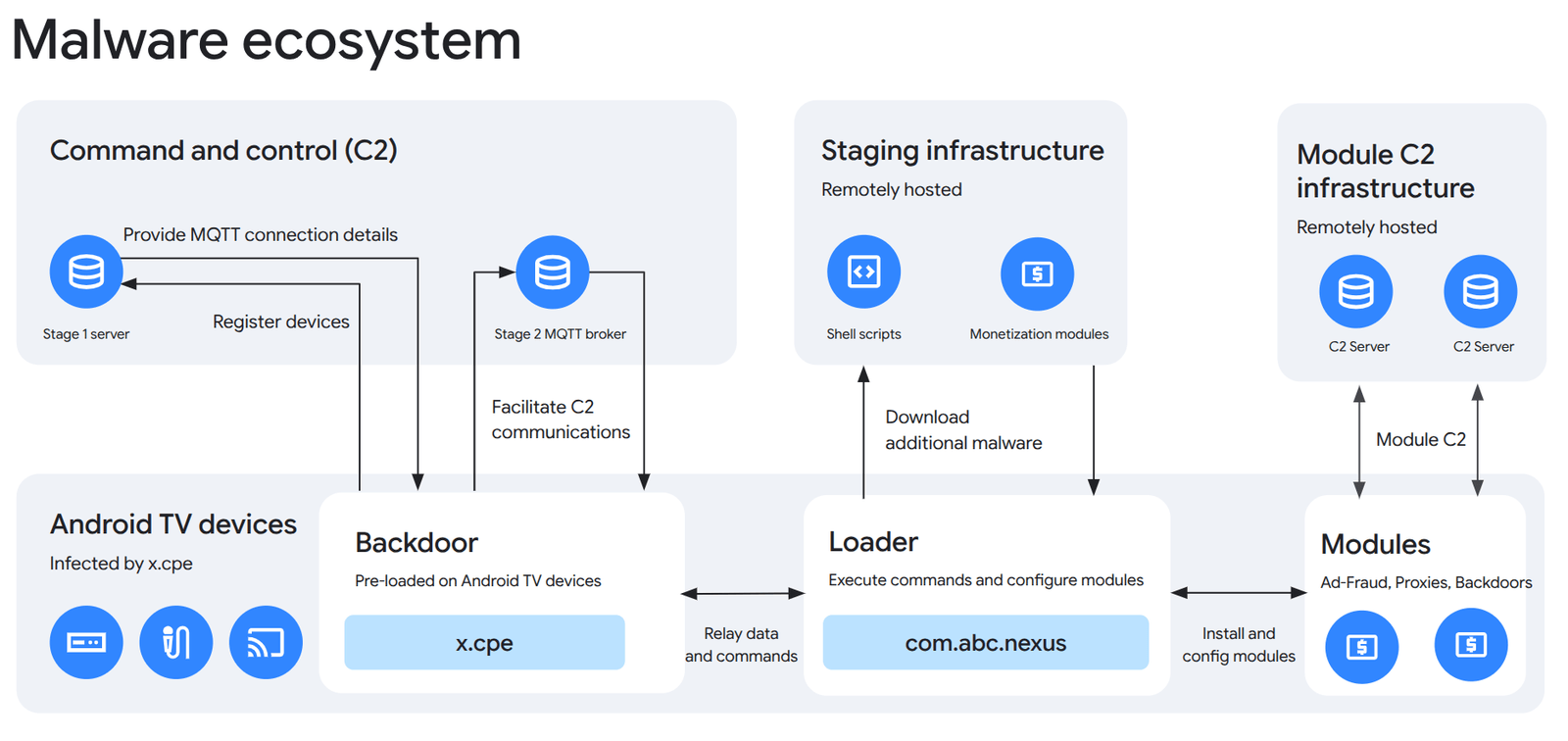
The malware has three stages. The primary backdoor, x.cpe (called com.oemservice in some builds), is preloaded in the firmware and runs with system privileges. If a user uninstalls it, it reinstalls itself from the /oem/ partition at the next reboot. It handles communication with the control server and passes work to a loader called com.abc.nexus, which carries its own anti-analysis tricks and sets up the money-making modules.
These modules are supplied by other criminals working as affiliates. They can arrive as programs built into the backdoor, software packages added to its loader, or extra apps downloaded later. Many turn the device into a residential proxy, allowing other people to use the victim’s home internet connection to hide their online activity. Others commit ad fraud or install additional backdoors. In other words, a set-top box becomes a proxy server without its owner’s knowledge.
The backdoor uses two steps to control infected devices. First, the box sends an HTTP request to download settings, location data and network information. It then maintains a live connection through MQTT, a lightweight messaging protocol, to receive commands from the operators. Google found that all analyzed samples used the same MQTT server to communicate with infected devices.
“Additional monetization modules as well as various shell scripts and legitimate applications are hosted remotely and downloaded by infected devices upon command from the operator via the MQTT broker.” continues the report. “A significant majority of these files are hosted as Github releases on operator-owned Github pages. Other files are hosted on operator-controlled servers and file hosting sites.”
Through this connection, attackers could secretly install apps, run commands and scripts, take screenshots, record keystrokes and map the victim’s network. They could also disable Google Play Protect’s app verification to install software without the user’s knowledge. Google observed operators taking screenshots, recording keystrokes, collecting account and device information, stealing app lists and system logs, and opening remote command-line sessions. However, most of their activity involved installing, removing and managing malware modules.
The malicious files came from several sources. The attackers mainly used GitHub releases hosted on their own accounts, the Filemail file-sharing service and two servers under their control. Network traffic analysis also suggests that the operators managed the command infrastructure through remote interfaces and an EMQX web console, connecting from IP addresses outside the infected device network.
Most infected devices are Android TV set-top boxes, but Google also found telehealth devices, karaoke machines and digital signage. One device can run several modules at once, up to three residential proxy kits. That shows Videostrong wants to squeeze every infected device as hard as it can. The proxy and bandwidth-sharing kits named in the report include Linkfog, AppSalt, GaGaNode, BWM, Traffmonetizer, EarnFM and NetNut.
Some of those kits enroll devices without asking. AppSalt’s SDK, owned by Honeygain, calls an opt-in function without showing any consent screen, and it stops running if the app came from the official Google Play Store. Ad-fraud modules such as Fission and HiddenView fire off fake ad impressions in the background, and HiddenView also uses hidden browser windows to simulate clicks and scrolling.
The configuration shows a well-run operation. MQTT messages carry resource limits for each module, download links per processor type, and priority weights. Devices are assigned to one of six timezone-based pools on ott.szbboys[.]com. Devices report their bandwidth use and alarms back, so the modules stay within set limits.
Google says the underlying market is resilient. Backdoor operators, ad-fraud rings and residential proxy providers work as an interconnected supply chain, and when one part gets disrupted they quickly switch to new loaders or rival kits. Lasting change, it says, needs accountability across hardware makers, the residential proxy industry and the broader technology sector.
Google wants retailers and distributors to require independent security audits from device manufacturers and to delist any implicated in supply-chain abuse. It says proxy providers’ claims of ethical sourcing need transparent, auditable proof of user consent, and that in its analysis these providers asked for consent only when platform policy forced them to. Silent opt-in remains the most common way devices become exit nodes.
For consumers, Google advises caution with apps that pay you for “unused bandwidth” or “sharing your internet”, which are a main way illicit proxy networks grow. Stick to app stores you trust, review permissions for third-party VPNs and proxies, and keep Google Play Protect on. Buy connected devices like set-top boxes only from reputable manufacturers, and check the partner list on Google’s Android TV website. Google also urges mobile platforms, ISPs, online marketplaces and other tech platforms to keep sharing intelligence.
“A device manufacturer intentionally infecting their users with malware is an unacceptable breach of trust. By turning everyday hardware into persistent beachheads for criminal affiliates, Videostrong prioritized illicit post-sale recurring revenue over the safety and privacy of its users.” concludes the report. “Downstream hardware brands, white-label resellers, telecommunications providers, and online e-commerce marketplaces also share responsibility for closing this vector.”
Malicious Claude Code extensions targeted Windows and macOS developers through Cursor collecting device details and planting files for persistent remote access.
Malicious Claude Code extensions targeted Windows and macOS developers through Cursor collecting device details and planting files for persistent remote access.
Cursor removed a malicious Claude Code extension backdoor. Learn how the Cursor Claude Code extension backdoor planted SSH keys on up to 5,000 developer PCs.
Related Posts:
INJ3CTOR3 FreePBX Malware Steals 17 Configuration Files for Off-Box Toll Fraud
CyberDakait Deploys Seven Android Trojan Families Against 17,960 Indian Banking Devices
Qilin Ransomware Targets VMware ESXi Servers and Healthcare Networks After Claiming 900 Victims in 2026
The post Malicious Claude Code Extension Injects SSH
Cursor removed a malicious Claude Code extension backdoor. Learn how the Cursor Claude Code extension backdoor planted SSH keys on up to 5,000 developer PCs.
Trellix uncovers the Sirius Backdoor in fake FedEx tax invoices. See how the fileless Sirius Backdoor blinds EDRs and survives Windows OS resets.
Related Posts:
Yoba Malware Campaign Sideloads Payloads Through Signed OpenAI and Anthropic Binaries
Fake Phantom, Jupiter, and Bitget Firefox Extensions Steal Crypto Recovery Phrases
Brazilian Magecart Group Hits Convertr Ecommerce Platform in Plausible Analytics Supply Chain Attack
The post Fake FedEx Tax Invoice PDFs Deliver Fileless Sirius Backd
BRONZE SANDCASTLE uses Sandboxie DLL sideloading to run a modified Meterpreter backdoor in memory against targets in Asia and Africa.
Related Posts:
Skynet LLMjacking Agent Hijacks Exposed AI Models to Hack Servers and Mine Crypto
INC Ransomware Affiliates Expose Seven Servers Holding Phantom AI Framework and 46 Encryptors
SafePay Ransomware Hits 600 Victims as FBI, CISA and Allies Issue Joint Warning
The post BRONZE SANDCASTLE Uses Sandboxie DLL Sideloading to Deploy Modified Meterpreter Bac
APT28 used the Hookedge backdoor, SSH tunnels, and a new loader to spy on a naval shipbuilder and defense firms in two NATO countries.
Related Posts:
APT41 Deploys BlackX UEFI Bootkit Against Central Asian Diplomatic Agencies
China-Linked Operator Used AI Agents to Breach 48 Government and Corporate Targets Across Asia
Lazarus Operation FlashHole Abuses CrossWeb EX and GitHub to Spy on South Korean Firms
The post APT28 Uses Hookedge Backdoor to Spy on Naval Shipbuilder and Defense Firms in Tw
Attackers infected 333 Tor exit nodes with Ebury malware to hijack SSH logins and steal passwords. See how a researcher exposed them.
Related Posts:
Aoki Infostealer Harvests API Keys and Tokens From AI Coding Assistants
CL-UNK-1211 Deploys SysGoRAT Malware and AI Scripts Against Government Linux Servers
Qilin, Inc and Settra Ransomware Gangs Exploit PAN-OS Flaw CVE-2026-0257 for VPN Access
The post 333 Tor Exit Nodes Hijacked by Ebury Malware for SSH Attacks appeared first on Daily CyberSecu
An active WordPress XSS campaign exploits Ninja Forms flaw CVE-2026-94504 and CVE-2026-93836 to plant hidden admin accounts. Patch now.
Related Posts:
Apache DolphinScheduler 3.4.3 Fixes Six Authorization Flaws That Leak Passwords and Kubernetes Credentials
wolfSSH 1.6.0 Fixes Five Flaws, Including Critical Host Key Bypass CVE-2026-16516
Cisco Finesse SSRF Flaw CVE-2026-20362 Publicly Disclosed, With Fixes Not Due Until 2027
The post Hackers Exploit Ninja Forms and WPC Product Bundles XSS Fla
The ClingSTUN backdoor hijacks unpatched IoT devices and hides in traffic to public STUN servers. Learn how it spreads and how to stop it.
Related Posts:
Four Attacker Clusters Exploit Citrix NetScaler Flaw CVE-2026-88771 to Plant Web Shells
Moroccan Intelligence Deploys Vast Surveillance Panopticon
DragonForce Backdoor Adds MQTT Fallback to Microsoft Teams TURN Command Channel
The post ClingSTUN Linux Backdoor Turns Unpatched IoT Devices Into Proxy Nodes appeared first on Daily CyberSecurity
Fortinet details ClingSTUN, a Linux backdoor exploiting unpatched IoT devices and abusing public STUN servers to route traffic past NAT.
FortiGuard Labs researchers spotted a Linux malware family they call ClingSTUN, and the name gives away its trick immediately. Instead of relying on a dedicated command server, the malicious code leans on STUN, the protocol that helps devices behind a router figure out their real public IP address. Video calling apps use it constantly, which means ClingSTUN
Fortinet details ClingSTUN, a Linux backdoor exploiting unpatched IoT devices and abusing public STUN servers to route traffic past NAT.
FortiGuard Labs researchers spotted a Linux malware family they call ClingSTUN, and the name gives away its trick immediately. Instead of relying on a dedicated command server, the malicious code leans on STUN, the protocol that helps devices behind a router figure out their real public IP address. Video calling apps use it constantly, which means ClingSTUN’s network traffic hides inside something that already looks completely normal.
“ClingSTUN functions as a back-connect proxy backdoor, turning infected systems into remotely controlled proxy nodes. It abuses public STUN (Session Traversal Utilities for NAT) infrastructure to discover externally mapped IP addresses and ports, maintain NAT bindings, and improve connectivity between compromised hosts and remote operators.” reads the report published by Fortinet. “Because many of the STUN servers it contacts are legitimate public services, the resulting traffic easily blends with normal VoIP and WebRTC communications.”
The attack starts with a familiar problem: old, unpatched devices exposed to the internet. Fortinet first spotted the campaign exploiting a known command injection flaw in Hytec Inter routers. As the campaign evolved, the attackers changed their download infrastructure and expanded the list of vulnerabilities they were exploiting.
In the latest wave, they were targeting devices from more than a dozen vendors, including D-Link, TP-Link, Realtek and Linksys, as well as several DVR and IoT cloud platforms. Many of these devices are easy targets because they are rarely updated or closely monitored.
Once the attackers find a vulnerable device, a small downloader script installs the right malware version for its hardware. It supports common architectures such as ARM, MIPS, PowerPC and Intel.
The latest version also checks the device for other malware before installing itself. It scans mounted filesystems and kills suspicious processes running from temporary directories. In other words, ClingSTUN is not just trying to infect the device. It also tries to remove competing malware and take full control.
The persistence mechanism is almost old-fashioned in its simplicity. The malware copies itself into two separate locations, then appends itself to three different boot scripts so it survives a reboot no matter which startup path the device actually uses. It also walks through every running process, checks whether the command line matches what the process claims to be, and kills anything that doesn’t line up, which is both a defense mechanism and a fairly blunt way of eliminating rival malware fighting for the same compromised box.
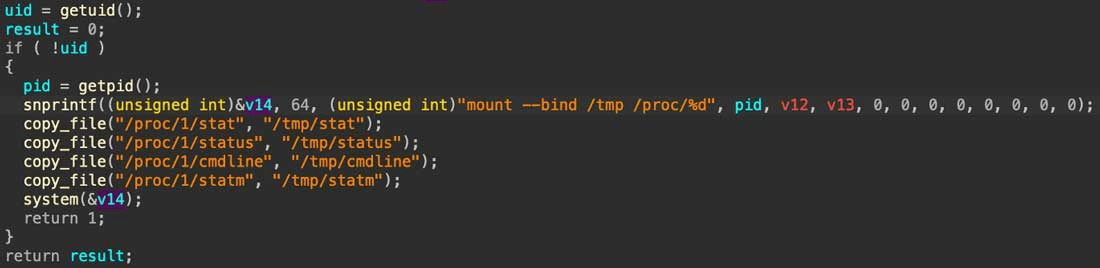
Two details stand out as genuinely well thought through rather than copy-pasted from some other botnet’s source code. First, it opens the device’s watchdog timer and quietly disables it, so the device never auto-reboots itself out of the infection the way embedded hardware is designed to if something goes wrong. Second, once it’s running as root, it swaps its own process metadata for a copy of PID 1’s, the very first process the kernel starts, which makes a basic process listing show what looks like the init system instead of malware.
“After setting up persistence, ClingSTUN clears its original command-line arguments so that its command line appears empty in tools such as “ps.” It then checks whether it is running as root (UID 0).” reads the report. “If so, it copies selected process information files from “/proc/1/” to “/tmp” and bind-mounts “/tmp” over its own “/proc/” directory, concealing its process information behind metadata copied from PID 1.”
The STUN part is especially interesting because it helps ClingSTUN hide in normal network traffic. The malware sends standard requests to public STUN servers to find out its external IP address and port. These are the same services commonly used by VoIP and WebRTC applications.
Later versions reduced the number of STUN servers and required all connections to work, which suggests the attackers were improving reliability. Because the traffic goes to legitimate third-party services, it can be difficult for defenders to tell the difference between ClingSTUN activity and normal traffic from apps such as Zoom.
Command delivery itself still needs a human on the other end willing to send a 20-byte packet the right way.
“ClingSTUN establishes a UDP socket, binds to a random local port, and sends standard 20-byte STUN binding requests. It sends these to 24 public endpoints and ensures at least half succeed.” Fortinet states. “The third evolution reduced this to 13 endpoints and ensures every endpoint connection succeeds.”
A single control datagram can trigger ClingSTUN to open a fresh outbound TCP connection to an address the operator specifies, pull down a command over that connection, and execute it, which keeps the heavy lifting off the STUN channel and limits what shows up in any one place. The malware also carries hardcoded exploits for seven more vulnerabilities purely for spreading itself further, meaning every infected device doubles as a scanner looking for its next host.
Fortinet stresses that the STUN servers are not compromised or malicious. They are simply working as intended. These third-party services should not automatically be treated as attacker-controlled infrastructure.
“ClingSTUN’s exploitation of known, unpatched vulnerabilities reinforces the importance of consistent cyber hygiene.” concludes the report. “Organizations should inventory Internet-facing devices, track their firmware and support status, and promptly apply available security updates, prioritizing vulnerabilities known to be actively exploited.”
Meet ClingSTUN, a new Linux backdoor that exploits IoT vulnerabilities, gives attackers remote command access and turns infected devices into proxy nodes.
Meet ClingSTUN, a new Linux backdoor that exploits IoT vulnerabilities, gives attackers remote command access and turns infected devices into proxy nodes.
A new DragonForce backdoor hides in Microsoft Teams TURN relays and falls back to MQTT. See how it works and how defenders can spot it.
Related Posts:
Moroccan Intelligence Deploys Vast Surveillance Panopticon
New 2CLoader Malware Delivers Vidar and Remus Infostealers While Dodging Sandboxes
BPFDoor Backdoor and New AVERAT Implant Hide in SMTP Traffic on Telecom Edge Devices
The post DragonForce Backdoor Adds MQTT Fallback to Microsoft Teams TURN Command Channel appeared first on Daily CyberS
Jamf Threat Labs details CloudSyncD, a fake macOS Zoom installer that hides a phished password using invisible zero-width Unicode characters.
Jamf Threat Labs found CloudSyncD while doing routine scanning on VirusTotal, buried inside a disguised Zoom client. They first spotted it on September 15, clearly still under construction, and within two days watched it move from a private test address to live command-and-control infrastructure on real domains. That’s a fast turnaround for something t
Jamf Threat Labs details CloudSyncD, a fake macOS Zoom installer that hides a phished password using invisible zero-width Unicode characters.
Jamf Threat Labs found CloudSyncD while doing routine scanning on VirusTotal, buried inside a disguised Zoom client. They first spotted it on September 15, clearly still under construction, and within two days watched it move from a private test address to live command-and-control infrastructure on real domains. That’s a fast turnaround for something that started as an obviously unfinished build.
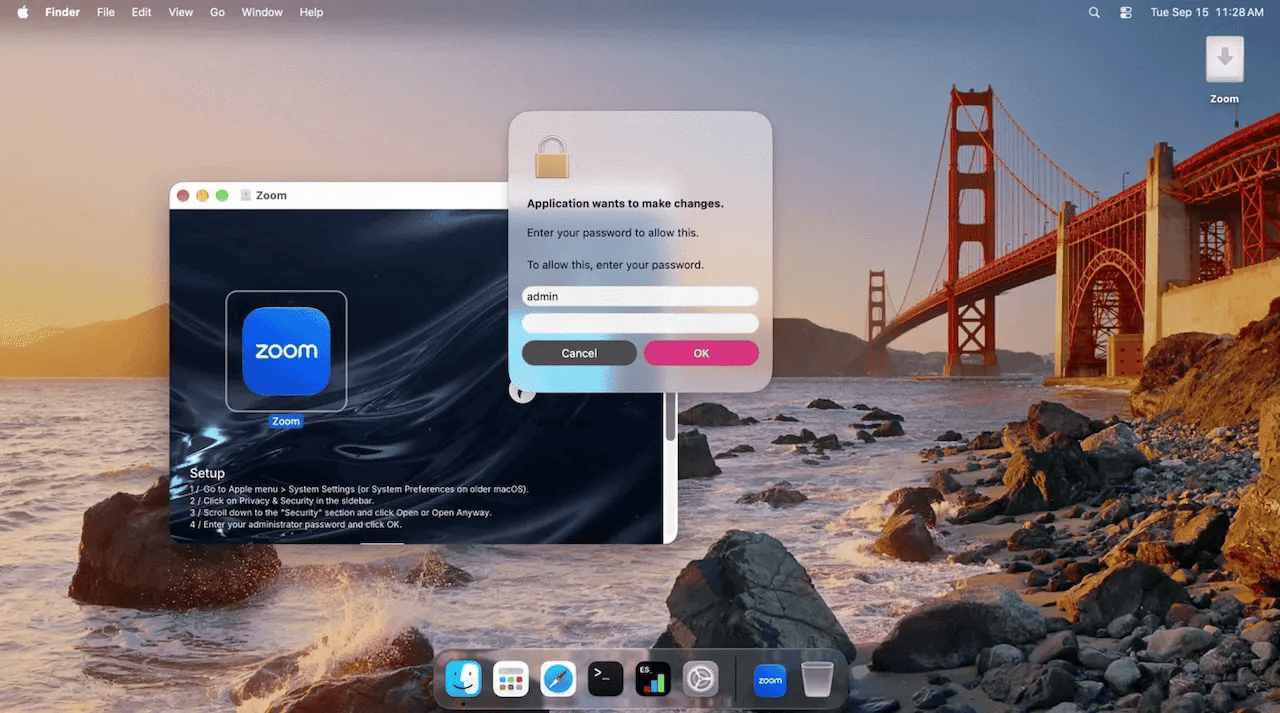
The delivery method is a classic macOS trick, made to look like a normal installer. The disk image opens as a volume called Zoom, with an app icon and an Applications shortcut. The background image then guides the victim step by step on how to bypass Gatekeeper, because the app is only ad-hoc signed and macOS would normally block it.
After the app starts, a fake dialog asks for the user’s password, claiming it is needed to continue the installation. The prompt keeps appearing until the password is correct.
“Once a password is entered, the dropper validates it against the local account using dscl and does not continue until the check succeeds.” reads the analysis published by Jamf Threat Labs. “After the password has been validated a fake progress window reading Downloading Zoom... appears.”
The captured password doesn’t get sent anywhere immediately. It gets base64 encoded, padded with a random amount of filler text, and buried inside a field that looks like an innocent cache value in a fake settings file named data.json. Nothing about that file screams malicious on a casual read, since it’s formatted to look exactly like ordinary application preferences with a theme and a language setting.
The trick used to find the hidden password is also where the file gets its name. After the visible version number, 1.0.0, there are 48 invisible Unicode characters. They are zero-width spaces and zero-width non-joiners, so they cannot be seen in normal text. When decoded, they tell the malware where the real password starts and how long it is inside the padded text. The amount of filler changes each time, so the password is hidden in a different position on every run, while the technique stays the same.
The malware does not download the payload separately. The full payload is already inside the dropper as a universal Mach-O file. It first tries to run the payload directly from memory through an anonymous file descriptor, avoiding writing it to disk. On most Macs, however, System Integrity Protection blocks this method. Jamf also saw the attempt fail during testing and recorded the exact error. When the fileless method fails, the malware writes the payload to a temporary file and runs it with sudo, using the password it just stole to get the privileges it needs.
“The dropper does not download its payload. It carries a complete universal Mach-O inside itself, roughly 756 KB in the development build, and extracts it at runtime. The same payload is also present on disk inside the application bundle, so the dropper has two sources for it. The dropper first writes the payload to an anonymous file descriptor and attempts to execute it through /dev/fd, presumably to avoid writing the Mach-O to disk.” continues the analysis. “In our testing this failed, with the dropper logging /dev/fd spawn failed rc=13. This technique will fail on the majority of macOS systems due to System Integrity Protection. Upon failure, it uses mkstemp to write the file temporarily to disk, then executes it using sudo along with the collected user’s password.”
A cleanup script follows, assembled at runtime from scattered obfuscated fragments and designed to swap in a replacement app bundle before deleting itself either way. In the builds Jamf actually recovered, though, the replacement bundle simply doesn’t exist, so this entire swap mechanism never fires. It’s a feature built and wired up for a payload that hadn’t shipped yet.
The second stage, which Jamf calls cloudsyncd after its disguised daemon name, is a fairly restrained implant once it’s actually running. It doesn’t set up persistence, doesn’t install a LaunchAgent, doesn’t rename itself to blend in the way its own configuration suggests it’s designed to. It just builds a working directory, logs its activity with encrypted records, and checks in with its server every 8 to 16 seconds carrying nothing but a hardware identifier.
The more interesting part is what happens after the malware checks in with its server. The server can send back either a compressed archive to unpack or a complete executable to run. So the backdoor is not limited to sending individual shell commands. It can deliver and run entire programs, which gives defenders a different clue to look for: a suspicious new file being created or executed rather than a series of strange terminal commands.
By the time Jamf published its research, the malware had moved beyond testing and was communicating with two live domains. Both were registered through the same registrar in 2011 and were protected by Cloudflare. At the time, neither domain was detected as malicious. All the samples also used the same encryption key and initialization vector. That means a single sample recovered by Jamf could potentially be used to decrypt the network traffic of other versions of the malware.
“CloudSyncD is a good reminder that although infostealers may dominate the threat landscape, attackers still have use for quieter malware that lies low until further access is needed.” concludes the report. “Its behaviors illustrate how macOS malware continues to move toward native implementations, string protection, and execution paths that attempt to avoid writing payloads to disk, while still depending on the oldest technique available: asking the user for their password.”
Cisco Talos details UAT-11587, a China-linked group using the Antino backdoor and Microsoft 365 as cover to spy on Asian governments.
Cisco Talos has been tracking a cluster of espionage activity since September 2025 that it calls UAT-11587, and by July 2026 the group had hit at least 16 government and policy organizations across eight Asian countries. The toolset includes a previously undocumented backdoor Talos named Antino, and the thing that makes it worth paying attention to isn’t how i
Cisco Talos details UAT-11587, a China-linked group using the Antino backdoor and Microsoft 365 as cover to spy on Asian governments.
Cisco Talos has been tracking a cluster of espionage activity since September 2025 that it calls UAT-11587, and by July 2026 the group had hit at least 16 government and policy organizations across eight Asian countries. The toolset includes a previously undocumented backdoor Talos named Antino, and the thing that makes it worth paying attention to isn’t how it gets in. It’s where it hides once it’s there.
Antino is written in Rust and works on both 32-bit and 64-bit versions of Windows. It supports the usual backdoor features, including shell and PowerShell access, file transfers, in-memory shellcode execution and persistence.
“Antino is a Rust-compiled Windows backdoor that supports host reconnaissance, shell and PowerShell execution, file transfer, in-memory shellcode loading and persistence. Its native command-and-control channel operates exclusively through Microsoft 365, using Microsoft Graph to interact with Outlook and OneDrive.” reads the report published by Talos.
None of these features are particularly new. What makes Antino different is how it communicates: instead of using its own command-and-control server, it uses Microsoft Graph to read commands from an Outlook mailbox and send stolen files to OneDrive. This allows its traffic to blend in with normal Microsoft 365 activity.
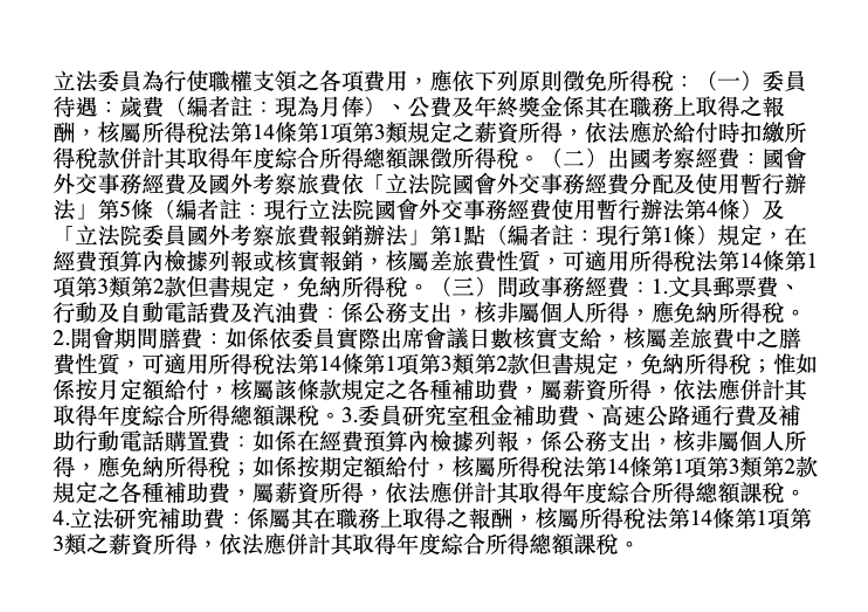
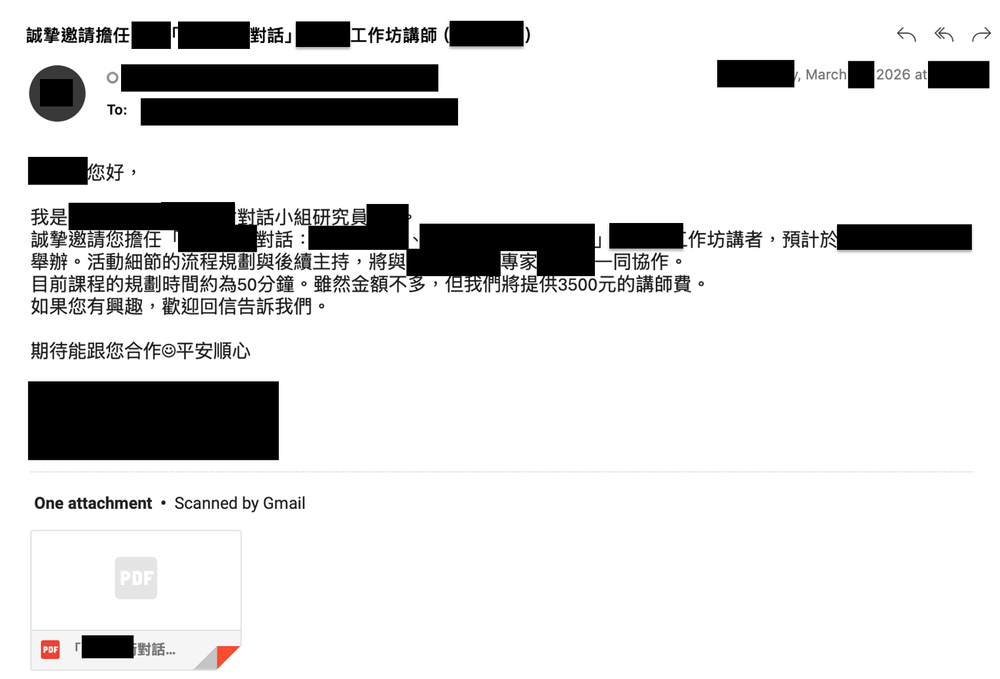
The attack starts in a more traditional way, with a convincing phishing email. UAT-11587 created highly targeted documents that suggest the attackers had researched their victims, including a fake workshop document about Taiwan’s information warfare and a document that closely copied a real Taiwan Ministry of Finance ruling about tax treatment for legislators.
“The document exactly reproduces a public Taiwan Ministry of Finance ruling to make the decoy appear credible.” conctinues the report. “Its subject strongly suggests that it was prepared for members of Taiwan’s public sector.”
In another case, the attackers reused a real Associated Press story about alleged Russian offers to the US over Venezuela. Matching malware samples appeared on VirusTotal two days after the original article was published.
The delivery trick is a simple but effective email spoofing technique that takes advantage of a gap many people overlook. The attackers sent the email through a legitimate provider, using one domain as the technical sender, while the visible From address showed the organization they were impersonating. SPF passed because the real sending domain was authorized, but DMARC detected the mismatch and failed. That still wasn’t enough to block the message. The impersonated domain had a DMARC policy set to monitoring rather than rejection, so the failed email still reached the inbox.
The Gmail trick is even more interesting. The attackers recreated Gmail’s normal attachment preview card almost pixel by pixel using images embedded in the email’s HTML. They then made the fake preview a link to a page controlled by the attackers. Open the email in Gmail and it looks just like the real thing because Gmail simply renders the HTML it receives. There is no exploit here. It’s just a very convincing copy of something users already trust.
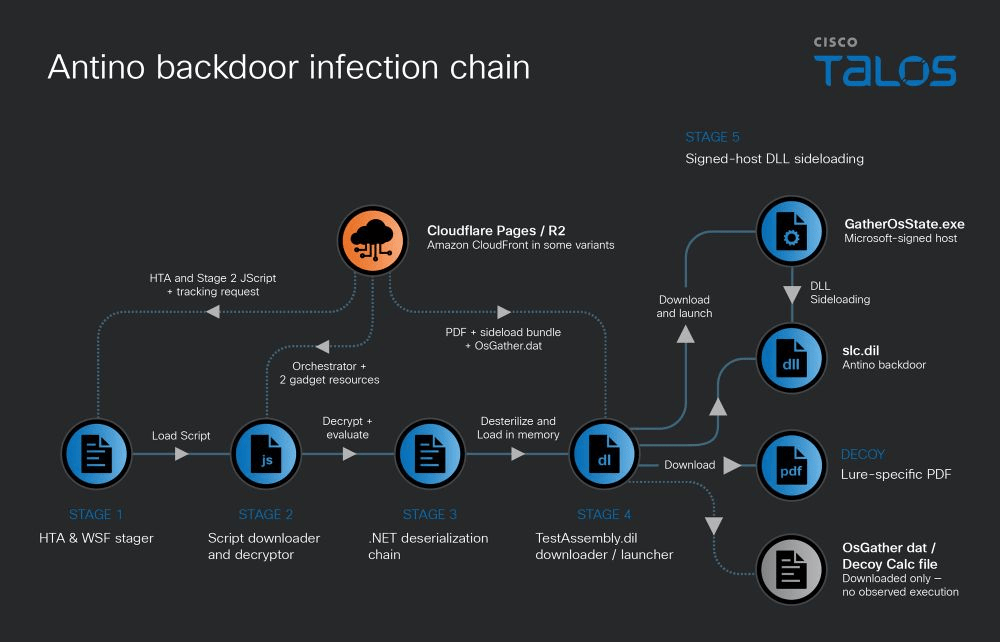
From that click, a five-stage chain kicks in, leaning on legitimate-looking HTA files, Windows Script Host, and a scripted .NET deserialization trick that abuses a known gadget chain to load malicious code inside a trusted process. The final stage sideloads Antino through a signed Microsoft diagnostic binary, meaning the thing dropping the backdoor onto disk is a tool Windows itself trusts by default. Cloudflare Pages, R2, and Amazon CloudFront carried almost every stage of this, which kept the traffic blending into ordinary HTTPS the whole way through.
Once Antino is running, it checks its Outlook mailbox for new commands every ten seconds. The commands and results are sent as structured JSON hidden inside specially formatted email subjects.
“The Antino backdoor receives commands through email messages. The implant actively pulls commands from the threat actor’s Outlook mailbox folder every 10 seconds. The protocol uses two message types: command emails contain tasking from the controller, while response emails contain the implant’s results.” states Talos. “Command messages are identified by the subject prefix command_req_[session_id] and responses by command_res_[session_id], as indicated in the HTTP GET request sent by Antino: “
A separate system is used to upload stolen files to one OneDrive folder and download attacker tools from another. Even the naming makes the attacker’s perspective clear: “uploads” are files sent to the victim, while “downloads” are files pulled back from the victim.
The attribution case leans on accumulated small details rather than any single smoking gun, which is honestly how these assessments should work. Decoy document metadata carries Simplified Chinese language tags and a UTC+8 timestamp, a combination more consistent with mainland China than Taiwan or Hong Kong, where Traditional Chinese dominates. Separately, ten different Antino builds reference a Rust package mirror built specifically to speed up dependency downloads inside mainland China, the kind of tooling choice a developer picks for convenience, not for disguise.
The victim list reads like a checklist of what an intelligence service would actually want: defense ministries, legislatures, foreign affairs offices, border and interior security agencies, plus the think tanks and civil society groups that tend to know things governments care about early. Around 350 compromised endpoints turned up across eight countries, with the largest single wave, roughly 57 new endpoints, hitting India over two days in June. That’s not noise. That’s a deliberate and sustained collection effort.
“Based on the development, preparation-environment, and targeting indicators detailed in this report, Talos assesses with high confidence that UAT-11587 is China-nexus.” the report concludes.
UAT-11587 Antino backdoor attacks hit Asian targets. Cisco Talos reveals how the Antino backdoor abuses Microsoft 365 for cyberespionage.
Related Posts:
PaperCut Zero-Day Attack Hides AdaptixC2 Implant Inside Fake Microsoft Copilot
Microsoft Details NeedyMantis Malware Used for Long-Term Access in Targeted Intrusions
New MacSync macOS Infostealer Targets Crypto Wallets
The post UAT-11587 Targets Asian Governments With Antino Backdoor appeared first on Daily CyberSecurity.
Microsoft details NeedyMantis malware, a modular backdoor that uses DLL sideloading to keep long-term access in telecom, academic, and government networks.
Related Posts:
UAT-11587 Targets Asian Governments With Antino Backdoor
PaperCut Zero-Day Attack Hides AdaptixC2 Implant Inside Fake Microsoft Copilot
New MacSync macOS Infostealer Targets Crypto Wallets
The post Microsoft Details NeedyMantis Malware Used for Long-Term Access in Targeted Intrusions appeared first on Daily CyberSecurity.
Microsoft details NeedyMantis malware, a modular backdoor that uses DLL sideloading to keep long-term access in telecom, academic, and government networks.
Learn how the new TASK#STOMP PowerShell backdoor steals data. The TASK#STOMP PowerShell backdoor abuses native Windows tools for persistence.
Related Posts:
Malicious Terraform Providers Spread Graphalgo Go Malware
CLOSEDQUORUM AI Malware Uses LLMs for Autonomous C2
WordPress Must-Use Plugin Malware Uses EtherHiding
The post New TASK#STOMP PowerShell Backdoor Targets Windows appeared first on Daily CyberSecurity.

 Entrar