❌

Visualização normal

Hoje — 9 de Novembro de 2026Cybersecurity News
  • ✇Cybersecurity News
  • Marsalek Malware Disguised as Game Cheats Uses Dual-Hook Setup to Steal Passwords and Wallets Do Son
    McAfee Labs uncovers Marsalek malware in fake game cheats. See how the dual-hook Marsalek malware drops PureLog to steal passwords from gamers and hackers. Related Posts: Anubis Ransomware Attackers Deploy Custom Lindnor Backdoor and 13 Security Killers Against US Target PolinRider Loader Hits 10 Hijacked npm Packages Using Ethereum Dead-Drop Resolver Trojanized Inno Setup Installers Deliver Proxyware and Compute Hijackers The post Marsalek Malware Disguised as Game Cheats Uses Dual-Hook Setu
     
  • ✇Security Affairs
  • Fake GitHub Security Tools Infect Over 2,000 PCs With Malware Pierluigi Paganini
    Fake GitHub security tools are spreading malware that disables defenses, steals sensitive data and infects over 2,000 PCs. Cybersecurity firm Doctor Web has found malware hidden in GitHub projects that look like security tools. The campaign targets blockchain game fans and, more recently, information security professionals. The researchers discovered that more than 2,000 PCs were infected. “The attackers behind these compromised development projects target blockchain game enthusiasts and
     

Fake GitHub Security Tools Infect Over 2,000 PCs With Malware

9 de Novembro de 2026, 05:07

Fake GitHub security tools are spreading malware that disables defenses, steals sensitive data and infects over 2,000 PCs.

Cybersecurity firm Doctor Web has found malware hidden in GitHub projects that look like security tools. The campaign targets blockchain game fans and, more recently, information security professionals. The researchers discovered that more than 2,000 PCs were infected.

“The attackers behind these compromised development projects target blockchain game enthusiasts and (most intriguingly) …information security professionals.” reads the report. “At the time of Doctor Web’s research into this matter, more than 2,000 PCs were infected.”

The campaign started two years ago with Visual Studio projects related to blockchain games, game bots and cheats. The attackers targeted people who used crypto wallets. They hid malicious code in project files, including commands that ran before a project was built and PowerShell commands stored in configuration files. They even provided instructions on how to install Visual Studio and download the projects from GitHub, making it easy for people with limited technical knowledge to use them.

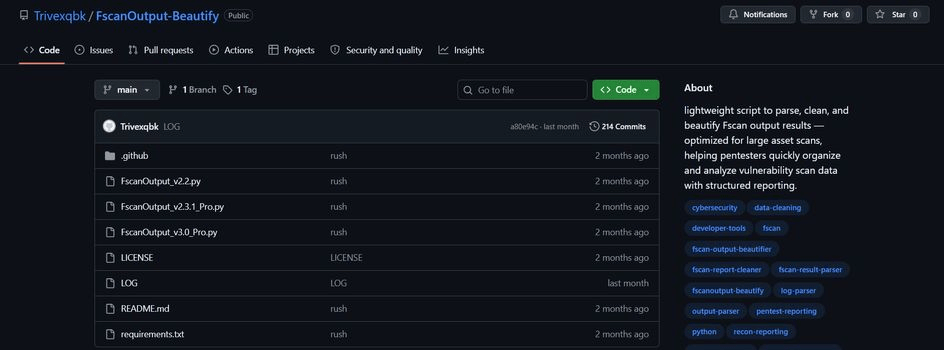
Now the attackers are targeting cybersecurity professionals. Their new GitHub projects claim to offer tools for automated scanning, security testing and log analysis. Doctor Web found one that pretends to analyze and clean results from the Fscan security scanner.

The attackers also hide malicious code in Python and Go files, using large blocks of blank spaces to make it harder to spot. Some of these fake security tools even remove the antivirus software installed on the victim’s computer.

Once a victim opens the project, a PowerShell script runs and contacts the attackers’ servers and legitimate platforms, including YouTube, Telegram, Google Docs, GitCode and Pastebin. An encrypted string it retrieves holds a link to an archive, which unpacks into a folder disguised as a Windows Photos component. Its main program is Microsoft.exe, a modular app built with the Electron framework.

It does most of the damage. The loader collects system information and sends it to a Telegram bot, keeps itself running, raises its privileges, and turns off Windows Defender, UAC, System Restore and shadow copies. It also adds its own Defender exclusions, injects code into legitimate processes, and removes McAfee, ESET and Malwarebytes antivirus products.

Its default mode, called Mode3, stacks several evasion tricks. It fakes its parent process, disables Smart App Control, removes security software hooks from ntdll.dll, makes direct system calls, and patches event tracing and antivirus script scanning in memory. If that fails, Mode2 takes over, adding Defender exclusions and injecting through PowerShell.

Three payloads follow. AsyncRAT, a remote access backdoor, runs as two identical copies on different ports, which probably lets two operators control one device. A clipper swaps crypto wallet addresses in the clipboard while taking screenshots, and a stealer takes browser data, FileZilla, MobaXterm and Total Commander configs, VPN settings, messenger files, game accounts and Discord tokens. Everything is zipped and sent through Telegram, and the malware edits the hosts file to block antivirus vendors’ domains.

The attackers are still developing the malware. Doctor Web found an unfinished component that could install itself as a system service, download Microsoft.exe again if someone deletes it, manage startup and install updates.

“Attackers are constantly updating the Trojans to introduce new features. For example, Doctor Web’s researchers discovered certain unused routines that facilitate downloading and decompressing yet another archive—Lodge.7z.” concludes the report. “It contains an Electron project that hasn’t been completed yet. The executable file’s name is WUDFHost.exe. Its code offers us a glimpse of some of the trojan’s future features.”

Doctor Web advises users to keep their antivirus software up to date and scan every file they download. The researchers warn that attackers are constantly improving the Trojans and adding new features.

Follow me on Twitter: @securityaffairs and Facebook and Mastodon

Pierluigi Paganini

(SecurityAffairs – hacking, Fake GitHub Security Tools)

  • ✇Security Affairs
  • Don’t Hand Propaganda a Gift: Reading the Brenner Base Tunnel SE Breach Calmly Pierluigi Paganini
    Brenner Base Tunnel SE confirms a breach and Everest claims 812 GB. What we know, what we don’t, and why overblown alarm helps propaganda more than the attackers. Brenner Base Tunnel (BBT) SE, the company building the Brenner Base Tunnel between Italy and Austria, has confirmed that unauthorized people accessed some of its data. The extortion group Everest claims it took 812 GB of files. Nobody has verified that, and a criminal bragging about file sizes isn’t an audited source. The timeli
     

Don’t Hand Propaganda a Gift: Reading the Brenner Base Tunnel SE Breach Calmly

8 de Novembro de 2026, 14:46

Brenner Base Tunnel SE confirms a breach and Everest claims 812 GB. What we know, what we don’t, and why overblown alarm helps propaganda more than the attackers.

Brenner Base Tunnel (BBT) SE, the company building the Brenner Base Tunnel between Italy and Austria, has confirmed that unauthorized people accessed some of its data. The extortion group Everest claims it took 812 GB of files. Nobody has verified that, and a criminal bragging about file sizes isn’t an audited source.

The timeline is thin. The intrusion reportedly dates to mid-October, Everest’s claim to 17 October, and the Austrian press broke the story on 6 November. On 7 November BBT SE told ANSA that operations are unaffected, the systems involved are isolated, and outside forensic experts and the authorities are on the case.

If real and current, drawings, surveys and site procedures would save an attacker a lot of reconnaissance. Together they could show how the infrastructure fits together, and fraudsters could borrow project names to fool contractors. Those are scenarios, not sightings.

Dates matter too. The tunnel won’t open before 2034, at a projected cost of about €11.7 billion, so older drawings may describe a design that has since changed.

Knowing how a tunnel is built does not mean being able to control it. Sabotage requires access to operational systems and weaknesses that attackers can exploit. So far, there is no evidence that attackers accessed industrial systems or tampered with the tunnel’s control functions. BBT SE has not confirmed any encryption of its systems either. Claims that ransomware could stop the tunnel therefore have no factual support.

Everest is a Russian-speaking cybercriminal group. ZeroFox has also noted that the group tends to exaggerate the amount of data it steals. Speaking Russian and operating within a Russian-speaking cybercrime environment does not prove that the group is directed by the Russian state. In July, the same group demanded CHF 10 million from Stadler Rail after using stolen credentials to access a supplier’s data platform. Production continued despite the incident.

The response should focus on practical security measures. Organizations need to identify which information was exposed, revoke potentially compromised credentials, keep document management systems separate from industrial control networks, and warn suppliers about fraudulent requests. Whether NIS2 applies to a project company that is still under construction depends on its activities and the relevant national legislation.

There is no benefit in creating unnecessary alarm. It only helps the attackers and anyone trying to exploit the incident for an influence campaign. Blaming Moscow without evidence would play directly into propaganda efforts. There are three key questions that need clear answers: which files were actually stolen, how recent and relevant they are, and who might still be able to use them.

Follow me on Twitter: @securityaffairs and Facebook and Mastodon

Pierluigi Paganini

(SecurityAffairs – hacking, Brenner Base Tunnel)

  • ✇Security Affairs
  • SECURITY AFFAIRS AI-CYBERSECURITY NEWSLETTER ROUND 7 Pierluigi Paganini
    Security Affairs AI-CYBERSECURITY newsletter includes a collection of the best articles and research on AI in the international landscape Artificial intelligence is rapidly changing cybersecurity, reshaping both the techniques used by attackers and the tools available to defenders. AI agents can automate tasks, analyze large amounts of data, discover vulnerabilities and accelerate offensive operations. At the same time, AI is creating new capabilities for threat detection, incident analysis
     

SECURITY AFFAIRS AI-CYBERSECURITY NEWSLETTER ROUND 7

8 de Novembro de 2026, 12:28

Security Affairs AI-CYBERSECURITY newsletter includes a collection of the best articles and research on AI in the international landscape

Artificial intelligence is rapidly changing cybersecurity, reshaping both the techniques used by attackers and the tools available to defenders. AI agents can automate tasks, analyze large amounts of data, discover vulnerabilities and accelerate offensive operations. At the same time, AI is creating new capabilities for threat detection, incident analysis and response. Security Affairs’ new newsletter follows this evolution, covering every week the latest threats, attacks, vulnerabilities and developments at the intersection of AI and cybersecurity.

‘It’s 100 percent a national security threat’: Accenture contractor connected an AI agent to the Pentagon’s secure network, and then sent data to a high-risk website  

Security notice — malicious version of Anthropic.claude-code (2.1.312 and 2.1.313) identified in the Cursor VS Code Extension Marketplace  

UK and Germany to jointly develop military AI in 2027

Appraisal by AI: Model-driven victim prioritization in the VOLTA infostealer  

AI policy wonks declare ‘sovereign agents’ a threat to civilization

Progress on provable inference for large language models

The Rise of LLMJacking: How Threat Actors Monetize Compromised Cloud and Model Resources     

“Black October” for AI Developer Platforms   

ARTEX Exposed: Mapping the Infrastructure Behind the South Korean Bank Breaches  

A thousand fewer paths to root

Securing Muse: More Than $1 Million in Bug Bounties Paid Out

Free the Model, Sell the Gateway: Prompt Adware hidden in Jailbreak Bundles

WorkOS October 30th, 2026 Data Security Incident  

Covert underperformance on safety research tasks

GPT‑6 Cyber: Advancing the frontier of aligned cybersecurity agents  

ThisBash Escape: Claude Dispatch Flaw Enables Browser Extensions RCE on the OS  

Follow me on Twitter: @securityaffairs and Facebook and Mastodon

Pierluigi Paganini

(SecurityAffairs – hacking, newsletter)

  • ✇Security Affairs
  • SECURITY AFFAIRS MALWARE NEWSLETTER ROUND 122 Pierluigi Paganini
    Security Affairs Malware newsletter includes a collection of the best articles and research on malware in the international landscape Malware Newsletter Unknown APT uses NetamLoader to attack a Win10 OS customized for governments in Asia   Shutting the Door on the XCPE Botnet   DarkBlinders: Inside an Active Espionage Campaign   Free the Model, Sell the Gateway: Prompt Adware hidden in Jailbreak Bundles   Poisoned Source: APT29 watering holes target mobile devices with n-day e
     

SECURITY AFFAIRS MALWARE NEWSLETTER ROUND 122

8 de Novembro de 2026, 11:24
  • ✇Security Affairs
  • Security Affairs newsletter Round 603 by Pierluigi Paganini – INTERNATIONAL EDITION Pierluigi Paganini
    A new round of the weekly Security Affairs newsletter has arrived! Every week, the best security articles from Security Affairs are free in your email box. Enjoy a new round of the weekly SecurityAffairs newsletter, including international press. Inside ARTEX: AI Hacking Tools, Exposed Servers and South Korean Bank BreachesOne Product Isn’t the Problem: Monetizing an AI Portfolio Without Confusing Your CustomersU.S. CISA adds SonicWall SonicOS SSLVPN flaw to its Known Exploited Vulnerabil
     

Security Affairs newsletter Round 603 by Pierluigi Paganini – INTERNATIONAL EDITION

8 de Novembro de 2026, 10:48

A new round of the weekly Security Affairs newsletter has arrived! Every week, the best security articles from Security Affairs are free in your email box.

Enjoy a new round of the weekly SecurityAffairs newsletter, including international press.

Inside ARTEX: AI Hacking Tools, Exposed Servers and South Korean Bank Breaches
One Product Isn’t the Problem: Monetizing an AI Portfolio Without Confusing Your Customers
U.S. CISA adds SonicWall SonicOS SSLVPN flaw to its Known Exploited Vulnerabilities catalog
White House Network Appears in Global Residential Proxy Traffic
OpenAI Rates GPT-6 Cyber Critical After Major Vulnerability Discoveries
ENISA Warns of Cyberattacks Targeting Refrigeration Systems Across Europe
OpenAI Reports Covert Underperformance in GPT-6 Astra
UNM Health Shuts Clinics and Diverts Patients During Security Incident
Russian APT29 Targets Mobile Users with Watering Hole Attacks
U.S. CISA adds Apple flaw to its Known Exploited Vulnerabilities catalog
U.S. Charges Canadian Man in Alleged Hack of University Supercomputers
Two Barracuda ESG Flaws Could Be Combined for Full Root Access; Patches Released
Cyberattack Hits French Blood Banks as Hackers Target Refrigeration Systems Across Europe
CVE-2026-58868: Critical Android Bug Could Let Attackers Run Remote Code
U.S. CISA adds WordPress flaw to its Known Exploited Vulnerabilities catalog
Binance Hack: How Fake Job Interviews and AI Abuse Led to a $6.34 Billion Attack
Synology Warns of Ransomware Attacks Targeting NAS Devices Running Outdated DSM Versions
Inside XCPE, the botnet that turned 1.3M set-top boxes into proxy servers
NIS2 Makes Board Members Personally Liable for Access Control Decisions
Apple’s spyware notifications reach the Bundestag: what the BSI says to do now
VOLTA, the infostealer that asks an AI which victims are worth the effort
New wave of fridge cyberattacks hits European supermarkets, this time in Belgium, Luxembourg, Sweden and Estonia
Hackers Send Fake Nuclear Threat Alerts to Ukrainian and Russian Citizens
Chainalysis Investigates Security Incident Involving AI-Driven Attack Techniques
FBI Blames North Korea for $6 Billion Binance Crypto Theft
SMS of Death: Android under attack, an invisible SMS can block calls and emergency services

International Press – Newsletter

Cybercrime

How hackers broke into four of Canada’s top law firms, stole client files and caused chaos

Polymarket Pauses Trading as Prediction Market Investigates Security Incident

From help desk impersonation to AD CS abuse: Investigating ESC1 and ESC8 intrusion paths

29 October Binance Security Incident: Initial Findings and Response Update     

“Black October” for AI Developer Platforms  

Canadian man extradited to the U.S. for his role in computer hacking scheme targeting universities  

ARTEX Exposed: Mapping the Infrastructure Behind the South Korean Bank Breaches

French bank Credit Mutuel Arkea says €100 million missing after cyberattack  

Malware

Shutting the Door on the XCPE Botnet  

Free the Model, Sell the Gateway: Prompt Adware hidden in Jailbreak Bundles  

Hackers hijack cPGuard autoupdate to deploy backdoor, steal data  

CWPdoor: The Invisible Backdoor Living Inside Control Web Panel  

Hacking

SMS of Death 

Chainalysis Security Incident Information  

Russia and Ukraine say emergency alert apps were hit by apparent cyber-attacks  

European supermarkets hit by new fridge cyber attack  

The Rise of LLMJacking: How Threat Actors Monetize Compromised Cloud and Model Resources

Securing Muse: More Than $1 Million in Bug Bounties Paid Out  

WorkOS October 30th, 2026 Data Security Incident  

A thousand fewer paths to root

ThisBash Escape: Claude Dispatch Flaw Enables Browser Extensions RCE on the OS 

Barracuda Networks is your new best friend (Barracuda Email Security Gateway Pre-Auth Remote Root RCE CVE-2026-116606 / CVE-2026-111560) 

Intelligence and Information Warfare  

North Korea Responsible for $6 Billion+ Binance Attack  

Russia funded Facebook and Twitter investments through Kushner investor

Unknown APT uses NetamLoader to attack a Win10 OS customized for governments in Asia

French blood banks hit alongside cyberattack on European supermarkets

UK and Germany to jointly develop military AI in 2027 

Apple threat notifications regarding Mercenary Spyware  

DarkBlinders: Inside an Active Espionage Campaign

Poisoned Source: APT29 watering holes target mobile devices with n-day exploits

Russian Federal State Statistics Service says it was hit by massive cyberattack — hackers steal 23TB of data, including Ukraine war casualty figures

The Google Whistleblower Taking on Big Tech Over Its Role in Gaza  

Weekly Wire #17: Hybrid war hits home  

Cybersecurity

Israeli startups raised at least $872 million in October, led by cybersecurity and AI 

Europe on alert after supermarket freezers hit by cyber-attacks in 10 countries  

Joint statement on cyber incidents in refrigeration systems across the EU  

GPT‑6 Cyber: Advancing the frontier of aligned cybersecurity agents

Residential Proxies Detected on White House Network  

European refrigerator controller redux: A new wave of refrigeration attacks

Hundreds of Mundane AI Apps Are Hiding Sexually Abusive Deepfake Features       

Japan announces emergency cybersecurity package following a wave of attacks   

ThisBash Escape: Claude Dispatch Flaw Enables Browser Extensions RCE on the OS  

Follow me on Twitter: @securityaffairs and Facebook and Mastodon

Pierluigi Paganini

(SecurityAffairs – hacking, newsletter)

New Abe Office Malware Tricks Chrome Into Decrypting Its Own Protected Browser Cookies

A newly analyzed remote-access trojan masquerading as an “Abe Office workstation helper” combines hidden-browser control with tooling designed to bypass Chrome’s App-Bound Encryption. Rather than breaking the cryptography, its browser stealer injects a helper into Chrome and requests decryption from inside the trusted browser process. The supplied analysis credits MalwareHunterTeam with identifying the sample, AbeAgent.exe, […]

The post New Abe Office Malware Tricks Chrome Into Decrypting Its Own Protected Browser Cookies appeared first on GBHackers Security | #1 Globally Trusted Cyber Security News Platform.

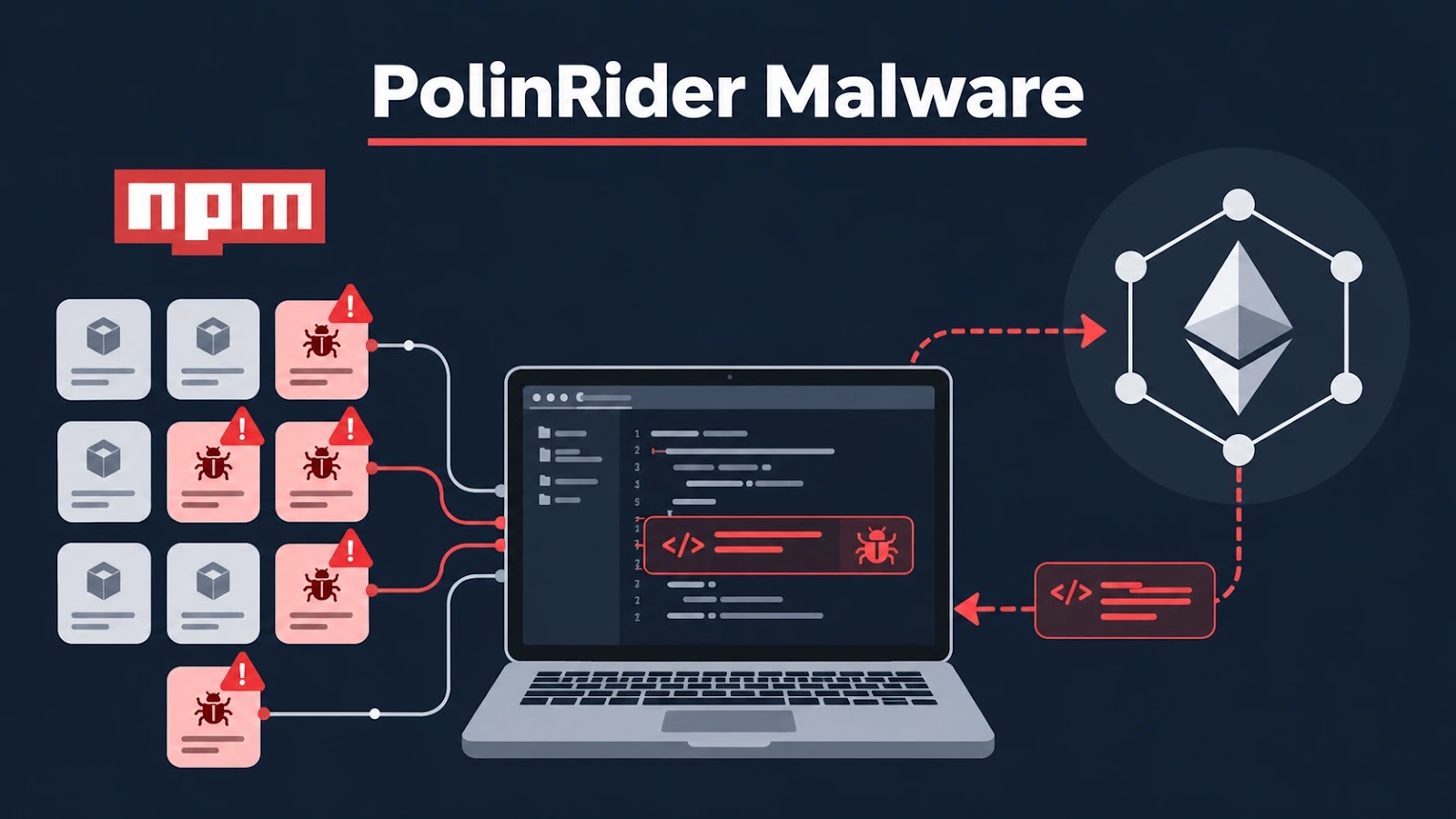
PolinRider Malware Returns in 10 Hijacked npm Packages Using Ethereum Blockchain to Deliver Malicious Code

A concealed JavaScript loaders in 12 releases across 10 hijacked npm packages, linking the compromise to previously documented PolinRider activity. Investigated on November 4, 2026, the releases use Ethereum transactions to discover remote payload servers and execute downloaded code inside developer environments, build systems, or applications. Sonatype tracks the finding as sonatype-2026-010515.guide. Unlike installation-triggered supply-chain […]

The post PolinRider Malware Returns in 10 Hijacked npm Packages Using Ethereum Blockchain to Deliver Malicious Code appeared first on GBHackers Security | #1 Globally Trusted Cyber Security News Platform.

Antes de ontemCybersecurity News
  • ✇Cybersecurity News
  • PolinRider Loader Hits 10 Hijacked npm Packages Using Ethereum Dead-Drop Resolver Do Son
    Sonatype uncovers the PolinRider loader in 12 releases across 10 hijacked packages. See how the npm PolinRider loader uses Ethereum to fetch malware. Related Posts: Trojanized Inno Setup Installers Deliver Proxyware and Compute Hijackers LuaJIT XLoader Infostealer Spreads via Fake Orders BITTER PapRAT Malware Targets South Asian Organizations The post PolinRider Loader Hits 10 Hijacked npm Packages Using Ethereum Dead-Drop Resolver appeared first on Daily CyberSecurity.
     
  • ✇Security Affairs
  • White House Network Appears in Global Residential Proxy Traffic Pierluigi Paganini
    Layer3 found residential proxy traffic using the White House network, raising concerns about potential exposure of internal systems. Layer3 Intel says it found residential proxy traffic leaving through the White House network. The researchers spotted it while browsing their new Residential Proxy Observatory, a tool that gives a global view of residential proxy and anonymized internet activity. “While our team was looking through it, we noticed residential proxy exit activity on AS2650. A
     

White House Network Appears in Global Residential Proxy Traffic

6 de Novembro de 2026, 19:17

Layer3 found residential proxy traffic using the White House network, raising concerns about potential exposure of internal systems.

Layer3 Intel says it found residential proxy traffic leaving through the White House network. The researchers spotted it while browsing their new Residential Proxy Observatory, a tool that gives a global view of residential proxy and anonymized internet activity.

“While our team was looking through it, we noticed residential proxy exit activity on AS2650. AS2650 is registered to the Executive Office of the President, the federal agency that hosts the White House network.” reads the report published by Layer3.

A residential proxy service allows customers to use everyday devices to route their internet traffic. This makes their activity look as if it comes from the device’s normal home internet connection. Layer3 detected this activity on AS2650, a network registered to the Executive Office of the President, the agency responsible for the White House network. Layer3 has not accused anyone at the White House of wrongdoing and says its data cannot identify who or what caused the activity.

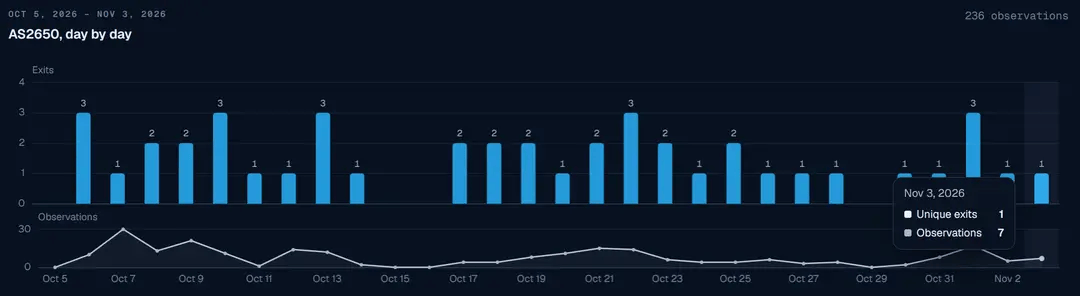
Between October 5 and November 3, Layer3 detected 236 connections through this network. The traffic came from six IP addresses and was recorded on 26 of those 30 days. A total of 28 residential proxy services were able to use the network. To check their findings, researchers compared the IP addresses with data from other security services, including Spur and Synthient. Both services also identify these addresses as residential proxy exit points.

proxy traffic using the White House network

Getting this data took no special skill. Anyone can sign up to a public residential proxy service, pay a few dollars and send requests through it. Layer3 says it didn’t target the network or try to steer its probes there, and it caught the activity by chance, simply by requesting global rotating access through these services.

The timing suggests something more than a guest network. About half the activity falls between 5 p.m. and midnight Eastern time, and almost none happens in the early morning. Layer3 reads that as a person, not public guest Wi-Fi: someone regularly on the White House network late into the evening whose device carries a proxy SDK, a software kit that turns a device into an exit point.

“Past research has shown that poorly secured proxy SDKs can allow internal network access and lateral movement. This is how past botnets have spread. In A Broken System Fueling Botnets, the researchers at Synthient documented how the Kimwolf botnet reached at least 2 million devices, mostly Android devices with an exposed ADB service, through residential proxy networks.” continues the report. “If an SDK on this network has the same kind of flaw, anyone buying proxy access could use it to reach internal systems.”

That matters because poorly secured proxy SDKs have let attackers into internal networks before. Synthient’s research, A Broken System Fueling Botnets, documented how the Kimwolf botnet reached at least 2 million devices, mostly Android devices with an exposed ADB service, through residential proxy networks. If an SDK on the White House network has the same kind of flaw, anyone buying proxy access could reach internal systems. Layer3 doesn’t claim that’s the case here, and it describes the risk as conditional.

The White House isn’t the only surprise. The observatory also finds residential proxies in some of the most isolated places on the planet. Saint Helena, Ascension and Tristan da Cunha, a South Atlantic territory that includes the most remote inhabited island in the world, shows 413 addresses and more than 32,000 observations, split between Starlink and the local provider, Sure Saint Helena.

Layer3 also detected three instances of proxy activity in Antarctica. All came from a Cloudflare WARP address linked to McMurdo Station. The researchers jokingly noted that penguins are not suspects. On Pitcairn Island, they found one Starlink address and one observation. Norfolk Island had one Norfolk Telecom address with four observations, while Svalbard had one Starlink address in Longyearbyen with three observations.

The researchers also found 388 addresses in the Falkland Islands, 43 in the Chagos Islands, 21 in Tokelau and seven in South Georgia. These findings suggest that residential proxy networks now operate in almost every corner of the world. For security teams, the main concern is that devices connected to protected networks could unknowingly become proxy exit points, potentially exposing those networks to outside traffic.

However, Layer3 says its data only shows where proxy traffic exits. It cannot identify the device being used or the person behind it. As the company explains, “Our data shows the exits, not the device or the person behind them.”

“Residential proxies have infected every corner of the world, and it looks like there is no place they cannot reach. Layer3 Intel tracks residential proxy and anonymization infrastructure worldwide. Even when the proxies hide in networks on the farthest corners of the planet, we can still observe them, leaving threat actors no place to hide.” concludes the report.

Follow me on Twitter: @securityaffairs and Facebook and Mastodon

Pierluigi Paganini

(SecurityAffairs – hacking, proxy traffic)

Vercel Introduces DBSC: How It Protects Against Cookie Theft

6 de Novembro de 2026, 13:58

Vercel is rolling out DBSC to make stolen session cookies harder to exploit. Learn how the protection works, its hardware requirements and security limits.

The post Vercel Introduces DBSC: How It Protects Against Cookie Theft appeared first on TechRepublic.

  • ✇Cybersecurity News
  • Trojanized Inno Setup Installers Deliver Proxyware and Compute Hijackers Do Son
    Microsoft exposes a campaign using trojanized installers. See how Inno Setup trojanized installers silently deploy WorldProxyPool, BOINC, and adware. Related Posts: PolinRider Loader Hits 10 Hijacked npm Packages Using Ethereum Dead-Drop Resolver LuaJIT XLoader Infostealer Spreads via Fake Orders BITTER PapRAT Malware Targets South Asian Organizations The post Trojanized Inno Setup Installers Deliver Proxyware and Compute Hijackers appeared first on Daily CyberSecurity.
     

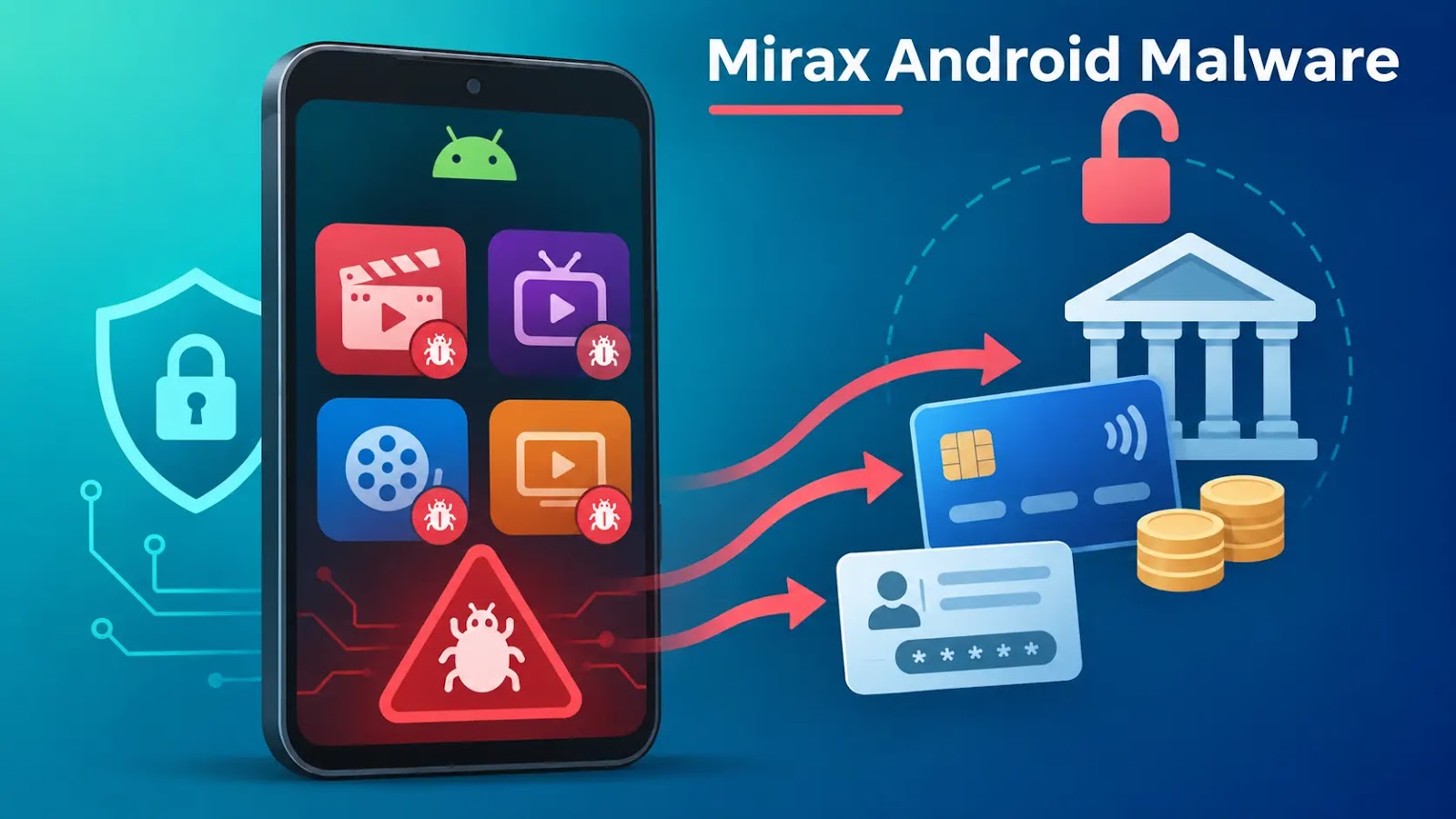
Hackers Use Fake Streaming Apps to Spread Mirax Android Malware and Steal Bank Accounts

Hackers are using streaming app lures to distribute Mirax. This Android banking trojan lets operators remotely control victims’ phones and initiate fraudulent transfers. Estimated losses reach millions of dollars, although confirmed cases capture only part of the campaign’s impact. The operation remained active when Group-IB published its November 5 investigation. Researchers linked the infections through […]

The post Hackers Use Fake Streaming Apps to Spread Mirax Android Malware and Steal Bank Accounts appeared first on GBHackers Security | #1 Globally Trusted Cyber Security News Platform.

  • ✇Cybersecurity News
  • LuaJIT XLoader Infostealer Spreads via Fake Orders Do Son
    Morphisec exposes a LuaJIT XLoader infostealer campaign. Learn how the XLoader infostealer abuses JScript and shared-section injection. Related Posts: BITTER PapRAT Malware Targets South Asian Organizations Apple Mercenary Spyware Threat Prompts Global Alerts Hugging Face Malware Campaign Infects AI GPU Servers The post LuaJIT XLoader Infostealer Spreads via Fake Orders appeared first on Daily CyberSecurity.
     
  • ✇Security Affairs
  • Russian APT29 Targets Mobile Users with Watering Hole Attacks Pierluigi Paganini
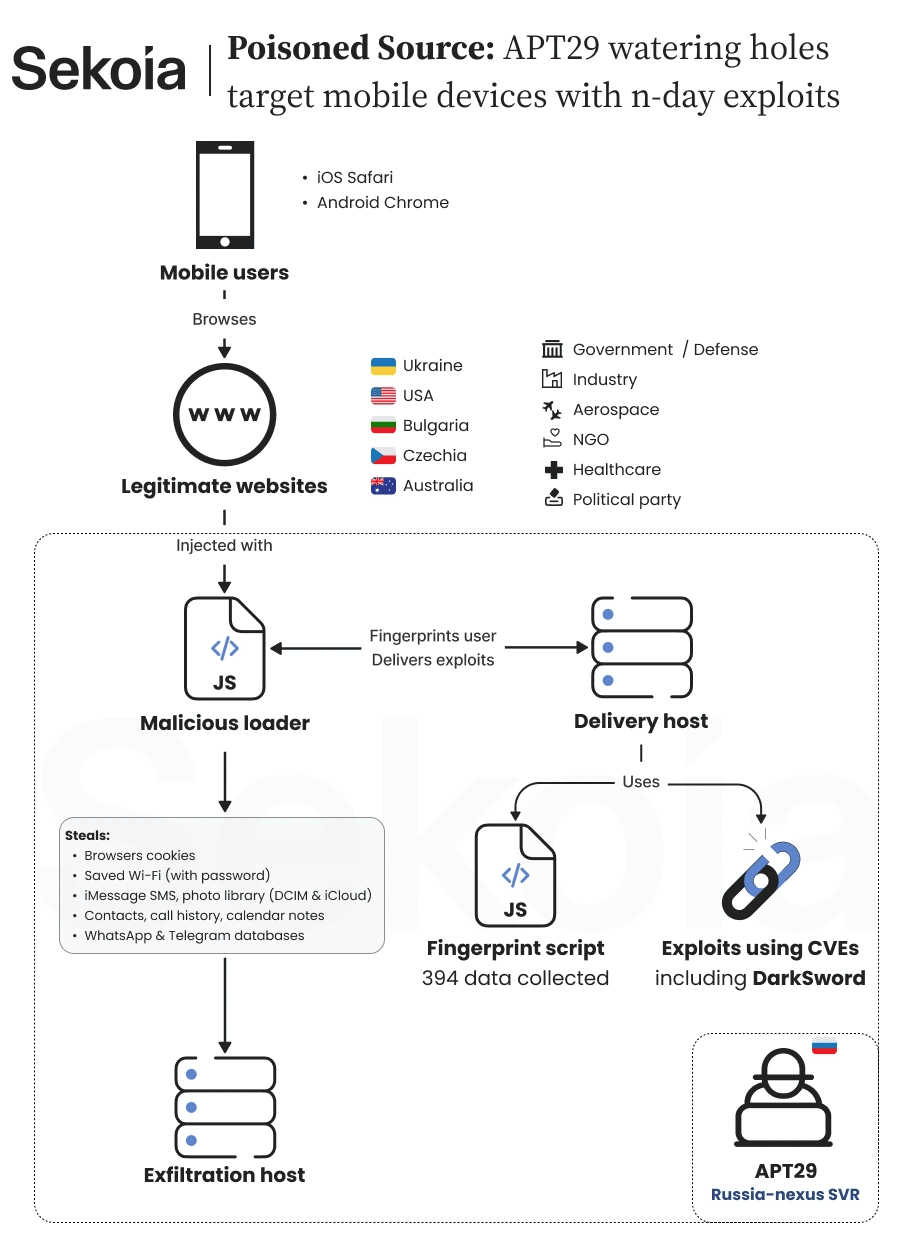
    Russia-linked group APT29 targeted iOS and Android users through hijacked websites and a compromised analytics service. Sekoia says a large-scale watering hole campaign is going after iOS and Android users, and it links the campaign to APT29 (aka SVR group, Cozy Bear, Nobelium, BlueBravo, Midnight Blizzard, and The Dukes), the Russian group tied to the SVR foreign intelligence service. A watering hole is a site that attackers poison so visitors infect themselves. Sekoia found the campaig
     

Russian APT29 Targets Mobile Users with Watering Hole Attacks

5 de Novembro de 2026, 07:00

Russia-linked group APT29 targeted iOS and Android users through hijacked websites and a compromised analytics service.

Sekoia says a large-scale watering hole campaign is going after iOS and Android users, and it links the campaign to APT29 (aka SVR group, Cozy Bear, Nobelium, BlueBravo, Midnight Blizzard, and The Dukes), the Russian group tied to the SVR foreign intelligence service. A watering hole is a site that attackers poison so visitors infect themselves.

Sekoia found the campaign in mid-October 2026. It involved hacked or cloned high-profile websites in the US, Ukraine, the Czech Republic and Bulgaria. There’s also a supply-chain attack on a Ukrainian web analytics service, Plerdy, loaded by thousands of websites, most of them Ukrainian.

The attackers used three different methods to reach victims, but all led to the same malicious payload. They injected JavaScript into hacked websites, created fake websites that copied legitimate ones and secretly added malicious code, and compromised the Plerdy analytics service to infect websites using its script.

APT29 Watering Hole

Sekoia first spotted the campaign on the website of a Ukrainian gas production company. Other compromised sites included a major US chemical industry association, a European far-right political party and a Bulgarian website linked to the military. In the Bulgarian case, attackers modified an existing JavaScript library without changing the website’s visible pages. Researchers found no clear pattern in the targeted organizations, although they believe some websites may have been selected to reach specific individuals.

Sekoia also identified two fake websites designed to impersonate legitimate services. One copied America250, the US initiative marking the country’s 250th anniversary, while another reproduced the website of Raffles London at The OWO, a luxury hotel close to the UK Ministry of Defence and Downing Street.

“The second website, theowo[.]club, now offline, acted as a reverse proxy for the website of Raffles London at The OWO, a prestigious luxury hotel housed in the historic Old War Office building.” reads the report published by Sekoia. “The hotel’s location is particularly noteworthy because of its proximity to some of the United Kingdom’s most sensitive government institutions, including the Ministry of Defence and 10 Downing Street, the official residence and office of the British Prime Minister.”

The hotel connection is particularly interesting because Ukrainian President Volodymyr Zelensky reportedly stayed there during a visit to London on October 14. Sekoia believes the fake website may have been used to target diplomatic delegations through spear-phishing, but stresses that this remains an unconfirmed possibility.

Between August 27 and September 3, 2026, the attackers compromised the Plerdy tracker at a.plerdy[.]com. For a week, visitors loaded both Plerdy’s script and the attackers’ profiling script. Several affected sites relate to the military and military recruitment, including army, special forces and military equipment websites.

“Between 27 August and 3 September 2026, the intrusion set compromised the Ukrainian Plerdy analytics tracker hosted under the domain a.plerdy[.]com, which is loaded by thousands of websites, the large majority of them Ukrainian.” reads the report. “It remains unclear whether the attackers intended to target visitors to specific websites or sought to compromise as many unpatched mobile devices as possible, indiscriminately exfiltrating data before selectively identifying and exploiting information of interest.”

Sekoia can’t say whether the aim was specific visitors or as many unpatched phones as possible, with the sorting done later. It also considers that the attackers may have used Plerdy after failing to inject code directly into Ukrainian high-value sites that relied on it. The Plerdy payload pointed to a load-balancing domain that sent traffic across several delivery servers.

The profiling script, which the attackers call UltimateFingerprinter, is attached to a minified AngularJS library that makes up 98 percent of a 2.3 MB file. Sekoia thinks that bulk might stop analysis by large language models, or make the script look legitimate. The script runs 61 collectors that build 394 fields, then sends them to a server that decides whether to answer with exploit code.

Strangely, almost none of that data matters. Only implausible screen sizes, like 99999, or a device reporting zero touch points block delivery. Sekoia doesn’t know why the attackers collect so much and sees no sign the data was used later.

Sekoia pulled three exploit chains from the delivery server. Class A hits iOS 16.7 and steals cookies. Class B hits iOS 18.5 and takes full device data. Class C hits Android Chrome versions 139 to 145, minus 143 for reasons Sekoia can’t explain, and steals Chrome cookies and Wi-Fi passwords.

“During the investigation, we tested different browser profiles against the fingerprinting endpoint at static[.]flux-telemetry[.]com in order to retrieve the exploits served to visitors.” states the report. “This allowed us to retrieve three complete exploit chains (afternamed A, B and C), along with their final payloads, targeting both Android and iOS. Here is a summary of what we found:”

Class B is DarkSword, which Sekoia describes as a suspected iOS exploit kit from a commercial surveillance vendor, uploaded to VirusTotal in September 2026. It takes text messages and iMessages, Mail indexes, voicemail, WhatsApp and Telegram databases, Keychain passwords and tokens, account credentials and Wi-Fi keys. It also takes contacts, call history, calendar, notes, Safari history and cookies, location caches, Health data, photos and iCloud Drive.

The Android payload, which Sekoia calls AndroSnitch, collects Chrome cookies, saved logins and history, plus Wi-Fi settings. It stops on one phone model, the Samsung Galaxy S25 Ultra. It resembles a 2024 payload that Google TAG documented, called AndroSnatch, but the sample is too small to prove lineage. The iOS cookie chains set a marker cookie meant to block reinfection for a day, but a coding mistake makes it expire in a minute.

All stolen data goes to ad.starx-net[.]com:8881/telemetry/v12. None of the chains persist on the device. All of them rely on known flaws, and none uses a zero-day.

For attribution, Sekoia has several threads. A CERT said a compromised site’s backend files held traces matching a private report on a 2025 APT29 watering hole campaign, and Google TAG said the framework resembles an APT29 campaign against Mongolian government websites in 2024. Victims also skew to Europe and the US with a focus on Ukraine, infrastructure sits across multiple hosters, and a hacked Czech far-right site fits APT29’s record of targeting European political parties. It rates the link moderate to high confidence, and it’s coordinating with the CERTs of affected countries.

The campaign shows how exploit kits move down the market. Sekoia says state-backed groups keep reusing frameworks from commercial surveillance vendors such as DarkSword, and that packaged exploit chains lower the cost and skill needed for advanced mobile attacks. It expects such reuse to become more frequent.

The good news is that Sekoia’s attackers don’t have fresh tricks. Every flaw was fixed by its vendor before the campaign began, and none works against fully updated devices.

“None of them contain zero-days or work against fully updated devices. Each flaw was resolved by the respective vendor before this campaign began. This operation targets unpatched devices using n-days; a user running an up-to-date operating system is safe from these attacks.” concludes the report.

“This watering hole campaign, which we assess with moderate to high confidence to be linked to APT29, combines multiple web delivery vectors with n-day mobile exploit chains targeting Android and iOS devices. Across the directly compromised websites, no single sectoral targeting pattern emerges from our analysis. While the victimology shows a focus on Ukraine and the United States, the inclusion of unrelated entities such as an Australian medical clinic complicates a broad strategic interpretation. However, we assess that these websites may have been selected to profile and infect specific individuals of interest based on targeting intelligence to which we do not have visibility. The operators adapted by deploying Adversary-in-the-Middle-ish to intercept visitors associated with diplomatic or high-profile events.”

Follow me on Twitter: @securityaffairs and Facebook and Mastodon

Pierluigi Paganini

(SecurityAffairs – hacking, APT29)

  • ✇Security Affairs
  • U.S. CISA adds Apple flaw to its Known Exploited Vulnerabilities catalog Pierluigi Paganini
    U.S. Cybersecurity and Infrastructure Security Agency (CISA) adds Apple flaw to its Known Exploited Vulnerabilities catalog. The U.S. Cybersecurity and Infrastructure Security Agency (CISA) added an Apple flaw, tracked as CVE-2024-27834 (CVSS score of 5.5), to its Known Exploited Vulnerabilities (KEV) catalog. “This type of vulnerability is a frequent attack vector for malicious cyber actors and poses significant risks to the federal enterprise.” reads the advisory by CISA. CVE-2024-27
     

U.S. CISA adds Apple flaw to its Known Exploited Vulnerabilities catalog

5 de Novembro de 2026, 05:55

U.S. Cybersecurity and Infrastructure Security Agency (CISA) adds Apple flaw to its Known Exploited Vulnerabilities catalog.

The U.S. Cybersecurity and Infrastructure Security Agency (CISA) added an Apple flaw, tracked as CVE-2024-27834 (CVSS score of 5.5), to its Known Exploited Vulnerabilities (KEV) catalog.

“This type of vulnerability is a frequent attack vector for malicious cyber actors and poses significant risks to the federal enterprise.” reads the advisory by CISA.

CVE-2024-27834 is a security vulnerability affecting Apple’s operating systems and Safari. It could allow an attacker who already has arbitrary read and write capabilities on a device to bypass Pointer Authentication (PAC), a hardware-based security mechanism designed to protect memory addresses and prevent certain types of memory-corruption attacks.

Pointer Authentication is a security feature implemented in Apple processors. It adds cryptographic signatures to pointers, helping ensure that memory addresses have not been maliciously modified.

An attacker who gains the ability to read and write arbitrary memory could potentially exploit CVE-2024-27834 to circumvent these protections. This could weaken an important security barrier and make further exploitation of the device easier.

What is the impact?

  • Bypassing Pointer Authentication protections.
  • Weakening defenses against memory-corruption attacks.
  • Potentially facilitating further exploitation when combined with other vulnerabilities.

Apple addressed the vulnerability through improved security checks in:

  • Safari 17.5
  • iOS 16.7.8 and iOS 17.5
  • iPadOS 16.7.8 and iPadOS 17.5
  • macOS Sonoma 14.5
  • tvOS 17.5
  • watchOS 10.5

Cybersecurity firm Sekoia reports on attacks attributed with moderate to high confidence to Russia-linked cyberespionage group APT29. Attackers used compromised websites, fake websites and a supply-chain compromise of Plerdy SEO Tracker to deliver malicious JavaScript. The zero-click exploit chain targeted Safari and Chrome vulnerabilities to bypass security protections and deploy information-stealing malware capable of collecting browser cookies and device data.

“Achieving arbitrary read/write access within the renderer is no longer sufficient for full exploitation on modern Apple silicon. This architecture relies on Pointer Authentication Codes (PAC) to cryptographically sign control-flow pointers. Because of this, even if an attacker can manipulate memory, they cannot simply overwrite a function pointer to hijack the execution flow, triggering an improperly signed pointer will crash the process rather than execute the payload.” Sekoia writes. “To overcome this mitigation and forge the valid pointers required for arbitrary code execution, the exploit chain incorporates a PAC bypass utilizing CVE-2024-27834.”

According to Binding Operational Directive (BOD) 22-01: Reducing the Significant Risk of Known Exploited Vulnerabilities, FCEB agencies have to address the identified vulnerabilities by the due date to protect their networks against attacks exploiting the flaws in the catalog.

Experts also recommend that private organizations review the Catalog and address the vulnerabilities in their infrastructure.

CISA orders federal agencies to fix the flaw by November 18, 2026.

Follow me on Twitter: @securityaffairs and Facebook and Mastodon

Pierluigi Paganini

(SecurityAffairs – hacking, CISA)

  • ✇Graham Cluley
  • Smashing Security podcast #491: How AI agents are spooking the banks Graham Cluley
    Bank of America has a message for its customers: please, for the love of God, stop handing your banking passwords to your AI assistant. And if your robot does something daft with your money? That's your problem, not theirs. Meanwhile, a company that promised to rescue ransomware victims without paying the criminals stands accused of... paying the criminals. ProPublica's Renee Dudley was on the case years before the indictment. Plus, Dropzone AI's Edward Wu asks what happens when AI models
     

Smashing Security podcast #491: How AI agents are spooking the banks

4 de Novembro de 2026, 21:15
Bank of America has a message for its customers: please, for the love of God, stop handing your banking passwords to your AI assistant. And if your robot does something daft with your money? That's your problem, not theirs. Meanwhile, a company that promised to rescue ransomware victims without paying the criminals stands accused of... paying the criminals. ProPublica's Renee Dudley was on the case years before the indictment. Plus, Dropzone AI's Edward Wu asks what happens when AI models break out of their test environment and go hacking, and whether AI agents can help overstretched security teams keep up. All this and more in episode 491 of the "Smashing Security" podcast with cybersecurity expert and keynote speaker Graham Cluley, and special guest Renee Dudley.
  • ✇Firewall Daily – The Cyber Express
  • Two Canadians Accused of Turning US University Supercomputers Into Crypto Miners Samiksha Jain
    For more than three years, computers at several American universities were allegedly doing work their owners never asked for. According to a federal indictment, two Canadian men broke into campus networks, stole passwords and quietly used the machines to mine cryptocurrency for themselves. One of them is now in the United States to face charges in the university supercomputer hacking case. The other is still fighting extradition in Canada. U.S. Attorney Michael DiGiacomo announced that a fede
     

Two Canadians Accused of Turning US University Supercomputers Into Crypto Miners

5 de Novembro de 2026, 02:21

university supercomputer hacking

For more than three years, computers at several American universities were allegedly doing work their owners never asked for. According to a federal indictment, two Canadian men broke into campus networks, stole passwords and quietly used the machines to mine cryptocurrency for themselves. One of them is now in the United States to face charges in the university supercomputer hacking case. The other is still fighting extradition in Canada. U.S. Attorney Michael DiGiacomo announced that a federal grand jury has indicted Ryan James Roach, 35, of Saskatchewan, and Mathiew James Stubbings, 41, of Ontario. Both face charges of conspiracy to obtain information from and cause damage to a protected computer, obtaining information from a protected computer, and intentional damage to a protected computer. The charges carry a maximum penalty of 10 years in prison and a $250,000 fine.

Why the University Supercomputer Hacking Targeted Campuses

The indictment points to a clear reason for the choice of targets. Roach and Stubbings allegedly went after educational institutions in the United States that had supercomputers. The scheme relied on processing power. Once inside, the pair allegedly forced victim computers to run cryptocurrency mining software, putting the machines' computing power to work for their own financial gain. Machines built for heavy computation made the scheme more profitable. Victims included educational institutions in New York, Tennessee, North Carolina and Massachusetts. Some of the damaged computers belonged to a higher education institution in the Western District of New York, where the case is being prosecuted.

How the Alleged Scheme Worked

According to the indictment, the scheme ran from June 2016 to December 2019 and followed a set pattern. The pair allegedly researched security weaknesses in victim networks before getting in. They accessed computers without authorization and deployed malware to take control. They then stole login credentials and sent the data to servers they controlled. Once inside a network, they allegedly used sophisticated techniques and tools to carry out reconnaissance and expand their access. The stolen login credentials were stored on their servers, the same servers that sent out malware and mining software to victim machines. The indictment says Roach and Stubbings damaged 10 or more protected computers within a one-year period, causing a loss of at least $5,000.

How They Allegedly Stayed Hidden

The case also shows the effort the pair allegedly put into avoiding detection. They used virtual private servers in multiple countries, registered under false names. Those servers delivered malware and mining software to victim computers and held the stolen credentials. To conceal their identities further, they allegedly used a server and compromised computers belonging to one victim to gain access to another. That meant intrusions could appear to come from a victim's own systems instead of from the people behind them.

Where the University Supercomputer Hacking Case Stands

Roach was extradited from Canada to the United States on October 28. He was arraigned before U.S. Magistrate Judge Mark W. Pedersen and held pending a detention hearing on November 3. Extradition proceedings for Stubbings are continuing in Canada. The investigation was carried out by the Federal Bureau of Investigation, under the direction of Special Agent-in-Charge Allen D. Davis II, and the Department of Justice's Computer Crime and Intellectual Property Section. The Justice Department's Office of International Affairs helped secure Roach's arrest and extradition. Assistant U.S. Attorney Meghan K. McGuire is prosecuting the case.

What Is Still Unclear

The indictment leaves several details open. It does not say how much cryptocurrency the pair allegedly mined, how many institutions were affected in total, or which universities were targeted beyond their states. The loss figure stated in the charges, at least $5,000, is the legal threshold tied to the damage count, not a full estimate of the harm. An indictment is an accusation, not proof. Both men are presumed innocent unless and until proven guilty.

China-Aligned Hackers Hijack Popular Sogou Keyboard Software to Secretly Install DarkVigil Malware

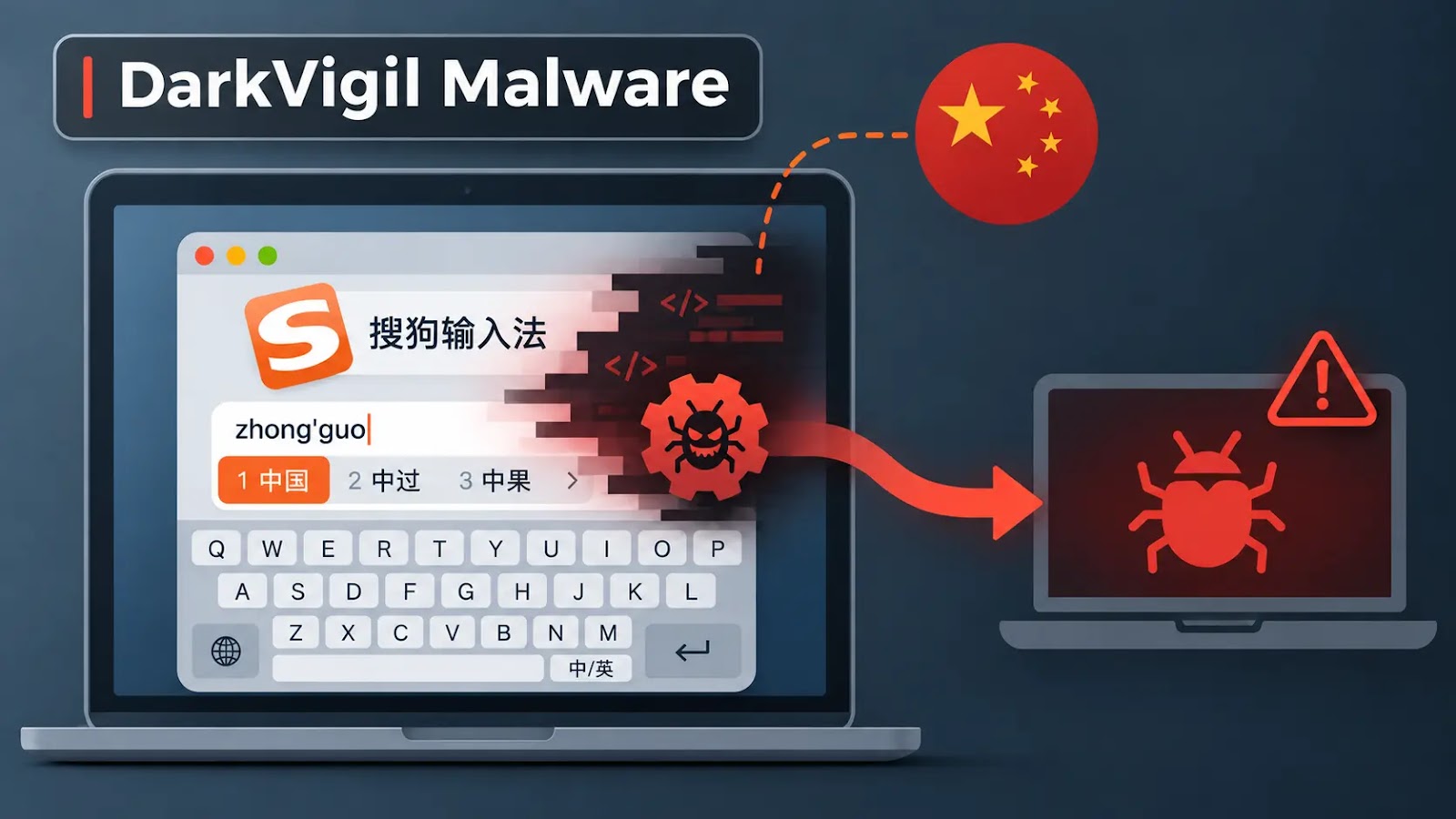
A China-aligned espionage group abused the update traffic of Sogou Input Method, one of China’s most widely used keyboard apps, to quietly install the DarkVigil implant on victims’ machines. ESET Research, which tracks the actor as SlippyNunchucks, published its findings on November 4, 2026. Tencent, which owns Sogou, has patched the flaw in version 16.10. […]

The post China-Aligned Hackers Hijack Popular Sogou Keyboard Software to Secretly Install DarkVigil Malware appeared first on GBHackers Security | #1 Globally Trusted Cyber Security News Platform.

❌
❌