Why Is Nvidia Investigating Its Own CEO, and Can the Board Remove Him?
![]()

![]()

![]()

![]()

![]()

![]()

![]()

![]()
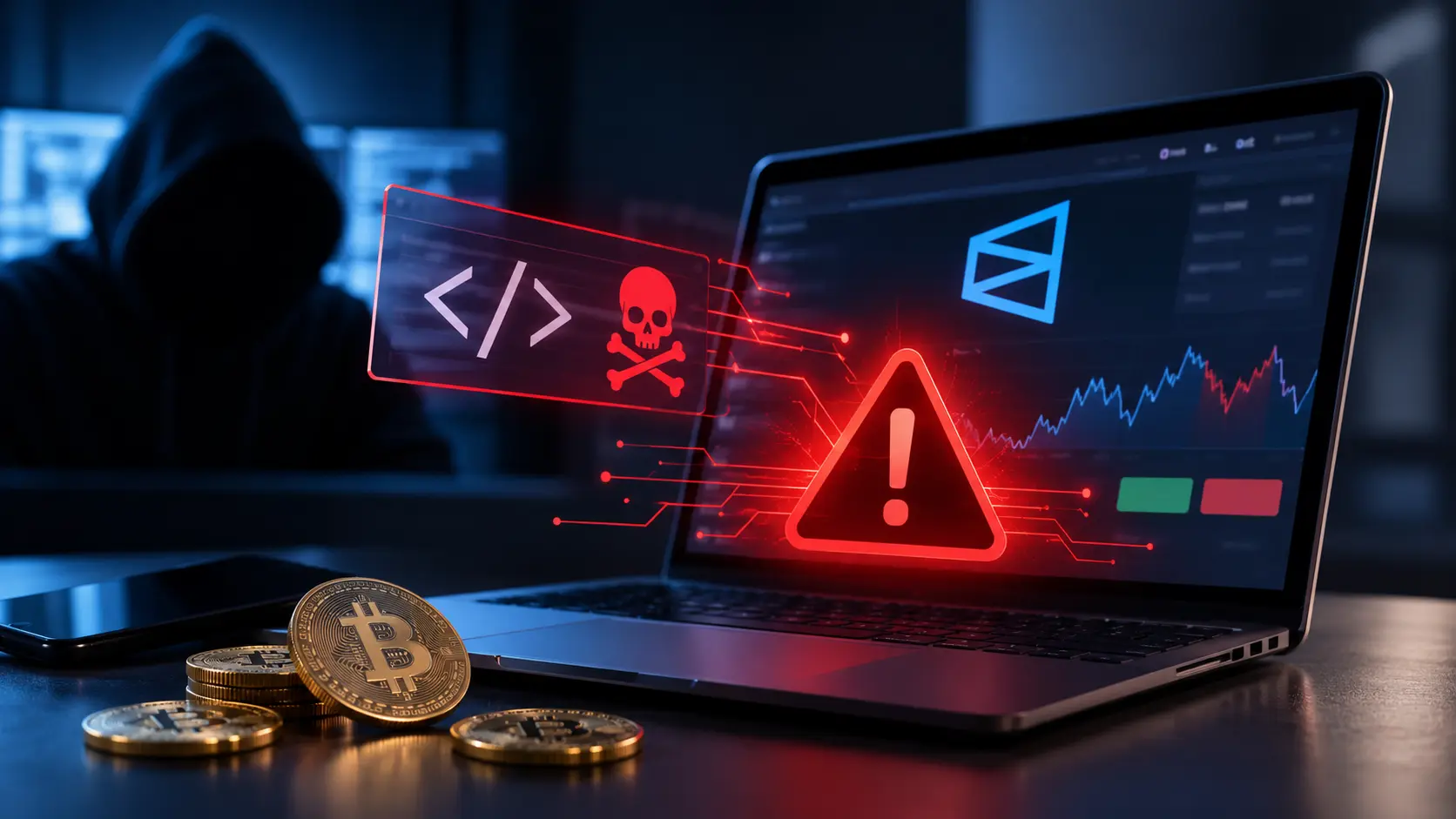
Polymarket users who had the site open during a short window on October 29 watched their positions get sold and their funds leave their wallets without doing anything themselves. The Polymarket hack did not start inside Polymarket.
It came through a small piece of code from an outside company that loaded on every visit to polymarket.com. The cryptocurrency-based prediction market now says it is returning $3.9 million to affected traders.
In a post-mortem published on October 31, Polymarket said a third-party vendor whose performance-monitoring script ran on polymarket.com had been compromised. The attacker swapped the vendor’s legitimate code for a compromised script built specifically to target Polymarket users.
The attacker did not need anyone’s password. For users who had the site open at the time, the malicious script used their active session to sell positions and move funds out of their wallets. Anyone logged in and browsing during that window was exposed. The vendor has publicly confirmed the compromise.
Polymarket’s status page first reported “unauthorized activity affecting user wallets” on October 29 and marked the incident as resolved later that day.
Performance-monitoring company DebugBear released its own update on the incident. It said its initial findings point to its domain registrar as the point of entry.
“Our DNS records were compromised through our domain registrar,” the company said on X. “We are currently unable to receive emails sent to our domain. Based on our initial investigation this attack targeted the website of a specific customer.”
[caption id="attachment_115172" align="aligncenter" width="538"]DebugBear added that it has “not seen any indication of a compromise of our internal systems,” though it is continuing to investigate.
This is the part of the story that should worry other website operators. According to the statements from both companies, the attacker appears to have gone after a vendor’s domain setup rather than Polymarket’s own systems, and used that position to put malicious code in front of Polymarket’s users. DebugBear’s own internal systems, by its account, show no sign of being breached.
Polymarket listed the steps it took once the attack was identified:
The trading pause stopped the bleeding, but it created a second set of losses for traders who were not directly hit by the script.
Polymarket is returning $3.9 million in total. Of that, $2.7 million covers the initial losses from the attack, and $1.2 million covers losses tied to the hours-long shutdown.
As of its post-mortem, the company said 95% of affected wallets had been refunded in full, through a mix of reimbursements for drained wallets and goodwill payments.
The refunds cover more than drained wallets. Polymarket said it also made goodwill payments in two cases:
Users do not need to file claims or tickets. Polymarket said it identified eligible wallets using on-chain and trading data. Anyone who thinks their amount is wrong, or believes they should have received a payment, can submit a form for the company to recheck.
Some questions are still open. Neither company has named the threat actor. DebugBear has said the attack targeted a single customer, but its investigation is ongoing, and it still cannot receive email sent to its domain. Polymarket has also not said exactly how many wallets were affected, only that 95% have been made whole.
The incident shows how much trust a website places in every outside script it loads. Polymarket’s own systems were not the entry point, yet its users still lost money, and it took a trading halt, a session reset and a removal of the vendor’s code to stop it.

![]()

![]()

![]()

![]()

![]()


![]()
Australians filed a cybercrime report about every six minutes over the past year, and artificial intelligence is making the attacks behind those reports faster and more convincing. That is the main finding of the ASD Cyber Threat Report 2025-26. It is the seventh annual assessment from the Australian Signals Directorate’s Australian Cyber Security Centre (ASD’s ACSC).
In FY2025-26, the agency received more than 82,000 cybercrime reports through ReportCyber. It responded to over 1,500 cyber security incidents, up more than 20% on the previous year and 36% over five years. It also notified Australian entities of potentially malicious activity more than 4,400 times, almost 80% more than in FY2024-25.
The report calls AI the defining force in the threat environment this year. In his foreword, Deputy Prime Minister and Defence Minister Richard Marles wrote that AI is helping malicious actors find vulnerabilities faster and exploit them at greater scale, speed and sophistication. He also noted that new threats have emerged in recent weeks from the unintended actions of AI agents and from model testing.
ASD’s ACSC makes one clear distinction. AI has not created new kinds of threats. It has amplified and sped up existing ones. AI-enabled cyber threats are most visible in social engineering. Attackers are using AI to write phishing emails with no spelling or grammar errors and to automate targeted spearphishing. The Australian Securities and Investments Commission has also seen a sharp rise in scams that use deepfake videos of celebrities and politicians.
The time defenders have to respond is also shrinking. The agency has previously observed that most vulnerabilities are exploited within two weeks, and some within 48 hours of a patch being released. It expects AI-driven tools to shorten that window further over the next 12 months. Publicly reported vulnerabilities (CVEs) rose 30%. Old flaws are still a problem too: ASD’s ACSC recorded the successful exploitation of a vulnerability first identified in 2008.
Only one Category 2 incident was recorded this year. However, extensive compromises rose from 26 to 40. ASD’s ACSC identified 362 incidents after proactively notifying organisations. A single notification about cPanel vulnerabilities, sent to 340 entities in May 2026, led to more than 60 confirmed incidents.
The number of ransomware incidents held steady at 139, but extensive ransomware incidents rose from 16 to 24. Health Care, Professional, Scientific and Technical Services, and Manufacturing remained the most affected sectors. Data breaches made up 98 incidents, a 66% increase on the previous year. Separately, the Office of the Australian Information Commissioner received 1,205 breach notifications in 2025. That is the highest yearly total since its Notifiable Data Breaches scheme began in 2018.
The financial impact is rising for businesses. The average self-reported cost of cybercrime per business report rose 16% to $93,500. For medium-sized businesses, it rose 45% to $141,300. The average cost for individuals stayed at $33,000. Identity fraud remained the most reported cybercrime, although reports fell 18%.
Stolen access is now a major entry point. Compromised accounts and credentials were among the most frequently reported incident categories, and phishing appeared in 39% of incidents. Government survey research cited in the report found that 55% of Australians reuse passwords across multiple accounts.
State-sponsored actors continued to target Australian government, business and individuals to gain sensitive information. The report says these actors are increasingly pre-positioning inside networks to enable future disruption. Marles wrote that the line separating state-sponsored espionage from sabotage and cybercrime is becoming increasingly blurred.
In April 2026, ASD’s ACSC and international partners highlighted a shift by China-nexus actors. These actors are moving towards large covert networks built from compromised home and small office routers, Internet of Things devices and smart devices.
Critical infrastructure accounted for 154 incidents, or 10% of the total, a decrease of almost 7%. Phishing was the leading initial access technique at 36%, and Financial and Insurance Services was the most affected critical infrastructure division at 30%.
In October 2026, ASD’s ACSC released the Essentials series. It evolves the Essential Eight into a principles-based framework with three chapters: Enterprise IT, Operational Technology and Cloud.
Under its Cyber Action Year, the agency is pushing five priorities:
The report also urges organisations to patch faster. For individuals, it recommends reviewing privacy settings and enabling multi-factor authentication or passkeys.
Suspicious activity, incidents and vulnerabilities can be reported at cyber.gov.au or through the Australian Cyber Security Hotline on 1300 CYBER1 (1300 292 371).

![]()
According to the FTC, the defendants allegedly used websites and sponsored search results to attract travelers, collect personal and financial information, and mislead consumers about the services they would receive. The complaint was filed in the U.S. District Court for the District of Puerto Rico.
The FTC alleges that, since at least October 2023, GovAssist, Entry and Zuckerman operated websites including GovAssist.com, Entry.com and IVS.us, offering passport applications, passport-related services, visa applications and visa renewals.
The complaint states that the websites presented themselves as affiliated with the U.S. State Department, although the defendants were neither the federal government nor authorized government-affiliated providers of passport-related services.
The alleged operation relied on paid search ads to reach people looking for official passport information. Searches such as “apply for a new passport,” “passport renewal,” and “passport renewal online” routinely returned IVS.us and Entry.com pages among Google’s top sponsored results, according to the FTC.
This approach allegedly placed commercial services in locations where users might expect to find official government resources. The distinction matters because consumers searching for essential documents may not recognize that a sponsored result belongs to a private company rather than a government agency.
The FTC alleges that the defendants made false promises about what their services could deliver, including claims that they could directly issue U.S. passports. In many cases, consumers allegedly received only a completed passport application that was available for free through the State Department’s website.
The complaint also challenges the companies’ pricing disclosures. Although their advertisements or websites reportedly stated that services started at $89, the FTC alleges that the lowest available price was $119, plus a $29 shipping fee, bringing the total to $148.
Consumers also needed to pay the State Department when submitting their passport applications. According to the complaint, the defendants prominently displayed their own prices while omitting or downplaying the additional government fee, potentially leaving customers unaware that they would have to pay again.
Delivery claims are another part of the case. The FTC alleges that the defendants advertised expedited passport services promising delivery in as little as six to 10 business days or three to four business days. The agency contends these promises were false because the timelines were faster than the quickest expedited service available through the State Department, the only source of U.S. passports.
The complaint further alleges that the defendants used fake positive reviews to make their services appear legitimate. Their websites reportedly highlighted excellent ratings based on consumer feedback published on Trustpilot and other review platforms.
According to the FTC, those ratings relied on high numbers of fake positive reviews. If established, the allegations would show how misleading reviews can reinforce the credibility created by sponsored search placements, making it harder for consumers to distinguish legitimate services from deceptive offerings.
The alleged combination of deceptive ads and fake reviews is central to the case because consumers may rely on both search rankings and customer feedback when deciding which service to trust.
The FTC alleges that the defendants violated the FTC Act, the Impersonation Rule and the Gramm-Leach-Bliley Act. The complaint targets the alleged impersonation of government services, misleading representations about passport processing and pricing, and the use of false consumer reviews.
Zuckerman, identified as the owner and sole member of GovAssist and Entry, allegedly operated the scheme while subject to an FTC order in an earlier, unrelated case involving Support King LLC. That case concerned stalkerware and resulted in a final administrative order addressing data privacy.
The FTC said its staff received assistance from the U.S. Postal Inspection Service, the U.S. Attorney’s Office for the District of Puerto Rico and the U.S. Department of State. The Commission authorized the complaint in a 2-0 vote.
The allegations illustrate how consumer fraud can exploit the gap between what users expect from an online search and what a website actually provides. A sponsored result may appear prominently, but its placement does not establish that the service is government-operated or officially authorized.
The case also highlights the role of pricing transparency and review authenticity in online trust. Claims about faster processing, low starting prices, and positive customer experiences can influence purchasing decisions, particularly when consumers need time-sensitive travel documents.
The FTC has emphasized that filing a complaint does not establish that the defendants violated the law. The case will be decided by the court.
For consumers, the allegations underscore the importance of distinguishing official government services from third-party providers and checking fees, processing claims, and reviewing credibility before sharing personal or financial information. The FTC also states that it will never demand money, threaten consumers, instruct them to transfer money, or promise them a prize.
![]()
site-verification-ok

![]()
The FBI, CISA and international partners have issued a warning about SafePay ransomware, a group that has impacted at least 600 victims across multiple critical infrastructure sectors since August 2024. Published on October 20, 2026, the joint cybersecurity advisory describes SafePay as among the most active ransomware groups in 2026, with operations affecting organizations in North America, South America, Europe and Australia.
The advisory was released by the FBI, the Cybersecurity and Infrastructure Security Agency (CISA), the United States Secret Service, Germany’s Landeskriminalamt Rheinland-Pfalz, the United Kingdom’s National Crime Agency and the UK’s North West Regional Organised Crime Unit. It draws on investigations conducted as recently as August 2026.
According to the agencies, SafePay actors break into networks by stealing or guessing passwords, running brute force attacks, using phishing and exploiting VPN access. The group uses IP addresses from the VPN provider Mullvad and phished account profiles to exploit two flaws in edge devices: CVE-2020-3259 and CVE-2023-20269.
The actors also use automated scripts to exploit three vulnerabilities in internet-exposed systems: CVE-2023-27532, CVE-2024-40711 and CVE-2024-40766.
Once inside, SafePay actors establish persistence by gaining administrative privileges on existing accounts or creating new ones. They rely on built-in tools such as PsExec, Windows Remote Management and Remote Desktop Protocol to execute commands and move laterally.
To find valuable files, the group has used ShareFinder.ps1 and SharpShares.exe to enumerate network shares. Before moving laterally, the actors commonly disable security software. In some cases, they changed system users’ passwords, locking legitimate users out. The advisory also notes the use of a User Account Control bypass, token impersonation and the credential dumper Mimikatz.
Data exfiltration is a central part of the group’s playbook. SafePay actors compress files using 7-Zip, WinRAR, FileZilla and RClone, then move stolen data out through WinSCP, RClone, OneDrive and the Backblaze command-line tool b2.exe. Remote desktop tools such as AnyDesk and TeamViewer have been installed to transfer ransomware onto victim systems.
To block recovery, the actors halt the Volume Shadow Copy Service and reset network attached storage holding backups to factory settings.
Files are then encrypted using a hybrid scheme combining the ChaCha20 stream cipher with RSA public-key cryptography. Encrypted files carry the .SafePay extension and, according to the advisory, cannot be recovered without the decryption key.
The group typically demands a portion of company revenue in cryptocurrency. A ransom note left on the desktop or root directory directs victims to a TOR chat portal, using a victim ID to log in. A representative also makes phone calls to pressure victims. If payment is refused, stolen data is posted to SafePay’s leak site. The ransomware may delete itself after encryption.
To reduce the risk of ransomware attacks from SafePay, the agencies urge organizations to prioritize patching known exploited vulnerabilities, especially on firewalls and other internet-facing systems. They recommend requiring multifactor authentication for webmail, VPNs and accounts that access critical systems.
Other measures include passwords of 15 to 64 characters, account lockouts after failed logins, offline backups that are encrypted and immutable, network segmentation, least privilege access and time-based admin access. The advisory also recommends restricting command-line and scripting permissions.
The advisory lists IP addresses, file names, hashes and hostnames observed between November 2024 and August 2026. The agencies advise verifying these indicators before blocking, as some IP addresses may later be reassigned to benign services.
The authoring agencies do not encourage paying ransom, noting payment does not guarantee file recovery. Incidents can be reported to the FBI’s Internet Crime Complaint Center, a local FBI or Secret Service field office, or CISA. In the UK, victims can report through Report Fraud or their local police force.
site-verification-ok

![]()
Every federal bankruptcy court in the United States has lost access to the system it uses to send out bankruptcy notices. A BAE Systems cyberattack has disrupted the Bankruptcy Noticing Center (BNC), the platform that produces and transmits notices for all federal bankruptcy courts across the country.
The Administrative Office of the U.S. Courts confirmed the incident in a statement on Thursday afternoon. BAE Systems, a British multinational, operates BNC systems and websites on behalf of the Federal Judiciary. The Cybersecurity and Infrastructure Security Agency (CISA), which typically handles cyberattacks on federal agencies, referred questions to the U.S. Courts.
According to the U.S. Courts, BAE Systems IT and websites that support BNC operations have been impacted by a cybersecurity incident. As a result, all access to the BNC systems and websites that BAE operates for the judiciary is currently unavailable. That includes:
The incident has also halted the BNC’s production and distribution of bankruptcy notices for the courts.
The Administrative Office said it has been in contact with the affected courts and is coordinating with BAE Systems. BAE is investigating the incident and working to restore operations. No timeline for recovery has been shared, and the nature of the attack has not been disclosed.
The BNC disruption is the latest in a series of incidents where an attack on a government contractor or third-party vendor has spilled over into public services.
Last week, a contact center for the Federal Motor Carrier Safety Administration (FMCSA), a Department of Transportation safety agency, was temporarily taken offline after a government contractor was targeted by a cyberattack, according to two people with knowledge of the situation who were granted anonymity because they were not authorized to speak on the record.
The contact center is run by support provider Senture. The FMCSA first reported technical difficulties on social media on October 6. It remains unclear when that attack began or whether it is ongoing.
In September 2026, the Kentucky Administrative Office of the Courts (AOC) confirmed that Kentucky Appellate Court data was compromised in a breach traced to a third-party vendor.
West Publishing Corporation, operating as Thomson Reuters Court Management Solutions (Thomson Reuters CMS), told the AOC that the incident originated in file systems tied to its C-Track case management platform. C-Track is used by the Kentucky Supreme Court and the Kentucky Court of Appeals to manage case records.
According to Thomson Reuters CMS, an unauthorized third party accessed and obtained court data from C-Track systems across several states, not just Kentucky. In Kentucky’s case, exposure was limited to appellate court data stored within the C-Track infrastructure.
Trial-level records that were never part of an appeal were not affected, since Kentucky does not use third-party vendors for trial court e-filing. The AOC said its appellate courts continued to operate normally throughout the incident.
Taken together, the three incidents show a common thread. Courts and federal agencies increasingly depend on outside contractors to run critical systems, and when those contractors are hit, the impact lands directly on public services.
In the BNC case, a single compromised contractor has stopped a core function for every federal bankruptcy court at once. How quickly BAE Systems can restore the platform, and whether any data was accessed, remain the key open questions.
site-verification-ok

![]()
No travel, no lessons, no test, and a UAE licence at the end of it. That was the promise behind a fake driving licence scheme that Dubai Police say has now been shut down. An eight-member criminal gang has been arrested for fraudulently obtaining driving licences from a neighbouring country for customers who had never been there, then helping them swap those licences for a UAE driving licence.
The gang charged AED 10,000 per licence. The arrests were made by Dubai Police’s General Department of Criminal Investigation, in cooperation with the UAE Ministry of Foreign Affairs and Dubai’s Roads and Transport Authority (RTA).
Dubai Police’s Economic Crimes Department found that the gang exploited legitimate licence exchange agreements. These arrangements allow holders of driving licences issued by certain countries to exchange them for UAE licences without additional training or testing, provided they meet the necessary requirements.
The suspects used offices belonging to transaction processing companies in the UAE to approach potential customers and promote their services. They offered to arrange licences from a neighbouring country without customers needing to travel there, learn to drive or pass mandatory tests.

Once obtained, the licences could be presented for exchange through Dubai’s RTA. In effect, the scheme used an agreement designed to simplify the process for eligible drivers to bypass the training and testing meant to confirm that drivers are qualified.
Dubai Police warned that obtaining a licence through illegal means is more than a procedural violation. It can pose a serious threat to road safety.
Driving lessons and examinations assess whether motorists have the skills, knowledge and ability to handle different traffic situations. Skipping them could put unqualified drivers on public roads, endangering motorists, passengers, pedestrians and other road users.
The force urged residents to be cautious of individuals or businesses promising licences without the required training, testing or legal procedures.
Police stressed that legal responsibility does not stop with those arranging the licences. Anyone who knowingly pays for a fake driving licence obtained through unlawful procedures may also face penalties and legal action.
Dubai Police also clarified a key point for buyers. Exchanging an illegally obtained foreign licence for a UAE licence does not make the original licence legitimate, and it does not exempt the holder from responsibility. Completing the official exchange process cannot be used to justify violations committed when the foreign licence was obtained.
According to Dubai Police, international licence exchange agreements exist to make it easier to exchange legally issued licences that meet the relevant requirements. They do not allow applicants to bypass the rules that govern how licences are originally issued in their home countries.
The force urged anyone seeking a driving licence to follow approved procedures and deal only with authorised entities. Residents were also encouraged to report individuals or companies offering licences through unlawful means, to help authorities identify fraud and protect the community.
Dubai Police reaffirmed that properly trained and qualified drivers are fundamental to road safety, and that licence exchange arrangements must never be used to get around these requirements.
site-verification-ok

![]()
AI agents can now run sequences of research tasks with little human input. The question is who answers for the results. The European Commission has published the fourth version of its ERA Living Guidelines on the responsible use of generative AI in research, and its answer is clear: researchers remain accountable, no matter how much work they hand to an AI agent.
Published on 15 October 2026, this is the most comprehensive update since the guidelines first appeared in March 2024. It adds guidance on agentic AI and expands advice on AI use in peer review and proposal evaluation. The previous revision came in May 2026.
The biggest addition covers agentic AI, systems that can pursue complex goals and act with some degree of autonomy. The guidelines state that using AI agents may never be treated as a delegation of control or responsibility.
Researchers are asked to build checkpoints into agent-driven work so that critical decisions, such as methodological choices, are validated by humans. Any hypothesis generated, data processed or conclusion drawn by an AI agent requires human validation. The document also warns that researchers are not exempt from legal responsibility because an agent acted on their behalf.
The guidelines repeat that AI systems cannot be authors, co-authors or owners of research, since authorship implies agency and responsibility.
On AI disclosure, the guidelines draw a clearer line. Researchers should disclose AI tools used substantially, such as for literature reviews, identifying research gaps, developing hypotheses or interpreting data. Minor uses like spellchecking, grammar correction or formatting generally do not need disclosure. In case of doubt, disclosure is advised.
Researchers are also asked to consider that generative AI can produce different outputs from the same input, which may affect reproducibility. Authors decide whether prompts, logs and model versions should be kept or shared.
The document notes that a global reporting standard for AI disclosure is being developed at the World Conference on Research Integrity 2026 in Vancouver, which will inform future versions.
The guidelines say peer review remains a fundamentally human process. AI should not be used to assess novelty, originality, significance or whether a manuscript should be accepted or rejected. Confidentiality is described as non-negotiable, and unpublished material should not be uploaded to tools that cannot guarantee it won’t be used for training.
For funding bodies, the update flags a new risk: hidden prompts. These are instructions secretly embedded in documents, through invisible text, formatting tricks or metadata, designed to steer an AI tool toward a more favourable assessment. Funders are advised to set clear rules prohibiting such manipulation and add safeguards in the IT systems that process applications.
The guidelines also note that AI-polished proposals are increasing application volumes and overloading evaluators, and suggest the evaluation process may need to be redesigned to be more AI-resilient.
Research organisations are encouraged to deploy locally hosted or self-governed AI tools so staff can work with scientific data while protecting confidentiality and research security. They are also told to ensure appropriate cybersecurity for these systems, especially those connected to the internet.
The document identifies systemic risks too, including dependence on proprietary AI systems and the concentration of AI capabilities and infrastructure outside the EU.
The guidelines are non-binding and do not replace existing laws or institutional rules. They rest on four principles: consider whether AI is the right tool, accountability stays with researchers and institutions, confidentiality is non-negotiable, and transparency builds trust. These draw on established research integrity frameworks, including the European Code of Conduct for Research Integrity.
The guidelines were developed with countries and stakeholders across the European Research Area. The next revision is planned for the third quarter of 2027, and an open feedback process remains available for contributions.
site-verification-ok

![]()

![]()