❌

Visualização normal

Antes de ontemAnalyst
  • ✇@BushidoToken Threat Intel
  • UK Cybercrime Journal: Police Cryptocurrency Crime Operations in 2026 BushidoToken
    What HappenedFour key UK enforcement actions have showcased the diversifying spectrum of cryptocurrency crime in the UK in 2026. This ranges from violent home invasions to sophisticated police impersonation and seed phrase social engineering. UK law enforcement also cracked down on P2P exchanges to help prevent cryptocurrency laundering and cashing out.Cryptocurrency Theft via Physical Violence (February 2026)Three individuals from Sheffield executed a targeted home invasion in London. Posing as
     

UK Cybercrime Journal: Police Cryptocurrency Crime Operations in 2026

7 de Outubro de 2026, 06:00

What Happened

Four key UK enforcement actions have showcased the diversifying spectrum of cryptocurrency crime in the UK in 2026. This ranges from violent home invasions to sophisticated police impersonation and seed phrase social engineering. UK law enforcement also cracked down on P2P exchanges to help prevent cryptocurrency laundering and cashing out.

Cryptocurrency Theft via Physical Violence (February 2026)

  • Three individuals from Sheffield executed a targeted home invasion in London. Posing as Amazon delivery drivers, the teenagers ambushed the victim with physical violence, forced him to transfer $4.5 million (£3.1 million) in cryptocurrency to their accounts, and stole his vehicle.
  • The offenders recorded their escape and boasted about the crime on Snapchat. The Metropolitan Police tracked the vehicle down and detained all three suspects within hours of the crime taking place.
  • The trio was sentenced at Sheffield Crown Court to a combined total of 16 years in youth detention, with the victim's assets recovered within 72 hours.

OCG Arrested for Seed Phrase Vishing (May 2026)

  • Ten suspects were arrested and charged following a coordinated multi-force operation led by the Eastern Region Special Operations Unit (ERSOU) alongside the Met, City of London Police, Kent Police, and YHROCU.
  • The organised crime group (OCG) targeted victims via fraudulent phone calls, posing as police officers or cryptocurrency platform representatives. Victims were tricked into disclosing critical wallet credentials, including private wallet seed phrases, allowing the attackers to drain the contents of their wallets.
  • One victim alone lost over £300,000. Simultaneous search warrants across Kent, Essex, London, and Yorkshire resulted in ten individuals being charged with conspiracy to defraud.

Impersonation Gang Jailed Over £4 Million Police Impersonation Fraud (July 2026) 

  • At Southwark Crown Court, three men in their twenties, were jailed for up to six years for defrauding eight victims out of over £4 million in cryptocurrency.
  • The gang impersonated police officers over the phone, informing victims their assets were compromised and convincing them to move funds to "secure police accounts" or share account access. To reinforce the ruse, the group also constructed fake police websites.
  • The Met Police Cryptocurrency Team dismantled the OCG, seizing 40 mobile devices, luxury vehicles, and recovering £1 million in direct victim funds.

FCA and Partners Crackdown on Illegal P2P Crypto Trading (September 2026):

  • In a joint operation, the UK Financial Conduct Authority (FCA), HM Revenue & Customs (HMRC), and the Metropolitan Police targeted three London premises operating as unregistered peer-to-peer (P2P) cryptocurrency exchanges, serving cease-and-desist letters to halt their unauthorised commercial activities under the Money Laundering Regulations 2017.
  • Because carrying out P2P crypto trading "by way of business" legally requires FCA authorisation, and zero P2P crypto businesses are currently registered in the UK, these firms operated outside mandatory Anti-Money Laundering (AML) and Counter-Terrorist Financing (CTF) frameworks, establishing a critical, unregulated liquidity channel for criminals to move and launder illicit funds.

Analyst Comment

The operational shift in UK-based cryptocurrency targeting indicates a dangerous blend of high-tech social engineering and low-tech physical coercion.

The first case involving the home invasion highlights to risks of showing off rich lifestyles on social media. Unfortunately, we live in an age whereby criminals can research their targets and gather the information necessary to attack their homes. High net-work individuals are prime targets and can be relatively trivial to locate due to posting their lives on social media.

Both the cryptocurrency vishing cases highlight the effectiveness of police impersonation. Threat actors exploit the high trust and compliance associated with law enforcement branding to bypass technical two-factor authentication (2FA) mechanisms, inducing panic in victims to voluntarily surrender seed phrases or authorise wallet transfers.

In the UK, unlawful gains are rapidly off ramped into physical luxury items (designer clothing, jewellery, high-end vehicles) or moved to foreign jurisdictions. However, as demonstrated by the Snapchat post in the Sheffield home invasion case, cybercriminal operational security (OPSEC) remains a primary vulnerability for law enforcement to exploit.

Unregistered P2P cryptocurrency exchanges continue to operate as a liquidity channel where illicit virtual funds can be converted into physical cash or clean bank transfers. By targeting the physical infrastructure where shadow financial activity meets the mainstream economy, law enforcement can starve wider cybercrime ecosystems of accessible liquidity.

Defensive Takeaways

Security teams, high-net-worth individuals, and institutional custodians must update defence models to protect against hybrid physical/digital vectors:

  • Operational Security (OPSEC) & Privacy: Minimise public disclosure of crypto holdings, wallet addresses, and physical locations. Threat actors frequently leverage social media OSINT to target victims for home invasions or vishing campaigns.
  • Absolute Protection of Seed Phrases: Never disclose seed phrases, recovery keys, or private keys to anyone. Legitimate financial institutions, exchanges, and law enforcement agencies will never request seed phrases or ask users to transfer funds to a "safe account".
  • Out-of-Band Verification: If contacted by someone claiming to be a police officer or exchange representative regarding asset security, hang up immediately. Independently verify the call by calling the official institution number.
  • Multi-Signature (Multi-Sig) & Time-Locked Storage: Implement multi-sig wallets requiring authorisations across geographically separated keys, alongside time-locked vaults. This mitigates the immediate risk of forced transfers during physical home invasions.

Relevant Sources

  1. https://www.independent.co.uk/tv/news/amazon-delivery-thief-londoncrytpcurrency-met-police-video-b2914193.html
  2. https://x.com/metpoliceuk/status/2019078494227997095
  3. https://www.rocu.police.uk/news/2026/may/ten-arrests-arrested-linked-to-alleged-crypto-currency-scam/
  4. https://news.met.police.uk/news/men-who-stole-more-than-4-pounds-million-of-crypto-are-jailed-511271
  5. https://www.fca.org.uk/news/press-releases/fca-and-partners-continues-crackdown-illegal-crypto-trading
Relevant CTI Sources

  • ✇Krebs on Security
  • Canadian Man Pleads Guilty in Snowflake Extortions BrianKrebs
    A 26-year-old Canadian man once described as one of the most consequential cybercrime threat actors of 2024 has pleaded guilty to computer fraud and conspiracy to hack and extort more than 165 organizations that used the cloud provider Snowflake. Connor Riley Moucka, of Kitchener, Ontario, also admitted to stealing call and text history records of more than 100 million AT&T customers. A surveillance photo of Connor Riley Moucka, a.k.a. “Judische” and “Waifu,” dated Oct 21, 2024, 9 days befor
     

Canadian Man Pleads Guilty in Snowflake Extortions

6 de Agosto de 2026, 14:00

A 26-year-old Canadian man once described as one of the most consequential cybercrime threat actors of 2024 has pleaded guilty to computer fraud and conspiracy to hack and extort more than 165 organizations that used the cloud provider Snowflake. Connor Riley Moucka, of Kitchener, Ontario, also admitted to stealing call and text history records of more than 100 million AT&T customers.

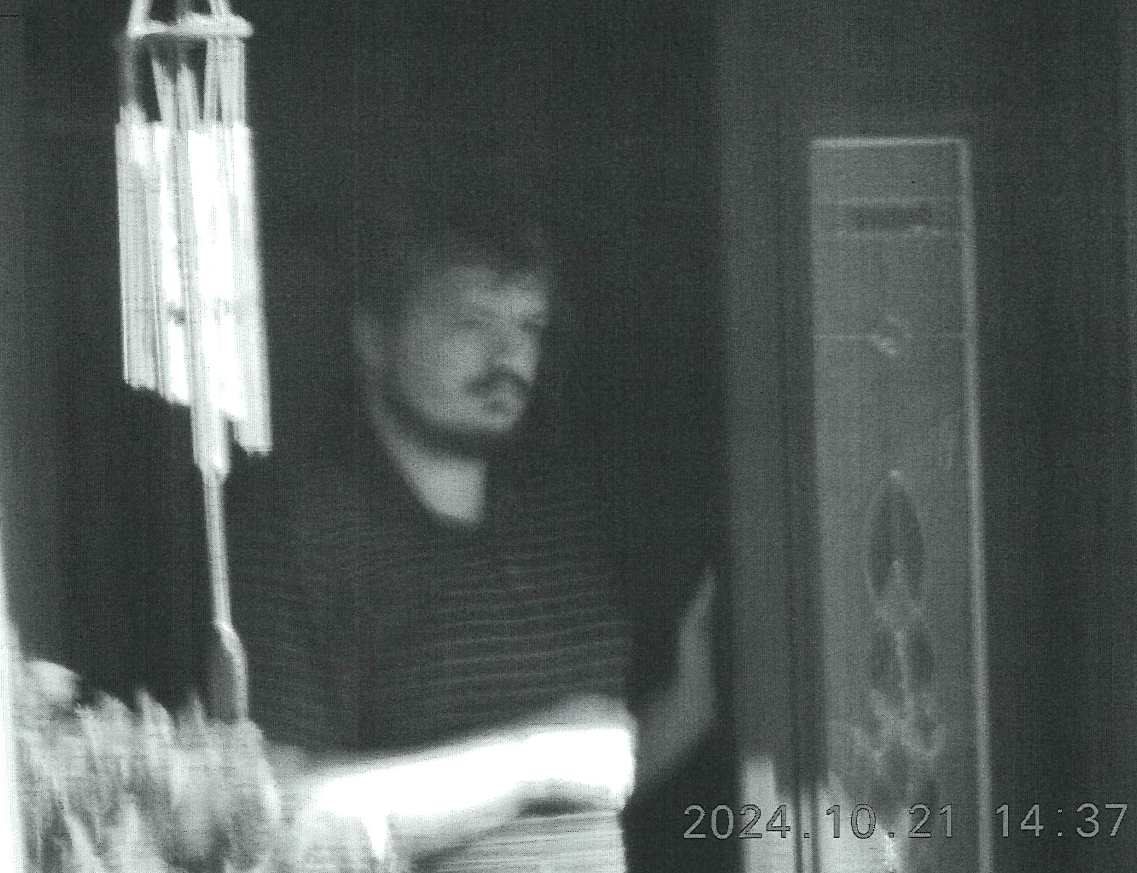
A surveillance photo of Connor Riley Moucka, a.k.a. “Judische” and “Waifu,” dated Oct 21, 2024, 9 days before Moucka’s arrest. This image was included in an affidavit filed by an investigator with the Royal Canadian Mounted Police (RCMP).

The U.S. Justice Department said between February and October 2024, Moucka and co-conspirators used stolen login credentials to steal cloud-hosted data belonging to at least 165 customers of a U.S.-based software-as-a-service company.

The hackers targeted stolen credentials for Snowflake customer accounts that did not enforce multi-factor authentication, and extorted or attempted to extort a host of well-known companies, including TicketMaster, Lending Tree, Advance Auto Parts and Neiman Marcus. Snowflake responded to the data thefts by increasing password complexity requirements and enforcing multi-factor authentication.

Moucka adopted new nicknames frequently — sometimes operating multiple identities concurrently — but two of his best-known monikers were “Judische” and “Waifu.” Judische’s admitted role in the Snowflake data thefts was first documented by KrebsOnSecurity in a September 2024 story about the overlap between Western, English-speaking cybercriminals and extremist groups that harass and extort minors into harming themselves or others.

That September 2024 story identified Judische as a software engineer from Ontario who has been involved in numerous data breaches and voice phishing attacks against U.S. companies since at least 2020. A little more than a month later, Canadian authorities arrested Moucka on a provisional warrant from the United States.

The government says Moucka and others used their unauthorized access to steal billions of sensitive customer records and download terabytes of information, “including individuals’ non-content call and text history records, banking and other financial information, payroll records, Drug Enforcement Administration (DEA) registration numbers, driver’s license numbers, passport numbers, social security numbers and other personally identifiable information. They then extorted victims by threatening to publish data online.”

Moucka also threatened and harassed government officials and security researchers who were helping to track him down. The Justice Department said the conspirators made over $2.5 million in ransom payments, and that in at least one instance, Moucka re-extorted a victim with threats of further disclosure of the victim’s stolen data.

“Moucka used the stolen data of a government officer and members of a then-former government officer’s immediate family in this re-extortion attempt,” reads a statement from the Justice Department.

One of Moucka’s admitted co-conspirators is Cameron “Kiberphant0m” Wagenius, a U.S. Army soldier who pleaded guilty in July 2025 to extorting AT&T and Verizon for their customer account data. Less than a month before Wagenius’s arrest, KrebsOnSecurity published a deep dive into Kiberphant0m’s various Telegram and Discord identities over the years, revealing how the owner of the accounts told others they were in the Army and stationed in South Korea.

One of several selfies on the Facebook page of Cameron Wagenius.

Kiberphant0m also re-extorted victims. Immediately following Moucka’s arrest, Kiberphant0m posted on hacker forums what he claimed were the AT&T call logs for then President-elect Donald Trump and for then Vice President Kamala Harris, as well schematics allegedly stolen from the U.S. National Security Agency (NSA).

Wagenius is set to be sentenced on September 3, 2026. The government says he faces a maximum penalty of 20 years in prison for conspiracy to commit wire fraud, a maximum penalty of five years in prison for extortion in relation to computer fraud, and a mandatory two-year sentence consecutive to any other prison time for aggravated identity theft.

The third alleged co-conspirator is John Erin Binns, 26, an elusive American man who fled the United States after being indicted for his admitted role in a 2021 breach at T-Mobile that exposed the personal information of at least 76 million customers.

Sources close to the investigation said Binns, also known as “IRDev” and “IntelSecrets,” was until recently incarcerated in a Turkish prison, but that he has since been released and has resurfaced online. Those sources said Binns also recently obtained Turkish citizenship, and under Turkish law a citizen cannot be extradited to a foreign country.

An image of a passport that Binns shared in an email to KrebsOnSecurity in Feb. 2023.

Moucka pleaded guilty to four criminal counts, including computer fraud, wire fraud, aggravated identity theft, and conspiracy. He is slated to be sentenced on Oct. 27 and faces a mandatory minimum penalty of two years in prison on the aggravated identity theft count, as well as a maximum penalty of 30 years in prison on the remaining counts. Ultimately, it will be up the federal judge how much time Moucka actually serves for his extensive cybercriminal rap sheet.

For an interview with Moucka prior to his arrest and a deeper look at Binns, see our original report on Moucka’s arrest.

  • ✇Krebs on Security
  • Germany Doxes “UNKN,” Head of RU Ransomware Gangs REvil, GandCrab BrianKrebs
    An elusive hacker who went by the handle “UNKN” and ran the early Russian ransomware groups GandCrab and REvil now has a name and a face. Authorities in Germany say 31-year-old Russian Daniil Maksimovich Shchukin headed both cybercrime gangs and helped carry out at least 130 acts of computer sabotage and extortion against victims across the country between 2019 and 2021. Shchukin was named as UNKN (a.k.a. UNKNOWN) in an advisory published by the German Federal Criminal Police (the “Bundeskrimina
     

Germany Doxes “UNKN,” Head of RU Ransomware Gangs REvil, GandCrab

5 de Abril de 2026, 23:07

An elusive hacker who went by the handle “UNKN” and ran the early Russian ransomware groups GandCrab and REvil now has a name and a face. Authorities in Germany say 31-year-old Russian Daniil Maksimovich Shchukin headed both cybercrime gangs and helped carry out at least 130 acts of computer sabotage and extortion against victims across the country between 2019 and 2021.

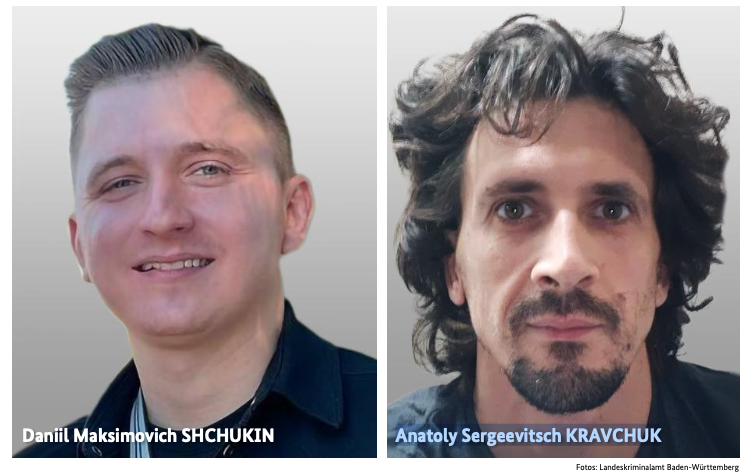
Shchukin was named as UNKN (a.k.a. UNKNOWN) in an advisory published by the German Federal Criminal Police (the “Bundeskriminalamt” or BKA for short). The BKA said Shchukin and another Russian — 43-year-old Anatoly Sergeevitsch Kravchuk — extorted nearly $2 million euros across two dozen cyberattacks that caused more than 35 million euros in total economic damage.

Daniil Maksimovich SHCHUKIN, a.k.a. UNKN, and Anatoly Sergeevitsch Karvchuk, alleged leaders of the GandCrab and REvil ransomware groups.

Germany’s BKA said Shchukin acted as the head of one of the largest worldwide operating ransomware groups GandCrab and REvil, which pioneered the practice of double extortion — charging victims once for a key needed to unlock hacked systems, and a separate payment in exchange for a promise not to publish stolen data.

Shchukin’s name appeared in a Feb. 2023 filing (PDF) from the U.S. Justice Department seeking the seizure of various cryptocurrency accounts associated with proceeds from the REvil ransomware gang’s activities. The government said the digital wallet tied to Shchukin contained more than $317,000 in ill-gotten cryptocurrency.

The GandCrab ransomware affiliate program first surfaced in January 2018, and paid enterprising hackers huge shares of the profits just for hacking into user accounts at major corporations. The GandCrab team would then try to expand that access, often siphoning vast amounts of sensitive and internal documents in the process. The malware’s curators shipped five major revisions to the GandCrab code, each corresponding with sneaky new features and bug fixes aimed at thwarting the efforts of computer security firms to stymie the spread of the malware.

On May 31, 2019, the GandCrab team announced the group was shutting down after extorting more than $2 billion from victims. “We are a living proof that you can do evil and get off scot-free,” GandCrab’s farewell address famously quipped. “We have proved that one can make a lifetime of money in one year. We have proved that you can become number one by general admission, not in your own conceit.”

The REvil ransomware affiliate program materialized around the same as GandCrab’s demise, fronted by a user named UNKNOWN who announced on a Russian cybercrime forum that he’d deposited $1 million in the forum’s escrow to show he meant business. By this time, many cybersecurity experts had concluded REvil was little more than a reorganization of GandCrab.

UNKNOWN also gave an interview to Dmitry Smilyanets, a former malicious hacker hired by Recorded Future, wherein UNKNOWN described a rags-to-riches tale unencumbered by ethics and morals.

“As a child, I scrounged through the trash heaps and smoked cigarette butts,” UNKNOWN told Recorded Future. “I walked 10 km one way to the school. I wore the same clothes for six months. In my youth, in a communal apartment, I didn’t eat for two or even three days. Now I am a millionaire.”

As described in The Ransomware Hunting Team by Renee Dudley and Daniel Golden, UNKNOWN and REvil reinvested significant earnings into improving their success and mirroring practices of legitimate businesses. The authors wrote:

“Just as a real-world manufacturer might hire other companies to handle logistics or web design, ransomware developers increasingly outsourced tasks beyond their purview, focusing instead on improving the quality of their ransomware. The higher quality ransomware—which, in many cases, the Hunting Team could not break—resulted in more and higher pay-outs from victims. The monumental payments enabled gangs to reinvest in their enterprises. They hired more specialists, and their success accelerated.”

“Criminals raced to join the booming ransomware economy. Underworld ancillary service providers sprouted or pivoted from other criminal work to meet developers’ demand for customized support. Partnering with gangs like GandCrab, ‘cryptor’ providers ensured ransomware could not be detected by standard anti-malware scanners. ‘Initial access brokerages’ specialized in stealing credentials and finding vulnerabilities in target networks, selling that access to ransomware operators and affiliates. Bitcoin “tumblers” offered discounts to gangs that used them as a preferred vendor for laundering ransom payments. Some contractors were open to working with any gang, while others entered exclusive partnerships.”

REvil would evolve into a feared “big-game-hunting” machine capable of extracting hefty extortion payments from victims, largely going after organizations with more than $100 million in annual revenues and fat new cyber insurance policies that were known to pay out.

Over the July 4, 2021 weekend in the United States, REvil hacked into and extorted Kaseya, a company that handled IT operations for more than 1,500 businesses, nonprofits and government agencies. The FBI would later announce they’d infiltrated the ransomware group’s servers prior to the Kaseya hack but couldn’t tip their hand at the time. REvil never recovered from that core compromise, or from the FBI’s release of a free decryption key for REvil victims who couldn’t or didn’t pay.

Shchukin is from Krasnodar, Russia and is thought to reside there, the BKA said.

“Based on the investigations so far, it is assumed that the wanted person is abroad, presumably in Russia,” the BKA advised. “Travel behaviour cannot be ruled out.”

There is little that connects Shchukin to UNKNOWN’s various accounts on the Russian crime forums. But a review of the Russian crime forums indexed by the cyber intelligence firm Intel 471 shows there is plenty connecting Shchukin to a hacker identity called “Ger0in” who operated large botnets and sold “installs” — allowing other cybercriminals to rapidly deploy malware of their choice to thousands of PCs in one go. However, Ger0in was only active between 2010 and 2011, well before UNKNOWN’s appearance as the REvil front man.

A review of the mugshots released by the BKA at the image comparison site Pimeyes found a match on this birthday celebration from 2023, which features a young man named Daniel wearing the same fancy watch as in the BKA photos.

Images from Daniil Shchukin’s birthday party celebration in Krasnodar in 2023.

Update, April 6, 12:06 p.m. ET: A reader forwarded this English-dubbed audio recording from a ccc.de (37C3) conference talk in Germany from 2023 that previously outed Shchukin as the REvil leader (Shchuckin is mentioned at around 24:25).

❌
❌