❌

Visualização normal

Antes de ontemFirewall Daily – The Cyber Express
  • ✇Firewall Daily – The Cyber Express
  • AI Is Now Fighting on Both Sides of the Cyber War, Singapore Warns Samiksha Jain
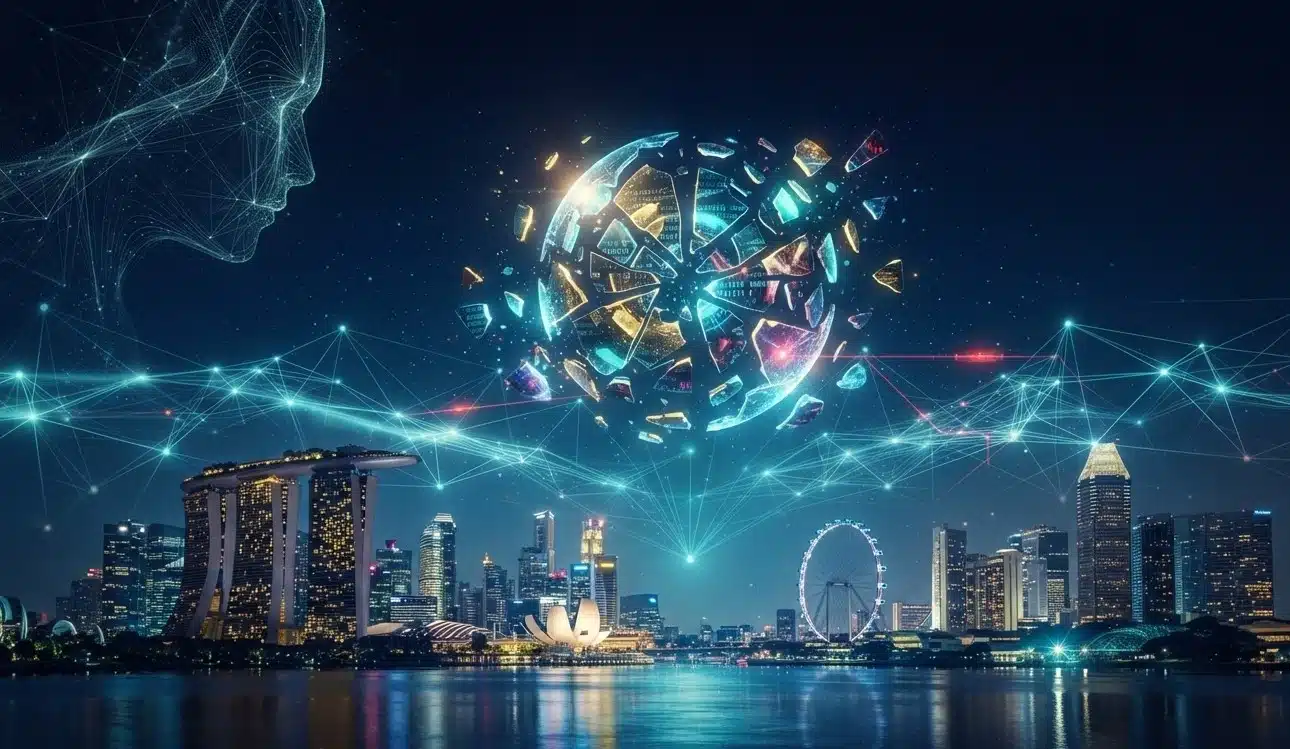
    Singapore opened SICW 2026 with a blunt message: no government, company or country can see the full picture of today's cyber threats, and artificial intelligence is now raising the stakes for defenders and attackers alike. Speaking at the opening ceremony of the 11th Singapore International Cyber Week on 13 October 2026, Gwenda Fong, Commissioner of Cybersecurity and Chief Executive of the Cyber Security Agency of Singapore (CSA), called for stronger international cooperation as threats grow
     

AI Is Now Fighting on Both Sides of the Cyber War, Singapore Warns

13 de Outubro de 2026, 05:01

SICW 2026

Singapore opened SICW 2026 with a blunt message: no government, company or country can see the full picture of today's cyber threats, and artificial intelligence is now raising the stakes for defenders and attackers alike. Speaking at the opening ceremony of the 11th Singapore International Cyber Week on 13 October 2026, Gwenda Fong, Commissioner of Cybersecurity and Chief Executive of the Cyber Security Agency of Singapore (CSA), called for stronger international cooperation as threats grow more complex. Her address came a day after Josephine Teo, Minister for Digital Development and Information and Minister-in-charge of Cybersecurity and Smart Nation, warned that trust in digital systems is becoming harder to sustain. This year's theme is "Cyber at a Crossroads: Shaping the New Cyber Order.

SICW 2026 Opens With a Warning

Fong, attending her first SICW as CSA chief, said Singapore's success has been built on being open and connected. That leaves its economy and society dependent on digital infrastructure, platforms and supply chains that extend well beyond its shores. Governments, infrastructure operators, cloud providers and cybersecurity firms each see part of the threat landscape, she said, but none sees all of it. "What appears to be an isolated incident to one organisation may in fact be part of a much larger campaign," Fong said. Assembling the picture is only half the challenge, she added. It must be done quickly enough to act before the adversary does.

AI Cuts Both Ways at SICW 2026

Fong said Singapore cannot simply keep adding analysts as threats grow in volume and sophistication. Instead, it wants AI to help defenders "see more, understand faster and to act more effectively." But adversaries can harness AI too, operating at greater speed and scale. The real test of AI cybersecurity, she said, is making sure the technology strengthens defences rather than tilting the advantage towards attackers. She also flagged a newer risk. As agentic AI systems gain access to data, applications and tools, they create new dependencies and vulnerabilities. "For years, cybersecurity has required us to understand what is connected to what. In an increasingly agentic world, we must also understand what can act on what," Fong said, pointing to questions of permissions and consequences.

SICW 2026 Puts AI Risks Into Practice

Rather than only discussing what AI could mean for security, CSA is testing it in practice this year. CSA is partnering with Google on an agentic AI cyber scenario exercise for international partners. It is working with the Singapore AI Safety Hub on a frontier AI governance workshop for officials from ASEAN and the wider Asia-Pacific. With Cloudflare, it is running hands-on training in AI-enabled cyber defence for critical infrastructure operators. Fong pointed to the ASEAN CERT Incident Drill, held since 2006, as proof that practising together builds the habits that matter in a real crisis.

The Trust Deficit Behind SICW 2026

On 12 October, Teo described what she called a paradox. At precisely the time when more trust is needed, trust is becoming harder to sustain. AI systems can make mistakes, be manipulated or behave in unintended ways, she said, and their capabilities are advancing faster than our understanding of the risks. Teo cited UNC3886's campaign against Singapore's telecommunications sector as a recent example of sophisticated actors targeting critical infrastructure. Ransomware and cybercrime remain pervasive, while strategic competition is forcing harder choices on technologies, suppliers, standards and interoperability. "We are willing to interact more, but find ourselves willing to trust less," she said. Without trust, Teo warned, businesses will hesitate to digitalise, citizens will be wary of new technologies, and countries will be less willing to stay open and connected.

"Accountability Cannot Be Outsourced"

Teo said industry must be a partner in securing the digital ecosystem, since it builds and operates much of the infrastructure economies depend on. That means shared standards, threat intelligence sharing, incident reporting and testing new technologies before deployment. On increasingly autonomous AI, she said human judgement, oversight or control must be retained where necessary. "Ultimately, accountability cannot be outsourced. Least of all, to machines," she said. She outlined steps already under way. CSA released its Securing Agentic AI Addendum earlier this year to guide organisations on securing autonomous AI systems. The agency is also working with industry to prepare critical infrastructure for the transition to quantum-safe systems. In addition, leading operational technology manufacturers and technology providers have committed to attain Singapore's Cyber Trust Mark.

What Comes Next

Teo said Senior Minister K Shanmugam would launch the Singapore Cybersecurity Strategy 2026, the country's updated national strategy, the following day, with partnerships remaining central to it. That approach will also carry into 2027, when Singapore assumes the ASEAN Chairmanship. Teo said Singapore will work with the bloc's 11 member states to strengthen collective cyber resilience, deepen practical cooperation and capacity building, and work more closely with industry. Estonia's Minister of Justice and Digital Affairs, Liisa-Ly Pakosta, also joined the week's proceedings for a fireside chat with Fong. Both leaders acknowledged that geopolitical competition is making cooperation harder. "Disagreement need not prevent dialogue, and competition need not preclude practical cooperation," Fong said. Teo put it simply: trust is not built through declarations, but through candid exchanges, competence and consistent action. Fong closed with a challenge to every delegate in the room: look beyond your own vantage point and find the people who can help you see the rest.
  • ✇Firewall Daily – The Cyber Express
  • Morocco Flags AI Threats, Prioritizes Critical Infrastructure Defense Samiksha Jain
    Morocco’s cybersecurity strategy is placing greater emphasis on proactive threat detection, critical infrastructure protection and artificial intelligence as the country strengthens its defenses against evolving cyber threats. Abdellatif Loudiyi, Minister Delegate to the Head of Government in charge of National Defense Administration, said securing information systems has become a necessity as digital transformation accelerates. Speaking at the opening of National Cybersecurity Week in Rabat
     

Morocco Flags AI Threats, Prioritizes Critical Infrastructure Defense

13 de Outubro de 2026, 02:24

Morocco cybersecurity strategy

Morocco’s cybersecurity strategy is placing greater emphasis on proactive threat detection, critical infrastructure protection and artificial intelligence as the country strengthens its defenses against evolving cyber threats. Abdellatif Loudiyi, Minister Delegate to the Head of Government in charge of National Defense Administration, said securing information systems has become a necessity as digital transformation accelerates. Speaking at the opening of National Cybersecurity Week in Rabat on Monday, Loudiyi stressed that cybersecurity must be integrated into institutional governance rather than treated as an additional expense. He called for stronger preparedness, early threat detection and coordinated responses to cyber incidents. The event, organized by the General Directorate of Information Systems Security under the National Defense Administration, runs from October 12 to 14 under the theme “Cybersecurity in the service of digital transformation and development.”

Morocco Cybersecurity Strategy Emphasizes Proactive Defense

Loudiyi said cyberattacks have become a tangible reality affecting countries worldwide, including developed nations. Their consequences have raised awareness among public and private institutions about the importance of cybersecurity in managing risks and protecting operations. He argued that organizations can no longer rely on responding to incidents after they occur. Instead, they need an approach centered on preparedness, vigilance, early detection, and response. According to the minister, these responsibilities must begin at the highest levels of institutional decision-making and extend across organizations, with each component accountable for its role. He also emphasized that cybersecurity resilience requires continuous work. As attackers develop new methods, institutions must regularly review protection measures, assess system readiness, and adapt their defenses to emerging threats.

Five Pillars to Strengthen National Cybersecurity

The minister outlined five interconnected areas supporting Morocco’s efforts to establish a coordinated national cybersecurity framework. These include a clear legal and regulatory framework, the development of human, technical and financial capabilities, greater public awareness and a stronger cybersecurity culture, enhanced monitoring and response capabilities, and regional and international cooperation. Loudiyi stressed that these elements must function together to strengthen national resilience. He also highlighted the shared responsibilities of government authorities and organizations operating information systems. While the General Directorate of Information Systems Security exercises its legally defined powers, individual system owners must protect their systems and allocate the resources required to do so. The minister said this integration of responsibilities is essential to building a cohesive national cybersecurity system.

AI Threats and Critical Infrastructure Protection Take Priority

Looking ahead, Loudiyi identified four priorities for the next phase of Morocco’s cybersecurity efforts: training specialized cybersecurity professionals, supporting national cybersecurity companies, strengthening critical infrastructure protection, and addressing the challenges associated with artificial intelligence. He described artificial intelligence in cybersecurity as a dual-use capability that can benefit both attackers and defenders. While attackers can use AI to support malicious activities, defenders can apply the technology to detect threats earlier and accelerate incident response. The emphasis on specialized training also reflects the need to develop the expertise required to address increasingly complex cybersecurity challenges. Supporting national companies is another priority identified by the minister as part of the broader effort to strengthen the country's capabilities. Loudiyi said these priorities should help Morocco prepare not only for existing threats but also for risks that may emerge as technologies and attack methods evolve.

Morocco Calls for Stronger International Cybersecurity Cooperation

Loudiyi also highlighted the role of cybersecurity cooperation in strengthening national defenses. He said Morocco remains committed to initiatives and mechanisms that promote collaboration between countries, with particular attention to its African and Arab partners. He presented cybersecurity as a shared responsibility requiring coordination, investment in skills and a sustained culture of awareness and vigilance. The minister concluded that a secure digital environment depends on collective efforts to protect information systems and maintain trust as digital transformation advances. National Cybersecurity Week provides a platform for these discussions through roundtables and workshops involving decision-makers, cybersecurity experts and industry professionals. The October 12 to 14 program is intended to encourage dialogue and the exchange of views on key cybersecurity challenges and approaches to addressing them.
  • ✇Firewall Daily – The Cyber Express
  • India’s DoT Warns Citizens Over SIM Fraud and IMEI Tampering Samiksha Jain
    The Department of Telecommunications (DoT) Madhya Pradesh, India LSA has cautioned citizens against fraudulent SIM cards, misuse of telecom identifiers and tampering with IMEI numbers, warning that such violations can carry serious legal consequences under India’s Telecommunications Act, 2023. The advisory follows recent cybercrime investigations that uncovered instances of unauthorized SIM activation. In one case, a Point of Sale (PoS) agent in Chhattisgarh was found to have illegally
     

India’s DoT Warns Citizens Over SIM Fraud and IMEI Tampering

22 de Setembro de 2026, 03:56

Fraudulent SIM cards

The Department of Telecommunications (DoT) Madhya Pradesh, India LSA has cautioned citizens against fraudulent SIM cards, misuse of telecom identifiers and tampering with IMEI numbers, warning that such violations can carry serious legal consequences under India’s Telecommunications Act, 2023.

The advisory follows recent cybercrime investigations that uncovered instances of unauthorized SIM activation. In one case, a Point of Sale (PoS) agent in Chhattisgarh was found to have illegally activated 25 mobile connections using citizens’ identification documents without their knowledge or consent.

Following the discovery, the DoT and telecom service providers blacklisted the concerned PoS agent, preventing it from issuing mobile connections in the future.

DoT Investigates Fraudulent SIM Cards and Mobile Connections

The 25 mobile connections linked to the case were examined through the Digital Intelligence Platform, or DIP, operated by the DoT. Connections identified as suspicious were subjected to re-verification.

Numbers that failed the re-verification process were subsequently deactivated.

The action highlights concerns around SIM card fraud, particularly where mobile connections are obtained or activated using another person’s identity documents. The DoT has also cautioned citizens against transferring SIM cards registered in their names, as legal liability may extend to the original subscriber if the connection is later misused.

Telecommunications Act 2023 Sets Penalties

The DoT said fraudulent issuance of SIM cards, misuse of telecom identifiers and tampering with IMEI numbers are punishable offences under the Telecommunications Act 2023.

Such violations may attract imprisonment of up to three years and fines of up to ₹50 lakh.

The department has urged citizens to avoid obtaining SIM cards through fake documents, fraud, cheating or impersonation. It has also warned against procuring SIM cards in their own names and subsequently transferring, renting, loaning or otherwise providing them to others for misuse in cyber fraud or other unlawful activities.

Citizens have also been advised not to use devices such as modems, modules or SIM Boxes with configurable or tampered IMEI numbers.

IMEI Numbers and Telecom Identifiers Under Scrutiny

The DoT has highlighted the misuse of telecommunications identifiers, including the International Mobile Equipment Identity, or IMEI numbers, as a security concern.

Citizens have been cautioned against using mobile applications, websites or other methods to modify Calling Line Identity (CLI) or other telecommunications identifiers. The department has also warned against using devices with tampered IMEI numbers.

According to the advisory, misuse of SIMs and telecom identifiers can affect citizen safety and pose risks to the security and integrity of telecommunications networks.

Sanchar Saathi Enables SIM and Device Checks

The DoT has advised citizens to regularly use Sanchar Saathi to verify mobile connections issued in their names and block numbers that are unnecessary or not genuinely theirs.

The Sanchar Saathi platform also provides a facility called “Check Genuineness of Your Mobile handset,” which allows users to verify IMEI numbers and associated device information. The service can provide details including the handset’s brand name, model name and manufacturer information.

Citizens can access the Sanchar Saathi services through its portal or mobile application to check and secure their mobile connections and devices.

The DoT has urged citizens to remain vigilant and avoid sharing SIM cards registered in their names, particularly where the connection could later be used for cyber fraud or other unlawful activities.
  • ✇Firewall Daily – The Cyber Express
  • Children Under 13 Could Be Barred From Social Media Under New EU Plan Samiksha Jain
    The European Commission has adopted the EU KIDS Act, a proposal that would introduce new age restrictions and safety requirements for online platforms used by children across the European Union. The proposal would prevent social media platforms from allowing children under 13 to access their services and establish an EU-wide minimum age of 15 for minors to open accounts independently. The EU KIDS Act would also shift the burden of proof to online service providers, requiring them to demonstrate
     

Children Under 13 Could Be Barred From Social Media Under New EU Plan

18 de Setembro de 2026, 02:18

EU KIDS Act

The European Commission has adopted the EU KIDS Act, a proposal that would introduce new age restrictions and safety requirements for online platforms used by children across the European Union. The proposal would prevent social media platforms from allowing children under 13 to access their services and establish an EU-wide minimum age of 15 for minors to open accounts independently.

The EU KIDS Act would also shift the burden of proof to online service providers, requiring them to demonstrate that their services are safe by design and appropriate for younger users.

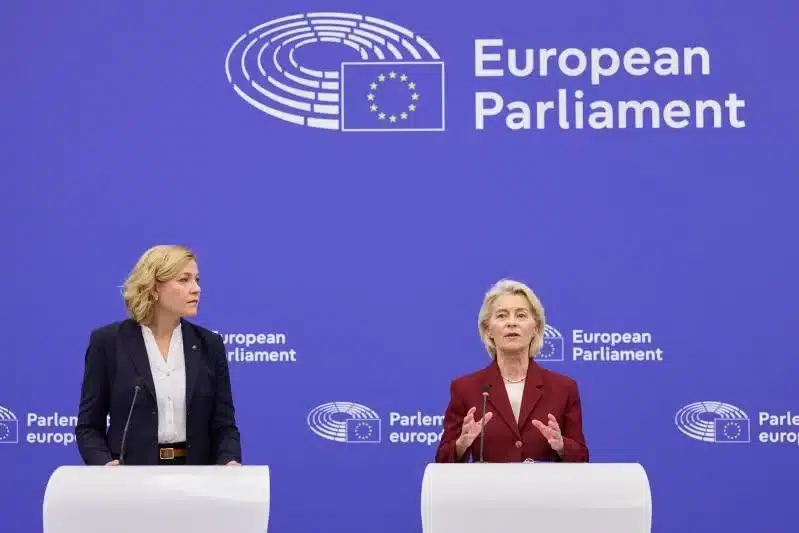
Commission President Ursula von der Leyen said the proposal is intended to give parents greater control over how children use digital services.

“Today, our children are engaging with the most sophisticated technologies ever created. Technology that was never created with their wellbeing in mind. Our KIDS Act is reversing the burden of proof - it is for platforms to show they are safe by design. And we put parents back in the driving seat, giving them the tools to help their children navigate a safer online world,” von der Leyen said.

EU KIDS Act Sets New Social Media Age Limits

Under the EU KIDS Act, children between 13 and under 15 would not be able to create autonomous social media accounts. Instead, they could use mini accounts managed through a parent or guardian's account, with access limited to age-appropriate social media and video-sharing services.

These mini accounts would include safeguards such as restricted social contacts and screen time of up to one hour per day.

Children between 3 and under 13 would not be permitted to access social media. They could, however, use specially designed child-friendly video-sharing services through guardian-managed accounts. Parents would also receive tools to restrict an adult device to those services when it is given to a child, with exposure limited to a maximum of one hour per day.

Safety-by-Design Rules Target Addictive Features

The proposal would introduce safety-by-design obligations for online services offering social media, video sharing, online video games, AI companions and chatbots to users under 18.

The proposed rules would prohibit addictive features and profiling-based recommendation feeds that can draw minors toward harmful content. Infinite scrolling without stopping points, reward mechanisms and push notifications during sleeping hours would also be restricted.

The proposal would further prohibit unsolicited contact from strangers. AI companions and chatbots would have to be turned off by default and could not simulate interpersonal relationships in ways that create emotional dependency.

Minor profiles would be private by default, while geolocation, camera and microphone access would be turned off. Platforms would also need to provide tools allowing minors to block or mute users, manage their time and control, tune and reset recommender systems.

Privacy-Preserving Age Assurance Proposed

The EU KIDS Act would require online services and app stores to use age assurance tools. The proposal points to the EU age verification app as one possible approach, with the system designed not to retain identity documents or biometric data.

Social media and video-sharing platforms would be expected to perform age verification when users create new accounts. For existing accounts, providers would estimate a user's age using reasonable indicators, such as the account creation date or credit card details.

EU Plans Faster Enforcement

The proposal would require very large online platforms to prove that their services are safe by design. Providers would submit compliance plans to the European Commission and an independent auditor, which would assess new services, features or functionalities.

If the Commission identifies shortcomings based on an auditor's report, it could require providers to propose corrective measures. The enforcement framework would build on existing structures under the Digital Services Act and Artificial Intelligence Act.

For noncompliance, the proposal includes expedited enforcement procedures under which the Commission should conclude investigations within 90 days.

Henna Virkkunen, Executive Vice-President for Tech Sovereignty, Security and Democracy, said the proposal would allow children to use digital services while increasing safeguards and accountability for platforms.

“With our EU KIDS Act, we make sure our children can enjoy their rights online - to learn, stay connected and explore. We also give parents the tools to accompany their kids to navigate a safe digital world. All of this by keeping the pressure high on platforms, because they must prove their services do not harm,” Virkkunen said.

EU KIDS Act Moves to Parliament and Council

The legislative proposal has now been submitted to the European Parliament and the Council for examination and adoption.

The proposal follows recommendations from the European Commission's Special Panel on Child Safety Online, which included more than 60 experts from areas including civil society, education, public health, child psychiatry and technology.

The Commission said public support for stronger online protections is also growing. According to the 2026 Special Eurobarometer on the Digital Decade, 92% of Europeans consider strengthening protection for children and young people online a top policy priority.


EU Plans ‘Article 4’-Style Security Protocol for Cyberattacks and Hybrid Threats

17 de Setembro de 2026, 03:40

Emergency Security Protocol

European Commission President Ursula von der Leyen has proposed an Emergency Security Protocol that would allow any European Union member state to trigger a coordinated response to security incidents including cyberattacks, sabotage and drone incursions. The proposal was announced during von der Leyen’s 2026 State of the Union address in Strasbourg, where she called for a new European security strategy in response to what she described as rising threats across the bloc. Recent incidents in Denmark, Lithuania and Poland, along with an attempted drone attack in Leipzig, were cited as examples of the changing security environment.

Emergency Security Protocol Would Bring EU Governments Together

Under the proposed Emergency Security Protocol, a single member state could trigger the mechanism, prompting all 27 EU governments to convene. The proposed framework would be designed to coordinate a European response, deter further escalation and mitigate the consequences of an incident. Von der Leyen presented the mechanism as a European counterpart to NATO’s Article 4, which allows alliance members to consult when the territorial integrity, political independence or security of a member is threatened. The EU proposal, however, was presented as a mechanism for incidents that fall below the threshold of armed aggression but still pose a national security threat. The proposal does not yet specify what decisions would follow such a meeting or whether the mechanism would create predetermined responses to specific types of incidents.

Cyberattacks and Hybrid Threats Drive Security Push

The Emergency Security Protocol comes as the EU considers how to respond to a broader range of hybrid threats. Von der Leyen cited cyberattacks, sabotage, arson and drone incursions as threats that are increasing across Europe. She argued that existing EU institutions and decision-making processes have not kept pace with the changing security environment. As part of the proposed European security strategy, she called for a European counter-hybrid playbook and greater agreement on how member states should respond to incidents that threaten national security without amounting to conventional armed aggression. The EU already has mutual-assistance and solidarity provisions. Article 42(7) of the Treaty on European Union provides for mutual assistance when a member state is the victim of armed aggression, while Article 222 of the Treaty on the Functioning of the European Union contains a separate solidarity provision.

EU Security Council Also Proposed

Alongside the Emergency Security Protocol, von der Leyen proposed creating a European Security Council focused on the security of the continent. The proposed format would include EU leaders and partners such as Canada, Norway, Ukraine and the United Kingdom. The initiative is intended to provide a broader forum for discussions on European security as the bloc reassesses how it responds to emerging threats. The Commission is also expected to outline further details through its forthcoming European security strategy.

Decision-Making Questions Remain

The proposed mechanism comes as questions remain over how quickly the EU can reach collective decisions during security crises. Many decisions under the bloc’s common foreign and security policy require unanimity, meaning individual governments can block measures supported by other member states. EU sanctions are also adopted unanimously. Von der Leyen did not specify whether the proposed protocol would change those decision-making rules, establish agreed responses in advance or primarily provide a framework for consultation. She also announced a European Instrument for Strategic Enablers, covering capabilities including air and missile defence, strategic transport, air-to-air refuelling, space systems and cyber capabilities. The initiative is intended to be aligned with NATO. The Emergency Security Protocol, European security strategy and proposed European Security Council form part of a wider effort outlined in the 2026 State of the Union address to strengthen coordination around Europe’s changing security environment. Further details are expected as the Commission develops its proposed security strategy.

AI Won’t Replace Cybersecurity Jobs, It’ll Replace the Toil – Harsha Reddy Explains What’s Next

14 de Agosto de 2026, 03:56

AI, Cybersecurity, Harsha Reddy

As enterprises race to bolt AI onto every business process, security leaders are being forced to answer a harder question than "should we adopt it" — it's "who's accountable when it goes wrong." To unpack this, The Cyber Express sat down with Harsha Reddy, Head of Information Security at Veterinary Emergency Group (VEG).

With nearly two decades in security leadership — including senior roles at Lixil and American Standard before joining VEG — Harsha brings a practitioner's view of where AI is genuinely changing the CISO's job, and where it's mostly just hype and shadow adoption.

Watch the Full Interview:

Harsha Reddy Explains Why AI Will Replace Tasks, Not Defenders

Harsha pushes back on the narrative that AI will hollow out security teams, pointing to Gartner research showing that while most fields are projected to lose jobs to AI, cybersecurity is expected to gain them. In his view, the technology is mainly absorbing the "toil" — log review, alert triage, evidence gathering — that keeps analysts from actually defending.

Also listen to S1 Episode: Awareness and Education at Young Age is the Answer to Cybersecurity Skill Gap

“It's the analyst who refuses to use AI that will get replaced by an analyst who uses it,” he says.

On adoption, Reddy points to a 2024 Microsoft-LinkedIn survey in which most executives called AI critical to their business, yet a majority had no formal plan and most had employees already bringing in their own tools. That gap, he argues, is why so many organizations are now dealing with AI-related data leaks. "Many organizations started onboarding AI like software when they should be onboarding it like staff." His fix isn't more restrictions — blocking AI just pushes it into the shadows — but guardrails, an internal AI enablement committee, and measuring actual business value instead of token consumption.

The conversation also digs into deepfake-driven fraud, why training employees to spot deepfakes is “a losing bet” at machine speed, and how he decides when to greenlight a new AI tool versus telling a business unit “not yet.”

The conversation closes with our newly introduced rapid-fire round "Express Shots" — Claude vs. ChatGPT, passkeys vs. passwords, and Reddy's prediction for the biggest cybersecurity threat of 2030.

💾

Read the latest updates Firewall Daily news and insights on The Cyber Expres, your trusted source for cybersecurity and information technology updates."
❌
❌