❌

Visualização normal

Antes de ontemFirewall Daily – The Cyber Express
  • ✇Firewall Daily – The Cyber Express
  • Google Suspends Open Source Bug Bounty Over AI-Generated Reports Ashish Khaitan
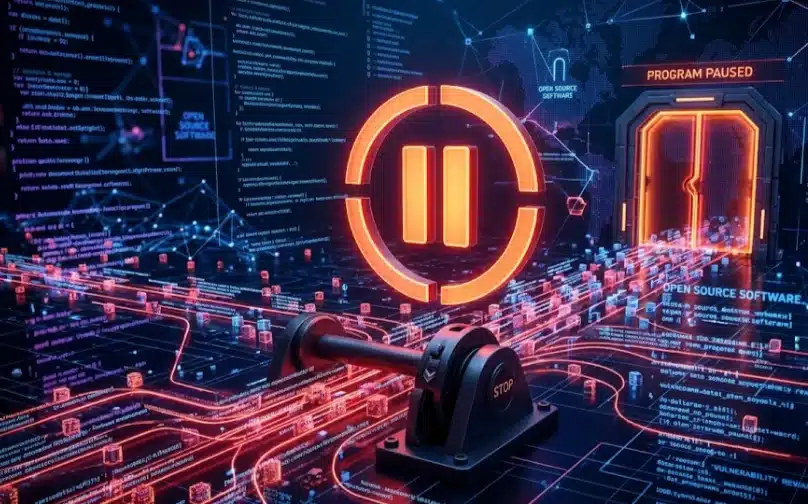
    Google has suspended its Open Source Software Vulnerability Rewards Program (OSS VRP), a vulnerability search initiative that paid researchers for finding flaws in the company's open-source software. The pause took effect on October 1, 2026. Google blamed a "significant rise" in automated and AI-generated reports, most of which turned out to be invalid.  Google announced the suspension in posts on X and on the program's website. It said it would provide "an update" in the first quarter of 202
     

Google Suspends Open Source Bug Bounty Over AI-Generated Reports

5 de Outubro de 2026, 05:54

OSS VRP

Google has suspended its Open Source Software Vulnerability Rewards Program (OSS VRP), a vulnerability search initiative that paid researchers for finding flaws in the company's open-source software. The pause took effect on October 1, 2026. Google blamed a "significant rise" in automated and AI-generated reports, most of which turned out to be invalid.  Google announced the suspension in posts on X and on the program's website. It said it would provide "an update" in the first quarter of 2027. According to Tom's Hardware, Google engineers and open-source maintainers had been overwhelmed by reports that were invalid or contained hallucinations.  Open Source Software Vulnerability Rewards Program

Why Google Halted OSS VRP 

"This pause is due to a significant rise in automated submissions, the vast majority of which are not valid," the company said. In the meantime, Google is encouraging participants to look at its other bug bounty programs.  As of October 1, 2026, the OSS VRP no longer accepts product vulnerability reports. Some reports involving Google Cloud repositories that affect Cloud products may still be accepted through the Cloud VRP. Flaws in open-source projects closely tied to Cloud or AI products can go to the Cloud VRP or the AI VRP. Researchers can also turn to the Patch Rewards Program, which pays for security improvements to Google's open-source projects. Reports submitted before October 1 are not affected.  Product vulnerabilities previously covered flaws that substantially affected the confidentiality or integrity of user data. Examples included memory corruption in file format parsers or network protocols, sanitizer failures, path traversal, and insecure defaults or code examples in documentation.   For OT0 and OT1 repositories, memory corruption reports required exact OSS-Fuzz reproduction steps or an already merged patch. Non-memory corruption reports did not need a patch. Google also urged researchers to build OSS-Fuzz integrations for important projects that lacked them before reporting. 

How Project Tiers Shape Vulnerability Search Rewards 

Repositories fall into four tiers: 
  • Flagship (OT0) projects are the most sensitive and carry the highest payouts. 
  • Important (OT1) projects have significant community impact or security criticality. Both OT0 and OT1 are listed at github.com/google/bughunters. 
  • Standard (OT2) covers active repositories with stable packages on registries such as npm or PyPI. There is no published list for this tier. 
  • Low-priority (OT3) includes experimental, sample, research, and archived projects. These earn no financial rewards. 
Supply chain compromises pay $3,133.7 to $31,337 for OT0, $1,337 to $13,337 for OT1, and $500 to $3,133.7 for OT2. Other security issues, such as leaked write-access credentials or weak passwords on third-party CI systems, earn $1,000 for OT0 and $500 for OT1. OT2 and OT3 projects receive nothing for product vulnerabilities or other security issues.  A reward panel sets final amounts based on security impact alone. It may pay more for clever or wide-reaching bugs and less for those that depend on hypothetical flaws. It typically pays once per root cause, though bonuses of about $1,000 are possible for especially clever findings or well-written reports. Researchers can donate their rewards to charity. Rewards left unclaimed after 12 months go to a charity of Google's choosing.  Several categories are excluded: 
  • Issues rooted in downstream integration 
  • Typosquatting without proof that build artifacts were compromised 
  • Insecure installation instructions 
  • Social engineering 
  • Bugs with negligible impact 
Google also asks researchers to avoid DoS attacks, black hat SEO, spam, and high-traffic automated testing tools. Reports go through Google's vulnerability form and should include a buildable proof of concept, the affected versions, an impact description, and an attack scenario. 
  • ✇Firewall Daily – The Cyber Express
  • South Korea’s Shinhan Bank Hack Exposes Data of 25,000 Customers Samiksha Jain
    The Shinhan Bank cyberattack has exposed personal and financial information belonging to about 25,000 customers in South Korea, with investigators examining whether advanced artificial intelligence tools were used to carry out the intrusion. The leaked information reportedly includes customers’ names, phone numbers, loan borrowing details and annual income. South Korea’s Financial Supervisory Service has launched an emergency on-site inspection as authorities investigate how the breach occurr
     

South Korea’s Shinhan Bank Hack Exposes Data of 25,000 Customers

5 de Outubro de 2026, 03:55

Shinhan Bank cyberattack

The Shinhan Bank cyberattack has exposed personal and financial information belonging to about 25,000 customers in South Korea, with investigators examining whether advanced artificial intelligence tools were used to carry out the intrusion. The leaked information reportedly includes customers’ names, phone numbers, loan borrowing details and annual income. South Korea’s Financial Supervisory Service has launched an emergency on-site inspection as authorities investigate how the breach occurred and whether the suspected use of AI points to a wider risk for financial institutions.

Shinhan Bank Cyberattack Under Investigation

Shinhan Bank said the information was leaked on Wednesday after hackers gained access to its systems. The bank immediately formed a response team and took measures aimed at limiting further damage. These measures included blocking access from external IP addresses and suspending the affected services. The bank said it had completed safety measures related to the incident. Sources cited in the reports said the attackers are suspected to be based overseas and may have used advanced AI tools during the attack. Experts said the bank may not have been specifically targeted, but could instead have been caught in attacks against vulnerable online platforms. The Financial Supervisory Service sent a team to the bank to examine the incident. Its investigation is expected to take months as officials determine the nature and extent of the data exposure.

AI Agent-Assisted Attacks Raise Concern

The suspected use of AI has added another concern to the Shinhan Bank breach. Cybersecurity experts said AI tools originally developed or shared for defensive purposes can also be adapted for malicious activity. Mun Chong-hyun, director at cybersecurity firm Genians, said several recent attacks in South Korea have involved such AI tools. He described the technology as a double-edged sword because capabilities created for cybersecurity can also be used to facilitate cybercrime. The concern is not limited to Shinhan Bank. An industry official said the wider financial sector could be exposed to AI agent-assisted attacks, and that financial institutions should conduct their own security checks to identify potential weaknesses and abnormal access attempts. The incident also highlights the type of information that can be exposed in attacks against banks. Unlike a breach involving only basic contact information, the Shinhan incident reportedly exposed both personal details and financial information.

South Korean Banks Face More Data Breaches

The Shinhan Bank cyberattack comes amid several recent incidents affecting South Korean lenders. KB Kookmin Bank said last Friday that personal information belonging to 119 customers had been leaked following an external intrusion. Hana Bank also reported a separate hack affecting 89 customers. South Korea’s Financial Services Commission has already held a meeting with local banks over the recent breaches and is expected to hold another meeting this week. The latest incidents have raised concerns about how AI-powered hacking could affect the financial sector, particularly if attackers can use automated tools to identify vulnerable systems or support attacks at greater scale. The Shinhan incident is relatively small compared with some of South Korea’s largest data breaches in terms of the number of affected people. However, the combination of personal and financial information makes the breach significant. Sungho Hwang, Korea country manager at NordVPN, said the exposed information could be used to create personalized scams. He also noted that generative AI has made such scams more convincing.

South Korea Faces Wider Cybersecurity Pressure

The banking incidents come as South Korea cyberattacks have increased across other sectors. Cyberattacks targeting South Korean military systems reached 18,951 cases in 2025, the highest annual figure in five years. The number was up 31 percent from 2024 and 108 percent from 2022. South Korea has also expanded its use of AI for defensive cybersecurity. The Ministry of Education and the Korea Education and Research Information Service operate an AI-based system designed to detect suspicious activity and issue automated alerts across 435 monitored institutions. In 2025, the system detected about 480 million potential cyber threat indicators, of which around 86,000 were confirmed as actual intrusions. As the investigation into the Shinhan Bank breach continues, the suspected role of AI is adding to concerns that financial institutions may need to account for increasingly automated forms of cyberattacks.
  • ✇Firewall Daily – The Cyber Express
  • Apache Tomcat Update: 12 Security Flaws Fixed in Tomcat 11.0.26 Ashish Khaitan
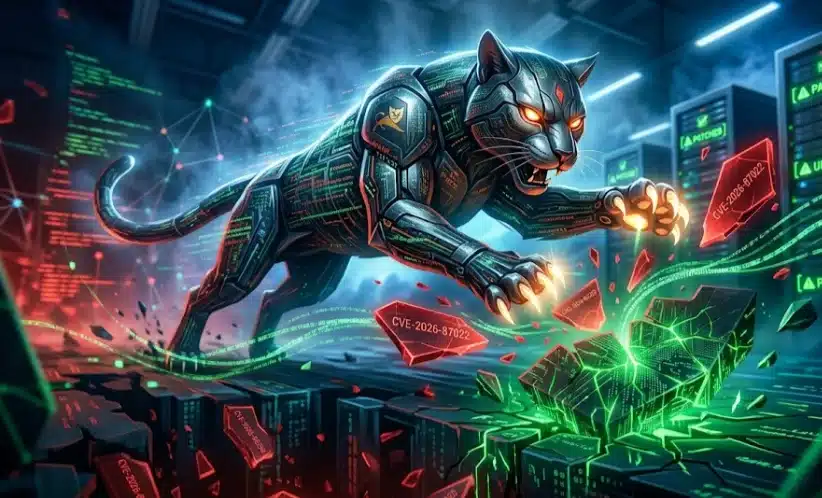
    The Apache Software Foundation has released Tomcat 11.0.26, an Apache Tomcat Update that resolves 12 security vulnerabilities. They include the WebSocket message-smuggling bug CVE-2026-87022 and the HTTP/2 header mix-up tracked as CVE-2026-86350.   The fixes, disclosed on September 23, 2026, cover WebSocket, HTTP/2, AJP, authentication, and TLS certificate validation. Four flaws are rated Important, three Moderate, and five Low.  Apache Tomcat Update-Who Needs It Most Tomcat 11 deployments
     

Apache Tomcat Update: 12 Security Flaws Fixed in Tomcat 11.0.26

24 de Setembro de 2026, 05:59

Apache Tomcat Update

The Apache Software Foundation has released Tomcat 11.0.26, an Apache Tomcat Update that resolves 12 security vulnerabilities. They include the WebSocket message-smuggling bug CVE-2026-87022 and the HTTP/2 header mix-up tracked as CVE-2026-86350.   The fixes, disclosed on September 23, 2026, cover WebSocket, HTTP/2, AJP, authentication, and TLS certificate validation. Four flaws are rated Important, three Moderate, and five Low. 

Apache Tomcat Update-Who Needs It

Most Tomcat 11 deployments are exposed. Many of the issues affect versions 11.0.0-M1 through 11.0.25, while narrower flaws start at 11.0.0-M5, 11.0.0-M14, 11.0.19 or 11.0.22. Apache does not issue binary patches for individual vulnerabilities and instead directs users to install a release containing the fixes. That makes 11.0.26 the practical minimum for remediation. 

How CVE-2026-87022 Enables WebSocket Smuggling 

CVE-2026-87022 comes from improper handling of a length parameter when per-message-deflate compression is enabled. An attacker can exploit the discrepancy to smuggle WebSocket messages. Every release from 11.0.0-M1 through 11.0.25 is affected, and the correction is in commit 4fef25fe. 

CVE-2026-86350 and Other HTTP/2 Defects 

CVE-2026-86350 is the higher-priority HTTP/2 issue. It is a regression introduced during the fix for CVE-2026-41293. Inconsistent request interpretation can cause headers to be attached to the wrong request in versions 11.0.22 through 11.0.25.  Two related HTTP/2 bugs were also fixed. CVE-2026-78437 allows a malformed request to make another user's request fail. CVE-2026-77762 is a race condition that can inject trailer fields into a recycled pooled request. 

Denial-of-Service and Authorization Risks 

Several fixes address availability. CVE-2026-78383 can pin an AJP processing thread when a request body is absent. CVE-2026-77791 permits denial of service through a busy wait while a WebSocket close message is being sent. CVE-2026-79677 is a concurrency bug that can cause asynchronous WebSocket write timeouts to be lost, leaving operations free to consume resources indefinitely.  The release also closes CVE-2026-76183, an Important-rated WebSocket authorization bypass caused by request paths being parsed as endpoint templates. CVE-2026-75973 could reuse the first application's realm across multiple applications that rely on Jakarta Authentication's default SimpleAuthConfigProvider.   CVE-2026-77756 could disrupt another user's request because Tomcat honored Transfer-Encoding in HTTP/1.0 traffic behind a reverse proxy. 

Certificate Validation Repairs 

Two fixes concern certificate checking. CVE-2026-86248 completes an earlier, incomplete OCSP fix. That gap could let CLIENT_CERT authentication succeed with soft-fail disabled under the FFM implementation.   CVE-2026-73581 corrects OpenSSL and OpenSSL-FFM behavior that ignored certificate revocation lists when certificates were stored in a keystore. 

Rolling Out the Apache Tomcat Update Safely 

Administrators are advised to take the following steps: 
  • Inventory every Tomcat 11 instance. 
  • Prioritize externally reachable WebSocket, HTTP/2 and AJP connectors. 
  • Upgrade to 11.0.26 after testing application compatibility. 
  • Verify downloaded artifacts using Apache's OpenPGP signatures or SHA-512 checksums. 
  • Review reverse-proxy and authentication configurations. 
  • Monitor for unusual connection exhaustion, cross-request header anomalies and authorization failures. 
Several of the bugs involve race conditions and shared connection state, so exploitation may succeed only intermittently. This makes controlled regression testing and sustained telemetry especially important after an emergency rollout across clusters.   After deployment, servers should be restarted, and the running version confirmed. Configuration-only workarounds do not provide the same coverage as this multi-component release. Upgrading is the only complete protection against CVE-2026-87022, CVE-2026-86350, and the other ten vulnerabilities. 
  • ✇Firewall Daily – The Cyber Express
  • Gunra Ransomware Builds a New Attack Network Through RaaS Samiksha Jain
    Gunra ransomware has expanded its operations through a structured ransomware-as-a-service (RaaS) affiliate program, prompting the FBI, CISA and other agencies to issue a joint advisory warning organizations about the threat. The Gunra ransomware variant uses a double-extortion model, encrypting victim data while threatening to publish stolen information on a dedicated leak site if ransom demands are not met. The FBI first observed Gunra in April 2025 as a double-extortion ransomware variant d
     

Gunra Ransomware Builds a New Attack Network Through RaaS

11 de Agosto de 2026, 08:01

Gunra ransomware

Gunra ransomware has expanded its operations through a structured ransomware-as-a-service (RaaS) affiliate program, prompting the FBI, CISA and other agencies to issue a joint advisory warning organizations about the threat. The Gunra ransomware variant uses a double-extortion model, encrypting victim data while threatening to publish stolen information on a dedicated leak site if ransom demands are not met. The FBI first observed Gunra in April 2025 as a double-extortion ransomware variant derived from leaked Conti ransomware source code.

Gunra Ransomware Shifts to Affiliate Model

By early 2026, the group had expanded through a formal ransomware-as-a-service affiliate program advertised on dark web forums. The program provides affiliates with a management panel, configurable ransomware builder, cross-platform locker payloads and affiliate documentation. The FBI also observed Gunra operating under new branding aliases, including Golden Community, while recruiting penetration testers and ethical hackers as initial access brokers. Gunra initially focused on Windows environments before introducing a Linux variant and moving toward broader cross-platform targeting. Victims observed on the group’s dedicated leak site include organizations across the Americas, Europe, the Middle East, Africa and the Asia-Pacific. Targeted sectors include healthcare and public health, financial services and insurance, critical manufacturing, transportation, government services, utilities, academia, media and communications, retail, and professional and nonprofit services. Gunra ransomware

VPN Vulnerabilities Used for Initial Access

According to the advisory, Gunra actors primarily gained initial access by exploiting known vulnerabilities in internet-facing devices, including firewall and VPN gateways. The FBI observed exploitation of CVE-2024-55591 and CVE-2025-24472, authentication bypass vulnerabilities affecting specific FortiOS and FortiProxy versions. The Republic of Korea’s National Police Agency also observed Gunra actors exploiting credential exposure and SSH access control weaknesses in internet-facing VPN gateways to obtain unauthorized remote access. After gaining access, attackers used tools including Impacket utilities to move laterally through victim networks using SMB. In one case, actors compromised an SSL-VPN appliance using default credentials where account lockout controls were absent. They later used stolen session information to access internal virtual desktop infrastructure and move through systems including Active Directory servers and IT personnel workstations.

Data Theft Precedes Encryption

The double-extortion ransomware operation involves stealing sensitive information before encrypting systems. The FBI observed Gunra actors collecting business-critical documents, databases, personally identifiable information, and internal email communications. In at least one case, the actors used a malicious executable called main.exe to exfiltrate data from Microsoft OneDrive and SharePoint. Compressed archives containing sensitive information were also transferred to the Mega file-sharing service, with the volume of exfiltrated data reaching tens of terabytes. For encryption, Gunra uses ChaCha20 and RSA-4096 algorithms and has been observed using the .ENCRT extension for encrypted files. A documented sample from July 2025 used the .CRYPT extension. The ransomware also uses Windows Management Instrumentation to delete volume shadow copies before encryption, while one victim had backup and archived data deleted from both primary and disaster recovery infrastructure.

Agencies Urge Patching and Network Segmentation

The authoring agencies recommend that organizations prioritize patching known exploited vulnerabilities in internet-facing systems, including VPN gateways and RDP-exposed infrastructure. They also advise implementing and testing offline, immutable backups stored in physically separate and segmented locations. Network segmentation is another key recommendation, intended to restrict lateral movement and limit the spread of ransomware between systems. The agencies also recommend reviewing domain controllers, servers, workstations and Active Directory environments for unrecognized accounts, auditing administrative privileges, requiring MFA where possible and testing security controls against the Gunra techniques mapped to the MITRE ATT&CK framework. The joint advisory was published August 10, 2026, as part of the ongoing #StopRansomware initiative.
  • ✇Firewall Daily – The Cyber Express
  • New Zealand Targets Russian Cyber Actors With Fresh Sanctions Samiksha Jain
    New Zealand has announced a new round of sanctions against Russia, targeting 33 individuals and entities accused of supporting Moscow’s war against Ukraine. The latest New Zealand sanctions against Russia place particular focus on cyber actors, individuals linked to the forced relocation and re-education of Ukrainian children, and entities supporting Russia’s military-industrial complex. Foreign Minister Winston Peters said the package also targets individuals involved in creating and spreadi
     

New Zealand Targets Russian Cyber Actors With Fresh Sanctions

11 de Agosto de 2026, 03:18

New Zealand Sanctions

New Zealand has announced a new round of sanctions against Russia, targeting 33 individuals and entities accused of supporting Moscow’s war against Ukraine. The latest New Zealand sanctions against Russia place particular focus on cyber actors, individuals linked to the forced relocation and re-education of Ukrainian children, and entities supporting Russia’s military-industrial complex. Foreign Minister Winston Peters said the package also targets individuals involved in creating and spreading anti-Ukraine propaganda, as well as actors from the Democratic People’s Republic of Korea (DPRK) and Iran providing support to Moscow. “Children should never be used as instruments of war,” Peters said, expressing concern over efforts to abduct and re-educate Ukrainian children through state-directed programmes.

New Zealand Sanctions Target Russian Cyber Actors

The latest Russia sanctions include several individuals previously accused by the United States and other Western governments of malicious cyber activity. Among them are Yuliya Pankratova and Denis Degtyarenko, members of the pro-Russian hacktivist group Cyber Army of Russia Reborn (CARR). The U.S. Treasury sanctioned both individuals in 2024 over alleged cyber operations targeting U.S. critical infrastructure. U.S. officials identified Pankratova, who uses the alias “YUliYA,” as the group’s leader, while Degtyarenko, known as “Dena,” was described as one of its primary hackers. American officials alleged that Degtyarenko was responsible for compromising an industrial control system at a U.S. energy company and had developed training materials for compromising supervisory control and data acquisition (SCADA) systems. Pankratova has also allegedly been associated with Z-Pentest, another pro-Russian hacking group accused of targeting critical infrastructure. New Zealand has also sanctioned Aleksandr Volosovik, known online as “Yalishanda.” U.S. prosecutors have accused him of helping operate Media Land, a Russian bulletproof hosting provider allegedly used by cybercriminals to target organizations including hospitals, schools and banks. In July, the U.S. Justice Department unsealed charges against Volosovik and two other Russian nationals, alleging activities that caused more than $62 million in losses to victims in the United States and other countries.

GRU-linked Official Among Sanctioned Individuals

Another individual included in the latest New Zealand sanctions against Russia is Andrey Averyanov, a senior Russian military intelligence officer who previously commanded GRU Unit 29155. Western governments have linked the unit to cyberattacks, sabotage and other covert operations. Its cyber division has been accused of targeting governments, defense organizations, think tanks and other entities in Ukraine and NATO countries. New Zealand had previously sanctioned members of the unit over alleged malicious cyber activity targeting Ukraine and other countries.

Russia Propaganda and Technology Entities Targeted

The new sanctions also target Russia’s Internet Development Institute (IRI), a Kremlin-backed organization that finances digital media and content promoting Russian state narratives. IRI director Alexey Goreslavsky has also been designated. The British government has previously said the institute was established by Russia’s presidential administration and received hundreds of millions of dollars in government funding. Its projects have included films and video games promoting narratives associated with the Kremlin. Russian information technology company LANIT has also been added to the sanctions list. The company has provided services to Russia’s Defense Ministry and sanctioned defense-industry companies, including state-owned conglomerate Rostec. LANIT had previously been sanctioned by the United States, Canada and Ukraine.

New Zealand Reaches 36th Russia Sanctions Round

The latest package represents New Zealand’s 36th round of Russia sanctions since the Russia Sanctions Act came into force in March 2022. New Zealand has now imposed sanctions on more than 2,000 Russian individuals, entities and vessels, alongside trade restrictions. The measures generally include asset freezes and travel bans and prohibit New Zealanders from making funds or other assets available to designated individuals and entities. Peters said cyber activity can have real-world consequences, noting that cyber actors are increasingly being used to gather intelligence, enable sanctions evasion and disrupt those opposing Russia’s aggression.

The Cyber Express Weekly Roundup: AI Fraud, Data Leaks, Malware Campaigns, and Critical Infrastructure Threats

The Cyber Express weekly Roundup July 2026 new

This weekly roundup highlights the growing complexity of digital threats affecting governments, businesses, developers, and consumers. From artificial intelligence being misused for financial fraud to large-scale customer data exposures, malicious software targeting developer ecosystems, and cyberattacks against critical infrastructure, recent incidents demonstrate how attackers are exploiting both emerging technologies and existing security weaknesses.  The latest developments show that cyber risks are expanding beyond traditional network attacks. Threat actors are targeting identities, trusted platforms, software supply chains, and operational technology environments. Organizations must strengthen security controls, improve monitoring capabilities, and adopt proactive measures to protect sensitive data and critical services. 

The Cyber Express Weekly Roundup 

Four Men Admit to $2.2 Million Medicaid Fraud Scheme Using AI 

Four Minnesota men have pleaded guilty in connection with a Medicaid fraud scheme that allegedly generated approximately $2.2 million through fraudulent claims for housing-related services. Prosecutors stated that artificial intelligence tools, including ChatGPT, were used to create false documentation supporting fraudulent billing activity. Read more... 

Tribeca Data Leak Exposes Celebrity-Linked Information 

A reported data leak connected to the Tribeca Film Festival exposed nearly 666,000 records containing personal information associated with attendees, contacts, and individuals linked to the entertainment industry. The exposed data reportedly included names, email addresses, phone numbers, and limited device-related information. Read more... 

Origin Energy Data Breach Impacts Around 900,000 Customers 

Australian energy company Origin Energy confirmed a data breach affecting approximately 900,000 current and former customers. The exposed information may include customer names, contact details, dates of birth, and partial account information. The company is investigating the incident and has advised customers to remain alert for possible scams or suspicious communications. Read more... 

Joyfill npm Packages Found Distributing DEV#POPPER Malware 

Security researchers discovered that two beta versions of Joyfill npm packages were distributing DEV#POPPER, a remote access trojan (RAT) capable of stealing information, executing commands, and compromising developer environments. Read more... 

Student Accused of IIT Website Breaches Offered Technical Assessment 

A student accused of breaching parts of the IIT Kanpur and IIT Madras websites after being rejected from IIT Kanpur’s cybersecurity program will undergo a technical skills assessment rather than facing immediate legal action. The institute stated that admissions for the current session are closed but indicated that future opportunities may be considered if the student demonstrates strong cybersecurity abilities. Read more... 

FBI Warns of PLC Cyberattacks Targeting U.S. Water Utilities 

The FBI and the U.S. Environmental Protection Agency warned that cyberattacks targeting internet-connected programmable logic controllers (PLCs) have disrupted water utilities across multiple U.S. states. Attackers reportedly manipulated PLC settings, affecting monitoring and operational processes. Read more... 

Weekly Cybersecurity Takeaway

This week’s incidents demonstrate how cyber threats continue to evolve across multiple domains, including artificial intelligence abuse, personal data exposure, software supply chain attacks, and critical infrastructure targeting.  A common theme across these events is the exploitation of trust. Attackers are abusing trusted technologies, legitimate software ecosystems, customer databases, and connected infrastructure to achieve their objectives.  Organizations must focus on building cyber resilience through stronger identity protection, secure development practices, continuous monitoring, and effective incident response planning.  As emerging technologies such as artificial intelligence and connected industrial systems become more widespread, cybersecurity strategies must evolve alongside them. Protecting digital assets requires not only stronger technical defenses but also responsible for technology use, awareness, and proactive risk management. 
❌
❌