Visualização normal

Antes de ontemStream principal
  • ✇Malwarebytes
  • If a fake moustache can fool age checks, is the Online Safety Act working?
    A report based on a survey by the UK’s Internet Matters shows that much of the responsibility for managing the online safety of children still falls on families. The Online Safety Act came into effect in July, 2025, and the report explores what has changed in the online lives of UK families since then. We discussed in December 2025 whether the privacy risks of age verification outweighed the enhanced child protection. While the report shows some progress, it mostly provides “an early view
     

If a fake moustache can fool age checks, is the Online Safety Act working?

7 de Maio de 2026, 07:21

A report based on a survey by the UK’s Internet Matters shows that much of the responsibility for managing the online safety of children still falls on families.

The Online Safety Act came into effect in July, 2025, and the report explores what has changed in the online lives of UK families since then.

We discussed in December 2025 whether the privacy risks of age verification outweighed the enhanced child protection. While the report shows some progress, it mostly provides “an early view of how the online landscape is changing, and crucially, where it is not.”

Around half of children say they now see more age-appropriate content, and roughly four in ten parents and children feel the online world has become somewhat safer.

The online world is as much a part of a child’s environment as the physical world is. And blocking the view to parts of that world is not taken lightly. Almost half of children think age checks are easy to bypass. About a third admit to doing so recently, using tactics from fake birthdates and borrowed logins to spoofed faces and, less commonly, VPNs.

“I did catch my son [12] using an eyebrow pencil to draw a moustache on his face, and it verified him as 15 years old.”

Yet 90% of children who noticed improved blocking and reporting saw this as a good thing. Their support for these safety features is pragmatic. They point to:

  • clearer rules
  • restricted contact with strangers
  • limits on high-risk functions

 They also rate these features as helpful in reducing exposure to harmful content and interactions.

But the system is not perfect. In the month after the child protection codes came into force, almost half of children reported some online harm, including violent, hateful, and body image-related content that should be covered by the Act’s protections.

The survey also revealed that age checks are now commonplace. Over half of children said they were asked to verify their age within a recent two-month window, often on major platforms like TikTok, YouTube/Google, and Roblox, on both new and existing accounts.

The technology is improving. Platforms use facial age estimation, government ID, and third-party age assurance apps, and these are usually easy for children to complete.

However, gains in protection come with unresolved and, in some cases, growing concerns around privacy and data use, especially around age verification and AI.

Parents are worried not just about what data is collected for age checks, but whether it will be stored or reused by government or industry. This has fueled calls for central, privacy-protective solutions rather than fragmented data collection across platforms.

Because age assurance systems are both intrusive (in terms of data) and often ineffective (easy workarounds, weak enforcement), the report suggests they may not yet provide a good safety-to-privacy trade-off from a family perspective.

Obviously, the survey also didn’t capture input from adults pretending to be children to gain access to child-only spaces, a risk that parents link directly to predatory behavior.

The authors conclude that the Online Safety Act has started to reshape children’s online environments, making safety features more visible and enabling more age‑appropriate experiences in some areas.

However, the Act has not yet produced a “step change.” Harmful content remains widespread, age‑assurance is patchy and easy to circumvent, and key concerns such as time spent online, AI risks, and persuasive design remain under‑regulated.


Browse like no one’s watching. 

Malwarebytes Privacy VPN encrypts your connection and never logs what you do, so the next story you read doesn’t have to feel personal. Try it free → 

  • ✇Open Source Intelligence Brasil
  • https://www.instagram.com/alexandremoraisdarosa/ osintbrasil.blogspot.com
    Alexandre Morais da Rosa é Desembargador do Tribunal de Justiça de Santa Catarina, Professor da UNIVALI e Doutor em Direito, com uma carreira marcada pela inovação acadêmica e pela prática judicial transformadora. Reconhecido nacionalmente, ele alia experiência prática nos tribunais à produção intelectual de referência, tornando-se uma das vozes mais influentes no debate jurídico contemporâneo.Com mais de 1.500 publicações e uma comunidade de 186 mil seguidores, Alexandre construiu um espaço de
     

https://www.instagram.com/alexandremoraisdarosa/


Alexandre Morais da Rosa é Desembargador do Tribunal de Justiça de Santa Catarina, Professor da UNIVALI e Doutor em Direito, com uma carreira marcada pela inovação acadêmica e pela prática judicial transformadora. Reconhecido nacionalmente, ele alia experiência prática nos tribunais à produção intelectual de referência, tornando-se uma das vozes mais influentes no debate jurídico contemporâneo.

Com mais de 1.500 publicações e uma comunidade de 186 mil seguidores, Alexandre construiu um espaço de diálogo acessível e profundo sobre Direito, Justiça e sociedade. Sua atuação vai além da magistratura: como educador, ele inspira novas gerações de juristas a pensar criticamente e a buscar soluções criativas para os desafios do sistema judicial.

Autista nível 1 de suporte, Alexandre traz uma perspectiva singular e autêntica, que reforça sua missão de humanizar o Direito e ampliar a compreensão sobre diversidade e inclusão no ambiente jurídico. Seu projeto @prof.amr.app e o portal www.profamr.app são extensões desse compromisso, oferecendo conteúdos e cursos que aproximam teoria e prática, preparando profissionais para atuar com excelência.

👉 Em resumo: Alexandre Morais da Rosa é um magistrado, professor e comunicador que transforma conhecimento jurídico em impacto social, conectando academia, prática e inovação.


Sigam https://www.instagram.com/prof.amr.app/

  • ✇Krebs on Security
  • SIM-Swapper, Scattered Spider Hacker Gets 10 Years BrianKrebs
    A 20-year-old Florida man at the center of a prolific cybercrime group known as “Scattered Spider” was sentenced to 10 years in federal prison today, and ordered to pay roughly $13 million in restitution to victims. Noah Michael Urban of Palm Coast, Fla. pleaded guilty in April 2025 to charges of wire fraud and conspiracy. Florida prosecutors alleged Urban conspired with others to steal at least $800,000 from five victims via SIM-swapping attacks that diverted their mobile phone calls and text m
     

SIM-Swapper, Scattered Spider Hacker Gets 10 Years

20 de Agosto de 2025, 22:47

A 20-year-old Florida man at the center of a prolific cybercrime group known as “Scattered Spider” was sentenced to 10 years in federal prison today, and ordered to pay roughly $13 million in restitution to victims.

Noah Michael Urban of Palm Coast, Fla. pleaded guilty in April 2025 to charges of wire fraud and conspiracy. Florida prosecutors alleged Urban conspired with others to steal at least $800,000 from five victims via SIM-swapping attacks that diverted their mobile phone calls and text messages to devices controlled by Urban and his co-conspirators.

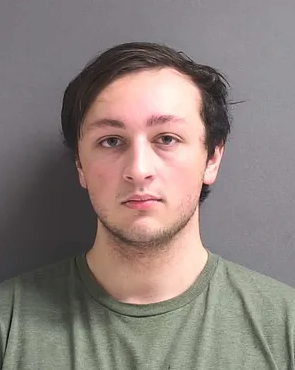
A booking photo of Noah Michael Urban released by the Volusia County Sheriff.

Although prosecutors had asked for Urban to serve eight years, Jacksonville news outlet News4Jax.com reports the federal judge in the case today opted to sentence Urban to 120 months in federal prison, ordering him to pay $13 million in restitution and undergo three years of supervised release after his sentence is completed.

In November 2024 Urban was charged by federal prosecutors in Los Angeles as one of five members of Scattered Spider (a.k.a. “Oktapus,” “Scatter Swine” and “UNC3944”), which specialized in SMS and voice phishing attacks that tricked employees at victim companies into entering their credentials and one-time passcodes at phishing websites. Urban pleaded guilty to one count of conspiracy to commit wire fraud in the California case, and the $13 million in restitution is intended to cover victims from both cases.

The targeted SMS scams spanned several months during the summer of 2022, asking employees to click a link and log in at a website that mimicked their employer’s Okta authentication page. Some SMS phishing messages told employees their VPN credentials were expiring and needed to be changed; other missives advised employees about changes to their upcoming work schedule.

That phishing spree netted Urban and others access to more than 130 companies, including Twilio, LastPass, DoorDash, MailChimp, and Plex. The government says the group used that access to steal proprietary company data and customer information, and that members also phished people to steal millions of dollars worth of cryptocurrency.

For many years, Urban’s online hacker aliases “King Bob” and “Sosa” were fixtures of the Com, a mostly Telegram and Discord-based community of English-speaking cybercriminals wherein hackers boast loudly about high-profile exploits and hacks that almost invariably begin with social engineering. King Bob constantly bragged on the Com about stealing unreleased rap music recordings from popular artists, presumably through SIM-swapping attacks. Many of those purloined tracks or “grails” he later sold or gave away on forums.

Noah “King Bob” Urban, posting to Twitter/X around the time of his sentencing today.

Sosa also was active in a particularly destructive group of accomplished criminal SIM-swappers known as “Star Fraud.” Cyberscoop’s AJ Vicens reported in 2023 that individuals within Star Fraud were likely involved in the high-profile Caesars Entertainment and MGM Resorts extortion attacks that same year.

The Star Fraud SIM-swapping group gained the ability to temporarily move targeted mobile numbers to devices they controlled by constantly phishing employees of the major mobile providers. In February 2023, KrebsOnSecurity published data taken from the Telegram channels for Star Fraud and two other SIM-swapping groups showing these crooks focused on SIM-swapping T-Mobile customers, and that they collectively claimed internal access to T-Mobile on 100 separate occasions over a 7-month period in 2022.

Reached via one of his King Bob accounts on Twitter/X, Urban called the sentence unjust, and said the judge in his case discounted his age as a factor.

“The judge purposefully ignored my age as a factor because of the fact another Scattered Spider member hacked him personally during the course of my case,” Urban said in reply to questions, noting that he was sending the messages from a Florida county jail. “He should have been removed as a judge much earlier on. But staying in county jail is torture.”

A court transcript (PDF) from a status hearing in February 2025 shows Urban was telling the truth about the hacking incident that happened while he was in federal custody. It involved an intrusion into a magistrate judge’s email account, where a copy of Urban’s sealed indictment was stolen. The judge told attorneys for both sides that a co-defendant in the California case was trying to find out about Mr. Urban’s activity in the Florida case.

“What it ultimately turned into a was a big faux pas,” Judge Harvey E. Schlesinger said. “The Court’s password…business is handled by an outside contractor. And somebody called the outside contractor representing Judge Toomey saying, ‘I need a password change.’ And they gave out the password change. That’s how whoever was making the phone call got into the court.”

❌
❌