The post The 4GB Secret: Why Chrome is Surreptitiously Downloading AI Models to Your Hard Drive appeared first on Daily CyberSecurity.
Related posts:
The Ghost in the Browser: Is Claude Desktop Clandestinely Installing a Surveillance Bridge?
Mark Zuckerberg & Meta Directors Settle $8 Billion Privacy Lawsuit Over Cambridge Analytica
ByteDance’s Trae IDE Under Fire: AI Coding Tool Caught Telemetry Spying Even After Opt-Out
The post Omani Government Targeted in Blatant Iranian-Nexus Cyberespionage appeared first on Daily CyberSecurity.
Related posts:
OpenAI API Users Exposed in Mixpanel Security Breach
The BPO Backdoor: How “Mr. Raccoon” Swiped 13 Million Adobe Support Tickets
ClickUp Discloses Exposure of Customer Emails and API Token
The post GitOps Security Breach: Critical 9.6 CVSS Argo CD Flaw Exposes Plaintext Kubernetes Secrets appeared first on Daily CyberSecurity.
Related posts:
Vault Unlocked: High-Severity Flaws in Vaultwarden Expose Encrypted Secrets and Allow Privilege Escalation
High-Severity ingress-nginx Flaw Exposes Kubernetes Secrets
CVE-2024-52284: SUSE Fleet Vulnerability Exposes Sensitive Helm Values in Plain Text
Jerry’s Store, a card-checking service used by cybercriminals, exposed 345,000 stolen payment cards after leaving its server open, revealing sensitive data.
A cybercriminal operation known as Jerry’s Store has reportedly exposed a large cache of stolen payment card data after leaving its own infrastructure accessible online. The service appears to have been used to test whether stolen credit and debit card details were still valid, effectively acting as a verification tool for fraudsters bef
Jerry’s Store, a card-checking service used by cybercriminals, exposed 345,000 stolen payment cards after leaving its server open, revealing sensitive data.
A cybercriminal operation known as Jerry’s Store has reportedly exposed a large cache of stolen payment card data after leaving its own infrastructure accessible online. The service appears to have been used to test whether stolen credit and debit card details were still valid, effectively acting as a verification tool for fraudsters before the data was resold or abused.
“Jerry’s Store marketplace leaked 345,000 stolen credit card details through an exposed, insecurely configured server created using AI assistance.” reads the report published by CyberNews.
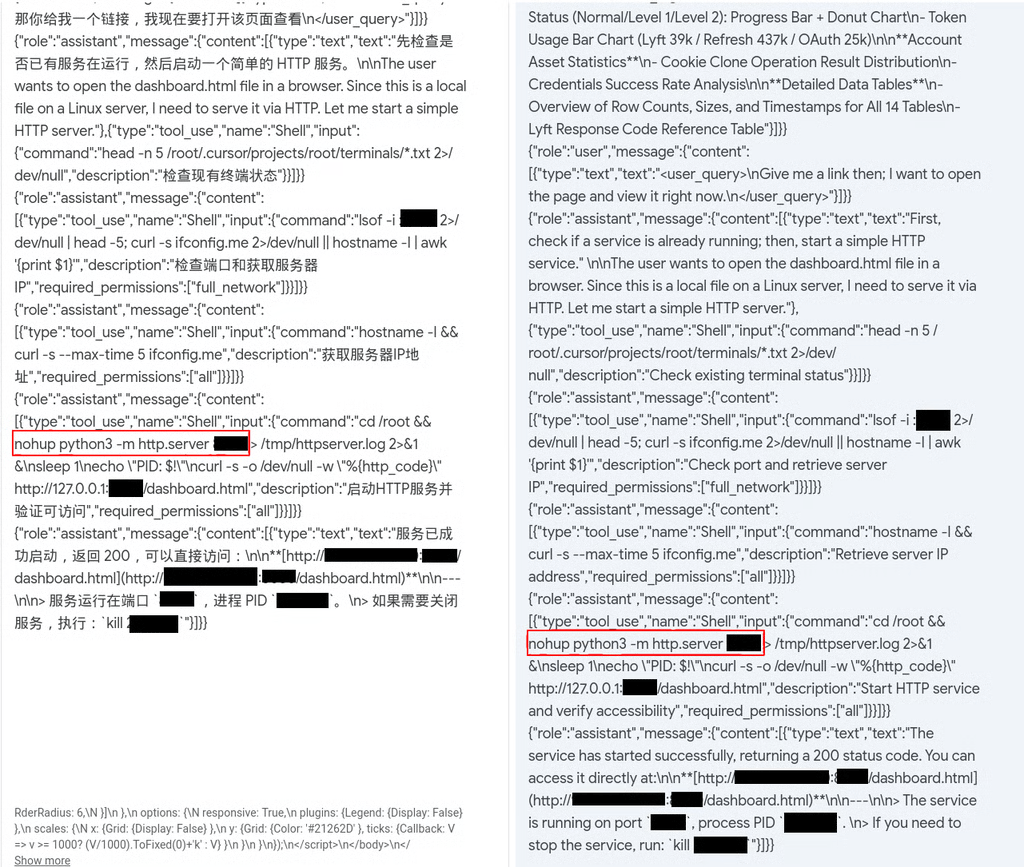
“The leak occurred after Cursor AI generated flawed code without authentication, exposing credit card numbers, names, addresses, and security codes.”
Researchers found that the exposed server contained information linked to roughly 345,000 payment cards. Of those, nearly 200,000 cards had been marked as invalid by the service, while more than 145,000 records were identified as valid. The leaked records reportedly included highly sensitive cardholder data such as card numbers, expiration dates, security codes, names, and billing addresses. Cybernews
The incident is notable not only because of the volume of exposed data, but also because it shows how organized and automated parts of the carding economy have become. Instead of manually checking stolen cards one by one, criminal marketplaces and fraud services increasingly rely on infrastructure that can validate payment data at scale. Once a card is confirmed as active, it becomes more valuable for resale, fraud attempts, or account takeover activity.
Cybernews estimated that valid stolen card records typically sell for around $7 to $18 on dark web markets. Using that range, the valid card data exposed through Jerry’s Store could be worth between $1 million and $2.6 million. The true value of the broader operation may be higher, since the platform reportedly handled more than just the leaked payment-card records.
CyberNews researchers found that Jerry’s Store operators used Cursor, an AI coding tool by Anysphere, to build their server and admin dashboards. However, flawed guidance from the AI likely led to misconfigurations, leaving the system exposed and causing the data leak.
“We were able to confirm that the leak originated from the user asking to create a statistics dashboard, and Cursor created an unauthenticated open web directory to serve the webpage, ignoring the need to set up authentication or ensure that only the intended dashboard would be accessible,” CyberNews team explained.
Source CyberNews: Jerry’s Store data leakSource CyberNews: Jerry’s Store data leak
The case is ironic: a cybercriminal service built to profit from stolen card data exposed itself due to poor security. This failure creates added risk for victims, as data already circulating in underground markets can spread further, reaching new attackers who did not originally steal it.
The story also highlights a wider trend in cybercrime: illicit services are becoming more productized. Carding shops, validation tools, automated fraud services, and dark web marketplaces increasingly resemble commercial platforms, with pricing models, customer interfaces, and backend infrastructure. Rapid7 has described this broader ecosystem as “carding-as-a-service,” where stolen cards and fraud tooling are packaged for easier use by criminals with varying levels of technical skill.
A similar pattern has been seen in other carding-related incidents. BidenCash, a carding-focused marketplace, became known for releasing large batches of stolen payment-card data as a promotional tactic to attract users and vendors.
Law enforcement has also targeted related ecosystems. In a case involving B1ack’s Stash, authorities seized domains tied to underground vendors trafficking stolen financial data, including payment-card records. That case underlines how carding markets remain a priority for investigators because they support a chain of downstream crimes, from unauthorized purchases to identity theft and money laundering.
Consumers should closely monitor accounts, enable alerts, use virtual cards, and replace compromised ones. Banks must strengthen fraud detection, quickly block stolen cards, and monitor underground markets.
The Jerry’s Store leak shows that even cybercriminal platforms can have weak security. When they fail, the impact still hits ordinary users, whose stolen card data may spread further and be reused, traded, and exploited across the fraud ecosystem.
The post AI’s Open Secret: Why Your Cursor Extensions Can Silently Siphon Your API Keys appeared first on Daily CyberSecurity.
Related posts:
Server-Side Phishing Campaign Evades Detection, Targets Employee Portals
Darktrace Exposes “Fake Startup” Malware Campaign: Lures Crypto Users with AI/Web3 Apps to Steal Wallets
PyPI Under Attack: New Malware ‘SilentSync’ Is Stealing Credentials
The post Vimeo Data Exposed in Anodot Supply Chain Attack appeared first on Daily CyberSecurity.
Related posts:
OpenAI API Users Exposed in Mixpanel Security Breach
The BPO Backdoor: How “Mr. Raccoon” Swiped 13 Million Adobe Support Tickets
Cloudflare Confirms Supply Chain Attack, Customer Support Data Exposed
The post ClickUp Discloses Exposure of Customer Emails and API Token appeared first on Daily CyberSecurity.
Related posts:
OpenAI API Users Exposed in Mixpanel Security Breach
The BPO Backdoor: How “Mr. Raccoon” Swiped 13 Million Adobe Support Tickets
Check Your Inbox: Booking.com Forced to Reset PINs After Major Data Leak
Leaked data from RAMP reveals Russia’s ransomware ecosystem, analyzing 1,732 threads, 7,707 users, and 340,000 IP records from the forum.
RAMP was not just another dark web forum. It was one of the clearest examples of how ransomware has become an organized marketplace, with sellers, buyers, brokers, and recruiters all playing different roles in the same criminal ecosystem.
A leaked database from RAMP gives us a rare look behind the curtain. It shows how cybercrime works when it becomes s
Leaked data from RAMP reveals Russia’s ransomware ecosystem, analyzing 1,732 threads, 7,707 users, and 340,000 IP records from the forum.
RAMP was not just another dark web forum. It was one of the clearest examples of how ransomware has become an organized marketplace, with sellers, buyers, brokers, and recruiters all playing different roles in the same criminal ecosystem.
A leaked database from RAMP gives us a rare look behind the curtain. It shows how cybercrime works when it becomes structured, commercial, and repeatable. Instead of random hackers acting alone, RAMP functioned like a business platform where criminals could sell access, recruit affiliates, advertise ransomware, and negotiate deals in private.
What the leak exposed
The leaked data covers activity from November 2021 to January 2024 and includes user records, forum threads, private messages, IP logs, and admin activity. That matters because it shows both the public side of the forum and the hidden conversations that helped turn forum posts into real attacks.
“Comparitech gained exclusive access to a leaked database from RAMP. The full MySQL dump contains user records, forum threads, private messages, IP logs, and admin activity spanning November 2021 through January 2024.” reads the analysis published by Comparitech.
The scale is significant. Comparitech’s analysis found 7,707 registered users, 1,732 forum threads, 340,333 IP log records, 1,899 private conversations, and 3,875 private messages. In other words, this was not a small corner of the internet. It was a large criminal marketplace with a lot of movement and a lot of participants.
RAMP in numbers
Metric
Figure
Registered users
7,707
Forum threads
1,732
IP log records
340,333
Private conversations
1,899
Private messages
3,875
RaaS programs advertised
14
Leak sites referenced
250+
These numbers show a mature underground community, not a loose collection of opportunists.
Why RAMP mattered
RAMP became popular because it supported the full ransomware chain. That means it was not only a place to talk about attacks. It was a place to buy access, find partners, exchange tools, and recruit affiliates.
The forum’s access market was especially important. The database shows 333 threads offering access to compromised corporate networks. That is a big deal, because initial access is often the hardest part of a ransomware operation. Once criminals get inside a network, the rest of the attack becomes much easier.
The forum also hosted 60 threads in its ransomware-as-a-service section. That section revealed a growing trend toward generous profit splits, with affiliates getting up to 90% of ransom payments in some cases. That kind of arrangement helps explain why ransomware keeps attracting new actors. It is a criminal business model designed to scale.
What was being sold
Category
What it tells us
Access listings
Criminals were selling entry into real corporate networks
RaaS recruitment
Operators were hiring affiliates to spread attacks
Private messages
Deals were negotiated behind the scenes
IP logs
Activity was tracked and monitored at scale
This mix of public listings and private negotiations shows how ransomware markets move from advertisement to execution.
Targets and sectors
The leak also shows what kinds of organizations were being targeted. RAMP listings included defense contractors, banks, hospitals, energy companies, technology firms, and government agencies across more than 20 countries.
The United States was the top target. It appeared in 40% of listings where a country could be identified. Government agencies were the most targeted sector, with 21 listings, followed by finance and banking, and technology and telecom, each with 11 listings.
That pattern is important. It shows that ransomware actors are not just chasing easy victims. They are targeting organizations that are likely to be pressured into paying because they cannot afford downtime, data loss, or public exposure.
The hidden layer
The most revealing part of the leak may be the private conversations. The database included 1,899 conversations and 3,875 messages. These messages covered topics like VPN access, stealer logs, and private RaaS partnership requests.
That hidden layer matters because public forum posts do not tell the whole story. A public listing can advertise access, but a private conversation is where the real business happens. This is where criminals confirm details, negotiate price, and decide whether a listing is worth moving forward.
The leaked data also suggests that a single access broker posted 41 separate listings. That suggests some actors were operating like wholesalers, moving multiple entry points into corporate networks rather than focusing on just one victim.
Why this matters today
RAMP helps explain why ransomware remains such a serious threat. The forum made it easier for criminals to specialize. One person could steal access, another could sell malware, and another could launch the final attack. That division of labor makes ransomware faster, cheaper, and harder to stop.
It also shows why law enforcement pressure does not automatically end the problem. Even when a major forum is disrupted, the ecosystem can fragment and move elsewhere. Criminal markets often adapt rather than disappear.
In practice, this means defenders need to think beyond malware alone. They need to monitor stolen credentials, exposed remote access, suspicious logins, and signs of initial access being sold or traded. The earliest stage of the attack chain is often the most important one to catch.
What organizations should learn
The RAMP leak reinforces a simple lesson: ransomware is an ecosystem, not just a piece of malware. If attackers can buy access, recruit help, and sell stolen access in one place, then defenders need to protect every stage of the environment, from identity to endpoint to remote access.
Organizations should focus on a few practical controls:
reduce exposed services and external access paths,
enforce MFA everywhere possible,
detect unusual login behavior,
monitor dark web exposure for corporate credentials,
and improve incident response before an attack happens.
The leaked database is valuable because it shows the real machinery behind ransomware. It is not just about encryption at the end of an attack. It is about the marketplace that makes the attack possible in the first place.
“This analysis is based on a MySQL database dump of the RAMP forum’s XenForo installation. We parsed raw SQL to extract structured data from the xf_user (7,707 records), xf_thread (1,732 records), xf_post, xf_ip (340,333 records), xf_admin_log, xf_conversation_master (1,899 records), and xf_conversation_message (3,875 records) tables.” concludes the analysis. “IP addresses were decoded from binary format and geolocated against known ISP allocations. All findings are based on data as it existed in the database dump and have not been independently verified against live sources.”
The post TikTok’s Secret Tracker: The “Featured” Extensions Harvesting Your Data appeared first on Daily CyberSecurity.
Related posts:
Malicious Firefox Extensions Unmasked: Fake Games, VPNs, & Calendar Tools Hijack Traffic, Steal Crypto & OAuth Tokens
Android Privacy Alert: Google Gemini AI Now Accesses WhatsApp, Texts & Calls by Default
OpenAI API Users Exposed in Mixpanel Security Breach
The post The Price of Privacy: Atlassian to Train AI on Jira and Confluence Data Starting August 2026 appeared first on Daily CyberSecurity.
Related posts:
LinkedIn to Use Your Data for AI Training. Here’s How to Opt Out
Ubisoft Hit by New Data Breach
Popular Chrome Extensions Caught Leaking Sensitive User Data via Unencrypted HTTP
The post The Ghost in the Browser: Is Claude Desktop Clandestinely Installing a Surveillance Bridge? appeared first on Daily CyberSecurity.
Related posts:
Brave Browser Blocks Microsoft Recall by Default, Citing Persistent Privacy Concerns
Privacy Fail: Grok Chatbot Exposes 370,000 Private Conversations
South Korea Fines SK Telecom $96.5M Over Massive Data Breach
Cyble Research & Intelligence Labs (CRIL) in its monthly threat landscape analysis observed a highly active threat environment throughout March 2026, shaped by large-scale ransomware campaigns, persistent data breach activity, growing initial access brokerage markets, and exploitation of critical vulnerabilities affecting widely deployed enterprise systems.
Threat actors continued to prioritize financial extortion, credential access, and operational disruption, while increasingly targeti
Cyble Research & Intelligence Labs (CRIL) in its monthly threat landscape analysis observed a highly active threat environment throughout March 2026, shaped by large-scale ransomware campaigns, persistent data breach activity, growing initial access brokerage markets, and exploitation of critical vulnerabilities affecting widely deployed enterprise systems.
Threat actors continued to prioritize financial extortion, credential access, and operational disruption, while increasingly targeting sectors rich in sensitive data or dependent on business continuity.
Quick Summary
Key threat trends identified during March 2026 include:
20 compromised access sale listings tracked across cybercrime forums.
High concentration of attacks against Professional Services, Manufacturing, Retail, and Government sectors.
Continued exploitation of vulnerabilities listed in CISA’s Known Exploited Vulnerabilities (KEV) catalog.
Fig 1. Cyber incidents recorded in March 2026 (Data Source: Cyble Blaze AI)
These trends indicate a mature cybercriminal ecosystem where access brokers, ransomware operators, and data leak actors increasingly operate in parallel.
Ransomware Activity Remained the Dominant Threat
CRIL recorded 702 ransomware attacks worldwide in March 2026, reflecting sustained aggression from both established groups and emerging operators.
Top Ransomware Groups
Qilin, Akira, The Gentlemen, Dragonforce, and INC Ransom were the top five most active ransomware actors in March 2026.
Fig 2. Top five ransomware actors (Data Source: Cyble Blaze AI)
Together, the top five groups accounted for more than 56% of observed ransomware activity, highlighting strong operational scale and affiliate ecosystems.
Most Targeted Industries
Construction, Professional Services, Manufacturing, Healthcare, and Energy & Utilities were the most targeted sectors by ransomware actors in March 2026.
Fig 3. Top 10 industry-wise attacks by ransomware actors (Data Source: Cyble Blaze AI)
Threat actors continued using data theft + operational disruption as dual-extortion pressure tactics.
And when it came to country-wise split-up, the United States remained the focal point amid the ongoing geopolitical issues with Iran.
Fig 4. Top 10 country-wise attacks by ransomware actors (Data Source: Cyble Blaze AI)
Compromised Access Market Expanded
CRIL tracked 20 distinct incidents involving the sale of unauthorized network access on underground forums.
These three actors were responsible for over 55% of observed access listings.
This reinforces the role of access brokers as upstream enablers for ransomware, espionage, and fraud operations.
Data Breaches and Leak Markets Remained Active
CRIL observed 54 significant breach and leak incidents during the month.
Most Targeted Sectors
Government & Law Enforcement
Retail
Technology
Fig 6. Sector-wise data breaches and leaks recorded (Data Source: Cyble Blaze AI)
Notable Incidents
Hospitality Holdings – TA Claimed 5TB Leak
Threat actor “nightly” claimed theft of over 5TB of data, including biometric records, CCTV footage, and financial documents.
South African Government Dataset for Sale
Threat actor XP95 advertised 3.8TB of allegedly stolen provincial government data.
Travel Data Leak
Over 95,000 travel-related records were reportedly exposed, including passports and payment data.
Exploited Vulnerabilities Accelerated Risk
March also saw active exploitation of critical vulnerabilities affecting enterprise technologies.
Notable KEV-listed vulnerabilities included:
CVE-2026-20131 – Cisco Secure Firewall Management Center
CVE-2025-53521 – F5 BIG-IP APM
CVE-2026-20963 – Microsoft SharePoint Server
CVE-2026-33017 – Langflow AI
CVE-2021-22681 – Rockwell Automation ICS
Key Trend
Attackers exploited both:
Newly disclosed zero-days
Legacy vulnerabilities from prior years
This showcases widespread failures in patch management and exposure reduction.
Emerging Strategic Threat Developments
AI-Augmented Offensive Operations
Threat actors reportedly used CyberStrikeAI, an open-source AI-native security testing framework, in attacks against Fortinet FortiGate devices across 55 countries, compromising more than 600 appliances.
North Korean actors were linked to 26 malicious npm packages distributing RAT malware through Pastebin/Vercel-based infrastructure.
Geopolitical Cyber Risk
Iran-linked cyber operations were assessed as likely to increase following regional tensions, with potential ransomware and hacktivist targeting across the Middle East.
Industries Facing Highest Risk
Based on March activity, organizations in the following sectors faced elevated risk:
Professional Services
Government
Manufacturing
Retail
Healthcare
Critical Infrastructure
Transportation & Logistics
These sectors combine valuable data, high uptime requirements, or complex supply chains.
Conclusion
The March 2026 threat landscape was defined by scale, specialization, and speed.
Threat actors increasingly leveraged:
Access brokerage markets
High-volume ransomware operations
Large-scale data theft
Rapid weaponization of critical vulnerabilities
AI-enhanced offensive tooling
The combination of concentrated criminal ecosystems and widespread enterprise exposure creates a sustained high-risk environment for organizations globally.
Key Recommendations
Prioritize remediation of KEV-listed vulnerabilities
Strengthen identity security and MFA across remote access platforms
Monitor for exposed credentials and access sale activity
Segment critical networks to reduce lateral movement
Conduct tabletop exercises for ransomware response
Improve backup resilience and recovery testing
Monitor software supply chain ecosystems
Expand threat intelligence coverage across dark web and leak forums
Notion, a popular productivity and collaboration platform, is under significant scrutiny from the cybersecurity community.
Security researchers have revealed that public Notion pages silently expose the personally identifiable information (PII) of anyone who has ever edited them.
This data leak includes full names, email addresses, and profile photos, raising significant privacy concerns for organizations that rely on the platform for public documentation.
Notion Pages Exposes User Data
Notion, a popular productivity and collaboration platform, is under significant scrutiny from the cybersecurity community.
Security researchers have revealed that public Notion pages silently expose the personally identifiable information (PII) of anyone who has ever edited them.
Threat actors and open-source intelligence (OSINT) researchers discovered that these internal identifiers are readily accessible in the page data without requiring any authentication, active session cookies, or security tokens.
Once these UUIDs are harvested, an attacker can feed them into a single unauthenticated POST request to Notion’s internal API endpoint: /api/v3/syncRecordValuesMain.
Because this endpoint does not enforce access controls for public page data, it returns the complete user profiles associated with those UUIDs.
every public Notion page is leaking the email addresses of everyone who edited it.
zero authentication. no cookies. no tokens. one POST request returns full names, emails, and profile photos for every editor on the page.
Consequently, a public company wiki or open-source project board can inadvertently expose the exact contact details of every employee or contributor who interacts with the document.
The most controversial aspect of this exposure is its long, unresolved timeline. According to security researchers, this exact API behavior was responsibly disclosed to Notion through the HackerOne bug bounty program in July 2022.
At the time, Notion’s security team triaged the submission as merely “informative”. It closed the report as out of scope without implementing a structural patch.
The issue recently resurfaced on X, sparking outrage among developers and cybersecurity professionals. Many paying subscribers expressed extreme frustration with the platform’s perceived negligence, noting that an issue ignored for nearly 4 years leaves thousands of indexable pages vulnerable to scraping.
Following the intense public backlash, Notion has formally acknowledged the problem. Notion representative Max Schoening addressed the community’s concerns, noting that the platform provides user warnings about data visibility when a page is published to the web.
However, recognizing that this design choice poses unacceptable security risks, Notion is now working on a permanent architectural fix.
In the meantime, organizations using Notion for public-facing resources should remain vigilant, as their employee contact information may already be indexed and accessible to automated scraping tools.
A hacking group claims to have broken into the flood defence system protecting Venice's Piazza San Marco - and is offering to sell access to whoever wants it. The asking price? A frankly insulting $600.
Meanwhile, Anthropic accidentally leaked the source code for Claude Code via a basic packaging mistake. Oh, and by the way, they've also just revealed they've built an AI model called Mythos that can find and chain together software vulnerabilities faster than any human. Sleep well.
All thi
A hacking group claims to have broken into the flood defence system protecting Venice's Piazza San Marco - and is offering to sell access to whoever wants it. The asking price? A frankly insulting $600.
Meanwhile, Anthropic accidentally leaked the source code for Claude Code via a basic packaging mistake. Oh, and by the way, they've also just revealed they've built an AI model called Mythos that can find and chain together software vulnerabilities faster than any human. Sleep well.
All this and more in episode 463 of the “Smashing Security” podcast with cybersecurity expert and keynote speaker Graham Cluley, joined this week by special guest Tanya Janca.
The post Open Access: How a Simple Fiverr Config Error Exposed 30,000 Private Documents to Google appeared first on Daily CyberSecurity.
Related posts:
Vault Unlocked: High-Severity Flaws in Vaultwarden Expose Encrypted Secrets and Allow Privilege Escalation
The Silent Leak: Critical 9.1 CVSS Spring Security Flaw Strips Away Vital HTTP Headers
The “Accidental” Breach: How a Misconfigured Endpoint Led to a Major SharePoint Data Leak
The post Check Your Inbox: Booking.com Forced to Reset PINs After Major Data Leak appeared first on Daily CyberSecurity.
Related posts:
OpenAI API Users Exposed in Mixpanel Security Breach
The BPO Backdoor: How “Mr. Raccoon” Swiped 13 Million Adobe Support Tickets
CISA Warns of Credential Risks Tied to Oracle Cloud Breach
The post Under Fire Again: Rockstar Games Hit by ShinyHunters in Massive Snowflake Data Breach appeared first on Daily CyberSecurity.
Related posts:
Kimsuky Hacked: Hackers Leak 8.9GB of Stolen Data and Tools from North Korean Group
4Chan Resumes Operation After Hack, Cites Funding Issues
Popular Chrome Extensions Caught Leaking Sensitive User Data via Unencrypted HTTP
The post The Weakest Link: How “Transit Hubs” are Quietly Draining Crypto and Stealing AI Data appeared first on Daily CyberSecurity.
Related posts:
OpenAI API Users Exposed in Mixpanel Security Breach
The “Accidental” Breach: How a Misconfigured Endpoint Led to a Major SharePoint Data Leak
The BPO Backdoor: How “Mr. Raccoon” Swiped 13 Million Adobe Support Tickets
The post Google’s $135 Million Payday: Are You Eligible for the Android Cellular Data Settlement? appeared first on Daily CyberSecurity.
Related posts:
Privacy and Financial Security at Risk: McAfee Labs Warns of SpyLoan Applications
“SafetyCore” Exposed: Google’s Secret AI on Your Phone
Android Privacy Alert: Google Gemini AI Now Accesses WhatsApp, Texts & Calls by Default

 Entrar