Visualização normal

Antes de ontemStream principal
  • ✇Security Boulevard
  • Cyberattacks on Hospitals Cost Lives. Here’s How to Fight Back at Machine Speed. Shriram Sharma
    Healthcare is the most targeted industry for cyberattacks, and ransomware-related delays in care have been linked to patient deaths. D3 Morpheus gives healthcare SOC teams an AI-autonomous platform that correlates alerts across the entire security stack, identifies ransomware kill chains in progress, and produces the audit-ready evidence trail that HIPAA and HITECH demand. The post Cyberattacks on Hospitals Cost Lives. Here’s How to Fight Back at Machine Speed. appeared first on D3 Security. The
     

Cyberattacks on Hospitals Cost Lives. Here’s How to Fight Back at Machine Speed.

27 de Fevereiro de 2026, 18:12

Healthcare is the most targeted industry for cyberattacks, and ransomware-related delays in care have been linked to patient deaths. D3 Morpheus gives healthcare SOC teams an AI-autonomous platform that correlates alerts across the entire security stack, identifies ransomware kill chains in progress, and produces the audit-ready evidence trail that HIPAA and HITECH demand.

The post Cyberattacks on Hospitals Cost Lives. Here’s How to Fight Back at Machine Speed. appeared first on D3 Security.

The post Cyberattacks on Hospitals Cost Lives. Here’s How to Fight Back at Machine Speed. appeared first on Security Boulevard.

  • ✇Malwarebytes
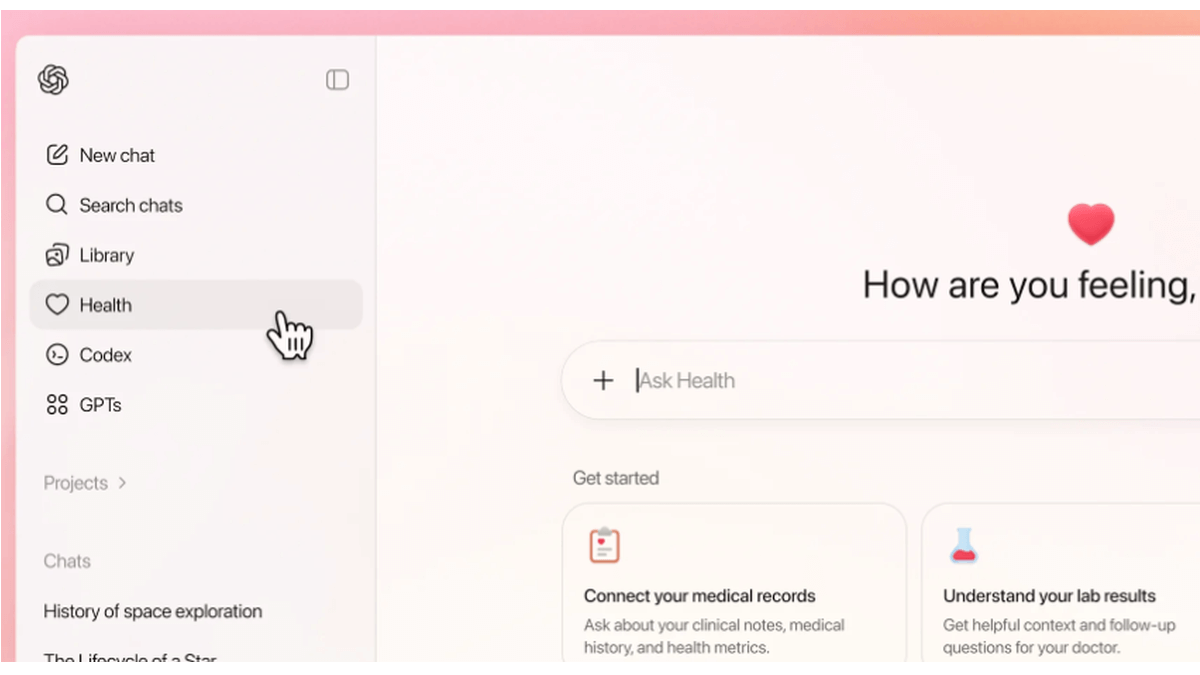
  • Are we ready for ChatGPT Health?
    How comfortable are you with sharing your medical history with an AI? I’m certainly not. OpenAI’s announcement about its new ChatGPT Health program prompted discussions about data privacy and how the company plans to keep the information users submit safe. ChatGPT Health is a dedicated “health space” inside ChatGPT that lets users connect their medical records and wellness apps so the model can answer health and wellness questions in a more personalized way. OpenAI promises addit
     

Are we ready for ChatGPT Health?

9 de Janeiro de 2026, 09:26

How comfortable are you with sharing your medical history with an AI?

I’m certainly not.

OpenAI’s announcement about its new ChatGPT Health program prompted discussions about data privacy and how the company plans to keep the information users submit safe.

ChatGPT Health is a dedicated “health space” inside ChatGPT that lets users connect their medical records and wellness apps so the model can answer health and wellness questions in a more personalized way.

ChatGPT health

OpenAI promises additional, layered protections designed specifically for health, “to keep health conversations protected and compartmentalized.”

First off, it’s important to understand that this is not a diagnostic or treatment system. It’s framed as a support tool to help understand health information and prepare for care.

But this is the part that raised questions and concerns:

“You can securely connect medical records and wellness apps to ground conversations in your own health information, so responses are more relevant and useful to you.”

In other words, ChatGPT Health lets you link medical records and apps such as Apple Health, MyFitnessPal, and others so the system can explain lab results, track trends (e.g., cholesterol), and help you prepare questions for clinicians or compare insurance options based on your health data.

Given our reservations about the state of AI security in general and chatbots in particular, this is a line that I don’t dare cross. For now, however, I don’t even have the option, since only users with ChatGPT Free, Go, Plus, and Pro plans outside of the European Economic Area, Switzerland, and the United Kingdom can sign up for the waitlist.

OpenAI only uses partners and apps in ChatGPT Health that meet OpenAI’s privacy and security requirements, which, by design, shifts a great deal of trust onto ChatGPT Health itself.

Users should realize that health information is very sensitive and as Sara Geoghegan, senior counsel at the Electronic Privacy Information Center told The Record: by sharing their electronic medical records with ChatGPT Health, users in the US could effectively remove the HIPAA protection from those records, which is a serious consideration for anyone sharing medical data.

She added:

“ChatGPT is only bound by its own disclosures and promises, so without any meaningful limitation on that, like regulation or a law, ChatGPT can change the terms of its service at any time.”

Should you decide to try this new feature out, we would advise you to proceed with caution and take the advice to enable 2FA for ChatGPT to heart. OpenAI claims 230 million users already ask ChatGPT health and wellness questions each week. I’d encourage them to do the same.


We don’t just report on data privacy—we help you remove your personal information

Cybersecurity risks should never spread beyond a headline. With Malwarebytes Personal Data Remover, you can scan to find out which sites are exposing your personal information, and then delete that sensitive data from the internet.

  • ✇@BushidoToken Threat Intel
  • BlackBasta Leaks: Lessons from the Ascension Health attack BushidoToken
    The BlackBasta ransomware group’s leaked chat logs have proven to already be another unique and fascinating opportunity for researchers to better understand the internal operations of a Russia-based organised cybercrime enterprise. These leaks followed a major leak of Conti chat logs in 2022, which also proved to be a treasure trove of intelligence on the cybercrime enterprise. The BlackBasta gang consists of former Conti ransomware members and it should come as no surprise that their operations
     

BlackBasta Leaks: Lessons from the Ascension Health attack

27 de Fevereiro de 2025, 19:43


The BlackBasta ransomware group’s leaked chat logs have proven to already be another unique and fascinating opportunity for researchers to better understand the internal operations of a Russia-based organised cybercrime enterprise. These leaks followed a major leak of Conti chat logs in 2022, which also proved to be a treasure trove of intelligence on the cybercrime enterprise. The BlackBasta gang consists of former Conti ransomware members and it should come as no surprise that their operations are similar in nature and structure.

Ransomware researchers have several valuable resources to conduct investigations with nowadays. This includes ransomware.live, which contains several resources including ransomch.at, a collection of negotiation chats between ransomware gangs and their victims, as well as the ransomware tool matrix and ransomware vulnerability matrix. These resources allow to deeply understand the capabilities and motivations of these ransomware gangs. However, leaked chat logs are the final missing piece of the puzzle and offer a deeper understanding from the cybercriminal’s very own perspective and organisational structure.

Active since April 2022, BlackBasta is one of the top-tier ransomware gangs and one of the largest cybercrime enterprises in the world. According to the US Cybersecurity Infrastructure and Security Agency (CISA), BlackBasta impacted up to 500 different businesses and critical infrastructure in North America, Europe, and Australia as of May 2024.

The importance of the Ascension Health incident

This blog shall dive deep into the Ascension Health attack by BlackBasta. It is a step-by-step extraction of the conversation between the BlackBasta members while they decide how to handle the attack.

The new insights around how BlackBasta and other ransomware gangs perceive being involved with incidents at healthcare sector victim should prove useful for incident responders, law enforcement, and governments that have to resolve these types of attacks on the healthcare sector on an alarmingly regularly basis.

Background

On 9 May 2024, mainstream news organisations in the US reported about a cyberattack and significant disruption of services of Ascension Health, one of the largest healthcare providers in the country. On 11 May 2024, BleepingComputer reported that BlackBasta was to blame for the attack on Ascension Health and that ambulances had been disrupted and patients were being redirected to other hospitals.

How the Incident Began

The BlackBasta attack on Ascension Health began many months before the ransomware was deployed on their network. Reconnaissance of Ascension Health by members of BlackBasta began around 3 November 2023. They shared 14 email addresses of Ascension Health employees, which we can only assume were used for phishing or password guessing. Ransomware gangs often used Zoominfo to profile their targets to determine whether it is worth it for them to attack and get a ransom from them.

A screenshot of a chat

AI-generated content may be incorrect.

The ransomware gang themselves wrote in their Matrix chat that CBS News had written about a cyberattack on Ascension Health on 9 May 2024 and exclaimed that “it looks like one of the largest attacks of the year.”

A screenshot of a chat

AI-generated content may be incorrect.

Another BlackBasta member “gg” confirmed in the chat that it was them and appeared to be surprised that the news was writing about it.

Later, “gg” appeared to feel bad about the attack and concerned that cancer patients were suffering. However, at this stage it is hard to tell if they are serious or being sarcastic.

A close-up of a white rectangular object

AI-generated content may be incorrect.

One member of BlackBasta who used the moniker “tinker” then stated that he wanted to be the negotiator for the BlackBasta team and began to strategize how to extract a ransom payment.

A close-up of a white background

AI-generated content may be incorrect.

“gg” says they encrypted Ascension Health’s network using the Windows Safe Mode Boot technique, which is a function that BlackBasta is well-known to do.

A screenshot of a computer

AI-generated content may be incorrect.

The negotiator, “tinker” begins to weigh up their options. He states he believes the FBI and CISA will be involved, as well as Mandiant and begins to compare the incident to the Change Healthcare attack by ALPHV/BlackCat (and later RansomHub) who received a 22 million USD ransom payment.

A close-up of a sign

AI-generated content may be incorrect.

A screenshot of a message

AI-generated content may be incorrect.

“gg” shares that all the stolen data was put on a server named “ftp8” and tagged as “ALBIR_DS” and says to “tinker” that he should “look at the folder name, everything we downloaded from them is there."

The operator, “gg” also shared a summary of the target environment of Ascension Health. This includes number of servers being over 12,000, what security tools they use such as Cylance, Tanium, and McAfee. Plus, “gg” said they downloaded over 1.4TB of data to "ftp8" and used BlackBasta ransomware version 4.0 and attacked them on 8 May 2024.

A screenshot of a chat

AI-generated content may be incorrect.

Interestingly, “gg” appears to have also recommended to bluff to the victim that they stole more than 1.5TB and say to the victim that they stole 3TB instead.

Negotiation Strategizing

After having established the details of the incident, Tinker (the negotiator) began to wonder about the likelihood of getting a ransom payment as well as estimate how much Ascension Health is likely losing per day.

A close-up of a message

AI-generated content may be incorrect.

Tinker (negotiator) then explains to the rest of the BlackBasta members involved in the attack what course of action they should take to get the ransom from Ascension Health. Tinker says they would normally set a 3% of the annual revenue and negotiate from there. They note that there are clear problems with the victim being a hospital and that this attack followed the Change Health attack by ALPHV/BlackCat. They also noted that they are worried as they believe the US National Security Agency (NSA) attacked TrickBot's servers four years ago and that the FBI took down Qakbot more recently. Tinker is  also worried that one of Ascension Health’s patients will die and they will be blamed and labelled as a terrorist attack.

Tinker also noted that when BlackSuit attacked Octapharma that it was labelled by the news as "hostile actions by Russia" and they warned that Conti was already under sanctions and that because they are tied to Conti they may not get paid.

Tinker, ransomware negotiator for BlackBasta, ultimately recommended giving the decryptor for free to Ascension Health and resorting to data theft extortion. This is notable, as it is a similar situation to the Irish HSE ransomware attack by Conti, who also provided the decryptor for free.

A close up of a text

AI-generated content may be incorrect.

❌
❌