Entrar

From School to Battlefield to Grave: How Russian Cossacks drive young people to war

From School to Battlefield to Grave
How Russian Cossacks drive young people to war
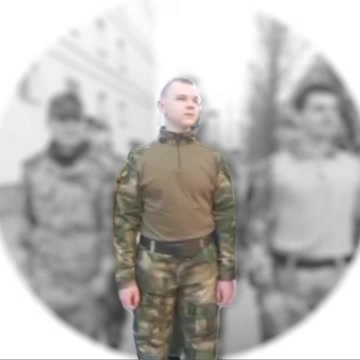
This video was posted in April 2024 by Беркут, a student association within a Russian Federal University.
Students, about to leave for an Airsoft competition, stand in military formation outside a campus building.
This is Олег Монин who took Berkut’s oath four months earlier. Through this veiled Cossack Youth Organisation, he trained in combat tactics with returned fighters and transitioned from pretend to real weapons.
Within a year, Oleg abandoned his studies and enlisted in БАРС-15, a Cossack Volunteer Battalion fighting in Ukraine.
By Feb. 10, 2025 Oleg was dead. He died aged 19, less than four months after deployment in Ukraine.
As of February 2025 there were more than 18,500 Cossacks on the front lines in Ukraine and approximately 50,000 in the army reserve.
Cossack societies, organisations, and even military units provide an identity that is indigenous to Russia, Visiting Assistant Professor at Miami University, Dr Marcello Fantoni told Bellingcat.
This identity is “rooted in ‘traditional’ values, martial prowess, military readiness, orthodox religiosity and a culture not influenced by the ‘corrupting’ West,” Fantoni added via email. This is why “education is central to the overall enterprise”.
Oleg’s story demonstrates how the Cossacks drive young people from a school club to a war zone and enable a state-sponsored alternative mobilisation force.
The Cossacks played an important role in the formation of the Russian Empire. They lived in
communities called hosts on the edges of the empire. They operate under
a military hierarchy ruled by a chief,
the Ataman. Due to their loyalty to the Tsar, the Cossacks were repressed by the
Bolsheviks after 1917.
Credit: Journal “Chronicle of War”, 1915; Nicholas II among officers
When the Soviet Union collapsed in 1991, the Cossacks’ descendants
called for a “rebirth”.
In 2005, a bill submitted by President Vladimir Putin allowed registered Cossack organisations members
to serve in military units and police forces.
Credit: tamvesti.ru
New hosts were created in traditionally non-Cossack lands with a
variety of institutions
to direct them. In 2018, the government
united them in the “All-Russian Cossack
Society”. Putin tries to marginalise the traditional Cossack groups, analyst Paul Goble told
Bellingcat while the ones “he has created for his own purposes” play a “major role in military and
patriotic education”.
Credit: Kremlin
There are 13 registered Cossack Hosts across all of Russia.
Only 8 of Russia’s 83 recognized Federal Subjects do not have a registered Cossack Host.
In 2018, the Black Sea Cossack Host of Crimea entered the register. The peninsula has been under Russian occupation since 2014. The Cossack legacy is also vitally important to Ukrainian identity.
There are new hosts in the occupied Ukrainian territories of Kherson, Zaporizhzhia, Donetsk, and Luhansk.
Russian Cossack organisations have been “very active within the occupied Ukrainian regions,” Dr Fantoni told Bellingcat. They “recruit local residents and then deploy them for cultural and military purposes,” allowing Russia “to contest and even co-opt a central tenet of Ukrainian national identity – Cossackdom,” he said.
The national “All-Russian Cossack Society” VSKO was created in 2018, and in 2019, the State Duma gave Russian President Vladimir Putin exclusive authority to appoint its national Ataman.
At the top of the VSKO is Ataman Vitaly Kuznetsov, a Cossack General.
Kuznetsov was appointed in November 2023, succeeding the first-ever national Ataman – Nikolai Doluda, then 70 years old and a sanctioned individual.
Kuznetsov has also become a leading Cossack interacting with the Russian state.
Including with Dmitry Mironov, assistant to President Putin and Chair of the Council for Cossack Affairs.
And Deputy Prime Minister of Russia Dmitry Chernyshenko.
As well as Leonid Pasechnik, head of the Luhansk People’s Republic. Kuznetsov thanked Pasechnik in June for helping create three Cossack Cadet Corps in the occupied region.
According to Kuznetsov, the VSKO priorities are “development of military Cossack societies in all directions: education, culture, history, and most importantly, youth. Everything through youth.”
Cossack education can be divided into primary, secondary, and tertiary levels, all with the goal of promoting a unified system.
At the primary level are the Cossack kindergartens, which compete nationally to be named the best.
There are Cossack schools and regular schools with a Cossack affiliation. Data from 2022 claim there were just under 2000 such institutions with around 210,000 students, but recent claims point to over 300,000 students.
The most intense level of Cossack education is the Cossack Cadets Corps, of which there are 31 across the country, with the newest corps created in Russia’s Far East. They also compete nationally.
Finally, the Association of Cossack Universities has 26 members, with many concentrated in Rostov and Krasnodar. There is also a Union of Cossack Youth, which in 2022 had more than 163,000 members. More than 5,500 Cossack youth took part in military exercises on training grounds in 2023.
Oleg’s story demonstrates how young people outside formal Cossack education can still get pulled in. It also shows that the Cossacks are but one of several interlaced strategies for “military-patriotic” education.
Oleg grew up in Saratov.
He studied in Lyceum N.3, a state-funded educational institution in Saratov. Often, the school promotes events like the national Zarnitsa competition. It includes activities like “putting on gas masks” or “sniper games” for third graders.
The school’s military club “Fakel” acts as an intermediary for these events and other nationwide military education initiatives such as the 24-hour-long Avangard training for tenth graders.
In 2024, Natalia Saprykina, the director of Lyceum N.3, was awarded a Letter of Gratitude for her “contribution to the patriotic education of the younger generation” by a Deputy of the Regional Duma.
Oleg graduated from high school in 2023 at the age of 17.
In the same year he enrolled in InPIT, a higher education institution of the Saratov State Technical University.
By November Oleg had turned 18 and was wearing military fatigues and practising survival skills alongside other candidates of a “military-patriotic” student association named Berkut, at another local university, the Saratov State Law Academy (SSLA).
Though Berkut is not explicitly a Cossack organisation, we established several connections between the head of Berkut, Alexander Andreevich, and Cossack organisations. As we’ll see, Andreevich was present at multiple military style training camps that Oleg took part in.
Neither does its page in the University website.
The association’s official objectives are “forming a positive image of military service” and “popularisation of service in the Russian army and law enforcement agencies”. It is headed by Alexander Andreevich.
However, some of Berkut’s videos include the banner of a Молодёжная казачья организация.
A Telegram post by Andrey Fetisov, the Saratov District Ataman, refers to Berkut as a “Cossack Youth Movement”.
Even though Berkut (left) shares a name and eagle iconography with a notorious Ukrainian special police force (right), part of which defected to Russia during the occupation of Crimea in 2014, Bellingcat found no link between the two organisations.
By December 2023, nearing the end of the first semester, Oleg and the other candidates took the Berkut oath, making them official members. Oath-taking ceremonies are “invented traditions” among Cossack forces.
Atop the dais stand senior members of Berkut, including the head of the organisation – Alexander Andreevich.
Andreevich is an active Cossack who has been working under the guidance of District Ataman Andrey Fetisov since at least April 2023.
More recently, in January 2025, they were both delivering a lesson to Cossack children for Yunarmiya, exemplifying the overlapping network of youth militarisation initiatives.
In July 2025, they both attended Saratov’s Council of Atamans that was hosted at the Ministry of Internal Policy and Public Relations of Saratov. Local organisations often meet there.
In August 2024, Andreevich attended the iVolga Cossack Youth Festival, where he met Kuznetsov. The only two people featured speaking in an official video.
Andreevich also led Oleg to two military-inspired events in April 2024.
The first, on April 13, was the annual Airsoft competition.
Five days later they went to a training that included trench tactics and simulated helicopter jumps.
Since 2023, Oleg often wore a distinctive yellow and red “Скорпион” call sign patch on his chest when wearing military fatigues, which distinguishes him from other youth at the events. That and other distinctive features identify him even with a mask or goggles.
Bellingcat was able to geolocate this place to be a Rosgvardia training ground on the outskirts of Saratov.
Notably, the trenches are not visible on Google Earth but are on Yandex Maps, which has more recent imagery for the region.
This group photo tells its own story. The flags visible are, from left to right, for the Volga Cossack Host, the Immortal Regiment, the Kuban Cossack Host, and Veteran News.
Oleg is at the far right wearing his “Scorpion” and Berkut patches.
This time, ex-fighters were there too.
Sergey Frolkov is an ex-fighter in the war on Ukraine. He regularly posts photos with an Akhmat special forces patch, associated with Kadryovites . He is also a member of the local Combat Brotherhood association.
As is Oleg Mysov, another returned fighter who also engages in “patriotic education of youth” events.
Both have attended Cossack events. Even though in this photo they are holding the Volga Cossack Host flag, Bellingcat could not clearly identify them as Cossacks.
A third man, Andrey Berdnikov is indeed a Cossack and a former fighter of BARS-15, the Battalion Oleg joined, though he was reportedly expelled by his Commander. On the left, Alexander Andreevich.
Bellingcat contacted Sergey Frolkov, Oleg Mysov and Andrey Berdnikov before publication to ask about their roles, but did not receive a response.
Five months later, in September 2024, Oleg went on a two-day training. Andrey Fetisov got a special thanks for the opportunity.
Bellingcat geolocated it to a military training ground in Samara, the same location where other Cossack recruits trained before deploying to BARS-15. Fetisov himself shared photos of this training ground two weeks after stepping down as Ataman to join BARS-15. Andreevich left and Oleg right in this photo.
They used real weapons this time. A video montage shows participants firing live rounds.
This is a photo that includes Oleg, Fetisov, and Andreevich. The first media we found for this event is from early September which is consistent with the sun position in this photo and the grass patches seen in satellite imagery from early September 2024.
Bellingcat contacted Kuznetsov, Fetisov and Andreevich to ask about their roles in the Cossack community, but they haven’t responded.
This is the last time Bellingcat was able to trace Oleg’s whereabouts with open sources before he joined BARS-15.
Many countries have a volunteer reserve system for getting more soldiers in times of war. In Russia, the system is known as BARS, created in 2015 and intensified in 2021. All BARS fighters sign a contract with the Ministry of Defense and get paid.
Mapping the geolocated positions of these units in the UAControlMaps Project dataset reveal widespread areas of operations. BARS Battalions are often reorganised. Estimates put the total number so far at over 30 BARS Battalions and 10 of them have overt Cossack affiliation.
Cossacks also operate as detachments in other military structures. By their own reckoning, in February there were more than 18,500 Cossacks on the front lines in Ukraine. In May the first-ever national Ataman, Nikolai Doluda, gave a higher figure of 46,000 Cossacks.
As of 2024, British Professor Rod Thornton estimated that BARS constitute some 10-30,000 troops in Ukraine, 15% of the total invasion force.
The Mediazona project tracks individual Russian losses in Ukraine and publishes bi-weekly reports. As of Nov. 21, 2025, they identified 149,241 publicly named casualties, Oleg among them.
The project also tracks volunteer casualties.
Deaths of volunteer fighters constituted 12.8% of losses in 2022 and 21.9% 2023. In 2024 they more than doubled to 45.7%. As of Nov. 21, verified deaths of volunteer fighters for 2025 were at 42.8%.
BARS-15 is a Cossack battalion created on
May 15, 2022,
and named
Ермак
after
a
historical
Ataman.
Originally composed of Cossacks from multiple hosts, mainly Volga and Oremburg, it
now
draws its members from the Volga Host only.
Credit: All-Russian Cossack Society
These are some of BARS-15 specific patches.
While in BARS-15 Oleg was reportedly assigned to the 15th Separate Guards Motor Rifle Brigade. Several sources place BARS-15 as subordinate to the 15th Separate Guards Motor Rifle Brigade also known as the Black Hussars, headquartered at the Samara Oblast. Bellingcat geolocated this video from September 2024 to their training grounds.
The panel reads Black Hussars. Oleg is on his knee in front of Andreevich, wearing his distinctive
“Scorpion” patch.
Credit: VKontakte @svpo_berkut
The number of active Cossack fighters in BARS-15 is reportedly 400, a number echoed
by a former Commander, with other sources saying over 900 volunteers
have passed through as of September 2024. They reportedly
took part in the
invasion
of Avdiivka among other combat
activities in Ukrainian cities both in Donetsk and Luhansk.
Credit: VKontakte @vvko_russia
Bellingcat geolocated this warehouse to the west of Selydove, Donetsk, using satellite imagery and reference images from when the warehouse was a concrete products factory.
One of its former members is Andrey Fetisov, who temporarily stepped down as Saratov District Ataman and joined
BARS-15 between approximately November
2023 and June 2024.
Credit: Telegram @izvestia64
The identification of Fetisov’s call sign – СЛЕНГ – suggests he took on military roles such as “Deputy Commander for Educational Work” and “Political Officer”.
In April 2024, Fetisov received a Medal for Bravery from
Vitaly Kuznetsov, the national Ataman. Within six months, Fetisov would be taking Oleg to the
BARS-15 training camp.
Credit: Telegram @izvestia64
There are many reasons why people are motivated to join Cossack groups, Dr Fantoni told Bellingcat, adding that these motivated individuals “are the driving force” behind militarisation. “Some do it out of patriotic motivations, others for political, economic or individual status gain, some even because this can protect oneself from future mobilisation to an actual fighting unit,” he said.
Oleg’s connection to the Cossacks was not typical. He did not attend a Cossack school or university and still found himself in their midst via the military youth groups he joined. As his story demonstrates, Cossacks are embedded into the education system. Their involvement includes Berkut showcasing Kalashnikovs to kids in a mall, a teacher and returned BARS-15 fighter weaving camouflage nets with children, a former BARS-15 commander giving inspirational lessons to young students, and Cossack cadets drawing “heartfelt mementoes” to send to BARS-15.
The Russian government announced that funding for the Cossacks will double in the next two years and it continues to implement its Strategy in relation to the Russian Cossacks 2021-2030.
The first-ever national Ataman and Kuznetsov’s predecessor, Nikolai Doluda, is working on a new national law on the Cossacks and the creation of a mobilisational reserve from the Cossacks.
This image first appeared on Oleg’s obituary posted by Fetisov. The vehicle, road, and equipment are consistent with those used by other fighters with the Black Hussars around February 2025.
According to recruitment posts BARS-15 training takes three weeks. A recent study found that to be the norm in Russia’s military while also labelling training as “low-quality and ineffective”.
Oleg’s obituary, published by his University states that “based on the results of training, he was appointed commander of a 120 mm mortar crew”.
Bellingcat reached out to Oleg’s parents.
His mother said she couldn’t speak about Oleg’s death,
it still hurts too much.
Additional research by Timothy B, Afton Briones, Sarah Grossman, Alexandra Malikova, Mitchell Polman, Olivia Gresham, Bonny Albo, Adam Arthur, Robert Chapman of the Bellingcat Volunteer Community.
Youri van der Weide and Aiganysh Aidarbekova contributed to this report.
Bellingcat is a non-profit and the ability to carry out our work is dependent on the kind support of individual donors. If you would like to support our work, you can do so here. You can also subscribe to our Patreon channel here. Subscribe to our Newsletter and follow us on Bluesky here and Mastodon here. With the unpredictability of social media algorithms making it harder for news outlets to reach audiences consistently, we have also started a WhatsApp channel that you can join to stay updated on our stories.
Satellite images are courtesy of Yandex, Maxar, Airbus, MapBox and Google Earth.
The post From School to Battlefield to Grave<span id="hide-colon">:</span> <span class="subtitle">How Russian Cossacks drive young people to war</span> appeared first on bellingcat.