Entrar
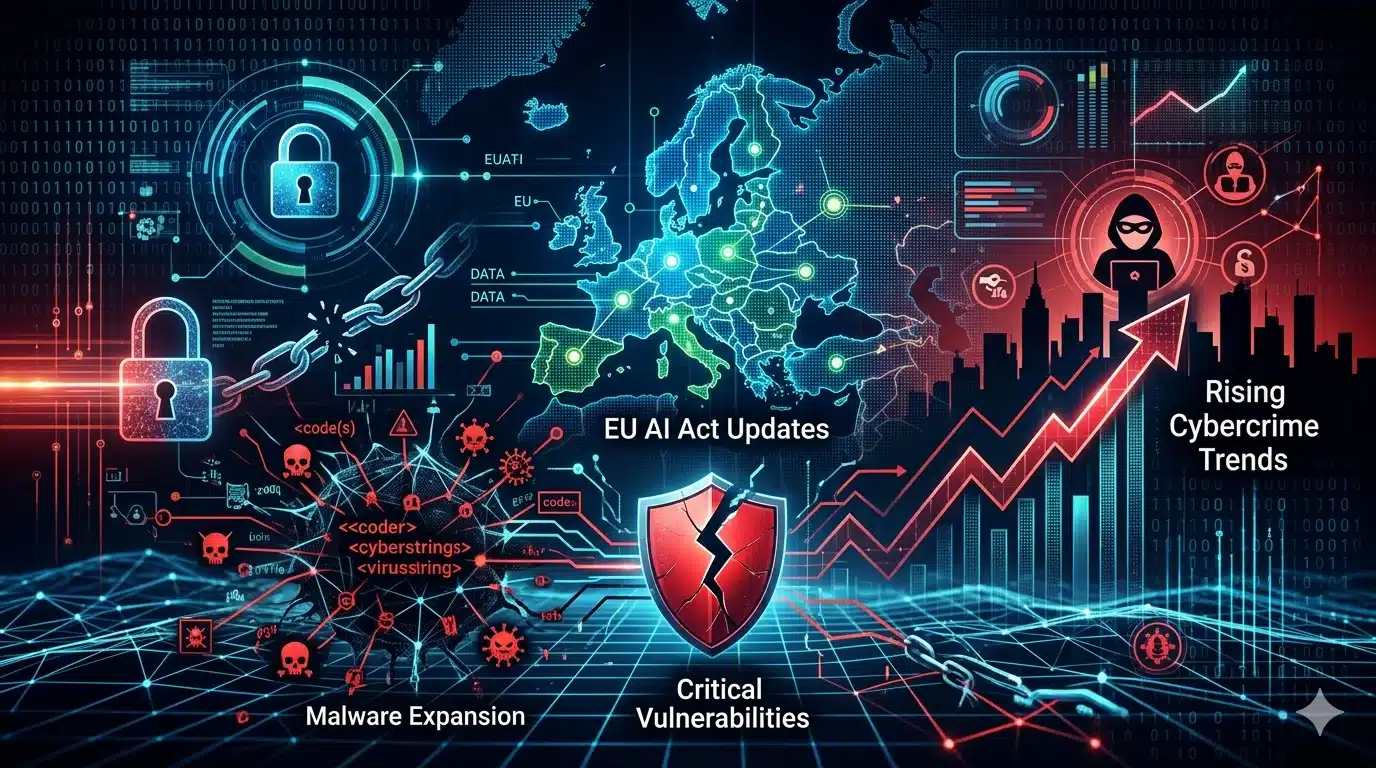
The Cyber Express Weekly Roundup: EU AI Act Updates, Malware Expansion, Critical Vulnerabilities, and Rising Cybercrime Trends
8 de Maio de 2026, 09:17




"First, we have identified a small number of additional accounts that were compromised as part of this incident," the company noted.
But the main concern is the next finding: "Second, we have uncovered a small number of customer accounts with evidence of prior compromise that is independent of and predates this incident, potentially as a result of social engineering, malware, or other methods."
The company did not disclose who were the attackers, what was the motive, or the impact on customers, and is yet to respond to these queries from The Cyber Express. It only stated: "In both cases, we have notified the affected customers."
Meanwhile, Rauch said, Vercel had notified other suspected victims and encouraged them to rotate credentials and adopt best practices.

Over 200,000 files containing sensitive personal information have been leaked following the University of Warsaw cyberattack that targeted the institution’s digital systems. The attack, which resulted in the publication of the stolen data on the darknet in mid-April 2026, has raised significant concerns about the university's cybersecurity protocols.
In response to the breach, the University of Warsaw took immediate action, isolating affected systems and working closely with relevant authorities to assess the scope of the incident. Rector Alojzy Z. Nowak commented, “Immediately after detecting the incident, the University undertook a series of actions aimed at limiting its impact and securing the IT environment. These included isolating affected systems, terminating unauthorized access, enforcing password resets for all users, strengthening authentication mechanisms, and conducting a comprehensive security review of the infrastructure.”
The cyberattack unfolded over several months, with attackers gaining access to the university's systems using valid login credentials. These credentials were likely obtained through malware that infected a user’s device, allowing the attackers to quietly exfiltrate large amounts of data over time. The stolen data was eventually posted on the darknet on the night of April 15, 2026, in an 850-gigabyte data dump.
The breach was initially detected on February 9, 2026, during a routine security scan, triggered by global ransomware threats. At first, it was believed that the stolen data had not left the university’s infrastructure. However, subsequent investigation revealed that a significant portion had already been leaked online.
In response to our inquiry, the university clarified: “At this stage, the investigation is ongoing, and no definitive attribution has been publicly confirmed. The incident involved unauthorized access using valid credentials that had likely been previously compromised, most probably through malware on a user’s device.”
The leaked files, which total over 200,000 documents, include a broad range of sensitive information. A large portion of the data came from the Faculty of Applied Social Sciences and Resocialization, as well as the Faculty of Neophilology. The breach exposed approximately 650 GB of publicly accessible audiovisual materials, along with 200 GB of sensitive personal data.
Among the types of personal data exposed were:
The university has acknowledged that it’s still too early to definitively determine which individuals' data has been impacted. In an official statement, they noted, “Given the nature of the incident, it is not yet possible to conclusively determine which specific individuals’ data may have been impacted; therefore, we encourage all members of the academic community to follow the recommended guidance and monitor further updates.”
Official Response and Security MeasuresFollowing the breach, the university has worked diligently to mitigate further damage. In addition to isolating the affected systems, the university has collaborated with Poland’s Central Bureau for Combating Cybercrime (CBZC) and CERT Polska to investigate the incident and fortify its cybersecurity defenses.
“We remain committed to fully clarifying the circumstances of this incident and to continuously improving the protection of personal data,” Rector Nowak stated. The university also emphasized its ongoing efforts to enhance security measures, including expanding advanced authentication methods, increasing network monitoring, and further segmenting IT infrastructure to reduce exposure to future risks.
Moreover, the university has published a detailed communication, following GDPR guidelines, to inform affected individuals about the breach and provide recommendations on how they can protect themselves. “Affected individuals are being informed through an official public communication available on the University’s website,” the statement said. “These include, among others, monitoring financial activity, securing personal data (e.g., PESEL number), changing passwords, enabling multi-factor authentication, and remaining vigilant against phishing or fraud attempts.”


Image Source: FBI Report[/caption]
These scams are no longer basic phishing attempts. Attackers spend time building trust, approaching victims through social media, messaging apps, or even dating platforms. Once trust is established, victims are guided toward fake investment platforms that show fabricated profits. By the time withdrawals are attempted, the money is gone.


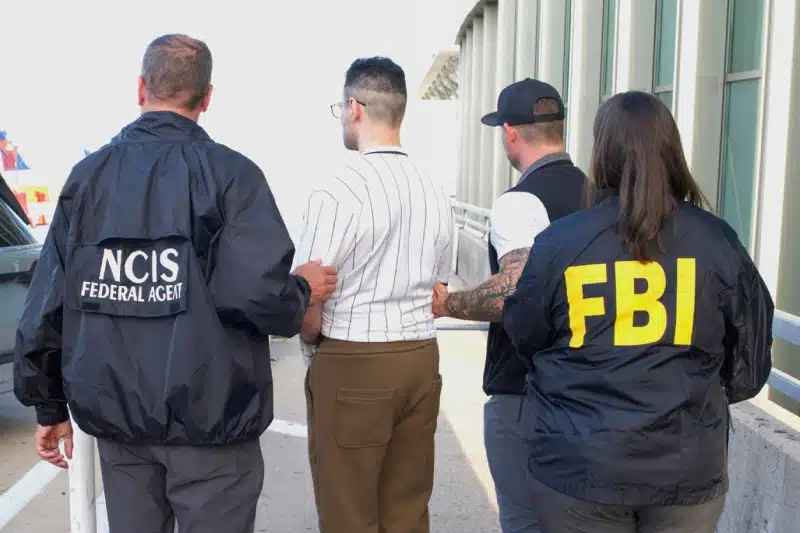

A federal court in Detroit sentenced Russian national Illya Angelov, on Tuesday, for running a botnet operation that infected thousands of computers daily, sold backdoor access to ransomware groups and victimized 72 companies across 31 U.S. states.
The extortion scheme involving Angelov and his criminal organization, known by the FBI as "Mario Kart," ran from 2017 to 2021. Prosecutors said Angelov and co-conspirators built a network of compromised computers that distributed malware-infected files attached to spam emails.
Angelov and his co-manager then monetized this botnet by selling access to individual compromised computers to other criminal groups, who typically engaged in ransomware extortion schemes — locking victims out of their computer networks and demanding extortion payments to restore access.
A botnet is a network of devices secretly infected with malware and controlled remotely by an attacker without the device owners' knowledge. The court records describe a scheme that was lucrative and prolific, sending 700,000 emails a day to computers around the world and infecting approximately 3,000 computers daily.
The Mario Kart malware provided a backdoor through which software could be uploaded to victims' computers. Instead of directly exploiting this access, the Mario Kart group sold it to customers, that is, other cybercriminal groups. These customers typically used the backdoor access to distribute ransomware, encrypting victims' data and demanding extortion payments to decrypt it.
Angelov's group included software coders who developed programs to distribute spam emails and malware so advanced it could evade virus-detection software. The operation sold backdoor access at scale, functioning as a criminal wholesale supplier to ransomware operators who lacked the infrastructure to breach targets themselves.
Angelov pleaded guilty in secret in October to one count of conspiracy to commit wire fraud. Prosecutors requested he serve 61 months in prison — a significant break from advisory sentencing guidelines calling for more than 12 years — and he was ordered to pay a $100,000 fine and a $1.6 million money judgment. The reduction reflected both his voluntary cooperation and the circumstances of his surrender.
Angelov was sentenced four years after an associate, Vyacheslav Igorevich Penchukov, was arrested in Switzerland and later extradited to the U.S. Penchukov was a member of a group that negotiated a $1 million payment to Angelov and a second individual for access to Mario Kart. A few days after Penchukov's arrest, Angelov contacted U.S. authorities and eventually negotiated his surrender. At the time of his travel and surrender, he was living in the United Kingdom, a country from which the U.S. could have sought his extradition.
Vitlalii Alexandrovich Balint, who provided essential coding to Mario Kart, was sentenced five months earlier in federal court in Detroit to 20 months in prison. While Balint's role in Mario Kart was significant, he was Angelov's subordinate.
The Mario Kart case sits inside a broader DOJ enforcement pattern targeting the upstream criminal economy — the access brokers and botnet operators who supply the tools and entry points that ransomware groups deploy.
The day before Angelov's sentencing, a separate federal court sentenced Russian access broker Aleksei Volkov to 81 months for supplying network access to the Yanluowang ransomware group across dozens of U.S. organizations.
Two Russian cybercriminals sentenced in two consecutive days across two different federal districts signals a deliberate prosecutorial push against the ransomware supply chain's foundational layer, not just its most visible operators.
The scheme operated before the peak of ransomware extortion payments, which reached a high of $1.25 billion in 2023. That trajectory makes the infrastructure Angelov built — and the model it demonstrated — directly relevant to understanding how the ransomware economy scaled to where it stands today.

A single individual selling stolen network credentials to the right buyers can cause more damage than any ransomware group operating alone and a federal court in Indiana made that arithmetic concrete by sentencing a 26-year-old Russian citizen to 81 months in prison for precisely that role — of being an access broker.
Aleksei Volkov, of St. Petersburg, Russia, was sentenced in the Southern District of Indiana for assisting major cybercrime groups, including the Yanluowang ransomware group, in carrying out numerous attacks against U.S. companies and other organizations. Volkov facilitated dozens of ransomware attacks throughout the United States, causing over $9 million in actual losses and over $24 million in intended losses.
Volkov operated as what the cybersecurity industry calls an initial access broker, which is a specialized criminal role that sits upstream of ransomware deployment. Rather than executing attacks himself, Volkov found vulnerabilities in computer networks and systems, identified ways to access those networks and systems without authorization, and sold that illicit access to conspirators who were also cybercriminals.
Those co-conspirators then used the access Volkov provided to infect the affected computer networks and systems with malware, encrypting victims' data and preventing them from accessing it, damaging their business operations.
The conspirators then demanded that the victims pay ransom in cryptocurrency — sometimes in the tens of millions of dollars — in exchange for restoring access to the data and promising not to publicly disclose the hack or release victims' stolen data on a leak website.
The access broker model is a critical enabler of the modern ransomware economy. By separating the intrusion skill from the extortion operation, it allows ransomware groups to scale attacks without needing every member to possess deep technical exploitation expertise. Volkov effectively ran a supply chain for cybercrime — sourcing the raw ingredient that ransomware operators cannot easily produce at volume themselves.
Volkov was arrested on January 18, 2024, in Italy after a Bitcoin transaction originating in Indianapolis tied him to the cybercrime group. He was subsequently extradited to the United States and pleaded guilty to charges including aggravated identity theft and access device fraud.
As part of his plea agreement, Volkov agreed to pay $9,167,198.19 in restitution to known victims. In addition to the 81-month prison term, he received two years of supervised probation. He had been indicted in both the Southern District of Indiana and the Eastern District of Pennsylvania.
The Yanluowang ransomware group, one of the criminal organizations Volkov supplied, previously claimed responsibility for high-profile breaches including a 2022 intrusion into Cisco's corporate network. The group's willingness to target major enterprise organizations shows the downstream risk that a single access broker enabling their operations can create across the entire victim landscape.
Prosecuting access brokers — rather than only the ransomware operators who deploy the final payload — directly attacks the supply chain that makes large-scale ransomware campaigns economically viable. Targeting that upstream layer forces criminal networks to either develop intrusion capabilities in-house — a significant barrier — or risk greater exposure by broadening their supplier relationships.

Image Source: FBI[/caption]
Once inside a system, additional malware components are downloaded to expand capabilities and maintain long-term access.

In this week’s cybersecurity roundup, The Cyber Express covers key global security developments, including a major supply chain disruption affecting a global manufacturer, rising concerns over security and legal risks linked to rapid AI adoption, and the continued escalation of cyber activity driven by geopolitical tensions.
Across industries, organizations are facing a mix of disruptive attacks and long-term espionage campaigns targeting both operational systems and critical infrastructure. Intelligence reports also continue to highlight sustained nation-state activity shaping the global threat landscape.
These developments reflect a cybersecurity environment where operational resilience, secure technology adoption, and coordinated defense strategies are increasingly essential to managing interconnected and fast-evolving risks.
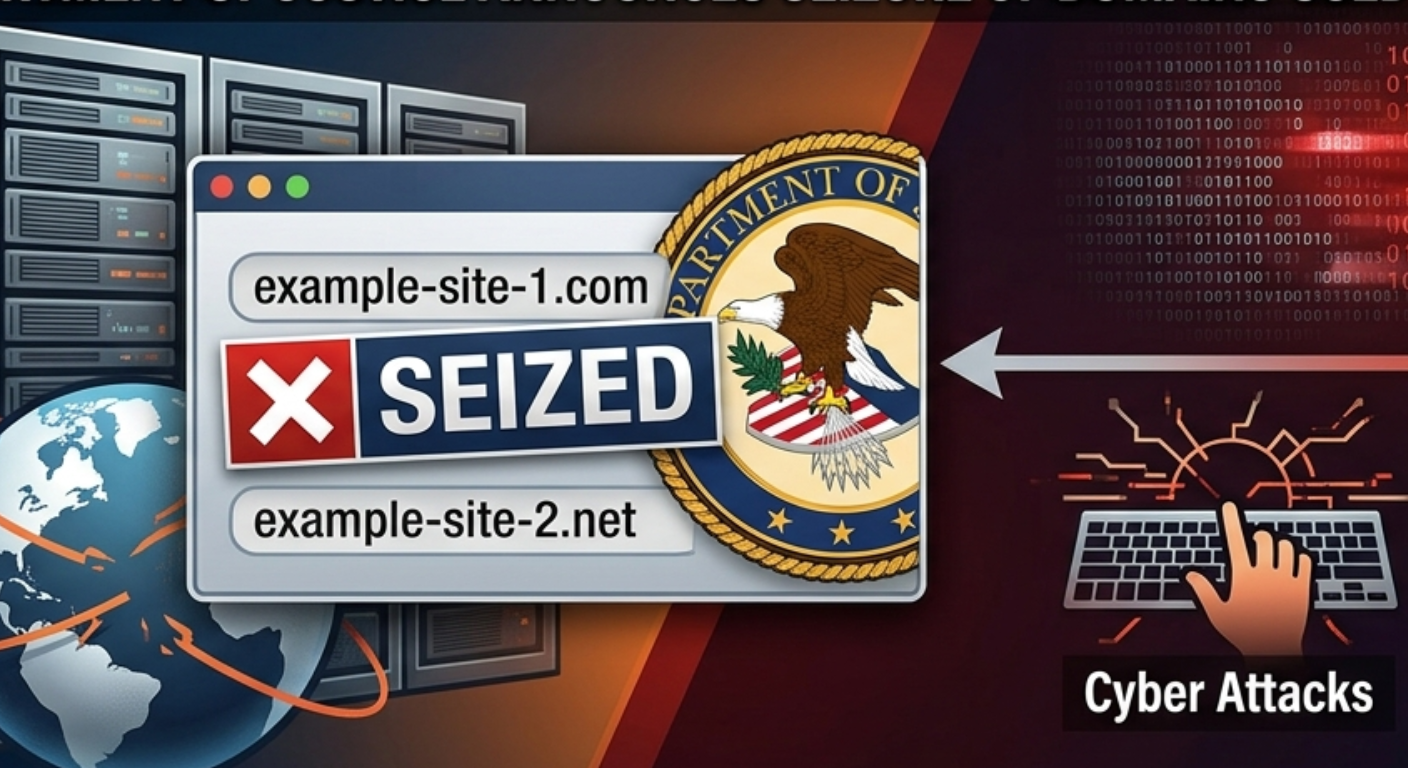
Image Source: FBI[/caption]
Officials also confirmed that the domains Justicehomeland[.]org and Karmabelow80[.]org had previously been used to claim responsibility for data theft targeting Albanian government systems, linked to tensions over support for an Iranian dissident group.


On the morning of March 11, employees at Stryker offices worldwide switched on their computers and found them blank — login screens replaced by a logo most had never seen. A small, barefoot boy with a slingshot, the symbol of Handala.
The attack on Stryker Corporation — a Fortune 500 medical technology giant that supplies surgical equipment, orthopedic implants, and neurotechnology to hospitals globally — ranks as one of the most operationally destructive cyberattacks ever executed against a U.S. healthcare company.
Stryker reported $25 billion in revenue in 2025 and employs approximately 56,000 people, with its products embedded in hospital supply chains worldwide. What hit it was not ransomware. The attackers came to destroy, not extort.
Stryker confirmed the incident in a Form 8-K filing with the U.S. SEC, describing "a global disruption to the Company's Microsoft environment" and stating it had no indication of ransomware or malware and believed the incident was contained. The company's own filing, however, understated what employees were already reporting on the ground.
Employees in the United States, Ireland, Costa Rica, and Australia reported that managed Windows laptops and mobile devices had been remotely wiped.
Another claimed the situation as "bad" and said: "Many colleagues phones have been wiped. Instructed to remove intune, company portal, teams, VPN from personal devices. Personal phone so have lost access to my eSim. Unable to log in to many things due to 2-factor authentication. Have lost all personal data from personal devices that were enrolled and now unable to access emails and teams."My wife had 3 Stryker managed devices wiped around 3:30 AM EDT. Their Entra login page was defaced with the Handala logo," a Reddit user said.
Handala claimed to have wiped more than 200,000 systems, servers, and mobile devices and extracted 50 terabytes of data, forcing Stryker to shut down operations across 79 countries. Stryker in a midnight update said it was still working on complete restoration post the cyberattack.
"We are continuing to resolve the disruption impacting our global network, resulting from the cyber attack. At this time, there is no indication of malware or ransomware and we believe the situation is contained to our internal Microsoft environment only. Our products like Mako, Vocera and LIFEPAK35 are fully safe to use. We have visibility to the orders entered before the event, and they will be shipped as soon as our system communications are restored. Any orders that have come in after the event are being examined. We are working to ensure our electronic ordering system is back up and running as quickly as possible. It is safe to communicate with Stryker employees and sales representatives by email and phone, and within your facility." - Stryker's update on the cyberattack
The mechanism behind the attack points to a calculated abuse of Microsoft Intune — a cloud-based platform enterprises use to manage and push policy updates to all enrolled devices from a single console. A wiper is malware that permanently erases data rather than encrypting it for ransom.
In short, an attacker with admin-level access to Intune effectively is holding a kill switch for every enrolled endpoint in the organization. The Handala branding that appeared on screens before the wipe confirmed that access had been established and held well before the destructive phase began — this was a deliberate, staged operation.
Handala — also known as Handala Hack Team, Hatef, and Hamsa — first surfaced in December 2023 as a hacktivist operation linked to Iran's Ministry of Intelligence and Security (MOIS), initially targeting Israeli organizations with destructive malware designed to wipe both Windows and Linux devices, explained researchers at AI-powered threat intelligence firm, Cyble.
The group takes its name and visual branding from the iconic Palestinian cartoon character created by Naji al-Ali — a child refugee who never grows up and always turns his back to the viewer.
The hacktivist branding, however, obscures a more serious intelligence attribution. Multiple threat intelligence firms assess Handala as one of several online personas maintained by Void Manticore, a MOIS-affiliated actor optimized for psychological and reputational disruption — breaking into systems, conducting hack-and-leak activity, and timing the publication of stolen material to maximize pressure.
Check Point Research found repeated overlaps between MuddyWater — another MOIS-affiliated group — and Void Manticore, including shared criminal tooling. Handala has used Rhadamanthys, a commercial infostealer sold on dark web forums, pairing it with custom data wipers in phishing lures that impersonated F5 software updates and even Israel's own National Cyber Directorate.
Cyble has observed Handala hackers using Hamsa and Hatef data wipers in its previous campaigns targeted mainly at Israeli entities. [caption id="attachment_110112" align="aligncenter" width="500"] Source: Cyble Research and Intelligence Labs[/caption]
Void Manticore's attack playbook follows a consistent pattern of Handala too. Initial access through unpatched web servers, VPN gateways, and remote access solutions; lateral movement using living-off-the-land tools like PowerShell and scheduled tasks; and final-stage deployment of destructive wiper families designed to erase file systems and corrupt boot records.
The group's prior targets read like a map of sensitive sectors. Since the start of the Iran-Israel war, Handala has claimed to have wiped Israeli military weather servers, intercepted security feeds in Jerusalem, stolen and wiped data from various companies, doxxed Israeli intelligence officers, and breached an Israeli oil and gas exploration company.
Most recently, threat intelligence reporting documented the group publishing identifying details for 50 senior Israeli Air Force officers — names, IDs, addresses, and phone numbers.
Handala stated the Stryker attack was carried out in retaliation for a U.S. military strike on a school in Minab, Iran, that reportedly killed more than 175 people, most of them children.
[caption id="attachment_110115" align="aligncenter" width="500"] Stryker Cyberattack Claim by Handala (Source: X)[/caption]
Stryker has no direct connection to military operations, though it did secure a $450 million Department of Defense contract in 2025 to supply medical devices to the U.S. military.
That contract likely put a target on Stryker's back.
Recent reporting indicates that MOIS-affiliated groups, including Handala, infiltrated U.S. and Israeli infrastructure weeks before the military operations conducted as part of Operation Epic Fury, suggesting pre-positioned access rather than reactive intrusion. In other words, Handala may have been inside Stryker's environment long before anyone noticed.
Check Point researchers also observed Handala routing operations through Starlink IP ranges to probe externally facing applications for misconfigurations and weak credentials — a deliberate technique to blend reconnaissance traffic into legitimate satellite internet usage and frustrate IP-based blocking.
The hacker collective on Wednesday also claimed hacking another Israeli company Verifone, a leading provider of payment solutions and point-of-sale terminals to countries across the globe. However, a spokesperson for the company told The Cyber Express that all such claims are "fake news" and do not hold any substance. “Verifone closely monitors the security and integrity of its systems worldwide. We have observed recent allegations on March 11, 2026 from threat actors claiming an intrusion into our systems in Israel. Verifone has found no evidence of any incident related to this claim and has no service disruption to our clients," the spokesperson said. Updated on March 13, 2026 1:24 AM ET: The article was updated with a statement from Verifone spokesperson confirming no evidence of intrusion and no authenticity in Handala's claims.