
 Entrar
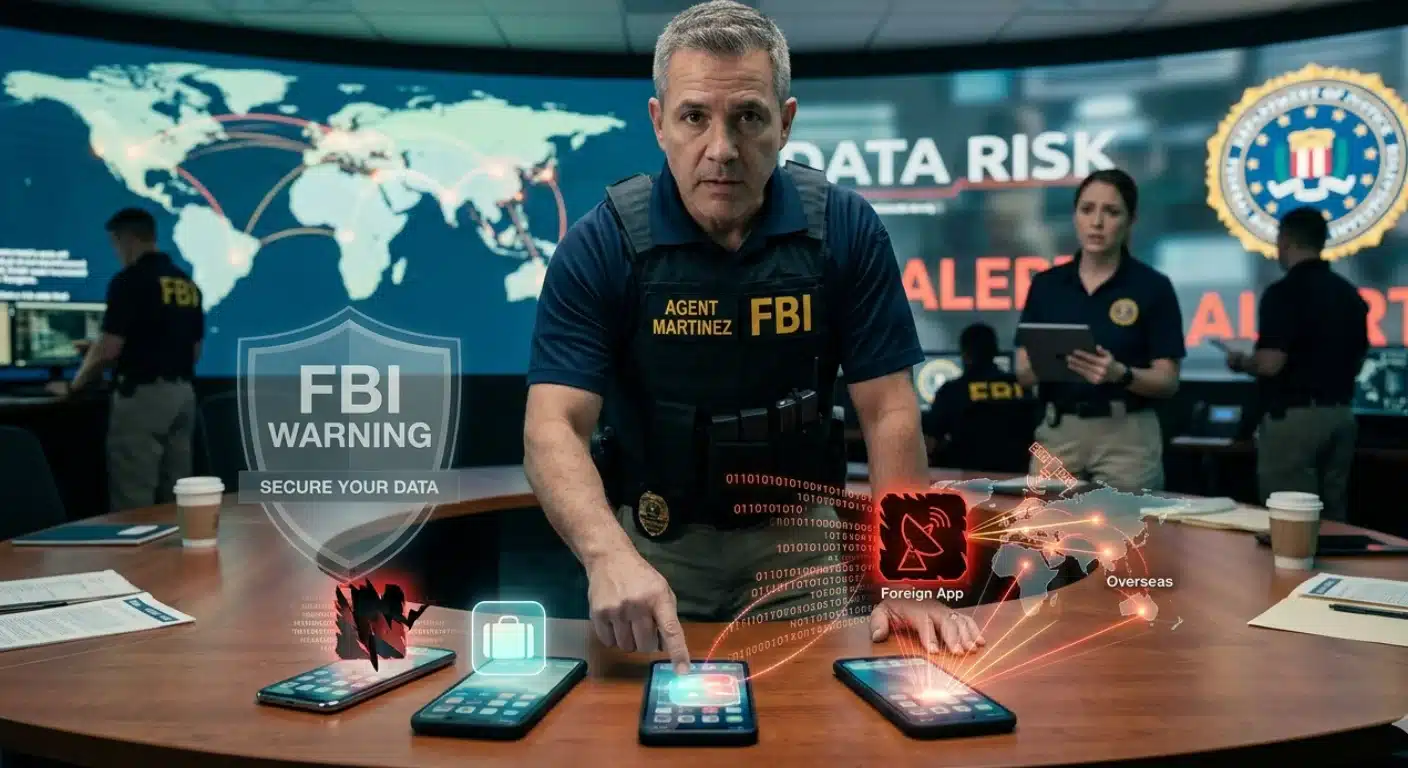

FBI Warns of Data Security Risks in Foreign-Developed Mobile Apps
2 de Abril de 2026, 05:48

Data Security Risks of Foreign-Developed Mobile Apps
The data security risks of foreign-developed mobile apps are not limited to what users see on the surface. According to the FBI, once permissions are granted, apps can continuously collect data from across a device—not just while actively in use. This includes access to contacts, messages, location data, and even system-level information. In many cases, users unknowingly allow apps to collect information not only about themselves but also about people in their contact lists. Apps that offer features like inviting friends can access and store contact details such as names, phone numbers, email addresses, and physical addresses. This expands the risk beyond individual users, pulling non-users into the data collection ecosystem. The concern is not just the volume of data—but the persistence of access.Where the Data Goes Raises Bigger Concerns
A key issue highlighted in the FBI’s advisory is data storage and jurisdiction. Many apps clearly state in their privacy policies that user data may be stored on servers located in China. This is where the data security risks of foreign-developed mobile apps become more complex. Companies operating in China are subject to national security laws that can require them to provide data access to government authorities when requested. For users, this creates a gap between consent and control. Even if data collection is disclosed, there is limited visibility into how that data may be accessed or used beyond the app itself. Some platforms offer local versions that allow users to run the app without relying on cloud-based systems, potentially reducing data transfer risks. However, not all apps provide this option. In some cases, users must agree to data sharing as a condition of using the service.Malware Risks Add Another Layer of Threat
The data security risks of foreign-developed mobile apps are not limited to data collection practices. The FBI also warns that some apps may contain hidden malware. This can include malicious code designed to exploit vulnerabilities in mobile operating systems, install backdoors, and enable unauthorized access to sensitive data. In more advanced cases, such malware can download additional malicious packages without the user’s knowledge. The risk increases significantly when apps are downloaded from unofficial sources. Third-party app stores and unknown websites are more likely to host compromised applications, while official app stores typically conduct security checks to reduce such threats. Still, the presence of malware—even in seemingly legitimate apps—remains a concern.FBI Urges Stronger Cyber Hygiene
While the spotlight is on foreign-developed apps, the FBI makes it clear that these data security risks of foreign-developed mobile apps are part of a broader digital security challenge. The agency emphasizes the importance of basic cyber hygiene. Users are advised to:- Disable unnecessary data sharing permissions
- Download apps only from official app stores
- Regularly update passwords
- Keep device software up to date
- Review terms of service before installing apps
