
Visualização normal

Antes de ontemStream principal
  • ✇bellingcat
  • Shipwrecks, Sham Papers and False Flags: Tracking the Company Behind It All Tomi McCluskey
    A shipwreck in India, an ammunition seizure in Senegal, and a raid on an oil tanker in Malaysia – all three incidents involve ageing vessels, operating with false papers and one recurring figure: Captain Suniel Kumar Sharma. For over a decade, Sharma has been condemned by the governments of Dominica, Guyana, Samoa, the Federated States of Micronesia and Eswatini, as well as the UN International Maritime Organisation (IMO), for issuing fraudulent paperwork to vessels, including false flag cert
     

Shipwrecks, Sham Papers and False Flags: Tracking the Company Behind It All

19 de Fevereiro de 2026, 05:25

A shipwreck in India, an ammunition seizure in Senegal, and a raid on an oil tanker in Malaysia – all three incidents involve ageing vessels, operating with false papers and one recurring figure: Captain Suniel Kumar Sharma.

For over a decade, Sharma has been condemned by the governments of Dominica, Guyana, Samoa, the Federated States of Micronesia and Eswatini, as well as the UN International Maritime Organisation (IMO), for issuing fraudulent paperwork to vessels, including false flag certificates.

In a recent interview with the Financial Times, Sharma said his most prominent flag registry, the International Maritime Safety Agency of Guyana (IMSAG), was no longer operational. However, a Bellingcat investigation has found certificates issued by IMSAG as recently as December 2025. In the same interview, Sharma denied setting up any more registries. Yet Bellingcat has found evidence of a newly launched website linked to Sharma offering flag registration in Nicaragua.

In June 2020, a typhoon off the Indian coast forced the 38-year-old oil tanker, MT Basra Star (IMO 8515817), to run aground. Despite an insurance inspector’s report recommending her immediate demolition, the vessel remained for five years, rusting away on the beach, until she was finally scrapped in January this year.

The Basra Star became a local tourist attraction during the five years it lay rusting on the beach. Instagram post, December 2025.

The insurance report states Basra Star was sailing under a Samoan flag and its classification society (the company that certifies the vessel as seaworthy) was Ascent Navals.   

Two years before MT Basra Star ran aground, the Samoan government and the IMO issued a warning about a fraudulent company called Ascent Navals, and its director, Captain Suniel Kumar Sharma, for appearing to operate on behalf of Samoa, but without official authorisation.

Screenshot of part of the IMO circular warning, dated 6 June 2018.

By sailing under a false flag (Samoa False) and a fraudulent classification society (Ascent Navals), when the worst-case scenario did occur, no jurisdiction (flag state) was legally responsible for the marooned ship.

Bellingcat contacted the vessel’s owners, Shat Al Arab Marine Supply LLC, the insurance surveyors, Uday Bhogate & Associates, and Ascent Navals and its director, Suniel Kumar Sharma. None responded to requests for comment.

Nearly two years after Basra Star was shipwrecked, another ageing vessel, Eolika (IMO 8214968), was found operating under a false flag while laden with illicit cargo. At the port of Dakar, Senegalese customs officers boarded the 39-year-old cargo ship and discovered three concealed containers of ammunition, reportedly worth US$5.2 million. Eolika was flying a false Guyana flag. 

Local TV media, Jambaar report from Dakar Port, published on YouTube, January 19, 2022.

In an open letter, the IMO, together with the Guyana authorities, denounced the flag under which Eolika was sailing as false. They warned of a fraudulent company, the International Maritime Safety Agency of Guyana (IMSAG), for flagging vessels without authorisation from any flag state. Guyana’s police force said it would investigate “this rogue enterprise led by Captain Suniel Kumar”, together with Interpol.  

There is no suggestion that Sharma or IMSAG took part in the transport of illicit goods. The IMO warning was issued in response to IMSAG supplying false paperwork, which then enables vessels to operate without oversight. Flying a false flag for a registry that doesn’t exist voids any insurance, risks crew safety and threatens environmental harm, as seen with the Basra Star.  

Support Bellingcat

Your donations directly contribute to our ability to publish groundbreaking investigations and uncover wrongdoing around the world.

But it’s not just Sharma’s companies supplying false papers. Last year, maritime experts at Windward identified 285 international tankers falsely flagged by 18 different fraudulent registries. The majority were sanctioned vessels, which typically seek out false flags to evade restrictions. However, according to Lloyd’s List Intelligence, it was Guyana’s fraudulent registry which became the first port of call for sanctioned tankers looking to hop flags.

Seized off the coast of Malaysia earlier this year, the sanctioned tanker Nora (IMO 9237539) switched to a false Guyana flag issued by IMSAG on February 1, 2025. Nora and a second sanctioned tanker, Rcelebra (IMO 9286073), were caught by the Malaysian Maritime Enforcement Agency (MMEA) engaged in an unauthorised ship-to-ship transfer.

Nora (left) and Rcelebra (right) moored together during an unauthorised ship-to-ship transfer off Penang. Source: MMEA/Facebook

Both captains and 53 members of the crew were detained. The cargo of crude oil was valued at more than RM512 million (US$130 million), according to the MMEA. 

53 crew members were arrested, according to MMEA. Source: MMEA/Facebook

However, within days, both tankers were released. Fined the maximum penalty of RM300,000 (US$76,000) for an unauthorised ship-to-ship transfer, the MMEA acted to enforce Malaysia’s environmental and maritime safety laws, but not International and UN sanctions. Asked if this was within its remit, the MMEA did not respond to our request. 

There is no indication that Sharma or IMSAG knowingly issued flags to criminal actors. But by providing false paperwork, the IMO warn that fraudulent flag registries are enabling high-risk vessels to continue operating. 

The promise of investment and the signing of an MoU

Crucial to understanding how IMSAG has continued to operate as a fraudulent registry for so long is that it was once legitimate. 

Back in 2021, Guyanan media described how IMSAG was making investments of US$35 million, creating hundreds of jobs, and constructing a state-of-the-art training facility – all presented as a way to grow Guyana’s maritime industry. 

Sharma (centre) and his wife (centre-right) pose with Guyanese officials after announcing a US$35M investment in Guyana’s maritime industry, March 2021. Source: Ministry of Public Works/Facebook.

Sharma also signed a Memorandum of Understanding (MoU) with Guyana’s Maritime Ministry. But less than six months later, Guyana quietly terminated all arrangements with Sharma and his companies.

Screenshot of Guyana’s official notice terminating all relations with Sharma. Source: MARAD.

Whilst the MoU was in effect, IMSAG had served as Guyana’s official international ship registry. The domain imsag.org was used to register and flag vessels on its behalf. But after the MoU was terminated, instead of shutting the company down, IMSAG continued to operate without Guyana’s authorisation. A redacted version of the MoU is still live and being promoted on IMSAG’s website. 

Screenshot from imsag.org, January, 2026. The yellow box added by Bellingcat highlights the continued promotion of the MoU, which Guyana terminated in 2021.

In a recent interview with the Financial Times, Sharma confirmed he had set up a ship registry in Guyana, but said it had been “discontinued” after the authorities withdrew consent. He also said the domain imsag.org was “not operational just informative”.

Bellingcat recently downloaded 230 vessel certificates for 87 ships from imsag.org, including the sanctioned tanker recently seized by the Malaysian authorities, Nora

Nora is still broadcasting the call sign ‘8RKK9’ as shown in this certificate issued by IMSAG.

Counter to Sharma’s claims that IMSAG was no longer operational, all 230 certificates found by Bellingcat were issued well after the MoU was terminated in March 2021, including some as recently as December 2025. Of the 87 certified vessels 63 were oil tankers, with an average age of 24 years. Diana 1 (IMO 9212229), for example – a 26-year-old oil tanker last seen in Libya – was issued a certificate by IMSAG on June 26 2025. 

Screenshot of a certificate issued by IMSAG for Diana 1.

According to Equasis data, Diana 1 hopped to a false Guyana flag on July 1 2025. 

Screenshot of Equasis data for Diana 1 showing flag as Guyana False.

Neither Sharma nor IMSAG responded to our request for comment regarding our findings that IMSAG had continued issuing certificates as recently as December 2025, despite Guyana having terminated the MoU and withdrawn its authorisation.

For a full list of the 87 vessels, including certificates and details of our methods, click below to expand:

See full certificate list and methodology

The table below lists all 87 vessels and 230 certificates that Bellingcat found records for on imsag.org. Hover over each certificate for details, or click to see an archived screenshot. Each vessel’s flag history has been pulled from the maritime database Equasis to compare when the vessels switched to the Guyana flag and when they were issued a certificate from IMSAG.

Methods:

The IMSAG website allowed users to search using either a “Certificate Number” or an “Official Number.” The search returned information about a vessel, including the dates on which certificates were issued.  While these certificate numbers were not publicly disclosed, Bellingcat found a seafarer certificate via a Google search for “site:imsag.org filetype:pdf”, which locates PDFs hosted on IMSAG’s website. By changing the URL to look for ship certificates instead, imsag.org returned a vessel certificate for the oil tanker, Tranquilus.

Bellingcat then tested sequential variations of certificate and official numbers, returning 230 certificates issued by IMSAG. As not all certificate numbers were sequential, this index represents only a partial view of IMSAG’s recent activity.

Expanding Operations in Nicaragua

In Sharma’s interview with the Financial Times, he denied he was setting up any more registries and said he had left the maritime sector entirely. Yet Bellingcat has found evidence of a new registry with links to Sharma that appears to be offering flag registration in Nicaragua. 

In July 2025, the domain niataregister.com was launched, promoting the Nicaragua International Aquatica Transportation Administration (NIATA).

Screenshot www.niataregister.com 10 Feb, 2026.

The website is active. Bellingcat found a certificate issued as recently as February 2 for the sanctioned tanker and member of the shadow fleet, Al Jafzia (IMO 9171498, sanctioned under the name Chil 1).

According to maritime tracking data, on February 6, while sailing under a false Aruba flag, the Al Jafzia was detained by the Indian Coast Guard for an illicit ship-to-ship transfer of Iranian oil. On February 11, the vessel began broadcasting under a Nicaraguan flag, listing its home port as Corinto, Nicaragua’s largest port. The MMSI number can be seen in the certificate below.  

Screenshot of a vessel certificate issued for Al Jafzia, February, 2026.

Despite multiple requests, the Nicaraguan authorities did not respond to our questions as to whether they had heard of NIATA or had any official partnership with the company. 

According to the IMO’s GISIS database, Nicaragua has not approved any organisation to issue flags on its behalf. The IMO also confirmed directly to Bellingcat that Nicaragua had provided no further information beyond what was visible in GISIS at the time of publication.

Screenshot of IMO GISIS database, January 2026.

Bellingcat downloaded all publicly available forms from NIATA’s website. Analysing document metadata revealed the creator of the documents as ‘Oceaniek Technologies’.

Screenshots: (left) form downloaded from the NIATA website, December 2025; (right) form metadata showing author as Oceaniek Technologies.

Navigating to the Oceaniek Technologies homepage (shown below), under the headline ‘Our Products’ 11 companies were promoted in a looping carousel up until August of last year. It now features only five, spanning a wide range of industries, including a cricket league, a hospital and streaming services.

Top – Oceanik Technologies homepage. Bottom – four of the 11 companies promoted up until August of last year.  Shown left to right: IMSAG, a cricket league, streaming services, and a hospital. Screenshots captured August, 2025.

The managing director of Oceanik Technologies, according to his own LinkedIn, is Suniel Sharma. Sharma has also been photographed by local Indian media, cited as the “MD of Oceanik Technologies”.

Screenshot of Sharma’s LinkedIn profile from December 19 2025.

Also among the 11 companies promoted up until August of last year were the Nautilus Times and Nautilus Register.

Screenshots taken August, 2025.

Promoting vessel classification services, Nautilus Register, appears as an entity of interest in OpenSanctions due to its ties with several sanctioned vessels, including members of the shadow fleet. Sharma’s own LinkedIn lists him as the Director General of the Nautilus Register. 

Screenshot of Sharma’s LinkedIn profile, dated 19 Dec.

Bellingcat confirmed nautilusregister.net is still active, issuing classification certificates as recently as January 2026 (shown below). The IMO told Bellingcat that Nautilus Register is not listed as a recognised organisation in their database, GISIS.

Certificate issued January 13 2026, via nautilusregister.net. Metadata contained within the PDF listed Sharma as the author.

A search for the second company, Nautilus Times, led to a website offering dozens of training courses, from cadetship to firefighting, as well as competency training.

Competency training is a requirement for all seafarers. Crew members may attend a course in any jurisdiction, but it’s then up to the flag state (the country in which the vessel is registered) as to whether that training is recognised.

According to the Nautilus Times website, a crew member can enrol in any one of six jurisdictions, as shown below, including Guyana and Nicaragua.

Screenshot of the Nautilus Times website offering competency training fees for six jurisdictions, highlighted by a yellow box. Annotations by Bellingcat.

After contacting all six jurisdictions, the official Maritime Administration Department (MARAD) of Guyana confirmed that Nautilus Times was not authorised to issue certificates to seafarers on their behalf. They reiterated that they had no relationship with Nautilus Times or Sharma. St Maarten has previously said that it does not have an international flag registry and therefore does not issue competency certificates. No other jurisdictions replied to our request. 

Bellingcat contacted both the Nautilus Times and Sharma to ask why the site was advertising courses on behalf of Guyana and St Maarten without their authorisation. Neither replied to our request for comment.

Finally, two more companies embedded in the carousel on Oceaniek Technologies’ homepage,  but deleted after August 2025, were the MSTA Registry and Aruba Maritime.

Screenshots of two of the 11 companies promoted in a carousel embedded on Oceanik Technologies’ homepage. Captured August 2025.

Subscribe to the Bellingcat newsletter

Subscribe to our newsletter for first access to our published content and events that our staff and contributors are involved with, including interviews and training workshops.

The MSTA Registry was cited in a warning issued by St Maarten and the IMO in May 2025 for issuing false flags to vessels under the guise of St. Maarten. Aruba Maritime was sanctioned by the European Union in October 2025 for fraudulently issuing oil tankers with false Aruba flags. 

Neither Oceaniek Technologies nor Sharma responded to our request for comment regarding the nature of these companies’ connection to Oceaniek Technologies. 

As sanction enforcements continue to expand, so too will the number of vessels seeking illegitimate paperwork from fraudulent registries such as IMSAG. Despite criminal charges being filed, warnings being issued, and investigations being published, Sharma’s operation continues – now seemingly having expanded into Nicaragua and with the apparent formation of a larger network, Oceaniek Technologies. 


Merel Zoet and Claire Press contributed to this report.

Bellingcat is a non-profit and the ability to carry out our work depends on the kind support of individual donors. If you would like to support our work, you can do so here. You can also subscribe to our Patreon channel here. Subscribe to our Newsletter and follow us on Bluesky here and Mastodon here.

The post Shipwrecks, Sham Papers and False Flags: Tracking the Company Behind It All appeared first on bellingcat.

  • ✇bellingcat
  • Inside the Strike: The US Munition That Hit a Residential Building in Venezuela gyula
    A Bellingcat investigation has identified remnants of an AGM-88 series missile inside a three-storey apartment complex that was hit in Catia La Mar during the US military raid on Venezuela on Jan. 3, 2026 that reportedly killed at least one civilian.  According to the Venezuelan independent media outlet, El Pitazo, Rosa Gonzalez, 79, was killed in this airstrike in the city of Catia La Mar in La Guaira State, 30 km north of the capital Caracas. The attack reportedly left a second individual s
     

Inside the Strike: The US Munition That Hit a Residential Building in Venezuela

Por:gyula
7 de Janeiro de 2026, 16:08

A Bellingcat investigation has identified remnants of an AGM-88 series missile inside a three-storey apartment complex that was hit in Catia La Mar during the US military raid on Venezuela on Jan. 3, 2026 that reportedly killed at least one civilian. 

According to the Venezuelan independent media outlet, El Pitazo, Rosa Gonzalez, 79, was killed in this airstrike in the city of Catia La Mar in La Guaira State, 30 km north of the capital Caracas. The attack reportedly left a second individual severely wounded.

Bellingcat asked the US Department of Defense to confirm our findings. However, they stated that “a Battle Damage Assessment is ongoing”. We also reached out to the Department of State but they did not respond to our questions at the time of publication.

The Jan. 3 US attack on Venezuela targeted multiple locations across the country, including military installations and areas within and around the capital, Caracas. US military helicopters, jets and drones provided cover for an assault force that landed at Fort Tiuna,  the largest military complex in Caracas; captured President Nicolas Maduro and First Lady Cilia Flores, and flew them out of the country.

About 75 people, including civilians, were killed in the operation, US officials familiar with the matter told the Washington Post. Among the military fatalities were 32 Cuban and 21 Venezuelan soldiers, according to various media reports.

According to El Pitazo, a second woman, Yohana Rodríguez Sierra, 45, was killed, and her daughter wounded, in other strikes at a communications station at Cerro El Volcán. Multiple residential houses were also reportedly destroyed in the nearby area of La Boyera.

The military operation in Caracas follows a series of attacks on alleged drug boats which have reportedly killed at least 114 in the Caribbean Sea and the Eastern Pacific Ocean.

Identifying the Munition

Bellingcat has found videos showing the aftermath of the Catia La Mar attack and remnants of the munition filmed at the location. The strike destroyed some exterior walls of one apartment complex and caused extensive damage to at least two apartments.

Left: Screenshot from a video showing the destroyed exterior walls of the apartment building. Source: LaTrIncHEra/Instagram. Right: Screenshot from a video filmed inside the apartment complex showing an extensive fragmentation pattern on a neighbouring building. Source: Carlos Marea/Instagram.

Bellingcat geolocated the apartment complex to an area in Catia La Mar about 30 km north of Caracas (10.592796, -67.037721) and approximately 500 m east of a targeted air defence storage inside a military facility.

Top: Panoramic composite showing the damaged building hit in the strike. Credit: Youri van der Weide/Bellingcat. Bottom: Location where the residential building was hit in Catia La Mar, La Guaira, Venezuela. Source: Airbus/Google Earth.
Screenshot showing what appears to be weapon system remnants found at the apartment complex that was struck. Source: Carlos Marea/Instagram.

One video also reveals remnants of a munition. According to an analysis of visual evidence by Bellingcat, the remnants appear to show an AGM-88 series missile.

Top Left: Munition remnants recovered at Caita La Mar. Source: Carlos Marea/Instagram. Top Right: Reference Photo of AGM-88 Series Missile remnants in Ukraine. Source: Open Source Munitions Portal. Bottom: Reference Photo of AGM-88 Series missile before being loaded on an aircraft. Source: Senior Master Sgt. Glen Flanagan/DVIDS.

Another remnant of the AGM-88 series missile appears in a video published by Euronews. This remnant is a BSU-60 tail fin, that according to an analyst note on the Open Source Munitions Portal (OSMP), is used exclusively with the AGM-88 series missile.

Top Left: Remnant recovered at Catia La Mar. Source: Euronews. Top Right: BSU-60 fin from an AGM-88 missile in Ukraine. Source: Open Source Munitions Portal. Bottom Left: Remnant of an AGM-88 series missile with one visible fin. Source: Open Source Munitions Portal. Bottom Right: US Servicemember installs BSU-60 fins onto an AGM-88 series missile. Source: Airman 1st Class Leon Redfern/DVIDS.

The AGM-88 HARM/AARGM series are American-produced air-to-surface missiles that are designed to hit ground-based radar-emitting targets, such as air defence systems like the Buk-M2E used by Venezuela’s military, with several of them destroyed during the US military raid.

“Venezuela does not operate the AGM-88 HARM. Its F-16 acquisition occurred in 1983, when the US wouldn’t release anti-radiation tech to the region,” Dr Andrei Serbin Pont, International Analyst and President of the Regional Coordinating Centre for Economic and Social Investigations, CRIES, told Bellingcat. Later Israeli upgrades added guided munitions/AAMs, not ARMs, he said.

According to TheWarZone, Venezuela did not receive any precision air-to-surface munitions, such as the AGM-88 series missiles. The Stockholm International Peace Research Institute (SIPRI) Arms Transfer Database does not report any transfers of AGM-88 missiles to Venezuela.

US Navy aircraft were photographed in the region with AGM-88E AARGM missiles in the weeks before the operation. Chairman of the Joint Chiefs of Staff, General Caine, stated that jets of this type, designed to suppress and destroy air defences, took part in the operation.

Left: US Navy E/A-18 equipped with an AGM-88E AARGM missile photographed in Puerto Rico on Dec. 15. Source: Ricardo Arduengo/Reuters. Right: US Navy Jet aboard the USS Gerald R. Ford, equipped with an AGM-88E AARGM missile on Dec. 22. Source: Seaman Abigail Reyes/DVIDS.

Air Defence Systems Targeted

The US struck several air defence systems across Venezuela as part of the operation, with Buk-M2E launchers being destroyed at  La Guaira Port, and the Higuerote and La Carlota airbases. Satellite imagery from Vantor shows that the area near a BuK-M2E storage building at Fort Guaicaipuro was also struck, but no air defence systems can clearly be seen.

Jan. 5, 2026 satellite imagery showing several damaged buildings at Fort Guaicaipuro. Satellite image ©2026 Vantor

According to satellite imagery, Buk-M2E launchers appear to have been stored at the military base approximately 500m from the residential building that was hit.

Aug. 19, 2025, Airbus Satellite imagery of the site showing vehicles outside the buildings, including two Buk-M2Es with missiles loaded. Source: Airbus via Google Earth.
Jan. 6, 2026, satellite imagery showing several destroyed buildings and vehicles at Catia La Mar Air Defence Storage Buildings. Satellite image ©2026 Vantor

Bellingcat was not able to determine what caused the missile to strike the apartment building or if Buk-2ME launchers at Catia La Mar or a different system were the intended target. 

The AARGM variant is capable of having designated missile “impact zones” and “avoidance zones” programmed to determine where the missile can or can’t impact when used on missions, a feature added to “prevent collateral damage”.

Bellingcat asked the US Department of Defense if any weapons used in the operation transmitted a weapons impact assessment or other data that indicated they hit an unintended or civilian location. They said that a Battle Damage Assessment is ongoing.


Carlos Gonzales, Giancarlo Fiorella, Jake Godin, Trevor Ball and Youri van der Weide contributed to this report.

Bellingcat is a non-profit and the ability to carry out our work is dependent on the kind support of individual donors. If you would like to support our work, you can do so here. You can also subscribe to our Patreon channel here. Subscribe to our Newsletter and follow us on Twitter here and Mastodon here.

The post Inside the Strike: The US Munition That Hit a Residential Building in Venezuela appeared first on bellingcat.

  • ✇bellingcat
  • Australian Cocaine Pilot Killed in Brazil Plane Crash Linked to Kinahan Drug Cartel Financial Investigations Team
    This article is the result of a collaboration with The Sunday Times. To stay up to date on our latest investigations, join Bellingcat’s new WhatsApp channel here. Insert: Timothy Clark. Main: The wreckage of Clark’s plane. Source: Facebook, TV Pajuçara / YouTube An Australian pilot who recently died when his small plane crashed in South America during a failed drug run has links to an alleged Kinahan cartel associate who is facing charges over the importation of a multimillion dollar cocain
     

Australian Cocaine Pilot Killed in Brazil Plane Crash Linked to Kinahan Drug Cartel

27 de Setembro de 2025, 12:57

This article is the result of a collaboration with The Sunday Times. To stay up to date on our latest investigations, join Bellingcat’s new WhatsApp channel here.

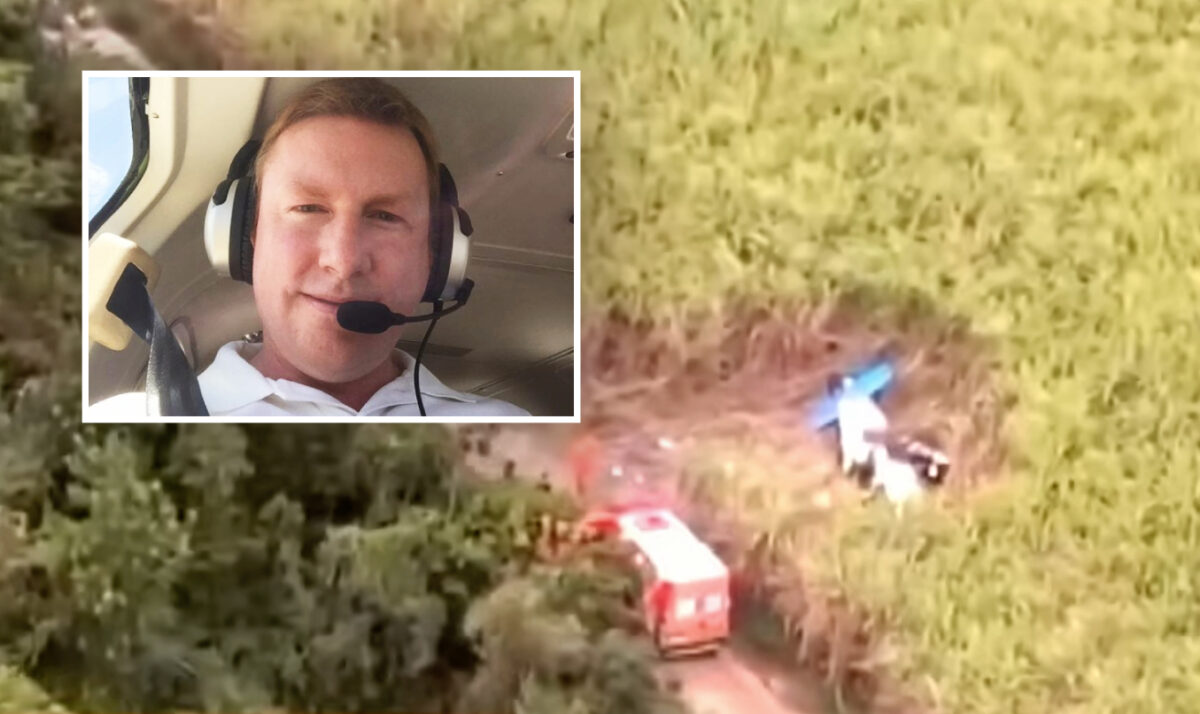
Insert: Timothy Clark. Main: The wreckage of Clark’s plane. Source: Facebook, TV Pajuçara / YouTube

An Australian pilot who recently died when his small plane crashed in South America during a failed drug run has links to an alleged Kinahan cartel associate who is facing charges over the importation of a multimillion dollar cocaine shipment to Western Australia.

The body of former Melbourne stockbroker Timothy James Clark was reportedly found at the wreckage of his single-engine Sling 4 in Brazil’s north-east on September 14, along with about 200kg of cocaine.

Left: the wreckage of the small aircraft in a sugarcane field in Coruripe; Timothy Clark’s drivers licence. Right: cocaine seized by police. Source: Polícia Militar de Alagoas via G1

Local media said Clark was the sole occupant of the aircraft, which had been fitted with additional fuel tanks and appeared to have its transponder turned off.

Melbourne newspaper The Age reported on Thursday that Clark’s failed mission in South America was not his “first rodeo” and quoted a confidential source who alleged that the 46-year-old had been involved in a drug smuggling operation in Western Australia last year.

The Australian Federal Police (AFP) charged German businessman Oliver Andreas Herrmann and Melbourne man Hamish Falconer with trafficking a commercial quantity of a controlled drug in December after a search of their hotel rooms uncovered 200kg of cocaine, packed in suitcases in single one-kilogram blocks, along with night vision goggles, aviation equipment and a hardware cryptocurrency wallet.

Insert: German national Oliver Herrmann. Top left: The Overlander Airport, where he allegedly met an aircraft on Dec 27, 2024. Bottom left: cocaine seized by the AFP. Right: Herrmann after he was detained. Source: Facebook / Oliver Herrmann, Google Street View, AFP

Herrmann had allegedly met a “small aircraft” at the remote Overlander Airstrip the day before his arrest. The AFP has not disclosed the make and model of the aircraft but said it had not seized an aircraft as part of its investigation.

Investigators estimated the street value of the drugs to be AUD $65 million and said an “organised crime syndicate” was likely responsible for the scheme.

In March, Bellingcat published an open source analysis of Herrmann’s online footprint and traced the champion marathon runner and international businessman to locations associated with the US-sanctioned Kinahan Organised Crime Group.

Crime boss Christy Kinahan and his sons Daniel Kinahan and Christopher Kinahan Jr have a collective US $15 million bounty on their heads. 

It followed reporting by our publishing partner The Sunday Times, which revealed that Herrmann had “close financial ties” to Christy Kinahan, the 68-year-old founder of the eponymous international drug cartel. Herrmann had no previously known links to organised crime. 

Bellingcat has now uncovered evidence linking alleged Kinahan cartel associate Herrmann to Timothy Clark, the Australian who was killed when his plane crashed in Brazil two weeks ago.  

Timothy Clark, who said on a couchsurfing website that he loved to “party hard”, pictured with friends at a “BBQ party” in 2015. Source: Timothy Clark’s Facebook

Using online tools that consolidate publicly available information and reverse image searches, Bellingcat found more than a dozen accounts registered to Clark across social media platforms, travel websites and review platforms.

This open source review shows that the Australian pilot – who used the moniker “The Broker” on X and Instagram – documented his travels to more than 20 countries across Africa, South America, Europe and Asia over the past decade.

Clark frequently used Tripadvisor to post reviews, including about chartering a catamaran in Bali and the VIP service at a Saint-Tropez bar where he spent €5,500 on “ultra topshelf” drinks.

Timothy Clark, who was also involved in multiple businesses with interests in energy and mining, frequently posted photos of his overseas travels. Source: Tripadvisor

Clark was also an associate of Oliver Herrmann; the German businessman’s Facebook profile shows he was “friends” with the Australian pilot. And a 2018 restaurant review posted by Clark included a photo that shows the pair dining together in the Zimbabwean capital of Harare. 

The filename of the photo is dated March 2, the same day that Herrmann logged a run in Harare on the fitness app, Strava. In the same week, Clark posted a review for a Harare bar close to where Herrmann recorded another GPS-tracked run on the same day.    

Among his reviews about luxury hotels and wine pairings, Timothy Clark (left) posted a photo with Oliver Herrmann (right) at a restaurant in Harare in 2018. Source: Tripadvisor

Herrmann, an acclaimed runner who won the 2016 Munich Marathon, logged more than 2,500 activities across dozens of countries on Strava between 2013 and 2023. His use of the fitness app provided an extensive overview of his travels during that period. 

Corporate records show Herrmann has been involved at senior levels with companies active in the fields of fintech, mining and consulting.

Locations of runs logged on Herrmann’s Strava account from September 2013 to January 2023. Source: Map data ©2025 Google, INEGI

Like Christy Kinahan, Clark had an active Google Maps profile where he posted reviews, photos and ratings. His profile used the alias “John Smithe”, but Clark is pictured in one of the images posted by the account and his real name is used in a reply from one of the venues, confirming it belongs to him.

Clark also left Tripadvisor reviews for two Zimbabwean venues – the Amanzi Lodge and Thetford Estate – which Christy Kinahan later attended, according to the cartel leader’s own Google Maps profile.

Clark, who lived in South Africa before his death, was also just one of eight X followers of Adam Wood, a known associate of Christy Kinahan in Africa.

Adam Wood (left) with cartel leader Christy Kinahan – known as the “Dapper Don” – at a 2019 aviation conference in Egypt.

South African news outlet City Press reported last week that Clark also operated a second aircraft for “legitimate” flights, a Beechcraft King Air 350 with Malawi registration number 7Q-YAO.

Bellingcat previously revealed that this aircraft was purchased in the US by an Indonesian company linked to Oliver Herrmann’s partner. It was then flown to Southern Africa by a ferry pilot who had also piloted a Pilatus PC-12 previously associated with a Kinahan-linked company.

Clark posted a Google review for a business at Lanseria Airport in Johannesburg on the same day in April 2024 that the Beechcraft King Air 350 landed there, according to tracking data from ADS-B Exchange.

Tracked flight path of the Beechcraft King Air 350 during its ferry flight from the USA to Africa in February 2024, with numerous subsequent flights also recorded in the region. Source: Flightradar24, Facebook, Google Earth

The Sunday Times reports today that the Sling 4 kit-plane piloted by Clark had been heavily modified for transatlantic flights. A source told the newspaper that Clark replaced the engine at least once in Brazil, indicating he was continuously flying it long-haul, and may have fitted a third engine due to the number of flying hours he was accumulating. 

Clark’s plane crashed about an 11-hour flight from the Amazon basin, a region that has become a major trafficking route for cocaine bound for Europe, the drug’s fastest-expanding market. 

The wreckage of Clark’s plane, which crashed earlier this month in Coruripe on the southern coast of the Brazilian state of Alagoas. Source: TV Pajuçara / YouTube

Tonnes of the drug flow from neighbouring Peru and Colombia, moving through the Amazon before being shipped to Europe and Africa.

The Sunday Times said Clark and Herrmann’s alleged activities suggested the Kinahan cartel had opened new smuggling routes for smaller shipments following a succession of seizures of cocaine consignments by police forces across Europe. 

Oliver Herrmann, who has no known convictions, has not yet entered a plea. His case is listed for a committal mention in Perth Magistrates Court on October 10.


Peter Barth, Connor Plunkett, Beau Donelly and John Mooney contributed to this article.

Bellingcat is a non-profit and the ability to carry out our work is dependent on the kind support of individual donors. If you would like to support our work, you can do so here. You can also subscribe to our Patreon channel here. Subscribe to our Newsletter and follow us on Bluesky here and Mastodon here. With the unpredictability of social media algorithms making it harder for news outlets to reach audiences consistently, we have also started a WhatsApp channel that you can join to stay updated on our stories.

The post Australian Cocaine Pilot Killed in Brazil Plane Crash Linked to Kinahan Drug Cartel appeared first on bellingcat.

❌
❌