 Entrar
Broken by Design: How VECT 2.0 Ransomware Becomes a Permanent Data Wiper
30 de Abril de 2026, 03:15
The post Broken by Design: How VECT 2.0 Ransomware Becomes a Permanent Data Wiper appeared first on Daily CyberSecurity.


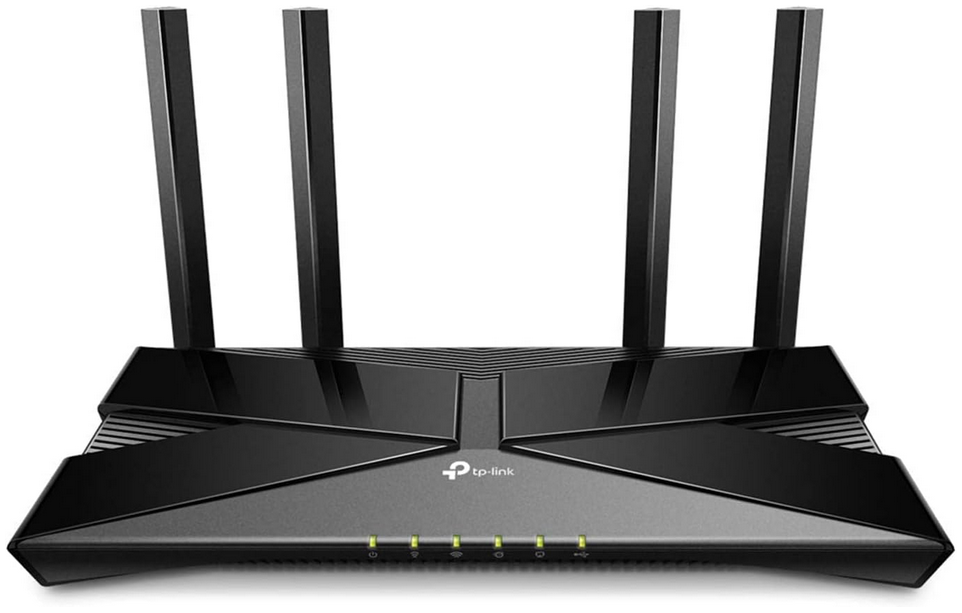
The U.S. government is reportedly preparing to ban the sale of wireless routers and other networking gear from TP-Link Systems, a tech company that currently enjoys an estimated 50% market share among home users and small businesses. Experts say while the proposed ban may have more to do with TP-Link’s ties to China than any specific technical threats, much of the rest of the industry serving this market also sources hardware from China and ships products that are insecure fresh out of the box.

A TP-Link WiFi 6 AX1800 Smart WiFi Router (Archer AX20).
The Washington Post recently reported that more than a half-dozen federal departments and agencies were backing a proposed ban on future sales of TP-Link devices in the United States. The story said U.S. Department of Commerce officials concluded TP-Link Systems products pose a risk because the U.S.-based company’s products handle sensitive American data and because the officials believe it remains subject to jurisdiction or influence by the Chinese government.
TP-Link Systems denies that, saying that it fully split from the Chinese TP-Link Technologies over the past three years, and that its critics have vastly overstated the company’s market share (TP-Link puts it at around 30 percent). TP-Link says it has headquarters in California, with a branch in Singapore, and that it manufactures in Vietnam. The company says it researches, designs, develops and manufactures everything except its chipsets in-house.
TP-Link Systems told The Post it has sole ownership of some engineering, design and manufacturing capabilities in China that were once part of China-based TP-Link Technologies, and that it operates them without Chinese government supervision.
“TP-Link vigorously disputes any allegation that its products present national security risks to the United States,” Ricca Silverio, a spokeswoman for TP-Link Systems, said in a statement. “TP-Link is a U.S. company committed to supplying high-quality and secure products to the U.S. market and beyond.”
Cost is a big reason TP-Link devices are so prevalent in the consumer and small business market: As this February 2025 story from Wired observed regarding the proposed ban, TP-Link has long had a reputation for flooding the market with devices that are considerably cheaper than comparable models from other vendors. That price point (and consistently excellent performance ratings) has made TP-Link a favorite among Internet service providers (ISPs) that provide routers to their customers.
In August 2024, the chairman and the ranking member of the House Select Committee on the Strategic Competition Between the United States and the Chinese Communist Party called for an investigation into TP-Link devices, which they said were found on U.S. military bases and for sale at exchanges that sell them to members of the military and their families.
“TP-Link’s unusual degree of vulnerabilities and required compliance with PRC law are in and of themselves disconcerting,” the House lawmakers warned in a letter (PDF) to the director of the Commerce Department. “When combined with the PRC government’s common use of SOHO [small office/home office] routers like TP-Link to perpetrate extensive cyberattacks in the United States, it becomes significantly alarming.”
The letter cited a May 2023 blog post by Check Point Research about a Chinese state-sponsored hacking group dubbed “Camaro Dragon” that used a malicious firmware implant for some TP-Link routers to carry out a sequence of targeted cyberattacks against European foreign affairs entities. Check Point said while it only found the malicious firmware on TP-Link devices, “the firmware-agnostic nature of the implanted components indicates that a wide range of devices and vendors may be at risk.”
In a report published in October 2024, Microsoft said it was tracking a network of compromised TP-Link small office and home office routers that has been abused by multiple distinct Chinese state-sponsored hacking groups since 2021. Microsoft found the hacker groups were leveraging the compromised TP-Link systems to conduct “password spraying” attacks against Microsoft accounts. Password spraying involves rapidly attempting to access a large number of accounts (usernames/email addresses) with a relatively small number of commonly used passwords.
TP-Link rightly points out that most of its competitors likewise source components from China. The company also correctly notes that advanced persistent threat (APT) groups from China and other nations have leveraged vulnerabilities in products from their competitors, such as Cisco and Netgear.
But that may be cold comfort for TP-Link customers who are now wondering if it’s smart to continue using these products, or whether it makes sense to buy more costly networking gear that might only be marginally less vulnerable to compromise.
Almost without exception, the hardware and software that ships with most consumer-grade routers includes a number of default settings that need to be changed before the devices can be safely connected to the Internet. For example, bring a new router online without changing the default username and password and chances are it will only take a few minutes before it is probed and possibly compromised by some type of Internet-of-Things botnet. Also, it is incredibly common for the firmware in a brand new router to be dangerously out of date by the time it is purchased and unboxed.
Until quite recently, the idea that router manufacturers should make it easier for their customers to use these products safely was something of an anathema to this industry. Consumers were largely left to figure that out on their own, with predictably disastrous results.
But over the past few years, many manufacturers of popular consumer routers have begun forcing users to perform basic hygiene — such as changing the default password and updating the internal firmware — before the devices can be used as a router. For example, most brands of “mesh” wireless routers — like Amazon’s Eero, Netgear’s Orbi series, or Asus’s ZenWifi — require online registration that automates these critical steps going forward (or at least through their stated support lifecycle).
For better or worse, less expensive, traditional consumer routers like those from Belkin and Linksys also now automate this setup by heavily steering customers toward installing a mobile app to complete the installation (this often comes as a shock to people more accustomed to manually configuring a router). Still, these products tend to put the onus on users to check for and install available updates periodically. Also, they’re often powered by underwhelming or else bloated firmware, and a dearth of configurable options.
Of course, not everyone wants to fiddle with mobile apps or is comfortable with registering their router so that it can be managed or monitored remotely in the cloud. For those hands-on folks — and for power users seeking more advanced router features like VPNs, ad blockers and network monitoring — the best advice is to check if your router’s stock firmware can be replaced with open-source alternatives, such as OpenWrt or DD-WRT.
These open-source firmware options are compatible with a wide range of devices, and they generally offer more features and configurability. Open-source firmware can even help extend the life of routers years after the vendor stops supporting the underlying hardware, but it still requires users to manually check for and install any available updates.
Happily, TP-Link users spooked by the proposed ban may have an alternative to outright junking these devices, as many TP-Link routers also support open-source firmware options like OpenWRT. While this approach may not eliminate any potential hardware-specific security flaws, it could serve as an effective hedge against more common vendor-specific vulnerabilities, such as undocumented user accounts, hard-coded credentials, and weaknesses that allow attackers to bypass authentication.
Regardless of the brand, if your router is more than four or five years old it may be worth upgrading for performance reasons alone — particularly if your home or office is primarily accessing the Internet through WiFi.
NB: The Post’s story notes that a substantial portion of TP-Link routers and those of its competitors are purchased or leased through ISPs. In these cases, the devices are typically managed and updated remotely by your ISP, and equipped with custom profiles responsible for authenticating your device to the ISP’s network. If this describes your setup, please do not attempt to modify or replace these devices without first consulting with your Internet provider.
A escalada de tensões entre Irã e Israel ganha um novo e perigoso capítulo no ciberespaço. Um relatório divulgado pela Check Point Research revela que o grupo de ciberespionagem iraniano conhecido como Educated Manticore, com ligações diretas ao Corpo da Guarda Revolucionária Islâmica (IRGC-IO), intensificou campanhas direcionadas contra acadêmicos, jornalistas e especialistas de tecnologia israelenses.
De acordo com a investigação, o Educated Manticore concentrou esforços em atacar profissionais de alto nível, incluindo professores de ciência da computação de universidades renomadas de Israel, pesquisadores de cibersegurança e jornalistas. As ações, sofisticadas e cuidadosamente planejadas, fazem parte de uma ofensiva de espionagem digital que visa obter acesso indevido a contas de e-mail e outros serviços críticos.
Os invasores se passam por pesquisadores, executivos ou analistas de empresas de cibersegurança fictícias, estabelecendo contato inicial por e-mail ou até mesmo por mensagens no WhatsApp. Com uma comunicação polida, bem estruturada e aparentemente legítima — muitas vezes auxiliada por inteligência artificial —, os criminosos buscam conquistar a confiança das vítimas e direcioná-las para links maliciosos.
Uma vez estabelecido o contato, os alvos são conduzidos para falsas páginas de login do Gmail, Outlook ou Yahoo, desenvolvidas com tecnologia moderna baseada em Single Page Applications (SPA) usando React. Essas páginas simulam com precisão o fluxo de autenticação de grandes provedores de e-mail, incluindo etapas de autenticação multifator (2FA), captura de senhas e códigos de verificação.
Além disso, o kit de phishing desenvolvido pelo grupo conta com keyloggers ocultos, capazes de registrar todas as teclas digitadas, mesmo que o usuário não finalize o processo. As informações são transmitidas em tempo real para os servidores dos atacantes, potencializando o roubo de credenciais e comprometendo ainda mais as contas das vítimas.
Um aspecto que chamou atenção dos analistas foi o uso de convites falsos do Google Meet, hospedados no próprio serviço Google Sites, o que dá uma aparência ainda mais legítima às páginas maliciosas. Ao clicarem nas imagens desses convites, as vítimas são redirecionadas a sites sob o controle dos atacantes.
A infraestrutura da Educated Manticore é ampla e bem estruturada. Desde janeiro de 2025, o grupo registrou mais de 130 domínios diferentes — muitos relacionados a temas como tecnologia, comunicação e educação —, utilizados para hospedar as páginas de phishing e gerenciar as operações clandestinas. A maioria desses domínios foi registrada através do provedor NameCheap.
Os especialistas também identificaram uma sobreposição significativa com outra célula de operações, conhecida como GreenCharlie, o que sugere uma possível ramificação ou subgrupo da Educated Manticore atuando de forma coordenada.
Entre os domínios maliciosos monitorados estão sendly-ink[.]shop, idea-home[.]online, live-meet[.]info, bestshopu[.]online, entre muitos outros. Além disso, diversos endereços IP associados à operação foram mapeados, fortalecendo as evidências de uma infraestrutura técnica bem organizada.
Apesar da crescente exposição e dos esforços da comunidade de segurança cibernética, o Educated Manticore segue atuando com rapidez e agressividade, demonstrando grande capacidade de adaptação e evasão. A campanha atual, ao explorar o contexto geopolítico e acadêmico, representa uma ameaça grave à integridade das instituições israelenses e ao ecossistema global de cibersegurança.
“Esses ataques evidenciam como o ciberespaço se tornou um dos principais campos de batalha no atual conflito Irã-Israel”, alertam os pesquisadores da Check Point. A expectativa é de que o grupo continue investindo em táticas de roubo de identidade e coleta de informações, principalmente de indivíduos envolvidos em ambientes acadêmicos, científicos e tecnológicos estratégicos.
A Check Point Research divulgou uma lista de domínios e endereços IP associados à infraestrutura maliciosa do Educated Manticore. Profissionais e empresas de tecnologia são fortemente aconselhados a implementar medidas de monitoramento e bloqueio desses indicadores em suas redes.
Entre os principais IOCs identificados estão:
Endereços IP:
185.130.226[.]71
45.12.2[.]158
45.143.166[.]230
91.222.173[.]141
194.11.226[.]9
Domínios Notórios:
sendly-ink[.]shop
idea-home[.]online
live-meet[.]info
bestshopu[.]online
live-message[.]online
A lista completa de domínios e IPs está disponível no relatório técnico da Check Point.
O caso do Educated Manticore reforça o papel crítico da cibersegurança no cenário geopolítico atual. A sofisticação técnica, combinada a uma estratégia agressiva de engenharia social, demonstra que grupos apoiados por Estados seguem explorando vulnerabilidades humanas e tecnológicas para alcançar seus objetivos de espionagem.
Especialistas recomendam vigilância redobrada, treinamentos contínuos de conscientização e o uso de autenticação forte e verificada, especialmente entre profissionais que atuam em áreas sensíveis de tecnologia e pesquisa.
