Visualização normal

Hoje — 9 de Maio de 2026Stream principal
  • ✇Security Affairs
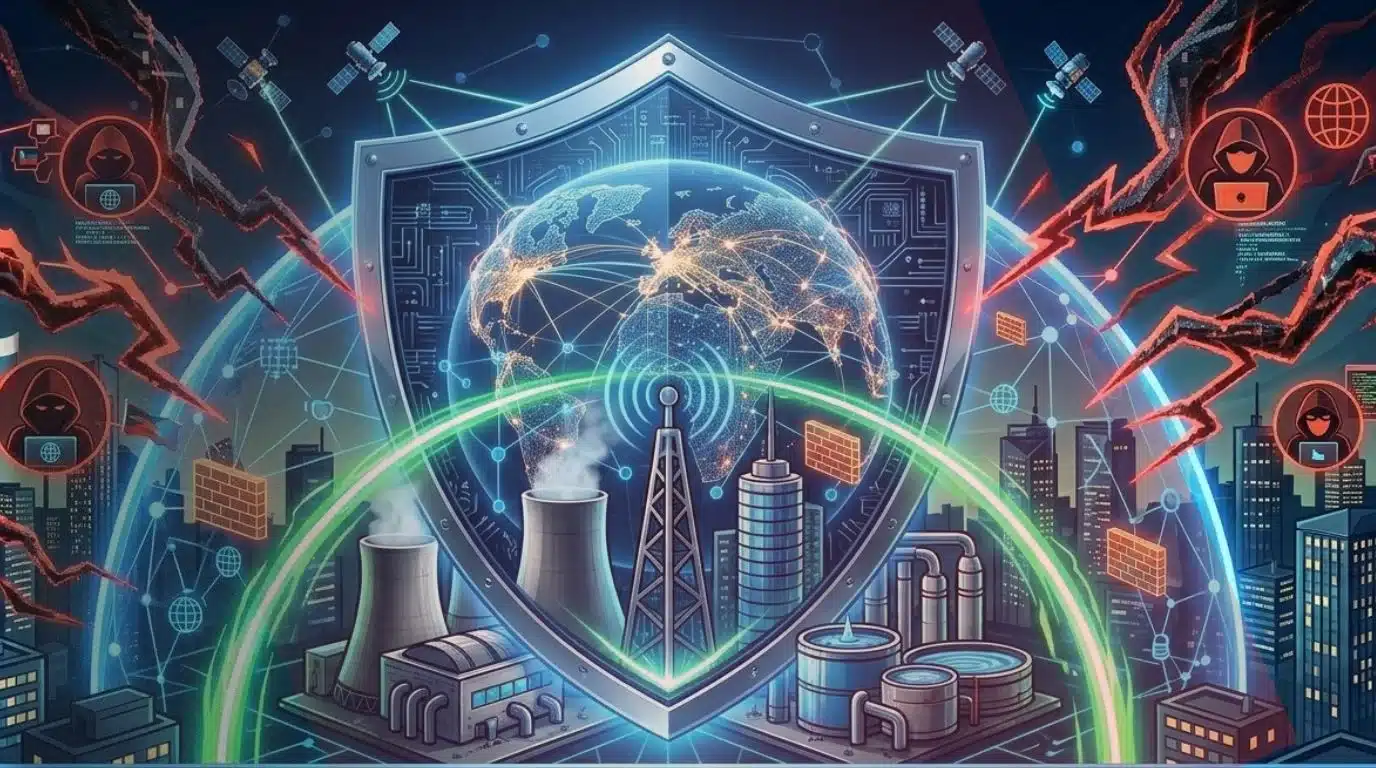
  • Cyberattacks on Poland’s Water Plants: A Blueprint for Hybrid Warfare Pierluigi Paganini
    Poland’s ABW confirmed hackers breached ICS at five water plants, gaining ability to alter equipment settings. Russia-linked APT groups suspected. Poland’s Internal Security Agency (ABW) has published a detailed account of a sustained campaign targeting the country’s water plants, documenting security breaches at five water treatment facilities in 2025. The incidents mark one of the clearest documented cases in Europe of state-linked hackers gaining direct access to industrial control system
     

Cyberattacks on Poland’s Water Plants: A Blueprint for Hybrid Warfare

8 de Maio de 2026, 15:16

Poland’s ABW confirmed hackers breached ICS at five water plants, gaining ability to alter equipment settings. Russia-linked APT groups suspected.

Poland’s Internal Security Agency (ABW) has published a detailed account of a sustained campaign targeting the country’s water plants, documenting security breaches at five water treatment facilities in 2025. The incidents mark one of the clearest documented cases in Europe of state-linked hackers gaining direct access to industrial control systems managing public water supplies.

The affected facilities were located in Jabłonna Lacka, Szczytno, Małdyty, Tolkmicko, and Sierakowo. In several cases, attackers didn’t just observe, they obtained the ability to modify operational parameters of equipment in real time, creating a direct and concrete risk to the continuity of public water services. A breach of this kind isn’t a data theft. It is the digital equivalent of sabotage.

“In some cases, the attackers gained access to industrial control systems and obtained the capability to modify device operating parameters.” reads the report published by ABW. “This created a direct threat to the continuity of water supply processes and the proper functioning of municipal infrastructure.”

The attack vectors ABW identified are as unglamorous as they are alarming: weak password policies and systems left directly exposed to the internet. These are not sophisticated zero-day exploits. They are basic security failures that the OT and ICS security community has been warning about for years.

“The incidents were made possible by inadequate security measures, including weak password policies and the exposure of management interfaces directly to the public internet.” continues the report. “In several cases, systems responsible for operational technology were accessible without sufficient protection mechanisms.”

The attribution points firmly eastward. ABW identified Russian APT groups APT28 and APT29, the same actors linked to election interference across Europe and the SolarWinds supply chain attack, as well as UNC1151, a Belarusian-aligned group previously connected to the Ghostwriter operation targeting NATO countries.

“APT28, APT29 and UNC1151 are among the most active state-linked cyber espionage groups operating against European targets.” concludes the report. “Their activities combine intelligence collection, disruptive cyber operations and coordinated information warfare campaigns.”

Follow me on Twitter: @securityaffairs and Facebook and Mastodon

Pierluigi Paganini

(SecurityAffairs – hacking, Water Plants)

Ontem — 8 de Maio de 2026Stream principal
  • ✇Cybersecurity News
  • The TOAD Trap: Why Scammers are Trading Malicious Links for VoIP Phone Numbers Ddos
    The post The TOAD Trap: Why Scammers are Trading Malicious Links for VoIP Phone Numbers appeared first on Daily CyberSecurity. Related posts: Cisco Talos Q2 Report: Phishing & Ransomware Dominate, with Qilin Using Deprecated PowerShell 1.0 The Dark Side of Telegram: How Cybercriminals Weaponize Bot APIs for Stealthy Data Exfiltration The Compliance Trap: How a 13,000-Org Phishing Wave Bypasses MFA via AiTM Proxying
     
Antes de ontemStream principal

CISA Launches CI Fortify to Defend Critical Infrastructure From Nation-State Cyber Threats

CI Fortify

The U.S. Cybersecurity and Infrastructure Security Agency (CISA) has launched a new initiative called “CI Fortify” aimed at helping critical infrastructure operators prepare for disruptive cyberattacks linked to geopolitical conflicts. The initiative comes amid growing concerns over nation-state cyber threats targeting operational technology (OT) systems that support essential services across the United States. The CI Fortify initiative focuses on improving critical infrastructure resilience through two key objectives: isolation and recovery. CISA said the effort is designed to help operators maintain essential operations even if adversaries compromise telecommunications networks, internet services, or industrial control systems. According to the agency, nation-state actors are no longer limiting their activities to espionage. Instead, threat groups have increasingly been pre-positioning themselves inside critical infrastructure environments to potentially disrupt or destroy systems during future geopolitical conflicts.

CI Fortify Initiative Focuses on Isolation and Recovery

Under the CI Fortify initiative, CISA is urging critical infrastructure organizations to assume that third-party communications and service providers may become unreliable during a crisis. Operators are also being asked to plan under the assumption that threat actors may already have some level of access to OT networks. Nick Andersen, Acting Director at CISA, emphasized the need for organizations to prepare for worst-case operational scenarios. “In a geopolitical crisis, the critical infrastructure organizations Americans rely on must be able to continue delivering, at a minimum, crucial services,” Andersen said. “They must be able to isolate vital systems from harm, continue operating in that isolated state, and quickly recover any systems that an adversary may successfully compromise.” The isolation strategy outlined under CI Fortify involves proactively disconnecting operational technology systems from external business networks and third-party connections. CISA said this approach is intended to prevent cyber impacts from spreading into OT environments while allowing organizations to continue delivering essential services in a degraded communications environment. The agency advised operators to identify critical customers, including military infrastructure and other lifeline services, and determine the minimum operational capabilities needed to support them during emergencies. CISA also recommended updating engineering processes and business continuity plans to support safe operations for extended periods while systems remain isolated.

Recovery Planning Central to Critical Infrastructure Resilience

Alongside isolation, the CI Fortify initiative places strong emphasis on recovery planning. CISA urged operators to maintain updated system documentation, create secure backups of critical files, and regularly practice system replacement or manual operational transitions. The agency noted that organizations should also identify communications dependencies that could complicate recovery efforts, such as licensing servers, remote vendor access, or upstream network connections. CISA encouraged operators to work closely with managed service providers, system integrators, and vendors to understand potential failure points and establish alternative recovery pathways. The initiative also highlights broader benefits of emergency planning beyond cybersecurity incidents. According to CISA, the same planning processes can help organizations maintain operations during weather-related disruptions, equipment failures, and safety emergencies. The agency said isolation planning can help cut off command-and-control access to compromised systems, while strong recovery preparation can reduce incident response costs and shorten recovery timelines.

Security Vendors and Service Providers Asked to Support CI Fortify

The CI Fortify initiative extends beyond infrastructure operators and calls on cybersecurity vendors, industrial automation suppliers, and managed service providers to support resilience planning efforts. Industrial control system vendors are being encouraged to identify barriers that could interfere with isolation and recovery procedures, including licensing restrictions and server dependency issues. Managed service providers and integrators are expected to assist organizations in engineering updates, local backup collection, and recovery documentation planning. Meanwhile, security vendors are being asked to support threat monitoring and provide intelligence if nation-state actors shift from espionage-focused activity to destructive cyber operations. CISA also requested vendors share information related to tactics that could undermine recovery or bypass isolation protections, including malicious firmware updates and vulnerabilities affecting software-based data diodes.

Volt Typhoon Cyberattacks Continue to Shape U.S. Cybersecurity Strategy

The launch of CI Fortify is closely tied to ongoing concerns surrounding the Volt Typhoon cyberattacks, which U.S. officials have linked to Chinese state-sponsored threat actors. CISA’s initiative specifically references the Volt Typhoon campaign as an example of how adversaries have attempted to establish long-term access inside U.S. critical infrastructure systems to potentially support disruptive actions during military conflicts. The Volt Typhoon operation first became public in 2023, when U.S. authorities revealed that Chinese hackers had infiltrated multiple sectors of American critical infrastructure. Former CISA Director Jen Easterly stated in 2024 that the agency had identified and removed Volt Typhoon intrusions across several sectors. She later reiterated in 2025 that efforts continued to focus on identifying and evicting Chinese cyber actors from critical infrastructure environments. Despite these operations, cybersecurity researchers and some government officials have warned that Chinese threat actors may still retain access to portions of critical infrastructure networks. Several experts have argued that nation-state groups remain deeply embedded in certain environments despite years of remediation efforts. With the CI Fortify initiative, CISA appears to be shifting focus toward operational resilience, recognizing that prevention alone may not be sufficient against sophisticated nation-state cyber threats targeting U.S. critical infrastructure.

  • ✇Firewall Daily – The Cyber Express
  • NCSC Warns Organisations to Act Fast as Hidden Software Flaws Surface Samiksha Jain
    Organisations worldwide are being urged to prepare for a vulnerability patch wave, as security experts warn that advances in artificial intelligence (AI) could rapidly expose long-standing weaknesses across software systems. The warning comes from National Cyber Security Centre (NCSC), which says businesses must act now to strengthen their environments before a surge of critical updates arrives. In a blog, Chief Technology Officer Ollie Whitehouse highlighted that years of accumulated technic
     

NCSC Warns Organisations to Act Fast as Hidden Software Flaws Surface

vulnerability patch wave

Organisations worldwide are being urged to prepare for a vulnerability patch wave, as security experts warn that advances in artificial intelligence (AI) could rapidly expose long-standing weaknesses across software systems. The warning comes from National Cyber Security Centre (NCSC), which says businesses must act now to strengthen their environments before a surge of critical updates arrives. In a blog, Chief Technology Officer Ollie Whitehouse highlighted that years of accumulated technical debt are now becoming a major cybersecurity risk. Technical debt refers to unresolved flaws and compromises in software that arise when organisations prioritise speed or short-term delivery over long-term resilience. According to Whitehouse, artificial intelligence is accelerating the problem. Skilled attackers are increasingly able to use AI tools to identify and exploit vulnerabilities at scale, forcing what the NCSC describes as a “correction” across the technology ecosystem. This is expected to trigger a vulnerability patch wave, with a high volume of security updates affecting open source, commercial, proprietary, and software-as-a-service platforms.

Prioritising External Attack Surfaces

As part of preparing for the vulnerability patch wave, the NCSC advises organisations to first focus on their external attack surfaces. Internet-facing systems, cloud services, and exposed infrastructure present the highest risk when new vulnerabilities are disclosed. The guidance recommends a perimeter-first approach. Organisations should secure outward-facing technologies before moving deeper into internal systems. This reduces the likelihood that attackers can exploit newly discovered weaknesses during the vulnerability patch wave. Where resources are limited, priority should be given to patching systems that are directly exposed to the internet. Critical security infrastructure should follow next. However, the NCSC cautions that patching alone will not solve every issue. Legacy and end-of-life systems remain a major concern. Many of these technologies no longer receive security updates, leaving organisations vulnerable even during a vulnerability patch wave. In such cases, businesses may need to replace outdated systems or bring them back into supported environments, especially if they are externally accessible.

Preparing for Faster and Large-scale Patching

The expected vulnerability patch wave will require organisations to rethink how they manage updates. The NCSC is urging businesses to prepare for faster, more frequent, and large-scale deployment of security patches, including across supply chains. Several key measures have been recommended:
  • Enable automatic updates wherever possible to reduce operational burden
  • Adopt secure “hot patching” to apply fixes without service disruption
  • Ensure internal processes support rapid and large-scale updates
  • Use risk-based prioritisation models such as Stakeholder Specific Vulnerability Categorisation (SSVC)
Whitehouse noted that organisations must be ready to accelerate patching timelines when critical vulnerabilities are actively exploited, particularly those affecting internet-facing systems. At the core of this approach is an “update by default” policy. This means applying software updates as quickly as possible, ideally through automated processes. While this may not always be feasible for safety-critical or operational technology systems, the NCSC says it should form the foundation of modern vulnerability management strategies.

Beyond Vulnerability Patch Wave: Addressing Systemic Risks

The NCSC emphasises that the vulnerability patch wave is only part of a broader cybersecurity challenge. Patching addresses immediate risks, but it does not eliminate the underlying causes of technical debt. Technology vendors are being encouraged to build more secure systems from the outset. This includes adopting memory safety and containment technologies such as CHERI, which can reduce the likelihood of exploitable vulnerabilities. For organisations operating critical services, strengthening cybersecurity fundamentals is equally important. Frameworks such as Cyber Essentials and sector-specific resilience models can help reduce the impact of breaches and improve overall security posture. Additional guidance has also been issued for high-risk environments, covering areas such as privileged access workstations, cross-domain security architecture, and threat detection through observability and proactive hunting.

Organisations Urged to Act Now

The NCSC has made it clear that preparation cannot be delayed. The anticipated vulnerability patch wave is expected to impact organisations of all sizes and sectors. Businesses are advised to review their vulnerability management processes, assess their exposure, and ensure their supply chains are also ready to respond. Larger organisations, in particular, are encouraged to seek assurance from both commercial and open-source partners. As Whitehouse concluded, readiness for the vulnerability patch wave will depend on proactive planning, strong fundamentals, and the ability to respond quickly at scale.
  • ✇Security Boulevard
  • China Has its Sights Set on Scammers, Just Not Those Targeting Americans  Teri Robinson
    A new report from the U.S.-China Economic and Security Review Commission reveals that while China is aggressively prosecuting fraud targeting its own citizens, it continues to turn a blind eye to industrial-scale scam centers victimizing Americans. This selective enforcement has incentivized Chinese criminal syndicates to pivot toward U.S. targets, resulting in over $10 billion in losses in 2024 through "pig-butchering" and crypto investment schemes. As attackers integrate AI to scale these ope
     

China Has its Sights Set on Scammers, Just Not Those Targeting Americans 

1 de Maio de 2026, 04:19
China, threats, scams, CISA TP-Link Volt Typhoon Salt Typhoon

A new report from the U.S.-China Economic and Security Review Commission reveals that while China is aggressively prosecuting fraud targeting its own citizens, it continues to turn a blind eye to industrial-scale scam centers victimizing Americans. This selective enforcement has incentivized Chinese criminal syndicates to pivot toward U.S. targets, resulting in over $10 billion in losses in 2024 through "pig-butchering" and crypto investment schemes. As attackers integrate AI to scale these operations and exploit cryptocurrency for money laundering, experts warn that organizations must treat social engineering as a structural infrastructure threat rather than a simple training issue, as diplomatic solutions remain unlikely in the current geopolitical climate

The post China Has its Sights Set on Scammers, Just Not Those Targeting Americans  appeared first on Security Boulevard.

  • ✇Security Boulevard
  • The Security Gap Hiding in Your Salesforce Org  Ido Gaver
    Stop guessing and start operating. Discover why large enterprises are shifting from reactive Salesforce management to continuous system understanding, and how visible metadata provides the critical context needed for both humans and AI agents to act with confidence. The post The Security Gap Hiding in Your Salesforce Org  appeared first on Security Boulevard.
     
  • ✇ASEC BLOG
  • Ransom & Dark Web Issues Week 1, April 2026 ATCP
    ASEC Blog publishes Ransom & Dark Web Issues Week 1, April 2026           Ransomware group NetRunner attack against the Indian subsidiary of a South Korean auto parts manufacturer Ransomware group Everest attack against a major Japanese automaker ShinyHunters claims of source code and internal data leak from a U.S. network infrastructure […]
     

Ransom & Dark Web Issues Week 1, April 2026

Por:ATCP
1 de Abril de 2026, 12:00
ASEC Blog publishes Ransom & Dark Web Issues Week 1, April 2026           Ransomware group NetRunner attack against the Indian subsidiary of a South Korean auto parts manufacturer Ransomware group Everest attack against a major Japanese automaker ShinyHunters claims of source code and internal data leak from a U.S. network infrastructure […]
  • ✇Security Boulevard
  • Let’s Stop Sovereignty Washing  Sebastian Scheele
    Don't fall for "sovereignty washing." Learn the technical difference between data residency and true digital sovereignty, the impact of the U.S. CLOUD Act, and the rise of European "Geopatriation." The post Let’s Stop Sovereignty Washing  appeared first on Security Boulevard.
     

Julius v0.2.0: From 33 to 63 Probes — Now Detecting Cloud AI, Enterprise Inference, and RAG Pipelines

24 de Março de 2026, 22:13

TL;DR: Julius v0.2.0 nearly doubles LLM fingerprinting probe coverage from 33 to 63, adding detection for cloud-managed AI services (AWS Bedrock, Azure OpenAI, Vertex AI), high-performance inference servers (SGLang, TensorRT-LLM, Triton), AI gateways (Portkey, Helicone, Bifrost), and self-hosted RAG platforms (PrivateGPT, RAGFlow, Quivr). This release also hardens the scanner itself with response size limiting and […]

The post Julius v0.2.0: From 33 to 63 Probes — Now Detecting Cloud AI, Enterprise Inference, and RAG Pipelines appeared first on Praetorian.

The post Julius v0.2.0: From 33 to 63 Probes — Now Detecting Cloud AI, Enterprise Inference, and RAG Pipelines appeared first on Security Boulevard.

❌
❌