 Entrar
AWS Launches “Amazon Quick” to Bridge the Gap Between Desktop and Cloud
29 de Abril de 2026, 05:06
The post AWS Launches “Amazon Quick” to Bridge the Gap Between Desktop and Cloud appeared first on Daily CyberSecurity.



현재 AI 활용이 ‘대화’ 중심으로 이뤄지고 있는 만큼, 고객이 복잡한 별도 시스템을 구축하지 않고도 이미 협업 맥락이 축적된 슬랙 환경에서 에이전트를 구현할 수 있도록 지원하겠다는 것이다.
9일 열린 기자간담회에서 세일즈포스는 이른바 ‘SaaS포칼립스(SaaSpocalypse)’로 불리는 SaaS 위기론의 중심에 서 있다는 평가와는 달리, 오히려 슬랙을 전면에 내세우며 AI 시대에 대한 자신감을 드러냈다. 특히 슬랙을 단순 협업툴이 아닌 ‘에이전트 OS’로 재정의하며, 향후 업무 환경이 대화 중심으로 재편될 것이라는 메시지를 강조했다.
슬랙은 이미 세일즈포스의 핵심 성장 엔진으로 자리 잡았다. 박세진 세일즈포스 코리아 대표는 기자간담회에서 “슬랙은 이제 협업 플랫폼을 넘어 세일즈포스의 매출을 견인하는 핵심 솔루션”이라고 강조했다. 실제로 이날 행사에 참여한 김고중 세일즈포스 코리아 부사장에 따르면 2021년 277억 달러(당시 약 30조 원)에 인수된 이후 5년 만에 인수 이전 대비 2.5배의 매출 성장을 기록했다. 지난해에만 10만 개 이상의 신규 고객사가 유입됐고 AI 사용자 수는 900% 이상 증가했다. 월 평균 240억 건이던 메시지 전송량은 최근 일간 10억 건을 돌파했다.
여기에 슬랙의 에이전트 플랫폼 전환 속도도 빠르다. 올해 1월 슬랙봇 출시와 2월 리얼타임 서치 API 및 MCP 서버 공개 이후 불과 두 달 만에 에이전트 OS로서의 채택률이 300% 증가했다. 주다혜 솔루션 엔지니어는 “이 정도 속도로 확산된 사례는 세일즈포스 내부에서도 매우 이례적”이라고 설명했다. 또한 AI 관련 서드파티 기술과 연계할 수 있는 개방형 생태계를 통해 사용자 유입을 강화하고 있다. 세일즈포스에 따르면 현재 슬랙에는 2,600개 이상의 외부 애플리케이션이 연동돼 있으며, 오픈AI와 앤트로픽 등 주요 AI 기업들도 자사 에이전트를 슬랙 환경에서 제공하고 있다.
세일즈포스 전체 솔루션에서도 슬랙의 역할은 크다. 현재 세일즈포스는 자사의 기술을 네 가지 축으로 구분해 설명한다. 데이터 기반 ‘컨텍스트 시스템’, 세일즈·서비스·마케팅 클라우드를 중심으로 한 업무 시스템, 에이전트포스를 중심으로 한 에이전트 시스템, 그리고 슬랙 기반 협업 인터페이스다. 이 구조는 ‘에이전트 엔터프라이즈’를 구현하기 위한 통합 아키텍처로, 각 레이어가 유기적으로 연결되는 것이 핵심이다.
세일즈포스는 이러한 기술 요소들이 실제 업무로 연결되는 지점에 슬랙이 위치한다고 설명했다. 슬랙과 슬랙봇은 사람과 AI, 데이터, 애플리케이션을 하나의 대화형 인터페이스로 연결하며, 에이전트 기반 업무가 실제로 이루어지는 핵심 플랫폼 역할을 맡는다는 것이다.
김근명 세일즈포스 엔터프라이즈 아키텍트는 “이 4가지 레이어는 어디서든 시작할 수 있고 서로 상호 보완한다”며 “기업의 에이전트 엔터프라이즈 혁신을 체계적이고 신뢰할 수 있는 형태로 가속화하는 것이 세일즈포스의 청사진”이라고 말했다.
기자간담회에서는 슬랙봇이 실제로 어떻게 활용되고 있는지에 대한 구체적인 사례도 소개됐다. 당근마켓의 이예찬 엔지니어는 사내 AI 에이전트 ‘카비(Karby)’ 사례를 들며, 슬랙에서 단순 멘션만으로 데이터 분석과 리포트 작성, 에러 분석까지 수행할 수 있다고 설명했다. 특히 과거에 사라진 기능의 이력을 물었을 때 슬랙에 축적된 대화 기록을 기반으로 언제, 누가, 왜 해당 결정을 내렸는지까지 찾아주는 경험을 공유하며 “대화 맥락이 쌓인 공간에서 AI가 작동하기 때문에 가능한 일”이라고 표현했다.
우아한형제들 이청규 엔지니어 역시 슬랙을 “시간이 지날수록 단순한 대화를 넘어 업무 흐름 자체가 되는 공간”이라고 설명했다.. 그는 슬랙 데이터를 기반으로 반복 질문을 줄이고 업무 효율을 높이는 ‘운영 2.0’ 단계로 조직이 진화하고 있다고 설명하며, 슬랙봇이 도입되면 신규 입사자조차 별도의 탐색 과정 없이 바로 질문하고 답을 얻을 수 있는 환경이 될 것이라고 내다봤다.
두 엔지니어는 공통적으로 AI의 핵심은 기술이 아니라 ‘맥락’이라고 강조했다. 실제 업무와 연결된 데이터가 자연스럽게 축적되는 환경에서만 AI가 실질적인 가치를 발휘할 수 있으며, 슬랙은 그 조건을 가장 잘 갖춘 플랫폼이라는 평가다.
김고중 부사장은 “몇 개월 후에는 사용자가 어떤 에이전트가 있는지 알 필요 없이 슬랙봇과 대화만으로 해당 도메인의 에이전트와 협업해 업무를 처리하게 될 것”이라며, 슬랙봇이 ‘슈퍼 에이전트’로 진화할 방향을 제시했다. 이어 슬랙봇은 개인화된 AI 비서로서 정보 검색과 요약을 넘어 실제 업무 실행까지 수행하며, 세일즈포스 내부적으로는 이를 통해 직원당 주 최대 20시간의 업무 시간을 절감하는 효과도 나타나고 있다고 설명했다.
jihyun.lee@foundryco.com

TLDR: SlackPirate has been defunct for a few years due to a breaking change in how the Slack client interacts with the Slack API. It has a new PR by yours truly to let you loot Slack again out of the box, and a BOF exists to get you all the credential material you need to do it. I recommend you let Nemesis do the heavy lifting of finding interesting data in what you pull back.
This all started because I noticed that my brilliant colleague Matt Creel had added a new BOF to TrustedSec’s CS-Remote-OPs-BOF collection that pulled Slack cookies from the memory of either a browser or Slack client process. This would allow an operator to then utilize the stolen cookies to proxy browser traffic through a compromised machine and access the target organization’s Slack instance. He released a great blog about it if you want to learn more.
Slack is awesome, and full of valuable data about an organization. There’s the obvious stuff like people being lax and pasting credentials, but don’t forget that is also a comprehensive directory of who works there, and probably more valuable than their internal documentation (when was the last time you actually searched Confluence? Exactly.)
I was stoked to start using Matt’s BOF, since there hasn’t been an assessment where I got access to Slack where it didn’t prove useful. That said, something was nagging at me… This is the age of Nemesis! We don’t need to read anymore, reading is for squares! We have computers to do that for us while we watch short-form videos of animals with funny things on their heads (see below). Reading Slack was no exception.
A classic.
So I set out to find a good Slack looter. I quickly stumbled upon SlackPirate, created by Mikail Tunç, which seemed to be the defacto choice. And for good reason! It is simple, fairly comprehensive, and also quite modular; you can change what is being searched for with relative ease. By default though it does a lot, such as:
Great! I plugged in my cookie and… no dice. I was unable to authenticate to any of the API endpoints I should be able to. I knew the Slack cookie I had was valid, so it was time to investigate.
Figuring out what was the matter was pretty breezy! Slack is an Electron app, so you can still access the Chrome dev tools. Slack used to allow this by exporting a particular environment variable:
SET SLACK_DEVELOPER_MENU=TRUE && start C:\Users\<USER>\AppData\Local\slack\slack.exe
You could then access the developer tools by pressing ctrl + alt + i. This no longer works for me, so I instead opted to use Chrome remote debugging, which was successful.
(NOTE: If you’re reading this blog, there’s a good chance your security team will have an alert in place for Chrome remote debugging to prevent cookie crimes. You may want to check with them before doing this on a work computer.)
C:\Users\<USER>\AppData\Local\slack\slack.exe --args --remote-debugging-port=9222
Then when you browse to chrome://inspect/ you will be able to see Slack as with option to inspect:
By pressing “inspect” you get your dev tools, plus a neat window of the Electron app you are debugging! I have never tried to use this to screen-peek on an Electron app over a proxy, but wouldn’t that be neat.
My strategy at this point was to record network traffic while performing actions that seemed like they would have to be hitting a defined API endpoint from the client and seeing what the network traffic looked like. For example, going to the “users” page and finding what endpoint got hit to retrieve them. That’s what I am doing in the screenshot above for the BloodHoundGang slack (which you should join if you haven’t).
This allowed me to compare the requests with what was being performed in SlackPirate and determine what had changed to break it.
Turns out, not much! The APIs ended up being the same as before, the only piece that was missing what that now requests were made with a token included in the request payload itself, in addition to the cookie in the headers we already knew about.
As you can see, this token is also in a nice searchable format, starting with “xoxc”, so the same technique used by Matt’s BOF to pull the cookie from memory can be used for the token. Now the BOF pulls both, and can be used not only get the credential material needed to browse a target organization’s Slack via a proxy, but also interact with it programmatically.
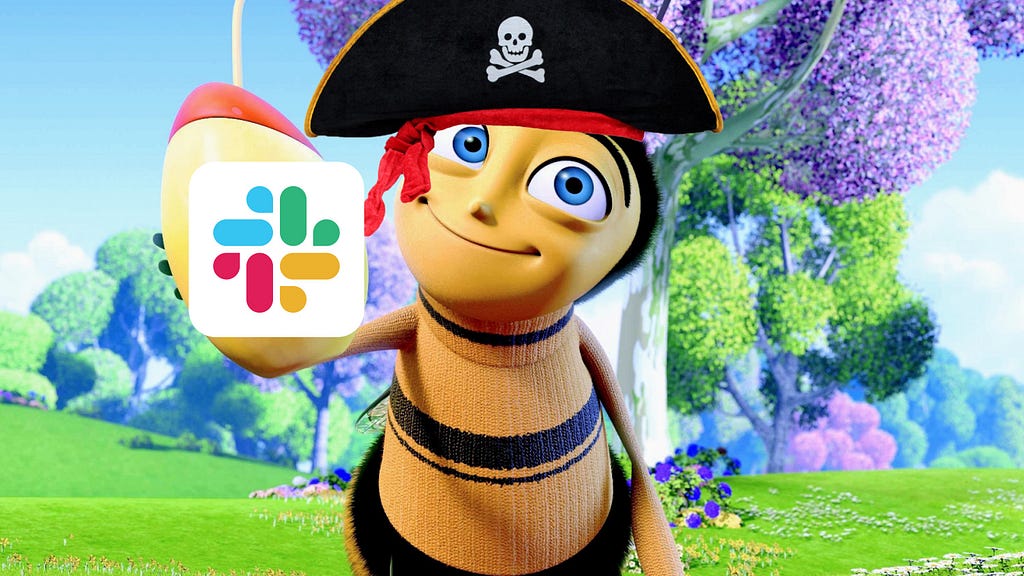
With these two pieces of information, you can hit the Slack API just as if you were the client when a user clicks around and types. You can even make your own janky Slack bots that post out of your account… which of course I did. But you already knew that from the title. So here’s screenshots of my fellow Specters suffering while I posted the entire Bee Movie into our group chat, each line as its own message. We all know it’s what you’re here for.
Quick aside — you may be thinking: Why go through all the trouble of doing this with the Electron client? Why not just open Slack in a web browser and inspect that traffic?
Anecdotally, I see people using the client way more often, so I wanted to make sure whatever I looked at would be representative of that. Also developers seem to trust dedicated clients more, so the tokens and cookies you snoop from them last much longer. For instance my buddy Jesko got tired of having to reauth to Slack, so he snagged a token from his phone’s client that never expires. My janky Slack bots haven’t had to reauth yet either.
So with our new programmatic access, it is time to loot! For the most part all of my changes to SlackPirate were updating the script to utilize the new token in addition to a cookie. There are a few other changes I threw in though that you may want to be aware of:
And there you have it. With these new updates, you are ready to get back to a nice easy life of not reading and letting Nemesis read your target’s whole Slack for you. So kick back and let your reading comprehension regress to a third-grade level with another classic animal-with-thing-on-head video from the cellar. It is a fine vintage.
SlackPirate Set Sails Again! Or: How to Send the Entire “Bee Movie” Script to Your Friends in Slack was originally published in Posts By SpecterOps Team Members on Medium, where people are continuing the conversation by highlighting and responding to this story.

Lots of startups use Google’s productivity suite, known as Workspace, to handle email, documents, and other back-office matters. Relatedly, lots of business-minded webapps use Google’s OAuth, i.e. “Sign in with Google.” It’s a low-friction feedback loop—up until the startup fails, the domain goes up for sale, and somebody forgot to close down all the Google stuff.
Dylan Ayrey, of Truffle Security Co., suggests in a report that this problem is more serious than anyone, especially Google, is acknowledging. Many startups make the critical mistake of not properly closing their accounts—on both Google and other web-based apps—before letting their domains expire.
Given the number of people working for tech startups (6 million), the failure rate of said startups (90 percent), their usage of Google Workspaces (50 percent, all by Ayrey’s numbers), and the speed at which startups tend to fall apart, there are a lot of Google-auth-connected domains up for sale at any time. That would not be an inherent problem, except that, as Ayrey shows, buying a domain with a still-active Google account can let you re-activate the Google accounts for former employees.
© Aurich Lawson | Getty Images
