Amazon's new Bee AI devices can summarize conversations, but their recording controls raise consent questions for employers and meeting participants.
The post Amazon Bee Frontier and Bee Eclipse Raise Workplace Consent Concerns appeared first on TechRepublic.
A recently released exploit package lets the third-generation Amazon Fire TV Cube gain an unlocked bootloader and persistent root access on firmware version PS7717 or earlier. Developed by XDA developer Pro-me3us, the project targets devices codenamed “gazelle”. It combines temporary privilege escalation with a separate bootloader vulnerability to enable lasting system modifications. This release includes […]
The post Amazon Fire TV Cube Security Flaws Allow Bootloader Unlocking and Permanent Ro
A recently released exploit package lets the third-generation Amazon Fire TV Cube gain an unlocked bootloader and persistent root access on firmware version PS7717 or earlier. Developed by XDA developer Pro-me3us, the project targets devices codenamed “gazelle”. It combines temporary privilege escalation with a separate bootloader vulnerability to enable lasting system modifications. This release includes […]
Amazon’s “About You” page reveals what it thinks it knows about you—and you can’t simply switch it off.
Dexerto reports that one shopper discovered her profile included the observation:
“has flat buttocks”
She suggested this might relate to a previous purchase of “butt scrunch leggings.” Whatever the connection, buying clothes doesn’t mean you expect the retailer to start describing your body.
What is Amazon’s About You?
About You is a page where customers can review and edit th
Amazon’s “About You” page reveals what it thinks it knows about you—and you can’t simply switch it off.
Dexerto reports that one shopper discovered her profile included the observation:
“has flat buttocks”
She suggested this might relate to a previous purchase of “butt scrunch leggings.” Whatever the connection, buying clothes doesn’t mean you expect the retailer to start describing your body.
What is Amazon’s About You?
About You is a page where customers can review and edit the personal details Amazon uses to shape their shopping recommendations. Amazon introduced it in May as a way to make personalization more visible and easier to manage.
According to Amazon, the information behind its personalized shopping experience includes:
Your purchase history
Your searches
Items saved to Lists
Product reviews you have written
Conversations with Alexa for Shopping
The resulting profile can contain categories such as “Home and Family,” “Interests and Hobbies,” “Brands,” and “Product Preferences.” Some entries describe straightforward shopping preferences. Others go further, making assumptions about how people live.
Amazon’s information categories
Amazon presents this as helpful. If you regularly buy non-dairy milk, for example, it might recommend other non-dairy products. But a useful recommendation and an accurate description of a person are not the same thing.
After all, a purchase might be a gift. An item on a list might be something you’re researching for someone else. A product search might reflect curiosity rather than a personal need.
Amazon has offered personalized recommendations for years. About You makes some of the information behind them visible and gives you a chance to see where its assumptions miss the mark.
How to find your information
To check what Amazon thinks it knows about you, log in to your Amazon account.
Hover over your name above Account & Lists, near the top-right corner.
Select Account.
Find the tile Ordering and shopping preferences, and select Your Shopping preferences.
From there, scroll to the bottom of the page and select Manage your information.
In the Amazon app, it works like this:
After logging in, tap You at the bottom
Tap Account > Account Settings > Shopping preferences > About You
Managing your information
To remove an entry:
Select a category to see what Amazon has listed about you, either because you volunteered it or Amazon assumed it based on your buying behavior.
Select Remove. You don’t need to select a reason. Select Remove again in the confirmation prompt.
Removing one entry from Amazon’s About You
Buying something should not be treated as volunteering every personal detail a retailer can infer from it. It’s good that these assumptions are visible and that you can remove them, but customers shouldn’t have to correct a profile they never deliberately filled out.
A meaningful privacy choice would let customers decline personal inferences, not merely delete them one at a time. It would also explain what deletion does. Is the information removed from Amazon’s servers or just moved out of your sight?
Amazon says you can remove information you don’t want used for personalization. Its announcement does not explain whether that also deletes the underlying data, or whether similar assumptions could be made again as you continue shopping. Nor does it describe a master opt-out from About You.
For now, checking your profile lets you see (and challenge) some of the conclusions Amazon has drawn about you.
Browse like no one’s watching.
Malwarebytes Privacy VPN encrypts your connection and never logs what you do, so the next story you read doesn’t have to feel personal. Try it free →
An Amazon Prime phishing campaign is using fake payment alerts to steal account logins, personal data and complete credit or debit card details from unsuspecting customers.
An Amazon Prime phishing campaign is using fake payment alerts to steal account logins, personal data and complete credit or debit card details from unsuspecting customers.
Discover why Amazon blocks Meta Muse AI from automated shopping. Learn about the security concerns, negotiation breakdowns, and advertising revenue impacts.
Related Posts:
OpenAI Races to Counter Grok Bot and Meta's Muse
X Content Farm Lawsuit Targets Engagement Fraud
DPC Imposes Massive GDPR Penalty on Google
The post Amazon Blocks Meta Muse AI Assistant appeared first on Daily CyberSecurity.
Discover why Amazon blocks Meta Muse AI from automated shopping. Learn about the security concerns, negotiation breakdowns, and advertising revenue impacts.
This week on the Lock and Code podcast…
If you want AI to tell you a story, it will. If you want that story to sound like one of your favorite authors, it can. And if you’re one of the authors that AI can imitate, you might be a little upset at what feels like theft.
In 2024, the authors Andrea Bartz, Charles Graeber, and Kirk Wallace Johnson sued Anthropic, the creator of Claude, alleging that the company had wrongfully digested millions of copyrighted works—including some of their very
If you want AI to tell you a story, it will. If you want that story to sound like one of your favorite authors, it can. And if you’re one of the authors that AI can imitate, you might be a little upset at what feels like theft.
In 2024, the authors Andrea Bartz, Charles Graeber, and Kirk Wallace Johnson sued Anthropic, the creator of Claude, alleging that the company had wrongfully digested millions of copyrighted works—including some of their very own—to train its AI models. The lawsuit grew to include more than 300,000 writers, and in September 2025, Anthropic agreed to pay $1.5 billion to settle the claims.
That headline-worthy payout, however, would eventually be paired with more startling news.
In January 2026, a district court judge unsealed thousands of documents related to the litigation. When The Washington Post investigated the documents, reporters found references to a secret project inside Anthropic called “Project Panama,” which Anthropic itself described as the company’s effort “to destructively scan all the books in the world.”
Anthropic is not alone in this.
On August 17, 404 Media co-founder and reporter Emanuel Maiberg revealed that Amazon is doing something similar inside a department it calls VGT3. By hiding an Apple AirTag in one book from a 1,000-book order, and then tracking the shipment across the country, 404 Media identified the book’s final destination to be a facility outside Las Vegas, where, according to employees, books are cut apart and scanned.
Today, on the Lock and Code podcast with host David Ruiz, we speak with Maiberg about Amazon’s VGT3 operation and the likely commonplace practice of AI companies purchasing, scanning, and destroying books in an effort to build “frontier” models.
“They’re buying a book, they’re scanning it, they’re mulching the book, and then the digital version of the book exists behind this wall where we don’t even know if they plan to sell it, right? It’s like they might keep it behind a wall, and the only way we see it come out again from behind that wall is in the form of an answer from a chatbot.”
See what you missed in Daily Tech Insider from Sept. 7–11.
The post AI Agents, Foldables, Cyberthreats, and Chip Deals Define This Week in Tech appeared first on TechRepublic.
Ring’s new TAKE encryption limits video-key retention while keeping cloud AI features, Ring Verify, and optional end-to-end encryption in play.
The post Ring’s New TAKE Encryption Deletes Video Keys Without Giving Up AI Features appeared first on TechRepublic.
Um artigo recente publicado na The Atlantic trazia o título contundente The End of Reading Is Here (O fim da leitura chegou). Segundo a matéria, uma pesquisa do National Endowment for the Arts (NEA) constatou que menos de 50% dos adultos americanos leram sequer um livro em 2022, e apenas 38% leram um romance ou conto.
Ao mesmo tempo, o mercado editorial nos Estados Unidos continua quebrando recordes de publicação ano após ano. Em 2025, por exemplo, o número de novos títulos ultrapassou quatro mi
Um artigo recente publicado na The Atlantic trazia o título contundente The End of Reading Is Here (O fim da leitura chegou). Segundo a matéria, uma pesquisa do National Endowment for the Arts (NEA) constatou que menos de 50% dos adultos americanos leram sequer um livro em 2022, e apenas 38% leram um romance ou conto.
Ao mesmo tempo, o mercado editorial nos Estados Unidos continua quebrando recordes de publicação ano após ano. Em 2025, por exemplo, o número de novos títulos ultrapassou quatro milhões, um aumento de um terço em relação a 2024. Uma enorme parcela desse total, 3,5 milhões de títulos, veio da autopublicação, e um dos principais motores desse mercado é o Kindle Direct Publishing (KDP), da Amazon.
Minha teoria para essa discrepância é a seguinte: ninguém mais lê livros, porque todo mundo está ocupado demais escrevendo-os. Brincadeiras à parte, se ainda houver algum leitor por aí, provavelmente já terá adivinhado aonde quero chegar: à toda-poderosa IA. Um tempo atrás, uma jornalista de tecnologia do New York Times se surpreendeu ao encontrar sua própria biografia na Amazon. Uma rápida olhada confirmou que ela havia sido escrita por IA. Ao investigar mais a fundo o universo da publicação de livros por IA, ela se deparou com o trabalho de um consultor de cibersegurança aposentado e extraordinariamente prolífico. O que aconteceu depois, e onde encontrar informações confiáveis na era da IA, é o tema deste post.
O começo da história: como uma jornalista seguiu o Coelho Branco e caiu na toca
Vamos começar do início. No verão de 2026, a jornalista de tecnologia do New York Times Kashmir Hill descobriu por meio de um conhecido que uma biografia sua havia sido publicada na Amazon um ano antes. O título era The Biography of Kashmir Hill: The New York Times Technology Journalist Who Exposed Clearview AI, Challenged Big Tech and Redefined Privacy in the Digital Age. E ela ficou mais do que surpresa, pois ninguém havia entrado em contato com ela ou com qualquer pessoa que conhecesse para fazer uma pesquisa sobre o livro.
“Alice pôs-se de pé num salto, pois lampejou-lhe na mente que nunca antes vira um coelho com um bolso de colete, nem com um relógio para tirar dele… “
O autor era um certo John Crane Miller, e a foto em sua página na Amazon era uma imagem genérica de banco de imagens de um homem branco do tipo que aparece por toda a Internet. Hill não conseguiu encontrar nenhum detalhe pessoal nem informação de contato sobre ele. Ao investigar mais a fundo o perfil dele na Amazon, porém, descobriu outra coisa: em uma única semana no verão de 2025, ele publicou biografias de Hill e de mais nove jornalistas americanos. Até o leitor mais crédulo teria dificuldade para acreditar que um gênio literário conseguiria produzir tamanho volume sem uma ajudinha robótica.
A biografia da jornalista Kashmir Hill gerada por IA, que ela encontrou por acaso na Amazon. Fonte
Ainda assim, a edição de capa dura da biografia de Kashmir Hill custava US$ 26,99, embora tivesse apenas 90 páginas. Depois de lê-la, Hill descobriu toda uma série de “fatos” sobre si mesma que jamais conhecera, incluindo uma descrição detalhada de seu ritual de preparo do café que, como observa a jornalista, na verdade é tarefa do marido. Miller chegou a afirmar no texto que havia lido o diário de infância de Kashmir Hill.
“…e, ardendo de curiosidade, correu pelo campo atrás dele, e felizmente chegou a tempo de vê-lo entrar de chofre numa toca de coelho grande sob a sebe. “
Hill não conseguiu localizar o autor de sua biografia. Deixou um comentário na página do livro na Amazon pedindo que ele entrasse em contato. Ninguém respondeu e, pouco depois, todos os livros do perfil de John Crane Miller desapareceram.
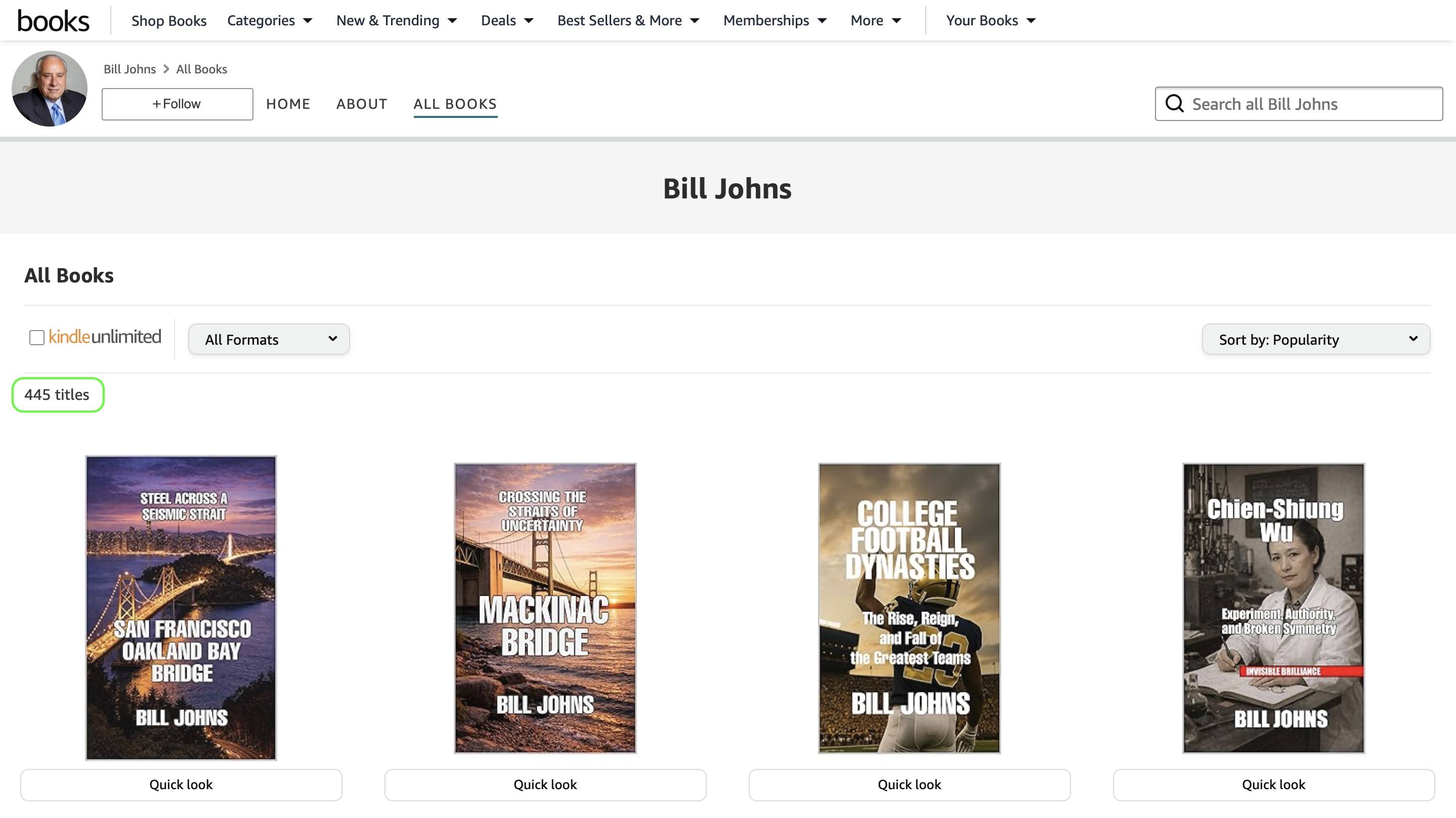
Mas isso lhe deu uma pista sobre vários outros autores de IA na Amazon. Em particular, ela encontrou um certo Bill Johns, cuja página de autor exibia impressionantes 445 livros. Sem esperar que desse em muita coisa, perguntou a Johns se ele aceitaria conceder uma entrevista e ficou bastante surpresa quando ele concordou. Foi provavelmente nesse momento que a investigação de Kashmir Hill se transformou em uma verdadeira viagem pela toca do coelho da IA…
“No momento seguinte, lá se foi Alice atrás dele, sem considerar, nem por um momento, como no mundo sairia de lá novamente. “
As IAventuras de Bill no País das Maravilhas
Bill Johns se aposentou em 2024, depois de construir carreira como consultor de cibersegurança. Em 2025, decidiu experimentar o ChatGPT e, em algumas semanas, usou a ferramenta para gerar seu primeiro livro. O tema era cibersegurança, mais especificamente a história do hacking, e a obra foi publicada com o nada original título Ghosts in the Machine. Johns vendeu apenas alguns exemplares, mas isso não o impediu de gerar outros 444 livros no ano seguinte.
Página de autor de Bill Johns na Amazon. Em um único ano, ele publicou 445 livros, sobre temas que vão de cibersegurança e… Pontes a esportes, biografias e filosofia. Fonte
Esse número impressionante inclui, por exemplo, uma série de 13 livros sobre cibersegurança que, além da já mencionada história do hacking, contém os seguintes títulos (em tradução livre):
The Cybersecurity Blueprint: Building and Operationalizing a Complete Defensive Strategy (O Plano diretor de cibersegurança: Construindo e operacionalizando uma estratégia defensiva completa)
Hardware Fortress: The Role of Data Diodes in Protecting Critical Infrastructure (Fortaleza do hardware: O papel dos diodos de dados na proteção de infraestruturas críticas)
Zero Trust: Redefining Security in a Perimeterless World (Zero confiança: Redefinindo a segurança em um mundo sem perímetros)
Evolving Threats, Evolving Chains: Cybersecurity for the Modern Supply Chain (Ameaças em evolução, cadeias em evolução: cibersegurança para a cadeia de suprimentos moderna)
The Integration Imperative: Cybersecurity for Legacy OT/ICS: Overcoming the Challenges of Digital Transformation in Critical Infrastructure (O imperativo da integração: Cibersegurança para OT/ICS legados — superando os desafios da transformação digital em infraestruturas críticas
A cibersegurança está longe de ser o único tema, ou sequer o principal, na mente desse prolífico autor. Além dela, a obra de Bill Johns abrange esportes, pontes, bebidas alcoólicas de todos os tipos, como saquê e uísque, biografias de personalidades, aviação militar e filosofia. Em resumo, é difícil pensar em um assunto sobre o qual Johns ainda não tenha escrito um livro.
O “processo criativo” de Johns consiste em planejar os capítulos de um livro com o ChatGPT e depois escrever cada um gradualmente. Segundo o próprio Johns, pedir à IA que gere um capítulo inteiro de uma só vez não funciona muito bem (para surpresa de ninguém…). Então, é melhor produzir o texto aos poucos. Quando necessário, ele pede ao ChatGPT que faça revisões. Depois da publicação, compra na Amazon um exemplar de cada um de seus 445 livros, mas apenas para colocá-lo na estante, já que lê-los provavelmente não faz parte do plano. Na visão de Johns, ele leu os livros enquanto estavam sendo gerados. E isso basta.
A meta desse titã literário é gerar 10 livros por semana, exatamente o máximo que a Amazon permite nesse período. Há apenas três anos, esse limite era duas vezes maior. Dito isso, ao contrário do autor da biografia de Kashmir Hill, os livros de Johns costumam ser consideravelmente mais longos.
O toque final no retrato desse incansável autor de autopublicação é, bem, o próprio retrato que aparece em sua página de autor na Amazon e na contracapa de todos os seus livros. Johns não esconde que a imagem também foi gerada por IA e explica a escolha com sua praticidade e franqueza características: “Era isso ou vestir um terno e tirar selfies.”
Johns deixou a IA cuidar até da sua foto de autor. Vestir-se bem e tirar uma selfie aparentemente dava trabalho demais. Fonte
A economia do País das Maravilhas da IA: curioso, cada vez mais curioso
Qualquer leitor minimamente atento inevitavelmente se pergunta: por que Bill Johns e outros produtores de livros gerados por IA se dão a esse trabalho, e em tamanha escala? Claro, alguém poderia “escrever” um livro só para colocar o link no currículo, acrescentar com orgulho “autor na Amazon” às bios das redes sociais e contar a desconhecidos no bar que é escritor. Talvez, por garantia, produzir mais alguns. Mas por que gerar mais de 400 livros?
A resposta está no modelo econômico que a Amazon criou muito antes de a IA entrar em cena. Ao contrário das editoras tradicionais, a Amazon não imprime uma tiragem antecipadamente. A maioria dos livros publicados pelo Kindle Direct Publishing segue um modelo de impressão sob demanda: o exemplar físico só é impresso quando um cliente faz o pedido na Amazon.
É assim que um autor consegue lançar um livro praticamente sem custo inicial. E, principalmente, sem o risco de acumular em um depósito exemplares não vendidos que já foram pagos e impressos. Em outras palavras, listar centenas de livros na loja on-line custa quase nada tanto para a Amazon quanto para o autor.
Com custos de investimento próximos de zero, até uma demanda modesta pode gerar lucro real. Bill Johns, por exemplo, vende algumas centenas de livros por mês a leitores desavisados. Em uma temporada de festas de fim de ano, de dezembro ao início de janeiro, as vendas chegaram a 821 exemplares, rendendo cerca de US$ 6.000 como complemento à aposentadoria.
Alguns livros de IA rendem ainda mais dinheiro aos autores. É o caso da biografia gerada por IA do ativista político americano Charlie Kirk, que se tornou um best-seller na Amazon após seu assassinato. Os leitores não ficaram satisfeitos e, depois de dezenas de avaliações com expressões como “entorpecente”, “golpe” e “uma vergonha”, a Amazon retirou o livro da plataforma. Ainda assim, é provável que o serviço tenha vendido milhares de exemplares da biografia antes disso, gerando um lucro considerável tanto para a Amazon quanto para o autor.
Como distinguir um corvo de uma escrivaninha
Em um mundo saturado de IA, distinguir o que é feito por humanos do que é feito por máquinas é cada vez mais relevante. E a Amazon está longe de ser o único marketplace on-line que alimenta ativamente a disseminação de lixo de IA, portanto há todos os motivos para acreditar que a situação só tende a piorar.
Para evitar mais uma leva de alucinações nada inspiradoras produzidas por chatbots, recomendamos recorrer a fontes confiáveis quando o assunto realmente importa. Em matéria de conhecimento especializado sobre cibersegurança, por exemplo, nosso blog é um bom ponto de partida. Ao contrário de certos consultores aposentados superprodutivos, escrevemos tudo por conta própria e assumimos a responsabilidade por cada palavra.
Para saber mais sobre cibersegurança em livros e filmes, confira outras publicações do nosso blog:
Amazon’s less-detailed order emails protect purchase data but may make phishing harder to spot. Learn how to verify order messages safely online.
The post Amazon’s Order Email Privacy Change Creates a Potential Phishing Trade-Off appeared first on TechRepublic.
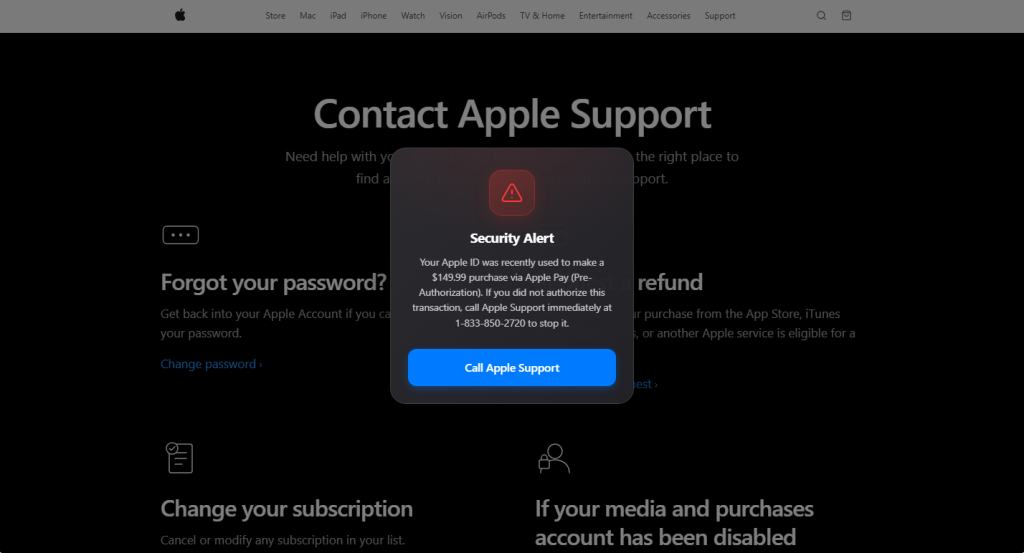
If you’ve spent any time browsing lately, you may have run into a full-screen popup warning you that your Apple ID or Amazon account was just used for a mysterious $149.99 purchase. It looks urgent. It looks official. And if you look at two examples side by side, it becomes obvious that it’s neither.
Below are two popups pulled from real pages—one dressed up as Apple Support, one as Amazon.
Same con, two costumes
Below, one popup is skinned as Apple Support, the other as Amazon. Swap th
If you’ve spent any time browsing lately, you may have run into a full-screen popup warning you that your Apple ID or Amazon account was just used for a mysterious $149.99 purchase. It looks urgent. It looks official. And if you look at two examples side by side, it becomes obvious that it’s neither.
Below are two popups pulled from real pages—one dressed up as Apple Support, one as Amazon.
Same con, two costumes
Below, one popup is skinned as Apple Support, the other as Amazon. Swap the logo and color palette and the structure is identical: a warning icon, a claim that a $149.99 purchase was just made “via Pre-Authorization,” and a phone number to call immediately. That phone number is exactly the same in both.
Fake Apple alertFake Amazon alert
That reused phone number is the tell. If you only see one popup, running the number through a lookup tool like Malwarebytes Scam Number Check is usually enough to expose it—a real Apple or Amazon line won’t come back flagged, but a scam number typically does, often tied to complaints about several unrelated companies at once.
Why the copy is built the way it is
Every element in these popups is doing specific psychological work:
A believable, moderate dollar amount. $149.99 is high enough to alarm you, low enough to sound like a real subscription or product charge rather than an obvious lie.
“Pre-Authorization” jargon. This is real payment terminology (used for things like hotel holds or gas station charges), borrowed here to sound technically credible to someone who doesn’t handle payments professionally.
Manufactured urgency. “Call immediately,” “Immediate Action Required,” “no hold times”—all are designed to get you dialing before you stop to verify anything.
Visual authority. Red warning triangles, brand-matching fonts and layouts, and a full-screen modal that blocks the rest of the page all borrow the visual language of legitimate security alerts.
A single, frictionless call to action. One button, one phone number. The popup wants exactly one thing from you: to pick up the phone.
If you do call, the number connects to a live scammer posing as support staff, whose actual goal is to get remote access to your device, walk you through “verifying” your identity in a way that hands over real account or payment info, or push you toward paying a fake fee—often via gift cards or a wire transfer.
How to tell if it’s fake
A few checks work regardless of which brand is being impersonated:
Real companies don’t alert you this way. Apple and Amazon notify you about account activity through email, in-app notifications, or your account’s activity log—never through an unexpected popup while you’re browsing.
No legitimate company tells you to call a phone number to stop a charge. Disputing a charge happens through your bank, your card issuer, or the company’s actual account dashboard—not a hotline dictated by a popup.
Check where the popup is actually served from. These often ride in on malicious ads, compromised sites, or browser redirects—the underlying page may be spoofed or injected, not the real apple.com or amazon.com support page it appears to sit on top of.
A popup you can’t easily close is a red flag on its own. Legitimate sites don’t need to trap you behind a full-screen modal to relay account information.
If in doubt, go direct. Close the tab (force-close via task manager if needed) and navigate to the company’s site yourself, or call the number printed on your card or official account page—never the one in the popup.
Check the number before you dial it. Run it through Malwarebytes Scam Number Check to see if it’s already been flagged as a scam line.
Block it before it loads. A browser extension like Malwarebytes Browser Guard catches both known malicious pages and unknown ones showing scam-like behavior, so these popups often get stopped before they ever render.
Don’t judge a scam by its logo
The brand on screen—Apple, Amazon, or whoever’s next—is the least important part of this scam. What actually matters is the pattern underneath: an unexpected popup, a suspiciously specific dollar amount, urgent language, and a phone number that wants you to call before you think. Once you recognize that pattern, it doesn’t matter which company’s name is stamped on top of it.
An AWS software bug showed some customers billing estimates in the billions and trillions. Here is what failed, why invoices were unaffected, and what IT teams should know.
The post AWS Billion-Dollar Software Bug Explained appeared first on TechRepublic.
An AWS software bug showed some customers billing estimates in the billions and trillions. Here is what failed, why invoices were unaffected, and what IT teams should know.
Wiz found GhostApproval symlink flaws in major AI coding assistants that could hide sensitive file targets, bypass approval checks and enable system access too.
Wiz found GhostApproval symlink flaws in major AI coding assistants that could hide sensitive file targets, bypass approval checks and enable system access too.
See whether an Amazon Kindle is worth buying, how it compares with other e-readers, and practical ways to read more books without overspending each month today.
See whether an Amazon Kindle is worth buying, how it compares with other e-readers, and practical ways to read more books without overspending each month today.
See what you missed in Daily Tech Insider from June 15–18.
The post AI Crackdowns, Mega Mergers, and Security Chaos Define This Week in Tech appeared first on TechRepublic.
What Happened:On 10 May 2026, the UK-based firm Arup Group was listed as a victim on the Tor data leak site of FulcrumSec. On their Tor data leak site, FulcrumSec stated that they have exposed 700GB of GitHub repos and 2TB of Azure and AWS S3 cloud, plus database backups.Other types of data the adversary claims to have stolen includes Neuron BMS client databases, Odoo ERP data, A66 landowner files, Apple code-signing certificates with plaintext passwords, a Google Cloud Platform (GCP) project w
On 10 May 2026, the UK-based firm Arup Group was listed as a victim on the Tor data leak site of FulcrumSec.
On their Tor data leak site, FulcrumSec stated that they have exposed 700GB of GitHub repos and 2TB of Azure and AWS S3 cloud, plus database backups.
Other types of data the adversary claims to have stolen includes Neuron BMS client databases, Odoo ERP data, A66 landowner files, Apple code-signing certificates with plaintext passwords, a Google Cloud Platform (GCP) project with production payment gateway credentials, and the source code of ArupCompute and Oasys.
The FulcrumSec operators also claimed to have spent over half a year analysing the data and went through “email correspondence” with the company before publishing the stolen data.
On the victim post, FulcrumSec wrote a detailed incident breakdown. In it, they stated they gained initial access in September 2025 via a GitHub personal access token found hardcoded in a JavaScript file on a forgotten subdomain, which provided access to over 10,000 private GitHub repositories belonging to Arup Group.
From there, they scanned the repositories and found additional hardcoded tokens, API keys, and passwords for AWS, Azure, and databases.
The adversary stated that Arup detected the Github and Azure Storage intrusions approximately six weeks after they happened and rotated the credentials, but it was too late as the data had been exfiltrated.
FulcrumSec also stated they pivoted into the AWS infrastructure using keys they had found belonging to Arup’s subsidiary Neuron.
FulcrumSec allegedly waited until April 2026 to contact their victim, Arup Group, due to the time it took to analyse the vast amounts of stolen data.
Impacted client organisations of Arup Group were also mentioned in the post, such as Disney and several other Hong Kong companies. The adversary reportedly uncovered Amazon data center seismic fragility data, British Petroleum (BP) site selection coordinates, and Queensferry Crossing internal documents as well.
Critically for the UK, the breached data exposed up to 62 HS2 related GitHub repositories. This involved Euston Station pile design files, ground movement assessments, over 14,000 sensor monitoring records, 48 archaeological site GPS coordinates (including Jones Hill Wood, a sensitive site for environmentalists), as well as confidential documents.
Analyst Comment:
Arup Group is a large multinational architectural design and engineering firm based in London who has been involved in constructing the Wembley Football Stadium in London, the HS1 Channel Tunnel Rail Link network, and the Eden Project in Cornwall, among other significant international construction projects.
Active since September 2025, FulcrumSec is a financially motivated data-theft-extortion group that specialises in rapid exfiltration of cloud-hosted databases by exploiting unrotated API keys and misconfigured cloud permissions.
This attack was noteworthy due to its highly targeted nature. FulcrumSec claimed they had access to Arup Group’s data for seven months and they clearly invested significant time to analyse the documents and spent weeks negotiating over email. Plus, to find initial access they also would have had to spend time checking Arup’s domains and Internet-facing assets to eventually find a single leaked credential to exploit. These types of targeted intrusions often only happen to large companies. This is because for it to be worth the cybercriminal’s time, effort, and risk to their freedom they will want a large ransom payment that only rich companies can typically afford.
FulcrumSec is an adversary worth monitoring due to the effort they put into their intrusions compared to other smash-and-grab ransomware campaigns. In October 2025, in a case documented by VX-Underground, FulcrumSec emailed detailed information about the breach they conducted with the aim of those details getting published and exert additional pressure on the victim.
Interestingly, FulcrumSec said the ransom they demanded was less than 1% of Arup’s annual revenue and was less than how much Arup lost to the deepfake fraudsters. This is a reference to Arup reportedly lost over £20 million pounds in 2024 after one of their Hong Kong employees was duped into sending cash to cybercriminals using an AI-generated video call. The fact Arup became publicly known for falling victim to a large scam potentially contributed to the adversary’s decision to select and focus them for this attack.
Defensive Takeaways:
Asset Inventory and Shadow IT Audits: Identifying the outdated unused domains with hardcoded credentials is standard best practices. All organisations must have processes in place to catalog and retire systems to avoid incidents like this.
Hardcoded Credentials in Code: They way FulcrumSec gained access demonstrates the importance of using secret environment variables and features like GitHub Secret Scanning.
Implement Incident Response Procedures: Importantly, Arup detect the activity too late and it took them a staggering six weeks to rotate credentials (according to the adversary), which shows why having automated systems to check for unauthorised usage and reset tokens and all accounts is crucial to respond to such attacks.
GitHub Activity Monitoring: The adversary claimed they were able to clone thousands of GitHub repositories containing sensitive data without being detected. These types of activities are available to monitor and detect in GitHub Audit Logs. It’s also important to have a plan in place when suspicious activities are detected.
Third-Party Risk Management Programs: This incident also had some notable downstream impact. It shows why client organisations of another company’s services need to know what data and how much data is stored by third-parties for when such breaches occur. Knowing what’s potentially exposed will streamline the response to the incident.
Deception Tech: Arup could have implemented a boobytraps for the adversary such as the use of CanaryTokens inside sensitive documents. As the adversary spent time analysing the Arup’s documents before contacting them, if they open a boobytrapped document, then the incident could been detected much earlier and the damages could have been reduced.

 Entrar