❌

Visualização normal

Antes de ontemStream principal

INTERPOL Operation Serengeti III Nets 1,462 Arrests and Recovers $105 Million in Cybercrime Crackdown

23 de Outubro de 2026, 03:08

INTERPOL’s Operation Serengeti III led to 1,462 arrests, disrupted 10,909 malicious networks and recovered $105 million across 21 countries.

INTERPOL announced the results of Operation Serengeti III, a multinational cybercrime crackdown that led to 1,462 arrests, disrupted 10,909 malicious networks and recovered more than $105 million in illicit funds. The operation brought together law enforcement agencies from 21 countries between June 29 and August 31, 2026, targeting online fraud, ransomware, business email compromise (BEC), scams and digital extortion.

“One of Africa’s largest cybercrime enforcement operations saw law enforcement agencies from 21 countries arrest 1,462 suspects, disrupt 10,909 malicious networks and recover more than USD 105 million in illicit funds.” reads the agency’s announcement. “Authorities identified 65,929 victims targeted by cybercriminal networks, underscoring the scale and sophistication of today’s digital threats. Financial investigations linked criminal activity to losses exceeding USD 385 million. ”

The scale of the operation is striking. Investigators identified 65,929 victims, while financial investigations linked the criminal activity to losses exceeding $385 million. The figures highlight how cybercrime continues to generate substantial profits by combining technical capabilities with familiar forms of deception.

The results also show why tackling these operations requires more than taking down websites or blocking malicious IP addresses. Investigators need to identify the people behind the infrastructure, follow the money and connect evidence collected across jurisdictions.

Uganda saw one of the largest actions in the operation. Authorities broke up two international fraud networks and arrested 365 foreign nationals suspected of running online investment and pension scams targeting people across Asia.

Investigators found call centres where staff followed prepared scripts to convince victims to invest through fake trading platforms and websites. The scams targeted people who believed they were making legitimate investments, including pensioners. These cases show how criminal groups combine technology with organized social engineering to deceive victims and steal their money.
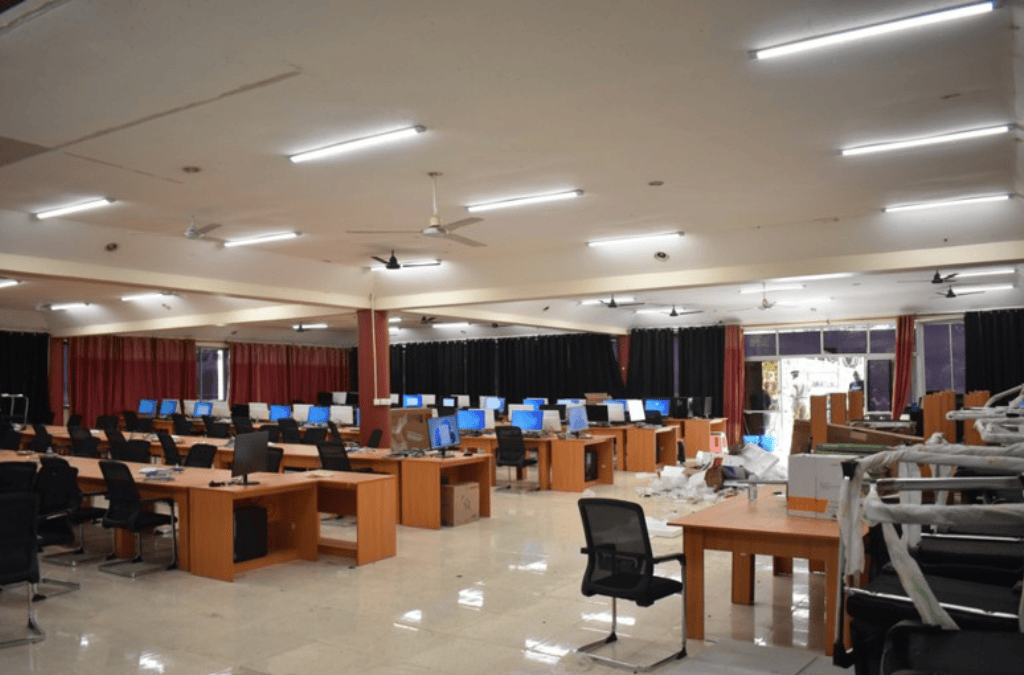
Operation Serengeti III
Source: Interpol – Suspected Scam Call centre in Uganda.


In Angola, authorities shut down two illegal cryptocurrency mining centres, arrested nine suspects and seized over 2,000 mining devices and six illegal power stations. The electrical equipment was worth more than $1 million.

In Nigeria, investigators arrested a suspect linked to phishing and business email compromise (BEC), which involved stealing software credentials and collecting about 2.1 million email addresses. They also recovered a luxury car suspected of being bought with criminal money.

A separate Nigerian investigation traced over $2.4 million linked to an investment scam promoted through messaging apps, with much of the money laundered through cryptocurrency. Authorities also targeted loan app fraud in Tanzania, vehicle import scams in Gabon and arrested 30 suspects in the Republic of Congo.

Operation Serengeti III relied on intelligence provided before the enforcement phase. Investigators from 20 African countries and the United States received information about suspicious domains, IP addresses and command-and-control infrastructure associated with criminal activity.

Private-sector cybersecurity companies also supported the operation, providing threat intelligence, technical analysis and investigative expertise. INTERPOL listed Group-IB, Kaspersky, Fortinet, TrendAI, Team Cymru, Uppsala Security, Cybercrime Atlas and Meta among the participating partners, alongside other organizations.

This cooperation matters because criminal infrastructure rarely respects national boundaries. A phishing domain, a compromised account, a fraudulent investment platform and the bank accounts used to move stolen funds may all involve different countries and service providers. Investigators need to connect those elements quickly enough to identify suspects and preserve evidence.

INTERPOL’s 2026 African Cyber Threat Assessment Report highlights the growing role of AI in cybercrime as financial losses rise. Criminals can use AI to create convincing messages, improve social engineering and target more victims. While AI does not replace the need for criminal infrastructure or ways to move stolen money, it can make scams easier to repeat and harder for victims to recognize.

INTERPOL said several investigations remain active. Authorities are continuing to identify suspects, trace illicit proceeds and analyze digital evidence recovered during the operation.

That qualification is important. Arrests and infrastructure disruptions are meaningful enforcement results, but they don’t automatically establish how many criminal organizations have been dismantled permanently, how much of the stolen money will reach victims, or whether other operators will rebuild the disrupted services.

“Cybercrime networks operate without regard for borders, exploiting technology to target victims on an unprecedented scale.”  INTERPOL Director of Cybercrime Neal Jetton said.

“Operation Serengeti III reinforces a clear message: while cybercrime is increasingly borderless, international cooperation remains one of the most effective tools for disrupting criminal networks, recovering criminal assets and protecting communities from digital harm.”

Follow me on Twitter: @securityaffairs and Facebook and Mastodon

Pierluigi Paganini

(SecurityAffairs – hacking, Operation Serengeti)
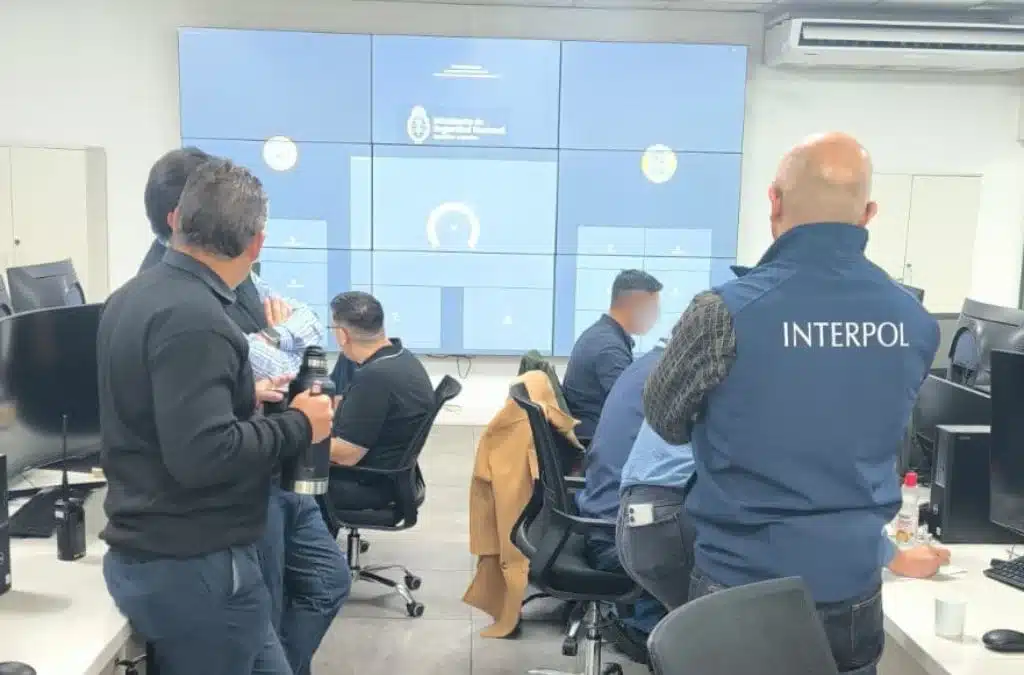
Operation Serengeti III Nets 1,462 Arrests and $105M in Cybercrime Crackdown

INTERPOL’s Operation Serengeti III targeted cybercrime in 21 African countries, recovering over $105 million and identifying 65,929 victims…
  • ✇Firewall Daily – The Cyber Express
  • Global Crackdown on West African Crime Networks Leads to 58 Arrests Samiksha Jain
    An eight-month international operation targeting West African organized crime groups has resulted in 58 arrests and the identification of 263 suspects across 22 countries, according to INTERPOL. Operation Jackal IV, conducted from November 2025 to June 2026, focused on disrupting criminal networks, tracing illicit funds, identifying high-value targets and supporting arrests and prosecutions. The operation brought together countries across six continents to tackle the growing global threat pos
     

Global Crackdown on West African Crime Networks Leads to 58 Arrests

26 de Agosto de 2026, 05:12

West African Organized Crime Groups

An eight-month international operation targeting West African organized crime groups has resulted in 58 arrests and the identification of 263 suspects across 22 countries, according to INTERPOL. Operation Jackal IV, conducted from November 2025 to June 2026, focused on disrupting criminal networks, tracing illicit funds, identifying high-value targets and supporting arrests and prosecutions. The operation brought together countries across six continents to tackle the growing global threat posed by West African criminal networks, including Black Axe and similar groups. These networks have been linked to a significant share of global cyber-enabled financial fraud, including romance scams, cryptocurrency and investment scams, and business email compromise fraud.

Operation Jackal IV Targets West African Organized Crime Groups

Operation Jackal IV also targeted money laundering activities used to move and conceal criminal proceeds across borders. INTERPOL coordinated cross-border intelligence sharing, analysis and operational support during the operation. It also provided specialized training to strengthen international investigations into financial crime. Tomonobu Kaya, Director of the INTERPOL Financial Crime and Anti-Corruption Centre, said the operation showed the importance of international cooperation in following illicit financial flows and disrupting criminal networks. [caption id="attachment_113806" align="aligncenter" width="600"]West African Organized Crime Groups Image Source: INTERPOL[/caption]

Major Arrests and Financial Crime Investigations

In Argentina, authorities identified 196 individuals linked to a major Crime-as-a-Service network suspected of providing website domains and money laundering support to West African organized crime groups. The investigation resulted in 17 arrests, with an INTERPOL Operational Support Team assisting with analysis of seized data and identification of suspects and criminal networks. South African authorities raided seven locations in Johannesburg linked to a syndicate involved in romance and investment scams targeting retirees in English-speaking countries. Investigators arrested 39 people, seized USD 2.67 million and blocked 257 bank accounts. In Italy, investigators identified an individual connected to a pan-European money laundering network that used shell companies, remittance services and cash withdrawals. One account processed EUR 845,000, or about USD 736,000, through 560 transactions involving 20 financial instruments. Romanian authorities dismantled a criminal group operating an investment scam through a call centre. The group promoted high returns from stocks and cryptocurrencies, with victims' money transferred to electronic wallets controlled by perpetrators. Authorities estimated that EUR 143 million had been stolen and laundered globally. Eleven people were arrested, while cash, cryptocurrency, six real estate properties and luxury watches were seized.

Sextortion and Crime-as-a-Service Emerge

Beyond individual investigations, the operation highlighted emerging threats involving sextortion and Crime-as-a-Service. INTERPOL identified an increase in West African organized crime groups using sextortion to target minors, including victims as young as 14. In these cases, offenders typically contacted minors through social media, established trust and persuaded them to share explicit images or videos. They then threatened to distribute the material to the victim's contacts unless a ransom was paid. Investigators also found that some criminal syndicates were procuring Crime-as-a-Service from external providers, including through the dark web. These services were used to outsource activities such as money laundering and other operational functions. While several cases from Operation Jackal IV remain under investigation, the preliminary results demonstrate the scale and international reach of the networks targeted during the eight-month operation. The participating countries were Austria, Argentina, Australia, Canada, Côte d'Ivoire, France, Germany, Indonesia, Ireland, Italy, Japan, Malaysia, the Netherlands, Nigeria, Portugal, South Africa, Spain, Sweden, Switzerland, the United Arab Emirates, the United Kingdom and the United States.

Fake Interpol Investigation Emails Push Ransomware at Small Businesses Globally

Fake Interpol investigation emails are targeting small businesses with Proton Drive links that deliver ransomware, encrypt files, and route victims to Tox chat.

Interpol: Cybercrime Hits 30% of Recorded Crime in Surveyed APAC Countries

25 de Junho de 2026, 12:13

Interpol’s latest Asia and South Pacific cybercrime assessment shows how phishing, ransomware, DDoS attacks, infostealers, and AI-enabled scams are raising security risks across APAC.

The post Interpol: Cybercrime Hits 30% of Recorded Crime in Surveyed APAC Countries appeared first on TechRepublic.

❌
❌