❌

Visualização normal

Antes de ontemStream principal
  • ✇Malwarebytes
  • LinkedIn adds new checks for fake profiles and work histories
    LinkedIn is adding trust and verification features aimed at making fake professional identities, invented work histories, and company impersonation harder to pull off. The company is responding to an environment in which generative AI enables imposters to create an entirely made-up professional persona. It reduces the cost of creating convincing headshots, biographies, résumés, outreach messages, and recommendations. LinkedIn’s new features use verified people and company Pages to help che
     

LinkedIn adds new checks for fake profiles and work histories

25 de Setembro de 2026, 12:04

LinkedIn is adding trust and verification features aimed at making fake professional identities, invented work histories, and company impersonation harder to pull off.

The company is responding to an environment in which generative AI enables imposters to create an entirely made-up professional persona. It reduces the cost of creating convincing headshots, biographies, résumés, outreach messages, and recommendations.

LinkedIn’s new features use verified people and company Pages to help check other users’ claims.

Colleague and classmate vouching: People can confirm that they worked or studied with someone during the period listed on that person’s profile. This confirms an affiliation; it does not rate the person’s ability or recommend them.

Employer control over false affiliations: Admins of verified company Pages can remove people who falsely claim to work there from the company’s associated people and search results. This doesn’t remove the person’s profile or erase the claim from it.

Workplace verification requirement (in testing): LinkedIn is testing a setting that would require people who want to associate themselves with a company Page to verify their workplace, for example, through a work email address.

Verified identity beyond LinkedIn: LinkedIn is extending partnerships that let users display their LinkedIn-verified identity elsewhere. New partners include Truecaller and PeerSpot, alongside Adobe and UserTesting.

LinkedIn hopes that multiple visible signals such as identity verification, workplace verification, peer corroboration, and company Page controls will make a fabricated profile less persuasive. It says its existing verification tools have verified 115 million members and more than 700,000 companies.

LinkedIn VP of Product Oscar Rodriguez told TechCrunch:

“We’ve been invested in [verification] because we believe that authenticity will be the single most valuable currency on the internet.”

These new affiliation checks cannot tell a job seeker whether an opportunity is genuine. A scammer does not always need to impersonate a major employer. They can invent a convincing startup, build a polished company Page, and use fake job listings or recruiters to lure applicants. The checks may be less helpful if the supposed employer itself is part of the scam.

As we’ve seen in recent research, criminals pose as both well-known companies and appealing new ventures offering the kind of role a job seeker hopes to find. The new checks may help someone determine whether a supposed recruiter is affiliated with a company they recognize. They may be less helpful when the company itself is part of the scam.

Verification is therefore a useful signal, not a guarantee. Job seekers should still be wary of unsolicited approaches, pressure to move conversations off LinkedIn, requests to install software or share identity documents, and job offers that arrive before a credible interview process. Check a recruiter’s affiliation, visit the employer’s website independently, and confirm that its contact details and job listing match.

LinkedIn’s changes acknowledge a growing problem: AI can make a fake professional identity look remarkably polished. Verified accounts, workplace affiliations, and colleague confirmations may become more valuable to criminals, too. They may try to exploit those signals through stolen accounts, manipulated verification, or carefully constructed networks of fraudulent profiles. Verification can raise the cost of deception, but it cannot replace healthy skepticism.


Scammers don’t need to hack you. They just need you to click once. 

Malwarebytes Identity Theft Protection catches suspicious activity before it becomes a problem.

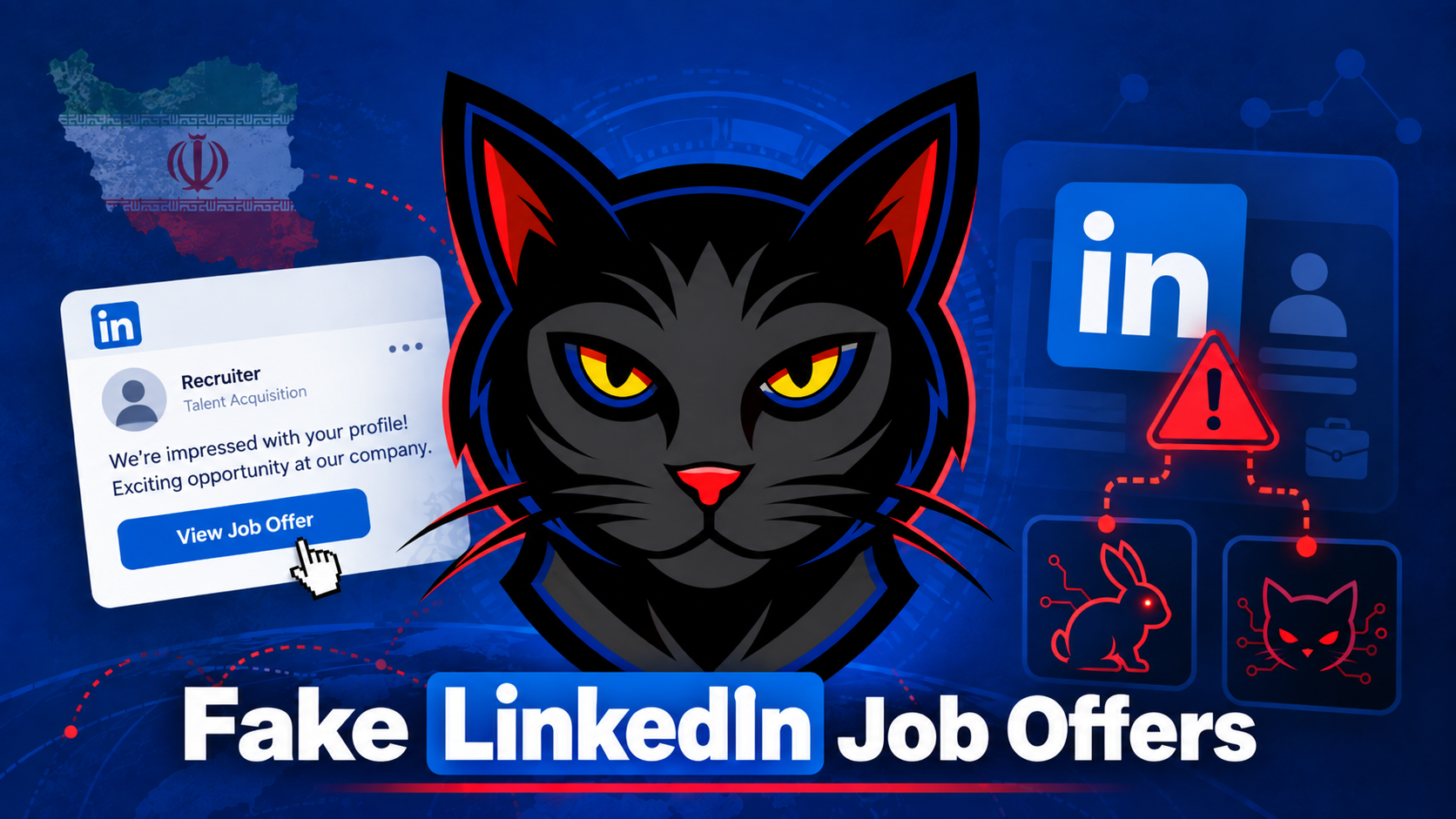
Iran-Linked Hackers Use Fake LinkedIn Job Offers to Deploy NodeRabbit and PollCat RATs

Iran-linked cyberespionage group Mirage Kitten is targeting software engineers with fake recruiter outreach on LinkedIn and job-search platforms. Using trojanized coding assessments to deploy two previously undocumented cross-platform remote access trojans: NodeRabbit and PollCat. The campaign targets developer workstations across Windows, Linux, and macOS, with victims identified in aviation, aerospace, and fintech organizations in Egypt, […]

The post Iran-Linked Hackers Use Fake LinkedIn Job Offers to Deploy NodeRabbit and PollCat RATs appeared first on GBHackers Security | #1 Globally Trusted Cyber Security News Platform.

  • ✇Security | CIO
  • 11 tech experts every CIO should follow on social media
    Social media is more than a place to network or follow the latest headlines and trends. For CIOs, platforms like LinkedIn, X, and Bluesky offer direct access to technology executives, AI experts, economists, and business leaders who share ideas, challenge conventional thinking, and provide insights that can help shape tech strategy. Here, 11 IT leaders share the social media experts they follow, and explain why these voices are worth CIOs’ time. Jensen Huang, founder an
     

11 tech experts every CIO should follow on social media

29 de Julho de 2026, 07:00

Social media is more than a place to network or follow the latest headlines and trends. For CIOs, platforms like LinkedIn, X, and Bluesky offer direct access to technology executives, AI experts, economists, and business leaders who share ideas, challenge conventional thinking, and provide insights that can help shape tech strategy. Here, 11 IT leaders share the social media experts they follow, and explain why these voices are worth CIOs’ time.

Jensen Huang, founder and CEO, Nvidia

I find Jensen Huang’s insights (X, LinkedIn) fascinating, and there’s much to be admired and learned from. He’s a bold thinker who fosters a culture of continuous learning, which is incredibly valuable in an ever-evolving tech and cyber business environment like Exos. My observations are that Huang is looking to better the lives of his employees, clients and community — and so am I. His content helps me to think differently and his leadership style has a lot of technical depth, which is especially relevant with the rise and momentum of AI. He’s been described as intensely curious, which aligns with Exos’ tagline, We are Curious. – Jose Martinez, CIO and managing director, Exos IT

Jason Crawford, founder and president, Roots of Progress Institute

Jason Crawford is an under-the-radar voice more CIOs should know. He is one of the most important thinkers on the philosophy and history of technology, and his work is about understanding why technological progress happens and how to sustain it. I follow him because his attention and capital directly drive where the industry moves next. – Yaron Hadad, CEO and CTO, Beehive Software

Kelsey Hightower, distinguished engineer, Google

Kelsey Hightower (Bluesky, LinkedIn) is valuable because he explains cloud infrastructure and Kubernetes in a way that’s practical and grounded. What I appreciate about his work is he often brings the conversation back to simplicity, maintainability, and the people who have to operate these systems. For technology leaders, that matters because the hardest part of cloud adoption isn’t choosing tools but making sure teams can run them reliably over time. – Sai Joshitha Kathari, senior site reliability engineer, Visa

Mustafa Suleyman, CEO, Microsoft AI

As an IT leader and advisor to CIOs, one of the voices I pay the closest attention to is Mustafa Suleyman (X) because he thinks beyond the technology itself. He consistently explores how AI changes institutions, labor markets, governance, and power structures. His work has influenced my own thinking about the growing concentration of AI capability and infrastructure in the hands of a relatively small number of organizations. For CIOs, that perspective is valuable because AI is no longer simply a technology investment, but a strategic, infrastructural, and organizational issue. – Matt Hasan, CEO, aiRESULTS, and founder, The AI Humanist Movement

Kevin Benedict, futurist, Tata Consultancy Services

Over the years, I’ve learned that technology leadership is about following people who help you connect innovation to business results, not the loudest voices. One person I consistently follow and recommend is Kevin Benedict (LinkedIn, X). He consistently delivers insights at the intersection of AI, digital transformation, customer experience, leadership, workforce evolution, and innovation. What distinguishes him is his ability to translate emerging technologies into practical business strategies. Rather than focusing on hype, Benedict focuses on execution, adoption, organizational impact, and measurable outcomes. His insights are practical, strategic, and immediately applicable, making him one of the most valuable voices for CIOs and technology executives navigating today’s rapidly evolving digital landscape. – Paul Bailo, digital transformation executive, educator, author, and founder and CEO, Landit.ai

Ethan Mollick, associate professor, The Wharton School

Ethan Mollick (LinkedIn) has the highest post frequency of the thought leadership I follow. From academic papers to showing model improvements by using his own “otter on a plane writing emails” benchmark, he covers a broad spectrum of AI topics. He frequently gets access to the latest models before they come out, and when they do, his posts give a glimpse of what’s new or different, grounded in longer experience with the products. – Andreas Welsch, founder and chief human agentic AI officer, Intelligence Briefing

Dado Van Peteghem, author and keynote speaker on AI, technology, and business

I suggest Dado Van Peteghem (LinkedIn, TikTok) as a thought leader for CIOs to follow. He provides excellent perspectives on the future of work and offers a strategic guide on how CIOs should adapt to AI, digital ecosystems, and new business models. Van Peteghem helps leadership teams understand how digital transformation goes beyond technology upgrades. His focus is on aligning technology, culture, leadership, and business strategy so digital initiatives create measurable business value rather than becoming isolated IT projects. This aligns with what I advocate, hence my support for him and his idea of digital ecosystems. Van Peteghem spells out how AI changes workflows and how organizations should redesign operating models to decide what should be automated versus what should remain human-driven. – Max Vermeir, VP of AI strategy, ABBYY

David Forino, co-founder and CTO, Quanted

David Forino (LinkedIn), led AI research at Volkswagen’s self-driving team and now often posts on LinkedIn about the data bottleneck in quant finance — how teams spend more time keeping data pipelines running than doing research. It’s the same problem most companies run into when they roll out AI, so his tips are always helpful from someone adjacent to them. – Charlie Simionescu-Marin, co-founder and CEO, Quanted

Justina Nixon-Saintil, chief impact officer and president, IBM International Foundation

I have a unique perspective on Justina Nixon-Saintil (LinkedIn) because I’ve also benefited from her guidance and mentorship through Salynt. What stands out to me is her focus on responsible innovation, workforce transformation, and AI governance. She talks about the people and the organizational side of technology adoption, which is often overlooked. Her perspective has reinforced for me that successful AI adoption is as much about trust, culture, and change management as it is about the technology itself. – Natalia Crosdale, COO, Salynt and a former US State Department technology program leader.

Niall Ferguson, senior fellow, The Hoover Institution, Stanford University

Fundamentally, I get the most value from the big brains who focus on consequences rather than capabilities. They help inspire my own thinking about which assumptions about my business stop being true because transformative technology exists. One of the most important voices I follow is Niall Ferguson (LinkedIn, X). He’s a historian, not a technologist, which is precisely why he’s valuable. Technology changes quickly. Institutions, markets, and power structures change slowly. Understanding the gap between the two is where many of the biggest opportunities and risks emerge. – Bill Huber, partner, digital platforms and solutions, ISG

Erik Bernhardsson, CEO, Modal

Good sources don’t make decisions for me, but they improve the quality of questions I ask before I make them. Erik Bernhardsson (LinkedIn) is at the intersection of AI, data infrastructure, and developer experience. Coming from Spotify and now building Modal, he brings a practical view of what modern AI infrastructure actually requires: fast iteration, flexible compute, and reducing infrastructure friction for teams. – Piotr Mynarski, technology director, eSky.com

  • ✇Security Boulevard
  • North Korea’s Enormous Crypto Hacks Redefine Scale and Strategy James Maguire
    A pair of tightly executed cyberattacks have become milestones in cryptocurrency theft in 2026 due to their sheer size. These two incidents, targeting Drift Protocol and KelpDAO, account for roughly three quarters of all recorded crypto losses through April, revealing a shift toward fewer, higher-dollar operations. Based on a report from TRM Labs, security researchers.. The post North Korea’s Enormous Crypto Hacks Redefine Scale and Strategy appeared first on Security Boulevard.
     

North Korea’s Enormous Crypto Hacks Redefine Scale and Strategy

1 de Maio de 2026, 16:14

A pair of tightly executed cyberattacks have become milestones in cryptocurrency theft in 2026 due to their sheer size. These two incidents, targeting Drift Protocol and KelpDAO, account for roughly three quarters of all recorded crypto losses through April, revealing a shift toward fewer, higher-dollar operations. Based on a report from TRM Labs, security researchers..

The post North Korea’s Enormous Crypto Hacks Redefine Scale and Strategy appeared first on Security Boulevard.

  • ✇Security Boulevard
  • Addressing the Edge Security Paradox Zac Amos
    The paradox of edge security describes how technologies designed to strengthen network defenses can also create new vulnerabilities. Edge devices improve performance and support localized threat detection by processing data closer to its source, yet modern enterprise environments often operate thousands of distributed endpoints. This rapid expansion of edge infrastructure increases the number of systems.. The post Addressing the Edge Security Paradox appeared first on Security Boulevard.
     

Addressing the Edge Security Paradox

1 de Maio de 2026, 15:20

The paradox of edge security describes how technologies designed to strengthen network defenses can also create new vulnerabilities. Edge devices improve performance and support localized threat detection by processing data closer to its source, yet modern enterprise environments often operate thousands of distributed endpoints. This rapid expansion of edge infrastructure increases the number of systems..

The post Addressing the Edge Security Paradox appeared first on Security Boulevard.

  • ✇Security Boulevard
  • U.S. Consumers Lost $2.1 Billion in Social Media Scams in 2025, FTC Says Jeffrey Burt
    An FTC report says that Americans last year lost $2.1 billion in social media scams, such as shopping and investment schemes. Social media site have become the place where most of these scams start, and more than half of that money was stolen in scams began on Facebook, WhatsApp, and Instagram. The post U.S. Consumers Lost $2.1 Billion in Social Media Scams in 2025, FTC Says appeared first on Security Boulevard.
     

U.S. Consumers Lost $2.1 Billion in Social Media Scams in 2025, FTC Says

1 de Maio de 2026, 09:47

An FTC report says that Americans last year lost $2.1 billion in social media scams, such as shopping and investment schemes. Social media site have become the place where most of these scams start, and more than half of that money was stolen in scams began on Facebook, WhatsApp, and Instagram.

The post U.S. Consumers Lost $2.1 Billion in Social Media Scams in 2025, FTC Says appeared first on Security Boulevard.

  • ✇Security Boulevard
  • China Has its Sights Set on Scammers, Just Not Those Targeting Americans  Teri Robinson
    A new report from the U.S.-China Economic and Security Review Commission reveals that while China is aggressively prosecuting fraud targeting its own citizens, it continues to turn a blind eye to industrial-scale scam centers victimizing Americans. This selective enforcement has incentivized Chinese criminal syndicates to pivot toward U.S. targets, resulting in over $10 billion in losses in 2024 through "pig-butchering" and crypto investment schemes. As attackers integrate AI to scale these ope
     

China Has its Sights Set on Scammers, Just Not Those Targeting Americans 

1 de Maio de 2026, 04:19
China, threats, scams, CISA TP-Link Volt Typhoon Salt Typhoon

A new report from the U.S.-China Economic and Security Review Commission reveals that while China is aggressively prosecuting fraud targeting its own citizens, it continues to turn a blind eye to industrial-scale scam centers victimizing Americans. This selective enforcement has incentivized Chinese criminal syndicates to pivot toward U.S. targets, resulting in over $10 billion in losses in 2024 through "pig-butchering" and crypto investment schemes. As attackers integrate AI to scale these operations and exploit cryptocurrency for money laundering, experts warn that organizations must treat social engineering as a structural infrastructure threat rather than a simple training issue, as diplomatic solutions remain unlikely in the current geopolitical climate

The post China Has its Sights Set on Scammers, Just Not Those Targeting Americans  appeared first on Security Boulevard.

  • ✇Security Boulevard
  • Networks of Browser Extensions Are Spyware in Disguise  Teri Robinson
    Modern browser extensions and ad blockers are legally collecting and reselling user data, including streaming habits and B2B sales intelligence, under the guise of "analytics." This unregulated "legal spyware" creates massive security gaps as employees unwittingly leak corporate URLs, SaaS dashboards, and research activity to third-party databases. With the rise of AI-native browsers and personal device syncing, security leaders must evolve beyond simple permission checks to implement rigorous
     

Networks of Browser Extensions Are Spyware in Disguise 

1 de Maio de 2026, 04:09

Modern browser extensions and ad blockers are legally collecting and reselling user data, including streaming habits and B2B sales intelligence, under the guise of "analytics." This unregulated "legal spyware" creates massive security gaps as employees unwittingly leak corporate URLs, SaaS dashboards, and research activity to third-party databases. With the rise of AI-native browsers and personal device syncing, security leaders must evolve beyond simple permission checks to implement rigorous extension governance and privacy policy reviews to prevent targeted attacks and corporate data leakage.

The post Networks of Browser Extensions Are Spyware in Disguise  appeared first on Security Boulevard.

It’s Not the Computer, Stupid. It’s the Information in It. Two Recent Indictments Stretch the Limits of “Theft” of Information.

30 de Abril de 2026, 05:57
SolarWinds supply chain cybersecurity Unisys Avaya Check Point Mimecast fines

The legal system persists in framing "computer crime" through the archaic lens of tangible property—theft and conversion—despite the fact that information is non-rivalrous and easily duplicated without depriving the original owner of possession. Recent federal indictments, such as the Van Dyke and SPLC matters, reveal a "doctrinally aggressive" expansion where the government claims universal ownership of information to prosecute misuse rather than disclosure. As the Supreme Court moves to narrow the Computer Fraud and Abuse Act (CFAA) and reject "right to control" theories, a widening gap emerges between prosecutorial tactics and judicial constraints, highlighting a desperate need to shift the legal focus from "ownership" to duties of confidentiality and authorized use.

The post It’s Not the Computer, Stupid. It’s the Information in It. Two Recent Indictments Stretch the Limits of “Theft” of Information. appeared first on Security Boulevard.

  • ✇Security Boulevard
  • Sevii Adds Ability to Dynamically Deploy AI Agents to Combat Cyberattacks Michael Vizard
    By leveraging Myrmidon Defense Technology (MDT), Sevii enables cybersecurity teams to orchestrate autonomous AI agent swarms to hunt, isolate, and remediate threats at machine speed. This "AI fire with AI fire" approach addresses the critical shortage of security professionals while offering a fixed-cost model that eliminates the unpredictability of AI token consumption. The post Sevii Adds Ability to Dynamically Deploy AI Agents to Combat Cyberattacks appeared first on Security Boulevard.
     

Sevii Adds Ability to Dynamically Deploy AI Agents to Combat Cyberattacks

29 de Abril de 2026, 10:07

By leveraging Myrmidon Defense Technology (MDT), Sevii enables cybersecurity teams to orchestrate autonomous AI agent swarms to hunt, isolate, and remediate threats at machine speed. This "AI fire with AI fire" approach addresses the critical shortage of security professionals while offering a fixed-cost model that eliminates the unpredictability of AI token consumption.

The post Sevii Adds Ability to Dynamically Deploy AI Agents to Combat Cyberattacks appeared first on Security Boulevard.

  • ✇Security Boulevard
  • Data Privacy Leaks – The Drip, Drip, Drip of Exposure Mark Rasch
    Beyond the "headline breach," modern enterprises face a persistent threat: steady-state data leakage. Learn why traditional privacy definitions fail and how "authorized" data flows in workplace apps create continuous legal and operational risk. The post Data Privacy Leaks – The Drip, Drip, Drip of Exposure appeared first on Security Boulevard.
     
  • ✇Security Boulevard
  • China-Backed Groups are Using Massive Botnets in Espionage, Intrusion Campaigns Jeffrey Burt
    China-sponsored threat groups like Salt Typhoon and Flax Typhoon are increasingly relying on multiple massive botnets comprising edge and IoT devices to run their cyber espionage and network intrusion campaigns, CISA and other security agencies say. The use of such "covert networks" makes it more difficult to detect and mitigate their campaigns. The post China-Backed Groups are Using Massive Botnets in Espionage, Intrusion Campaigns appeared first on Security Boulevard.
     

China-Backed Groups are Using Massive Botnets in Espionage, Intrusion Campaigns

27 de Abril de 2026, 09:32
Chinese, A PRC flag flies atop a metal flagpole

China-sponsored threat groups like Salt Typhoon and Flax Typhoon are increasingly relying on multiple massive botnets comprising edge and IoT devices to run their cyber espionage and network intrusion campaigns, CISA and other security agencies say. The use of such "covert networks" makes it more difficult to detect and mitigate their campaigns.

The post China-Backed Groups are Using Massive Botnets in Espionage, Intrusion Campaigns appeared first on Security Boulevard.

FBI, Indonesian Authorities Team to Take Down Site Ripping Off Users for Millions 

27 de Abril de 2026, 05:36

Phishing still hooks users around the world and coaxes them to hand over credentials. But on occasion the good guys take them down, like the FBI in collaboration with Indonesian law enforcement did with W3LLStore marketplace. 

The post FBI, Indonesian Authorities Team to Take Down Site Ripping Off Users for Millions  appeared first on Security Boulevard.

❌
❌