Visualização normal

Hoje — 8 de Setembro de 2026Stream principal
  • ✇Cybersecurity News
  • CVE-2026-80172 (CVSS 9.8): Dell SCG Flaw Grants Unauthorized Access Do Son
    A Dell Secure Connect Gateway vulnerability (CVE-2026-80172, CVSS 9.8) grants unauthorized access via forged admin tokens. Patch SCG now. Related Posts: September 2026 SAP Security Patch Day Fixes Critical Flaws ASUS Patches Control Center Express and Armoury Crate Flaws Public PoC Disclosed for ZcopyReaper Linux Vulnerability (CVE-2026-43502) The post CVE-2026-80172 (CVSS 9.8): Dell SCG Flaw Grants Unauthorized Access appeared first on Daily CyberSecurity.
     
Antes de ontemStream principal

SonicWall Warns of Two Actively Exploited SMA1000 Zero-Days, One Rated Maximum Severity

3 de Setembro de 2026, 04:47

Graphic showing SonicWall SMA1000 devices, CVE-2026-83548, the maximum-severity SonicWall SMA1000 pre-authentication vulnerability

SonicWall disclosed this week that attackers are chaining two previously unknown vulnerabilities in its SMA1000 secure access appliances to run commands on unpatched devices, and urged customers to install an emergency hotfix.

The more severe flaw, CVE-2026-83548, is a pre-authentication server-side request forgery weakness in the appliance's Appliance Work Place interface, rated 10.0 on the CVSS scale. It lets a remote attacker with no credentials reach sensitive internal functionality. The second, CVE-2026-83549, is an operating-system command injection bug in the Appliance Management Console rated 7.8; on its own it requires administrative authentication, but paired with the SSRF flaw it yields remote code execution.

The vendor said it found both issues internally and then observed them being used together in live attacks. SonicWall has not published indicators of compromise or described the attackers.

Affected products are the SMA1000 series 6210, 7210 and 8200v, in both hardware and virtual form. Fixed builds are 12.4.3-03526 and later, and 12.5.0-02952 and later. SonicWall firewalls running SSL-VPN and the separate SMA 100 line are not affected.

Remediation guidance goes beyond patching. SonicWall told customers to contact its support organization to review appliances for signs of intrusion and, where compromise is suspected, to re-image or redeploy the device, rotate all credentials and reset TOTP tokens — an acknowledgment that one-time-password seeds stored on a breached appliance survive a software update. The company said customers should move to the hotfix release as quickly as possible.

Shadowserver Foundation scanning has tracked more than 400 internet-exposed SMA1000 appliances, though an unknown share of those are already patched. The small install base belies the risk profile. These are remote-access gateways that sit at the network edge and hold credentials for the environments behind them.

The disclosure extends a difficult run for the product line. Attackers exploited a separate pair of SMA1000 zero-days in July 2026, tracked as CVE-2026-15409 and CVE-2026-15410, to deploy custom malware; CISA later confirmed ransomware operators were abusing that access.

Read: CISA Adds SonicWall SMA1000 Vulnerabilities to KEV Catalog Following Active Exploitation

Another zero-day surfaced in December 2025. Seventeen SonicWall vulnerabilities across the company's product families currently sit in CISA's Known Exploited Vulnerabilities catalog. Edge appliances from SonicWall, Ivanti, Citrix and Fortinet have collectively become the preferred initial-access route for ransomware affiliates and espionage crews, because they are internet-facing by design and rarely instrumented with endpoint detection.

  • ✇Cybersecurity News
  • Sakura Internet Breach Exposes 1.36 Million Customer Accounts Do Son
    Sakura Internet disclosed a breach of its customer management system affecting 1.36 million accounts, though passwords were hashed and salted and no ransom was demanded. Related Posts: Leaked Corporate AWS Keys Expose Full Admin Rights Kimi Work Silently Uploads Five Recent Agent Sessions With Feedback Reports SafePal Data Breach Exposes Order Information of 39,798 Customers The post Sakura Internet Breach Exposes 1.36 Million Customer Accounts appeared first on Daily CyberSecurity.
     
  • ✇Firewall Daily – The Cyber Express
  • EU to Review Social Media Age Limits After Child Safety Report Samiksha Jain
    The European Commission is moving closer to introducing new measures on Child Safety Online after President Ursula von der Leyen received recommendations from a Special Panel examining the impact of social media on children. The report, released Monday, calls for stronger safeguards, greater platform accountability, and age-appropriate restrictions as the EU prepares to review the findings and present legislative proposals after the summer. Speaking alongside the panel's co-chairs, von der Leye
     

EU to Review Social Media Age Limits After Child Safety Report

Child Safety Online

The European Commission is moving closer to introducing new measures on Child Safety Online after President Ursula von der Leyen received recommendations from a Special Panel examining the impact of social media on children. The report, released Monday, calls for stronger safeguards, greater platform accountability, and age-appropriate restrictions as the EU prepares to review the findings and present legislative proposals after the summer.

Speaking alongside the panel's co-chairs, von der Leyen said protecting children online has become one of the most pressing challenges facing governments. She stressed that parents, not algorithms, should shape children's development and warned that the current digital environment is exposing young users to growing risks.

Child Safety Online Becomes a Priority for the EU

Von der Leyen said the Special Panel examined both the opportunities and harms created by social media algorithms and their effects on children. According to the findings highlighted in her statement, young people across Europe now spend between four and six hours each day on screens, while nearly 60% of young children have experienced emotional or psychosocial problems online.

She said these challenges include loss of sleep, anxiety, depression, cyberbullying, exposure to harmful content, and unwanted online interactions, all occurring while children's brains are still developing.

"We believe that parents bring up our kids, and not predatory algorithms," von der Leyen said, adding that social media platforms should no longer have unrestricted access to children.

Digital Services Act Places Responsibility on Platforms

A key recommendation focuses on holding technology companies accountable for the safety of their services. Von der Leyen said platforms that build online systems should also be responsible for ensuring they do not harm users, particularly children.

She pointed to the Digital Services Act (DSA) as the EU's framework for requiring providers to remove harmful features, including addictive algorithms, dark patterns, harmful content, and unwanted contacts.

According to the Commission President, the EU has already taken action under the Digital Services Act against TikTok over its addictive design and recently against Meta. She said platforms have a duty of care toward users and must respond quickly when children report harmful experiences.

EU Considers Social Media Age Restrictions

The report also strengthens the case for introducing social media age restrictions, with von der Leyen arguing that the debate is no longer about whether children use social media but when platforms should be allowed to reach them.

She said the European Union's age verification app is designed to help parents by providing an easy-to-use, privacy-preserving, and open-source tool to verify age before accessing online platforms.

Von der Leyen also suggested that Europe should consider establishing a "social media start date," comparing it to existing age limits for driving and purchasing alcohol.

Panel Calls for Age-Appropriate Digital Access

According to the statement, children under the age of three should have no exposure to screens or digital platforms. Older children should only access social media under parental, caregiver, or teacher supervision and within limited time periods.

Von der Leyen said childhood is a critical stage of brain development and argued that children need opportunities to play, build real-world friendships, and develop their identities before algorithms begin shaping their online experiences.

She added that policymakers should first identify platforms with age-inappropriate and addictive features, describing the category as "social media plus," before considering phased access for different age groups.

EU to Review Recommendations Before New Proposal

The European Commission said the report comes after consultations with parents, educators, experts, young people, EU member states, and international partners, including Australia.

Von der Leyen confirmed that the Commission will now review the recommendations before presenting a formal proposal after the summer.

While no legislative measures have yet been announced, the report signals the EU's intent to strengthen Child Safety Online protections by expanding platform accountability, improving age verification, and evaluating new rules governing children's access to social media.

Azure CLI Password Spray Attack Exposes Microsoft 365 MFA Gap

6 de Julho de 2026, 13:48

A password spray campaign targeting Azure CLI sign-ins exposed how narrow Conditional Access policies can leave Microsoft 365 accounts vulnerable even when MFA is enabled.

The post Azure CLI Password Spray Attack Exposes Microsoft 365 MFA Gap appeared first on TechRepublic.

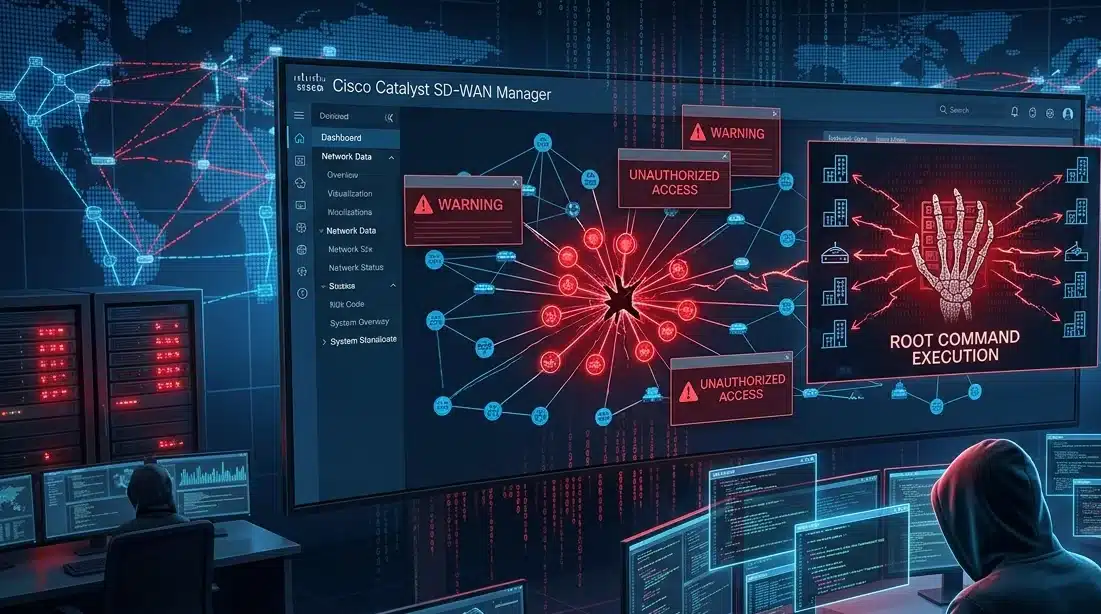
Cisco Warns of Active Exploitation of Catalyst SD-WAN Flaw With No Patch Available

CVE-2026-20245

Cisco has issued an urgent warning that a high-severity vulnerability in its Catalyst SD-WAN Manager platform is being actively exploited in the wild—and no patch exists yet. CVE-2026-20245 allows authenticated attackers with netadmin privileges to execute arbitrary commands as root, placing wide-area network infrastructure at severe risk.
The disclosure is particularly alarming because Catalyst SD-WAN Manager controls and orchestrates SD-WAN deployments across enterprise and carrier networks. A successful exploit could allow attackers to push malicious configurations to thousands of edge devices simultaneously.

Understanding CVE-2026-20245

CVE-2026-20245 exists in the command-line interface (CLI) of Cisco Catalyst SD-WAN Manager, resulting from insufficient validation of user-supplied input when processing file arguments. The vulnerability carries a CVSS base score of 7.8 (High), with a vector of CVSS:3.1/AV:L/AC:L/PR:L/UI:N/S:U/C:H/I:H/A:H.
To exploit the flaw, an attacker must have netadmin-level credentials on the affected system. While this limits the immediate attack surface, Cisco noted in its advisory that attackers are chaining CVE-2026-20245 with two related vulnerabilities—CVE-2026-20182 and CVE-2026-20127—to achieve initial access before escalating to root execution. This chaining technique effectively reduces the privilege prerequisite in practice.
An attacker supplies a specially crafted file to the Catalyst SD-WAN Manager CLI. Insufficient input validation allows the crafted file to execute arbitrary OS-level commands with root privileges. Cisco confirmed "limited cases" in which exploitation resulted in configuration changes being pushed to downstream edge devices—a significant escalation of potential impact.

No Patch Available — Cisco Plans Future Release

Unlike most critical vulnerability advisories, Cisco has disclosed CVE-2026-20245 without an accompanying patch. The company stated it plans to address the vulnerability in a future software release but did not provide a specific timeline.
This leaves organisations with only partial mitigations at their disposal. Cisco advises restricting CLI access to only trusted users and applying strict controls on file upload functionality within SD-WAN Manager administrative interfaces.
A vulnerability without a patch and with confirmed in-the-wild exploitation is a worst-case scenario for network defenders," noted a network security practitioner familiar with SD-WAN infrastructure. Every day without a patch is another day of active risk.

Why It Matters

SD-WAN infrastructure occupies a privileged position in modern enterprise networks, providing policy control over traffic routing across branches, data centres, and cloud environments. Compromising the management plane—which CVE-2026-20245 enables—gives attackers visibility into traffic flows, the ability to redirect connectivity, and the power to inject backdoor configurations across all managed edges.
The impact extends beyond a single organisation. Managed service providers (MSPs) and telecommunications carriers that use Cisco Catalyst SD-WAN to manage multiple customer environments face the prospect of cross-tenant compromise if their management platform is breached.

Mitigation Steps

  • Immediately audit who holds netadmin credentials on Catalyst SD-WAN Manager deployments and revoke unnecessary access.
  • Enable multi-factor authentication (MFA) for all SD-WAN Manager administrative accounts to reduce credential-theft risk.
  • Restrict file upload functionality within the SD-WAN Manager interface to the absolute minimum required for operations.
  • Monitor SD-WAN Manager CLI logs for unusual file upload activity or unexpected root-level command executions.
  • Apply network segmentation to isolate the SD-WAN management plane from general enterprise networks.
  • Subscribe to Cisco Security Advisories (tools.cisco.com/security/center) and apply the patch immediately upon release.
  • Conduct a configuration audit of all managed edge devices to identify any unauthorized configuration pushes already applied.
  • ✇Firewall Daily – The Cyber Express
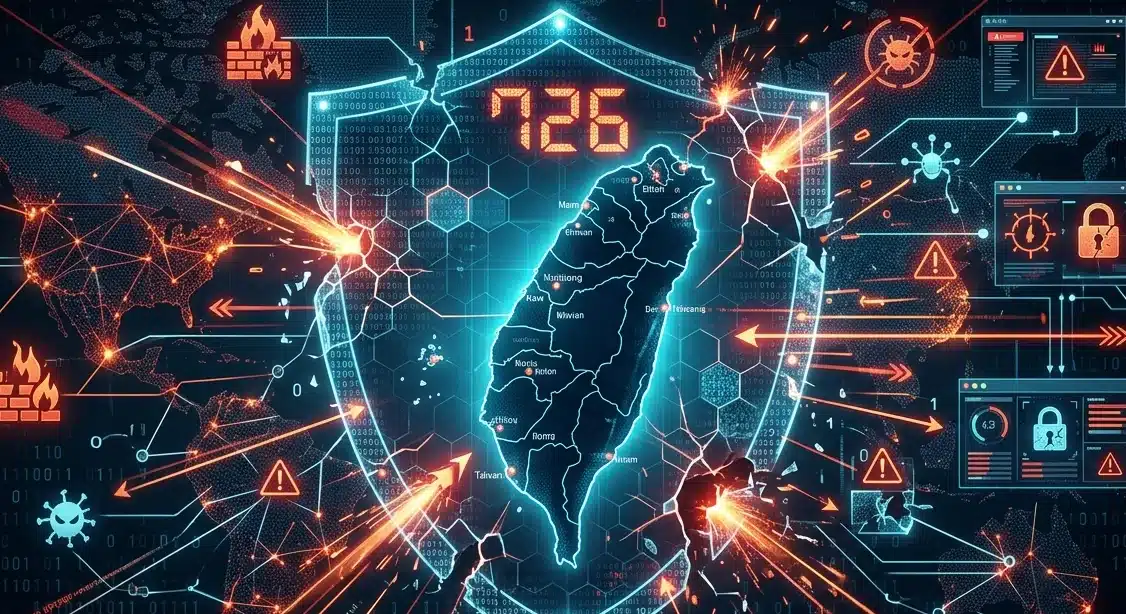
  • Taiwan Flags Five Major Cyber Risks After 726 Security Incidents in 2025 Ashish Khaitan
    Taiwan’s digital security authorities have identified five major areas of concern following hundreds of reported cybersecurity incidents involving government agencies in 2025. According to Taiwan’s Ministry of Digital Affairs, the country recorded 726 cybersecurity incidents this year, highlighting ongoing Taiwan cyber risk challenges tied to ransomware, fake software, supply chain weaknesses, and social engineering attacks. The Administration for Cyber Security said the total number of repor
     

Taiwan Flags Five Major Cyber Risks After 726 Security Incidents in 2025

Taiwan cyber risk

Taiwan’s digital security authorities have identified five major areas of concern following hundreds of reported cybersecurity incidents involving government agencies in 2025. According to Taiwan’s Ministry of Digital Affairs, the country recorded 726 cybersecurity incidents this year, highlighting ongoing Taiwan cyber risk challenges tied to ransomware, fake software, supply chain weaknesses, and social engineering attacks. The Administration for Cyber Security said the total number of reported cases declined slightly compared to 2024, with 29 fewer incidents recorded year over year. However, officials warned that attack methods continue to expose weaknesses across government systems and digital infrastructure.

Cybersecurity Incidents in Taiwan 

As reported by CNA and cited by UDN, most cybersecurity incidents were categorized as low-level threats under Taiwan’s classification system. However, authorities stressed that even minor breaches can create broader operational and national security concerns if left unresolved.  Under Taiwan’s cybersecurity framework, incidents are divided into four levels based on their impact on confidentiality, integrity, and system availability. Level 1 incidents accounted for 87.33% of all reports in 2025, while Level 2 incidents represented 9.78%. Level 3 incidents made up 2.89% of the total. No Level 4 incidents — the most severe category — were reported during the year.  Unauthorized access remained the most common issue among reported cybersecurity incidents, accounting for 68.6% of all cases. Equipment-related failures represented 15.43% of incidents, while denial-of-service attacks accounted for 4.96%. Website attacks made up another 2.48% of reported cases.  Following a review of cyber threat patterns and incident reports from government agencies, Taiwan’s Administration for Cyber Security identified five major Taiwan cyber risk trends that officials believe require immediate attention. 

Fake Messaging Apps Raise Taiwan Cyber Risk

One of the biggest cybersecurity risks highlighted by the administration involved fake communication software distributed through unofficial websites. According to UDN, some users unknowingly downloaded counterfeit messaging applications after replacing old devices or setting up new computers. Authorities said these downloads allowed attackers to install backdoor malware capable of compromising systems and sensitive information. The administration urged government agencies to implement stricter procedures for system modifications and software installations. Officials recommended that all software, hardware, and application installations receive prior approval before being used within agency systems. The administration warned that unofficial downloads continue to create major Taiwan cyber risk exposure across public sector networks.

Ransomware Tactics Become More Sophisticated

The second major concern centered on ransomware groups using customized software drivers to infiltrate systems and evade security detection tools. Authorities noted that attackers are becoming more advanced in bypassing conventional endpoint security measures. To reduce the likelihood of future cybersecurity incidents, the administration advised agencies to regularly scan websites for vulnerabilities, apply timely fixes, deploy web application firewalls, and ensure endpoint protection software remains updated. The ministry emphasized that outdated security tools and delayed patch management continue to increase Taiwan's cyber risk across both government and critical infrastructure networks.

Weak Supply Chain Security Creates Additional Exposure 

Supply chain vulnerabilities were identified as the third major cybersecurity threat. Officials cited one case in which a maintenance contractor installed remote desktop software on a website server. Hackers later gained access to the system after successfully guessing the password linked to the remote access tool.  The incident highlighted growing concerns about third-party vendors and contractor oversight. According to the administration, external maintenance work can create hidden entry points for cybercriminals if agencies fail to maintain strict security controls. The administration said agencies should strengthen supervision of vendors, improve password management practices, and enforce tighter restrictions on remote access systems to reduce Taiwan's cyber risk tied to supply chain operations. 

CISA Launches CI Fortify to Defend Critical Infrastructure From Nation-State Cyber Threats

CI Fortify

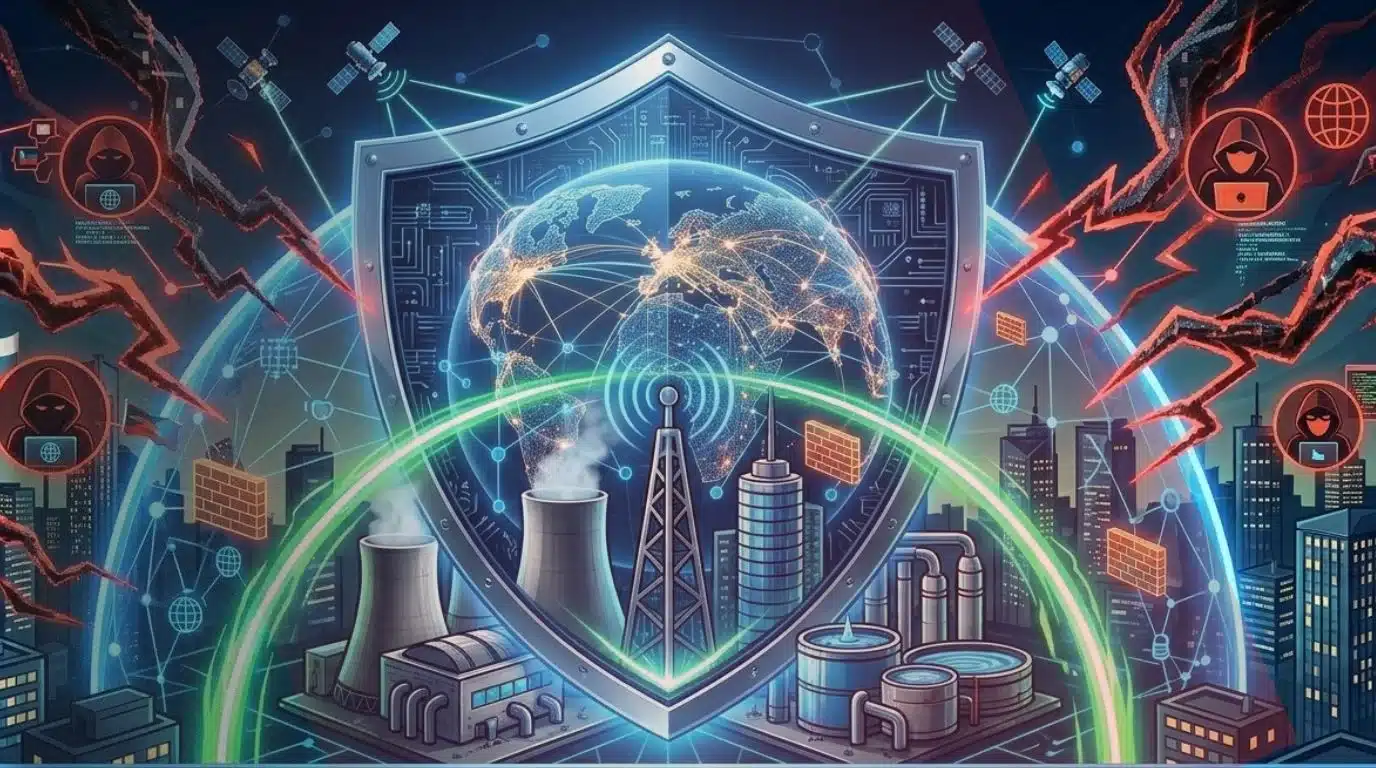
The U.S. Cybersecurity and Infrastructure Security Agency (CISA) has launched a new initiative called “CI Fortify” aimed at helping critical infrastructure operators prepare for disruptive cyberattacks linked to geopolitical conflicts. The initiative comes amid growing concerns over nation-state cyber threats targeting operational technology (OT) systems that support essential services across the United States. The CI Fortify initiative focuses on improving critical infrastructure resilience through two key objectives: isolation and recovery. CISA said the effort is designed to help operators maintain essential operations even if adversaries compromise telecommunications networks, internet services, or industrial control systems. According to the agency, nation-state actors are no longer limiting their activities to espionage. Instead, threat groups have increasingly been pre-positioning themselves inside critical infrastructure environments to potentially disrupt or destroy systems during future geopolitical conflicts.

CI Fortify Initiative Focuses on Isolation and Recovery

Under the CI Fortify initiative, CISA is urging critical infrastructure organizations to assume that third-party communications and service providers may become unreliable during a crisis. Operators are also being asked to plan under the assumption that threat actors may already have some level of access to OT networks. Nick Andersen, Acting Director at CISA, emphasized the need for organizations to prepare for worst-case operational scenarios. “In a geopolitical crisis, the critical infrastructure organizations Americans rely on must be able to continue delivering, at a minimum, crucial services,” Andersen said. “They must be able to isolate vital systems from harm, continue operating in that isolated state, and quickly recover any systems that an adversary may successfully compromise.” The isolation strategy outlined under CI Fortify involves proactively disconnecting operational technology systems from external business networks and third-party connections. CISA said this approach is intended to prevent cyber impacts from spreading into OT environments while allowing organizations to continue delivering essential services in a degraded communications environment. The agency advised operators to identify critical customers, including military infrastructure and other lifeline services, and determine the minimum operational capabilities needed to support them during emergencies. CISA also recommended updating engineering processes and business continuity plans to support safe operations for extended periods while systems remain isolated.

Recovery Planning Central to Critical Infrastructure Resilience

Alongside isolation, the CI Fortify initiative places strong emphasis on recovery planning. CISA urged operators to maintain updated system documentation, create secure backups of critical files, and regularly practice system replacement or manual operational transitions. The agency noted that organizations should also identify communications dependencies that could complicate recovery efforts, such as licensing servers, remote vendor access, or upstream network connections. CISA encouraged operators to work closely with managed service providers, system integrators, and vendors to understand potential failure points and establish alternative recovery pathways. The initiative also highlights broader benefits of emergency planning beyond cybersecurity incidents. According to CISA, the same planning processes can help organizations maintain operations during weather-related disruptions, equipment failures, and safety emergencies. The agency said isolation planning can help cut off command-and-control access to compromised systems, while strong recovery preparation can reduce incident response costs and shorten recovery timelines.

Security Vendors and Service Providers Asked to Support CI Fortify

The CI Fortify initiative extends beyond infrastructure operators and calls on cybersecurity vendors, industrial automation suppliers, and managed service providers to support resilience planning efforts. Industrial control system vendors are being encouraged to identify barriers that could interfere with isolation and recovery procedures, including licensing restrictions and server dependency issues. Managed service providers and integrators are expected to assist organizations in engineering updates, local backup collection, and recovery documentation planning. Meanwhile, security vendors are being asked to support threat monitoring and provide intelligence if nation-state actors shift from espionage-focused activity to destructive cyber operations. CISA also requested vendors share information related to tactics that could undermine recovery or bypass isolation protections, including malicious firmware updates and vulnerabilities affecting software-based data diodes.

Volt Typhoon Cyberattacks Continue to Shape U.S. Cybersecurity Strategy

The launch of CI Fortify is closely tied to ongoing concerns surrounding the Volt Typhoon cyberattacks, which U.S. officials have linked to Chinese state-sponsored threat actors. CISA’s initiative specifically references the Volt Typhoon campaign as an example of how adversaries have attempted to establish long-term access inside U.S. critical infrastructure systems to potentially support disruptive actions during military conflicts. The Volt Typhoon operation first became public in 2023, when U.S. authorities revealed that Chinese hackers had infiltrated multiple sectors of American critical infrastructure. Former CISA Director Jen Easterly stated in 2024 that the agency had identified and removed Volt Typhoon intrusions across several sectors. She later reiterated in 2025 that efforts continued to focus on identifying and evicting Chinese cyber actors from critical infrastructure environments. Despite these operations, cybersecurity researchers and some government officials have warned that Chinese threat actors may still retain access to portions of critical infrastructure networks. Several experts have argued that nation-state groups remain deeply embedded in certain environments despite years of remediation efforts. With the CI Fortify initiative, CISA appears to be shifting focus toward operational resilience, recognizing that prevention alone may not be sufficient against sophisticated nation-state cyber threats targeting U.S. critical infrastructure.

  • ✇Security Boulevard
  • Time to Rethink Privileged Access for Machines and AI Agents Peter Senescu
    For years, Identity and Access Management (IAM) and Privileged Access Management (PAM) have been treated as foundational and a solved security challenge. Organizations deployed vaults, enforced policies, and checked the compliance box for their privileged users.  Fast forward to today, and that model no longer holds up.    What’s emerging now is not an incremental shift, but a structural one. Identity is no longer centered on […] The post Time to Rethink Privileged Access for Machines and AI Age
     

Time to Rethink Privileged Access for Machines and AI Agents

1 de Maio de 2026, 13:35

For years, Identity and Access Management (IAM) and Privileged Access Management (PAM) have been treated as foundational and a solved security challenge. Organizations deployed vaults, enforced policies, and checked the compliance box for their privileged users.  Fast forward to today, and that model no longer holds up.    What’s emerging now is not an incremental shift, but a structural one. Identity is no longer centered on […]

The post Time to Rethink Privileged Access for Machines and AI Agents appeared first on 12Port.

The post Time to Rethink Privileged Access for Machines and AI Agents appeared first on Security Boulevard.

  • ✇Security Boulevard
  • U.S. Consumers Lost $2.1 Billion in Social Media Scams in 2025, FTC Says Jeffrey Burt
    An FTC report says that Americans last year lost $2.1 billion in social media scams, such as shopping and investment schemes. Social media site have become the place where most of these scams start, and more than half of that money was stolen in scams began on Facebook, WhatsApp, and Instagram. The post U.S. Consumers Lost $2.1 Billion in Social Media Scams in 2025, FTC Says appeared first on Security Boulevard.
     

U.S. Consumers Lost $2.1 Billion in Social Media Scams in 2025, FTC Says

1 de Maio de 2026, 09:47

An FTC report says that Americans last year lost $2.1 billion in social media scams, such as shopping and investment schemes. Social media site have become the place where most of these scams start, and more than half of that money was stolen in scams began on Facebook, WhatsApp, and Instagram.

The post U.S. Consumers Lost $2.1 Billion in Social Media Scams in 2025, FTC Says appeared first on Security Boulevard.

Hybrid Authentication Environments

Por:Enzoic
29 de Abril de 2026, 08:23

Reduce credential risk in hybrid authentication environments by securing the password layer that remains alongside passkeys.

The post Hybrid Authentication Environments appeared first on Security Boulevard.

  • ✇Security Boulevard
  • Every Employee is Getting an AI Assistant, But Is Security Infrastructure Ready? David Goldschlag
    2 min readThere’s a conversation happening inside almost every enterprise right now. Leadership has decided that AI agents are going to change how the organization works. Claude for Work licenses are being purchased. Rollouts are being planned. Employees are being told that their personal AI assistant is here and that it will change everything about how they […] The post Every Employee is Getting an AI Assistant, But Is Security Infrastructure Ready? appeared first on Aembit. The post Every Em
     

Every Employee is Getting an AI Assistant, But Is Security Infrastructure Ready?

23 de Abril de 2026, 04:48

2 min readThere’s a conversation happening inside almost every enterprise right now. Leadership has decided that AI agents are going to change how the organization works. Claude for Work licenses are being purchased. Rollouts are being planned. Employees are being told that their personal AI assistant is here and that it will change everything about how they […]

The post Every Employee is Getting an AI Assistant, But Is Security Infrastructure Ready? appeared first on Aembit.

The post Every Employee is Getting an AI Assistant, But Is Security Infrastructure Ready? appeared first on Security Boulevard.

  • ✇ASEC BLOG
  • Ransom & Dark Web Issues Week 4, April 2026 ATCP
    ASEC Blog publishes Ransom & Dark Web Issues Week 4, April 2026           ShinyHunters Claims Data Breach Involving Major U.S. Convenience Store Chain ShinyHunters Claims Theft of Internal Data and Source Code from U.S. Software Development Firm Emergence of New Data Extortion Group: Prinz Eugen
     

Ransom & Dark Web Issues Week 4, April 2026

Por:ATCP
22 de Abril de 2026, 12:00
ASEC Blog publishes Ransom & Dark Web Issues Week 4, April 2026           ShinyHunters Claims Data Breach Involving Major U.S. Convenience Store Chain ShinyHunters Claims Theft of Internal Data and Source Code from U.S. Software Development Firm Emergence of New Data Extortion Group: Prinz Eugen
  • ✇Security Boulevard
  • Unauthorized Users Reportedly Gain Access to Anthropic’s Mythos AI Model Jeffrey Burt
    A group of unauthorized users reportedly has gained access to Anthropic’s controversial Claude Mythos Preview AI frontier model despite the AI vendor’s efforts to keep it out of public hands by limiting the organizations that can use it. Bloomberg reported that the unnamed group had tried multiple ways to gain access to the AI model.. The post Unauthorized Users Reportedly Gain Access to Anthropic’s Mythos AI Model appeared first on Security Boulevard.
     
  • ✇Security Boulevard
  • NIST, Overrun by Massive Numbers of Submitted CVEs, Limits Analysis Work Jeffrey Burt
    NIST said it overwhelmed by the surge in the number of CVEs submissions in recent years, so it is paring back the analysis work it does on the dangerous security flaws. Security experts say the number of new vulnerabilities detected will only grow during the AI era and that the private sector will need to pick up the slack left by NIST's decision. The post NIST, Overrun by Massive Numbers of Submitted CVEs, Limits Analysis Work appeared first on Security Boulevard.
     

NIST, Overrun by Massive Numbers of Submitted CVEs, Limits Analysis Work

17 de Abril de 2026, 14:59
NIST CSF vulnerabilities ransomware backlog

NIST said it overwhelmed by the surge in the number of CVEs submissions in recent years, so it is paring back the analysis work it does on the dangerous security flaws. Security experts say the number of new vulnerabilities detected will only grow during the AI era and that the private sector will need to pick up the slack left by NIST's decision.

The post NIST, Overrun by Massive Numbers of Submitted CVEs, Limits Analysis Work appeared first on Security Boulevard.

❌
❌