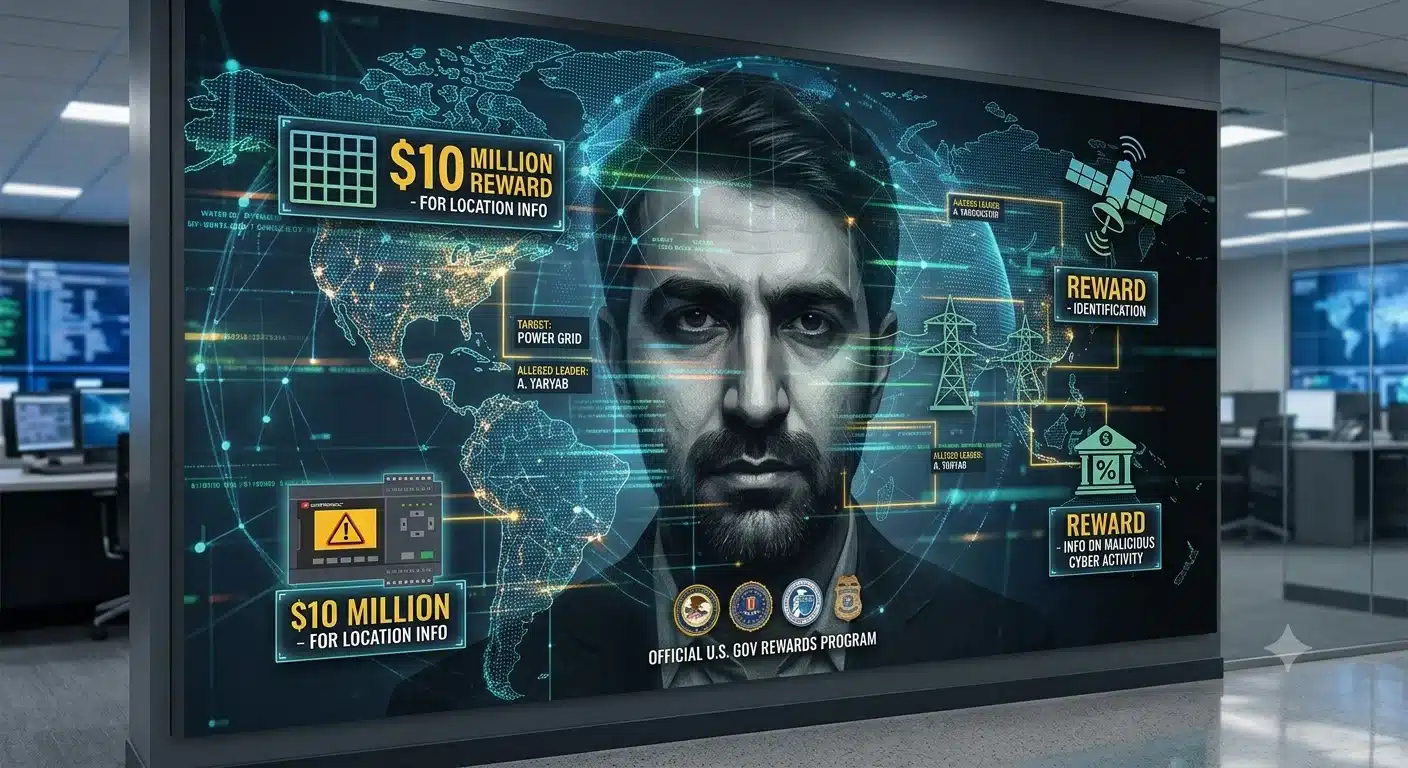
US Puts $10 Million Bounty on Alleged Iranian Cyber Chief
![]()

![]()

Organizations today are not short of data, particularly in the domain of cyber. What many lack is a timely, trusted assessment that can help leaders act with greater confidence.
When a cyber incident begins, the technical questions surface first. What happened? Which systems are affected? Is the activity contained? But the questions that often shape the outcome are rarely technical alone. Who is behind the activity? What are they trying to achieve? Is this an isolated event or part of a broader campaign? Which customers, suppliers, assets or services are exposed? Is there a sanction, legal, regulatory or reputational dimension? And what is a proportionate immediate response while the facts are still incomplete?
This is why cyber is, in a meaningful sense, as much a human decision-making problem as a technological one. The OECD argues that digital security risk should be integrated into broader decision-making, rather than treated only as a technical issue. Tools can detect signals, spot patterns, correlate events and flag anomalies, but it takes people to decide what those signals mean, when to escalate, which trade-offs matter and what action the organization should take. In Moody’s recent whitepaper on supporting decision dominance through financial, corporate and trade intelligence, we make the case that the decisive moments in a cyber incident belong not only to systems, but to judgement.
That matters for CIOs and other technology decision-makers, because theirs is one of the most demanding decision environments in the enterprise. Reporting lines and structures vary by organization, but common themes tend to recur: technical complexity, compressed timelines, uncertain attribution and fragmented responsibility. Security teams may see indicators before they understand intent. Legal teams may need to assess obligations before the full scope of an incident is known. Communications teams often must prepare for scrutiny while operations are still working through containment. Business leaders may first need to decide when a decision must be made, then whether to pause a service, isolate a supplier, notify a regulator, issue a public statement or accept some temporary disruption to prevent greater harm.
The result can be a gap between signal and action, at a time when many organizations are experiencing a growing volume of cyber signals and alerts. Organizations commonly track mean time to detect and respond. But a less visible but equally consequential metric is decision latency: the time it takes to move from a technical signal to a shared understanding of what matters, and a decision about what to do. An organization can identify a threat quickly and still act too slowly if it cannot interpret the signal, convene the relevant stakeholders or agree on a proportionate response. The challenge is not simply speed — decisions made quickly but poorly can amplify harm. It is reducing decision latency without sacrificing judgement. This urgency is not theoretical and shouldn’t simply be admired. In her 2026 GCHQ Annual Lecture at Bletchley Park, Director Anne Keast-Butler described “a moment of consequence” shaped by the radical uncertainty. Her wider point is key for CIOs and their peers across the board: cyber security is a critical priority, and resilience depends on the ability to act with urgency, judgement and trusted partnerships.
Technical signals tend to become more useful when connected to wider context. A malicious domain, an unusual login, a compromised account or malware signature may tell a security team that something is happening. On its own, that signal rarely tells an executive what the organization should do next. Context reframes the question from “what does this indicator mean?” to “what decision should we make?”
That context can take several forms. Payment flows may provide additional context regarding the financial networks associated with an event or risk scenario. Ownership structures can help identify relationships between suppliers, counterparties or entities that may merit further review. Sanctions exposure may change the legal and compliance implications of a response. Adverse media may provide indicators of potential reputational or integrity concerns. Corporate linkages may reveal that what looks like a narrow technical event is in fact connected to a wider network of actors, assets or interests.
None of this removes uncertainty altogether, and no decision-maker should wait for perfect information before acting. What broader context does is improve the conditions under which judgement is exercised. Two incidents may look similar at the technical level but demand different leadership responses. One may be opportunistic criminal activity with limited broader consequence. Another may involve connections to a sanctioned entity, an organized crime network, a critical supplier or a state-linked ecosystem. The signal may look similar, but the appropriate response is not.
This distinction matters because cyber response is often not contained within the security function, especially in a learning organization. A serious incident typically draws in teams from across multiple disciplines, such as security, IT, legal, risk, compliance, finance, procurement, communications and business operations. It may also involve external parties such as law enforcement, intelligence agencies, regulators, financial institutions, infrastructure operators and key suppliers. The CIO will not own every lever in this environment, and organizational structure will influence how close to the centre of the systems they sit, dependencies and information flows that affect the organization’s ability to respond effectively. Is the CIO supported or supporting during an incident? What leeway is afforded the CIO to act when required?
A common challenge in cyber response is not the absence of technical capability, but the absence, or fragility, of a shared decision model. Teams will have data, dashboards and incident playbooks in place, but still lack clarity on who decides, what information is needed, which trade-offs are acceptable and how quickly business context can be brought to bear. Ensuring a common operating picture — one that gives the leadership team a shared understanding of the same facts — tends to be a differentiator between organizations that respond coherently and those that do not.
For CIOs and CEOs, this is an organizational design problem as much as a technology one. Experience suggests that a cyber strategy that stands alone may be less effective than one integrated into the organization’s broader strategy from the outset. Cyber maturity should not be judged only by the number of controls deployed, alerts processed or systems monitored, but also by the quality of the decisions an organization can make under pressure. Using scenarios to test decision making can help refine organizational design, highlight blockers that may emerge at critical times, and improve leaders’ understanding of the potential consequences of poor decision making. That wider coordination challenge is reflected in CISA’s incident response guidance, which treats serious cyber incidents as events requiring coordination across multiple stakeholders.
This is where integrated intelligence has a role to play. Its value lies less in the sheer volume of information it provides — most organizations already have more data than they can absorb — and more in its ability to help prioritize, separating signal from noise. It can help distinguish activity that is technically interesting from activity that may be strategically material. Used well, it can help identify enabling networks associated with an attack, inform disruption options and help focus scarce defensive resources on the assets, relationships and dependencies most likely to matter.
The aim is not to know everything. It is to develop sufficient understanding of the most relevant factors early enough to support timely actions while meaningful response options remain available.
CIOs can make this practical by asking five questions:
These questions move the conversation from reporting to leadership, and they reflect the human reality of cyber defence. Employees, analysts, managers and executives are asked to make repeated judgement calls under uncertainty, often with too much noise and too little time. Attackers are often well placed to exploit that reality; resilient organizations tend to design around it
Cybersecurity has spent years improving visibility, and that work remains essential. But visibility alone does not create resilience. The next challenge is decision quality.
For CIOs, the strategic shift is that cyber signals become most valuable when connected to real-world consequences: financial, operational, legal, reputational and geopolitical. In a fast-moving incident, the critical question is rarely whether the organization has more data. It is whether leaders can understand what matters, decide what to do and act while meaningful response options remain available.
The organizations that are often most effective in this environment are not necessarily those with the most dashboards. They are often those that have worked to reduce decision latency without sacrificing judgement, often through rehearsal, scenario testing and learning from gaps identified during those exercises. In an environment shaped by ambiguity, compressed timelines and interconnected risk, the ability to make better decisions faster may become one of the defining measures of not just cyber resilience, but of leadership itself.


Records held in Salesforce and ServiceNow systems are under attack leaving user data exposed, according to researchers at Reco.
The attack appears similar to those perpetrated by the extortion group ShinyHunters, Reco said. ShinyHunters has been particularly active this year, attacking dating sites in January and Oracle in June, and there are fears that they could have found a new target.
Reco has named the latest campaign of attacks “City-Forum,” after a domain name associated with the attackers’ IP address. While it bears similarities to Shiny Hunters’ past exploits, there are also differences. This time around the attacker penetrated the systems through the UI-API layer, an attack point that Reco had not seen used before, and had also created its own toolset to carry out the attack. It is also targeting a native ServiceNow Service Portal search endpoint that has almost no online documentation or well-known open-source tools.
The threat is particularly noteworthy, Reco said, as the attackers have studied the services to map different common data-leak vectors, a sign of an advanced approach.
A Salesforce spokesperson said that it was aware of the campaign in which malicious actors are exploiting customers’ overly permissive Experience Cloud guest user configurations in the campaign to potentially access more data than targeted organizations intended.
“This issue highlights risks stemming from misconfigurations, such as overly permissive guest user profiles, and not from a Salesforce vulnerability,” the spokesperson said.
Regardless of who the attackers were and how the attack was carried out, one thing should be clear: Organizations should be increasingly careful about who they give login credentials to.
This article first appeared on CSO.

U.S. and South Korean authorities warn about the growing Gunra ransomware threat as the operation expands its capabilities and affiliate network.
The post US, South Korea Warn of Growing Gunra Ransomware Threat appeared first on TechRepublic.

Organizations have spent years and billions of dollars hardening their defenses against cyberattacks, but prevention alone no longer settles the question that matters most to a board. Accenture’s State of Cybersecurity Resilience 2025 report stated that organizations had faced an average of 1,876 cyberattacks in a single quarter, a 75% increase over the prior year. What’s more, 63% of the surveyed executives cited a rapidly evolving threat landscape as their biggest challenge. In such a dangerous environment, organizations must assume that eventually an attack will succeed, so IT has to be able to prove that it can recover cleanly once an attacker gets in.
Attackers already understand this shift. Mandiant, a Google subsidiary, reported in its M-Trends 2026 Report that “adversaries are systematically targeting infrastructure such as backups, identity services, and virtualization layers to deny recovery, putting immense pressure on organizations to pay ransom demands or risk losing the ability to recover.” Backup systems have become a primary target.
Demonstrating recoverability has been difficult for IT, because backup, recovery, cybersecurity, and disaster recovery all evolved as separate disciplines, with each solving its own piece of the problem essentially independently. That fragmentation leaves organizations unable to answer basic questions about their own ability to bounce back.
A new discipline, resilience operations (ResOps) has emerged to close the gap between performing backups and proving that an organization can actually use them to recover. ResOps functions as an operating discipline that focuses business, security, and infrastructure teams on recovering critical functions quickly while avoiding reinfection. This discipline also provides the teams with a common framework so they can pivot away from assumptions and anecdotes to instead quantify resilience in a repeatable, sustainable way. Spot-testing of discrete systems is not enough. Organizations need to perform regular tests of the entire system if it is to pivot away from assumptions and anecdotes to quantify resilience in a repeatable, sustainable way.
Additionally, to measure the effectiveness of recovery, the industry needs an updated resilience metric, mean time to clean recovery (MTCR). Metrics such as recovery time objective (RTO) and recovery point objective (RPO) still matter, but neither confirms that restored data is free of compromise. MTCR closes that gap, by measuring how long it takes to validate that a recovered system is both online and clean, giving CIOs, CISOs, and boards a single evidence-based answer during an attack.
Building that kind of resilience starts with architecture. Depending on a single vendor or platform across multiple heterogeneous environments introduces a single point of failure. Diversity is a strength, especially when it comes to the identity infrastructure. Recovery systems that share the same identity layer with production will fail if the identity systems are compromised, so more and more organizations now stand up an independent identity infrastructure solely for recovery. Immutable air-gapped storage rounds out the picture, but it remains rare among organizations, even for their most critical workloads. Finally, during recovery execution, backups should be paired with clean room validation of workloads before anything returns to production.
“For years the industry measured resilience by how fast we could restore data,” says Bill O’Connell, chief security officer at Commvault. “Now the measure that matters is whether we can prove, with evidence, that what we restored is actually clean.”
Vendors such as Commvault are building the infrastructure to support this shift, giving organizations the tools for testing recovery as a complete system rather than a collection of individual failure scenarios and to walk into the boardroom with proof instead of assumptions. But whatever the underlying backup-and-recovery infrastructure in this increasingly dangerous threat environment, organizations need to make attaining clean recovery their goal.
Build real resilience
Learn how organizations are proving recoverability and achieving clean recovery when it matters most.


A Canadian hacker has admitted being part of a group responsible for several major cyberattacks. Connor Riley Moucka pleaded guilty to being part of a coterie of hackers that hit 165 organizations, resulting in the theft of customer records and the extortion of millions of dollars.
Industry sources have identified Moucka as one of the main players in attacks on data hosted by cloud data warehouse Snowflake. Companies affected by the hacks include the likes of AT&T, Ticketmaster and the Neiman Marcus Group.
He worked with two other hackers: John Edward Binns and Cameron John Wagenius. Binns was not in US custody as of April 2026, while Wagenius, going by the name of Kiberphant0m, was arrested in January 2025 and pleaded guilty in July that year
Moucka and other members of the group used stolen login credentials to compromise data belonging to at least 165 customers of a US-based software-as-a-service company. This unauthorized access was used to steal billions of sensitive customer records and download terabytes of information,
“Connor Moucka hacked over 150 companies and organizations, obtained extremely sensitive information, and extorted the victims for millions of dollars. Today’s guilty plea serves as a reminder to all cybercriminals, regardless of where they live, that they cannot hide behind a wall of anonymity. You will be found and brought to justice,” said assistant attorney general A. Tysen Duva of the Justice Department’s Criminal Division
The trial is the result of a coordinated worldwide action against the Snowflake group. The investigation was led by the FBI but benefited from contributions from the Royal Canadian Mounted Police, the Australian Federal Police, Spain’s Guardia Civil, the Security Service of Ukraine and the Turkish National Police.
This article first appeared on CSO.


![]()
A De Bijenkorf cyberattack involving one of the retailer's external logistics partners has disrupted order processing, returns, and refunds while raising concerns over potential customer data exposure. The Dutch luxury department store chain said the security incident occurred within the systems of a third-party logistics provider, adding that there is currently no evidence that its own infrastructure was compromised.
The Amsterdam-based retailer confirmed that customers can continue placing online orders and stores remain open. However, deliveries, returns, and refunds are expected to take longer than usual as the investigation continues.
According to De Bijenkorf, unauthorized individuals gained access to part of its logistics partner's systems. The logistics provider responded by immediately blocking the unauthorized access and implementing additional security measures.
An external investigation is now underway to determine the cause of the incident, its scope, and whether customer information was affected.
As a precaution, De Bijenkorf has informed customers about the incident and submitted a report to the Dutch Data Protection Authority while awaiting the investigation's findings.
The retailer said investigators are still determining whether any personal information has been compromised.
Based on the information currently available, data that may be involved includes:
De Bijenkorf emphasized that sensitive financial information is not part of the incident. The company said payment details, bank account numbers, credit card information, usernames, and passwords were not accessed.
The retailer said it is still investigating whether individual customers have been affected. Customers whose information is confirmed to be involved will receive direct communication via email from info@debijenkorf.nl.
For those who have not yet received a notification, the company said it cannot currently rule out the possibility that their information was included in the incident until the investigation is completed.
De Bijenkorf also stressed that no login credentials were compromised, meaning unauthorized individuals cannot access customer accounts using stolen usernames or passwords.
Although the investigation remains ongoing, De Bijenkorf warned customers to stay alert for a possible phishing risk if personal information is ultimately found to have been exposed.
The retailer advised customers not to click on suspicious links or open unexpected attachments. It also reminded customers never to share passwords, payment information, or personal details through email or phone calls.
The company said it will never request credit card details, gift card information, or other sensitive information via email.
The incident adds to a growing list of attacks targeting organizations that support retail operations rather than retailers directly. A logistics cyberattack can interrupt deliveries, returns, and customer service even when the affected retailer's own systems remain operational.
In July 2026, a ransomware attack on Japan's largest refrigerated logistics company disrupted food deliveries across the country, causing supply shortages for restaurant chains, including Kentucky Fried Chicken. The incident demonstrated how cyberattacks on logistics providers can quickly impact downstream retail operations and customer services.
For now, De Bijenkorf said its stores remain open, online ordering continues to operate, and there are no indications that its own systems have been compromised. The retailer said it will provide additional updates as the external investigation establishes whether customer data was affected and the full extent of the incident.

![]()
The biggest data breaches of 2026 so far, ranked by impact, with details on exposed data, affected users, and what readers should do next.
The post The Biggest Data Breaches of 2026 So Far, Ranked by Impact appeared first on TechRepublic.
Apple is releasing some iPhone security fixes earlier as AI raises concerns about faster cyberattacks and shorter patch windows.
The post iPhone Security Fixes May Arrive Sooner as AI Speeds Up Threats appeared first on TechRepublic.

![]()
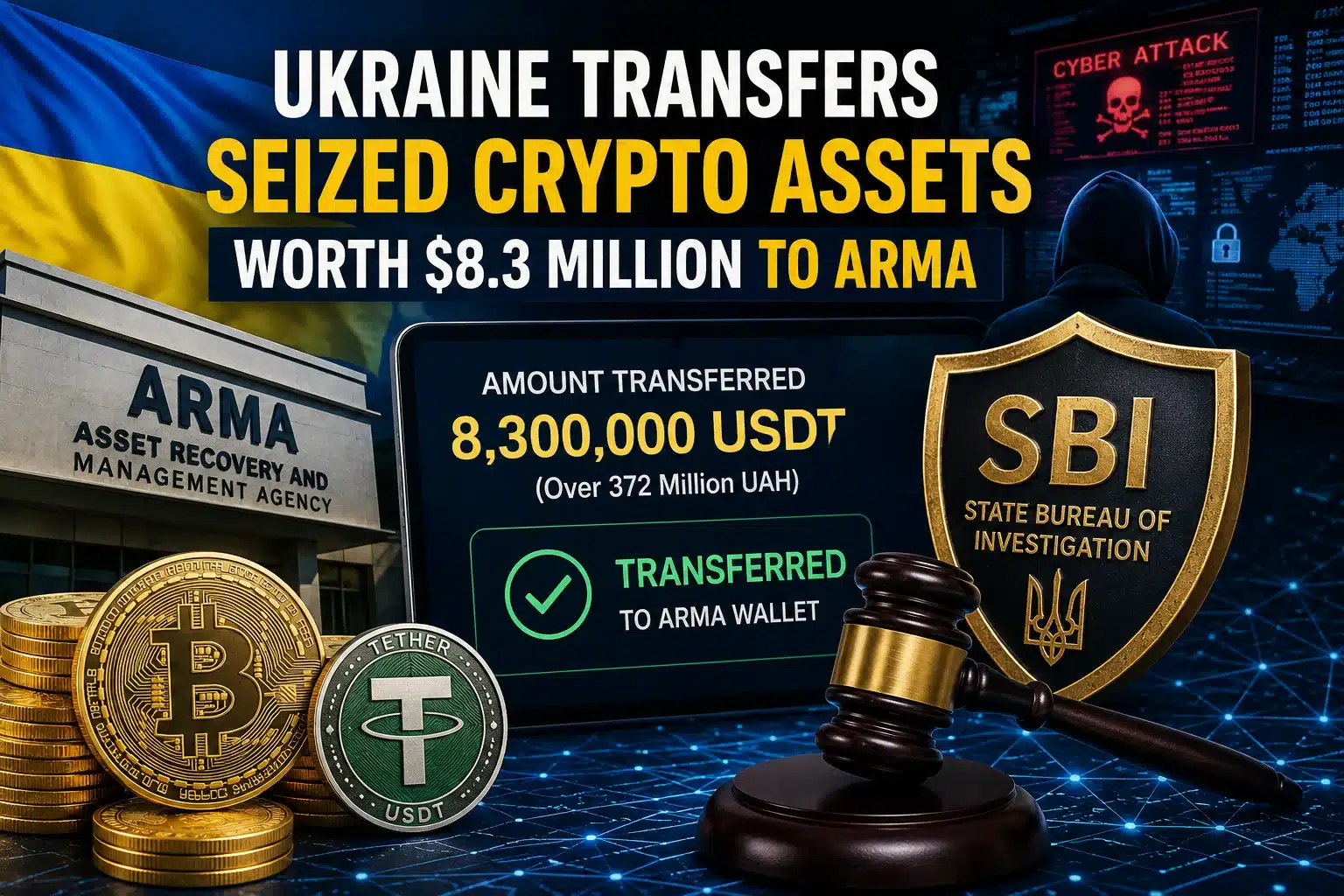
Ukraine has transferred Seized Crypto Assets worth more than 8.3 million USDT to the country's Asset Recovery and Management Agency (ARMA), marking the first time virtual assets have been placed under the agency's management following a court decision. The transfer follows an investigation led by the State Bureau of Investigation into an international hacking group accused of carrying out cyberattacks, extortion, and money laundering across Europe and the United States.
According to Ukrainian authorities, the transferred cryptocurrency is valued at more than 372 million hryvnias and represents a milestone in the country's efforts to manage digital assets linked to criminal investigations.
The State Bureau of Investigation said the transfer was completed as part of an ongoing criminal investigation conducted in cooperation with the DVB of the National Police and U.S. law enforcement agencies.
Investigators determined that the virtual assets were stored in crypto wallets controlled by a member of the organized hacking group. Following a court order, more than 8.3 million USDT was transferred to ARMA's official crypto wallet.
Authorities said this is the first practical case in Ukraine where seized digital assets have been transferred to ARMA for management, demonstrating the country's ability to handle new categories of assets within the legal system.
According to investigators, members of the international hacking group carried out large-scale cyberattacks against individuals and companies in Europe and the United States.
The investigation alleges the group stole confidential information, demanded ransom payments, and laundered criminal proceeds in Ukraine through the purchase of residential properties, vehicles, and other high-value assets.
Authorities estimate that the criminal group's activities caused losses exceeding $100 million.
As part of the pre-trial investigation, four members of the group, including its alleged organizer, were detained and placed in custody.
The investigation resulted in the cryptocurrency seizure and the confiscation of additional assets with a combined value exceeding $11.1 million.
According to the State Bureau of Investigation, the seized property includes residential buildings, apartments, vehicles, approximately $1 million in cash, and digital assets equivalent to more than $8.3 million.
The Office of the Prosecutor General is providing procedural oversight for the criminal proceedings.
The State Bureau of Investigation said that after converting the cryptocurrency into fiat currency, authorities plan to purchase military bonds.
According to the agency, the initiative is intended to support Ukraine's economy during martial law while ensuring that assets obtained through criminal activity are redirected for state purposes.
Officials described countering transnational cybercrime and ensuring effective mechanisms for the seizure and management of criminal assets as key priorities.
ARMA said receiving the cryptocurrency marks an important step in the evolution of Ukraine's asset management system.
The agency stated that the successful transfer reflects coordinated efforts between the State Bureau of Investigation and the Office of the Prosecutor General, enabling the execution of the court's decision and preserving the value of the seized assets.
ARMA added that it is continuing to develop mechanisms for managing all categories of seized property, including real estate, corporate rights, and virtual assets, to ensure their preservation in the interests of the state and society.
The agency said the case demonstrates that as cybercriminals increasingly use digital technologies to conceal illicit proceeds, authorities must also strengthen their ability to manage and preserve cryptocurrency and other digital assets seized during criminal investigations.
Five Eyes agencies warned that AI could speed cyberattacks within months, raising new risks around prompt injection, phishing, and enterprise AI tools.
The post Five Eyes Warns AI Could Speed Cyberattacks Within Months appeared first on TechRepublic.

![]()

![]()

![]()

A pair of tightly executed cyberattacks have become milestones in cryptocurrency theft in 2026 due to their sheer size. These two incidents, targeting Drift Protocol and KelpDAO, account for roughly three quarters of all recorded crypto losses through April, revealing a shift toward fewer, higher-dollar operations. Based on a report from TRM Labs, security researchers..
The post North Korea’s Enormous Crypto Hacks Redefine Scale and Strategy appeared first on Security Boulevard.

![]()

![]()