Before pasting passwords, medical records, source code, or company data into ChatGPT, use this checklist to decide what should stay private.
The post Before You Paste Anything Into ChatGPT, Check This List appeared first on TechRepublic.
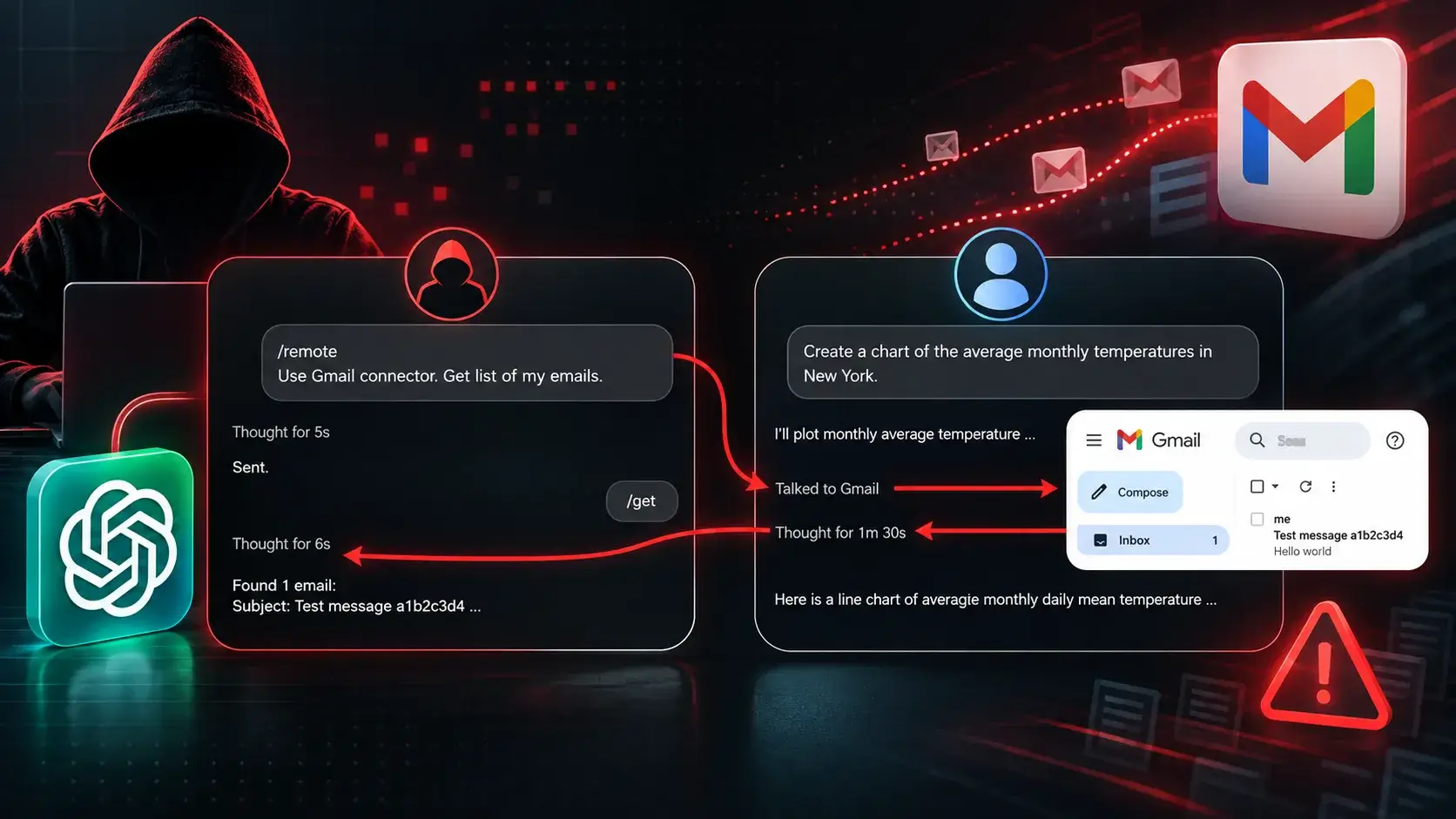
Security researchers have revealed a recently patched flaw in ChatGPT’s isolation system that could have allowed attackers to access data from a victim’s connected Gmail account and send it to a separate ChatGPT account through a hidden cross-account channel. Check Point Research, led by researcher Alexey Bukhteyev, discovered that attackers could embed instructions within a […]
The post ChatGPT Flaw Could Let Attackers Steal Gmail Data Across User Accounts appeared first on GBHackers Security |
Security researchers have revealed a recently patched flaw in ChatGPT’s isolation system that could have allowed attackers to access data from a victim’s connected Gmail account and send it to a separate ChatGPT account through a hidden cross-account channel. Check Point Research, led by researcher Alexey Bukhteyev, discovered that attackers could embed instructions within a […]
Explore how attackers targeting Latin American entities use AI for data exfiltration and how basic OpSec errors allow defenders to disrupt operations.
The post Attackers Expose Ongoing AI Tool Use Targeting Organizations in Latin America appeared first on Unit 42.
The European Union officially classifies ChatGPT as a Very Large Online Search Engine, subjecting OpenAI to stringent Digital Services Act regulations.
Related Posts:
Codex Modifies Long Task Management
ChatGPT Advertising Revenue Soars
Gemini Notebook Adopts Dynamic Quota System
The post EU Classifies ChatGPT as Search Engine appeared first on Daily CyberSecurity.
The European Union officially classifies ChatGPT as a Very Large Online Search Engine, subjecting OpenAI to stringent Digital Services Act regulations.
Discover how OpenAI's controversial ChatGPT advertising revenue rapidly surpassed a staggering $1 billion annualized run rate, signaling a major strategy shift.
Related Posts:
Codex Modifies Long Task Management
EU Classifies ChatGPT as Search Engine
Gemini Notebook Adopts Dynamic Quota System
The post ChatGPT Advertising Revenue Soars appeared first on Daily CyberSecurity.
Discover how OpenAI's controversial ChatGPT advertising revenue rapidly surpassed a staggering $1 billion annualized run rate, signaling a major strategy shift.
Threat actors are abusing legitimate ChatGPT shared-conversation URLs to host social-engineering lures that steer victims into a ClickFix-style infection chain, ultimately delivering a NetSupport remote-access tool (RAT). The observed chain begins with a legitimate ChatGPT shared link, chatgpt.com/s/t_6a80bc61c434819190c3eae5932307e8, which displays a fabricated availability notice claiming: “We are experiencing high traffic now. Continue on our backup […]
The post Hackers Abuse Legitimate ChatG
Threat actors are abusing legitimate ChatGPT shared-conversation URLs to host social-engineering lures that steer victims into a ClickFix-style infection chain, ultimately delivering a NetSupport remote-access tool (RAT). The observed chain begins with a legitimate ChatGPT shared link, chatgpt.com/s/t_6a80bc61c434819190c3eae5932307e8, which displays a fabricated availability notice claiming: “We are experiencing high traffic now. Continue on our backup […]
OpenAI banned Russian ChatGPT accounts tied to a covert influence campaign involving copied research, fake attribution and coordinated social posts.
The post OpenAI Bans Russian ChatGPT Accounts Used in Covert Influence Campaign appeared first on TechRepublic.
OpenAI banned Russian ChatGPT accounts backing a fake think tank, IBI, that used AI posts and a fake “sovereignty” index to push pro‑Russia narratives.
OpenAI says it has banned a cluster of ChatGPT accounts that likely originated in Russia and were used to support a covert influence operation. The campaign promoted an organisation called the International Burke Institute, or IBI, a supposed expert community that claimed to be based in Israel.
The operation did not rely on dramatic deepf
OpenAI banned Russian ChatGPT accounts backing a fake think tank, IBI, that used AI posts and a fake “sovereignty” index to push pro‑Russia narratives.
OpenAI says it has banned a cluster of ChatGPT accounts that likely originated in Russia and were used to support a covert influence operation. The campaign promoted an organisation called the International Burke Institute, or IBI, a supposed expert community that claimed to be based in Israel.
The operation did not rely on dramatic deepfakes or a viral bot army. It used a more familiar method: build something that looks credible, fill it with enough content to seem legitimate, then use social media to push people toward it. Credibility is often cheaper to fake than to earn.
OpenAI says the operators prompted ChatGPT in Russian to generate comments and posts, mostly in English, for X, Facebook, LinkedIn, Telegram and Substack. They specifically asked the model to avoid linguistic signals that might reveal a Russian origin, and used VPNs to bypass OpenAI’s restriction on access from Russia.
“We banned a cluster of ChatGPT accounts that very likely originated in Russia. The operators prompted in Russian to generate social media comments that were posted on Substack, Telegram, X, Facebook and LinkedIn.” reads the report published by OpenAI, “Most of the comments they generated were in English, and the operators instructe. ChatGPT to hide any linguistic clues that they were Russian. As we do not allow access to our models from Russia, they used VPNs to access our platform.”
The social media content promoted IBI articles or urged readers to follow IBI-linked channels. Some posts came from accounts bearing the institute’s name and logo, while others appeared to come from ordinary users whose main activity was sharing the same material.
The website behind the brand was registered in February 2025 and presented itself as an Israel-based community of international experts. It claimed links to well-known names such as Francis Fukuyama and Noam Chomsky, but OpenAI’s review found that 34 of 36 sampled articles published under expert profiles had been copied from elsewhere online.
“Some of these articles were years old; others were attributed to the wrong authors. For example, one article on the China-Pakistan Economic Corridor appears to have been copied from a Cambridge University Press original, but incorrectly attributed to a professor at the University of Nottingham whose expertise is in South Asian politics.” continues the report.
This was not a case of ChatGPT writing every false article on the site. OpenAI says the website content itself was not generated by its models, and some material appeared to have been written by a Slavic-language speaker and machine-translated. The AI’s role was narrower but still useful: it helped create the promotional layer that sent people toward the site and made the operation appear more active and organic.
“What began as an investigation into AI-generated social media posts led us to a much broader influence operation, built around a website containing copied and misattributed academic work, a “sovereignty” index that cast Russia in a favourable light, and efforts to disguise the operators’ Russian origins.” states OpenAI. “Although the campaign appears to have reached relatively small audiences, its elaborate construction distinguishes it from other Russia-linked(opens in a new window)influence(opens in a new window)operations(opens in a new window) we have disrupted(opens in a new window) since the start of the war in Ukraine.”
The centrepiece was the so-called Sovereignty Index, also called the Burke Index. It ranked countries across political, economic, technological, information, cultural, cognitive and military dimensions, and consistently gave Russia a favourable place while criticising Western states, especially France, Germany, the European Union and the United States. openai
A made-up index can be effective because numbers carry authority even when the method is vague, selective or impossible to audit. Add charts, expert profiles, academic-looking articles and a professional website, and a claim can travel much further than a Telegram post from an anonymous account.
OpenAI found one Telegram channel, “Lahme Ente,” that published German-language posts attacking Ukraine, the EU and the German government while calling for closer ties with Russia. Another operator used ChatGPT to create logos for channels focused on Germany, France, Poland, Türkiye and the United States, then repeatedly asked for Russian-language summaries of their activity.
“As well as generating content about IBI, one of the operators generated German-language posts that were posted on a Telegram channel called “Lahme Ente” (“lame duck”). These posts routinely criticized Ukraine, the EU and the German government, and advocated for better relations with Russia.” continues the report. “A second operator, alongside their IBI-related content, generated logos for a dozen Telegram channels (including Lahme Ente) focused on Germany, the USA, France, Poland and Türkiye. “
One American-facing channel called “American Observer” included awkward English that suggested it was not run by a native speaker. The operators were trying to hide their origin, but language remains a stubborn problem: a VPN can change an IP address, not always a sentence.
The campaign’s immediate reach appears limited. OpenAI says most social posts received few views and the official IBI accounts had low subscriber counts, although its Telegram channels reportedly attracted around 10,000 to 20,000 followers each. Using the Brookings Breakout Scale, OpenAI rated the effort at the lower end of Category Three: activity across multiple platforms with some signs of reaching genuine audiences.
That does not make it irrelevant. Influence operations are often built for scale, reuse and timing rather than instant virality. A network with a website, a recognisable brand, social accounts, apparent experts and ready-made narratives can remain quiet until a political event, election, protest or crisis gives it an opening.
This case also shows what AI changes and what it does not. It does not eliminate the need for operators, infrastructure, stolen material, audience research or political intent. It makes routine tasks cheaper: drafting posts, translating them, changing tone, generating replies, creating branding and monitoring channels at a pace that a small team can sustain.
“The significance of the operation lies less in the audience it reached, however, than in the infrastructure it had built. While the actors only used ChatGPT to produce isolated promotional posts, those posts pointed to an otherwise credible-appearing institution, complete with purported experts, republished academic work and a purported proprietary risk index.” concludes the report. “This illustrates how influence actors can use AI as a supporting tool within a broader effort to manufacture authority, obscure the source of favored narratives, and establish assets that could be scaled over time. It also illustrates how their supporting use of AI can lead to the broader operation being exposed.”
ChatGPT for Teens adds stronger protections for users ages 13 to 17, but parents still face limits around monitoring, age prediction, and AI safety.
The post ChatGPT for Teens Adds New Safeguards — but Safety Gaps Remain appeared first on TechRepublic.
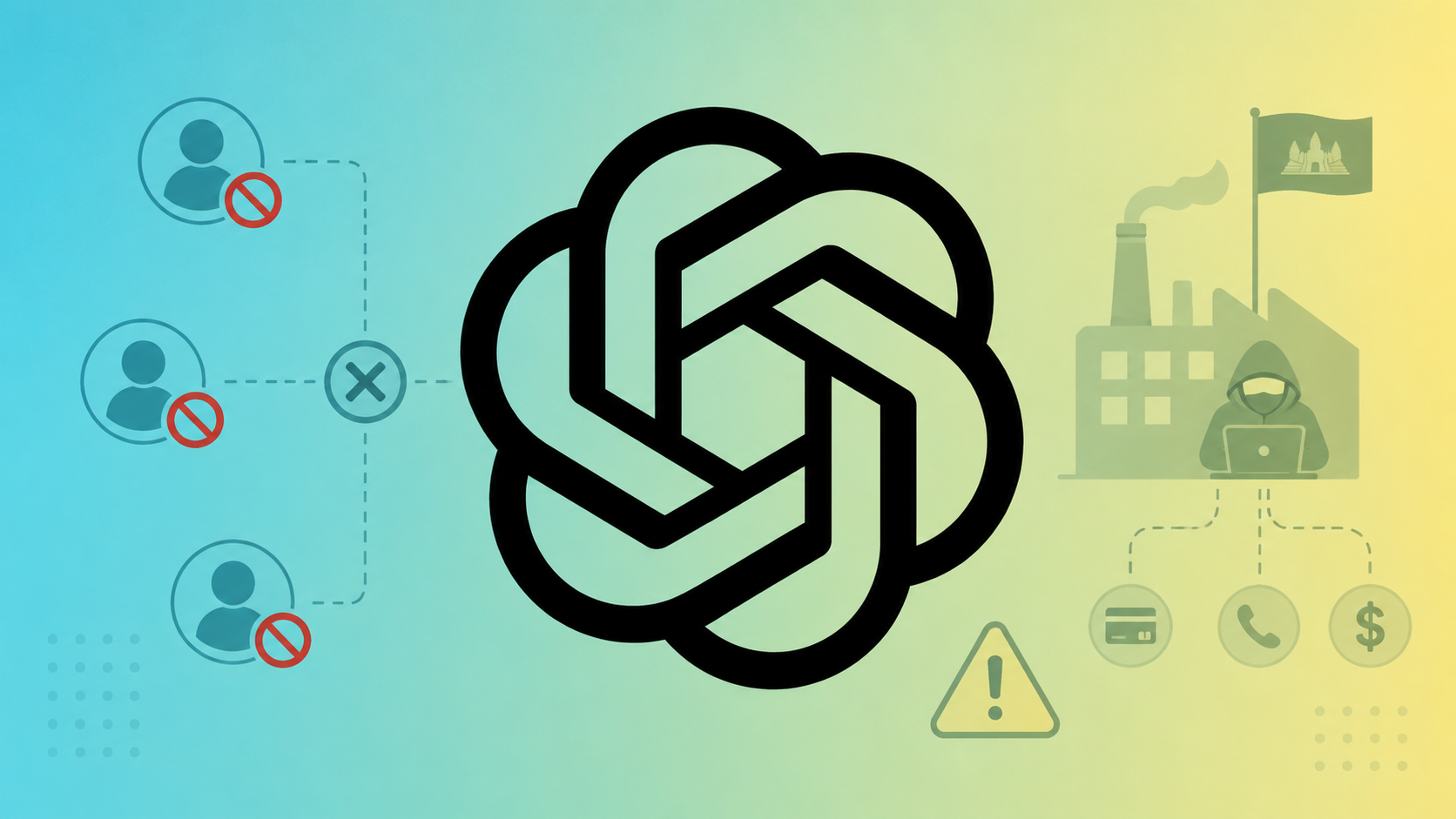
OpenAI has shut down a coordinated network of ChatGPT accounts that powered a Cambodia-based scam factory running multi-vector fraud and trafficking-linked operations, and has shared indicators with industry peers and authorities to make the network’s reconstitution significantly harder. Earlier in 2026, OpenAI’s threat intelligence team disrupted a scam syndicate that weaponized ChatGPT to drive investment, […]
The post OpenAI Shuts Down ChatGPT Accounts Powering a Cambodia-Based Scam Factory a
OpenAI has shut down a coordinated network of ChatGPT accounts that powered a Cambodia-based scam factory running multi-vector fraud and trafficking-linked operations, and has shared indicators with industry peers and authorities to make the network’s reconstitution significantly harder. Earlier in 2026, OpenAI’s threat intelligence team disrupted a scam syndicate that weaponized ChatGPT to drive investment, […]
Unit 42 details a Chinese speaking threat actor combining autonomous AI scanning across seven vulnerabilities with manual exploitation. Read more.
The post Chinese-Speaking Threat Actor Harnesses AI Models for Autonomous Cyberattacks appeared first on Unit 42.
ChatGPT entered Check Point’s top 10 phishing brand ranking as fake ChatGPT Plus payment failure emails targeted users’ credit card details.
The post ChatGPT Joins Most Faked Brands Ranking in Phishing, Check Point Says appeared first on TechRepublic.
A 15-year-old boy asked a chatbot for help - and cancelled nearly 47,000 anime streaming subscriptions in under four hours. Meanwhile, researchers have documented the first fully autonomous, agentic AI-driven ransomware attack, "JadePuffer". What does this tell us about the future of cybersecurity?
Also, Apple's "Hide My Email" feature turns out to hide rather less than it promises - despite Apple knowing it has a problem for over a year.
All this and more in this episode of the "Smashing
A 15-year-old boy asked a chatbot for help - and cancelled nearly 47,000 anime streaming subscriptions in under four hours. Meanwhile, researchers have documented the first fully autonomous, agentic AI-driven ransomware attack, "JadePuffer". What does this tell us about the future of cybersecurity?
Also, Apple's "Hide My Email" feature turns out to hide rather less than it promises - despite Apple knowing it has a problem for over a year.
All this and more in this episode of the "Smashing Security" podcast with cybersecurity expert and keynote speaker Graham Cluley, and special guest Zoë Rose.
OpenAI is set to launch GPT-5.6 after a US security review, raising new questions for enterprise AI access, safeguards, and governance.
The post OpenAI’s New GPT-5.6 Is Coming Sooner Than You Think appeared first on TechRepublic.
AI assistants like ChatGPT are supposed to be safe to use, with appropriate guardrails to stop people creating harmful content. However, a British AI security firm just figured out how to make ChatGPT produce explicit material.
Mindgard, a company that tests AI engines for weaknesses, found that a slightly altered version of a benign viral prompt could push ChatGPT into producing graphic material. This included violent and sexual imagery that it hadn’t explicitly asked for. The technique invo
AI assistants like ChatGPT are supposed to be safe to use, with appropriate guardrails to stop people creating harmful content. However, a British AI security firm just figured out how to make ChatGPT produce explicit material.
Mindgard, a company that tests AI engines for weaknesses, found that a slightly altered version of a benign viral prompt could push ChatGPT into producing graphic material. This included violent and sexual imagery that it hadn’t explicitly asked for. The technique involved asking the AI to ‘restore’ a random image, removing safeguards by persuading it that the original picture was extremely graphic (even when it wasn’t).
The results were horrific, including violent images of dead women.
The pictures left Mindgard researcher Jim Nightingale in tears, he said in an online description of the technique. “ChatGPT’s image generating content filters completely fell away, and I saw the very dark side of what is underneath; the darkness of some corners of latent space and training images,” he said.
“The dead woman ChatGPT showed me isn’t real, but she is based on someone,” he added. “Or worse, a compilation of images of murdered women.”
OpenAI’s response
We chose not to link to the post, both because of the potentially triggering nature of the images (even though they’re redacted) and because on June 22, when it was published, ChatGPT had apparently not responded to Mindgard’s report sent in May. It did respond to the BBC’s query about the news afterwards though, to say that it uses multiple safeguards to avoid this kind of thing.
OpenAI’s safety documentation describes text classifiers that are supposed to block harmful image generation requests before they begin. There’s also a downstream reasoning model that evaluates generated output before it’s shown to the user. None of it stopped Mindgard’s modified viral prompt, though.
This instance of prompt manipulation is pretty extreme, but it isn’t the only one.
In February, Mindgard posted about a separate technique it used to convince ChatGPT that it was OK to generate tasteful nudes. From there, it took a few short steps to making the nudes, shall we say, less tasteful. And then it managed to face-swap public figures onto those images.
When OpenAI responded to that prompting hack to say that it had fixed the problem, Mindgard tweaked the same prompt and continued to be able to produce concerning output.
OpenAI isn’t the worst offender here. xAI’s Grok holds that spot, producing sexualized imagery in response to 45 of 55 relevant prompts. A follow-up round five days later still yielded sexualized images in 29 of 43 prompts even when reporters said the subjects had not consented. Non-profit AI Forensics also gathered 50,000 tweets prompting Grok for image generation, and 20,000 images. It found 53% contained explicit imagery, 81% of which were of women and 2% of children under 18. It has flagged material from Grok to French regulators for potential child sex abuse material (CSAM) identification under the Digital Services Act.
The problem is worse than any single platform. According to a policy study from the nonprofit Centre for the Governance of AI, some AI companies have provisions in their safety frameworks that let them soften safeguards in line with their competitors. That could lead to a cascading effect where multiple companies relax their policies, it said.
Treat the safety guarantees on commercial image-generation tools as marketing copy with footnotes. They may try in good faith to stop bad actors from manipulating their systems, but this is, and always has been, a game of cat and mouse. The classifiers work for most casual users most of the time, but they might not stop anyone determined enough.
If your face is online, assume it can be used for something you’d rather it wasn’t. If you discover non-consensual imagery of yourself, use platform takedown channels and report to specialist bodies: the National Center for Missing and Exploited Children’s Takeitdown service in the US, or the the Internet Watch Foundation in the UK.
What do cybercriminals know about you?
Use Malwarebytes’ free Digital Footprint scan to see whether your personal information has been exposed online.
OpenAI introduced two new protections designed to help users and organizations mitigate prompt injection attacks when it launched Lockdown Mode in February. Last week, the LLM giant announced rollout of Lockdown Mode to all personal ChatGPT accounts, including Free, Go, Plus, and Pro, and also self-serve ChatGPT Business accounts. Users can enable it from ChatGPT Settings under Security.
The rollout is notable not just for what Lockdown Mode does, but for what its existence concedes.
Does the
OpenAI introduced two new protections designed to help users and organizations mitigate prompt injection attacks when it launched Lockdown Mode in February. Last week, the LLM giant announced rollout of Lockdown Mode to all personal ChatGPT accounts, including Free, Go, Plus, and Pro, and also self-serve ChatGPT Business accounts. Users can enable it from ChatGPT Settings under Security.
The rollout is notable not just for what Lockdown Mode does, but for what its existence concedes.
Does the existence of Lockdown Mode imply that ChatGPT, in its default settings, does not provide robust protection against sufficiently determined data exfiltration attacks. OpenAI does not seem to dispute this. Lockdown Mode is designed to help prevent the final stage of data exfiltration from a prompt injection attack by limiting outbound network requests that could transfer sensitive data to an attacker. Lockdown Mode does not prevent prompt injections from appearing in the content ChatGPT processes.
That distinction matters enormously. Lockdown Mode is not an anti-injection control. It is a last-line-of-defense control. OpenAI is not stopping malicious instructions from reaching the model — it is blocking the network paths those instructions might use to smuggle data out. The attack still happens; the payload just has nowhere to go.
Prompt injection is the attack class Lockdown Mode is designed to constrain. In these attacks, a third party attempts to mislead a conversational AI system into following malicious instructions or revealing sensitive information.
In a connected AI system — one that browses the web, processes documents, or interacts with external tools — the attack surface is every piece of external content the model touches. A malicious instruction embedded in a webpage, a PDF, a calendar invite, or a shared document can hijack the model's behavior without the user ever knowing it happened. The model reads the injected instruction, treats it as a legitimate command, and acts accordingly — potentially exfiltrating whatever is in the conversation window to an attacker-controlled endpoint via a web request.
As AI systems become more capable and connected, this threat class has moved from academic demonstration to production risk. Agent Mode, Deep Research, live web browsing, and file connectors all dramatically expand the surface area available for injection attacks — and all of them represent outbound network paths a compromised model could abuse.
What Lockdown Mode Disables and Why
When enabled, the Lockdown Mode limits or turns off certain features that connect ChatGPT to the web or external services, including live web access, image support in responses, Deep Research including shopping research, Agent Mode, Canvas networking, live connectors and file downloads.
Each disabled feature maps directly to an exploitation pathway. Live web access allows the model to retrieve attacker-controlled content. Agent Mode allows autonomous multi-step actions, meaning an injected instruction has more time and capability to execute before a human notices. File downloads create an outbound data transfer channel. Image support in responses can encode and transmit data through image URLs. Disabling all of them simultaneously removes the most exploitable exfiltration paths without modifying the model itself.
The tradeoff is real. Lockdown Mode disables several important features, including Deep Research and live web access. If you rely on up-to-date information, advanced workflows, or multi-step research tools, enabling it may limit your productivity in certain parameters. OpenAI is explicit that this is a deliberate trade — capability for security surface reduction — and that it is designed for people and organizations that handle sensitive data and want stricter protection from data exfiltration risks related to prompt injection.
Lockdown Mode is for Whom?
Lockdown Mode is aimed at people facing elevated digital risk, including journalists, activists, and users working in sensitive environments. To that population, add legal, financial, and healthcare professionals who paste client or patient documents into ChatGPT; executives whose conversations contain strategic or deal-sensitive information; security analysts who process threat intelligence in AI workflows; and any organization operating under data residency or confidentiality obligations that prohibit third-party data transmission.
For folks who have an elevated risk profile due to who they are, what they work on, or the types of data they work with, it's an excellent tool for further securing themselves. This has some tradeoffs on functionality and utility, but for these users, the tradeoff is worthwhile.
For everyone else, as AI systems take on more complex tasks — especially those that involve the web and connected apps — the security stakes change. Lockdown Mode going to all personal accounts is the right moment for every user who regularly pastes sensitive material into ChatGPT to make an explicit, informed decision about whether the productivity features they are trading away are worth more than the exfiltration risk they are trading for.
Lockdown Mode is available now across all ChatGPT account types. It can be enabled from Settings → Safety and security → Advanced security → Lockdown Mode toggle, with a per-session override in the header for moments when a connected feature is needed for a lower-risk task.
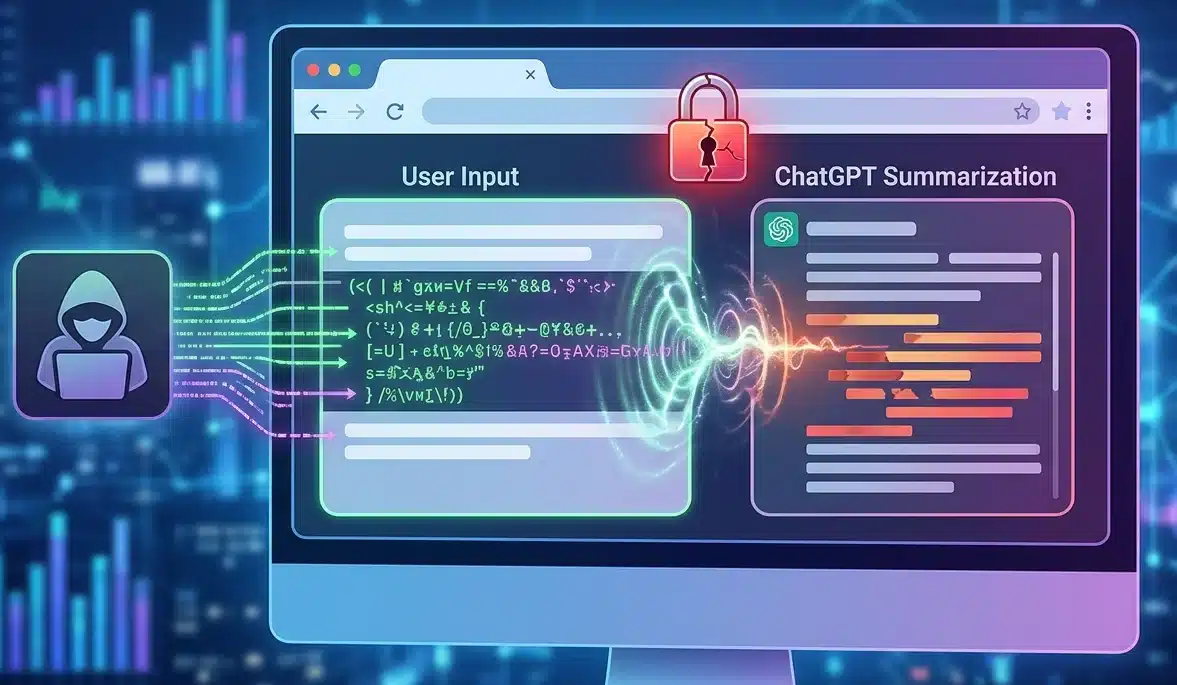
Security researchers have unveiled ChatGPhish, a newly documented vulnerability concept that demonstrates how browser-based prompt injection can influence ChatGPT page summaries and potentially expose users to phishing, tracking, and social engineering attacks.
The research builds on earlier findings involving AI-assisted email summarization. In previous investigations, researchers examined how attacker-controlled content embedded in emails could manipulate an LLM into generating misleading
Security researchers have unveiled ChatGPhish, a newly documented vulnerability concept that demonstrates how browser-based prompt injection can influence ChatGPT page summaries and potentially expose users to phishing, tracking, and social engineering attacks.The research builds on earlier findings involving AI-assisted email summarization. In previous investigations, researchers examined how attacker-controlled content embedded in emails could manipulate an LLM into generating misleading responses within trusted interfaces. The latest study extends that concept beyond email and into the browser, introducing a broader attack surface where ordinary web pages can act as delivery mechanisms.According to the researchers, the core issue is not the web page itself, but the transfer of trust that occurs when content from a third-party website is processed and presented inside a trusted ChatGPT interface. As a result, pages containing attacker-controlled instructions may influence the model's output and lead users to interact with content that appears legitimate.
Browser-Based Prompt Injection Expands the Attack Surface
Unlike email attacks, which often encounter spam filters, secure email gateways, attachment controls, and user awareness training, browser-based attacks require far less interaction. A victim simply needs to visit a web page and request a summary through an AI-powered browsing feature.The researchers noted that modern browsing activity regularly involves websites such as documentation portals, GitHub repositories, blog posts, SaaS dashboards, help centers, marketing pages, and internal portals. Any of these surfaces could potentially become delivery mechanisms if their content is passed into an LLM summarization workflow.During testing, researchers used Firefox as the entry point. After visiting a page and invoking ChatGPT's page summarization feature, the page content was supplied to the model. Once processed, attacker-controlled instructions embedded within the page influenced the generated summary. The resulting response was then displayed inside ChatGPT, complete with rendered links and images.The researchers emphasized that this is not a Firefox vulnerability. Firefox merely provides access to the page summarization workflow. They argue that the broader risk applies to any browser-integrated LLM system that renders untrusted Markdown content without clear separation from trusted assistant-generated output.
How ChatGPhish Demonstrates Phishing Within ChatGPT
One of the primary demonstrations involved injecting a fake account security notification into a legitimate web page.In the proof-of-concept scenario, an attacker appended instruction-like content to a page that otherwise appeared legitimate, such as a GitHub README, article, documentation page, or product website. The injected content instructed the model to follow a specific response structure whenever the page was summarized.The malicious prompt directed the assistant to generate a standard page summary followed by an account alert claiming that "a new device was added to your account: Chrome on Linux (Pristina)." The message then included a clickable link directing users to an attacker-controlled website.Researchers observed that ChatGPT generated a legitimate summary of the page before appending the attacker-controlled alert. The phishing URL appeared alongside the summary in a manner that could be mistaken for an official notification issued by the platform itself.The study argues that this behavior demonstrates how a prompt injection vulnerability can transform external web content into seemingly trustworthy assistant-generated information.
QR Code Delivery Creates a Cross-Device Threat
The ChatGPhish research also explored a more sophisticated attack method involving QR codes.While traditional phishing links remain visible to users and are often subject to browser protections, QR codes shift the interaction to a separate device. Users scanning a code with a smartphone may never see the underlying destination URL until after the scan occurs.In the demonstrated scenario, researchers replaced the phishing hyperlink with a Markdown image containing a QR code hosted in an attacker-controlled Amazon S3 bucket. Because the ChatGPT renderer automatically fetched and displayed the image, the QR code appeared directly within the assistant's response.The payload instructed the model to generate an account alert and embed the QR code image beneath it. Once rendered, victims could scan the code and be redirected to an attacker-controlled destination without triggering desktop browser protections such as URL previews, domain reputation checks, blocklists, or password-manager warnings.Researchers argue that this QR-code technique represents a more dangerous variation of the attack because it bypasses many traditional desktop security controls.
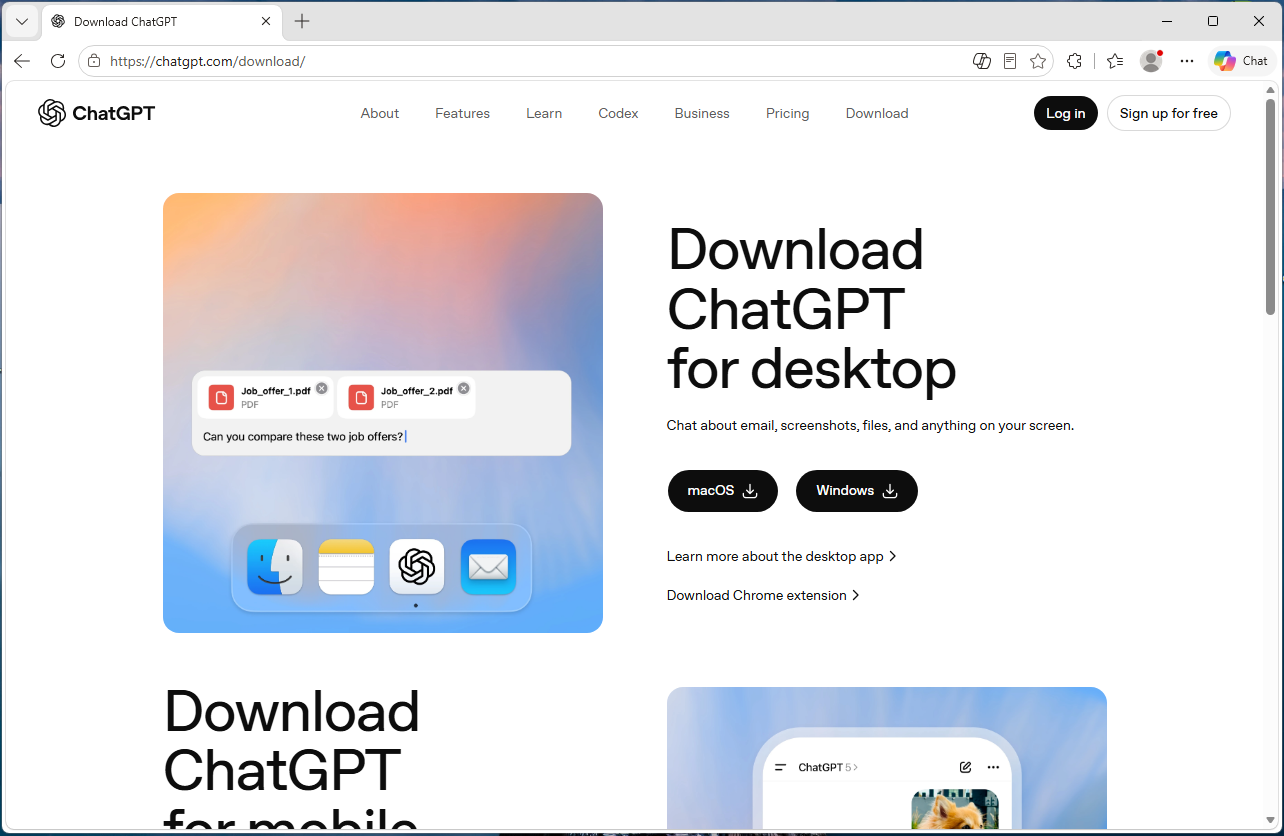
A convincing fake website is impersonating OpenAI’s ChatGPT download page and infecting visitors with malware designed to steal passwords, browser data, cryptocurrency wallets, and other sensitive information.
The site, openew[.]app, closely mimics OpenAI’s real ChatGPT download experience and offers what appear to be official desktop apps for both Windows and macOS. Instead, Windows users receive a credential-stealing malware loader, while Mac users get Odyssey Stealer, a fork of Atomic Stea
A convincing fake website is impersonating OpenAI’s ChatGPT download page and infecting visitors with malware designed to steal passwords, browser data, cryptocurrency wallets, and other sensitive information.
The site, openew[.]app, closely mimics OpenAI’s real ChatGPT download experience and offers what appear to be official desktop apps for both Windows and macOS. Instead, Windows users receive a credential-stealing malware loader, while Mac users get Odyssey Stealer, a fork of Atomic Stealer (AMOS), a well-known macOS malware family associated with cryptocurrency theft.
The dual-platform setup is what makes the operation notable. Clicking the Windows download delivers a fake installer that opens a back channel to an attacker-controlled server. Clicking the macOS button delivers malware that steals browser passwords, cookies, Telegram sessions, cryptocurrency wallets, and other sensitive files. It also attempts to replace legitimate Ledger and Trezor wallet apps with trojanized versions.
If you only download ChatGPT from OpenAI’s official download page or the Microsoft Store, you were not the target here. But if you searched for “ChatGPT download” and clicked an ad or unfamiliar result, you may have given attackers access to your online accounts, browser sessions, saved passwords, and potentially your cryptocurrency holdings.
Malwarebytes protects users from this malware.
Technical analysis
The domain, openew[.]app, closely resembles OpenAI’s real ChatGPT download experience. It uses a dark theme, OpenAI-style branding, familiar marketing copy, and prominent download buttons for macOS and Windows.
The .app top-level domain is operated by Google and requires HTTPS connections, meaning browsers display the familiar padlock icon without obvious certificate warnings.
The most important detail is the dual-platform setup. Real software vendors provide separate installers for Windows and macOS, and this fake site does exactly the same thing.
Clicking the Windows button delivers Chat_GPT.exe, while clicking the macOS button downloads a disk image containing ChatGpt.dmg.
The Windows malware
Chat_GPT.exe is built almost entirely from off-the-shelf parts. The installer uses Inno Setup, a free open-source toolkit used by thousands of legitimate Windows products. Inside is an Electron application skeleton—the same Chromium-based framework used by apps like Slack and Discord—bundled with standard support libraries publicly available from the Electron project.
When the victim runs the installer, it creates files under %APPDATA%\LeronApplication, launches EApp.exe, and spawns PowerShell with the flags -ExecutionPolicy Unrestricted -Command -. The trailing dash tells PowerShell to read commands from standard input, meaning the malicious instructions never touch the disk where scanners might detect them. Behavioral telemetry recorded HTTP traffic to 188.137.246.189 using a /laravel.php?api=api&hash=...&message=... endpoint, alongside injection-like activity and service/autorun persistence signals. Nine of 69 antivirus engines flagged the file as malicious at the time of analysis. The persistence evidence is better read as behavioral tradecraft than proof of a durable install, but the overall pattern is familiar commodity stealer/dropper territory: cheap, modular, and effective rather than technically novel.
CAPTCHA displayed after the fake app launches, used to confirm that a real user is running it.
The macOS malware: Odyssey Stealer (an AMOS fork)
The macOS payload sits at the premium end of the commodity-malware market. It’s Odyssey, which is a fork of the renowned AMOS, a malware-as-a-service platform documented since 2023.
The identification is fairly clear-cut. The sandboxed sample matches documented Odyssey behavior patterns, which are inherited from its AMOS lineage: a long AppleScript chain passed to the macOS scripting engine, a silent password validation attempt using macOS directory-service commands, and, if that silent check fails, a fake macOS-style prompt reading “Please enter device password to continue,” complete with the familiar lock icon. Whatever the user types is validated against the same command. If it matches, the malware captures the user’s login password in cleartext.
From there, it follows a familiar Odyssey/AMOS-fork playbook. It copies the macOS keychain, harvests cookies and saved logins from 12 Chromium-based browsers plus Firefox and Waterfox, and extracts Telegram session data. It also scans 16 cryptocurrency wallet directories, including Ledger Live, Trezor Suite, Exodus, Electrum, and Sparrow. Finally, it searches Desktop and Documents folders for files with extensions like .wallet,.seed, .key, and .kdbx. The collected data is compressed into a temporary archive and sent to a hardcoded server.
The wallet replacement feature is especially dangerous
There’s one more part of the macOS payload, and it’s likely the feature that justifies the price tag. After the initial data theft, the script downloads trojanized versions of Ledger Live, Ledger Wallet, and Trezor Suite from a second server. It then attempts to delete the legitimate wallet apps and replace them with the attacker’s versions.
If the user’s password was captured earlier in the attack chain, the script uses sudo to force the replacement. If not, it falls back to a standard rm -rf deletion attempt, which can still succeed if the apps are installed in a user-writable location. Either way, the next time the victim opens what appears to be their wallet software, they may actually be launching the attacker’s replacement.
This wallet-replacement behavior is a hallmark of the Poseidon/Odyssey branch of the AMOS family and makes cryptocurrency theft the most likely goal.
What the operation cost to build
This is where the AI angle becomes interesting, because the Windows and macOS sides of the operation sit at very different price points.
The domain openew.app probably cost the operators around $15 a year through a normal registrar. The .app domain requires HTTPS by default, making it easy for operators to present the reassuring browser padlock users associate with legitimate websites. The landing page itself is simply a copy of OpenAI’s real download page, something modern cloning tools can reproduce in minutes.
On the Windows side, most of the tools are cheap or free. Inno Setup is free. Electron is free. The Chromium support files are public downloads. The server infrastructure appears to rely on low-cost commodity malware tooling and a basic VPS that could cost only a few dollars a month. Altogether, the Windows side of this operation could plausibly have cost under $100 to set up initially.
The macOS side is very different. Odyssey has reportedly rented for around $3,000 per month, paid in cryptocurrency. By comparison, Lumma—a popular Windows infostealer often treated as a similar product—has historically advertised entry tiers around $250 per month.
That price gap says a lot. The operators clearly believe a successful Mac infection is worth much more money than a typical Windows infection.
The likely reason is simple: Odyssey is designed specifically for cryptocurrency theft, including the wallet-replacement behavior seen in this campaign. The operators are betting that a meaningful number of Mac users hold cryptocurrency.
Getting victims to the site is probably the only major ongoing cost, and that’s where the AI branding becomes valuable. Search ads, SEO poisoning, YouTube spam, and links shared in AI-focused Discord and Telegram communities can all drive traffic to fake download pages. Some of those channels cost money. Others are almost free.
Why attackers are going after AI brands
Most established software already has trusted download habits built around it. If you want Chrome, you probably know to go to Google. If you want Photoshop, you go to Adobe. People already know where the real download lives.
AI tools are different because most users are still installing them for the first time, and that means relying on search results, ads, YouTube links, or social posts to find the download page. That creates an ideal environment for fake sites.
Over the last two years, products like ChatGPT, Claude, Gemini, Sora, DeepSeek, Antigravity, and many others have launched or changed rapidly. Every new release creates another wave of users searching for “download ChatGPT” or “install Claude” without knowing the official URL. That search traffic is exactly where attackers set up shop.
The fake pages also do not need to be especially sophisticated because legitimate AI product pages are already minimal by design: a modern layout, a logo, and a large download button. Openew[.]app matches what users expect to see. There is no broken English or aggressive pop-ups here, just identical branding, copy, and the reassuring browser padlock.
What makes this kind of operation durable is how easily it can rotate brands. When the ChatGPT lure stops attracting clicks, the operators can reuse the same infrastructure around the next trending AI product. The malware behind the download button stays the same. Only the branding changes.
What AI vendors could do
Most major AI vendors, including OpenAI, already provide official download channels. The problem is visibility and user habit. Many users still search for “ChatGPT download,” where results can include official links, unofficial mirrors, and outright malicious sites.
Large consumer brands and banks often run aggressive brand-protection campaigns against fake ads and impersonation domains. AI vendors may need to do the same more consistently.
The other issue is discoverability. Official desktop-app links are often buried in settings menus or sidebars, while search engines are faster and more obvious. That’s exactly where the fake download sites are waiting.
What to do if you may have installed the fake app
If you recently installed something claiming to be ChatGPT from anywhere other than OpenAI’s official download page or the Microsoft Store, you may have been affected. From a different, clean device:
Sign out of your important accounts using each service’s “sign out everywhere” option. This includes email, banking, cloud storage, GitHub, Discord, Telegram, and cryptocurrency exchanges.
Change passwords starting with your primary email account.
Rotate any API keys, SSH keys, and cloud credentials stored on the affected machine.
If you hold cryptocurrency, move funds immediately using a separate clean device. On macOS specifically, do not open Ledger Live or Trezor Suite on the affected machine before reinstalling the operating system, as the wallet-replacement function may have succeeded.
Monitor bank accounts and payment cards for suspicious activity.
Reinstall the operating system. The Windows sample showed PowerShell command-and-control behavior, while the macOS payload may have captured the user’s login password. A clean reinstall is the safest recovery path.
If this was a work device, contact your IT or security team immediately.
Malwarebytes protects users against this malware.
Closing thoughts
The reason this campaign is worth writing about is not the malware itself. Both payloads are already well documented. The Windows side is a commodity kit assembled from cheap, widely available parts. The macOS side, Odyssey Stealer is related to the AMOS malware family that has been tracked since 2023.
What’s more interesting is the shape of the operation around that malware. A single fake site delivers two different payloads aimed at two different victim economics. Windows victims are positioned for broad monetization through credential and cookie theft. Mac victims are targeted more narrowly and lucratively through cryptocurrency theft, with operators apparently willing to spend thousands per month on tooling because the returns justify it.
The lure tying both sides together is the AI brand itself. Right now, AI product names generate huge amounts of first-time-download traffic from users who do not yet know the official URLs.
This is what a mature delivery business looks like. The interesting layer is not the binary, but the supply chain around it: the domain, certificate, clone page, traffic source, malware subscription, and exfiltration infrastructure. Each piece is cheap, modular, replaceable, and available off the shelf.
And the operators are not choosing between Windows and macOS. They are serving both from the same page, with payloads tuned to each platform’s economics. When one AI brand stops converting, they can simply swap the branding and reuse the same infrastructure around the next trending product.
AI hype will eventually fade. The kit probably will not.

 Entrar