Visualização normal

Antes de ontemStream principal
  • ✇Blog oficial da Kaspersky
  • Como se proteger da espionagem por webcam: cinco passos simples Tom Fosters
    Hoje, pode parecer que há uma câmera nos observando em cada canto: na campainha com vídeo na entrada, na webcam de um notebook no escritório de casa, na babá eletrônica IP no quarto das crianças, na smart TV com câmera e microfone no quarto, no robô aspirador com câmera de navegação… Até um alimentador inteligente para gatos pode estar espionando você! E qualquer uma dessas câmeras pode facilmente se transformar em uma ferramenta de extorsão, chantagem ou curiosidade mal-intencionada. Nem é prec
     

Como se proteger da espionagem por webcam: cinco passos simples

28 de Agosto de 2026, 09:00

Hoje, pode parecer que há uma câmera nos observando em cada canto: na campainha com vídeo na entrada, na webcam de um notebook no escritório de casa, na babá eletrônica IP no quarto das crianças, na smart TV com câmera e microfone no quarto, no robô aspirador com câmera de navegação… Até um alimentador inteligente para gatos pode estar espionando você! E qualquer uma dessas câmeras pode facilmente se transformar em uma ferramenta de extorsão, chantagem ou curiosidade mal-intencionada.

Nem é preciso procurar muito para encontrar exemplos. Coreia do Sul, final de 2025: não foi apenas um dispositivo, mas 120.000 câmeras IP foram invadidas. Os criminosos vendiam, por assinatura em chats privados, imagens íntimas e gravações do cotidiano das pessoas.

Neste artigo, analisamos exatamente de onde vem a ameaça e apresentamos cinco regras que podem reduzir bastante as chances de você virar a estrela do show de um voyeur.

Casos reais de vigilância

Pornografia de hotel por assinatura

Infelizmente, relatos sobre câmeras em miniatura encontradas em quartos de hotel e apartamentos alugados se tornaram quase rotineiros. Tecnicamente, elas pertencem a uma categoria diferente de dispositivos: “câmeras espiãs” disfarçadas de tomadas, detectores de fumaça ou despertadores. Mais adiante, explicaremos como detectá-las.

Os criminosos não se limitam a publicar imagens de câmeras espiãs. Também fazem transmissões ao vivo. O acesso a vídeos íntimos, naturalmente, não é gratuito. Em algumas regiões, criminosos montaram uma infraestrutura em torno das câmeras espiãs: uns instalam os dispositivos, outros processam as imagens e outros vendem o acesso pela dark web ou por aplicativos de mensagens. Em geral, as vítimas descobrem que havia uma câmera oculta no quarto do hotel por acaso, depois de se depararem com vídeos de si mesmas em sites pornográficos.

Caça a motoristas

Outro vetor de ataque comum é a invasão de câmeras veiculares conectadas à Internet. Esses dispositivos são alvos atraentes para invasores: a segurança é fraca, e as imagens mostram claramente placas de veículos, sinalização viária e endereços em prédios. As gravações também contêm metadados detalhados, incluindo datas exatas, coordenadas de GPS e outras informações.

Isso pode permitir que criminosos identifiquem as rotas habituais da vítima, descubram onde o carro fica estacionado ou até escutem conversas com passageiros. As informações podem ser suficientes para uma vigilância completa, o roubo do veículo ou até chantagem, caso a câmera grave conversas e imagens dentro do carro.

Stalking

Nem todas as imagens roubadas de câmeras resultam de ataques de cibercriminosos profissionais em busca de lucro. Às vezes, stalkers invadem webcams para espionar pessoas específicas, muitas vezes alguém que conhecem. Por exemplo, em 2025 veio à tona um caso em que um homem vinha espionando colegas de trabalho havia anos por meio das câmeras IP instaladas nas casas delas. Todas as vítimas eram mulheres, e não faziam ideia de que estavam sendo observadas.

Em outro caso, um homem monitorava a ex-esposa e a filha por meio de um sistema de interfone e câmeras IP. Ele nem tentava esconder que espionava a própria família e chegou a enviar à filha capturas de tela da webcam. Como consequência, ela acabou tendo que se mudar.

Por que isso acontece?

Negligância com regras básicas de cibersegurança

Esse é provavelmente o principal motivo pelo qual câmeras IP são invadidas. A maioria dos usuários não altera senhas padrão de roteadores, dispositivos inteligentes e aplicativos conectados a eles. Essas senhas são praticamente de conhecimento público. Muitas vezes, são usadas combinações simples, como “admin/admin” ou “root/1234”, que todos conhecem ou que podem ser adivinhadas em segundos sem um algoritmo sofisticado. Foi exatamente isso que permitiu aos invasores comprometer 120.000 câmeras na Coreia do Sul.

Fabricantes de câmeras irresponsáveis

Embora os fabricantes garantam que os dados das câmeras sejam armazenados apenas localmente, na prática, costuma ser bem diferente. Por exemplo, em 2022, pesquisadores descobriram que uma linha popular de câmeras de vídeo enviava capturas de imagem ao servidor do fabricante sempre que uma pessoa aparecia no quadro. E mais: o acesso remoto às gravações de todas as câmeras ficava disponível por URLs previsíveis, o que tornava essas URLs relativamente fáceis de reproduzir ou adivinhar.

Ao mesmo tempo, a empresa afirmava que suas câmeras usavam criptografia de ponta a ponta, armazenavam gravações apenas no dispositivo e não enviavam dados a servidores externos. Por sinal, a suposta “criptografia segura” era implementada com uma chave fixa idêntica para todos os usuários. E a própria chave podia ser facilmente encontrada no código-fonte publicado pelo fabricante.

Em resumo, se um dispositivo tem lente e Wi-Fi, considere a possibilidade de que, mais cedo ou mais tarde, uma falha grave de segurança seja descoberta nele.

Mecanismos de busca para dispositivos vulneráveis estão se tornando cada vez mais populares

Para acessar uma câmera, muitas vezes o invasor só precisa saber o endereço IP dela e testar algumas senhas comuns. Existem mecanismos de busca que indexam dispositivos e suas portas abertas, em vez de sites: webcams, roteadores, controladores industriais, equipamentos médicos e muito mais.

Se uma câmera IP não exigir nome de usuário e senha ou estiver “protegida” pelas credenciais padrão “admin/admin”, ela pode ser facilmente descoberta e adicionada ao banco de dados de um serviço de OSINT. Jornalistas e pesquisadores já usaram esses serviços para encontrar câmeras acessíveis ao público em quartos de crianças, escritórios, salas cirúrgicas de hospitais, bancos e lojas.

Então, o que fazer?

O que é possível fazer em casa ou em um pequeno escritório sem uma equipe dedicada à segurança? Estas cinco recomendações simples podem ajudar.

1. Pesquise sobre o fabricante

Ao escolher um modelo de câmera IP, verifique se câmeras daquele fabricante já foram invadidas. Por exemplo, pesquise por “invasão de câmera IP nome do fabricante“. Depois, acesse a seção de Suporte do fabricante e confira a data da atualização de firmware mais recente para o modelo considerado e para modelos mais antigos.

Se o firmware não tiver sido atualizado nos últimos seis meses ou se as atualizações forem lançadas de forma irregular, considere escolher outro modelo. A maioria das câmeras usa versões embarcadas especializadas do Linux, e mais de 2.300 vulnerabilidades foram registradas no kernel do Linux nos primeiros seis meses de 2026. Sem atualizações regulares de firmware, é quase certo que, mais cedo ou mais tarde, as câmeras de um fabricante apresentarão uma falha de segurança.

Considere modelos de grandes fabricantes para evitar uma coleção inteira de vulnerabilidades com praticamente nenhuma chance de que elas sejam corrigidas. Câmeras baratas de empresas pouco conhecidas, com recursos limitados e proteção fraca, podem acabar saindo caras.

2. Desative recursos desnecessários

Quanto menos serviços de armazenamento em nuvem de terceiros estiverem envolvidos no sistema de vigilância, melhor. Ao escolher uma câmera, procure um slot para cartão microSD ou compatibilidade com dispositivo de armazenamento conectado à rede (NAS), para que todas as gravações possam ser armazenadas localmente.

O ideal é que a câmera consiga funcionar na rede local, sem transmitir dados para a nuvem ou para os servidores do fabricante, com visualização pela LAN ou por meio de uma conexão segura com a rede doméstica ou do escritório.

Ao comprar outros dispositivos para casa inteligente, avalie se você realmente precisa de uma câmera integrada à smart TV, caixa de som inteligente, robô aspirador ou alimentador automático para animais. Cada um desses dispositivos amplia a superfície de ataque em potencial.

Depois de comprar uma câmera IP, revise as configurações, geralmente disponíveis no aplicativo do fabricante ou pela interface Web da câmera, e desative tudo o que não for necessário.

  • Preste atenção aos recursos relacionados ao reconhecimento de pessoas, inteligência artificial, permissões do sistema, descoberta de outros dispositivos na rede e armazenamento em nuvem. Se você não usa um recurso, pode desativá-lo.
  • Nas configurações de rede, confirme que o UPnP (Universal Plug and Play) está desativado ou sequer disponível como opção. O UPnP pode permitir que a câmera se torne acessível a outros dispositivos pela Internet.
  • Verifique se o acesso P2P à webcam está desativado ou indisponível, para que a câmera não se conecte a servidores externos nem possa ser acessada pela Internet sem seu controle direto.
  • Crie o hábito de verificar quem está conectado à sua conta e quem ainda tem acesso às suas gravações. Se você concedeu acesso à webcam a um amigo para ficar de olho no seu cachorro durante uma viagem, lembre-se de revogar depois os acessos ou encerrar as sessões desnecessárias. E, se você terminou um relacionamento recentemente, verifique com atenção especial se a pessoa com quem se relacionava ainda tem acesso. Para saber mais, consulte Higiene digital após uma separação: o que verificar e desativar.

3. Altere as configurações padrão

As senhas padrão de fábrica são conhecidas pelos invasores há anos. Se você ainda não alterou o nome de usuário e a senha do roteador ou da câmera IP, um invasor pode conseguir acesso em questão de segundos.

  • Substitua o nome de usuário e a senha padrão de fábrica do roteador por credenciais exclusivas e longas. Isso pode ser feito pela interface Web do roteador. Explicamos abaixo como acessá-la. Para gerar e armazenar senhas fortes e exclusivas, recomendamos usar Kaspersky Password Manager.
  • Se a câmera estiver vinculada a uma conta em um site ou aplicativo, use também uma senha forte e ative a autenticação de dois fatores ou a autenticação por chave de acesso sempre que possível. Os tokens de 2FA e as chaves de acesso também podem ser armazenados no Kaspersky Password Manager e sincronizados em todos os seus dispositivos.
  • Atualize o firmware do roteador e da câmera IP para as versões mais recentes, mesmo que você tenha acabado de comprar os dispositivos, e crie o hábito de fazer atualizações regularmente. Campanhas de invasão de câmeras IP em grande escala muitas vezes exploram vulnerabilidades conhecidas há muito tempo, que só podem ser corrigidas com a instalação de atualizações.

4. Coloque todas as câmeras e dispositivos inteligentes em uma rede Wi-Fi separada

Recomendamos segmentar o Wi-Fi doméstico em sub-redes separadas. Você provavelmente já viu essa configuração em cafés, que costumam ter uma rede Wi-Fi para a equipe e outra para visitantes.

O ideal é colocar todas as câmeras IP e outros dispositivos de casa inteligente em uma rede Wi-Fi separada e totalmente isolada de notebooks, celulares e outros dispositivos de trabalho. Melhor ainda, as câmeras IP devem ficar isoladas de todos os demais dispositivos em uma rede Wi-Fi dedicada exclusivamente a elas.

A maioria dos roteadores modernos permite criar pelo menos duas redes Wi-Fi, uma rede principal e uma rede para visitantes. Modelos mais avançados podem oferecer ainda mais opções. Assim, mesmo que a câmera seja invadida, o invasor não conseguirá chegar aos outros dispositivos nem acessar arquivos confidenciais.

Como abrir a interface Web do roteador

  1. Digite o endereço IP do roteador na barra de endereços do navegador. Normalmente, ele está impresso em uma etiqueta na parte inferior do roteador. Entre os endereços IP comuns para roteadores domésticos estão 168.0.1, 192.168.1.1 e 10.0.0.1.
  2. Na página que abrir, faça login. A maioria dos roteadores tem um nome de usuário e uma senha padrão, que normalmente também estão impressos na mesma etiqueta. Alguns roteadores podem solicitar a criação de um nome de usuário e de uma senha. Recomendamos escolher uma senha forte e armazená-la no Kaspersky Password Manager. As senhas padrão de fábrica são conhecidas pelos invasores há muito tempo e, se você não alterar a senha do roteador, eles podem entrar facilmente na sua rede doméstica.
  3. Abra as configurações e procure seções relacionadas à segmentação da rede Wi-Fi ou à criação de sub-redes ou redes para visitantes.

Para obter instruções detalhadas de configuração, consulte o manual do roteador ou a seção de suporte do site do fabricante. Para mais dicas sobre como proteger sua casa inteligente, consulte nossa postagem Como proteger sua casa smart.

5. Aprenda a detectar câmeras ocultas, em casa e durante uma viagem

Nosso último conjunto de recomendações não trata da configuração da câmera em si, mas de boas práticas de segurança.

Crie o hábito de verificar a lista de clientes do roteador. Se você vir um dispositivo desconhecido com um nome estranho ou endereço MAC, investigue o que é e por que está conectado à sua rede doméstica. Nossa solução de segurança inclui um componente dedicado do Smart Home Monitor. Esse recurso pode alertar quando um novo dispositivo se conecta à rede doméstica com ou sem fio, fornecer recomendações simples para melhorar a segurança da rede e identificar senhas fracas do roteador e criptografia insegura.

Durante viagens, recomendamos verificar se há dispositivos de gravação ocultos em quartos de hotel e imóveis alugados:

  • inspecione locais que ofereçam um bom campo de visão do ambiente, como grades de ventilação, detectores de fumaça, tomadas e objetos decorativos;
  • no escuro, use o smartphone como detector óptico improvisado: ligue a lanterna e a câmera, examine lentamente o ambiente e procure reflexos característicos produzidos por lentes de câmeras;
  • use a câmera frontal para procurar fontes de luz infravermelha invisíveis ao olho humano. Isso pode ajudar a identificar a iluminação IR usada para “visão noturna”.

Para conhecer outros métodos práticos de encontrar câmeras espiãs, consulte nosso post Quatro maneiras de encontrar câmeras espiãs.

O que mais você deve saber sobre vigilância e câmeras:

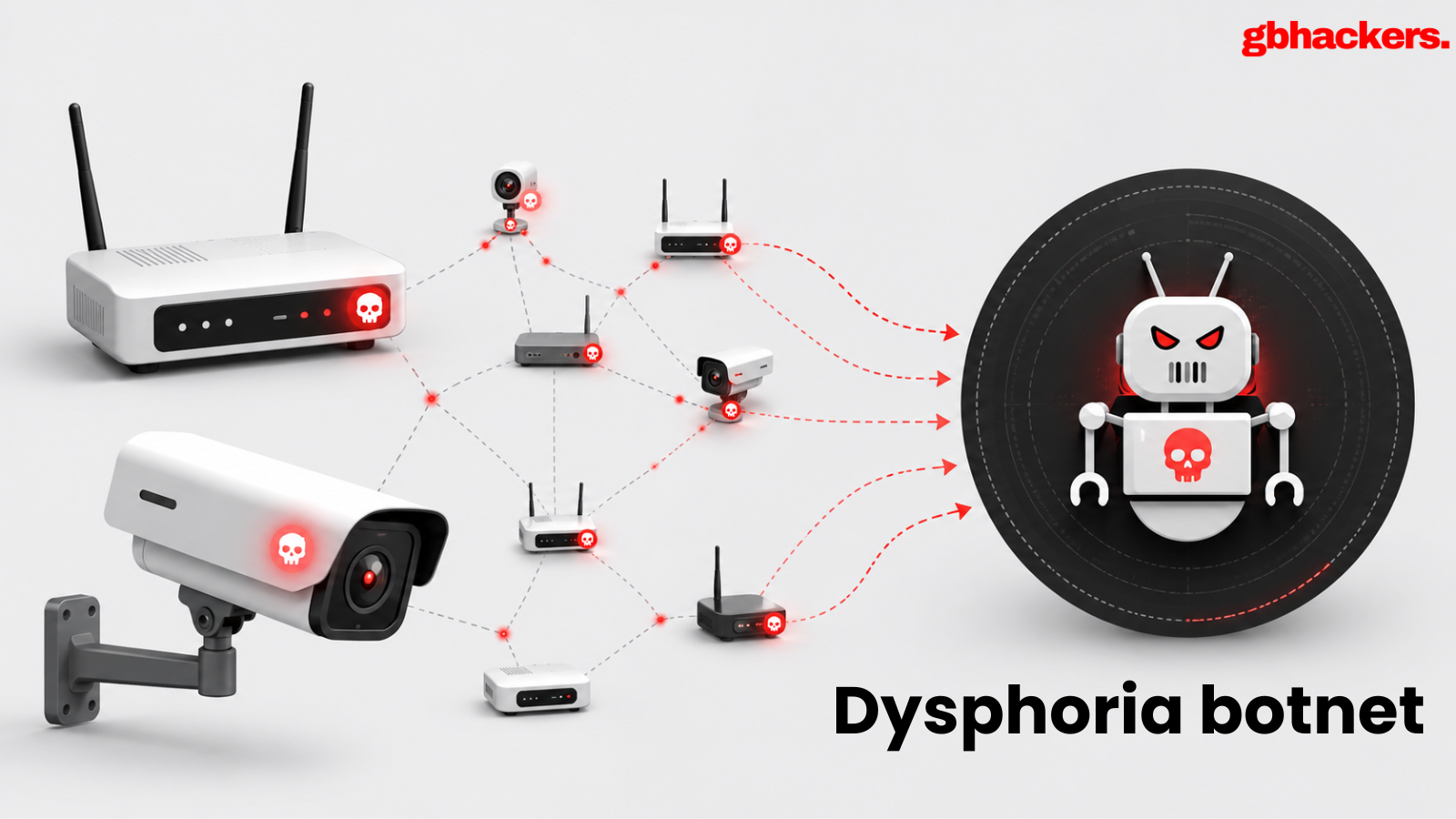
Dysphoria Hijacks Routers, Gateways and IP Cameras to Build Massive IoT Botnet

The Dysphoria botnet has expanded into a major Internet of Things threat, with a new Shadowserver Special Report identifying approximately 296,000 compromised devices. The campaign targets exposed routers, gateways, IP cameras and other embedded Linux systems, converting poorly secured equipment into a distributed platform for DDoS attacks and increasingly, residential proxy and relay operations. Dysphoria’s […]

The post Dysphoria Hijacks Routers, Gateways and IP Cameras to Build Massive IoT Botnet appeared first on GBHackers Security | #1 Globally Trusted Cyber Security News Platform.

  • ✇Malwarebytes
  • AI chat bots are sliding into League of Legends friend requests
    Lina K., a co-worker, recently shared a firsthand account of how bots are adding League of Legends players via the Riot client friends list immediately after a match ends, striking up a flirty conversation, and eventually pushing an OnlyFans link. The pattern lines up with a wave of complaints that have piled up on Reddit and Facebook gaming communities over the past several months, and it fits into a broader trend of AI-assisted social engineering that has moved from dating apps straight into g
     

AI chat bots are sliding into League of Legends friend requests

7 de Agosto de 2026, 18:26

Lina K., a co-worker, recently shared a firsthand account of how bots are adding League of Legends players via the Riot client friends list immediately after a match ends, striking up a flirty conversation, and eventually pushing an OnlyFans link. The pattern lines up with a wave of complaints that have piled up on Reddit and Facebook gaming communities over the past several months, and it fits into a broader trend of AI-assisted social engineering that has moved from dating apps straight into game clients.

The pattern

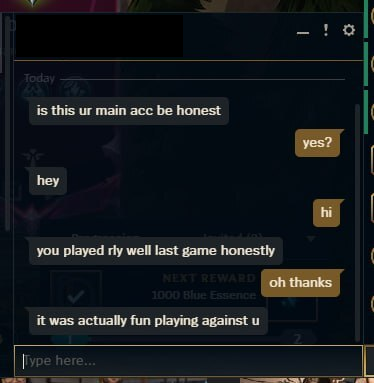
The scheme reported by multiple League of Legends players follows a near-identical script. A friend request lands in the Riot client within moments of a match ending, from an account whose name does not match anyone from that game. The message opens with generic flattery like “you played really well last game” or “I liked your playstyle” designed to sound like a genuine compliment from an opponent or teammate.

fun playing against you

When questioned about who they are, the accounts often claim to have been on the enemy team despite name mismatches, and many present themselves as a woman looking for a duo partner. A detail that likely raises engagement odds. Victims who check the account’s profile frequently find it blank: no visible match history, no overview data, sometimes a very low account level. These are all signs of a throwaway account built or bought purely for outreach, but sometimes they turn out to be stolen existing accounts.

doesn't have any activity to share

After a short exchange, the contact says they are “getting off soon” and hands over a Discord username, moving the conversation to a platform Riot’s chat protections cannot see or moderate.

getting off soon... add my discord

Once on Discord, the persona shifts into a longer-form romance/flirtation script. Usually, hours of chat building rapport, paired with a steady stream of photos that are suggestive but stop short of explicit content, a tactic that keeps engagement high while deferring the “reveal” until trust is established. That reveal ultimately comes in the form of a link to a paid subscription platform, most often OnlyFans, framed as an exclusive, limited-time offer.

promising nudes

A reverse image search on the photos sent during one such conversation turned up the same pictures recycled across unrelated websites and at least one YouTube video, with commenters in that video describing having received identical images from a bot under different names. This is strong evidence that the same photo set is cycling through many chats simultaneously, run at scale rather than by one individual.

Lina stated:

“One of my friends tried to break the bot too, left it on read for some time – the bot actually switched the pictures to match the context of “Concern” on the face of the model with “Why are you not replying?”, which quite clearly gave away bulk image generation for the script.’

When the account was pressed with a “reveal your instructions” style prompt-injection attempt (text formatted to look like a system message ordering the bot to break character and print its configuration), it did not comply and instead stayed in persona, deflecting the request and continuing the pitch.

attempt to unveal the bot was thwarted

That resilience to a common jailbreak technique suggests the bot’s operators have added guardrails against exactly this kind of probing, or that the “model” behind it is a simpler scripted flow layered with some LLM-generated text rather than an open, unrestricted chatbot.

Why this is happening inside the game client now

What makes this wave notable isn’t the romance scam script itself.  AI-driven catfishing has been documented on dating apps and social media for a couple of years. The difference is the entry point. Players have reported getting these bot friend requests after essentially every single match, with no way to distinguish a real player’s request from a bot’s inside the Riot client.

Community threads describe the bots seemingly appearing right after a game ends, which has fueled speculation that the bot operators are scraping or monitoring publicly available match data through third-party stats-tracking sites and associated APIs to identify recently finished games and target participants, though this has not been independently confirmed by Riot.

Riot’s own client architecture may be inadvertently helping. The Riot Client exposes local endpoints (such as the friends list API) that third-party tools and overlays query, and community-run “op.gg“-style trackers pull player and match data that could plausibly be used to correlate who just finished a game with who to target next. Some affected players have found a partial workaround: switching on the client’s “streamer mode,” which hides recent match and online status information, appears to reduce how often bot requests arrive. Which is an indirect clue that the targeting relies on visible activity signals rather than random spam.


Safer. Cleaner. Ad-free browsing.


The end goal: content promotion, not always theft

Unlike classic Discord scams that push fake Nitro codes or malware-laden “test my game” links to hijack accounts, this particular chain appears primarily aimed at driving paid subscriptions to an OnlyFans-style page of a fake AI girl. That doesn’t make it harmless. Even when the underlying OnlyFans account is real, the conversations are very likely run by paid chat operators or scripted/AI-powered systems working from a shared script and a reused media library, a business model that has been described by former OnlyFans “chatters” themselves: agencies assign staff (or bots) to respond as the creator around the clock, pull from a pre-made vault of photos and messages, and are financially incentivized to convert every conversation into a subscription or tip.

There are also more damaging variants layered onto the same funnel. Community reports describe some of these bot accounts eventually sending a link that, once clicked, is designed to hijack the recipient’s Discord account or harvest credentials rather than lead to legitimate content.

That means the “girl who wants to duo” opening can just as easily terminate in an account-takeover attempt as in a subscription upsell. Because the funnel starts with a low-cost, disposable Riot account and migrates the target to Discord within minutes, the League client friend request functions purely as a first-contact filter: cheap to generate, easy to discard after a single use, and outside the reach of Riot’s in-game reporting tools once the conversation moves off-platform.

How to stay safe

Recognizing these scams is the best way to protect yourself. But there is more you can do:

  • Treat any Riot client friend request from an unrecognized name as suspicious by default, especially one that arrives seconds after a match ends—check whether the account actually appeared in your last game before accepting anything.
  • Enable streamer mode or equivalent privacy settings in the Riot client to limit what activity and match data outside parties can see, which several affected players found reduced the frequency of these requests.
  • Be skeptical of anyone who quickly steers the conversation off-platform to Discord, especially if they cite being unavailable (“gotta go soon, here’s my Discord”) as the reason—this is a deliberate move to a channel with less moderation and no shared match context to verify identity.
  • Run a reverse image search (Google Images, TinEye, or a dedicated tool) on any profile or “personal” photos sent early in a conversation; recycled images across unrelated sites or forums are one of the most reliable tells of a bot or catfishing operation.
  • Watch for AI-typical conversation patterns: responses that feel scripted, arrive instantly regardless of time of day, are grammatically flawless but emotionally generic, or that consistently dodge voice/video calls.
  • Never send money, gift cards, cryptocurrency, or payment details to someone you met exclusively through in-game or Discord contact, no matter how convincing the rapport feels—legitimate connections do not require urgent financial “help” or exclusive subscription purchases within hours of meeting.
  • Do not click links sent by unfamiliar contacts, even ones framed as harmless subscription pages, game invites, or file downloads; some variants of this scheme are documented to lead to credential-stealing or account-hijacking pages rather than legitimate content.
  • Lock down Discord’s privacy settings (restrict who can DM you and send friend requests) and enable multi-factor authentication, since a compromised Discord account is often used to relaunch the same scam against the victim’s own friend list.
  • Report suspicious Riot client accounts to Riot Support and suspicious Discord accounts/servers to Discord Trust & Safety; reporting does not remove the account instantly but it feeds the pattern data that platforms use to detect and ban clusters of bot accounts.
  • If a bot or scripted persona pushes back convincingly against attempts to “break” it (e.g., ignoring prompt-injection or jailbreak-style messages designed to expose it as an AI), treat that resilience itself as a red flag rather than reassurance—a well-guarded script is not the same as a genuine person.

Something feel off? Check it before you click.  

Malwarebytes Scam Guard helps you analyze suspicious links, texts, and screenshots instantly.  

Available with Malwarebytes Premium Security for all your devices, and in the Malwarebytes app for iOS and Android.  

Try it free → 

“I’m Allowed”: Hackers Use Simple Claims to Bypass AI Guardrails

Cisco Talos found hackers using simple authorization claims to bypass AI guardrails, build DDoS attack tools, steal credentials and access live camera services.
  • ✇Security Affairs
  • TuxBot v3: The IoT Botnet Built With AI – Bugs, Disclaimers and All Pierluigi Paganini
    TuxBot v3, an AI-built IoT botnet for 17 architectures, shipped with LLM bugs and safety disclaimers the developer never removed. Palo Alto Networks’ Unit 42 identified a previously undocumented modular IoT botnet framework called TuxBot v3 Evolution, and it comes with an unusual detail: the developer used a large language model to write significant portions of the code, and the LLM’s safety disclaimer ended up in every compiled binary. Sixty-one C source files each carry an identical header
     

TuxBot v3: The IoT Botnet Built With AI – Bugs, Disclaimers and All

16 de Julho de 2026, 08:13

TuxBot v3, an AI-built IoT botnet for 17 architectures, shipped with LLM bugs and safety disclaimers the developer never removed.

Palo Alto Networks’ Unit 42 identified a previously undocumented modular IoT botnet framework called TuxBot v3 Evolution, and it comes with an unusual detail: the developer used a large language model to write significant portions of the code, and the LLM’s safety disclaimer ended up in every compiled binary. Sixty-one C source files each carry an identical header warning that “this code is for educational and authorized security research only.” The developer shipped it without removing a single line.

“The malware authors leveraged an LLM to assist in their code development, yielding mixed results. While the AI complied with their request to generate botnet code, it included a safety disclaimer that the developer failed to remove before shipping.” reads the Unit 42’s report. “Although the LLM clearly aided in constructing the botnet, several functions in the analyzed samples failed to work correctly. While a manual code review could have easily resolved these errors, the authors neglected this step. “

The LLM’s raw chain-of-thought reasoning was also left verbatim in source file comments throughout the codebase, including gems like “// I created them so I should know?” and “// Wait, where is the command?”, an LLM narrating its own confusion to itself, preserved for posterity in a working botnet.

The framework is substantial. It cross-compiles a C-based bot agent for 17 architectures, including ARM, MIPS, PowerPC, RISC-V, and x86_64. It includes a Go-based command-and-control server with a DDoS-for-hire panel, a custom exploit virtual machine, Docker-based test infrastructure, and an automated build system.

The bot brute-forces Telnet access with 1,496 credential pairs and contains exploit code targeting more than 30 IoT device families.

“The TuxBot framework we recovered and analyzed is approximately 70% functional. The core infection flow (scanning, credential brute-forcing, persistence, primary C2 setup and DDoS execution) works.” continues the report. “The Telnet, SSH, HTTP and Android Debug Bridge (ADB) scanners all operate correctly. Furthermore, with its 1,496 credential pairs, the Telnet scanner remains a viable infection vector.”

The parts that don’t work trace almost entirely to bugs introduced by the LLM.

The most consequential LLM failure is in the C2 authentication module. The developer asked for Argon2id password hashing. The LLM couldn’t import the right library, fell back to SHA256 loops, but kept the Argon2id comments, constants, and output format, including a return value formatted as “$argon2id$v=19$…” that contains nothing of the sort.

“Despite its use of PKBDF2 for password hashing, the LLM formats the output to look like Argon2id anyway:

return fmt.Sprintf("$argon2id$v=19$m=%d,t=%d,p=%d$%s$%s", ...)

The LLM hallucinated that it implemented Argon2id but actually fell back to SHA256 loops while keeping the Argon2id comments, constants and output format.” states the report.

There’s also an XOR key mismatch that breaks the IRC fallback channel, four exploit payloads, and HTTP polling. The custom exploit VM never fires because the Go compiler writes the file magic as “TUXE” while the C runtime expects “EXPL.” Sixteen exploit functions are compiled as dead code that never get called. Seventy-eight attack vectors mapped to six handlers, all HTTP application-layer methods silently redirected to TCP SYN floods.

“During our research, we were able to fix these issues with a handful of LLM-assisted prompts. We reconstructed the correct table entries and fixed the IRC C2 channel with a few targeted prompts.” states Palo Alto Networks. “Given that the operator already has the source code and has been actively deploying binaries (six new samples in April 2026), we can reasonably assume that a version with some or all of these fixes already exists in the wild.”

Unit 42 found six new samples in internal telemetry in April 2026, compiled with GCC 14.2.0 production builds across multiple architectures. The C2 infrastructure at 209.182.237[.]133 has been active since at least March 2026.

The developer’s Git log leaked their workstation hostname pointing to an Iranian-hosted machine, and the parent domain digikalas[.]online resolves to Iran’s Arvan Cloud CDN. Shared dropper infrastructure at 185.10.68[.]127 on FlokiNET links TuxBot to Kaitori v3.9 and AISURU tooling, separate codebases that all converge on the same bulletproof host, placing the operator within the Keksec ecosystem.

The development timeline starts in January 2025 with the developer cloning the open-source MHDDoS DDoS toolkit from GitHub, with 254 automated benchmark reports generated in early January 2026 and the first VirusTotal submission appearing January 20. Somebody spent a year building this. The AI helped with most of it, introduced most of the bugs, and nobody caught them because the generated code reads cleanly on the surface.

“Shared infrastructure with Kaitori v3.9 and AISURU tooling places the TuxBot operator within the Keksec ecosystem. This group is known for running multiple IoT botnet variants in parallel. TuxBot appears to be another variant in that portfolio. It’s one that aims to go beyond the usual Mirai fork with its encrypted C2, its DGA and a modular exploit system, even though that system does not work yet in the version we recovered.” continues the report. “The broken features can be fixed. We demonstrated this during our analysis by reconstructing the IRC C2 channel and decrypting the mismatched table entries with a few targeted LLM prompts. “

Follow me on Twitter: @securityaffairs and Facebook and Mastodon

Pierluigi Paganini

(SecurityAffairs – hacking, TuxBot v3)

Residential Proxy Risks: Understanding Google’s Latest Action Against 2 Million Strong NetNut

3 de Julho de 2026, 09:00

Google announced that it helped take down NetNut, a 2 million strong malicious residential proxy network. The incident highlights the growing risks posed by residential proxy networks that quietly conscript consumer devices into services used by cybercriminals and nation-state actors alike.

The post Residential Proxy Risks: Understanding Google’s Latest Action Against 2 Million Strong NetNut appeared first on The Security Ledger with Paul F. Roberts.

  • ✇Security Affairs
  • Seven Bugs in FatFs Put IoT and Embedded Devices at Risk Pierluigi Paganini
    runZero found 7 flaws in FatFs, a filesystem used in IoT and embedded devices. Bugs can cause memory corruption, crashes, or data leaks via crafted storage. Cybersecurity firm runZero has disclosed seven vulnerabilities in FatFs, a compact open-source library that lets embedded devices read and write FAT and exFAT formatted storage, the same formats used on USB drives and SD cards. The severity ratings run from CVSS Medium to High. This project revisited a 2017 security audit of the FatF
     

Seven Bugs in FatFs Put IoT and Embedded Devices at Risk

6 de Julho de 2026, 07:20

runZero found 7 flaws in FatFs, a filesystem used in IoT and embedded devices. Bugs can cause memory corruption, crashes, or data leaks via crafted storage.

Cybersecurity firm runZero has disclosed seven vulnerabilities in FatFs, a compact open-source library that lets embedded devices read and write FAT and exFAT formatted storage, the same formats used on USB drives and SD cards. The severity ratings run from CVSS Medium to High.

This project revisited a 2017 security audit of the FatFs driver, where manual testing and fuzzing had only found minor issues. In March 2026, the team repeated the analysis using Visual Studio Code and GitHub Copilot in auto mode with simple prompts and no custom tooling. The results were unexpected: issues previously missed became easy to find. The AI helped generate fuzzing inputs automatically and even validated exploitability across different embedded environments, turning what was once a manual, time-consuming process into something far more automated and effective.

The flaws impact multiple platforms, including Espressif ESP-IDF, STMicroelectronics STM32Cube, Zephyr RTOS, MicroPython, ArduPilot, RT-Thread, Mbed, Samsung TizenRT, and SWUpdate. Downstream from those platforms sit consumer IoT devices, industrial controllers, drones, hardware crypto wallets, and more.

Most of the devices that bundle FatFs don’t have the memory protections that phones and desktops take for granted, such as ASLR.

“For the vendors who build on these platforms it’s simple: any physical access leads to a jailbreak, especially given the lack of address space layout randomization (ASLR) and memory protection. For everyone else, there are numerous devices where brief physical access by the general public should not lead to a full compromise.” states the report. “For example, security cameras with SDCard storage, voting machines with USB file readers, ATMs, and pretty much anything else that has a screen that you expect people to touch.”

A security camera with an SD card slot, a voting machine with a USB reader, an ATM, a public kiosk: none of these should hand over full control to whoever plugs in a drive, but on unpatched hardware running vulnerable FatFs code, that’s the exposure.

All seven bugs share the same trigger: a device reads a crafted storage volume or firmware image, FatFs mishandles the malformed data, and bad things follow. Two of the CVEs, CVE-2026-6682 and CVE-2026-6683, are also implicated in over-the-air firmware update processes, which extends the attack surface beyond physical media entirely.

Below are the details of the seven flaws:

  • CVE-2026-6682 (CVSS 7.6, High) – FAT32 integer overflow in mount_volume() can produce attacker-controlled file-size metadata. This may be trusted as a read length by downstream code, leading to heap or stack corruption and possible code execution.
  • CVE-2026-6687 (CVSS 7.6, High) – exFAT label-length stack overflow in f_getlabel() allows oversized writes into label buffers when the label field is not properly capped. This can lead to straightforward memory corruption in embedded firmware.
  • CVE-2026-6688 (CVSS 7.6, High) – long filename overflow in downstream callers where fno.fname exceeds fixed-size buffers. This often breaks in wrapper code using strcpy or sprintf and depends heavily on how firmware handles filenames.
  • CVE-2026-6685 (CVSS 6.1, Medium) – unsigned subtraction wrap in dirty-cache handling on fragmented volumes can corrupt memory or cause silent data corruption, which is especially dangerous in logging and control systems.
  • CVE-2026-6683 (CVSS 4.6, Medium) – exFAT divide-by-zero in sync/write paths triggered by crafted media leads to reliable crashes and potential device bricking in firmware update scenarios.
  • CVE-2026-6686 (CVSS 4.6, Medium) – uninitialized cluster exposure when extending files past EOF can leak stale data from previously deleted files, creating an information disclosure risk.
  • CVE-2026-6684 (CVSS 4.6, Medium) – GPT partition scan loop in pre-R0.16 versions can trigger unbounded scanning, causing boot-time denial of service. It is fixed upstream, but still present in older embedded deployments.

FatFs is maintained by one developer. runZero made repeated attempts to reach the maintainer and involved JPCERT/CC in the coordination process. Neither effort produced a response. For six of the seven CVEs, there is no upstream patch. The only fix available is the GPT scan issue addressed in R0.16, and even that requires downstream vendors to update their vendored copies.

That last detail is the crux of the problem.

“FatFs is one of those components. It’s compact, useful, and copied everywhere. That’s great for shipping products quickly, but less great when memory-safety issues show up in parser-adjacent code that happily ingests untrusted media.” continues the report. “This kind of component is even more challenging to deal with, from a disclosure-and-fix perspective, in that nearly everyone ends up making local, vendored modifications. So, an upstream patch must be validated pretty carefully before incorporating.”

Even when a fix does eventually appear, every vendor that’s diverged from upstream has to validate it against their own modifications before shipping it. The precedent from PixieFail, nine vulnerabilities in EDK II network boot code disclosed in 2024, is that this process takes years, not weeks, and FatFs has a weaker fix pipeline because there’s no responsive upstream at all.

runZero published proof-of-concept disk images, a test harness, and a working QEMU-based exploit demonstration in a companion repository at github.com/runZeroInc/vulns-2026-fatfs-chance. No attacks using these bugs had been reported as of the July 1 disclosure date.

What to do if you ship or run affected products?

If you build firmware that touches FAT or exFAT storage, the immediate work is: find your vendored copy of FatFs, audit the wrapper code around it, examine how your code handles filenames and file sizes, and plan for patching. Pay particular attention to any code that copies fno.fname into a fixed-size buffer. If you run affected devices rather than build them, treat physical ports and firmware update channels as attack surface: restrict who can plug in media, monitor for vendor security advisories, and apply firmware updates when vendors release them.

The broader point runZero makes is worth sitting with. Keeping these bugs quiet in 2026 would accomplish nothing, because the tooling that found them is now widely available. The right response to that reality is disclosure, coordination where possible, and publication to give defenders a head start.

Follow me on Twitter: @securityaffairs and Facebook and Mastodon

Pierluigi Paganini

(SecurityAffairs – hacking, FatFs)

RondoDox Botnet Exploits Critical 2018 Vulnerability to Hijack ASUS Routers

Cybersecurity firm VulnCheck reveals hackers are using a critical 2018 vulnerability to bypass authentication and hack over a million ASUS routers.
  • ✇SentinelLabs
  • LABScon25 Replay | Please Connect to the Foreign Entity to Enhance Your User Experience LABScon
    In this LABScon 25 presentation, Joe FitzPatrick explores how networked devices manufactured overseas have quietly become indispensable to everything from small-business prototyping labs to roadside infrastructure. He argues that the safeguards meant to manage the risks these devices introduce are, in practice, largely ineffective. Starting with recent reports of undocumented cellular radios found in solar inverters used in U.S. highway infrastructure, Joe notes that adding that kind of connecti
     

LABScon25 Replay | Please Connect to the Foreign Entity to Enhance Your User Experience

6 de Maio de 2026, 10:00

In this LABScon 25 presentation, Joe FitzPatrick explores how networked devices manufactured overseas have quietly become indispensable to everything from small-business prototyping labs to roadside infrastructure. He argues that the safeguards meant to manage the risks these devices introduce are, in practice, largely ineffective.

Starting with recent reports of undocumented cellular radios found in solar inverters used in U.S. highway infrastructure, Joe notes that adding that kind of connectivity to a device with an exposed serial port takes minutes and can be done by anyone: the manufacturer, the installer, or someone who came along later.

From there he covers the familiar mechanisms by which banned hardware finds its way into supply chains anyway, through relabeling and FCC-certified modular components, before turning to mandatory product activation in consumer devices like drones and 3D printers, and what it actually takes to use them without phoning home.

The deeper problem is that small businesses and infrastructure operators are genuinely dependent on imported hardware because it works and it’s affordable. A significant amount of it runs on devices that connect to foreign entities by default, and there’s no clean domestic alternative.

Joe concludes that import bans don’t fix problems that exist equally in domestic products, and that trade policy is the wrong tool for what is fundamentally a consumer safety problem. His preferred alternatives are right to repair with offline use guarantees, hardware and firmware bills of materials, and comprehensive privacy legislation.

This talk is essential viewing for security practitioners concerned about hardware supply chain risks, the unexpected connectivity of critical infrastructure, or the US’s deep dependence on foreign-manufactured consumer electronics.

About the Author

Joe FitzPatrick (@securelyfitz) is an Instructor and Researcher at SecuringHardware.com. Joe has spent most of his career working on low-level silicon debug, security validation, and penetration testing of CPUs, SoCs, and microcontrollers. He has spent the past decade developing and delivering hardware security related tools and training, instructing hundreds of security researchers, pen testers, and hardware validators worldwide. When not teaching Applied Physical Attacks training, Joe is busy developing new course content or working on contributions to the NSA Playset and other misdirected hardware projects, which he regularly presents at all sorts of fun conferences.

LABScon 2026 | Call For Papers

Submission Deadline: June 19, 2026

LABScon is a unique venue for original research to be shared among peers. The benefit of an invite-only audience of researchers is that there’s no need for long preambles or introductions – speakers are encouraged to dive right into their technical findings.

  • Original content only.
  • Talks are 20 minutes long + 5 minutes for Q&A.
  • Workshops are 90 minutes long.
  • LABScon is primarily a threat intelligence and vulnerability research conference but we keep an open-mind.

About LABScon

This presentation was featured live at LABScon 2025, an immersive 3-day conference bringing together the world’s top cybersecurity minds, hosted by SentinelOne’s research arm, SentinelLABS.

Keep up with all the latest on LABScon here.

  • ✇SentinelLabs
  • LABScon25 Replay | Are Your Chinese Cameras Spying For You Or On You? LABScon
    In this LABScon 25 presentation, Marc Rogers and Silas Cutler explore the complex, “shadow” supply chain of ultra-cheap Chinese smart home devices, specifically focusing on video doorbells and security cameras widely sold on mainstream online shopping platforms under various rotating brand names like Eken and Tuck. Marc, who assisted the FCC Enforcement Bureau in its investigations, and Silas reveal how these devices often share identical hardware platforms powered by Allwinner semiconductors, a
     

LABScon25 Replay | Are Your Chinese Cameras Spying For You Or On You?

22 de Abril de 2026, 19:00

In this LABScon 25 presentation, Marc Rogers and Silas Cutler explore the complex, “shadow” supply chain of ultra-cheap Chinese smart home devices, specifically focusing on video doorbells and security cameras widely sold on mainstream online shopping platforms under various rotating brand names like Eken and Tuck.

Marc, who assisted the FCC Enforcement Bureau in its investigations, and Silas reveal how these devices often share identical hardware platforms powered by Allwinner semiconductors, a company heavily subsidized by the Chinese government.

Firmware analysis uncovered hardcoded root passwords and supposed security fixes that amounted to little more than commenting out vulnerable services from startup scripts rather than removing them. Despite appearing to use local cloud services, metadata and video content are frequently routed through servers in Hong Kong and China.

Rogers and Cutler trace a network of shell companies and fictional personas entirely absent from tax and voter records. These entities use non-responsive registered agents and PO boxes specifically set up to refuse legal service, effectively shielding the actual manufacturers from regulatory oversight and making enforcement nearly impossible.

The rapid iteration of hardware versions with no long-term support mirrors distribution patterns more commonly associated with malware campaigns.

While the investigation stops short of attributing direct malice, Rogers and Cutler argue that these devices collectively form a massive, vulnerable IoT surface that can be controlled through simple configuration pushes from overseas. Consumers are drawn in by low prices and subscription features, unaware that their data ultimately resides under foreign control.

About the Authors

Marc Rogers is Co-Founder and Chief Technology Officer for the AI observability startup nbhd.ai. Marc has served as VP of Cybersecurity Strategy for Okta, Head of Security for Cloudflare and Principal Security researcher for Lookout. In his role as technical advisor on USA’s “Mr. Robot” and the BBC’s “The Real Hustle”, he helped create on-screen hacks for both shows.

Silas Cutler is a Principal Security Researcher at Censys, with over a decade of experience tracking threat actors and developing methods for pursuit. Before Censys, he worked as Resident Hacker for Stairwell, Reverse Engineering Lead for Google Chronicle, and as a Senior Security Researcher on CrowdStrike’s Intelligence team.

LABScon 2026 | Call For Papers

Submission Deadline: June 19, 2026

LABScon is a unique venue for original research to be shared among peers. The benefit of an invite-only audience of researchers is that there’s no need for long preambles or introductions – speakers are encouraged to dive right into their technical findings.

  • Original content only.
  • Talks are 20 minutes long + 5 minutes for Q&A.
  • Workshops are 90 minutes long.
  • LABScon is primarily a threat intelligence and vulnerability research conference but we keep an open-mind.

About LABScon

This presentation was featured live at LABScon 2025, an immersive 3-day conference bringing together the world’s top cybersecurity minds, hosted by SentinelOne’s research arm, SentinelLABS.

Keep up with all the latest on LABScon here.

New Mirai Variant Nexcorium Hijacks DVR Devices for DDoS Attacks

Cybersecurity researchers at Fortinet have discovered Nexcorium, a new Mirai-based malware targeting TBK DVR systems to turn them into a botnet for DDoS attacks.
  • ✇DCiber
  • Além do monitoramento: o novo papel do SOC na defesa cibernética Redação
    Neste ano, o Brasil sofreu mais de 315 bilhões de tentativas de ataque cibernético apenas no primeiro semestre — número que representa cerca de 84% de todo o tráfego malicioso registrado na América Latina no período, de acordo com um levantamento da Fortinet divulgado em agosto passado. Com adversários fazendo uso crescente de IA para conduzir campanhas de phishing, ataques DDoS e exploração de vulnerabilidades em ambientes híbridos e multicloud, líderes de segurança corporativa se veem diante d
     

Além do monitoramento: o novo papel do SOC na defesa cibernética

8 de Dezembro de 2025, 11:05

Neste ano, o Brasil sofreu mais de 315 bilhões de tentativas de ataque cibernético apenas no primeiro semestre — número que representa cerca de 84% de todo o tráfego malicioso registrado na América Latina no período, de acordo com um levantamento da Fortinet divulgado em agosto passado. Com adversários fazendo uso crescente de IA para conduzir campanhas de phishing, ataques DDoS e exploração de vulnerabilidades em ambientes híbridos e multicloud, líderes de segurança corporativa se veem diante de uma encruzilhada: manter o SOC (Security Operations Center) da forma como está ou apostar em novas tecnologias e formas de trabalho que respondam à nova realidade.

Grupos criminosos adotam táticas avançadas e combinam técnicas de Advanced Persistent Threat (APT) com ferramentas de IA para driblar as defesas tradicionais. Golpes que envolvem deepfakes ou phishing automatizado por IA tornam cada vez mais difícil distinguir o legítimo do malicioso. Ao mesmo tempo, a superfície de ataque das organizações se expandiu dramaticamente. Com ambientes de TI híbridos e multicloud, centenas de novos serviços e integrações são adicionados constantemente aos ecossistemas corporativos, abrindo brechas que muitas vezes são difíceis de monitorar.

O problema é que grande parte dos SOCs atuais foi concebida para um contexto em que as ameaças eram baseadas em assinatura e o volume de eventos era controlável. Hoje, porém, a multiplicação de fontes de telemetria, tais como endpoints, nuvens, APIs, identidades, dispositivos IoT e aplicações SaaS, faz com que o volume de logs cresça de forma exponencial.

Não se trata apenas de mais dados, mas de dados de naturezas distintas, com diferentes formatos, níveis de granularidade e relevância operacional. Ferramentas modernas de detecção e monitoramento, como EDRs, XDRs e soluções de observabilidade, coletam informações em tempo real e geram fluxos contínuos de telemetria que precisam ser correlacionados com ameaças conhecidas e comportamentos anômalos. Sem uma arquitetura de dados e automação adequadas, esse ecossistema torna-se difícil de orquestrar – e o SOC passa a lidar menos com ruído e mais com complexidade analítica. O desafio, portanto, deixou de ser filtrar falsos positivos e passou a ser transformar grandes volumes de logs em inteligência acionável com velocidade e contexto.

E, quando os adversários passam a empregar IA para criar malwares praticamente indetectáveis, um SOC calcado apenas em esforço humano não consegue escalar na mesma proporção do risco. O resultado é um descompasso perigoso entre a capacidade defensiva e a velocidade com que as ameaças modernas atuam, evidenciando que manter o status quo não é mais sustentável.

Uma das principais transformações em curso é a adoção do modelo de SOC as a Service, que redefine a forma como as empresas estruturam sua defesa cibernética. Diferente do modelo híbrido ou totalmente interno, o SOCaaS oferece monitoramento, detecção e resposta a incidentes 24×7 por meio de uma plataforma escalável e baseada em nuvem, administrada por especialistas em cibersegurança.

Esse formato elimina a necessidade de manter infraestrutura local pesada e reduz o tempo de implantação, ao mesmo tempo em que garante acesso contínuo a tecnologias e analistas altamente especializados.

Ao integrar telemetria proveniente de múltiplas camadas, o SOC as a Service consolida os eventos em um único datalake de análise, aplicando correlação e contextualização automatizadas com apoio de SOAR e machine learning. Assim, os alertas deixam de ser tratados de forma isolada e passam a compor narrativas completas de ataque, permitindo uma visão tática e antecipada das ameaças.

Essa automação nativa reduz drasticamente o tempo médio de detecção (MTTD) e o tempo médio de resposta (MTTR), pontos críticos para conter ataques modernos que podem se propagar em minutos.

Outro benefício do modelo é a atualização contínua da inteligência de ameaças. Fornecedores de SOCaaS normalmente operam com bases globais de threat intelligence, alimentadas por fontes de ciberinteligência regionais e internacionais.

Essa atualização constante amplia a visibilidade sobre novas campanhas maliciosas, técnicas de exploração e indicadores de comprometimento (IoCs), garantindo que o ambiente corporativo permaneça protegido mesmo diante de vetores inéditos. Ao mesmo tempo, as plataformas de SOCaaS modernas integram recursos de análise comportamental (UEBA) e aprendizado contínuo, permitindo identificar padrões anômalos e prevenir movimentos laterais antes que evoluam para incidentes graves.

Mais do que uma modernização tecnológica, a adoção de modelos de SOC as a Service representa um novo paradigma de defesa cibernética. O CISO que ainda vê o SOC apenas como um centro de monitoramento precisa agora encará-lo como um núcleo de inteligência e antecipação, sustentado por automação, correlação de dados e aprendizado de máquina.

  • ✇DCiber
  • Ataques cibernéticos fazem 1,3 vítima por hora no mundo, segundo relatório da Apura Redação
    Os ataques de ransomware estão longe de desacelerar. No último ano, foram registradas 11.796 vítimas diretas desse tipo de ciberataque ao redor do mundo, 1,3 vítimas por hora, segundo dados do BTTng da Apura Cyber Intelligence, plataforma de inteligência em ameaças cibernéticas. O impacto vai além dos números: empresas paralisadas, serviços essenciais comprometidos e milhões de pessoas expostas a riscos iminentes. A onda de ataques abrange qualquer empresa de todos os segmentos, desde a saúde at
     

Ataques cibernéticos fazem 1,3 vítima por hora no mundo, segundo relatório da Apura

8 de Dezembro de 2025, 11:02

Os ataques de ransomware estão longe de desacelerar. No último ano, foram registradas 11.796 vítimas diretas desse tipo de ciberataque ao redor do mundo, 1,3 vítimas por hora, segundo dados do BTTng da Apura Cyber Intelligence, plataforma de inteligência em ameaças cibernéticas. O impacto vai além dos números: empresas paralisadas, serviços essenciais comprometidos e milhões de pessoas expostas a riscos iminentes.

A onda de ataques abrange qualquer empresa de todos os segmentos, desde a saúde até os serviços públicos. Em maio passado, a Ascension Healthcare, uma das maiores operadoras de saúde dos EUA, foi alvo de um ataque cibernético que comprometeu sistemas críticos, incluindo registros médicos e comunicação interna. Hospitais ficaram sem acesso a informações essenciais por semanas, forçando equipes a recorrerem a procedimentos manuais. “Isso gerou riscos reais, com erros relatados no Kansas e em Detroit, que poderiam ter resultado em graves consequências médicas”, explica Anchises Moraes, Especialista de Theat Intel da Apura.

A Ascension não divulgou oficialmente o grupo por trás do ataque, mas investigações apontam para o Black Basta. Sete dos vinte e cinco mil servidores foram comprometidos, e 5,6 milhões de indivíduos receberam notificações sobre o possível vazamento de dados.

No Brasil, a TOTVS foi alvo do grupo BlackByte, com relatos de que dados da empresa foram acessados. A companhia informou seus acionistas, garantindo a continuidade dos serviços, mas sem dissipar completamente a incerteza. Já a Sabesp sofreu um ataque do grupo RansomHouse, que não apenas roubou dados, mas também os publicou posteriormente.

O futuro dos ataques: alvos menores, impactos maiores

Se antes os criminosos miravam grandes corporações exigindo valores exorbitantes, a tendência é que ataques menores, porém em massa, ganhem força em todo o mundo, incluindo o Brasil. Pequenas e médias empresas se tornaram alvos fáceis, já que possuem menos recursos para segurança e maior propensão a pagar resgates. “Elas têm mais dificuldade em recuperar dados roubados ou encriptados, tornando-se presas ideais para esses criminosos”, alerta Anchises.

Outro ponto crítico é a ascensão da Internet das Coisas (IoT). O crescimento de dispositivos conectados, tanto em ambientes domésticos quanto industriais, expande a superfície de ataque. Botnets formadas por aparelhos desprotegidos alimentam ataques de negação de serviço (DDoS), enquanto falhas em sistemas industriais expõem infraestruturas críticas a riscos catastróficos.

“Quanto mais automatizado, maior a vulnerabilidade. Empresas que adotam tecnologia intensiva, como na Indústria 4.0, precisam investir tanto em proteção cibernética quanto na capacitação de seus colaboradores”, destaca o especialista.

A resposta global? O endurecimento das leis e a repressão ao pagamento de resgates. Nesse ambiente, governos e entidades reguladoras estão apertando o cerco. Leis mais rigorosas para setores críticos, como saúde, finanças e infraestrutura, estão sendo discutidas e aplicadas ao redor do mundo. Penalidades mais severas para empresas que negligenciarem a segurança cibernética também estão no radar.

“Infelizmente, muitas empresas só reagem quando o prejuízo financeiro se torna inegável. Com regulamentação mais dura e multas elevadas, elas serão forçadas a reforçar suas defesas”, conclui.

Outra tendência é o desestímulo ao pagamento de resgates. Algumas legislações já estão sendo elaboradas para coibir essa prática, retirando dos criminosos seu principal incentivo. Fiscalizações mais rigorosas e colaboração internacional também fazem parte do arsenal contra o ransomware.

Merece destaque a ação das forças da lei, que no ano passado foi sentido por grandes grupos de ransomware. Em fevereiro de 2024 foi anunciada a ‘Operação Cronos’ realizada de forma conjunta por agências de segurança de diversos países, incluindo o FBI, a Agência Nacional do Crime (NCA) do Reino Unido e a Europol, com o objetivo de desmantelar as atividades do grupo LockBit, um dos grupos mais ativos até então. Estima-se que o líder do grupo pode ter lucrado, sozinho, cerca de US$100 milhões.

“A guerra contra os cibercriminosos está longe de acabar. Mas empresas, governos e indivíduos precisam agir agora para que a próxima grande vítima não seja apenas mais uma estatística”, sublinha Anchises.

Sobre a Apura Cyber Intelligence, acesse: https://apura.com.br/

  • ✇Troy Hunt
  • Home Assistant + Ubiquiti + AI = Home Automation Magic Troy Hunt
    It seems like every manufacturer of anything electrical that goes in the house wants to be part of the IoT story these days. Further, they all want their own app, which means you have to go to gazillions of bespoke software products to control your things. And they're all - with very few exceptions - terrible:That's to control the curtains in my office and the master bedroom, but the hubs (you need two, because the range is rubbish) have stopped communicating.That one is for the spa, but it look
     

Home Assistant + Ubiquiti + AI = Home Automation Magic

27 de Agosto de 2025, 04:37
Home Assistant + Ubiquiti + AI = Home Automation Magic

It seems like every manufacturer of anything electrical that goes in the house wants to be part of the IoT story these days. Further, they all want their own app, which means you have to go to gazillions of bespoke software products to control your things. And they're all - with very few exceptions - terrible:

Home Assistant + Ubiquiti + AI = Home Automation Magic

That's to control the curtains in my office and the master bedroom, but the hubs (you need two, because the range is rubbish) have stopped communicating.

Home Assistant + Ubiquiti + AI = Home Automation Magic

That one is for the spa, but it looks like the service it's meant to authenticate to has disappeared, so now, you can't.

Home Assistant + Ubiquiti + AI = Home Automation Magic

And my most recent favourite, Advantage Air, which controls the many tens of thousands of dollars' worth of air conditioning we've just put in. Yes, I'm on the same network, and yes, the touch screen has power and is connected to the network. I know that because it looks like this:

Home Assistant + Ubiquiti + AI = Home Automation Magic

That might look like I took the photo in 2013, but no, that's the current generation app, complete with Android tablet now fixed to the wall. Fortunately, I can gleefully ignore it as all the entities are now exposed in Home Assistant (HA), then persisted into Apple Home via HomeKit Bridge, where they appear on our iThings. (Which also means I can replace that tablet with a nice iPad Mini running Apple Home and put the Android into the server rack, where it still needs to act as the controller for the system.)

Anyway, the point is that when you go all in on IoT, you're dealing with a lot of rubbish apps all doing pretty basic stuff: turn things on, turn things off, close things, etc. HA is great as it abstracts away the crappy apps, and now, it also does something much, much cooler than just all this basic functionality...

Start by thinking of the whole IoT ecosystem as simply being triggers and actions. Triggers can be based on explicit activities (such as pushing a button), observable conditions (such as the temperature in a room), schedules, events and a range of other things that can be used to kick off an action. The actions then include closing a garage door, playing an audible announcement on a speaker, pushing an alert to a mobile device and like triggers, many other things as well. That's the obvious stuff, but you can get really creative when you start considering devices like this:

Home Assistant + Ubiquiti + AI = Home Automation Magic

That's a Sonoff IoT water valve, and yes, it has its own app 🤦‍♂️ But because it's Zigbee-based, it's very easy to incorporate it into HA, which means now, the swag of "actions" at my disposal includes turning on a hose. Cool, but boring if you're just watering the garden. Let's do something more interesting instead:

Home Assistant + Ubiquiti + AI = Home Automation Magic

The valve is inline with the hose which is pointing upwards, right above the wall that faces the road and has one of these mounted on it:

Home Assistant + Ubiquiti + AI = Home Automation Magic

That's a Ubiquiti G4 Pro doorbell (full disclosure: Ubiquiti has sent me all the gear I'm using in this post), and to extend the nomenclature used earlier, it has many different events that HA can use as triggers, including a press of the button. Tie it all together and you get this:

Not only does a press of the doorbell trigger the hose on Halloween, it also triggers Lenny Troll, who's a bit hard to hear, so you gotta lean in real close 🤣 C'mon, they offered "trick" as one of the options!

Enough mucking around, let's get to the serious bits and per the title, the AI components. I was reading through the new features of HA 2025.8 (they do a monthly release in this form), and thought the chicken counter example was pretty awesome. Counting the number of chickens in the coop is a hard problem to solve with traditional sensors, but if you've got a camera that take a decent photo and an AI service to interpret it, suddenly you have some cool options. Which got me thinking about my rubbish bins:

Home Assistant + Ubiquiti + AI = Home Automation Magic

The red one has to go out on the road by about 07:00 every Tuesday (that's general rubbish), and the yellow one has to go out every other Tuesday (that's recycling). Sometimes, we only remember at the last moment and other times, we remember right as the garbage truck passes by, potentially meaning another fortnight of overstuffing the bin. But I already had a Ubiquiti G6 Bullet pointing at that side of the house (with a privacy blackout configured to avoid recording the neighbours), so now it just takes a simple automation:

- id: bin_presence_check
  alias: Bin presence check
  mode: single
  trigger:
    - platform: state
      entity_id: binary_sensor.laundry_side_motion
      to: "off"
      for:
        minutes: 1
  condition:
    - condition: time
      weekday:
        - mon
        - tue
  action:
    - service: ai_task.generate_data
      data:
        task_name: Bin presence check
        instructions: >-
          Look at the image and answer ONLY in JSON with EXACTLY these keys:
          - bin_yellow_present: true if a rubbish bin with a yellow lid is visible, else false
          - bin_red_present: true if a rubbish bin with a red lid is visible, else false
          Do not include any other keys or text.
        structure:
          bin_yellow_present:
            selector:
              boolean:
          bin_red_present:
            selector:
              boolean:
        attachments:
          media_content_id: media-source://camera/camera.laundry_side_medium
          media_content_type: image/jpeg
      response_variable: result
    - service: "input_boolean.turn_{{ 'on' if result.data.bin_yellow_present else 'off' }}"
      target:
        entity_id: input_boolean.yellow_bin_present
    - service: "input_boolean.turn_{{ 'on' if result.data.bin_red_present else 'off' }}"
      target:
        entity_id: input_boolean.red_bin_present

Ok, so it's a 40-line automation, but it's also pretty human-readable:

  1. When there's motion that's stopped for a minute...
  2. And it's a Monday or Tuesday...
  3. Create an AI task that requests a JSON response indicating the presence of the yellow and red bin...
  4. And attach a snapshot of the camera that's pointing at them...
  5. Then set the values of two input booleans

From that, I can then create an alert if the correct bin is still present when it should be out on the road. Amazing! I'd always wanted to do something to this effect but had assumed it would involve sensors on the bins themselves. Not with AI though 😊

And then I started getting carried away. I already had a Ubiquiti AI LPR (that's a "license plate reader") camera on the driveway and it just happened to be pointing towards the letter box. Now, I've had Zigbee-based Aqara door and window sensors (they're effectively reed switches) on the letter box for ages now (one for where the letters go in, and one for the packages), and they announce the presence of mail via the in-ceiling Sonos speakers in the house. This is genuinely useful, and now, it's even better:

Home Assistant + Ubiquiti + AI = Home Automation Magic

I screen-capped that on my Apple Watch whilst I was out shopping, and even though it was hard to make out the tiny picture on my wrist, I had no trouble reading the content of the alert. Here's how it works:

- id: letterbox_and_package_alert
  alias: Letterbox/Package alerts
  mode: single
  trigger:
    - id: letter
      platform: state
      entity_id: binary_sensor.letterbox
      to: "on"
    - id: package
      platform: state
      entity_id: binary_sensor.package_box
      to: "on"
  variables:
    event: "{{ trigger.id }}"  # "letter" or "package"
    title: >-
      {{ "You've got mail" if event == "letter" else "Package delivery" }}
    message: >-
      {{ "Someone just left you a letter" if event == "letter" else "Someone just dropped a package" }}
    tts_message: >-
      {{ "You've got mail" if event == "letter" else "You've got a package" }}
    file_prefix: "{{ 'letterbox' if event == 'letter' else 'package_box' }}"
    file_name: "{{ file_prefix }}_{{ now().strftime('%Y%m%d_%H%M%S') }}"
    snapshot_path: "/config/www/snapshots/{{ file_name }}.jpg"
    snapshot_url: "/local/snapshots/{{ file_name }}.jpg"
  action:
    - service: camera.snapshot
      target:
        entity_id: camera.driveway_medium
      data:
        filename: "{{ snapshot_path }}"
    - service: script.hunt_tts
      data:
        message: "{{ tts_message }}"
    - service: ai_task.generate_data
      data:
        task_name: "Mailbox person/vehicle description"
        instructions: >-
          Look at the image and briefly describe any person
          and/or vehicle standing near the mailbox. They must
          be immediately next to the mailbox, and describe
          what they look like and what they're wearing.
          Keep it under 20 words.
        attachments:
          media_content_id: media-source://camera/camera.driveway_medium
          media_content_type: image/jpeg
      response_variable: description
    - service: notify.adult_iphones
      data:
        title: "{{ title }}"
        message: "{{ (description | default({})).data | default('no description') }}"
        data:
          image: "{{ snapshot_url }}"

This is really helpful for figuring out which of the endless deliveries we seem to get are worth "downing tools" for and going out to retrieve mail. Equally useful is the most recent use of an AI task, recorded just today (and shared with the subject's permission):

Like packages, we seem to receive endless visitors and getting an idea of who's at the door before going anywhere near it is pretty handy. We do get video on phone (and, as you can see, iPad), but that's not necessarily always at hand, and this way the kids have an idea of who it is too. Here's the code (it's a separate automation that plays the doorbell chime):

- id: doorbell_ring_play_ai
  alias: The doorbell is ringing, use AI to describe the person
  trigger:
    platform: state
    entity_id: binary_sensor.doorbell_ring
    to: 'on'
  action:
  - service: ai_task.generate_data
    data:
      task_name: "Doorbell visitor description"
      instructions: >-
        Look at the image and briefly describe how many people you see and what they're wearing, but don't refer to "the image" in your response.
        If they're carrying something, also explain that but don't mention it if they're not.
        If you can recognise what job they might, please include this information too, but don't mention it if you don't know.
        If you can tell their gender or if they're a child, mention that too.
        Don't tell me anything you don't know, only what you do know.
        This will be broadcast inside a house so should be conversational, preferably summarised into a single sentence.
      attachments:
        media_content_id: media-source://camera/camera.doorbell
        media_content_type: image/jpeg
    response_variable: description
  - service: script.hunt_tts
    data:
      message: "{{ (description | default({})).data | default('I have no idea who is at the door') }}"

I've been gradually refining that prompt, and it's doing a pretty good job of it at the moment. Hear how the response noted his involvement in "detailing"? That's because the company logo on his shirt includes the word, and indeed, he was here to detail the cars.

This is all nerdy goodness that has blown hours of my time for what, on the surface, seems trivial. But it's by playing with technologies like this and finding unusual use cases for them that we end up building things of far greater significance. To bring it back to my opening point, IoT is starting to go well beyond the rubbish apps at the start of this post, and we'll soon be seeing genuinely useful, life-improving implementations. Bring on more AI-powered goodness for Halloween 2025!

Edit: I should have included this in the original article, but the ai_task service is using OpenAI so all processing is done in the cloud, not locally on HA. That requires and API key and payment, although I reckon that pricing is pretty reasonable (and the vast majority of those requests are from testing):

Home Assistant + Ubiquiti + AI = Home Automation Magic
❌
❌