❌

Visualização normal

Antes de ontemStream principal
  • ✇Firewall Daily – The Cyber Express
  • Why Would Anyone Hack a Supermarket Freezer? Europe Is Finding Out Samiksha Jain
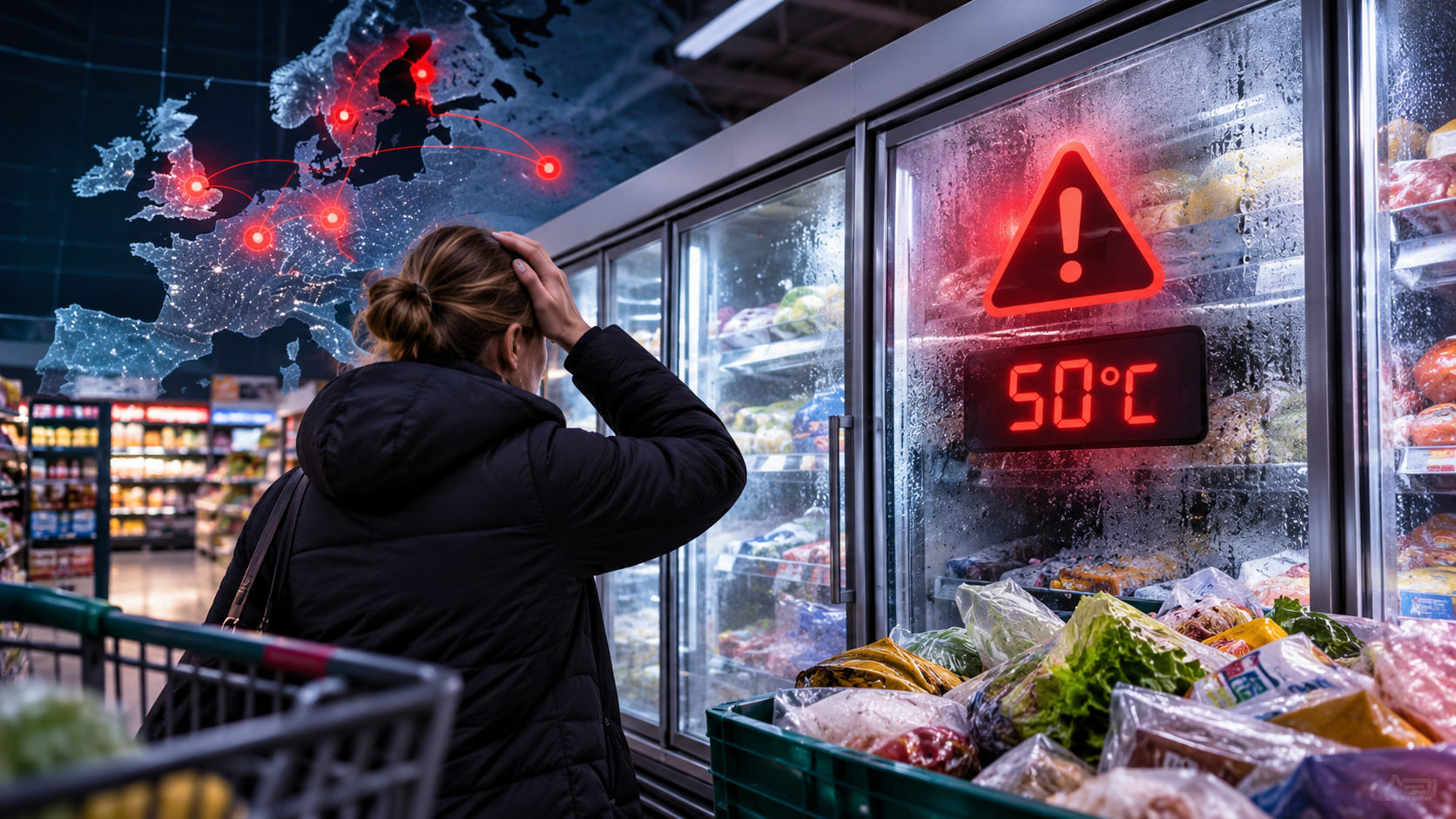
    Supermarkets in Sweden, Belgium, Luxembourg, Ireland and Estonia were throwing out spoiled food on Monday after their fridges and freezers stopped doing their job. In at least two cases, temperatures had been pushed to 50 degrees Celsius (122 degrees Fahrenheit). The apparent supermarket cyberattack came only weeks after attackers took control of cooling equipment in hundreds of stores across France. That raises an obvious question: why are supermarket freezers suddenly a target, and why now?
     

Why Would Anyone Hack a Supermarket Freezer? Europe Is Finding Out

3 de Novembro de 2026, 03:24

supermarket cyberattack

Supermarkets in Sweden, Belgium, Luxembourg, Ireland and Estonia were throwing out spoiled food on Monday after their fridges and freezers stopped doing their job. In at least two cases, temperatures had been pushed to 50 degrees Celsius (122 degrees Fahrenheit). The apparent supermarket cyberattack came only weeks after attackers took control of cooling equipment in hundreds of stores across France. That raises an obvious question: why are supermarket freezers suddenly a target, and why now?

How the Supermarket Cyberattack Unfolded Across Europe

Sweden saw some of the clearest signs of tampering. ICA Group spokesperson Gustaf Nilsson told the TT news agency that "a limited number" of stores were affected overnight by an incident involving refrigeration systems. One ICA Kvantum store in Sjöbo, in southern Sweden, was more direct. In a Facebook post, it said its fridges and freezers had been hacked and set to 50 degrees Celsius, and that staff were discarding affected products. The Coop chain also reported problems with fridges and freezers at six stores in central Sweden, according to TT, though it did not immediately share details. In Belgium, Delhaize said an "IT incident" had affected refrigeration in several dozen stores, mostly in Belgium and a few in neighbouring Luxembourg. "In the affected stores, the range of fresh and frozen products is temporarily somewhat limited. Our distribution centers are operating normally, and there has been no disruption to deliveries to our stores," spokesperson Sarah De Meester said. Carrefour said a cyberattack targeting refrigeration had affected 15 of its more than 700 Belgian stores, and described the impact as "extremely limited. supermarket cyberattack In Ireland, Musgrave Group said refrigeration systems in 13 SuperValu stores were affected by the "cyber incident." Chilled and frozen products were removed from sale as a precaution. By Monday afternoon, the company said the incident had been "fully resolved" and that restocking of chilled and frozen ranges was "well under way." In Estonia, refrigeration technology company Kitman Coldtech said attackers had accessed a computer controlling a client's refrigeration system and raised the temperature to 50 degrees Celsius, public broadcaster ERR reported. Chief executive Jann Mutso declined to name the store but said the attack was addressed within minutes and caused no significant damage. The Selver supermarket chain confirmed that one of its outlets was affected.

Is This Supermarket Cyberattack Linked to France?

None of the companies has publicly linked Monday's incidents to France, but the pattern is hard to miss. Last month, attackers remotely took control of refrigeration systems in hundreds of supermarkets and independent stores across France. They pushed fridge and freezer temperatures as high as 50 degrees Celsius. French TV channel BFM reported that the attackers appeared to trigger a forced defrost option, which kept units heating instead of cooling. By morning, tonnes of food had perished. Some equipment had melted, and in some stores the heat had sparked fires. Five of France's major retail groups were hit: E.Leclerc, Intermarché, Carrefour, Monoprix and Coopérative U. At least 300 Intermarché and Netto stores were affected. Coopérative U reported more than 100 stores, Carrefour said 80, and Monoprix said about 5% of its roughly 490 stores were targeted. Bruce Hallas, CEO at Re-thinking the Human Factor, who lives in France, noted on LinkedIn that current estimates sit around 400 stores. He added that some individual branches reported losses of about €250,000. Retailers say millions of euros' worth of food was spoiled, which makes food losses the most visible cost of the attack.

Why the Supermarket Cyberattack Targeted Fridges

The French case offers the strongest clue. The attack did not rely on a new exploit. It targeted ageing systems: internet-connected devices that were still online years after their manufacturer stopped supporting them. Experts say this weakness is common across retail and industry. The cyberattacks in France appeared to target old systems in particular. Timing made the damage worse. In France, the attackers struck while shops were closed, so temperatures kept rising for hours with no one in the store to notice. Monday's incidents in Sweden also happened overnight. Estonia shows the other side of the picture. There, the intrusion was caught within minutes and caused no significant damage. The difference between tonnes of ruined stock and almost no loss came down to how quickly someone noticed.

What We Still Don't Know

Key questions remain open. The reports do not say who is behind the attacks or what they want. The full scale is also unclear. Estimates for France range from around 400 to more than 500 stores, and ICA has not said how many of its Swedish stores were hit. The chains affected on Monday have not confirmed whether their equipment shares the ageing, unsupported setup seen in France. What is clear is that the same tactic has now reached at least five European countries, with fridge temperatures set to 50 degrees Celsius each time.

The Cyber Express Weekly Roundup: Hackers Turn Supermarket Freezers Into Ovens, UPI PIN Theft and More

16 de Outubro de 2026, 02:25

weekly cybersecurity roundup

Supermarket freezers that cooked their own stock overnight. Text messages about traffic fines that quietly steal payment PINs. North Korean IT workers paying Americans to keep remote jobs at U.S. companies. This weekly cybersecurity roundup brings together incidents that reached well beyond stolen data, causing spoiled food, store fires, disrupted grocery deliveries and drained bank accounts. Here are the stories that shaped the week.

Hackers Turned French Supermarket Freezers Into Ovens Overnight

Hundreds of French supermarkets woke up to spoiled stock after hackers took remote control of internet-connected refrigeration systems overnight. Retailers confirmed on Monday that attackers pushed fridge and freezer temperatures as high as 50 degrees Celsius (122F) while stores were closed. Tonnes of food perished, some equipment melted, and in some stores the heat sparked fires. French supermarket cyberattack French TV channel BFM reported that the attackers appeared to trigger a forced defrost option, keeping units heating instead of cooling. The attack did not use a new exploit. It targeted ageing connected devices still online years after their manufacturer stopped supporting them. E.Leclerc, Intermarché, Carrefour, Monoprix and Coopérative U were all hit. At least 300 Intermarché and Netto stores were affected, Coopérative U reported more than 100, Carrefour said 80, and Monoprix said about 5 percent of its roughly 490 stores were targeted. Bruce Hallas, CEO at Re-thinking the Human Factor, noted that estimates sit around 400 stores, with some branches reporting losses of about €250,000. Some reports put the total above 500 shops. Read More

Fake Traffic Challan Texts Are Stealing UPI PINs From Android Users in India

GhostBat RAT, an Android malware strain first identified by Cyble in October 2025, has evolved to capture PINs from 60 banking, UPI, wallet and fintech apps. It spreads through SMS messages about unpaid traffic challans that lead victims to fake mParivahan download pages, with GitHub repositories also used to host the malicious files. Cyble's research also exposed a wider operator-controlled ecosystem it tracks as GhostX, linking phishing pages, backend control systems and malware distribution. Many of the fake apps are first-stage loaders that hide the real payload in encrypted files or download it later, helping them pass initial scans. Read More

Death Threats, Laptop Farms, Stolen IDs: Inside North Korea's Job Scam

North Korean IT workers are paying Americans to help them get and keep remote jobs at U.S. companies, according to an updated FBI public service announcement. The Justice Department also announced charges, two arrests and the seizure of about 187 computer devices linked to the scheme. The FBI said Americans are being hired to appear on camera, sit for job interviews, verify fake identities, lend social media or professional networking accounts, ship packages, complete drug tests or fingerprint submissions, and keep work laptops running from their homes. The workers also use stolen identities, extort victims and threaten physical violence. North Korea's government receives an estimated 85 to 90 percent of the revenue they generate, which helps fund its nuclear weapons and military programs. Read More

Ahold Delhaize Incident Disrupts Grocery Supply in Netherlands and Belgium

A cyber incident at Ahold Delhaize has disrupted parts of the grocery retailer's IT infrastructure, prompting it to take some systems offline. Stores remain open, but reports from the Netherlands and Belgium indicate disruption to distribution, customer service and some delivery operations. The company has not disclosed the nature of the incident or whether customer or employee data was affected, and it has given no timeline for full recovery. Ahold Delhaize operates in nine countries, employs more than 384,000 people and owns U.S. brands including Food Lion and Stop & Shop. Read More

Kerala Police Signs MoU With Cyble for Cybercrime Investigations

Kerala Police has signed a three-year Memorandum of Understanding with Cyble to bring threat intelligence into cybercrime investigations. The agreement, signed through Cyble Infosec India Private Limited and announced on October 12, 2026, covers intelligence support, investigative assistance and capacity building. It will support the Kerala Police Cyber Operations wing and Cyberdome in identifying and investigating emerging threats. Read More [caption id="attachment_114716" align="aligncenter" width="600"]Kerala Police MoU Image Source: Cyble[/caption]

Seoul National University Reports 28 Hacking Incidents Since 2021

Seoul National University has suffered 28 hacking incidents since 2021, exposing more than 1,100 pieces of personal information belonging to students, faculty and staff. The figures come from data the university submitted to Rep. Baek Seung-ah of the Democratic Party. There were eight attacks in 2021, a peak of 10 in 2022, none in 2023, one in 2024 and five in 2025, with four confirmed so far this year. Departmental systems were hit most often, in 19 incidents, followed by laboratory systems with six, research systems with two and one institutionwide system. Read More

Morocco Prioritizes AI Threats and Critical Infrastructure Defense

Morocco is placing greater focus on proactive threat detection, critical infrastructure protection and artificial intelligence in its cybersecurity strategy. Speaking at the opening of National Cybersecurity Week in Rabat, Abdellatif Loudiyi, Minister Delegate in charge of National Defense Administration, said cybersecurity must be built into institutional governance rather than treated as an extra expense. He called for stronger preparedness, early detection and coordinated incident response. The event runs from October 12 to 14. Morocco cybersecurity strategy Taken together, this week's incidents show attackers targeting the systems people rely on every day, from shop refrigeration and grocery supply chains to payment apps and hiring processes. Follow The Cyber Express for next week's weekly cybersecurity roundup and ongoing coverage of these stories. Read More
❌
❌