Your streaming box might not look like much of a computer. But connect enough inexpensive devices together, and they can run an AI model.Researchers at Anthropic demonstrated this by running a Google Gemma model across 15 off-brand Android TV boxes. They warn that small models could soon spread across vulnerable internet-of-things (IoT) devices, including smart ovens and TV boxes, stating:“Our experiments suggest that small AI models may be months away from being capable enough to self-replicate
Your streaming box might not look like much of a computer. But connect enough inexpensive devices together, and they can run an AI model.
Researchers at Anthropic demonstrated this by running a Google Gemma model across 15 off-brand Android TV boxes. They warn that small models could soon spread across vulnerable internet-of-things (IoT) devices, including smart ovens and TV boxes, stating:
“Our experiments suggest that small AI models may be months away from being capable enough to self-replicate on commercial internet-of-things (IoT) devices, like smart ovens and off-brand Android TV boxes.”
In this scenario, AI isn’t simply helping an attacker write malicious code. It becomes part of the software carrying out the replication.
Anthropic breaks that process into four stages:
Find another device.
Gain the ability to execute code on it.
Set up the software needed to run an AI model.
Continue spreading from the new host.
The researchers tested whether AI agents could complete this sequence. They did not demonstrate a small model spreading and running independently on compromised household devices.
The tests used Android emulators with unauthenticated debugging access, making it much easier for the agents to gain access than it would be on properly secured devices. Large file transfers and sustained communication between devices could make real-world replication easier to detect, while limited computing power could slow it. Crucially, the experiments did not demonstrate a model that was both capable enough to complete the replication process and small enough to run on the consumer hardware being targeted.
Anthropic projects that smaller models could reach the necessary capability by the end of 2026 if improvement continues at its historical rate.
Varun Chandrasekaran, an assistant professor at the University of Illinois, told AFP that the findings were consistent with related research but cautioned that Anthropic’s work had not been independently verified. He identified people using AI to improve attacks as the bigger current threat, rather than AI systems going rogue.
Smart-device botnets are already a problem.
Criminals hijacking connected devices is nothing new. Mirai and its descendants have recruited routers, security cameras, and digital video recorders into botnets used to launch distributed denial-of-service (DDoS) attacks, overwhelming services with traffic. BADBOX 2.0 illustrates another form of abuse: compromised consumer devices used for activities including residential proxy services, which route other people’s traffic through victims’ internet connections.
Neither demonstrates autonomous AI replication, but both show that connected devices can become infrastructure for criminals.
What you can do now
The practical response is to reduce the opportunities for any attacker to misuse your connected devices:
Keep operating systems, software, and firmware up to date to reduce exposure to known vulnerabilities.
Buy from reputable vendors that provide ongoing firmware and security updates. A bargain device is less attractive if you cannot trust its software or obtain security fixes.
Avoid unofficial app stores promising free streaming content. The FBI specifically flags these marketplaces in its BADBOX 2.0 guidance.
Don’t disable protections to make an app work. Requests to turn off Google Play Protect are a warning sign, as are Android devices without Play Protect certification.
If you notice something suspicious, disconnect the device from your network while you investigate.
Put smart devices that are unable to run security software on a separate network isolated from your computers and phones, such as a guest network.
Scammers know more about you than you think.
Malwarebytes Mobile Security protects you from phishing, scam texts, malicious sites, and more. With real-time AI-powered Scam Guard built right in.
Netskope tracks four XWorm versions in the wild, 46 plugins, and new tools for location, audio and live browser control, with detections up fourfold.
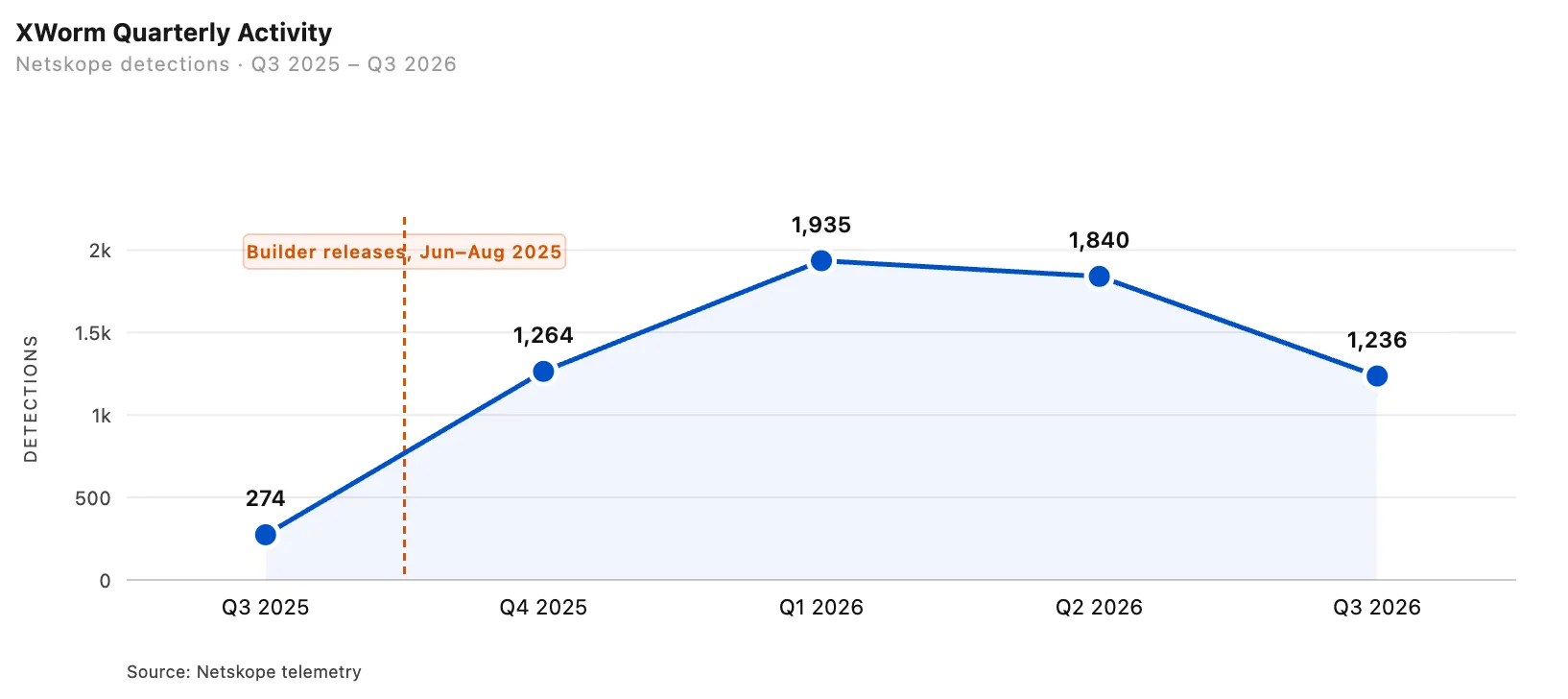
Netskope Threat Labs has been following XWorm since September 2024, and its latest report shows the malware has changed a lot. Over the past year the team identified four distinct versions running at the same time in the wild. Detection volume is still high, with 1,236 events across more than 100 customer organizations in the third quarter of 2
Netskope tracks four XWorm versions in the wild, 46 plugins, and new tools for location, audio and live browser control, with detections up fourfold.
Netskope Threat Labs has been following XWorm since September 2024, and its latest report shows the malware has changed a lot. Over the past year the team identified four distinct versions running at the same time in the wild. Detection volume is still high, with 1,236 events across more than 100 customer organizations in the third quarter of 2026, four times the number from the same quarter in 2025.
The leak fueled the surge. In June 2025, a cracked version of the XWorm builder was released publicly. In August, the source code for a modified version, 6.4, also leaked. These leaks gave XWorm more exposure and helped drive its growth.
Netskope’s data shows how long the impact lasted. Detections more than quadrupled between the third and fourth quarters of 2025. In the first quarter of 2026, they reached seven times the original level and stayed there through the second quarter. Detections fell to 1,236 in the third quarter of 2026, but September alone accounted for 601, matching the monthly average during the peak in the first half of the year.
The victims skew toward money. Financial services make up about 35% of affected customers, and activity is concentrated in India, Brazil, Italy, Panama and the United States.
“The public leak of the V6.4 builder in mid-2025 drove this initial surge, keeping activity consistently above pre-leak baselines ever since.” reads Netskope’s analysis. “The financial services sector accounts for approximately 35% of affected customers, with activity concentrated in India, Brazil, Italy, Panama, and the United States.”
Since Netskope published its report on version 6.0 in July 2025, four new versions of the malware have been discovered: V6.4, V6.5 (“XWorm Reborn”), V7.2, and V7.4. Three of these versions were released after the malware generator tool became publicly available. The number of known plugin features has also increased from 35 to 46. This includes new modules, such as SteamTokenRecovery, Rootkit, ResetSurvival, and Cmstp-Bypass, as well as several plugins that were previously removed in V6.0 but have now been brought back.
Each new version includes small but significant updates:
V6.4 includes file details that link it to celestialproject.org.
V6.5 updates its branding link to c3lestial.fun, adds five new plugins, and introduces a built-in license check for the tool itself.
V7.2 adds stronger code protection to hide its activity, uses six different tricks to avoid running in virtual analysis environments, and disguises its file details as the software Voicemod.
V7.4 introduces a new file delivery system (dropper), uses a technique to bypass Windows security monitoring, switches to a new communication channel for commands, and reinstates license checks.
The surveillance side is where it gets uncomfortable. Netskope says XWorm has moved from an infostealer to a full surveillance platform. Three plugins matter most: Maps, Microphone and HBrowser, and webcam capture is also available on demand.
HBrowser changes how account theft works. Starting with version 6, it gives the operator a live view of the victim’s running browser, relays the operator’s mouse, keyboard and paste actions into it, and streams the screen back. The commands travel over XWorm’s usual encrypted channel and run on the victim’s machine.
This creates a full remote browser session for the attacker. Because every logged-in tab remains open, the attacker can access accounts directly without needing to steal passwords or bypass multi-factor authentication (MFA). Netskope notes that this plugin grants full account access without ever extracting login credentials.
The location-tracking feature bypasses the standard Windows permission prompt. It first modifies a Windows system setting to suppress consent requests, then attempts to fetch precise GPS coordinates within 15 seconds to send to the attacker. If GPS is unavailable, it falls back to IP-based location tracking. Because the modified setting remains in place, future location requests continue to bypass user permission.
“XWorm continues to evolve and has now added surveillance capabilities. It can track geolocation and record the victim’s audio without requesting the victim’s permission.” continues the report. “The HBrowser plugin gives operators direct control of the victim’s live browser session, granting access to accounts without needing to exfiltrate credentials and making MFA irrelevant.”
Microphone does what the name says. It captures audio from any device on the machine, with the operator choosing which one, and streams it back in half-second chunks that are compressed, encoded and encrypted, so audio reaches the operator with about half a second of delay. The microphone stays active for as long as the operator keeps the session open, and both Maps and Microphone run without privilege escalation or a visible prompt.
Netskope expects more of the same. Since the builder and source code were leaked, it expects continued upgrades and use of the toolkit. Its indicators of compromise are on the team’s GitHub, and its protection flags the samples as Gen:Variant.Application.Lazy and Trojan.Generic.
The key lesson for security teams is that multi-factor authentication (MFA) cannot protect accounts once an attacker has already gained access to an active browser session. This vulnerability applies to any account currently logged in on an infected computer.
The HBrowser plugin clearly demonstrates this risk: from the attacker’s perspective, it provides a complete, live remote browser session with full access to open accounts.
“Since its builder and source code were leaked, we expect continued upgrades and use of this toolkit. Netskope Threat Labs will continue to monitor XWorm.” NetSkope concludes.
2CLoader malware dodges sandboxes and security tools to deliver Vidar and Remus infostealers. See how it works and how to detect it.
Related Posts:
Moroccan Intelligence Deploys Vast Surveillance Panopticon
DragonForce Backdoor Adds MQTT Fallback to Microsoft Teams TURN Command Channel
BPFDoor Backdoor and New AVERAT Implant Hide in SMTP Traffic on Telecom Edge Devices
The post New 2CLoader Malware Delivers Vidar and Remus Infostealers While Dodging Sandboxes appeared first on Daily CyberSecu
Socket links GlassWorm VS Code themes to malicious VS Code extensions with 8,000+ installs, including a Coca-Cola theme. See how to check yours.
Related Posts:
Moroccan Intelligence Deploys Vast Surveillance Panopticon
DragonForce Backdoor Adds MQTT Fallback to Microsoft Teams TURN Command Channel
New 2CLoader Malware Delivers Vidar and Remus Infostealers While Dodging Sandboxes
The post Socket Links Popular VS Code Color Themes to the GlassWorm Supply Chain Campaign appeared first on Daily C
Shai-Hulud npm worm spreads through Keyv and hundreds of packages with 2 billion monthly downloads, stealing npm, GitHub, cloud and CI credentials in real time.
Shai-Hulud npm worm spreads through Keyv and hundreds of packages with 2 billion monthly downloads, stealing npm, GitHub, cloud and CI credentials in real time.
A security researcher has demonstrated how Microsoft Copilot for Word can be tricked into spreading a self‑propagating prompt‑injection “AI worm.” The attack silently alters documents and embeds its own hidden instructions into newly created files, allowing it to spread through normal document-sharing workflows without macros or traditional malware.
The technique allows an attacker to hide a JSON‑formatted prompt as white text on a white background inside a Word document. When someone asks C
A security researcher has demonstrated how Microsoft Copilot for Word can be tricked into spreading a self‑propagating prompt‑injection “AI worm.” The attack silently alters documents and embeds its own hidden instructions into newly created files, allowing it to spread through normal document-sharing workflows without macros or traditional malware.
The technique allows an attacker to hide a JSON‑formatted prompt as white text on a white background inside a Word document. When someone asks Copilot for Word to draft or edit content based on that document, Copilot strips away the formatting, reads the hidden text, and treats the embedded instructions as part of the user’s request.
Copilot then modifies the active document and appends the full malicious prompt as hidden white text. That new document becomes a new carrier. Anyone who later uses it as source material for Copilot triggers the same behavior, allowing the prompt injection to spread to more documents. Because the documents are created and edited by legitimate users, the attack can be difficult to trace.
The researcher could still reproduce the full worm chain even after Microsoft rolled out multiple mitigations, including upgrades to newer GPT‑5.5 and 5.6 models.
At the time of writing, there is no complete mitigation for this broader class of attacks across comparable large language model (LLM)‑based products. It’s characterized as an architectural weakness of current LLM systems: attacker‑controlled content shares the same context window as trusted instructions. Attacks that exploit this behavior are known as prompt injection attacks and may never be fixed.
How to stay safe
Treat documents from outside your organization as untrusted, especially if you plan to use them with Copilot for Word.
Review any attached document before using it as Copilot source material, and carefully verify Copilot‑generated/edited documents before sharing or reusing them.
If you don’t use Copilot, you can disable it.
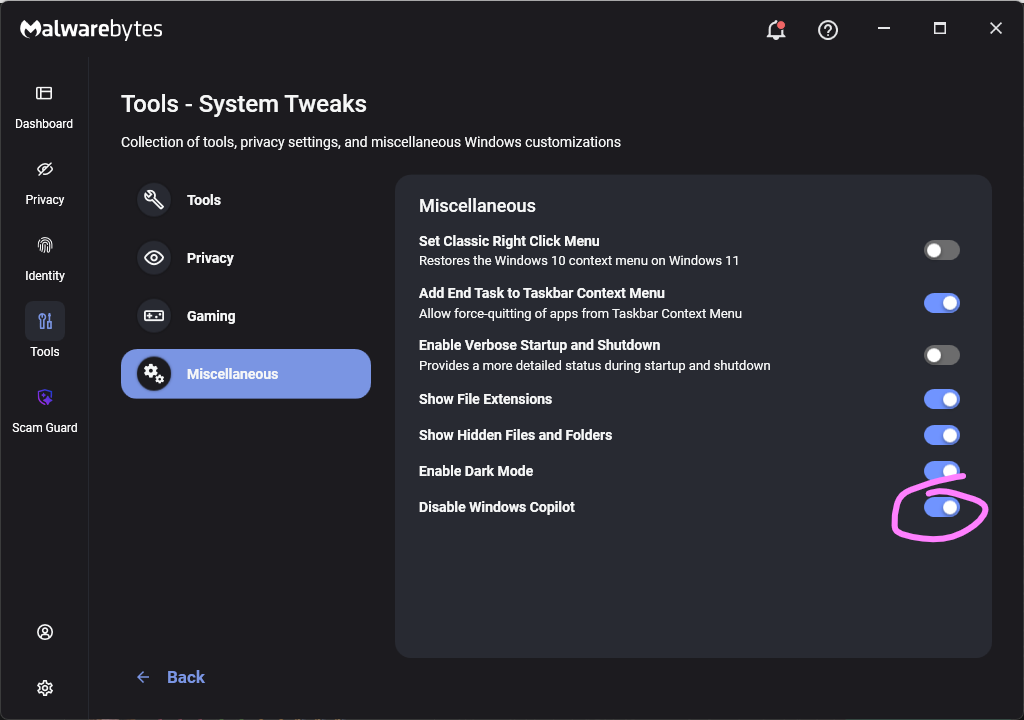
Malwarebytes users can turn off Copilot under Tools > System Tweaks > Miscellaneous.
Malwarebytes setting to disable Copilot
Or in Word itself:
For individual users who don’t want Copilot in Word:
Open Word, go to File > Options > Copilot and clear the Enable Copilot checkbox, then restart Word.
In some versions of Word, the setting appears under File > Options > General in a Copilot section. In both cases, the key is unchecking the “Enable Copilot” setting.
You can also remove the Copilot icon from the ribbon by right‑clicking the ribbon, open the customization dialog, locate the Copilot/Assistance button, and removing it.
Alternatively, you can limit Copilot’s role by following these instructions:
In Word, go to File > Account > Account Privacy > Manage Settings, and uncheck Turn on optional connected experiences. This reduces certain cloud‑powered AI features, including Copilot‑related functions that rely on those services.
In the Microsoft 365 Admin Center, under Copilot > Settings, set Pin Microsoft 365 Copilot Chat to Do not pin Copilot chat in Microsoft 365 apps so the chat pane doesn’t appear by default in apps like Word.
This doesn’t remove Copilot entirely or stop these attacks, but it does reduce its visibility and limits some of its cloud‑assisted functionality.
From reporting threats to removing them.
Cybersecurity risks should never spread beyond a headline. Keep threats off your devices by downloading Malwarebytes today.
All threats
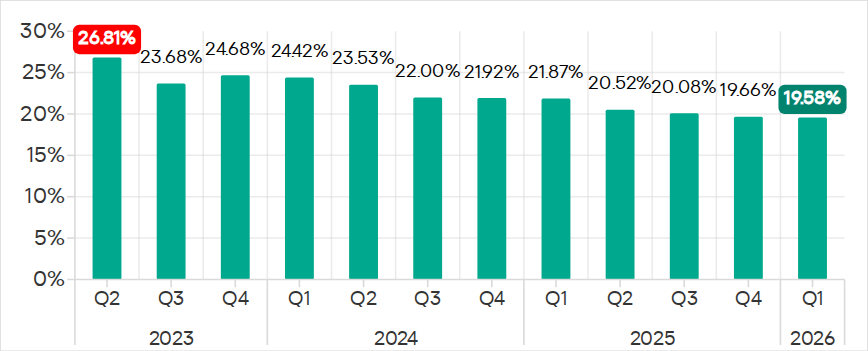
The percentage of ICS computers on which malicious objects were blocked continued to decrease, reaching 19.6% in Q1 2026. This is the lowest value in three years, and it is 1.4 times lower than in Q2 2023.
Percentage of ICS computers on which malicious objects were blocked, Q2 2023–Q1 2026
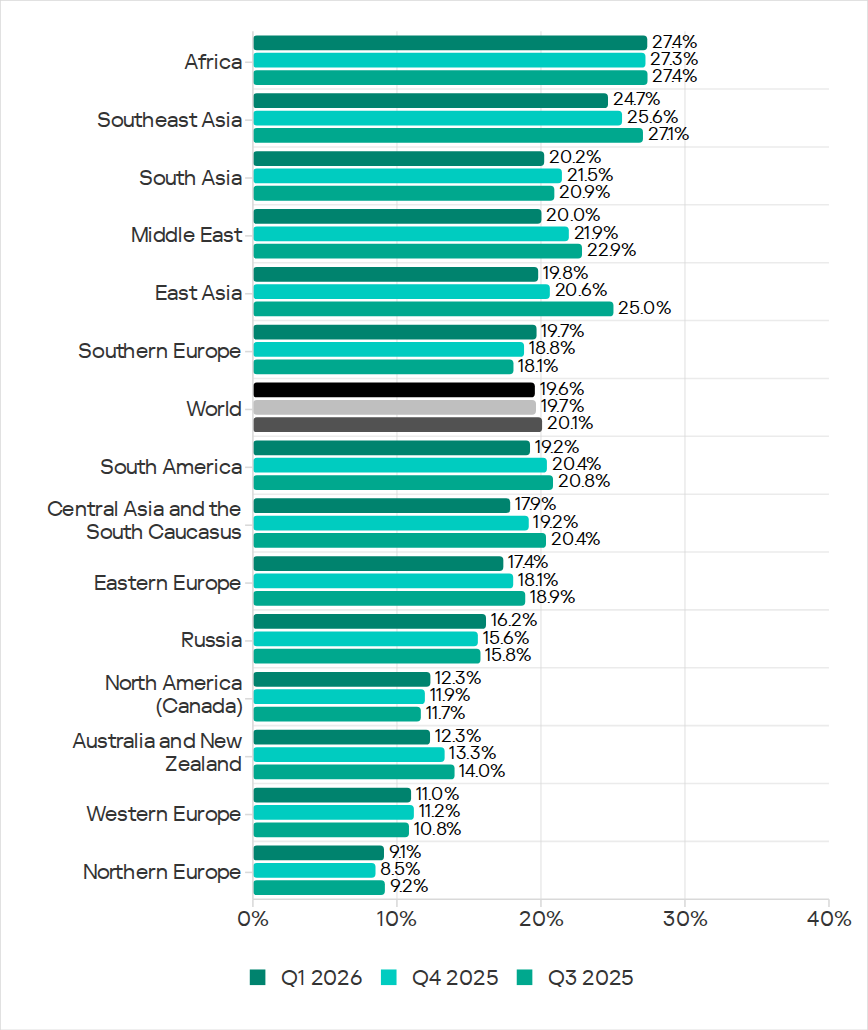
Regionally, the percentages ranged from 9.1% in Northern Europe to 27.4% in Africa.
Regions ranked by percentage of attacked ICS computers
The percentage of ICS computers on which malicious objects
The percentage of ICS computers on which malicious objects were blocked continued to decrease, reaching 19.6% in Q1 2026. This is the lowest value in three years, and it is 1.4 times lower than in Q2 2023.
Percentage of ICS computers on which malicious objects were blocked, Q2 2023–Q1 2026
Regionally, the percentages ranged from 9.1% in Northern Europe to 27.4% in Africa.
Regions ranked by percentage of attacked ICS computers
The percentage of ICS computers on which malicious objects were blocked increased in five regions over the quarter, most notably in Southern Europe, Northern Europe, and Russia.
In Q1 2026, Southern Europe led the way in growth for internet and email threats. The region also saw the fastest growth in spyware, as well as malicious scripts and phishing pages.
In Russia, the percentage of ICS computers on which malicious objects were blocked exceeded the figures for the previous two quarters. Russia saw an increase in the percentage for threats from the internet, and a slight increase in the figure for threats from email clients (Russia is one of three regions where this figure did not decrease).
Among the threat categories, the greatest increases were observed in the percentages for denylisted internet resources, as well as spyware (distributed in the region via the internet and email clients).
Selected industries
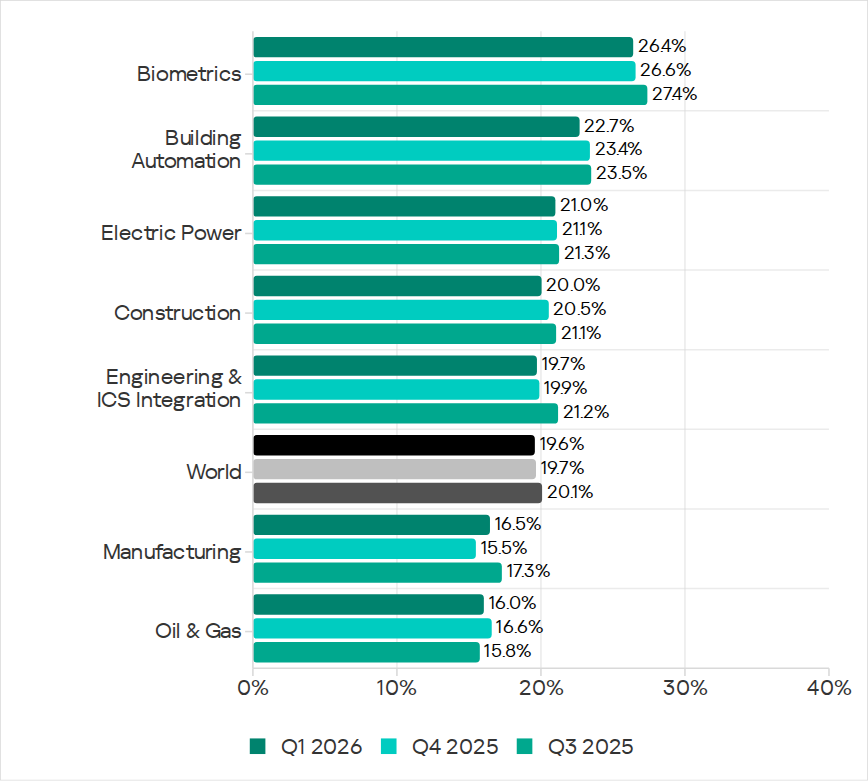
Biometric systems (26.4%) traditionally rank top among the industries and OT infrastructure types covered in this report in terms of the percentage of ICS computers on which malicious objects were blocked. These systems are characterized by internet access, extensive email use for data exchange and approvals (such as access granting), and, in many cases, minimal cybersecurity controls within the organizations that use these systems.
Industries ranked by the percentage of ICS computers on which malicious objects were blocked
Biometric systems rank first among industries in terms of email threats. At the same time, unlike other industries, the percentage for email threats in biometric systems exceeds that for internet threats.
In all selected industries, the global average follows a downward trend. In Q1 2026, the percentage of ICS computers on which malicious objects were blocked increased only in the manufacturing sector — by 1.0 pp. The percentages for this industry increased across 10 regions, with the most notable increases in Western Europe, Northern Europe, and Russia.
Threat categories
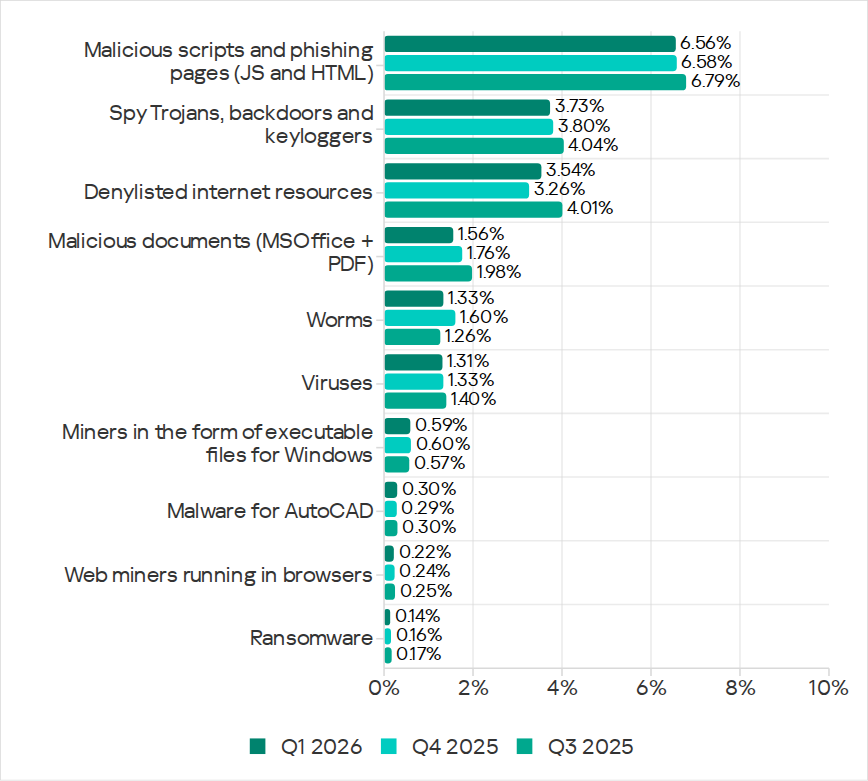
In Q1 2026, Kaspersky security solutions blocked malware from 10,052 different malware families of various categories on industrial automation systems.
Over the quarter, the percentage of ICS computers on which denylisted internet resources were blocked increased (after decreasing over the previous two quarters), and there was a slight increase in the percentage for AutoCAD malware.
Percentage of ICS computers on which the activity of malicious objects from various categories was prevented
Malicious scripts and phishing pages (JS and HTML)
Malicious scripts and phishing pages retained their to spot among threat categories by the percentage of ICS computers on which these threats were blocked. The global average in Q1 2026 was 6.56%.
Over the quarter, the percentages increased in four regions. The most significant change was observed in Southern Europe (9.85%, +0.94 pp). The figures for malicious scripts in the region increased over three consecutive quarters.
Among the selected industries, across all regions, the highest percentages for the malicious scripts and phishing pages category were recorded for biometric systems (19.59%) and building automation (15.43%) in Southern Europe. These same industries lead in similar rankings for malicious documents and spyware.
Spyware
The percentage of ICS computers on which spyware was blocked decreased over two consecutive quarters, dropping to 3.73%. Despite the decline, spyware has ranked second among threat categories by the percentage of attacked computers for three consecutive quarters.
The percentages increased in five regions over the quarter, most notably in Southern Europe (5.46%, +0.35 pp) and Russia (2.84%, +0.24 pp).
In Southern Europe, the percentage of ICS computers on which spyware was blocked increased in all the selected industries except manufacturing. The greatest increase was observed in biometric systems.
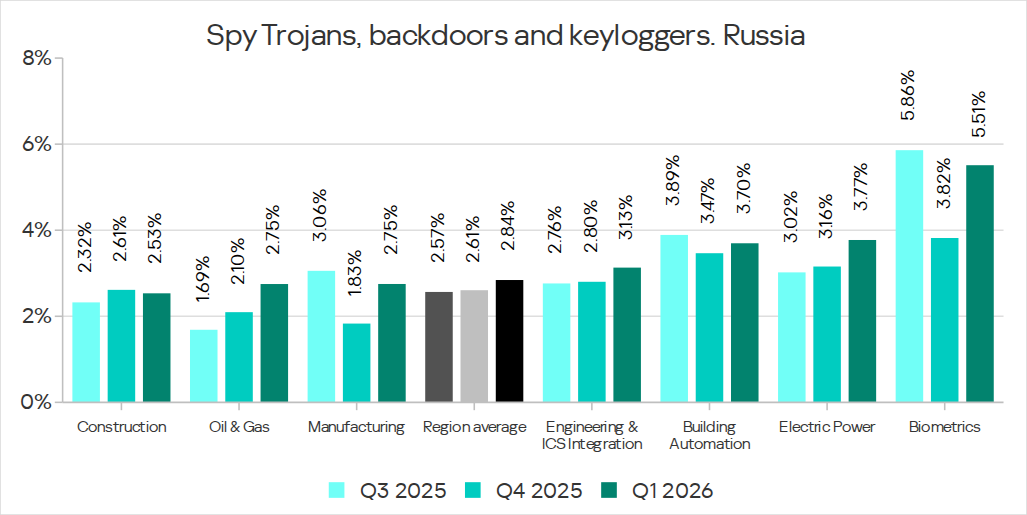
Among the selected industries, the highest percentage of spyware in Russia was recorded in biometric systems. That said, the percentage of ICS computers on which spyware was blocked increased in all industries in the region except construction. The percentage figure has been increasing for two consecutive quarters in the oil and gas industry (by a factor of 1.63 over six months), and for three consecutive quarters in engineering and ICS integration, as well as electric power. In the remaining sectors, the values have been fluctuating.
Percentage of ICS computers on which spyware was blocked in various industries in Russia, Q3 2025–Q1 2026
Denylisted internet resources
The percentage of ICS computers on which denylisted internet resources were blocked increased to 3.54%.
The most notable increase over the quarter occurred in Southeast Asia (4.58%, +0.65 pp). Among the industries in the region, the highest percentage figures for this threat category were recorded in electric power and construction. Over the quarter, the largest increases in percentages figures were observed in the electric power and manufacturing industries.
In North America (Canada), denylisted internet resources (2.14%) showed the greatest increase among all categories — by a factor of 1.22.
Among the selected industries across all regions, the highest percentage figures for the denylisted internet resources category were in the electric power (7.11%) and construction (6.25%) industries in Southeast Asia.
Malicious documents (Microsoft Office + PDF)
The percentage figure for this category decreased over two consecutive quarters, reaching its lowest value (1.56%) for the entire period of observations in Q1 2026. It increased just in two regions: Australia and New Zealand (1.12%, +0.04 pp), and Russia (0.62%, +0.01 pp).
Among the selected industries across all regions, the highest percentages for malicious documents were recorded for biometric systems (9.02%) and building automation (6.97%) in Southern Europe. These same industries also lead in similar rankings for malicious scripts and spyware.
Ransomware
The percentage of ICS computers on which ransomware was blocked has decreased for two consecutive quarters, dropping to 0.14%. This is the lowest value among all categories.
The percentage increased in two regions: North America (Canada) (0.11%, +0.04 pp) and slightly in Northern Europe (0.06%, +0.01 pp).
Among the selected industries across all regions, the highest percentages for ransomware were recorded in the oil and gas and manufacturing industries (0.92% and 0.65%, respectively) in Central Asia and the South Caucasus, and in biometric systems (0.89%) in Russia.
Miners in the form of executable files for Windows
The percentage of ICS computers on which miners in the form of executable files for Windows were blocked decreased to 0.59%.
The percentage increased in seven regions. The largest increase was observed in Africa (0.63%, +0.16 pp). Among the selected industries, the largest increases in the region were in the manufacturing and oil and gas industries.
Among the selected industries across all regions, the highest percentages for miners in the form of executable files were recorded in construction (1.99%), biometric systems (1.98%), and the oil and gas industry (1.97%) in Central Asia and the South Caucasus.
Web miners
The percentage of ICS computers on which web miners were blocked has been declining for a year, and in Q1 2026, it reached the lowest value for the entire period under review (0.22%).
At the same time, the percentage increased in seven regions. The largest increases were observed in South Asia (0.28%, +0.11 pp), the Middle East (0.31%, +0.09 pp), and Africa (0.34%, +0.08 pp). Despite the increases, the percentages in these regions for Q1 2026 did not exceed those observed in 2023–2024 and in Q1 2025.
Among the selected industries across all regions, the highest percentages for web miners were recorded for biometric systems (0.97%) in Russia. Biometric systems in South Asia (0.79%) ranked second, and the electric power sector in Southeast Asia (0.76%) ranked third.
Worms
The percentage of ICS computers on which worms were blocked decreased to 1.33%.
The percentage decreased across all regions following an increase in the previous quarter (due to a wave of phishing attacks that distributed the Backdoor.MSIL.XWorm backdoor worm across all regions of the world).
Among the selected industries across all regions, the highest percentage figure for worms was recorded for biometric systems (4.80%) in Central Asia and the South Caucasus. Two industries in Africa – biometric systems (4.04%) and electric power (3.53%) – took the second and third spots, respectively.
Viruses
The percentage of ICS computers on which viruses were blocked decreased to 1.31%.
The top 3 regions by this figure remained the same: Southeast Asia (6.11%, first by a wide margin), Africa (4.15%), and East Asia (2.97%). These same regions are also among the leaders by the percentage of systems affected by AutoCAD malware. The largest increase in this figure was observed in Africa (+0.41 pp).
Among the selected industries across all regions, the highest percentages for viruses were recorded in the construction industry (6.35%) and building automation (5.50%) in Southeast Asia.
Malware for AutoCAD
The percentage of ICS computers on which malware for AutoCAD was blocked increased to 0.30%.
The most notable increase over the quarter was observed in Africa, with the region’s percentage figure rising by 0.47 pp, a very significant increase for this category, and almost doubling (to 0.91%).
Among the selected industries across all regions, the highest percentages for AutoCAD malware were recorded in the construction industry in East Asia (5.58%) and Southeast Asia (3.87%).
Main threat sources
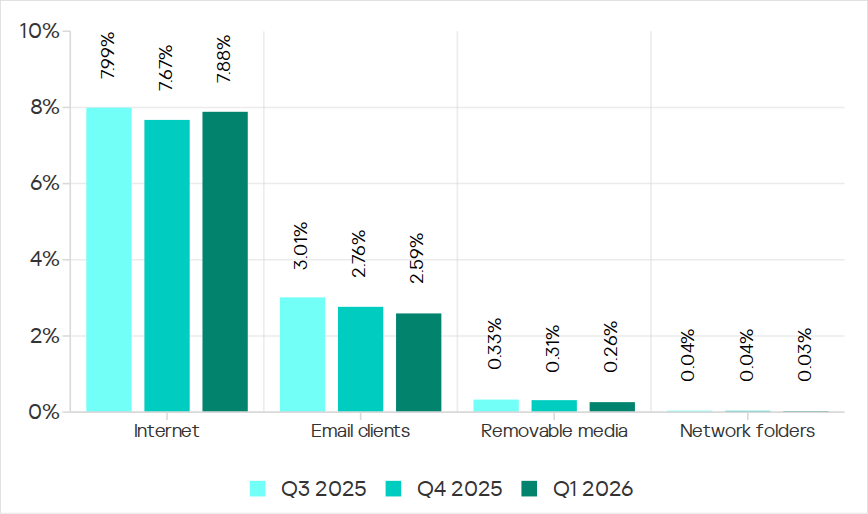
In Q1 2026, the average percentages across all threat sources, except threats from the internet, decreased globally.
Percentage of ICS computers on which malicious objects from various sources were blocked
Internet
The percentage of ICS computers on which threats from the internet were blocked increased to 7.88%. However, over the past three years, the percentage figure for internet threats has followed a downward trend.
The largest increases in the percentages were recorded in Southern Europe (8.59%, +0.59 pp), Southeast Asia (10.16%, +0.55 pp), and Northern Europe (4.47%, +0.51 pp).
Among the selected industries across all regions, the highest percentages for threats from the internet were recorded in electric power (13.16%) and construction (12.55%) in Southeast Asia, and in the engineering and ICS integration sector (12.33%) in South Asia.
Email clients
The percentage of ICS computers on which threats delivered via email clients were blocked decreased to 2.59%. This is a three-year low.
The percentage of this threat source increased in three regions: Southern Europe (6.54%, +0.2 pp), East Asia (1.5%, +0.09 pp), and slightly in Russia (0.7%, +0.04 pp).
Among the selected industries across all regions, the highest percentages for email threats were recorded for biometric systems (19.78%) and building automation (12.34%) in Southern Europe. In these two industries, the percentage of ICS computers on which email threats are blocked is higher than the percentage for threats from the internet. A similar situation was observed in two other instances, both in biometric systems (in South America and Southeast Asia).
Removable media
The percentage of ICS computers on which threats were detected when connecting removable media continued to decrease, reaching its lowest value for the period under review (0.26%).
Among the selected industries across all regions, the highest percentages for removable media threats blocked on ICS computers were observed in the electric power sector in Central Asia and the South Caucasus (1.45%), East Asia (1.34%), and Africa (1.16%).
Network folders
The percentage of ICS computers on which threats are blocked in network folders is steadily decreasing. In Q1 2026, it was the lowest for the period under review (0.029%).
East Asia has traditionally led by a wide margin. The percentage for East Asia (0.135%) is 27 times higher than the lowest regional value (recorded in Northern Europe).
The largest increases in the percentages for threats from network folders were observed in Africa (0.037%, +0.006 pp) and South America (0.013%, +0.006 pp).
Among the selected industries across all regions, the construction industry in East Asia, at 0.36%, holds the top positions in the ranking by the percentage of ICS computers on which threats are blocked in network folders.
Purpose and Scope The May 2026 APT Trends report identified supply chain attacks, developer environment attacks, automated Initial Breach, and exploitation of runtime environments as key developments. Lazarus, Famous Chollima, Gamaredon, MuddyWater, and Nimbus Manticore are of particular concern. Status of Major APT Groups by Region North Korea The Lazarus group exploited Git Hooks (Git […]
Purpose and Scope The May 2026 APT Trends report identified supply chain attacks, developer environment attacks, automated Initial Breach, and exploitation of runtime environments as key developments. Lazarus, Famous Chollima, Gamaredon, MuddyWater, and Nimbus Manticore are of particular concern. Status of Major APT Groups by Region North Korea The Lazarus group exploited Git Hooks (Git […]
ASEC Blog publishes Ransom & Dark Web Issues Week 2, May 2026 Coinbase Claims Data Leak of South Korean Medical Ultrasound Equipment Manufacturer Emergence of New Data Extortion Group ‘Leak Bazaar’ Hasan’s BreachForums and TeamPCP Host Large-Scale Supply Chain Attack Competition Using Shaid-Hulud Worm
ASEC Blog publishes Ransom & Dark Web Issues Week 2, May 2026 Coinbase Claims Data Leak of South Korean Medical Ultrasound Equipment Manufacturer Emergence of New Data Extortion Group ‘Leak Bazaar’ Hasan’s BreachForums and TeamPCP Host Large-Scale Supply Chain Attack Competition Using Shaid-Hulud Worm
Unit 42 details CVE-2026-0300, a buffer overflow vulnerability in the PAN-OS User-ID Authentication Portal. Read now for details.
The post Threat Brief: Exploitation of PAN-OS Captive Portal Zero-Day for Unauthenticated Remote Code Execution appeared first on Unit 42.
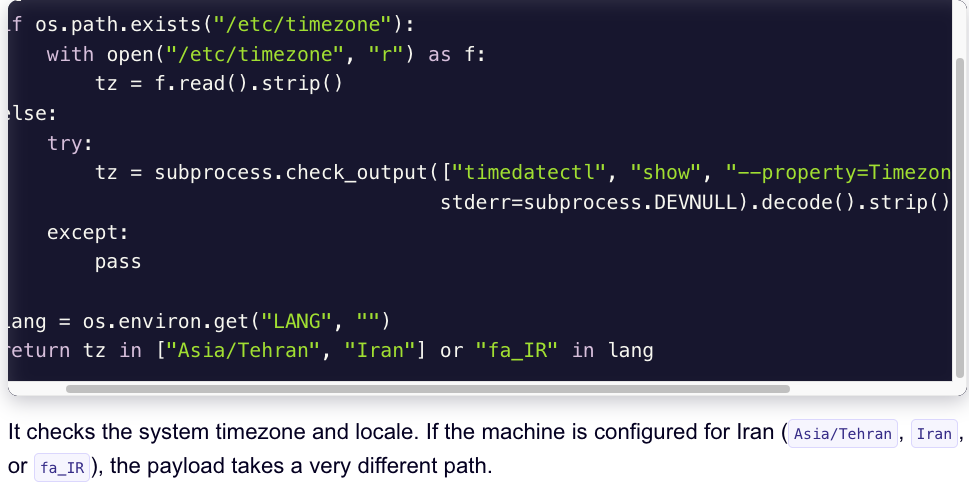
A financially motivated data theft and extortion group is attempting to inject itself into the Iran war, unleashing a worm that spreads through poorly secured cloud services and wipes data on infected systems that use Iran’s time zone or have Farsi set as the default language.
Experts say the wiper campaign against Iran materialized this past weekend and came from a relatively new cybercrime group known as TeamPCP. In December 2025, the group began compromising corporate cloud environments using
A financially motivated data theft and extortion group is attempting to inject itself into the Iran war, unleashing a worm that spreads through poorly secured cloud services and wipes data on infected systems that use Iran’s time zone or have Farsi set as the default language.
Experts say the wiper campaign against Iran materialized this past weekend and came from a relatively new cybercrime group known as TeamPCP. In December 2025, the group began compromising corporate cloud environments using a self-propagating worm that went after exposed Docker APIs, Kubernetes clusters, Redis servers, and the React2Shell vulnerability. TeamPCP then attempted to move laterally through victim networks, siphoning authentication credentials and extorting victims over Telegram.
A snippet of the malicious CanisterWorm that seeks out and destroys data on systems that match Iran’s timezone or have Farsi as the default language. Image: Aikido.dev.
In a profile of TeamPCP published in January, the security firm Flare said the group weaponizes exposed control planes rather than exploiting endpoints, predominantly targeting cloud infrastructure over end-user devices, with Azure (61%) and AWS (36%) accounting for 97% of compromised servers.
“TeamPCP’s strength does not come from novel exploits or original malware, but from the large-scale automation and integration of well-known attack techniques,” Flare’s Assaf Moragwrote. “The group industrializes existing vulnerabilities, misconfigurations, and recycled tooling into a cloud-native exploitation platform that turns exposed infrastructure into a self-propagating criminal ecosystem.”
On March 19, TeamPCP executed a supply chain attack against the vulnerability scanner Trivy from Aqua Security, injecting credential-stealing malware into official releases on GitHub actions. Aqua Security said it has since removed the harmful files, but the security firm Wiz notes the attackers were able to publish malicious versions that snarfed SSH keys, cloud credentials, Kubernetes tokens and cryptocurrency wallets from users.
Over the weekend, the same technical infrastructure TeamPCP used in the Trivy attack was leveraged to deploy a new malicious payload which executes a wiper attack if the user’s timezone and locale are determined to correspond to Iran, said Charlie Eriksen, a security researcher at Aikido. In a blog post published on Sunday, Eriksen said if the wiper component detects that the victim is in Iran and has access to a Kubernetes cluster, it will destroy data on every node in that cluster.
“If it doesn’t it will just wipe the local machine,” Eriksen told KrebsOnSecurity.
Image: Aikido.dev.
Aikido refers to TeamPCP’s infrastructure as “CanisterWorm” because the group orchestrates their campaigns using an Internet Computer Protocol (ICP) canister — a system of tamperproof, blockchain-based “smart contracts” that combine both code and data. ICP canisters can serve Web content directly to visitors, and their distributed architecture makes them resistant to takedown attempts. These canisters will remain reachable so long as their operators continue to pay virtual currency fees to keep them online.
Eriksen said the people behind TeamPCP are bragging about their exploits in a group on Telegram and claim to have used the worm to steal vast amounts of sensitive data from major companies, including a large multinational pharmaceutical firm.
“When they compromised Aqua a second time, they took a lot of GitHub accounts and started spamming these with junk messages,” Eriksen said. “It was almost like they were just showing off how much access they had. Clearly, they have an entire stash of these credentials, and what we’ve seen so far is probably a small sample of what they have.”
Security experts say the spammed GitHub messages could be a way for TeamPCP to ensure that any code packages tainted with their malware will remain prominent in GitHub searches. In a newsletter published today titled GitHub is Starting to Have a Real Malware Problem, Risky Business reporter Catalin Cimpanu writes that attackers often are seen pushing meaningless commits to their repos or using online services that sell GitHub stars and “likes” to keep malicious packages at the top of the GitHub search page.
This weekend’s outbreak is the second major supply chain attack involving Trivy in as many months. At the end of February, Trivy was hit as part of an automated threat called HackerBot-Claw, which mass exploited misconfigured workflows in GitHub Actions to steal authentication tokens.
Eriksen said it appears TeamPCP used access gained in the first attack on Aqua Security to perpetrate this weekend’s mischief. But he said there is no reliable way to tell whether TeamPCP’s wiper actually succeeded in trashing any data from victim systems, and that the malicious payload was only active for a short time over the weekend.
“They’ve been taking [the malicious code] up and down, rapidly changing it adding new features,” Eriksen said, noting that when the malicious canister wasn’t serving up malware downloads it was pointing visitors to a Rick Roll video on YouTube.
“It’s a little all over the place, and there’s a chance this whole Iran thing is just their way of getting attention,” Eriksen said. “I feel like these people are really playing this Chaotic Evil role here.”
Cimpanu observed that supply chain attacks have increased in frequency of late as threat actors begin to grasp just how efficient they can be, and his post documents an alarming number of these incidents since 2024.
“While security firms appear to be doing a good job spotting this, we’re also gonna need GitHub’s security team to step up,” Cimpanu wrote. “Unfortunately, on a platform designed to copy (fork) a project and create new versions of it (clones), spotting malicious additions to clones of legitimate repos might be quite the engineering problem to fix.”
Update, 2:40 p.m. ET: Wiz is reporting that TeamPCP also pushed credential stealing malware to the KICS vulnerability scanner from Checkmarx, and that the scanner’s GitHub Action was compromised between 12:58 and 16:50 UTC today (March 23rd).

 Entrar