 Entrar

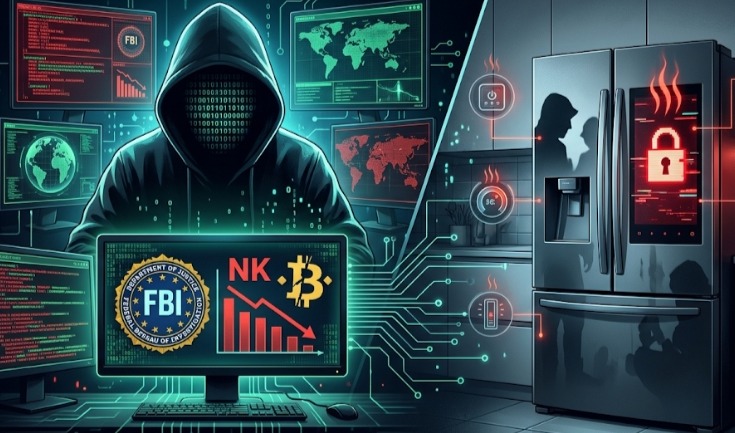
The Cyber Express Weekly Roundup: FBI Blames North Korea for $6B Binance Hack, Hackers Turn Up the Heat on Europe’s Fridges and More
6 de Novembro de 2026, 11:33






| Airline | Reported impact |
| Japan Airlines (JAL) | About 92,000 passenger records |
| Cathay Pacific Airways | About 53,000 passenger bookings |
| Singapore Airlines (SIA) | About 46,000 booking records |
| All Nippon Airways (ANA) | Up to 37,800 customer profiles |
| Malaysia Airlines | Customer data exposed across August 2023 to September 2026 |
| Korean Air | Unauthorised access to customer reservation databases |
| Asiana Airlines | Passenger booking references exposed through system account credentials |
| Condor Airlines | Part of the German leisure carrier's international flight data accessed |
| Airline | Link to the breach |
| Japan Transocean Air (JTA) | Affected through parent company Japan Airlines |
| Air Do | Affected through shared system pathways with ANA |
| StarFlyer | Affected through shared system pathways with ANA |
| Solaseed Air | Affected through shared system pathways with ANA |
| Ibex Airlines | Still determining the scope of exposure via its ANA integration |
| Oriental Air Bridge | Still determining the scope of exposure via its ANA integration |

The UK's National Cyber Security Centre (NCSC) has put a date on a threat that security teams across Europe have been bracing for. In its 2026 Annual Review, The State of the Cyber Nation, the agency assesses it is highly likely that AI-powered malware will be used in a ransomware attack on UK Critical National Infrastructure by 2028.
That is not a distant, speculative scenario. It is a two-year window, and it lands alongside a second judgement. By 2028, China, Russia and other nation-states will highly likely be using AI-enabled cyber capabilities routinely to pursue geopolitical goals, with the UK facing sophisticated attacks at greater scale and speed.
The review also recorded that UK and EU member states jointly attributed a December 2025 attack on Poland's energy grid to Russia's FSB Centre 16. Had it succeeded, roughly 500,000 citizens could have lost power. Europe is not watching this threat from the sidelines; it is where the playbook is being tested.
The NCSC's assessment is precise about where AI makes the difference. It calls AI an almost certain "force multiplier" that improves reconnaissance, social engineering, vulnerability discovery and exploit development. The biggest effect, it says, will be faster and larger versions of existing tactics rather than brand-new attack vectors.
Ransomware is where that acceleration hits CNI hardest. The review expects criminal adoption of AI to raise the scale and efficiency of ransomware, social engineering and exploitation. It also warns that open-source AI tools built for security researchers are likely to be repurposed to automate criminal workflows, cutting costs and raising attack volumes against less resilient targets.
The agency is careful not to overstate today's reality. Its Incident Management team has begun to see attackers using AI tools, but none of the observed uses enabled a new class of attack. Human operators remain essential, and the NCSC notes that losing control of an agentic AI is likely to hinder threat actors from reaching their goals.
The review's pessimistic 2028 scenario shows why that caveat may not last. In it, frontier AI is available to everyone from state actors to novice hackers, jailbroken models are sold in criminal marketplaces, and attribution becomes harder as capability spreads. It even describes a realistic possibility of an automated cyber actor operating beyond its operator's control. Cloud-controlled CNI and AI-driven robotics raise the chance that a digital compromise causes physical harm.
The NCSC stresses this is an illustration of the cost of inaction, not a forecast. But it is a scenario written by the agency responsible for defending UK infrastructure, and it is set just two years out.
If the UK is looking at 2028, continental Europe is already living with the threat. The NCSC names Russia as the most audacious cyber threat to the UK today. GCHQ Director Anne Keast-Butler goes further in the review's foreword, warning that tactics Russia developed against Ukraine are now being turned more widely on states and their institutions.
Three data points from the review frame the European picture:
The pattern matters for anyone running energy, water, transport or telecoms in Europe. Grids, interconnectors and supply chains cross borders, and a disruptive attack in one country can cascade into its neighbors. The review also describes how cyber threats to the UK can escalate rapidly and without warning during periods of geopolitical tension.
Add AI to this mix and the timeline compresses. A state actor that today relies on patience and known router flaws could, with AI-assisted discovery and exploitation, find and weaponize new weaknesses across thousands of European edge devices far faster than defenders can patch them.
While Russia is the loudest threat, the NCSC sees China as the most capable. It judges that China highly likely has both the intent and the best position to use AI against CNI and other strategic targets. Its frontier AI programmes are expected to sharpen vulnerability identification, targeting efficiency and access operations.
Data sits at the center of that strategy. The review describes China collecting large volumes of information from the UK and elsewhere, then using it to train models and improve capability. In the AI era, stolen data is no longer just espionage material; it is fuel.
The UK has already acted on this. In December 2025, it sanctioned two China-based firms: i-Soon, which targeted more than 80 government and private IT systems globally, and Integrity Technology Group, which the FBI has linked to the Flax Typhoon intrusions. In April 2026, the NCSC and 15 partners across nine other countries published guidance on the covert networks most China-linked actors use to hide their activity.
The 2028 scenario adds a further concern: China, as a leading developer, may help spread advanced AI-cyber capability to other actors, letting them hide in the noise and making attribution harder for European defenders.
The most useful finding in the review is also the least dramatic: attackers are still getting in through the basics. Over the past year, the NCSC received 1,831 reports of cyber attacks. Of these, 337 needed its direct support, and 80 were classed as nationally significant.
For large organizations, 88% of incidents started through four initial access vectors:
Even state-linked intrusions often used flaws for which patches already existed but had not been applied quickly enough. As the review puts it, sophisticated actors do not need to be sophisticated to gain initial access; their skill shows in what they do once inside.
This is exactly where AI changes the economics. The NCSC expects AI-assisted vulnerability discovery to give attackers more chances to hit systems before owners patch them. It is urging every organization to prepare for a "patch wave": a surge of security updates across the technology stack, many of them critical, as AI exposes years of technical debt.
Two further risks deserve attention:
The financial stakes are already clear. UK government research cited in the review puts the annual cost of malicious cyber activity to UK organizations at about £14.7 billion. The 2025 attack on Jaguar Land Rover alone cost the company around £196 million in direct costs and contributed to UK GDP growing just 0.1% in Q3 2025.
The NCSC's answer is to meet machine-speed attacks with machine-speed defense. Several initiatives in the review stand out:
There are early results. Under the Government Cyber Action Plan, the median time to fix domain-related vulnerabilities fell from 50 days to 8. The Early Warning service now covers 19,922 organizations, up 52% on last year.
For Europe, the lesson is that partnership is now part of the defense. The review highlights the world's first AI security standard developed through ETSI, the European standards body, as proof that allies can shape AI security while the technology is still evolving.
National defense at machine speed also depends on seeing adversaries before they reach the network. Groups like FSB Centre 16 and China-linked operators plan, recruit, and trade access in places most defenders never look. As AI makes attribution harder, government agencies, national CERTs, and defense bodies need intelligence that tracks threat actors across the open, deep, and dark web and connects that activity to the infrastructure being targeted. Cyble Hawk is built for exactly this. It gives national security teams sovereign threat intelligence, adversary profiling, and investigative support. That means early warning of campaigns against critical infrastructure and stronger attribution when an attack does land. Book a demo to see how your agency can move from reacting to incidents to anticipating them.
The NCSC's core message is that AI did not create these weaknesses; it is exposing them faster. Operators of critical infrastructure should act on the following now:
The NCSC has given Europe a deadline. By 2028, AI-powered ransomware against UK critical infrastructure moves from possibility to expectation, and state actors will be using AI as a routine part of their operations. The Poland grid attack and the global router campaign show the targeting is already in place; AI simply adds speed and scale.
The agency's own framing is a "moment of choice." Organizations that modernize, patch fast, and build resilience now will be able to absorb what comes next. Those that defer will find AI exposing their technical debt faster than they can repay it.
For CNI operators across the UK and Europe, the next two years are the window to close the gap. Continuous visibility into emerging vulnerabilities, active exploitation and threat actor activity will be central to staying ahead of attacks that move at machine speed.
The post AI-Powered Ransomware Is Coming for UK Critical Infrastructure, and Europe Is Already the Testing Ground appeared first on Cyble.







The INJ3CTOR3 toll-fraud operation has given its FreePBX implant a dangerous new capability. Cyble Research & Intelligence Labs (CRIL) documented the JOMANGY PHP webshell in May.
It has since analyzed artifacts collected from the operator’s staging servers on 9 September 2026 and found that the implant now sends victims’ SIP trunk, AMI, database, and mail-relay credentials off the server. As a result, wiping an infected host no longer ends the fraud.
INJ3CTOR3 has targeted Asterisk-based phone systems since at least 2020. That November, Check Point Research named the group for exploiting CVE-2019-19006 in FreePBX. Unit 42 linked it to attacks on Elastix in 2022, and Fortinet documented its EncystPHP webshell in January 2026.
The September version of the k.php script ends with two new base64-encoded lines. Each line holds 17 curl commands that upload configuration files from FreePBX, Issabel, and Elastix systems to /hima_data/index.php.
Cron beacons rerun k.php every minute, so the theft repeats constantly. If a victim changes passwords while the system is still infected, the new passwords leak within minutes. With a stolen trunk secret, attackers can register with the carrier from anywhere and place calls that never touch the victim’s PBX. The only exception is when the carrier limits the trunk to the victim’s IP addresses.
The “hima” name matches a backdoor account the malware creates. It also matches a Telegram user Check Point spotted in 2020 sharing a tool that scanned and cracked SIP ranges.
Plain-text commands now point to 160[.]119[.]69[.]4, while base64-encoded commands still reach 45[.]95[.]147[.]178. The credential upload targets both hosts. Both hosts stopped responding in late September. CRIL is urging law enforcement agencies and national CERTs to work with hosting providers to preserve the server data and sinkhole the addresses.
The core JOMANGY code is largely unchanged, but the identifiers defenders were told to hunt for have changed:
The panel can also forge a FreePBX admin session through the ampuser class and setAdmin(). This means changing the admin password does not lock the attacker out.
The malware plants an .htaccess file in /var/www/html/admin/views/. It routes any request containing an encoded space or tab, such as %20 or %09, to config.php. Access logs record only the requested path, never the webshell’s filename, so searching logs for the shell by name can come up empty.
Trunks written directly to /etc/asterisk files such as pjsip_custom.conf also stay invisible in the FreePBX console. Administrators should audit through Asterisk CLI commands such as pjsip show endpoints and compare the results with what the console lists.
Shadowserver counted more than 900 compromised FreePBX instances in February 2026, and over 700 were still infected in May. Sangoma’s patch for CVE-2025-57819 blocks new exploitation but does not clean systems that are already compromised.
CRIL recommends this order:
CRIL’s report-only beagle.sh script can help with triage. Because the operator keeps rotating hashes and hosts, detection based on behavior and file origin will outlast hunting for specific hashes.





A decade-old flaw in the language behind much of the web, found by AI and serious enough to take Wikipedia offline. Driving licenses sold for AED 10,000 to people who never sat for a test. A police sweep across 21 African countries that ended in more than 1,400 arrests.
This weekly roundup covers stories where the weak point was not always a firewall, but the trust built into code libraries, license agreements, and the frameworks organizations use to measure their own security.
Here are the stories that shaped the week.
Two critical vulnerabilities in PHP, the scripting language that powers a large share of the web, have triggered urgent patching warnings from agencies around the world. Dubbed PHP2Shell and tracked as CVE-2026-109618 and CVE-2026-109619, the flaws have already been linked to outages at Wikipedia and a number of government websites. Read more…
An INTERPOL-coordinated crackdown spanning 21 countries has ended in 1,462 arrests. Operation Serengeti III ran from June to August 2026 and targeted fraud, ransomware, business email compromise and online scams. Investigators disrupted 10,909 malicious networks and recovered more than USD 105 million. The operation also identified nearly 66,000 victims, linked to combined losses of more than USD 385 million. Read more…
The Australian Signals Directorate has launched ASD Essentials, a broader successor to the Essential Eight, the security baseline Australian organizations have long been measured against. Where the Essential Eight centered on a fixed set of mitigation strategies, the new framework extends its scope to enterprise IT, operational technology and cloud environments. Read more…
Dubai Police have arrested an eight-member gang that sold driving licenses for AED 10,000 each. Customers received licenses issued in a neighboring country without ever travelling there, taking a lesson or sitting a test. The gang then helped buyers convert those licenses into UAE licenses by exploiting legitimate license exchange agreements between the two countries. Read more…
Fintech firms vet their commercial vendors closely, but the open-source libraries, container images and third-party components inside their systems often arrive with far less scrutiny. That mismatch leaves a blind spot in how financial technology companies manage risk. Vijendra Katiyar of CleanStart points to examples such as a widely used Redis image that carried 185 known CVEs, and the Shai-Hulud worm, which spread through malicious npm packages. Read more…
Taken together, this week’s stories show how much of today’s risk comes from what organizations already trust: decade-old code, inherited software components, official exchange agreements and security checklists that measure effort rather than results. Follow The Cyber Express for next week’s weekly cybersecurity roundup and ongoing coverage of these stories.
site-verification-ok
site-verification-ok

A cybercrime crackdown spanning 21 countries has led to 1,462 arrests, the disruption of 10,909 malicious networks and the recovery of more than USD 105 million in illicit funds, making Operation Serengeti III one of the largest cybercrime enforcement operations Africa has seen.
Coordinated by INTERPOL between 29 June and 31 August 2026, the operation targeted cyber-enabled fraud, ransomware, business email compromise (BEC), online scams and digital extortion. Authorities identified 65,929 victims of cybercriminal networks, while financial investigations linked the activity to losses exceeding USD 385 million.
The operation comes as INTERPOL’s African Cyber Threat Assessment Report 2026 describes a rapidly evolving environment, with artificial intelligence increasingly enabling cybercrime across the continent and cyber-enabled financial losses still rising.
Ahead of Operation Serengeti III, investigators from 20 African countries and the United States received actionable intelligence on suspicious domains, IP addresses and command-and-control infrastructure tied to criminal activity. Private-sector partners supplied intelligence, technical analysis and operational expertise, helping authorities identify targets, map criminal networks and support investigations across the region.
INTERPOL’s Director of Cybercrime, Neal Jetton, said:
“Cybercrime networks operate without regard for borders, exploiting technology to target victims on an unprecedented scale.
“Operation Serengeti III reinforces a clear message: while cybercrime is increasingly borderless, international cooperation remains one of the most effective tools for disrupting criminal networks, recovering criminal assets and protecting communities from digital harm.”
In Uganda, authorities dismantled two transnational fraud rings and arrested 365 foreign nationals tied to online investment and pension fraud schemes targeting victims in Asia. A suspected scam call centre ran on a rotating model, using scripted communications, fake trading platforms and fraudulent websites to lure pensioners into non-existent investments.
In Angola, investigators shut down two illegal cryptocurrency mining centres, arrested nine suspects and seized more than 2,000 mining devices along with six illegal power transformation stations. The electrical infrastructure alone was valued at over USD 1 million.
In Nigeria, police arrested a suspect behind a large-scale phishing and BEC operation that harvested software credentials and amassed roughly 2.1 million email addresses, and recovered a luxury vehicle believed to have been bought with criminal proceeds. A separate Nigerian probe into an international investment fraud scheme promoted via messaging apps led to another arrest, with more than USD 2.4 million in suspected proceeds traced, much of it laundered through cryptocurrency.
Elsewhere, authorities dismantled a malicious mobile loan application scheme in Tanzania, disrupted a social media-based vehicle import fraud network in Gabon and arrested 30 suspects linked to a cybercrime operation in the Republic of Congo.
Several investigations stemming from Operation Serengeti III remain active, as authorities work to identify more suspects, trace illicit proceeds and analyse seized digital evidence.
Supporting partners included Group-IB, Kaspersky, Fortinet, TrendAI, Team Cymru, Uppsala Security, Cybercrime Atlas, Meta, the Global Anti-Scam Alliance and the Postal and Telecommunications Regulatory Authority of Zimbabwe. The operation was co-funded by the Global Action on Cybercrime Enhanced (GLACY-e) project, a joint initiative of the European Union and the Council of Europe.
Participating countries were Angola, Benin, Cameroon, Congo, Côte d’Ivoire, Democratic Republic of Congo, Eswatini, Gabon, Gambia, Ghana, Kenya, Mozambique, Nigeria, Rwanda, Senegal, South Africa, Tanzania, Uganda, the United States, Zambia and Zimbabwe.
site-verification-ok
site-verification-ok

Japan is preparing to set up a dedicated team to run AI-driven cyberattack simulations to expose weaknesses in technology systems. Japan’s plan for AI cyberattack simulations comes as organizations worldwide scramble to address critical PHP flaws that have disrupted parts of the internet.
Speaking on Friday, Industry Minister Ryosei Akazawa said those defending against cyber threats need to think like attackers, using AI proactively to uncover potential weak points before they can be exploited.
His comments follow widespread disruption caused by the disclosure of the PHP flaws, which led to millions of reported hacking attempts. Businesses and governments were forced to patch their systems or temporarily take websites offline.
Because PHP is widely used to build and run websites and web applications, any weakness in the language poses a risk to organizations across many sectors.
The vulnerabilities triggered precautionary shutdowns across banking, transport, airline and government services in several countries.
In Japan, Nomura, Mitsubishi UFJ Financial Group, ANA and East Japan Railway temporarily halted some online services. The Ministry of Finance, the National Tax Agency and the Meteorological Agency also suspended certain digital services as part of their security response.
On Friday, JR East said some of its services were back online, while others would resume only after safety checks. Nippon Paint said it had applied a security patch and restored its website.
The disruption shows how difficult it is to secure interconnected digital infrastructure when a widely used software component turns out to have serious weaknesses.
The fallout also reached services people rely on in a crisis. Telecommunications company SoftBank said it was temporarily suspending its mobile emergency alert system while it carried out maintenance to fix a PHP vulnerability.
While the system is down, customers will not receive early warnings through it for earthquakes, tsunami threats, disasters, or evacuation information. The case shows that cybersecurity incidents can extend well beyond ordinary websites and interrupt access to vital public safety information.
The episode has put a fresh focus on finding vulnerabilities before attackers do. The Japan AI cyberattack simulations are designed to help defenders understand how weaknesses might be targeted and to sharpen their response capabilities, in line with the approach Ryosei Akazawa outlined.
Simulation alone is not enough, however. Installing patches remains essential, and organizations need to test updated systems carefully before bringing services back, especially where transport, finance, and government operations are affected.
As AI tools grow more capable for both attackers and defenders, businesses and governments face the task of pairing fast vulnerability detection with effective security updates, continuous monitoring, and resilient digital infrastructure.
site-verification-ok
site-verification-ok

A Yonsei University cyberattack has compromised the personal information of roughly 10,000 students and graduates after outsiders gained unauthorized access to the school’s online portal. The breach comes months after Sogang University disclosed a far larger leak.
The university’s Office of Information and Communications confirmed the breach in a notice sent to affected individuals on Thursday. “The personal information of some university members was confirmed to have been leaked following unauthorized external access to the Yonsei Portal Service,” the office stated.
The compromised data included student identification numbers, mobile phone numbers, and email addresses, along with system management details such as login identification keys and the number of failed password attempts on affected accounts. Resident registration numbers were not exposed.
From 1 p.m. Thursday, affected individuals could check on Yonsei University’s official website which details were compromised.
The cyberattack on Yonsei University reportedly began at around 7:41 p.m. on Tuesday.
“An attack on the university’s system was detected at the time, and we immediately blocked the IP [internet provider] address,” a university representative told the JoongAng Ilbo. “While we were analyzing the cause at around 10 a.m. the following day, a second hacking attempt was made from a different IP address, which we also blocked.”
Yonsei reported the incident to the Personal Information Protection Commission (PIPC) on Wednesday afternoon. The Personal Information Protection Act requires organizations to report a personal data breach within 72 hours of becoming aware of it and to notify affected individuals.
“We plan to gather additional evidence related to the hacking attacks and refer the case to investigative authorities,” the representative said.
The university also plans a comprehensive security review of its systems, along with stronger monitoring and security measures. It urged students and graduates to be wary of text messages, phone calls, and emails claiming to be from the university, and to avoid clicking links from unknown sources or entering personal information on suspicious websites.
The cyberattack on Yonsei University follows a series of attacks on higher education institutions. On Aug. 14, Sogang University suffered an external cyberattack that exposed approximately 180,000 records containing personal information of students, graduates, and university staff, according to a notice posted on the Sogang University website.
The problem goes beyond recent cases. According to data the Ministry of Education submitted to People Power Party Rep. Kim Meen-geon, personal data breaches at universities affected 2.8 million people between 2022 and July this year.
Experts have called for more cybersecurity personnel and greater funding as hacking attacks grow increasingly sophisticated, including through the use of AI.
“Just as the government develops information security measures for small- and medium-sized businesses, it should establish support measures to strengthen cybersecurity at universities,” said Kim Seung-joo, a professor at Korea University’s School of Cybersecurity. “Support appears particularly necessary for private universities that lack sufficient funding for cybersecurity.”
site-verification-ok
