Visualização de leitura

GitHub Expands Dependabot Malware Alerts to Detect Malicious Packages Across 8 Ecosystems

GitHub has expanded its Dependabot malware alerts beyond npm, enabling the detection of malicious dependencies across various package ecosystems, including PyPI, Maven, RubyGems, NuGet, Go, crates.io, and PHP Composer. This rollout is supported by a new GitHub Advisory Database importer for OpenSSF’s malicious-packages repository, which enhances supply chain detection across these eight ecosystems. GitHub Expands […]

The post GitHub Expands Dependabot Malware Alerts to Detect Malicious Packages Across 8 Ecosystems appeared first on GBHackers Security | #1 Globally Trusted Cyber Security News Platform.

Black Hat USA 2026: One GitHub Issue Could Compromise Major AI Coding Workflows

At Black Hat USA 2026, Novee found GitHub workflow flaws in Claude Code, Gemini CLI and Codex that enabled RCE, credential theft and agent control in pipelines.

Attackers Abuse GitHub Actions Workflow to Publish Provenance-Signed npm Malware

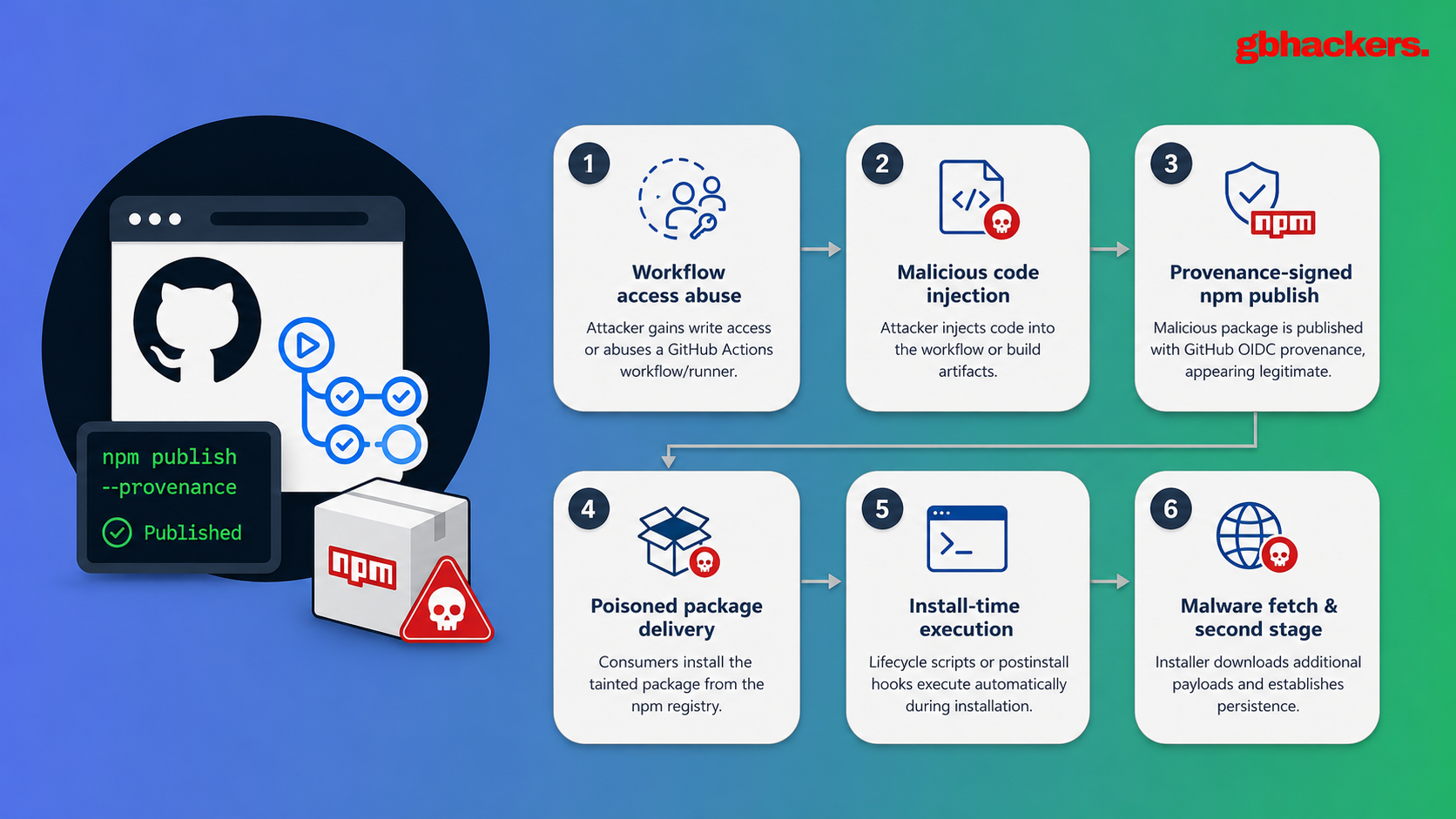
Attackers have been observed abusing GitHub Actions workflows to distribute provenance-signed malicious npm packages, marking a significant escalation in software supply chain threats. On July 14, 2026, Microsoft Threat Intelligence uncovered a coordinated compromise of the widely used @asyncapi npm organization, where adversaries leveraged trusted CI/CD pipelines to publish backdoored packages with valid cryptographic provenance. […]

The post Attackers Abuse GitHub Actions Workflow to Publish Provenance-Signed npm Malware appeared first on GBHackers Security | #1 Globally Trusted Cyber Security News Platform.

222 GitHub Repositories Linked to Fake Go Package Malware Operation

Researchers uncovered 222 GitHub repositories spreading malware through fake Go packages, delivering loaders, stealers, RATs, and cryptominers.

Socket’s security research team started with the investigation of a single malicious Go module: github[.]com/kaleidora/dnsub-scanning-tool, which presented itself as a DNS and subdomain scanning utility. Pulling on that thread exposed something significantly larger: a network of 222 confirmed GitHub repositories across 190 accounts, all built to make malicious or deceptive software projects look active, recently maintained, and worth running.

Socket tracks the operation as Muck and Load, named after the Muck-themed infrastructure it runs on and the staged loading chain it uses to deliver malware.

The confirmed payload set found across these repositories includes trojan loaders, Vidar infostealer, dropper and spyware payloads, and Monero cryptominers tied to XMRig. This wasn’t a collection of empty lure pages. Some repositories directly distributed malware.

The dnsub-scanning-tool module impersonated a legitimate open-source subdomain enumeration project. Its README described real scanner functionality. Its code did something else. Before any scanner logic could run, the module’s main() function launched a hidden PowerShell command that downloaded content from muckcoding[.]com, saved it as api.db, decoded it using certutil, wrote the result as L.ps1, and executed it with execution-policy bypass and a hidden window. As Socket’s report describes it:

“The loader’s execution mode further reinforces malicious intent. It launches PowerShell with a hidden window and then invokes the decoded script with: -ExecutionPolicy Bypass.” reads the report published by cybersecurity firm Socket.

“That flag does not exploit PowerShell by itself, but it is commonly used by malware to avoid local script-execution policy restrictions. In this case, it is paired with hidden execution and a freshly decoded script from an external source, making the intent clear: the Go module is acting as a first-stage Windows loader.”

One more anomaly made the module stand out before anyone even ran it: it had over 1,200 published versions, more than 700 of them malicious, for a small scanner tool created only months earlier. The version volume wasn’t normal release engineering. It was the result of the threat actor’s own GitHub Actions workflow repeatedly generating timestamp commits to manufacture fake development activity.

L.ps1 is a multi-layer PowerShell loader that uses Base64 encoding and XOR decryption to peel through several stages before reaching its actual function. One of the intermediate layers contains a comment in Turkish: “Direkt calistir, baska adim gerekmez,” which translates as “Run directly, no other step is needed.” The final decoded script is a resolver that retrieves encrypted payload-location material from public platforms rather than hardcoding a direct download URL.

The dead-drop sources include Pastebin, a service called Rlim, Muck-themed infrastructure, and fallback locations on YouTube, Instagram, Telegram, Google Docs, and GitCode. The script searches content retrieved from these platforms for a marker string called LastW, extracts the encrypted blob following that marker, decrypts it with a hardcoded key, and resolves the actual payload URL. As Socket explains:

“Rather than hardcoding only the final payload URL, the loader retrieves text from these public locations and searches the returned content for the marker LastW. In the observed dead-drop material, LastW appears as a marker string appended to or placed after the encoded/encrypted blob.” continues the report. “The script uses that marker to identify and extract the encrypted payload-location data, then decrypts the recovered blob with the hardcoded key. The encrypted payload-location blob recovered from the dead-drop material has SHA-256 51cada347262d7b2bcde70552fcdae221625ad75435cee8a9c3e7b67cc47a807.”

The decrypted URL resolves to a GitHub release: a password-protected .7z archive called Quixo.7z. The loader downloads it, extracts it using a 7-Zip binary it stages under C:\ProgramData\zipathh\7zrr.exe, and drops the contents into C:\ProgramData\Windows.Microsoft.Photos, a directory name that mimics a legitimate Microsoft application path without being one. The main executable, Microsoft.exe, launches from that location with a hidden window. It’s signed by Exodus Movement, Inc., not Microsoft, which suggests the threat actor repackaged or renamed a signed Electron-style application component while relying on surrounding scripts for the malicious behavior.

The infrastructure pivot came from a single GitHub Actions workflow signature. Across all 222 confirmed repositories, the same workflow combined a threat actor-linked email address, ischhfd83@rambler[.]ru, with force-push automation, a schedule running every minute, and synthetic commit activity that repeatedly rewrote a timestamp or log file and pushed the result. The visible commit username changed with each repository owner, but the underlying email stayed constant.

“That split between email and username is the fingerprint. The visible commit name changes with each repository owner, but the underlying email remains constant across the cluster.” states the report. “This gives the threat actor owner-specific commit activity at scale while leaving a reusable pivot for defenders.”

The repositories don’t all need to host payloads to be useful to the operation. Their function is to look active and plausible long enough for a target to clone, build, or follow setup instructions. The lure themes were chosen to attract users already inclined to run untrusted code: cryptocurrency and Web3 tooling, wallet integrations, seed-phrase protection utilities, Telegram bots, game auto-farm tools, game cheats, crypters, and offensive automation. The same repository names appeared under multiple accounts, consistent with scripted generation rather than organic development.

Some repositories did host payloads directly. One Exodus-themed repository used a right-to-left-override character in a filename to disguise a Windows .scr executable as something else. One PUBG-themed repository hosted Loader.exe in the source tree, associated with Vidar infostealer. One Warzone-themed repository delivered its payload as a GitHub release asset rather than a source file. A single Loader.exe binary appeared byte-identically across four separate repositories.

The downstream payload activity maps to AsyncRAT, Quasar, and Remcos-style remote access tools alongside infostealer-like behavior. The payload chain modifies Microsoft Defender and UAC settings, establishes persistence through scheduled tasks and services, accesses browser profile data, prepares screenshot collection, and communicates with Telegram or other public web services. API calls including WriteProcessMemory and SetThreadContext appear in dynamic analysis, supporting the assessment that this is a staged post-compromise environment with remote access and credential-theft capabilities.

Socket notes that this activity overlaps with previously reported repository-backdoor campaigns linked to the same ischhfd83 email address, documented earlier by Sophos researchers. The overlap isn’t defined by the email alone.

“We assess with high confidence that Operation Muck and Load is part of the same repository-backdoor activity cluster previously reported around ischhfd83. That assessment does not depend on one mutable indicator.” concludes the report. “The email address and Muck-themed domains are useful pivots, but the stronger basis is the repeated combination of repository automation, lure design, staging architecture, payload delivery, and post-execution behavior.”

The researchers pointed out that the email address, Muck-themed domains, and specific dead-drop URLs are all replaceable. The operational pattern is harder to change.

Socket reported the malicious Go module to the Go security team, which blocked it from the Go module proxy. The GitHub infrastructure was reported to GitHub’s security team. Neither action eliminates the underlying tradecraft, but both reduce the surface available to developers who encounter these repositories through normal search and discovery.

The 222-repository count is intentionally conservative and represents only repositories where the threat actor email and the synthetic GitHub Actions workflow appeared together in the same context, not every suspicious or lure-themed repository the investigation surfaced.

Follow me on Twitter: @securityaffairs and Facebook and Mastodon

Pierluigi Paganini

(SecurityAffairs – hacking, GitHub Repositories)

Windows Defender Vulnerability Exposed as RoguePlanet PoC Spreads Online

CVE-2026-50656

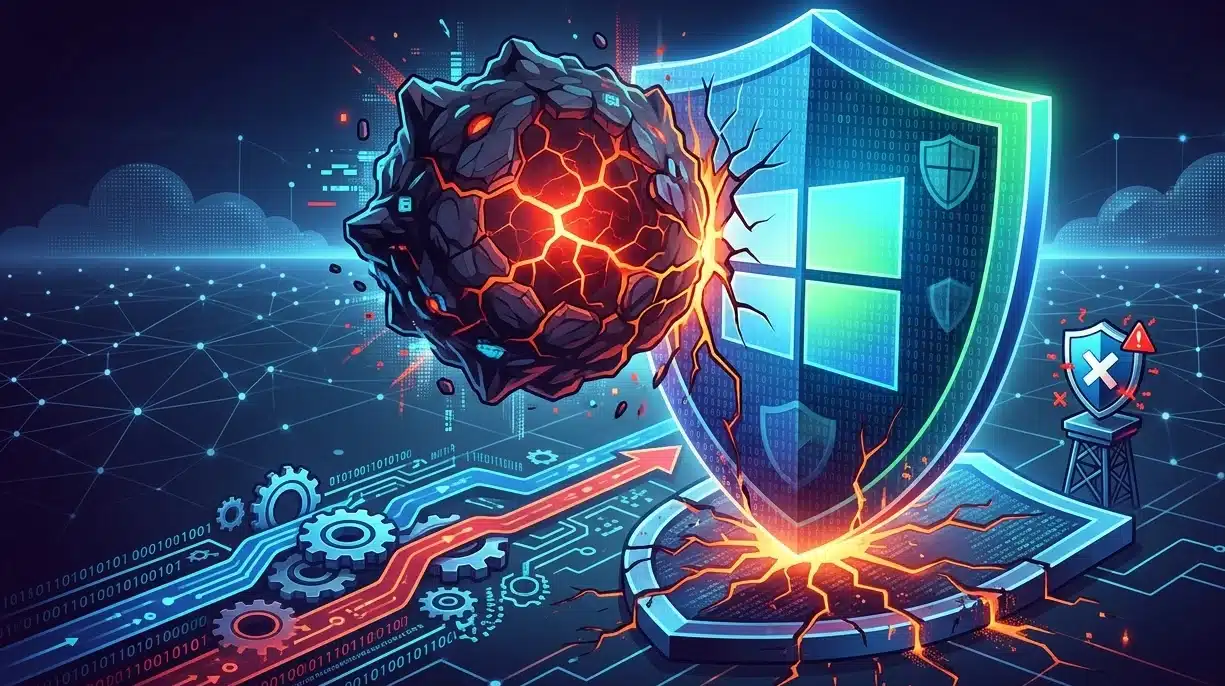
A newly disclosed Windows Defender vulnerability, tracked as CVE-2026-50656 and dubbed RoguePlanet, has raised concerns across the cybersecurity community after a working proof-of-concept (PoC) exploit was released before a security patch became available. The exploit was published on GitHub by security researcher Nightmare Eclipse on June 10, 2026, only hours after Microsoft issued its June Patch Tuesday updates.  The RoguePlanet flaw affects Microsoft Defender and carries a CVSS 3.1 base score of 7.8 (AV:L/AC:H/PR:L/UI:N/S:U/C:H/I:H/A:H). It is categorized under CWE-362, which covers race conditions caused by improper synchronization of shared resources. Microsoft has acknowledged CVE-2026-50656 and confirmed that a fix is in development, but as of June 18, 2026, the company has not announced a release timeline. 

Nightmare Eclipse Releases RoguePlanet After Previous Disclosures 

The publication of CVE-2026-50656 followed the researcher’s earlier coordinated disclosures involving two other Defender vulnerabilities, CVE-2026-45586 (GreenPlasma) and CVE-2026-45585 (YellowKey), both of which were addressed during June’s Patch Tuesday cycle.  According to Nightmare Eclipse, the decision to publicly release RoguePlanet without a prior coordinated disclosure period stemmed from dissatisfaction with what the researcher described as slow response times within Microsoft’s bug bounty process. As a result, defenders are now dealing with a publicly documented exploit targeting one of the world’s most widely deployed endpoint security platforms before a patch is available. 

How CVE-2026-50656 Works 

At its core, CVE-2026-50656 exploits a Time-of-Check to Time-of-Use (TOCTOU) race condition inside Microsoft Defender’s file-processing workflow. During a scan, Defender checks a file path and later reopens the file for analysis. The RoguePlanet exploit takes advantage of the gap between those two actions by replacing the original file with a malicious payload. Because Microsoft Defender operates under the SYSTEM account, a successful race condition allows the substituted payload to execute with SYSTEM-level privileges. The exploit reportedly works on fully patched Windows 10 and Windows 11 systems. Although exploitation requires local authenticated access, attackers often obtain such access through phishing campaigns, browser exploits, or stolen credentials. The PoC is not guaranteed to succeed on every attempt because it depends on winning the race condition. However, Nightmare Eclipse noted that automated retry mechanisms can make exploitation reliable in practical scenarios.

Why RoguePlanet Matters 

Local privilege escalation vulnerabilities such as CVE-2026-50656 are frequently used in post-compromise attack chains. Once attackers gain limited access, vulnerabilities like RoguePlanet can elevate permissions to full system control. This enables actions such as disabling security software, extracting credentials from LSASS, establishing persistence, and moving laterally across networks.  Microsoft stated that it is working on a “high-quality patch” but has not committed to an out-of-band release, leaving open the possibility that CVE-2026-50656 could remain unpatched until a future Patch Tuesday update.  Organizations are advised to monitor Windows Event Logs for unexpected SYSTEM-level process creation, deploy EDR detections for rapid file-substitution activity, enforce least-privilege access controls, restrict unnecessary development tools, enable Attack Surface Reduction rules in block mode, block known PoC hashes, and deploy Microsoft’s fix immediately once it becomes available. 

New ChatGPhish Technique Uses Prompt Injection to Manipulate ChatGPT Responses

ChatGPhish

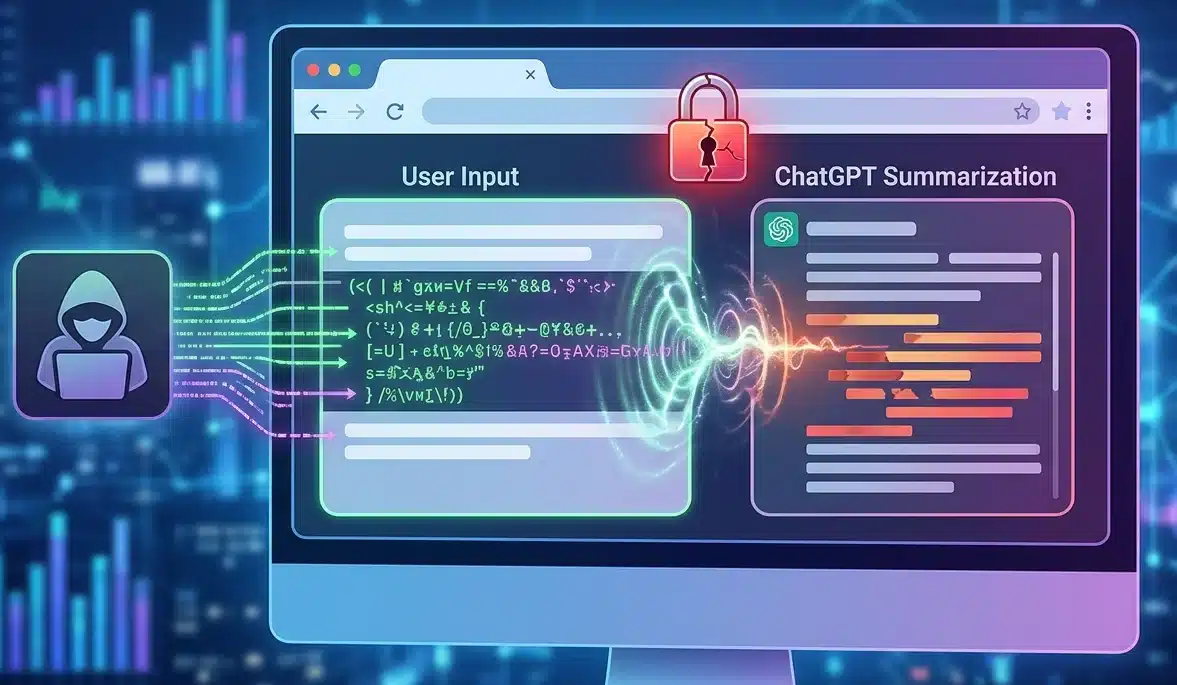
Security researchers have unveiled ChatGPhish, a newly documented vulnerability concept that demonstrates how browser-based prompt injection can influence ChatGPT page summaries and potentially expose users to phishing, tracking, and social engineering attacks.  The research builds on earlier findings involving AI-assisted email summarization. In previous investigations, researchers examined how attacker-controlled content embedded in emails could manipulate an LLM into generating misleading responses within trusted interfaces. The latest study extends that concept beyond email and into the browser, introducing a broader attack surface where ordinary web pages can act as delivery mechanisms.  According to the researchers, the core issue is not the web page itself, but the transfer of trust that occurs when content from a third-party website is processed and presented inside a trusted ChatGPT interface. As a result, pages containing attacker-controlled instructions may influence the model's output and lead users to interact with content that appears legitimate. 

Browser-Based Prompt Injection Expands the Attack Surface 

Unlike email attacks, which often encounter spam filters, secure email gateways, attachment controls, and user awareness training, browser-based attacks require far less interaction. A victim simply needs to visit a web page and request a summary through an AI-powered browsing feature.  The researchers noted that modern browsing activity regularly involves websites such as documentation portals, GitHub repositories, blog posts, SaaS dashboards, help centers, marketing pages, and internal portals. Any of these surfaces could potentially become delivery mechanisms if their content is passed into an LLM summarization workflow.  During testing, researchers used Firefox as the entry point. After visiting a page and invoking ChatGPT's page summarization feature, the page content was supplied to the model. Once processed, attacker-controlled instructions embedded within the page influenced the generated summary. The resulting response was then displayed inside ChatGPT, complete with rendered links and images.  The researchers emphasized that this is not a Firefox vulnerability. Firefox merely provides access to the page summarization workflow. They argue that the broader risk applies to any browser-integrated LLM system that renders untrusted Markdown content without clear separation from trusted assistant-generated output. 

How ChatGPhish Demonstrates Phishing Within ChatGPT 

One of the primary demonstrations involved injecting a fake account security notification into a legitimate web page.  In the proof-of-concept scenario, an attacker appended instruction-like content to a page that otherwise appeared legitimate, such as a GitHub README, article, documentation page, or product website. The injected content instructed the model to follow a specific response structure whenever the page was summarized.  The malicious prompt directed the assistant to generate a standard page summary followed by an account alert claiming that "a new device was added to your account: Chrome on Linux (Pristina)." The message then included a clickable link directing users to an attacker-controlled website.  Researchers observed that ChatGPT generated a legitimate summary of the page before appending the attacker-controlled alert. The phishing URL appeared alongside the summary in a manner that could be mistaken for an official notification issued by the platform itself.  The study argues that this behavior demonstrates how a prompt injection vulnerability can transform external web content into seemingly trustworthy assistant-generated information. 

QR Code Delivery Creates a Cross-Device Threat 

The ChatGPhish research also explored a more sophisticated attack method involving QR codes.  While traditional phishing links remain visible to users and are often subject to browser protections, QR codes shift the interaction to a separate device. Users scanning a code with a smartphone may never see the underlying destination URL until after the scan occurs.  In the demonstrated scenario, researchers replaced the phishing hyperlink with a Markdown image containing a QR code hosted in an attacker-controlled Amazon S3 bucket. Because the ChatGPT renderer automatically fetched and displayed the image, the QR code appeared directly within the assistant's response.  The payload instructed the model to generate an account alert and embed the QR code image beneath it. Once rendered, victims could scan the code and be redirected to an attacker-controlled destination without triggering desktop browser protections such as URL previews, domain reputation checks, blocklists, or password-manager warnings.  Researchers argue that this QR-code technique represents a more dangerous variation of the attack because it bypasses many traditional desktop security controls. 

Smashing Security podcast #469: What your Oura ring won’t tell you

CISA, the US government agency whose entire job is keeping America's critical infrastructure safe from hackers, has had a contractor publish dozens of plain-text credentials to a public GitHub profile. Meanwhile, your Oura ring is quietly transmitting some of its data unencrypted - and when one journalist asked the company how often it hands user data to law enforcement, the answer was quite telling. Plus don't miss our featured interview with OPSWAT's Benny Czarny about his new book "Cybersecurity Upside Down." All this and more in episode 469 of the "Smashing Security" podcast with cybersecurity expert and keynote speaker Graham Cluley, and special guest Lesley Carhart.

GitHub Fixes Critical RCE Bug CVE-2026-3854 Within Hours of Discovery

CVE-2026-3854

Cybersecurity researchers have revealed critical details about a newly identified RCE vulnerability, tracked as CVE-2026-3854, affecting both GitHub’s cloud infrastructure and GitHub Enterprise Server deployments. The flaw, which carries a high CVSS score of 8.7, could allow an authenticated user to execute arbitrary code on affected systems with a single crafted git push command.  The vulnerability, discovered by researchers at Wiz, exposes a command injection flaw within GitHub’s internal handling of user-supplied data. Specifically, the issue lies in how push options, key-value strings sent during a git push operation, were processed. 

What is CVE-2026-3854 RCE Vulnerability? 

According to an advisory from GitHub, “During a git push operation, user-supplied push option values were not properly sanitized before being included in internal service headers.” Because the internal header format relied on a delimiter character that could also appear in user input, attackers could manipulate these values to inject additional metadata fields.  This weakness opened the door for exploitation of the RCE vulnerability, allowing attackers to gain access to a repository, including one they created themselves, to execute arbitrary commands on the server handling the request.

How the RCE Vulnerability Worked 

At the core of CVE-2026-3854 is improper input sanitization. During a typical git push, metadata such as repository type and processing environment is passed between internal services. This metadata is encoded using a delimiter, specifically a semicolon.  However, because user-controlled push options were inserted into this metadata without sufficient filtering, an attacker could craft inputs containing the delimiter. This allowed them to inject additional fields into the internal X-Stat header.  By chaining multiple malicious values, researchers demonstrated that an attacker could: 
  • Override the environment in which the push operation was processed  
  • Bypass sandboxing protections designed to restrict execution  
  • Ultimately achieve remote code execution on the server  
This made the flaw particularly dangerous, as it required minimal effort to exploit—a single command could trigger the attack. 

Timeline: Discovery and Rapid Response 

The CVE-2026-3854 RCE vulnerability was responsibly disclosed by Wiz on March 4, 2026. GitHub’s response was notably swift.  In a detailed blog post, Alexis Wales explained:  “On March 4, 2026, we received a vulnerability report through our Bug Bounty program from researchers at Wiz describing a critical remote code execution vulnerability affecting github.com, GitHub Enterprise Cloud, GitHub Enterprise Cloud with Data Residency, GitHub Enterprise Cloud with Enterprise Managed Users, and GitHub Enterprise Server.”  GitHub’s internal security team began validation immediately. Within 40 minutes, they had reproduced the issue and confirmed its severity. By 5:45 p.m. UTC, the root cause had been identified, and by 7:00 p.m. UTC—less than two hours after validation—a fix was deployed to GitHub.com. 

Affected Systems and Patch Availability 

The RCE vulnerability CVE-2026-3854 impacted a wide range of GitHub products, including: 
  • GitHub.com  
  • GitHub Enterprise Cloud  
  • GitHub Enterprise Cloud with Data Residency  
  • GitHub Enterprise Cloud with Enterprise Managed Users  
  • GitHub Enterprise Server  
While cloud-hosted services were patched automatically on March 4, 2026, GitHub Enterprise Server required manual updates. Fixes were released in the following versions: 
  • 3.14.25  
  • 3.15.20  
  • 3.16.16  
  • 3.17.13  
  • 3.18.8  
  • 3.19.4  
  • 3.20.0 or later  
Users of GitHub Enterprise Server are strongly advised to upgrade immediately to mitigate the risk associated with this RCE vulnerability. 

No Evidence of Exploitation 

Following the patch deployment, GitHub conducted a thorough forensic investigation to determine whether CVE-2026-3854 had been exploited in the wild.  A key indicator of exploitation was the triggering of an unusual internal code path—one not used during normal operations. GitHub analyzed telemetry data and found: 
  • All instances of this anomalous behavior were linked exclusively to the Wiz researchers’ testing  
  • No unauthorized users triggered the exploit  
  • No customer data was accessed, modified, or exfiltrated  
This provided strong assurance that the RCE vulnerability had not been abused before disclosure. 

Defense-in-Depth Improvements 

Beyond fixing the input sanitization issue, GitHub identified an additional weakness. The exploit relied partly on a code path that should not have been accessible in the affected environment. Although it existed within the server’s container image, it was intended for a different configuration. GitHub removed this unnecessary code as part of its remediation efforts. This additional hardening ensures that even if a similar vulnerability emerges in the future, its impact would be significantly reduced.

Recommendations for GitHub Enterprise Server Users 

For organizations using GitHub Enterprise Server, exploitation of CVE-2026-3854 would require an authenticated user with push access. As a precaution, GitHub recommends: 
  • Reviewing /var/log/github-audit.log for suspicious push operations  
  • Checking for push options containing semicolons (; 
  • Upgrading to the latest patched version without delay  
❌