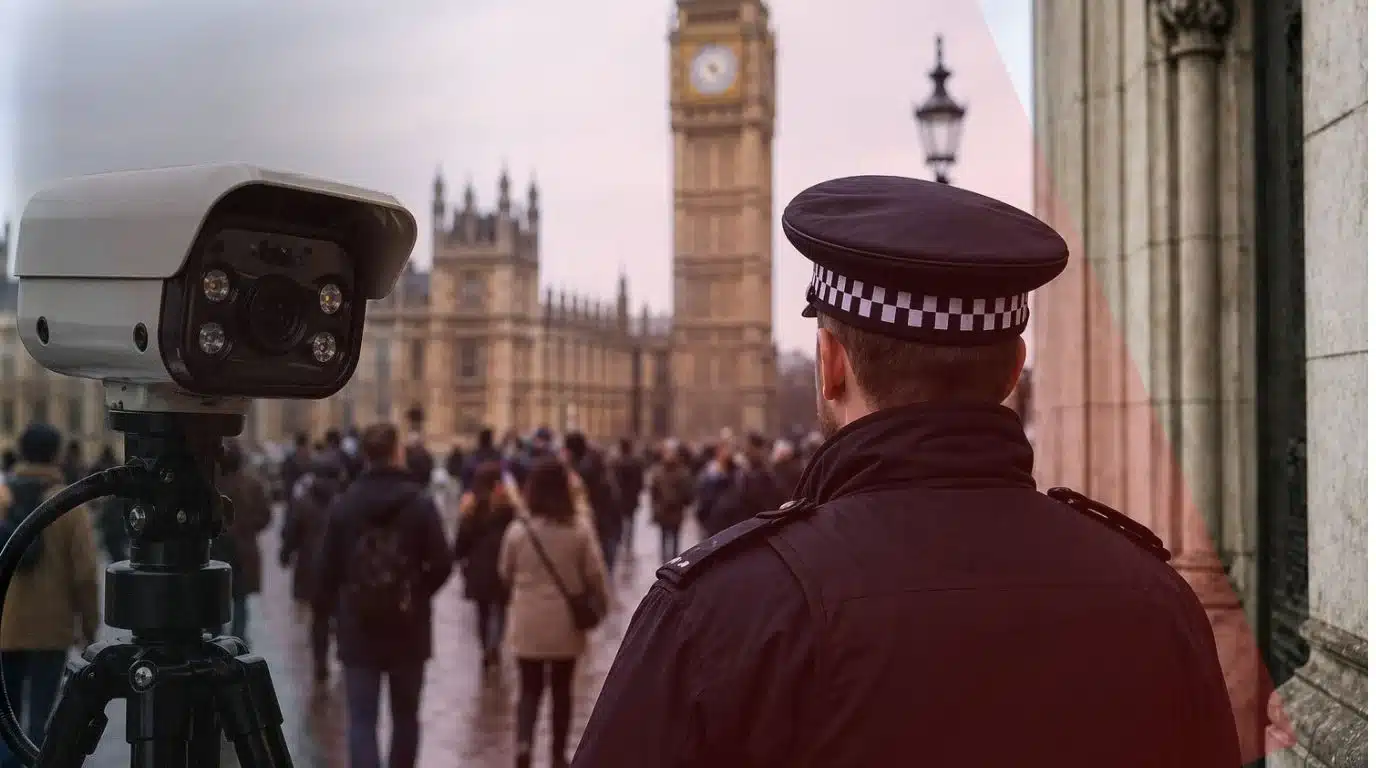
A Live Facial Recognition Policy used by the Metropolitan Police Service has been upheld by the High Court of Justice, marking a significant legal development in the use of surveillance technology in the UK. The ruling, delivered on April 21, 2026, dismissed a legal challenge that questioned whether the policy allows excessive discretion in how facial recognition is deployed.
The case, brought by civil liberties campaigners, focused on whether the Live Facial Recognition Policy complies with protections under the European Convention on Human Rights, particularly rights related to privacy, expression, and assembly.
Challenge to Live Facial Recognition Policy and Legal Grounds
The
judicial review was filed by Shaun Thompson and Silkie Carlo, director of Big Brother Watch. The claimants argued that the Live Facial Recognition Policy gives police officers too much freedom to decide where and how the technology is used, potentially leading to arbitrary surveillance.
Their case relied on Articles 8, 10, and 11 of the ECHR, which protect the right to
privacy and freedom of expression and assembly. They argued that the policy lacked sufficient clarity and safeguards, making it incompatible with legal standards that require laws to be foreseeable and constrained.
However, the court clarified that the case was not about whether
facial recognition technology itself is appropriate, but whether the policy governing its use meets legal requirements.
Court Finds Safeguards and Structure in Live Facial Recognition Policy
In its judgment, the court ruled that the Live Facial Recognition Policy contains clear rules and does not grant unchecked powers to police officers. Judges highlighted that the policy limits deployment to three defined scenarios: crime hotspots, protective
security operations, and cases involving specific intelligence about a suspect’s presence.
The court noted that each deployment must undergo a proportionality assessment, ensuring that potential impacts on privacy and civil liberties are considered. It also emphasized that decisions are subject to oversight and follow a structured chain of command.
According to the
ruling, these safeguards distinguish the current policy from earlier concerns raised in previous cases. The judges concluded that the Live Facial Recognition Policy meets the legal requirement of being “in accordance with the law.”
Evidence and Concerns Around Misuse Rejected
The claimants pointed to concerns about wrongful identification and potential misuse of facial recognition technology. One claimant described being mistakenly stopped after being incorrectly matched to a suspect.
Despite these concerns, the court found that much of the supporting evidence did not directly address the legality of the policy. Some submissions were dismissed as opinion rather than factual or expert evidence relevant to the legal issues being considered.
The court also rejected arguments that the policy enables widespread surveillance in crowded areas. It clarified that deployment decisions are based on crime
data and intelligence, not simply on the number of people in a location.
Discrimination Concerns and Broader Debate
Concerns about bias in facial recognition systems were raised during the proceedings, particularly following earlier findings by the National Physical Laboratory. However, the court stated that no substantial legal challenge on discrimination grounds had been properly presented.
As a result, it did not find evidence that the Live Facial Recognition Policy is unlawful on those grounds.
Separately, the UK government has signaled plans to expand the use of facial recognition technology. The Home Office has proposed increasing its deployment and is consulting on a stronger legal framework to support wider use.
Operational Impact and Future of Facial Recognition
The Metropolitan Police has defended the use of facial recognition, stating that the technology has supported thousands of arrests angd helped identify suspects in serious crimes, including violent and sexual offenses. Officials also highlighted improvements in accuracy and safeguards, including the immediate deletion of non-matching data and human review of alerts.
Commissioner Mark Rowley described the ruling as a major step forward for public safety, emphasizing that the technology is carefully controlled and effective.
With the court confirming that the Live Facial Recognition Policy meets legal standards, the decision is likely to influence how surveillance tools are used and regulated in the UK. It also sets a precedent for future legal challenges as governments and law enforcement agencies continue to expand the use of biometric technologies.

 Entrar