❌

Visualização de leitura

Ubuntu Releases Security Fixes for Critical Linux Kernel Vulnerability Allowing Remote Code Execution

Ubuntu has published fixes for CVE-2026-98432, a critical Linux kernel flaw in IPv4 TCP connection handling. It carries a CVSS 3.1 score of 9.8 and can lead to remote code execution. The fixes for Ubuntu 22.04 LTS and newer are in the -proposed pocket, so they are not yet in the default updates channel. Critical […]

The post Ubuntu Releases Security Fixes for Critical Linux Kernel Vulnerability Allowing Remote Code Execution appeared first on GBHackers Security | #1 Globally Trusted Cyber Security News Platform.

Kali Linux 2026.3 Released With 6 New Penetration Testing Tools and Major Updates

Kali Linux 2026.3 has been officially released, bringing six new security tools, updated image-building scripts, KDE Plasma 6.7, and major NetHunter improvements. Announced on October 26, 2026, this third release of the year includes 126 package updates and upgrades the Linux kernel from version 6.19 to 7.1.5.kali. This release focuses on customization, making it easier […]

The post Kali Linux 2026.3 Released With 6 New Penetration Testing Tools and Major Updates appeared first on GBHackers Security | #1 Globally Trusted Cyber Security News Platform.

Hackers Used AI-Generated Scripts to Break Into Government Linux Servers and Hunt for Secrets

Hackers used apparently AI-generated scripts to compromise government Linux infrastructure, harvest credentials and pursue sensitive databases and official mailboxes in a campaign tracked as CL-UNK-1211. The investigation, published October 15, linked the operation to government entities and state-affiliated infrastructure. Attribution remains unresolved: under Unit 42’s attribution framework, the UNK designation means researchers have not established […]

The post Hackers Used AI-Generated Scripts to Break Into Government Linux Servers and Hunt for Secrets appeared first on GBHackers Security | #1 Globally Trusted Cyber Security News Platform.

14-Year-Old Linux Kernel Vulnerability Enables Root Access and Docker Escape

A vulnerability in the Linux kernel’s AF_ALG cryptographic interface, which has existed for 14 years, can let an unprivileged local attacker gain root access and escape a Docker container by exploiting a race condition in concurrent socket writes. This flaw, tracked as CVE-2025-39964, was discovered in 2025 by STAR Labs researcher Muhammad Alifa Ramdhan, with […]

The post 14-Year-Old Linux Kernel Vulnerability Enables Root Access and Docker Escape appeared first on GBHackers Security | #1 Globally Trusted Cyber Security News Platform.

Critical Linux KVM Flaw Enables Guest-to-Host Escape on ARM64 Systems

A critical vulnerability in the Linux Kernel-based Virtual Machine (KVM) for ARM64 systems could let attackers escape a virtual machine and gain read and write access to host kernel memory. This flaw, tracked as CVE-2026-89775, specifically affects ARM64 hosts with nested virtualization enabled and has been addressed in the mainline Linux kernel. Security researcher Hyunwoo […]

The post Critical Linux KVM Flaw Enables Guest-to-Host Escape on ARM64 Systems appeared first on GBHackers Security | #1 Globally Trusted Cyber Security News Platform.

Linux BambooToken Malware Uses MQTT C2 for Remote Shell Access and File Exfiltration

A Linux variant of the BambooToken backdoor uses MQTT as its command-and-control channel, enabling operators to profile compromised hosts, execute shell commands, and transfer files through broker-mediated topics. Analysis of a statically linked x86-64 ELF sample shows that its configuration, task routing, and network payloads are obfuscated with separate XOR routines. The examined sample, SHA-256 […]

The post Linux BambooToken Malware Uses MQTT C2 for Remote Shell Access and File Exfiltration appeared first on GBHackers Security | #1 Globally Trusted Cyber Security News Platform.

Linux Kernel Hit by 4 LPE Flaws Enabling Attackers to Gain Root Shell

Linux administrators are being urged to patch four newly disclosed local privilege escalation (LPE) vulnerabilities, collectively known as DirtyAH6, TUNderflow, PPPoEject, and DiagSpill. These vulnerabilities can allow attackers to corrupt kernel memory and gain root-level access on affected systems. The vulnerabilities are tracked under the following CVE identifiers: CVE-2026-80844, CVE-2026-81000, CVE-2026-68121, and CVE-2026-74469. They affect […]

The post Linux Kernel Hit by 4 LPE Flaws Enabling Attackers to Gain Root Shell appeared first on GBHackers Security | #1 Globally Trusted Cyber Security News Platform.
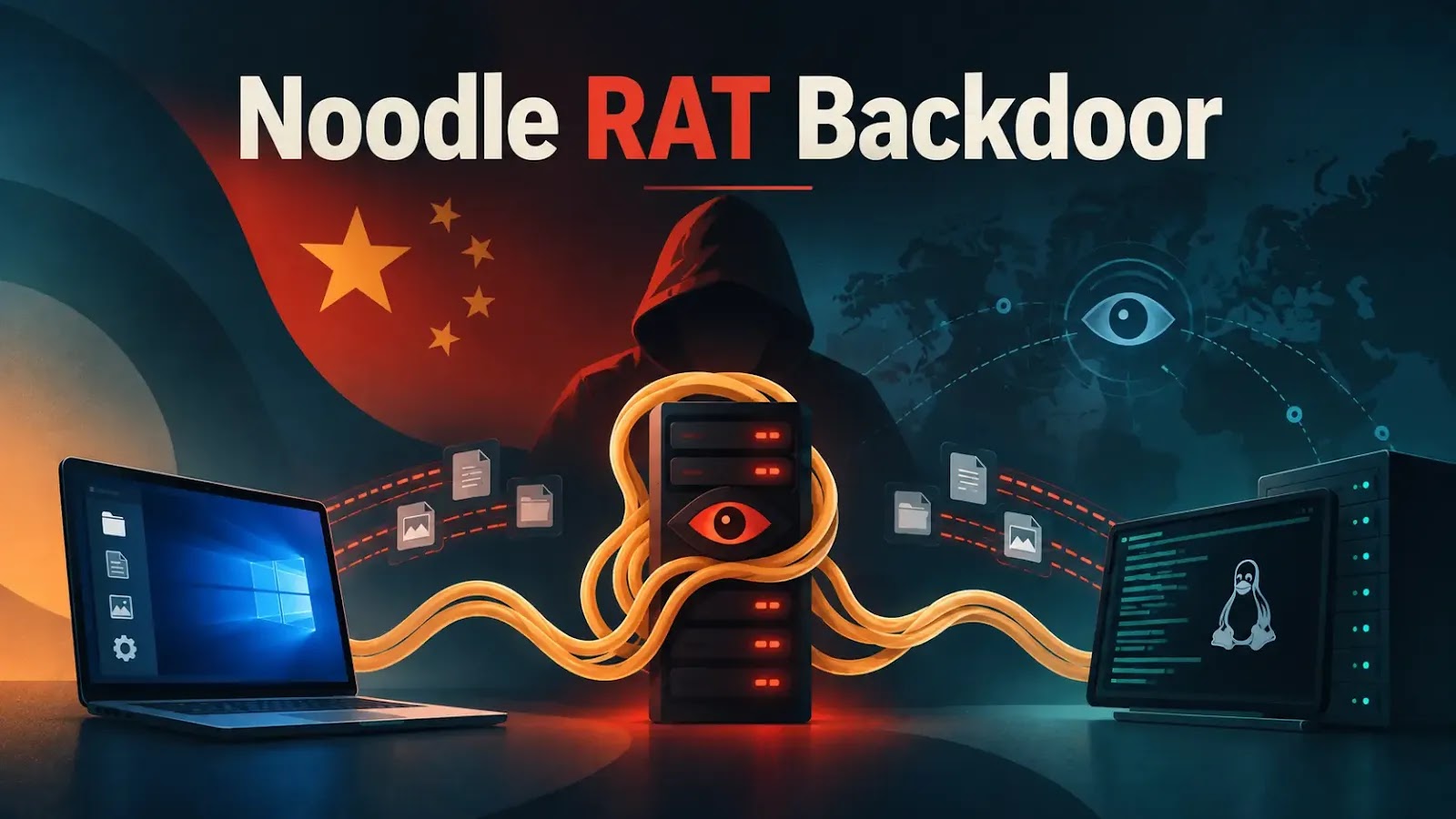
Chinese-Speaking Hackers Use Noodle RAT Backdoor to Spy on Windows and Linux Systems

Chinese-speaking threat actors are continuing to rely on Noodle RAT, a cross-platform remote access trojan designed to maintain covert access to compromised Windows workstations and Linux servers. Also tracked as ANGRYREBEL and Nood RAT, the malware has been active since at least mid-2016 but was long mistaken for variants of Gh0st RAT, Rekoobe, and other […]

The post Chinese-Speaking Hackers Use Noodle RAT Backdoor to Spy on Windows and Linux Systems appeared first on GBHackers Security | #1 Globally Trusted Cyber Security News Platform.

Acronis Backup Plugin Vulnerability Exploited in the Wild to Gain Elevated Linux Privileges

Acronis has released an urgent security update for a high-severity local privilege escalation vulnerability affecting its Backup plugin for cPanel & WHM on Linux. The company confirmed that attackers have already exploited this flaw in limited, targeted attacks against vulnerable deployments. This vulnerability is tracked as CVE-2026-87886 and is described as an insecure file permissions […]

The post Acronis Backup Plugin Vulnerability Exploited in the Wild to Gain Elevated Linux Privileges appeared first on GBHackers Security | #1 Globally Trusted Cyber Security News Platform.

Linux Kernel ZcopyReaper Vulnerability Lets Local Attackers Gain Root Privileges

Security researchers have disclosed a local privilege escalation vulnerability in the Linux kernel related to the Reliable Datagram Sockets (RDS) zero-copy send path. This vulnerability could let an unprivileged local attacker gain root privileges. It is tracked as CVE-2026-43502 and is referred to as “ZcopyReaper.” NebuSec researcher Yuan Tan reported the issue in a disclosure […]

The post Linux Kernel ZcopyReaper Vulnerability Lets Local Attackers Gain Root Privileges appeared first on GBHackers Security | #1 Globally Trusted Cyber Security News Platform.

Tengu Mirai-Style Linux Bot Hides as Kernel Worker to Launch DDoS and Proxy Attacks

A newly analyzed Linux malware sample, dubbed Tengu, combines Mirai-style botnet tradecraft with broad persistence, DDoS, SSH probing, and proxy capabilities. The stripped 32-bit ELF masquerades as a Linux kernel worker process while targeting servers, embedded devices, and IoT-adjacent systems. It has no symbols, uses NX protection and partial RELRO, and carries a SHA-256 hash […]

The post Tengu Mirai-Style Linux Bot Hides as Kernel Worker to Launch DDoS and Proxy Attacks appeared first on GBHackers Security | #1 Globally Trusted Cyber Security News Platform.

❌