 Entrar
Operation Epic Fury Exposes Critical OT Security Gaps in U.S. Oil and Gas Sector

A new rowhammer attack gives complete control of NVIDIA CPUs.
On Thursday, two research teams, working independently of each other, demonstrated attacks against two cards from Nvidia’s Ampere generation that take GPU rowhammering into new—and potentially much more consequential—territory: GDDR bitflips that give adversaries full control of CPU memory, resulting in full system compromise of the host machine. For the attack to work, IOMMU memory management must be disabled, as is the default in BIOS settings.
“Our work shows that Rowhammer, which is well-studied on CPUs, is a serious threat on GPUs as well,” said Andrew Kwong, co-author of one of the papers. “GDDRHammer: Greatly Disturbing DRAM RowsCross-Component Rowhammer Attacks from Modern GPUs.” “With our work, we… show how an attacker can induce bit flips on the GPU to gain arbitrary read/write access to all of the CPU’s memory, resulting in complete compromise of the machine.”
Update Friday, April 3: On Friday, researchers unveiled a third Rowhammer attack that also demonstrates Rowhammer attacks on the RTX A6000 that achieves privilege escalation to a root shell. Unlike the previous two, the researchers said, it works even when IOMMU is enabled.
The second paper is GeForge: Hammering GDDR Memory to Forge GPU Page Tables for Fun and Profit:
…does largely the same thing, except that instead of exploiting the last-level page table, as GDDRHammer does, it manipulates the last-level page directory. It was able to induce 1,171 bitflips against the RTX 3060 and 202 bitflips against the RTX 6000.
GeForge, too, uses novel hammering patterns and memory massaging to corrupt GPU page table mappings in GDDR6 memory to acquire read and write access to the GPU memory space. From there, it acquires the same privileges over host CPU memory. The GeForge proof-of-concept exploit against the RTX 3060 concludes by opening a root shell window that allows the attacker to issue commands that run unfettered privileges on the host machine. The researchers said that both GDDRHammer and GeForge could do the same thing against the RTC 6000.
What happened A supply chain attack campaign attributed to TeamPCP, dubbed Mini Shai-Hulud, has compromised packages across the PyPI, NPM, and PHP ecosystems over a two-day period, affecting over 1,800 developer repositories containing stolen credentials. The campaign was first identified on April 29 when malicious versions of four SAP NPM packages were caught delivering information-stealing […]
The post 1,800 Developers Hit in Mini Shai-Hulud Supply Chain Attack Across PyPI, NPM, and PHP appeared first on CISO Whisperer.
The post 1,800 Developers Hit in Mini Shai-Hulud Supply Chain Attack Across PyPI, NPM, and PHP appeared first on Security Boulevard.

What happened The FBI issued a public service announcement on April 30, 2026, warning the US transportation and logistics industry of a sharp rise in cyber-enabled cargo theft, with estimated losses in the United States and Canada reaching nearly $725 million in 2025. That represents a 60% increase over the prior year. Confirmed cargo theft […]
The post FBI Links Cybercriminals to Sharp Surge in Cargo Theft Attacks appeared first on CISO Whisperer.
The post FBI Links Cybercriminals to Sharp Surge in Cargo Theft Attacks appeared first on Security Boulevard.

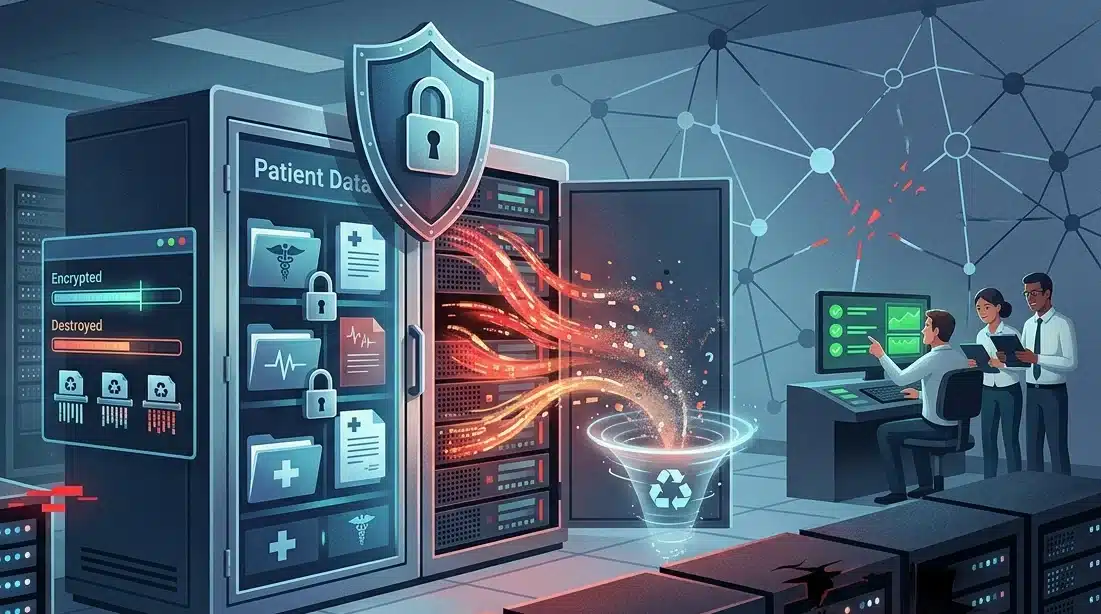

Over 200,000 files containing sensitive personal information have been leaked following the University of Warsaw cyberattack that targeted the institution’s digital systems. The attack, which resulted in the publication of the stolen data on the darknet in mid-April 2026, has raised significant concerns about the university's cybersecurity protocols.
In response to the breach, the University of Warsaw took immediate action, isolating affected systems and working closely with relevant authorities to assess the scope of the incident. Rector Alojzy Z. Nowak commented, “Immediately after detecting the incident, the University undertook a series of actions aimed at limiting its impact and securing the IT environment. These included isolating affected systems, terminating unauthorized access, enforcing password resets for all users, strengthening authentication mechanisms, and conducting a comprehensive security review of the infrastructure.”
The cyberattack unfolded over several months, with attackers gaining access to the university's systems using valid login credentials. These credentials were likely obtained through malware that infected a user’s device, allowing the attackers to quietly exfiltrate large amounts of data over time. The stolen data was eventually posted on the darknet on the night of April 15, 2026, in an 850-gigabyte data dump.
The breach was initially detected on February 9, 2026, during a routine security scan, triggered by global ransomware threats. At first, it was believed that the stolen data had not left the university’s infrastructure. However, subsequent investigation revealed that a significant portion had already been leaked online.
In response to our inquiry, the university clarified: “At this stage, the investigation is ongoing, and no definitive attribution has been publicly confirmed. The incident involved unauthorized access using valid credentials that had likely been previously compromised, most probably through malware on a user’s device.”
The leaked files, which total over 200,000 documents, include a broad range of sensitive information. A large portion of the data came from the Faculty of Applied Social Sciences and Resocialization, as well as the Faculty of Neophilology. The breach exposed approximately 650 GB of publicly accessible audiovisual materials, along with 200 GB of sensitive personal data.
Among the types of personal data exposed were:
The university has acknowledged that it’s still too early to definitively determine which individuals' data has been impacted. In an official statement, they noted, “Given the nature of the incident, it is not yet possible to conclusively determine which specific individuals’ data may have been impacted; therefore, we encourage all members of the academic community to follow the recommended guidance and monitor further updates.”
Official Response and Security MeasuresFollowing the breach, the university has worked diligently to mitigate further damage. In addition to isolating the affected systems, the university has collaborated with Poland’s Central Bureau for Combating Cybercrime (CBZC) and CERT Polska to investigate the incident and fortify its cybersecurity defenses.
“We remain committed to fully clarifying the circumstances of this incident and to continuously improving the protection of personal data,” Rector Nowak stated. The university also emphasized its ongoing efforts to enhance security measures, including expanding advanced authentication methods, increasing network monitoring, and further segmenting IT infrastructure to reduce exposure to future risks.
Moreover, the university has published a detailed communication, following GDPR guidelines, to inform affected individuals about the breach and provide recommendations on how they can protect themselves. “Affected individuals are being informed through an official public communication available on the University’s website,” the statement said. “These include, among others, monitoring financial activity, securing personal data (e.g., PESEL number), changing passwords, enabling multi-factor authentication, and remaining vigilant against phishing or fraud attempts.”
The tempo of UK cyberattacks has shifted from sporadic disruption to something far more systemic. When incidents reach a frequency of four national events each week, the issue stops being purely technical and becomes structural. It raises a more uncomfortable question than whether attacks will happen; it asks whether UK cybersecurity readiness is evolving fast enough to keep pace with a threat environment that is no longer linear, but compounding.
The latest assessment from the National Cyber Security Centre (NCSC) reveals a sharp escalation in UK national cyber threats. In the 12 months leading to September 2025, 204 incidents were classified as nationally significant, more than double the 89 recorded in the previous year. This is the highest figure on record.
In total, 429 cyber incidents required NCSC intervention during this period. Among them, 18 were categorized as “highly significant,” meaning they carried the potential to severely disrupt essential services or compromise national security. That figure alone notes an almost 50% increase compared with the previous year, continuing a three-year trend of intensifying severity in cyberattacks in the UK.
These are not isolated breaches caused by opportunistic threat actors. A large share of activity is linked to advanced persistent threat (APT) groups, well-funded, highly capable operators that pursue long-term access to critical systems. Their objectives range from strategic intelligence gathering to financial gain and, in some cases, deliberate disruption.
Dr Richard Horne, Chief Executive of the NCSC, has made the situation explicit: the growing frequency of serious incidents demonstrates that the UK’s exposure to cyber risk is rapidly. He has warned that delays in strengthening defenses are no longer neutral, they actively increase vulnerability.
The rising intensity of UK cyberattacks has prompted direct intervention from the government. Senior executives across major UK businesses, including those in the FTSE 350, have been formally urged to treat cyber resilience as a board-level responsibility rather than a technical afterthought.
This shift is not symbolic. It reflects recognition that cyber risk now sits alongside financial and operational risk. Organizations are being pushed to integrate security into strategic decision-making, rather than relegating it to IT departments.
To support this, the NCSC has introduced tools aimed at improving baseline protections, particularly for smaller businesses that often lack dedicated security resources. The Cyber Essentials programme has been positioned as an accessible entry point, with added incentives such as free cyber insurance for eligible firms to encourage adoption.
One of the less obvious drivers behind the rise in UK national cyber threats is the transformation of the energy sector. The UK’s clean energy ambitions, particularly under the Clean Power 2030 initiative, are reshaping infrastructure at speed.
Battery storage capacity is expected to increase sixfold, while wind and solar generation could nearly triple. At the same time, the system is becoming more decentralized, introducing a wider range of operators and digital interfaces.
From a cybersecurity perspective, this creates a paradox. The energy system becomes more resilient in terms of generation diversity, but more vulnerable in terms of digital exposure. Each new connection, whether a distributed solar installation or a grid-scale battery, adds another potential entry point for attackers.
This is why UK critical infrastructure attacks are increasingly focused on non-traditional targets. Recent incidents in Europe have shown adversaries probing distributed renewable assets, exploiting the reliance on remote management and interconnected control systems.
Energy systems do not operate in isolation. They underpin transport networks, healthcare services, communications, and financial systems. A disruption in energy supply can trigger cascading failures across multiple sectors.
Even non-cyber incidents put a spotlight on this fragility. The 2025 North Hyde substation fire demonstrated how quickly a localized event can create broader disruption. In the case of coordinated cyberattacks, the potential for systemic impact is higher.
This interconnectedness is what makes cyberattacks in the UK particularly concerning. The risk is not just service interruption, but the amplification of disruption across dependent systems.
To address these challenges, the UK government is reassessing its regulatory framework, particularly the Network and Information Systems (NIS) Regulations. Introduced in 2018, these rules were designed for a more centralized energy system and may no longer reflect current realities.
The key issue is scope. Many organizations that contribute to system stability fall outside NIS requirements because they do not meet existing thresholds or have not been formally designated as critical operators.
The proposed reforms aim to close this gap through two primary measures:
This dual approach acknowledges that UK cybersecurity readiness cannot rely solely on protecting the largest players. In a decentralized system, smaller entities can represent equally critical points of failure.
The proposed baseline requirements are designed to establish a minimum standard of cyber hygiene across the sector. These measures are expected to be proportionate and widely applicable, focusing on preventing common attack vectors rather than enforcing advanced capabilities.
They align closely with the Cyber Essentials framework, which emphasizes five core controls: firewalls, secure configuration, access management, malware protection, and patching.
However, this approach has limitations. Cyber Essentials is primarily tailored to IT environments and does not fully address operational technology (OT), which is central to energy infrastructure. OT systems require different security models, as they interact directly with physical processes.
Recognizing this, policymakers are considering a hybrid model that extends beyond technical controls to include governance, supply chain security, and incident response planning. This reflects a more mature understanding of UK national cyber threats, where organizational resilience is as important as technical defense.
With UK cyberattacks occurring at a rate of four national incidents per week, the financial impact of significant cyberattacks in the UK, often exceeding £436,000 per breach, makes gaps in UK cybersecurity readiness a measurable risk. As UK national cyber threats grow and UK critical infrastructure attacks become more likely, organizations need timely threat intelligence and faster response.
Cyble provides real-time threat intelligence and automated detection to help identify and mitigate risks earlier. Schedule a demo to see how Cyble can support your security operations.
The post Four Nationally Significant Cyberattacks Every Week — Is the UK Ready? appeared first on Cyble.

The cybersecurity industry is obsessing over Anthropic’s new model, Claude Mythos Preview, and its effects on cybersecurity. Anthropic said that it is not releasing it to the general public because of its cyberattack capabilities, and has launched Project Glasswing to run the model against a whole slew of public domain and proprietary software, with the aim of finding and patching all the vulnerabilities before hackers get their hands on the model and exploit them.
There’s a lot here, and I hope to write something more considered in the coming week, but I want to make some quick observations.
One: This is very much a PR play by Anthropic—and it worked. Lots of reporters are breathlessly repeating Anthropic’s talking points, without engaging with them critically. OpenAI, presumably pissed that Anthropic’s new model has gotten so much positive press and wanting to grab some of the spotlight for itself, announced its model is just as scary, and won’t be released to the general public, either.
Two: These models do demonstrate an increased sophistication in their cyberattack capabilities. They write effective exploits—taking the vulnerabilities they find and operationalizing them—without human involvement. They can find more complex vulnerabilities: chaining together several memory corruption bugs, for example. And they can do more with one-shot prompting, without requiring orchestration and agent configuration infrastructure.
Three: Anthropic might have a good PR team, but the problem isn’t with Mythos Preview. The security company Aisle was able to replicate the vulnerabilities that Anthropic found, using older, cheaper, public models. But there is a difference between finding a vulnerability and turning it into an attack. This points to a current advantage to the defender. Finding for the purposes of fixing is easier for an AI than finding plus exploiting. This advantage is likely to shrink, as ever more powerful models become available to the general public.
Four: Everyone who is panicking about the ramifications of this is correct about the problem, even if we can’t predict the exact timeline. Maybe the sea change just happened, with the new models from Anthropic and OpenAI. Maybe it happened six months ago. Maybe it’ll happen in six months. It will happen—I have no doubt about it—and sooner than we are ready for. We can’t predict how much more these models will improve in general, but software seems to be a specialized language that is optimal for AIs.
A couple of weeks ago, I wrote about security in what I called “the age of instant software,” where AIs are superhumanly good at finding, exploiting, and patching vulnerabilities. I stand by everything I wrote there. The urgency is now greater than ever.
I was also part of a large team that wrote a “what to do now” report. The guidance is largely correct: We need to prepare for a world where zero-day exploits are dime-a-dozen, and lots of attackers suddenly have offensive capabilities that far outstrip their skills.

Parking lots were filled with cars that couldn’t be moved and drivers had to awkwardly explain to employers why they couldn’t make it to work after a cyberattack took down the Intoxalock vehicle breathalyzer system.
The post Intoxalock Vehicle Breathalyzers Downed by Cyberattack, Leave Drivers Stranded appeared first on Security Boulevard.

Modern conflict no longer begins with troops crossing borders; it often starts with packets crossing networks. For example, the escalation on February 28, 2026, involving Iran, the United States, and Israel gives insights on how quickly geopolitical cyber threats can evolve into full-spectrum confrontations. What unfolded was not just a regional clash but a preview of how cyber warfare attacks now operate alongside missiles, drones, and information campaigns.
In this environment, cybersecurity for US organizations can no longer be treated as a purely technical function. It has become a matter of strategic resilience. Nation-state cyberattacks are synchronized with real-world conflict, creating ripple effects that extend far beyond the immediate battlefield.
The opening phase of hostilities, initiated through Operation Epic Fury by the United States and Operation Roaring Lion by Israel, marked a new shift in how cyber warfare attacks are deployed. Within the first 72 hours (February 28 to March 3), cyber operations were executed in parallel with kinetic strikes, targeting both infrastructure and perception.
At approximately 06:27 GMT on February 28, coordinated strikes hit more than two dozen Iranian provinces, targeting nuclear facilities, IRGC command centers, and missile systems. Reports indicated the targeted killing of Ayatollah Ali Khamenei, a moment that fundamentally altered the trajectory of the conflict.
Simultaneously, cyber operations disrupted Iranian digital infrastructure at scale. Internet connectivity dropped to roughly 1–4% of normal levels, crippling government communications, media platforms, and military coordination. This was not incidental; it was deliberate integration of cyber defense strategies into offensive planning.
Compromised mobile applications and defaced state websites were used to inject confusion into the population, while misinformation campaigns blurred the line between truth and manipulation. This convergence of cyber and psychological operations reflects a new doctrine in nation-state cyberattacks: control the narrative while degrading the network.
By March 1, the conflict had entered a second phase: retaliation and decentralization. Iran launched ballistic missiles and drones targeting Israel, GCC countries, and US-linked assets. At the same time, cyberspace saw a surge in non-state actors.
More than 70 hacktivist groups mobilized within days. These groups, spanning ideological lines, including pro-Iranian and pro-Russian actors, conducted distributed denial-of-service (DDoS) attacks, website defacements, and credential theft campaigns. Their operations targeted government portals and critical infrastructure across regions such as Turkey, Poland, and the Gulf.
One notable example was a malicious Android application disguised as an Israeli missile alert system. Distributed via Hebrew-language SMS, it harvested sensitive user data, including contacts, SMS logs, IMEI numbers, and email credentials, while employing encryption and anti-analysis techniques. This level of technical prowess blurred the distinction between hacktivism and state-sponsored tooling.
At the same time, cybercriminal groups exploited the chaos. Social engineering campaigns surged across the UAE, while ransomware actors began blending ideological messaging with extortion tactics.
As the conflict intensified between March 2 and March 3, its impact on critical infrastructure security became more apparent. Missile strikes damaged physical assets, including infrastructure linked to aviation and cloud services. Meanwhile, cyber activity targeted digital dependencies supporting those systems.
Although most observed cyber warfare attacks during this period were disruptive rather than destructive, primarily DDoS attacks, exposed surveillance systems, and propaganda operations, there were persistent, unverified claims of industrial control system (ICS) compromise. Even without confirmation, such claims can influence decision-making and public confidence.
The broader implication is clear: critical infrastructure security must account for both verified threats and perceived ones. In a hybrid conflict, perception itself becomes a weapon.
One of the more nuanced aspects of this conflict is what has not happened, at least not yet. Despite the scale of activity, large-scale destructive nation-state cyberattacks remained limited during the first 72 hours. This was partly attributed to disruptions in Iran’s internet connectivity, which constrained command-and-control operations.
However, intelligence indicators suggest that pre-positioned access and dormant capabilities remain intact. Once connectivity stabilizes, these assets could be activated rapidly, potentially escalating cyber warfare attacks to a more destructive phase.
Given the global interconnectedness of digital systems, US organizations are not insulated from geographically distant conflicts. Supply chains, cloud dependencies, and third-party services create indirect exposure to geopolitical cyber threats.
Effective cyber defense strategies must therefore evolve in several key areas:
The events between February 28 and March 3, 2026, mark a shift in modern conflict, where cyber warfare attacks are now central to military strategy. For US organizations, this means adapting to persistent geopolitical cyber threats that blur the lines between physical and digital conflict.
Cybersecurity for US organizations must focus on anticipation, strengthening cyber defense strategies, improving cyber risk management, and reinforcing critical infrastructure security to handle sustained campaigns.
Cyble supports this approach by providing AI-powered threat intelligence and real-time visibility to help organizations detect and respond to nation-state cyberattacks more effectively. Security teams can schedule a demo or access Cyble’s latest reports to better prepare for modern cyber threats.
The post When Geopolitical Conflict Spills into Cyberspace — How US Organizations Should Respond appeared first on Cyble.

Operational Challenges and Temporary Adjustments
The Signature Healthcare cyberattack also affected a wide range of support services. According to updates released by the hospital:

Cybersecurity has always been a race, but it is no longer a fair one. Attackers now operate at machine speed, orchestrating campaigns that evolve in seconds, while many defense teams still rely on workflows measured in hours or days. This widening gap has forced a fundamental shift in thinking. The conversation is no longer about faster response alone; it is about anticipation, autonomy, and intelligent coordination.
Cybersecurity AI innovation built on agentic AI architecture is the new shift everyone is talking about. These systems are not passive tools waiting for instructions; they actively investigate, reason, and act. What distinguishes this evolution is the emergence of dual-brain design, a concept that blends real-time decision-making with long-term contextual understanding.
Traditional systems struggle because they attempt to process everything, real-time signals and historical context, within a single framework. Dual-brain architecture breaks this limitation by dividing responsibilities into two complementary layers.
The first layer, often described as neural memory, operates like a continuously evolving knowledge graph. It maps relationships across attacker behaviors, infrastructure patterns, and indicators of compromise. This is where neural memory threat intelligence becomes critical. Instead of storing static data, it builds a living model of how threats behave over time, adapting as new intelligence flows in.
The second layer focuses on unstructured information. Security data rarely arrives neatly packaged; it exists in fragmented reports, dark web discussions, and analyst notes. This layer transforms raw, ambiguous inputs into semantic meaning. It doesn’t just match patterns; it interprets intent.
Together, these layers create a system capable of both immediate reaction and informed reasoning. One “brain” reacts in real time; the other provides depth and memory. The result is a more balanced and capable AI cybersecurity architecture that can connect weak signals long before they become visible threats.
One of the most persistent failures in cybersecurity operations is an alert overload. Analysts are inundated with notifications, many of which lack context or urgency. Critical threats often hide in plain sight, buried under noise.
Dual-brain systems address this by shifting the focus from alerts to outcomes. Instead of generating isolated warnings, they construct a coherent narrative around a threat. Signals from endpoints, cloud systems, and external intelligence sources are correlated into a single, actionable story.
This is where autonomous AI security becomes transformative. The system doesn’t stop detecting; it investigates, validates, and responds. Compromised systems can be isolated, malicious domains blocked, and policies enforced automatically. What once required hours of manual effort can now happen in seconds, with minimal human intervention.
A clear example of this cybersecurity ai innovation in action can be seen in Cyble Blaze AI, a platform designed to operationalize agentic ai architecture at scale. Its implementation of dual-brain design brings together real-time detection and long-term contextual reasoning in a way that mirrors how experienced analysts think, only at machine speed.
Cyble Blaze AI uses a neural memory layer to continuously map relationships between threat actors, attack techniques, and infrastructure patterns. This intelligence base allows it to connect early indicators, such as leaked credentials or exploit chatter, with internal vulnerabilities. Complementing this is a vector-based processing layer that interprets unstructured data, enabling deeper contextual understanding across sources like dark web forums and fragmented threat reports.
What sets the platform apart is its ability to act on this intelligence autonomously. Built on a distributed agentic ai architecture, Cyble Blaze AI deploys specialized agents that monitor endpoints, cloud environments, and external threat landscapes simultaneously. These agents collaborate in real time, sharing insights and triggering coordinated responses across domains.
The platform’s predictive capabilities are particularly notable. By analyzing more than 350 billion threat data points, it identifies patterns that signal where attacks are likely to emerge. In many cases, it can forecast risks up to six months in advance, turning neural memory threat intelligence into a forward-looking defense mechanism rather than a retrospective tool.
The real power of this approach lies in its structure. Rather than relying on a monolithic system, modern platforms use a distributed agentic ai architecture composed of specialized agents.
Each agent has a defined role. Some continuously scan for anomalies across endpoints. Others focus on cloud environments or SaaS ecosystems. Response agents execute containment and remediation actions. What makes this effective is not just specialization, but coordination.
When one agent detects a signal, it is immediately shared across the system. A suspicious login identified in a cloud environment can trigger endpoint containment actions without delay. This real-time collaboration enables detection, analysis, and response to occur in under two minutes in many scenarios.
This level of orchestration marks a clear departure from traditional tools. It reflects a broader shift toward autonomous ai security, where systems operate with a high degree of independence while maintaining precision.
Perhaps the most significant advancement in this cybersecurity ai innovation is its predictive capability. By analyzing vast datasets, often exceeding 350 billion threat data points, these systems identify patterns that indicate where future attacks are likely to emerge.
This is not guesswork. It is a large-scale correlation across historical attacks, newly disclosed vulnerabilities, and global threat activity. Early indicators, such as leaked credentials or exploit discussions on underground forums, are linked to an organization’s environment.
Through neural memory threat intelligence, the system recognizes trajectories. It can forecast risks up to six months in advance, giving organizations a critical window to act before an attack materializes.
This fundamentally changes the role of cybersecurity. Defense is no longer reactive; it becomes anticipatory.
Dual-brain architecture redefines cybersecurity by shifting the goal from reacting to threats to preventing them altogether. By combining agentic ai architecture, predictive analytics, and neural memory threat intelligence, platforms like Cyble Blaze AI enable autonomous ai security that anticipates attack paths, reduces exposure, and neutralizes risks before they escalate.
This marks a fundamental evolution in AI cybersecurity architecture, where speed and context work together to deliver predictive, outcome-driven defense. To see how this cybersecurity AI innovation operates in practice, organizations can request a personalized demo for Cyble Blaze AI and explore its capabilities firsthand.
The post Dual-Brain Architecture: The Cybersecurity AI Innovation That Changes Everything appeared first on Cyble.

