
 Entrar
The post Orbital Ambitions: Anthropic Taps Musk’s “Colossus” to Double Claude’s Power and Eye the Stars appeared first on Daily CyberSecurity.
Visualização de leitura

CISA Launches CI Fortify to Defend Critical Infrastructure From Nation-State Cyber Threats
CI Fortify Initiative Focuses on Isolation and Recovery
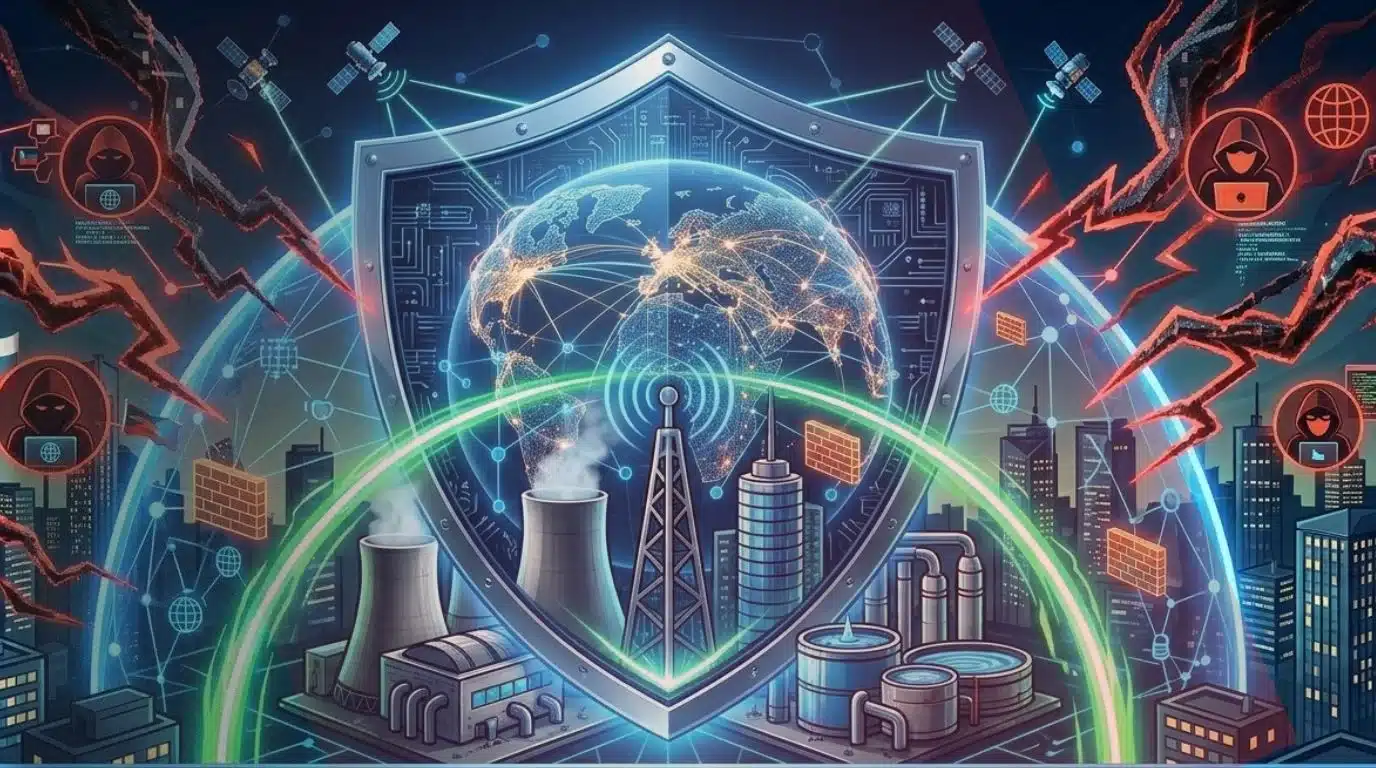
Under the CI Fortify initiative, CISA is urging critical infrastructure organizations to assume that third-party communications and service providers may become unreliable during a crisis. Operators are also being asked to plan under the assumption that threat actors may already have some level of access to OT networks. Nick Andersen, Acting Director at CISA, emphasized the need for organizations to prepare for worst-case operational scenarios. “In a geopolitical crisis, the critical infrastructure organizations Americans rely on must be able to continue delivering, at a minimum, crucial services,” Andersen said. “They must be able to isolate vital systems from harm, continue operating in that isolated state, and quickly recover any systems that an adversary may successfully compromise.” The isolation strategy outlined under CI Fortify involves proactively disconnecting operational technology systems from external business networks and third-party connections. CISA said this approach is intended to prevent cyber impacts from spreading into OT environments while allowing organizations to continue delivering essential services in a degraded communications environment. The agency advised operators to identify critical customers, including military infrastructure and other lifeline services, and determine the minimum operational capabilities needed to support them during emergencies. CISA also recommended updating engineering processes and business continuity plans to support safe operations for extended periods while systems remain isolated.Recovery Planning Central to Critical Infrastructure Resilience
Alongside isolation, the CI Fortify initiative places strong emphasis on recovery planning. CISA urged operators to maintain updated system documentation, create secure backups of critical files, and regularly practice system replacement or manual operational transitions. The agency noted that organizations should also identify communications dependencies that could complicate recovery efforts, such as licensing servers, remote vendor access, or upstream network connections. CISA encouraged operators to work closely with managed service providers, system integrators, and vendors to understand potential failure points and establish alternative recovery pathways. The initiative also highlights broader benefits of emergency planning beyond cybersecurity incidents. According to CISA, the same planning processes can help organizations maintain operations during weather-related disruptions, equipment failures, and safety emergencies. The agency said isolation planning can help cut off command-and-control access to compromised systems, while strong recovery preparation can reduce incident response costs and shorten recovery timelines.Security Vendors and Service Providers Asked to Support CI Fortify
The CI Fortify initiative extends beyond infrastructure operators and calls on cybersecurity vendors, industrial automation suppliers, and managed service providers to support resilience planning efforts. Industrial control system vendors are being encouraged to identify barriers that could interfere with isolation and recovery procedures, including licensing restrictions and server dependency issues. Managed service providers and integrators are expected to assist organizations in engineering updates, local backup collection, and recovery documentation planning. Meanwhile, security vendors are being asked to support threat monitoring and provide intelligence if nation-state actors shift from espionage-focused activity to destructive cyber operations. CISA also requested vendors share information related to tactics that could undermine recovery or bypass isolation protections, including malicious firmware updates and vulnerabilities affecting software-based data diodes.Volt Typhoon Cyberattacks Continue to Shape U.S. Cybersecurity Strategy
The launch of CI Fortify is closely tied to ongoing concerns surrounding the Volt Typhoon cyberattacks, which U.S. officials have linked to Chinese state-sponsored threat actors. CISA’s initiative specifically references the Volt Typhoon campaign as an example of how adversaries have attempted to establish long-term access inside U.S. critical infrastructure systems to potentially support disruptive actions during military conflicts. The Volt Typhoon operation first became public in 2023, when U.S. authorities revealed that Chinese hackers had infiltrated multiple sectors of American critical infrastructure. Former CISA Director Jen Easterly stated in 2024 that the agency had identified and removed Volt Typhoon intrusions across several sectors. She later reiterated in 2025 that efforts continued to focus on identifying and evicting Chinese cyber actors from critical infrastructure environments. Despite these operations, cybersecurity researchers and some government officials have warned that Chinese threat actors may still retain access to portions of critical infrastructure networks. Several experts have argued that nation-state groups remain deeply embedded in certain environments despite years of remediation efforts. With the CI Fortify initiative, CISA appears to be shifting focus toward operational resilience, recognizing that prevention alone may not be sufficient against sophisticated nation-state cyber threats targeting U.S. critical infrastructure.
NCSC Warns Organisations to Act Fast as Hidden Software Flaws Surface
Prioritising External Attack Surfaces
As part of preparing for the vulnerability patch wave, the NCSC advises organisations to first focus on their external attack surfaces. Internet-facing systems, cloud services, and exposed infrastructure present the highest risk when new vulnerabilities are disclosed. The guidance recommends a perimeter-first approach. Organisations should secure outward-facing technologies before moving deeper into internal systems. This reduces the likelihood that attackers can exploit newly discovered weaknesses during the vulnerability patch wave. Where resources are limited, priority should be given to patching systems that are directly exposed to the internet. Critical security infrastructure should follow next. However, the NCSC cautions that patching alone will not solve every issue. Legacy and end-of-life systems remain a major concern. Many of these technologies no longer receive security updates, leaving organisations vulnerable even during a vulnerability patch wave. In such cases, businesses may need to replace outdated systems or bring them back into supported environments, especially if they are externally accessible.Preparing for Faster and Large-scale Patching
The expected vulnerability patch wave will require organisations to rethink how they manage updates. The NCSC is urging businesses to prepare for faster, more frequent, and large-scale deployment of security patches, including across supply chains. Several key measures have been recommended:- Enable automatic updates wherever possible to reduce operational burden
- Adopt secure “hot patching” to apply fixes without service disruption
- Ensure internal processes support rapid and large-scale updates
- Use risk-based prioritisation models such as Stakeholder Specific Vulnerability Categorisation (SSVC)
Beyond Vulnerability Patch Wave: Addressing Systemic Risks
The NCSC emphasises that the vulnerability patch wave is only part of a broader cybersecurity challenge. Patching addresses immediate risks, but it does not eliminate the underlying causes of technical debt. Technology vendors are being encouraged to build more secure systems from the outset. This includes adopting memory safety and containment technologies such as CHERI, which can reduce the likelihood of exploitable vulnerabilities. For organisations operating critical services, strengthening cybersecurity fundamentals is equally important. Frameworks such as Cyber Essentials and sector-specific resilience models can help reduce the impact of breaches and improve overall security posture. Additional guidance has also been issued for high-risk environments, covering areas such as privileged access workstations, cross-domain security architecture, and threat detection through observability and proactive hunting.Organisations Urged to Act Now
The NCSC has made it clear that preparation cannot be delayed. The anticipated vulnerability patch wave is expected to impact organisations of all sizes and sectors. Businesses are advised to review their vulnerability management processes, assess their exposure, and ensure their supply chains are also ready to respond. Larger organisations, in particular, are encouraged to seek assurance from both commercial and open-source partners. As Whitehouse concluded, readiness for the vulnerability patch wave will depend on proactive planning, strong fundamentals, and the ability to respond quickly at scale.
China Has its Sights Set on Scammers, Just Not Those Targeting Americans

A new report from the U.S.-China Economic and Security Review Commission reveals that while China is aggressively prosecuting fraud targeting its own citizens, it continues to turn a blind eye to industrial-scale scam centers victimizing Americans. This selective enforcement has incentivized Chinese criminal syndicates to pivot toward U.S. targets, resulting in over $10 billion in losses in 2024 through "pig-butchering" and crypto investment schemes. As attackers integrate AI to scale these operations and exploit cryptocurrency for money laundering, experts warn that organizations must treat social engineering as a structural infrastructure threat rather than a simple training issue, as diplomatic solutions remain unlikely in the current geopolitical climate
The post China Has its Sights Set on Scammers, Just Not Those Targeting Americans appeared first on Security Boulevard.
Open vs. Closed Weight Models and Why You Need Confidential Inference Either Way

The open vs. closed AI model debate misses the bigger issue. Confidential inference secures model weights and data during runtime.
The post Open vs. Closed Weight Models and Why You Need Confidential Inference Either Way appeared first on Security Boulevard.
Bluesky Outage: Coordinated Traffic Attack Causes Widespread Errors
Bluesky’s DDoS attack caused outages for a second day, disrupting feeds, notifications, and search across the platform.
The post Bluesky Outage: Coordinated Traffic Attack Causes Widespread Errors appeared first on TechRepublic.
