Visualização de leitura

The April 2026 Security Update Review

It’s time once again for Patch Tuesday, and this one is huge. We’ve also got multiple exploits in the wild, which adds another layer of urgency to this month’s release. Take a break from your regularly scheduled activities, and let’s take a look at the latest security patches from Adobe and Microsoft. If you’d rather watch the full video recap covering the entire release, you can check it out here:

Adobe Patches for April 2026

For April, Adobe released 12 bulletins addressing 61 unique CVEs in Adobe Acrobat Reader, InDesign, InCopy, FrameMaker, Connect, ColdFusion, Bridge, Photoshop, Illustrator, Experience Manager Screens, and the Adobe DNG SDK. Three of the Cold Fusion bugs came through the TrendAI ZDI program. For this month, I’m introducing an Adobe table as well. I’d love to get your feedback on whether this is helpful.

Bulletin ID Product CVE Count Highest Severity Highest CVSS Exploited Deployment Priority
APSB26-43 Adobe Acrobat Reader 1 Critical 8.6 Yes 1
APSB26-44 Adobe Acrobat Reader 2 Critical 8.6 No 2
APSB26-32 Adobe InDesign 9 Critical 7.8 No 3
APSB26-33 Adobe InCopy 2 Critical 7.8 No 3
APSB26-36 Adobe FrameMaker 11 Critical 8.6 No 3
APSB26-37 Adobe Connect 9 Critical 9.6 No 3
APSB26-38 Adobe ColdFusion 7 Critical 9.3 No 1
APSB26-39 Adobe Bridge 6 Critical 7.8 No 3
APSB26-40 Adobe Photoshop 1 Critical 7.8 No 3
APSB26-42 Adobe Illustrator 1 Critical 7.8 No 3
APSB26-34 Adobe Experience Manager Screens 9 Important 5.4 No 3
APSB26-41 Adobe DNG SDK 3 Important 5.5 No 3

Obviously, the active attack in Reader is the highest priority for this month, but don’t ignore the second bunch of Reader patches. Cold Fusion also gets a deployment priority of 1, so if you’re still running that platform, make sure you get the update. Otherwise, the FrameMaker and Connect patches fix 11 and nine bugs, respectively. InDesign and Experience Manager Screens also have nine CVEs addressed.

Outside of the Reader bug, none of the other bugs fixed by Adobe this month are listed as publicly known or under active attack at the time of release. One of the Reader bugs and Cold Fusion have a deployment priority of one, the other Reader bug has a priority of two, while all of the other updates released by Adobe this month are listed as deployment priority 3.

Microsoft Patches for April 2026

This month, Microsoft released a monstrous 163 new CVEs in Windows and Windows components, Office and Office Components, Microsoft Edge (Chromium-based), Azure, .NET and Visual Studio, SQL Server, Hyper-V Server, BitLocker, and the Windows Wallet Service. Counting the third-party and a huge Chromium release, it brings the total number of CVEs to a staggering 247 updates. Six of these bugs were reported through the TrendAI ZDI program. Eight of these bugs are rated Critical, two are rated as Moderate, and the rest are rated Important in severity.

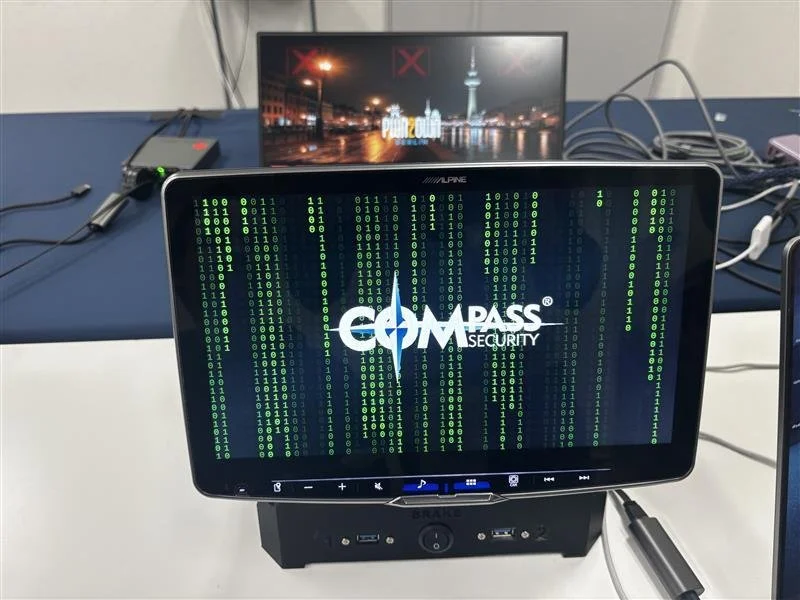
By my count, this is the second-largest monthly release in Microsoft’s history. There are many things we could speculate on to justify the size, but if Microsoft is like the other programs out there (including ours), they are likely seeing a rise in submissions found by AI tools. For us, our incoming rate has essentially tripled, making triage a challenge, to say the least. Whatever the reason, we have a lot of bugs to deal with this month. I should also point out that the Pwn2Own Berlin occurs next month, and it’s typical for vendors to patch as much as they can before the event.

There is one Microsoft bug listed as under active attack at the time of release, and one other that’s publicly known. Let’s take a closer look at some of the more interesting updates for this month, starting with the vulnerability being exploited in the wild:

-    CVE-2026-32201 - Microsoft SharePoint Server Spoofing Vulnerability
Microsoft doesn’t provide a lot of information about this bug, but Spoofing bugs in SharePoint often manifest as cross-site scripting (XSS) bugs. They do note that attackers could view information or make changes to disclosed information. As always, they don’t provide any information on how widespread these attacks are, but I wouldn’t wait to test and deploy this fix – especially if you have internet-connected SharePoint servers.

-    CVE-2026-33825 - Microsoft Defender Elevation of Privilege Vulnerability
This bug is listed as publicly known, and this time, we know exactly where it was disclosed. There have been some questions about how exploitable this bug may be, but it does look like it’s a real problem – just with some reliability issues in its current state. I won’t add on to the commentary from the researcher about working with Microsoft. I’m just glad they are offering a fix for the vulnerability. If you rely on Defender, test and deploy this one quickly.

-   CVE-2026-33827 - Windows TCP/IP Remote Code Execution Vulnerability
This vulnerability allows remote, unauthenticated attackers to exploit code on affected systems without user interaction. That adds up to a wormable bug – at least on systems with IPv6 and IPSec enabled. It is a race condition, which sets exploitability to High on the CVSS scale, but we see race conditions exploited at Pwn2Own all the time, so don’t rely on that obstacle. If you’re running IPv6, I would test and deploy this fix quickly before public exploits become available.

-    CVE-2026-33824 - Windows Internet Key Exchange (IKE) Service Extensions Remote Code Execution Vulnerability
Speaking of wormable bugs, here’s our second one this month. By the title, we can tell that systems with IKE enabled are affected, but that leaves plenty of targets for attackers. Microsoft also notes a significant mitigation for this bug. Blocking UDP ports 500 and 4500 at the perimeter prevents external attackers from reaching the affected service. However, insiders could still target this for lateral movement within an enterprise. For enterprises using IKE, get this fix tested and deployed with haste.

Here’s the full list of CVEs released by Microsoft for April 2026:

April 2026 Patch Tuesday
CVE Title Severity CVSS Public Exploited Type
CVE-2026-32201 Microsoft SharePoint Server Spoofing Vulnerability Important 6.5 No Yes Spoofing
CVE-2026-5281 * Chromium: CVE-2026-5281 Use after free in Dawn High N/A No Yes RCE
CVE-2026-33825 Microsoft Defender Elevation of Privilege Vulnerability Important 7.8 Yes No EoP
CVE-2026-23666 .NET Framework Denial of Service Vulnerability Critical 7.5 No No DoS
CVE-2026-32190 Microsoft Office Remote Code Execution Vulnerability Critical 8.4 No No RCE
CVE-2026-33114 Microsoft Word Remote Code Execution Vulnerability Critical 8.4 No No RCE
CVE-2026-33115 Microsoft Word Remote Code Execution Vulnerability Critical 8.4 No No RCE
CVE-2026-32157 Remote Desktop Client Remote Code Execution Vulnerability Critical 8.8 No No RCE
CVE-2026-33826 Windows Active Directory Remote Code Execution Vulnerability Critical 8 No No RCE
CVE-2026-33824 Windows Internet Key Exchange (IKE) Service Extensions Remote Code Execution Vulnerability Critical 9.8 No No RCE
CVE-2026-33827 Windows TCP/IP Remote Code Execution Vulnerability Critical 8.1 No No RCE
CVE-2026-26171 .NET Denial of Service Vulnerability Important 7.5 No No DoS
CVE-2026-32226 .NET Framework Denial of Service Vulnerability Important 5.9 No No DoS
CVE-2026-32178 .NET Spoofing Vulnerability Important 7.5 No No Spoofing
CVE-2026-32203 .NET and Visual Studio Denial of Service Vulnerability Important 7.5 No No DoS
CVE-2026-33116 .NET, .NET Framework, and Visual Studio Denial of Service Vulnerability Important 7.5 No No DoS
CVE-2023-20585 * AMD: CVE-2023-20585 IOMMU Write Buffer Vulnerability Important 5.3 No No RCE
CVE-2026-32072 Active Directory Spoofing Vulnerability Important 6.2 No No Spoofing
CVE-2026-25184 Applocker Filter Driver (applockerfltr.sys) Elevation of Privilege Vulnerability Important 7 No No EoP
CVE-2026-32171 Azure Logic Apps Elevation of Privilege Vulnerability Important 8.8 No No EoP
CVE-2026-32168 Azure Monitor Agent Elevation of Privilege Vulnerability Important 7.8 No No EoP
CVE-2026-32192 Azure Monitor Agent Elevation of Privilege Vulnerability Important 7.8 No No EoP
CVE-2026-32181 Connected User Experiences and Telemetry Service Denial of Service Vulnerability Important 5.5 No No DoS
CVE-2026-27924 Desktop Window Manager Elevation of Privilege Vulnerability Important 7.8 No No EoP
CVE-2026-32152 Desktop Window Manager Elevation of Privilege Vulnerability Important 7.8 No No EoP
CVE-2026-32154 Desktop Window Manager Elevation of Privilege Vulnerability Important 7.8 No No EoP
CVE-2026-27923 Desktop Window Manager Elevation of Privilege Vulnerability Important 7.8 No No EoP
CVE-2026-32155 Desktop Window Manager Elevation of Privilege Vulnerability Important 7.8 No No EoP
CVE-2026-23653 GitHub Copilot and Visual Studio Code Information Disclosure Vulnerability Important 5.7 No No Info
CVE-2026-23653 * GitHub: CVE-2026-32631 'git clone' from manipulated repositories can leak NTLM hashes Important 7.4 No No Info
CVE-2026-33096 HTTP.sys Denial of Service Vulnerability Important 7.5 No No DoS
CVE-2026-25250 * MITRE: CVE-2026-25250 Secure Boot disable Eazy Fix Important 6 No No SFB
CVE-2026-26181 Microsoft Brokering File System Elevation of Privilege Vulnerability Important 7.8 No No EoP
CVE-2026-32219 Microsoft Brokering File System Elevation of Privilege Vulnerability Important 7 No No EoP
CVE-2026-32091 Microsoft Brokering File System Elevation of Privilege Vulnerability Important 8.4 No No EoP
CVE-2026-26152 Microsoft Cryptographic Services Elevation of Privilege Vulnerability Important 7 No No EoP
CVE-2026-33103 Microsoft Dynamics 365 (On-Premises) Information Disclosure Vulnerability Important 5.5 No No Info
CVE-2026-32188 Microsoft Excel Information Disclosure Vulnerability Important 7.1 No No Info
CVE-2026-32189 Microsoft Excel Remote Code Execution Vulnerability Important 7.8 No No RCE
CVE-2026-32197 Microsoft Excel Remote Code Execution Vulnerability Important 7.8 No No RCE
CVE-2026-32198 Microsoft Excel Remote Code Execution Vulnerability Important 7.8 No No RCE
CVE-2026-32199 Microsoft Excel Remote Code Execution Vulnerability Important 7.8 No No RCE
CVE-2026-32184 Microsoft High Performance Compute (HPC) Pack Elevation of Privilege Vulnerability Important 7.8 No No EoP
CVE-2026-26155 Microsoft Local Security Authority Subsystem Service Information Disclosure Vulnerability Important 6.5 No No Info
CVE-2026-27914 Microsoft Management Console Elevation of Privilege Vulnerability Important 7.8 No No EoP
CVE-2026-26149 Microsoft Power Apps Security Feature Bypass Important 9 No No SFB
CVE-2026-32200 Microsoft PowerPoint Remote Code Execution Vulnerability Important 7.8 No No RCE
CVE-2026-26143 Microsoft PowerShell Security Feature Bypass Vulnerability Important 7.8 No No SFB
CVE-2026-33120 † Microsoft SQL Server Remote Code Execution Vulnerability Important 8.8 No No RCE
CVE-2026-20945 Microsoft SharePoint Server Spoofing Vulnerability Important 4.6 No No Spoofing
CVE-2026-33822 Microsoft Word Information Disclosure Vulnerability Important 6.1 No No Info
CVE-2026-33095 Microsoft Word Remote Code Execution Vulnerability Important 7.8 No No RCE
CVE-2026-23657 Microsoft Word Remote Code Execution Vulnerability Important 7.8 No No RCE
CVE-2026-32081 Package Catalog Information Disclosure Vulnerability Important 5.5 No No Info
CVE-2026-26170 PowerShell Elevation of Privilege Vulnerability Important 7.8 No No EoP
CVE-2026-26183 Remote Access Management service/API (RPC server) Elevation of Privilege Vulnerability Important 7.8 No No EoP
CVE-2026-26160 Remote Desktop Licensing Service Elevation of Privilege Vulnerability Important 7.8 No No EoP
CVE-2026-26159 Remote Desktop Licensing Service Elevation of Privilege Vulnerability Important 7.8 No No EoP
CVE-2026-26151 Remote Desktop Spoofing Vulnerability Important 7.1 No No Spoofing
CVE-2026-32085 Remote Procedure Call Information Disclosure Vulnerability Important 5.5 No No Info
CVE-2026-32167 SQL Server Elevation of Privilege Vulnerability Important 6.7 No No EoP
CVE-2026-32176 SQL Server Elevation of Privilege Vulnerability Important 6.7 No No EoP
CVE-2026-0390 UEFI Secure Boot Security Feature Bypass Vulnerability Important 6.7 No No SFB
CVE-2026-32220 UEFI Secure Boot Security Feature Bypass Vulnerability Important 4.4 No No SFB
CVE-2026-32212 Universal Plug and Play (upnp.dll) Information Disclosure Vulnerability Important 5.5 No No Info
CVE-2026-32214 Universal Plug and Play (upnp.dll) Information Disclosure Vulnerability Important 5.5 No No Info
CVE-2026-32079 Web Account Manager Information Disclosure Vulnerability Important 5.5 No No Info
CVE-2026-33104 Win32k Elevation of Privilege Vulnerability Important 7 No No EoP
CVE-2026-32196 Windows Admin Center Spoofing Vulnerability Important 6.1 No No Spoofing
CVE-2026-26178 Windows Advanced Rasterization Platform Elevation of Privilege Vulnerability Important 8.8 No No EoP
CVE-2026-32073 Windows Ancillary Function Driver for WinSock Elevation of Privilege Vulnerability Important 7 No No EoP
CVE-2026-26168 Windows Ancillary Function Driver for WinSock Elevation of Privilege Vulnerability Important 7.8 No No EoP
CVE-2026-26173 Windows Ancillary Function Driver for WinSock Elevation of Privilege Vulnerability Important 7 No No EoP
CVE-2026-26177 Windows Ancillary Function Driver for WinSock Elevation of Privilege Vulnerability Important 7 No No EoP
CVE-2026-26182 Windows Ancillary Function Driver for WinSock Elevation of Privilege Vulnerability Important 7 No No EoP
CVE-2026-27922 Windows Ancillary Function Driver for WinSock Elevation of Privilege Vulnerability Important 7 No No EoP
CVE-2026-33099 Windows Ancillary Function Driver for WinSock Elevation of Privilege Vulnerability Important 7 No No EoP
CVE-2026-33100 Windows Ancillary Function Driver for WinSock Elevation of Privilege Vulnerability Important 7 No No EoP
CVE-2026-32088 Windows Biometric Service Security Feature Bypass Vulnerability Important 6.1 No No SFB
CVE-2026-27913 Windows BitLocker Security Feature Bypass Vulnerability Important 7.7 No No SFB
CVE-2026-26175 Windows Boot Manager Security Feature Bypass Vulnerability Important 4.6 No No SFB
CVE-2026-32162 Windows COM Elevation of Privilege Vulnerability Important 8.4 No No EoP
CVE-2026-20806 Windows COM Server Information Disclosure Vulnerability Important 5.5 No No Info
CVE-2026-26176 Windows Client Side Caching driver (csc.sys) Elevation of Privilege Vulnerability Important 7.8 No No EoP
CVE-2026-27926 Windows Cloud Files Mini Filter Driver Elevation of Privilege Vulnerability Important 7 No No EoP
CVE-2026-32070 Windows Common Log File System Driver Elevation of Privilege Vulnerability Important 7 No No EoP
CVE-2026-33098 Windows Container Isolation FS Filter Driver Elevation of Privilege Vulnerability Important 7.8 No No EoP
CVE-2026-26153 Windows Encrypted File System (EFS) Elevation of Privilege Vulnerability Important 7.8 No No EoP
CVE-2026-32087 Windows Function Discovery Service (fdwsd.dll) Elevation of Privilege Vulnerability Important 7 No No EoP
CVE-2026-32093 Windows Function Discovery Service (fdwsd.dll) Elevation of Privilege Vulnerability Important 7 No No EoP
CVE-2026-32086 Windows Function Discovery Service (fdwsd.dll) Elevation of Privilege Vulnerability Important 7 No No EoP
CVE-2026-32150 Windows Function Discovery Service (fdwsd.dll) Elevation of Privilege Vulnerability Important 7 No No EoP
CVE-2026-27931 Windows GDI Information Disclosure Vulnerability Important 5.5 No No Info
CVE-2026-27930 Windows GDI Information Disclosure Vulnerability Important 5.5 No No Info
CVE-2026-32221 Windows Graphics Component Remote Code Execution Vulnerability Important 8.4 No No RCE
CVE-2026-27906 Windows Hello Security Feature Bypass Vulnerability Important 4.4 No No SFB
CVE-2026-27928 Windows Hello Security Feature Bypass Vulnerability Important 8.7 No No SFB
CVE-2026-26156 Windows Hyper-V Remote Code Execution Vulnerability Important 7.8 No No RCE
CVE-2026-32149 Windows Hyper-V Remote Code Execution Vulnerability Important 7.3 No No RCE
CVE-2026-27910 Windows Installer Elevation of Privilege Vulnerability Important 7.8 No No EoP
CVE-2026-27912 Windows Kerberos Elevation of Privilege Vulnerability Important 8 No No EoP
CVE-2026-26179 Windows Kernel Elevation of Privilege Vulnerability Important 7.8 No No EoP
CVE-2026-26180 Windows Kernel Elevation of Privilege Vulnerability Important 7.8 No No EoP
CVE-2026-32195 Windows Kernel Elevation of Privilege Vulnerability Important 7 No No EoP
CVE-2026-26163 Windows Kernel Elevation of Privilege Vulnerability Important 7.8 No No EoP
CVE-2026-32215 Windows Kernel Information Disclosure Vulnerability Important 5.5 No No Info
CVE-2026-32217 Windows Kernel Information Disclosure Vulnerability Important 5.5 No No Info
CVE-2026-32218 Windows Kernel Information Disclosure Vulnerability Important 5.5 No No Info
CVE-2026-26169 Windows Kernel Memory Information Disclosure Vulnerability Important 6.1 No No Info
CVE-2026-27929 Windows LUA File Virtualization Filter Driver Elevation of Privilege Vulnerability Important 7 No No EoP
CVE-2026-32071 Windows Local Security Authority Subsystem Service (LSASS) Denial of Service Vulnerability Important 7.5 No No DoS
CVE-2026-20930 Windows Management Services Elevation of Privilege Vulnerability Important 7.8 No No EoP
CVE-2026-26162 Windows OLE Elevation of Privilege Vulnerability Important 7.8 No No EoP
CVE-2026-33101 Windows Print Spooler Elevation of Privilege Vulnerability Important 7.8 No No EoP
CVE-2026-32084 Windows Print Spooler Information Disclosure Vulnerability Important 5.5 No No Info
CVE-2026-27927 Windows Projected File System Elevation of Privilege Vulnerability Important 7.8 No No EoP
CVE-2026-26184 Windows Projected File System Elevation of Privilege Vulnerability Important 7.8 No No EoP
CVE-2026-32069 Windows Projected File System Elevation of Privilege Vulnerability Important 7.8 No No EoP
CVE-2026-32074 Windows Projected File System Elevation of Privilege Vulnerability Important 7.8 No No EoP
CVE-2026-32078 Windows Projected File System Elevation of Privilege Vulnerability Important 7.8 No No EoP
CVE-2026-26167 Windows Push Notifications Elevation of Privilege Vulnerability Important 8.8 No No EoP
CVE-2026-32158 Windows Push Notifications Elevation of Privilege Vulnerability Important 7.8 No No EoP
CVE-2026-32159 Windows Push Notifications Elevation of Privilege Vulnerability Important 7.8 No No EoP
CVE-2026-32160 Windows Push Notifications Elevation of Privilege Vulnerability Important 7.8 No No EoP
CVE-2026-26172 Windows Push Notifications Elevation of Privilege Vulnerability Important 7.8 No No EoP
CVE-2026-20928 Windows Recovery Environment Security Feature Bypass Vulnerability Important 4.6 No No SFB
CVE-2026-32216 Windows Redirected Drive Buffering System Denial of Service Vulnerability Important 5.5 No No DoS
CVE-2026-27909 Windows Search Service Elevation of Privilege Vulnerability Important 7.8 No No EoP
CVE-2026-26161 Windows Sensor Data Service Elevation of Privilege Vulnerability Important 7.8 No No EoP
CVE-2026-26174 Windows Server Update Service (WSUS) Elevation of Privilege Vulnerability Important 7 No No EoP
CVE-2026-32224 Windows Server Update Service (WSUS) Elevation of Privilege Vulnerability Important 7 No No EoP
CVE-2026-26154 Windows Server Update Service (WSUS) Tampering Vulnerability Important 7.5 No No Tampering
CVE-2026-26165 Windows Shell Elevation of Privilege Vulnerability Important 7 No No EoP
CVE-2026-26166 Windows Shell Elevation of Privilege Vulnerability Important 7 No No EoP
CVE-2026-27918 Windows Shell Elevation of Privilege Vulnerability Important 7.8 No No EoP
CVE-2026-32151 Windows Shell Information Disclosure Vulnerability Important 6.5 No No Info
CVE-2026-32225 Windows Shell Security Feature Bypass Vulnerability Important 8.8 No No SFB
CVE-2026-32202 Windows Shell Spoofing Vulnerability Important 4.3 No No Spoofing
CVE-2026-32082 Windows Simple Search and Discovery Protocol (SSDP) Service Elevation of Privilege Vulnerability Important 7 No No EoP
CVE-2026-32083 Windows Simple Search and Discovery Protocol (SSDP) Service Elevation of Privilege Vulnerability Important 7 No No EoP
CVE-2026-32068 Windows Simple Search and Discovery Protocol (SSDP) Service Elevation of Privilege Vulnerability Important 7 No No EoP
CVE-2026-32183 Windows Snipping Tool Remote Code Execution Vulnerability Important 7.8 No No RCE
CVE-2026-32089 Windows Speech Brokered Api Elevation of Privilege Vulnerability Important 7.8 No No EoP
CVE-2026-32090 Windows Speech Brokered Api Elevation of Privilege Vulnerability Important 7.8 No No EoP
CVE-2026-32153 Windows Speech Runtime Elevation of Privilege Vulnerability Important 7.8 No No EoP
CVE-2026-27907 Windows Storage Spaces Controller Elevation of Privilege Vulnerability Important 7.8 No No EoP
CVE-2026-32076 Windows Storage Spaces Controller Elevation of Privilege Vulnerability Important 7.8 No No EoP
CVE-2026-27908 Windows TDI Translation Driver (tdx.sys) Elevation of Privilege Vulnerability Important 7 No No EoP
CVE-2026-27921 Windows TDI Translation Driver (tdx.sys) Elevation of Privilege Vulnerability Important 7 No No EoP
CVE-2026-27915 Windows UPnP Device Host Elevation of Privilege Vulnerability Important 7.8 No No EoP
CVE-2026-27919 Windows UPnP Device Host Elevation of Privilege Vulnerability Important 7.8 No No EoP
CVE-2026-32075 Windows UPnP Device Host Elevation of Privilege Vulnerability Important 7 No No EoP
CVE-2026-27916 Windows UPnP Device Host Elevation of Privilege Vulnerability Important 7.8 No No EoP
CVE-2026-27920 Windows UPnP Device Host Elevation of Privilege Vulnerability Important 7.8 No No EoP
CVE-2026-32077 Windows UPnP Device Host Elevation of Privilege Vulnerability Important 7.8 No No EoP
CVE-2026-27925 Windows UPnP Device Host Information Disclosure Vulnerability Important 6.5 No No Info
CVE-2026-32156 Windows UPnP Device Host Remote Code Execution Vulnerability Important 7.4 No No RCE
CVE-2026-32223 Windows USB Printing Stack (usbprint.sys) Elevation of Privilege Vulnerability Important 6.8 No No EoP
CVE-2026-32165 Windows User Interface Core Elevation of Privilege Vulnerability Important 7.8 No No EoP
CVE-2026-27911 Windows User Interface Core Elevation of Privilege Vulnerability Important 7.8 No No EoP
CVE-2026-32163 Windows User Interface Core Elevation of Privilege Vulnerability Important 7.8 No No EoP
CVE-2026-32164 Windows User Interface Core Elevation of Privilege Vulnerability Important 7.8 No No EoP
CVE-2026-23670 Windows Virtualization-Based Security (VBS) Security Feature Bypass Vulnerability Important 5.7 No No SFB
CVE-2026-27917 Windows WFP NDIS Lightweight Filter Driver (wfplwfs.sys) Elevation of Privilege Vulnerability Important 7 No No EoP
CVE-2026-32080 Windows WalletService Elevation of Privilege Vulnerability Important 7 No No EoP
CVE-2026-32222 Windows Win32k Elevation of Privilege Vulnerability Important 7.8 No No EoP
CVE-2026-21637 * HackerOne: CVE-2026-21637 TLS PSK/ALPN Callback Exceptions Bypass Error Handlers Moderate 7.5 No No SFB
CVE-2026-33119 Microsoft Edge (Chromium-based) for Android Spoofing Vulnerability Moderate 5.4 No No Spoofing
CVE-2026-33829 Windows Snipping Tool Spoofing Vulnerability Moderate 4.3 No No Spoofing
CVE-2026-5858 * Chromium: CVE-2026-5858 Heap buffer overflow in WebML Critical N/A No No RCE
CVE-2026-5859 * Chromium: CVE-2026-5859 Integer overflow in WebML Critical N/A No No RCE
CVE-2026-5272 * Chromium: CVE-2026-5272 Heap buffer overflow in GPU High N/A No No RCE
CVE-2026-5273 * Chromium: CVE-2026-5273 Use after free in CSS High N/A No No RCE
CVE-2026-5274 * Chromium: CVE-2026-5274 Integer overflow in Codecs High N/A No No RCE
CVE-2026-5275 * Chromium: CVE-2026-5275 Heap buffer overflow in ANGLE High N/A No No RCE
CVE-2026-5276 * Chromium: CVE-2026-5276 Insufficient policy enforcement in WebUSB High N/A No No SFB
CVE-2026-5277 * Chromium: CVE-2026-5277 Integer overflow in ANGLE High N/A No No RCE
CVE-2026-5279 * Chromium: CVE-2026-5279 Object corruption in V8 High N/A No No RCE
CVE-2026-5280 * Chromium: CVE-2026-5280 Use after free in WebCodecs High N/A No No RCE
CVE-2026-5283 * Chromium: CVE-2026-5283 Inappropriate implementation in ANGLE High N/A No No SFB
CVE-2026-5284 * Chromium: CVE-2026-5284 Use after free in Dawn High N/A No No RCE
CVE-2026-5285 * Chromium: CVE-2026-5285 Use after free in WebGL High N/A No No RCE
CVE-2026-5286 * Chromium: CVE-2026-5286 Use after free in Dawn High N/A No No RCE
CVE-2026-5287 * Chromium: CVE-2026-5287 Use after free in PDF High N/A No No RCE
CVE-2026-5289 * Chromium: CVE-2026-5289 Use after free in Navigation High N/A No No RCE
CVE-2026-5290 * Chromium: CVE-2026-5290 Use after free in Compositing High N/A No No RCE
CVE-2026-5860 * Chromium: CVE-2026-5860 Use after free in WebRTC High N/A No No RCE
CVE-2026-5861 * Chromium: CVE-2026-5861 Use after free in V8 High N/A No No RCE
CVE-2026-5862 * Chromium: CVE-2026-5862 Inappropriate implementation in V8 High N/A No No SFB
CVE-2026-5863 * Chromium: CVE-2026-5863 Inappropriate implementation in V8 High N/A No No SFB
CVE-2026-5864 * Chromium: CVE-2026-5864 Heap buffer overflow in WebAudio High N/A No No RCE
CVE-2026-5865 * Chromium: CVE-2026-5865 Type Confusion in V8 High N/A No No RCE
CVE-2026-5866 * Chromium: CVE-2026-5866 Use after free in Media High N/A No No RCE
CVE-2026-5867 * Chromium: CVE-2026-5867 Heap buffer overflow in WebML High N/A No No RCE
CVE-2026-5868 * Chromium: CVE-2026-5868 Heap buffer overflow in ANGLE High N/A No No RCE
CVE-2026-5869 * Chromium: CVE-2026-5869 Heap buffer overflow in WebML High N/A No No RCE
CVE-2026-5870 * Chromium: CVE-2026-5870 Integer overflow in Skia High N/A No No RCE
CVE-2026-5871 * Chromium: CVE-2026-5871 Type Confusion in V8 High N/A No No RCE
CVE-2026-5872 * Chromium: CVE-2026-5872 Use after free in Blink High N/A No No RCE
CVE-2026-5873 * Chromium: CVE-2026-5873 Out of bounds read and write in V8 High N/A No No RCE
CVE-2026-5291 * Chromium: CVE-2026-5291 Inappropriate implementation in WebGL Medium N/A No No SFB
CVE-2026-5292 * Chromium: CVE-2026-5292 Out of bounds read in WebCodecs Medium N/A No No Info
CVE-2026-5874 * Chromium: CVE-2026-5874 Use after free in PrivateAI Medium N/A No No RCE
CVE-2026-5875 * Chromium: CVE-2026-5875 Policy bypass in Blink Medium N/A No No SFB
CVE-2026-5876 * Chromium: CVE-2026-5876 Side-channel information leakage in Navigation Medium N/A No No Info
CVE-2026-5877 * Chromium: CVE-2026-5877 Use after free in Navigation Medium N/A No No RCE
CVE-2026-5878 * Chromium: CVE-2026-5878 Incorrect security UI in Blink Medium N/A No No Spoofing
CVE-2026-5879 * Chromium: CVE-2026-5879 Insufficient validation of untrusted input in ANGLE Medium N/A No No SFB
CVE-2026-5880 * Chromium: CVE-2026-5880 Incorrect security UI in browser UI Medium N/A No No Spoofing
CVE-2026-5881 * Chromium: CVE-2026-5881 Policy bypass in LocalNetworkAccess Medium N/A No No SFB
CVE-2026-5882 * Chromium: CVE-2026-5882 Incorrect security UI in Fullscreen Medium N/A No No Spoofing
CVE-2026-5883 * Chromium: CVE-2026-5883 Use after free in Media Medium N/A No No RCE
CVE-2026-5884 * Chromium: CVE-2026-5884 Insufficient validation of untrusted input in Media Medium N/A No No SFB
CVE-2026-5885 * Chromium: CVE-2026-5885 Insufficient validation of untrusted input in WebML Medium N/A No No SFB
CVE-2026-5886 * Chromium: CVE-2026-5886 Out of bounds read in WebAudio Medium N/A No No Info
CVE-2026-5887 * Chromium: CVE-2026-5887 Insufficient validation of untrusted input in Downloads Medium N/A No No SFB
CVE-2026-5888 * Chromium: CVE-2026-5888 Uninitialized Use in WebCodecs Medium N/A No No RCE
CVE-2026-5889 * Chromium: CVE-2026-5889 Cryptographic Flaw in PDFium Medium N/A No No SFB
CVE-2026-5890 * Chromium: CVE-2026-5890 Race in WebCodecs Medium N/A No No RCE
CVE-2026-5891 * Chromium: CVE-2026-5891 Insufficient policy enforcement in browser UI Medium N/A No No SFB
CVE-2026-5892 * Chromium: CVE-2026-5892 Insufficient policy enforcement in PWAs Medium N/A No No SFB
CVE-2026-5893 * Chromium: CVE-2026-5893 Race in V8 Medium N/A No No RCE
CVE-2026-5894 * Chromium: CVE-2026-5894 Inappropriate implementation in PDF Low N/A No No SFB
CVE-2026-5895 * Chromium: CVE-2026-5895 Incorrect security UI in Omnibox Low N/A No No Spoofing
CVE-2026-5896 * Chromium: CVE-2026-5896 Policy bypass in Audio Low N/A No No SFB
CVE-2026-5897 * Chromium: CVE-2026-5897 Incorrect security UI in Downloads Low N/A No No Spoofing
CVE-2026-5898 * Chromium: CVE-2026-5898 Incorrect security UI in Omnibox Low N/A No No Spoofing
CVE-2026-5899 * Chromium: CVE-2026-5899 Incorrect security UI in History Navigation Low N/A No No Spoofing
CVE-2026-5900 * Chromium: CVE-2026-5900 Policy bypass in Downloads Low N/A No No SFB
CVE-2026-5901 * Chromium: CVE-2026-5901 Policy bypass in DevTools Low N/A No No SFB
CVE-2026-5902 * Chromium: CVE-2026-5902 Race in Media Low N/A No No RCE
CVE-2026-5903 * Chromium: CVE-2026-5903 Policy bypass in IFrameSandbox Low N/A No No SFB
CVE-2026-5904 * Chromium: CVE-2026-5904 Use after free in V8 Low N/A No No RCE
CVE-2026-5905 * Chromium: CVE-2026-5905 Incorrect security UI in Permissions Low N/A No No Spoofing
CVE-2026-5906 * Chromium: CVE-2026-5906 Incorrect security UI in Omnibox Low N/A No No Spoofing
CVE-2026-5907 * Chromium: CVE-2026-5907 Insufficient data validation in Media Low N/A No No SFB
CVE-2026-5908 * Chromium: CVE-2026-5908 Integer overflow in Media Low N/A No No RCE
CVE-2026-5909 * Chromium: CVE-2026-5909 Integer overflow in Media Low N/A No No RCE
CVE-2026-5910 * Chromium: CVE-2026-5910 Integer overflow in Media Low N/A No No RCE
CVE-2026-5911 * Chromium: CVE-2026-5911 Policy bypass in ServiceWorkers Low N/A No No SFB
CVE-2026-5912 * Chromium: CVE-2026-5912 Integer overflow in WebRTC Low N/A No No RCE
CVE-2026-5913 * Chromium: CVE-2026-5913 Out of bounds read in Blink Low N/A No No Info
CVE-2026-5914 * Chromium: CVE-2026-5914 Type Confusion in CSS Low N/A No No RCE
CVE-2026-5915 * Chromium: CVE-2026-5915 Insufficient validation of untrusted input in WebML Low N/A No No SFB
CVE-2026-5918 * Chromium: CVE-2026-5918 Inappropriate implementation in Navigation Low N/A No No SFB
CVE-2026-5919 * Chromium: CVE-2026-5919 Insufficient validation of untrusted input in WebSockets Low N/A No No SFB
CVE-2026-33118 Microsoft Edge (Chromium-based) Spoofing Vulnerability Low 4.3 No No Spoofing

* Indicates this CVE had been released by a third party and is now being included in Microsoft releases.

† Indicates further administrative actions are required to fully address the vulnerability.


Looking at the other Critical-rated bugs in this month’s release, there are three Office-related bugs where the Preview Pane is once again listed as an exploit vector. I would still like to have a full-proof way of disabling the Preview Pane, but I don’t see that as an option. There’s a bug in the RDP client, but that involves connecting to a malicious RDP server. The bug in Active Directory requires authentication and a network adjacent attacker. The final Critical-rated bug is an interesting DoS in .NET Framework. An unauthenticated attacker could deny service over a network – presumably crippling any affected app made in .NET. You rarely see Critical-rated DoS bugs, but this one deserves the moniker.

Moving on to the other code execution bugs, you have quite a few open-and-own bugs in Office components, most notably Excel, where the Preview Pane is not an attack vector. The bug in SQL Server requires authentication, and as usual, additional steps are needed to ensure you have the correct update to remediate this vulnerability. The two bugs in Hyper-V almost reads like a privilege escalation since it allows unauthorized attackers to execute code locally. That’s the same for the bugs in the Windows Snipping Tool and the UPnP Device host.

More than half of this release addresses Elevation of Privilege (EoP) bugs. However, most simply lead to local attackers executing their code at SYSTEM-level privileges or administrative privileges, so there’s not much to add without further technical details about the bugs themselves. The bugs in SQL Server could allow an attacker to gain SQL sysadmin privileges. One of the kernel bugs simply states an attacker could “elevate privileges locally”. How obtuse. That’s similar for the bug in afd.sys and Desktop Windows Manager, but Microsoft also states that these bugs could crash an affected system. There are several bugs that result in a sandbox escape, including Windows Push Notifications, AFD for Winsock, Management Services, and User Interface Core. Of these, CVE-2026-26167 (Push Notifications) is the most notable — it's the only one with low attack complexity, meaning no race condition needed. The rest all require winning a race condition (AC:H). The bugs in UPnP are interesting as they allow attackers to gain access to a limited set of administrator-protected objects. Not a full escalation but definitely getting access to resources they shouldn’t. The vulnerability in the Brokering File System allows attackers to gain the level of the logged on user, so don’t do your normal activities as a user with admin privileges. The bug in Azure Monitor Agent leads to root-level access.

There are a dozen different security features bypass bugs in the April release. Some of these are obvious by the title alone. For example, the bugs in Windows Hello bypass safety features within the Hello app itself. The bug in the Biometric Service allows attackers to bypass biometric protections. The vulns in BitLocker and Secure Boot bypass protections in those components. The bug in Power Apps allows attackers to bypass a security warning dialog and trick targets into triggering an external protocol call that performs unintended actions on the user’s device. The bug in Windows Shell allows attackers to bypass Mark of the Web (MotW) protections. The bug in PowerShell could almost be described as a code execution bug as exploiting it bypasses dynamic-expression security checks, which could result in code execution. The vulnerability in the Windows Recovery Environment allows local attackers to bypass BitLocker device encryption. Finally, the bug in Virtualization‑Based Security (VBS) is the most interesting of the bunch – and not just because VBS is a (relatively) new feature. The problem allows attackers to manipulate allow a compromised Windows kernel to modify memory belonging to the secure kernel, breaking the intended isolation guarantees provided by VBS. Somewhat of a sandbox escape, but this time, you’re escaping from Virtual Trust Level 0 (VTL0) to Virtual Trust Level 1 (VTL1). Neat.

Moving on to the Information Disclosure bugs fixed this month, we have 20 different CVEs. Fortunately, most of these simply result in info leaks consisting of unspecified memory contents or memory addresses. While useful in crafting exploits, they aren’t exactly exciting on their own. There are also several bugs that disclose addresses from an object a contained in a sandboxed execution environment. This includes bugs in the Print Spooler, Package Catalog, and Web Account Manager. The bug in Dynamics 365 discloses the ever ineffable “sensitive information”. There are three different info disclosure bugs in UPnP. Two allow an attacker to read from the file system, while the third discloses anything available to the LOCAL SERVICE account. The final info disclosure bug resides in Copilot and Visual Studio and allows attackers to disclose the contents of the Model Context Protocol (MCP) when using Copilot. There are those who think MCP is dead (thanks to agentic AI agents), but if you’re using a custom MCP, I doubt you would want it leaked.

The April release contains just a handful of Spoofing bugs. Some, like the bugs in .NET, Active Directory, and Windows Shell, just say that they allow spoofing over a network. Others, like the bug in Windows Snipping Tool, say similar but also note that it could be used to relay NTLMv2 hashes. The patch for RDP notes that there are new warning dialogs coming this month. The bug in the Windows Admin Center would allow an attacker to interact with other tenant’s applications and content. Finally, the spoofing bug in SharePoint is another XSS issue.

There are eight DoS bugs in the April release, but as always, Microsoft provides no actionable information about the vulnerabilities. Microsoft does offer a mitigation for the http.sys bug that can be applied while you test and deploy the patch, but I would rely on the patch rather than the mitigation. Another exception is the bug for Connected User Experiences and Telemetry Service, which allows attackers to deny service locally rather than over the network.

The final(!) bug in the April release is a Tampering bug in WSUS that reads like a DoS. According to Microsoft, “An attacker can send specially crafted packets which could affect availability of the service and result in Denial of Service (DoS).” But sure – let’s call it Tampering.

No new advisories are being released this month.

Looking Ahead

I will be in Berlin for the next Patch Tuesday, which will be May 12, and I’ll provide my full thoughts then on what will hopefully be a smaller release than this one. Until then, stay safe, happy patching, and may all your reboots be smooth and clean!
Announcing Pwn2Own Berlin for 2026

If you just want to read the contest rules, click here.


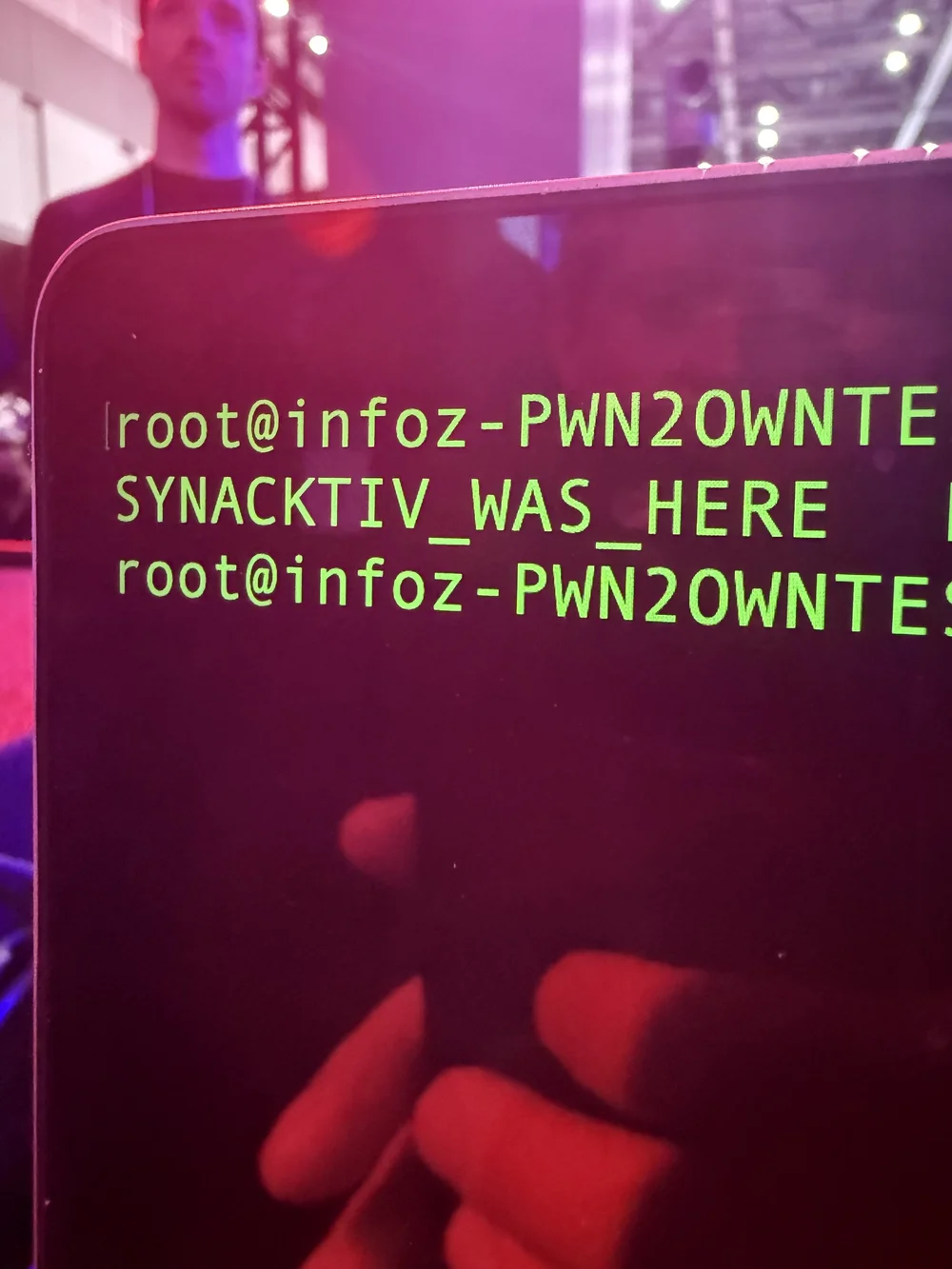
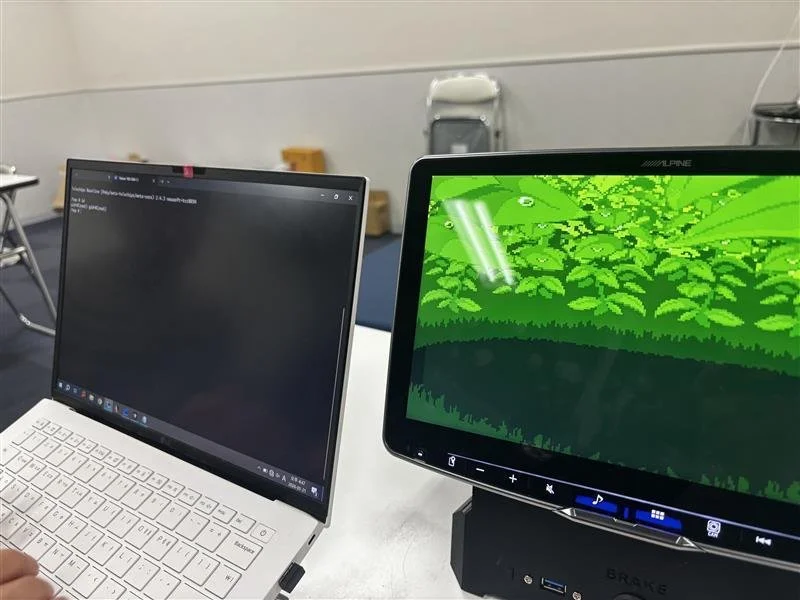
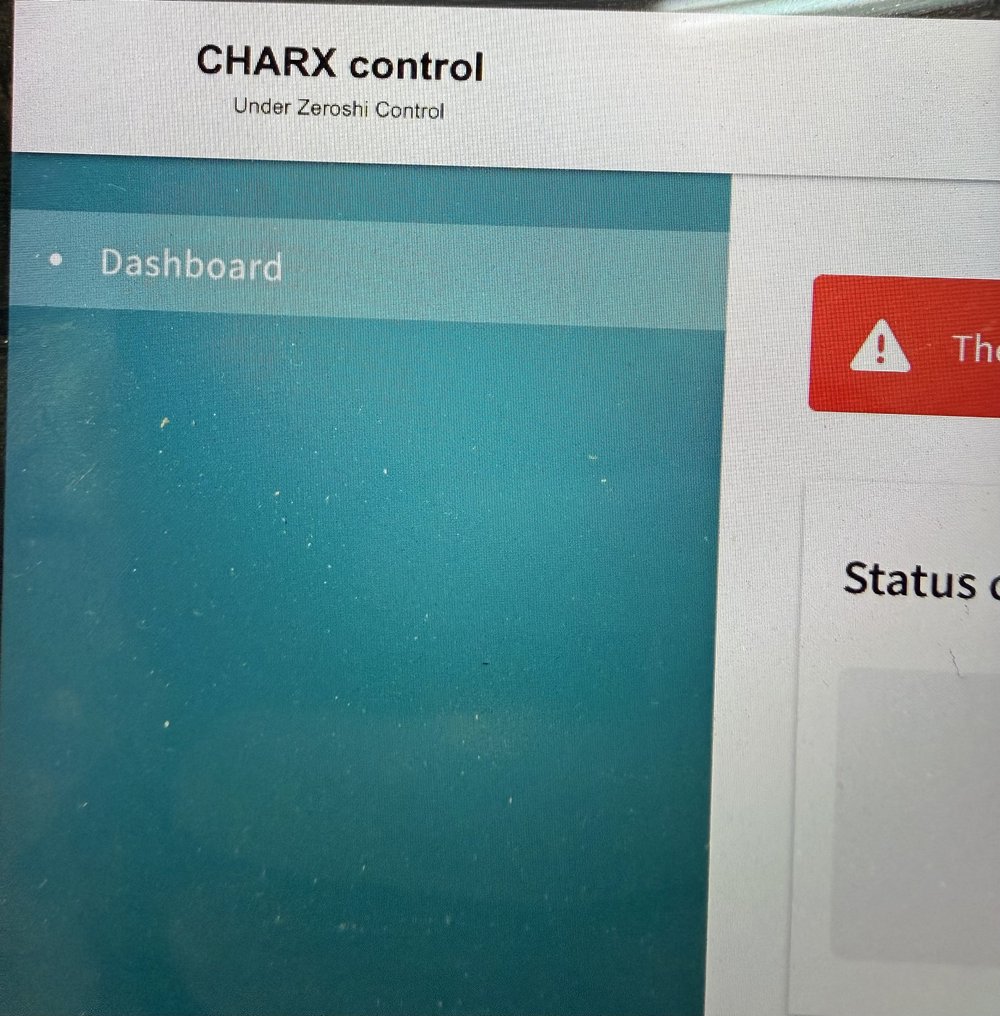
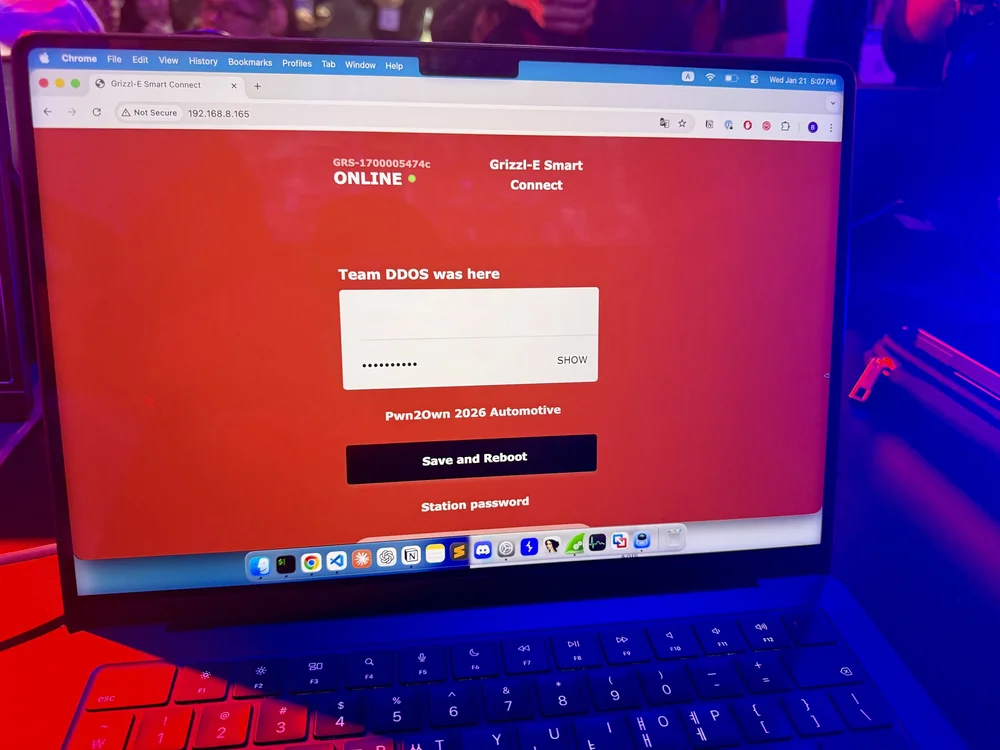
Willkommen zurück, meine Damen und Herren, zu unserem zweiten Wettbewerb in Berlin! That’s correct (if Google translate didn’t steer me wrong). After our inaugural competition last year, Pwn2Own returns to Berlin and OffensiveCon. Outside of our shipping troubles, we had an amazing time and can’t wait to get back.

Last year, we added Artificial Intelligence as a category with great results. This year, we’re expanding this and splitting it into multiple different categories: AI Databases, Coding Agents, Local Inferences, and a separate category for NVIDIA products. In last year’s contest, NVIDIA targets had wins, losses, and collisions, so it will be interesting to see how they fare this year. The folks from AWS wanted to get into the fray as well, so they stepped up to co-sponsor this year’s event, which allows us to increase the reward for bugs in Firecracker. Of course, we have all of the returning categories as well, including web browsers, containers, servers, virtualization, and operating systems. There’s more than $1,000,000 in cash and prizes available for contestants. Last year, we awarded $1,078,750 for 28 unique 0-days over the three-day event. We’ll see if we can eclipse those numbers in 2026.

The contest begins on May 14, but registration closes on May 7, so don’t delay in getting those submissions in. We’re hoping for maximum participation, so set aside your vibe coding and show us what you can really do. We’re looking forward to some cutting-edge exploitation on display. For 2026, we have a total of 31 targets across 10 categories. Here is a full list of the categories for this year’s event:  

-- Virtualization
-- Web Browser
-- Enterprise Applications
-- Servers
-- Local Escalation of Privilege
-- Containers
-- AI Database
-- Coding Agents
-- Local Inference
-- NVIDIA

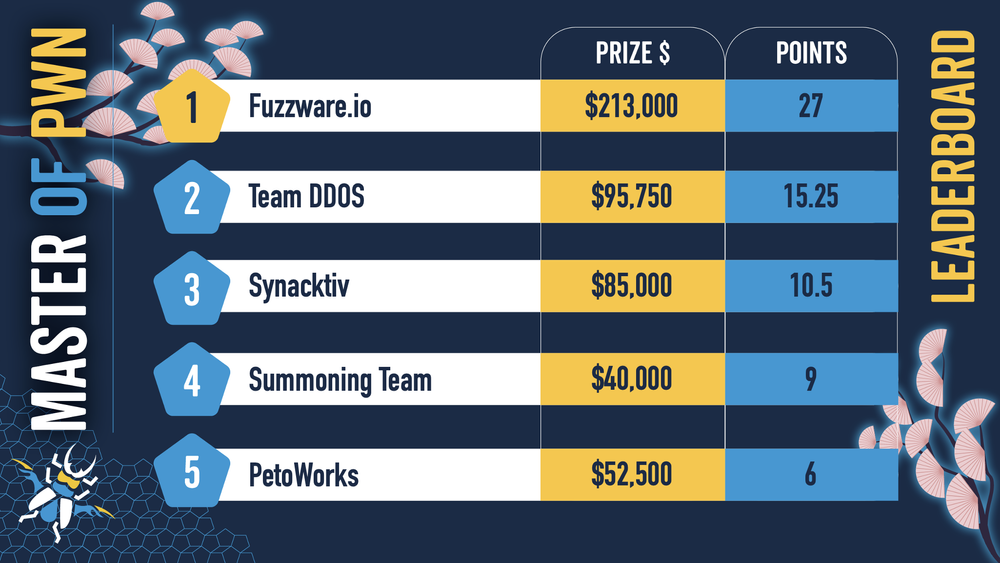
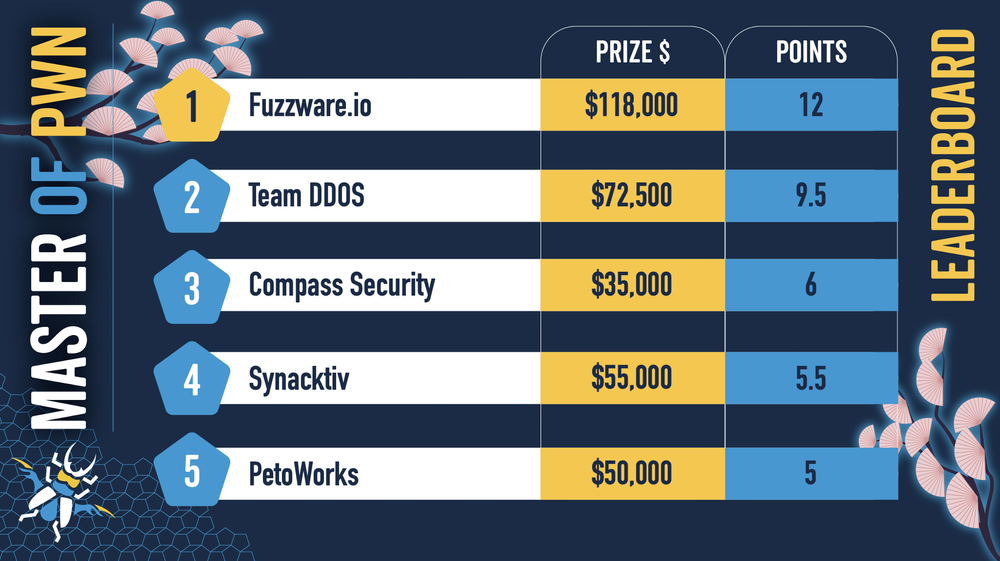
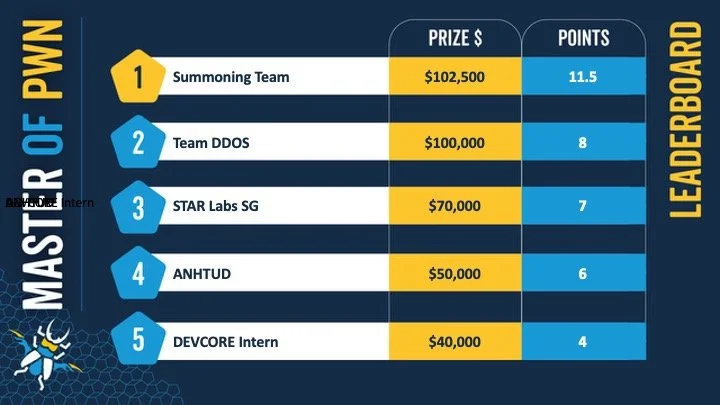
Of course, no Pwn2Own competition would be complete without us crowning a Master of Pwn (Meister von Pwn?). Since the order of the contest is decided by a random draw, contestants with an unlucky draw could still demonstrate fantastic research but receive less money since subsequent rounds go down in value. However, the points awarded for each unique, successful entry do not go down. Someone could have a bad draw and still accumulate the most points. The person or team with the most points at the end of the contest will be crowned Master of Pwn, receive 65,000 ZDI reward points (enough for Platinum status), a killer trophy, and a pretty snazzy jacket to boot.

Let's look at the details of the rules for this year's event.

Virtualization Category

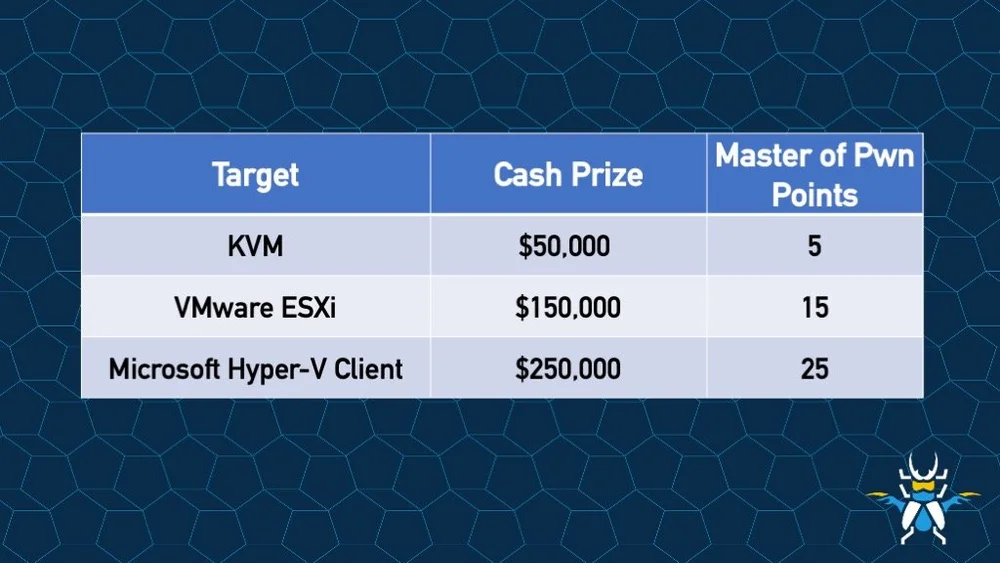
Some of the highlights for each contest can be found in the Virtualization Category, and we’re thrilled to see what this year’s event could bring with it. As usual, VMware is the main highlight of this category as we’ll have VMware ESXi return with an award of $150,000. Last year produced the first ESXi exploits in Pwn2Own history, so it will be interesting to see if we get more. Microsoft also returns as a target and leads the virtualization category with a $250,000 award for a successful Hyper-V Client guest-to-host escalation. Kernel-based Virtual Machine (KVM) is our final target in this category with a prize of $50,000.

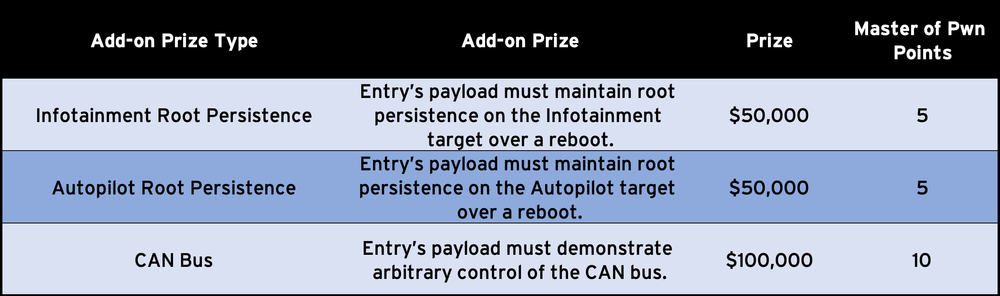
There’s an add-on bonus in this category as well. If a contestant can escape the guest OS, then gain arbitrary code execution on the virtualization target and obtain arbitrary code execution in the guest operating system on a separate virtual machine managed by the same targeted virtualization target, they’ll earn another $50,000. That could push the payout on a ESXi bug to $200,000. This bonus is for KVM and ESXi only. Here’s a detailed look at the targets and available payouts in the Virtualization category:

Back to top

Web Browser Category

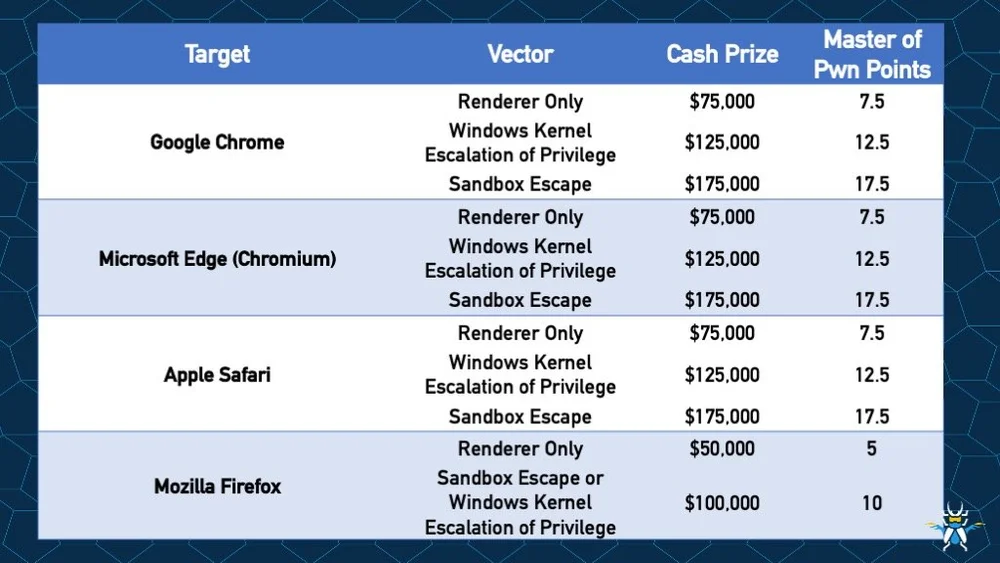
While browsers are the “traditional” Pwn2Own target, we’re continuously tweaking the targets in this category to ensure they remain relevant. We re-introduced renderer-only exploits a couple of years ago, and this year, we’ve increased the award to $75,000. In fact, we’ve increased the awards across the board for this category. Here’s a detailed look at the targets and available payouts:

Back to top

Enterprise Applications Category

Enterprise applications return as targets with Adobe Reader and various Office components on the target list once again. Attempts in this category must be launched from the target under test. For example, launching the target under test from the command line is not allowed. Prizes in this category run from $50,000 for a Reader exploit with a sandbox escape or a Reader exploit with a kernel privilege escalation, and $150,000 for an Office 365 application. Word, Excel, and PowerPoint are all valid targets. Microsoft Office-based targets will have Protected View enabled where applicable. Adobe Reader will have Protected Mode enabled where applicable.

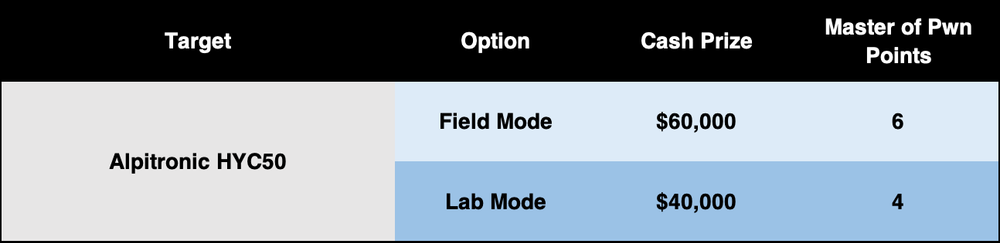
This year, we’re adding a bonus for Copilot data exfiltration and Copilot action execution. Microsoft just patched a bug like this in Excel, so we know they are out there. If you’re able to exploit Copilot in addition to a Microsoft application, you’ll earn an additional $50,000. There are quite a few rules and scenarios around this add-on, so be sure to read the rules carefully and contact us with questions. Here’s a detailed view of the targets and payouts in the Enterprise Application category:

Back to top

The Server Category

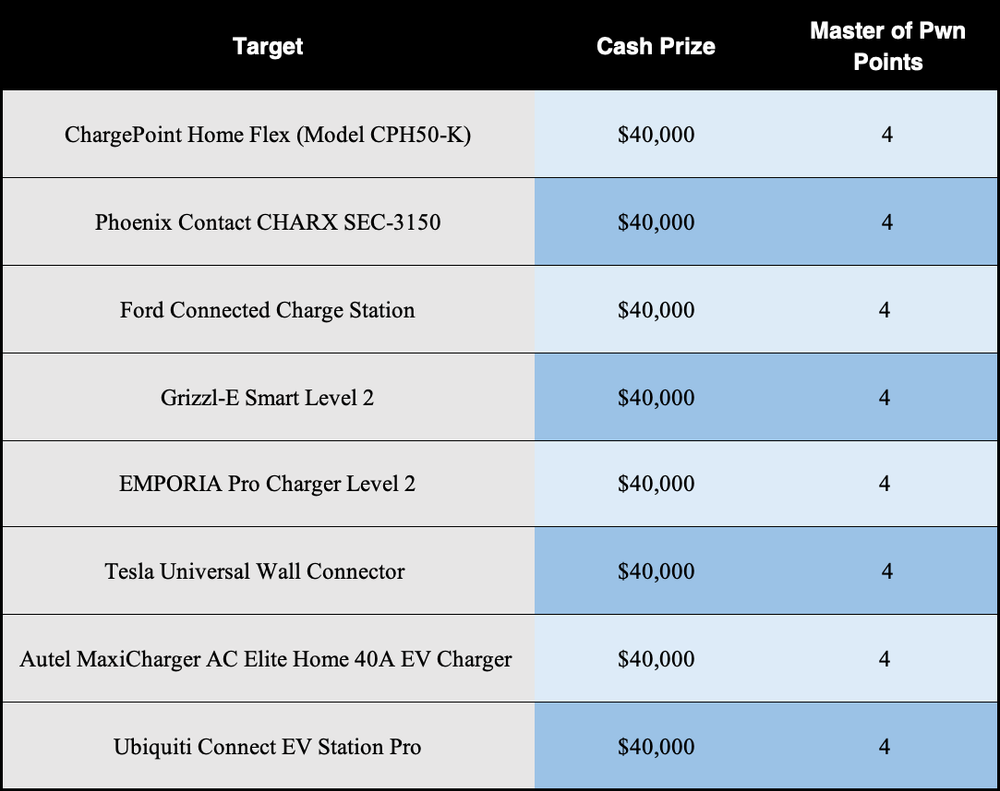
The Server Category for 2026 focuses solely on the server components we’re most interested in. These servers are often targeted by everyone from ransomware crews to nation/state actors, so we know there are exploits out there for them. The only question is whether we’ll see any of the competitors bring one of those exploits to Pwn2Own. Last year, the bugs demonstrated in SharePoint ended up being exploited in the wild, so we know people are looking for these with great interest. Microsoft Exchange has been a popular target for some time, and it returns as a target this year as well, with a payout of $200,000. This category is rounded out by Microsoft Windows RDP/RDS, which also has a payout of $200,000. Here’s a detailed look at the targets and payouts in the Server category:

Back to top

Local Escalation of Privilege Category

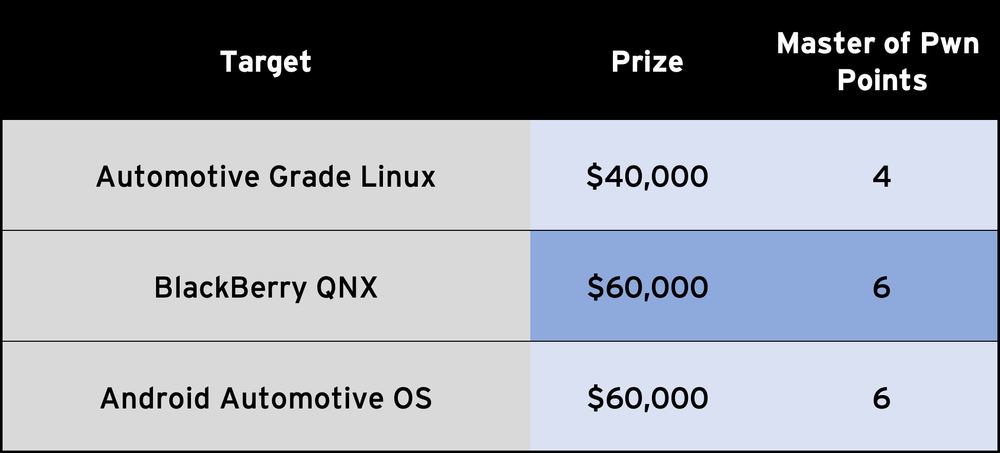
This category is a classic for Pwn2Own and focuses on attacks that originate from a standard user and result in executing code as a high-privileged user. A successful entry in this category must leverage a kernel vulnerability to escalate privileges. Red Hat Enterprise Linux for Workstations returns as our Linux-based target, while Apple macOS, and Microsoft Windows 11 return as targets in this category. Prior exploits in this category have won Pwnie awards, so they’re always interesting to see. Here’s a detailed look at the targets and payouts in this category:

Back to top

The Container Category

We’re excited to have this category return for its third season, and we’re hopeful that even more contestants will target one of these container targets. For an attempt to be ruled a success against these three, the exploit must be launched from within the guest container/microVM and execute arbitrary code on the host operating system. Again, with help from AWS, Firecracker returns as a target with a prize of $100,000. Here are the targets and payouts for this category:

Back to top

AI Database Category

In the past, AI Hackathons have focused on using AI to develop vulnerabilities or other offensive frameworks. We’re opening up the models and various components themselves for exploitation. The first AI sub-category focuses on databases. An attempt in this category must be launched from the contestant’s laptop. Here’s a look at the targets and awards in the AI Database category:

Back to top

The Coding Agent Category

Let’s face it. At some point or another, we’ve probably all vibe coded something. There’s no shame in that, but how secure are the tools we use for vibe coding? Well, let’s take the most popular choices and find out. A successful entry must interact with a contestant-controlled resource (e.g. web page, repository, media file) to exploit a vulnerability within the coding agent. The attack vector of the entry must be a common coding agent use case. There are few things out of scope here as well. UI spoofing or misrepresentation unrelated to permission prompts, model jailbreaks or prompt outputs that do not cross security boundaries, and vulnerabilities that require unsafe or permission-less modes are just a few of the things not allowed. As this is a new category, please read the rules carefully to ensure your entry qualifies. Here’s a look at the targets and awards in the AI Coding Agent category:

Back to top

The Local Inference Category

We couldn’t leave local inference and LLMs out of Pwn2Own. These products claim to provide enhanced data privacy, zero-cost inference, lower latency, and fully offline functionality. We’ll see how the security stacks up. An attempt in this category must be launched from the contestant’s laptop within the contest network. Here are the targets and payouts for the Local Inference category:

Back to top

The NVIDIA Category

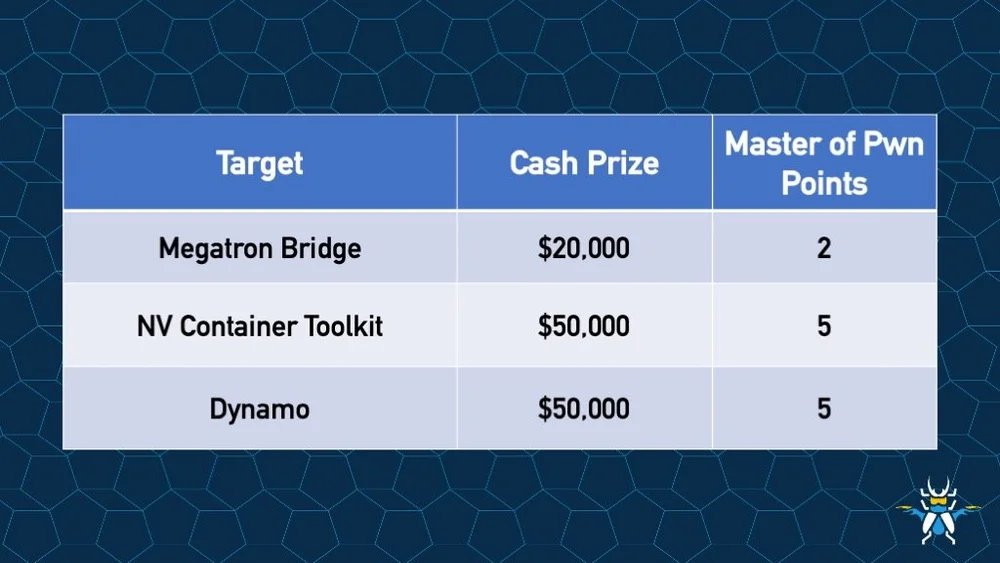
Our last AI sub-category focuses solely on NVIDIA products. For network accessible targets, an attempt must be launched from the contestant's laptop within the contest network. For NV Container Toolkit, the attempt must be launched from within a crafted container image and execute arbitrary code on the host operating system. For Megatron Bridge, entries that leverage vulnerabilities pertaining to pickle deserialization or that leverage a vulnerability when “trust_remote_code=true” are out of scope. Here are the targets and payouts for the NVIDIA category:

Back to top

Conclusion

The complete rules for Pwn2Own Berlin 2026 are found here. As always, we highly encourage entrants to read the rules thoroughly if they choose to participate. If you are thinking about participating but have specific configuration or rule-related questions, email us. Questions asked over X (nee Twitter), BlueSky, or other means will not be answered. Registration is required to ensure we have sufficient resources on hand at the event. Please contact ZDI at pwn2own@trendmicro.com to begin the registration process. Registration for onsite participation closes at 5 p.m. Central European Time on May 7, 2026.

Be sure to stay tuned to this blog and follow us on Twitter, Mastodon, LinkedIn, or Bluesky for the latest information and updates about the contest. We look forward to seeing everyone in Germany, and we hope to see some of the best in the world show what they can do – vibe coded or not.

With special thanks to our Pwn2Own Berlin 2026 partners AWS, for providing their expertise and technology.

© 2026 Trend Micro Incorporated. All rights reserved. PWN2OWN, ZERO DAY INITIATIVE, ZDI, ZERO DAY INITIATIVE, TrendAI, and Trend Micro are trademarks or registered trademarks of Trend Micro Incorporated. All other trademarks and trade names are the property of their respective owners.

The March 2026 Security Update Review

I am back in the friendly confines of the Mid-South headquarters of TrendAI ZDI (a.k.a. my home office), and am all set for the third patch Tuesday of 2026. Take a break from your regularly scheduled activities and let’s take a look at the latest security patches from Adobe and Microsoft.If you’d rather watch the full video recap covering the entire release, you can check it out here:

Adobe Patches for March 2026

For March, Adobe released eight bulletins addressing 80 unique CVEs in Adobe Acrobat Reader, Commerce, Illustrator, Substance 3D Painter, Premier Pro, Experience Manager, Substance 3D Stager, and the Adobe DNG Software Development Kit (SDK). Two of these bugs were submitted through the TrendAI ZDI program. If you need to prioritize, the update for Acrobat likely has the most impact, with the patch fixing two Critical-rated and one Important bugs. The fix for Experience Manager is the largest this month with 33 CVEs addressed. However, these are simple cross-site scripting (XSS) bugs, so it’s not too exciting. The fix for Commerce is also quite large with 19 CVEs. Most of these are also XSS bugs, but there’s a few security feature bypass bugs in there, too. Adobe actually gives this patch a deployment priority of 2, but it’s not under active attack at the time of release.

The fix for Illustrator corrects seven bugs, including a few Critical-rated ones. The patch for Substance 3D Painter fixes nine different CVEs, all rated Important. That’s not the case for Substance 3D Stager, which fixes six different Critical bugs that could lead to arbitrary code execution. The patch for the Adobe DNG Software Development Kit (SDK) addresses one Critical and one Important bug. Finally, the update for Premiere Pro correct a single, Critical-rated bug that could lead to arbitrary code execution.

None of the bugs fixed by Adobe this month are listed as publicly known or under active attack at the time of release, and beyond the update for Commerce, all of the other updates released by Adobe this month are listed as deployment priority 3.

Microsoft Patches for March 2026

This month, Microsoft released 84 new CVEs in Windows and Windows components, Office and Office Components, Microsoft Edge (Chromium-based), Azure, SQL Server, Hyper-V Server, and the Windows Resilient File System (ReFS). Counting the third-party and Chromium updates listed in the release, it brings to total number of CVEs to 94. Five of these bugs were reported through the TrendAI ZDI program. Eight of these bugs are rated Critical, and the rest are rated Important in severity.

This volume is relatively typical for a March release, and the lack of bugs under active attack is a nice change from last month. There are two vulnerabilities listed as publicly known at the time of release, but none listed as actively exploited.

Let’s take a closer look at some of the more interesting updates for this month, starting with a bug with an AI slant:

-    CVE-2026-26144 - Microsoft Excel Information Disclosure Vulnerability
This is a fascinating bug and an attack scenario we’re likely to see more often. The vulnerability is a simple cross-site scripting (XSS) bug in Excel, but an attacker could use it to cause the Copilot Agent to exfiltrate data off the target. This essentially makes it a zero-click information disclosure. Although not stated, the disclosure is likely at the level of the logged-on user, so there isn’t a privilege escalation component. Info disclosures rarely get rated Critical, but it makes sense here.

-    CVE-2026-26110/CVE-2026-26113 - Microsoft Office Remote Code Execution Vulnerability
Another month and another pair of Office bugs where the Preview Pane is an exploit vector. I’ve lost count of how many of these bugs have been patched over the last year, but it’s just a matter of time until they start appearing in active exploits. The latest versions of Outlook allow you to hide the Preview Pane, but it isn’t clear if this would mitigate these attacks. The best option is still to test and deploy the update, but considering how many of these patches exist, it’s likely further updates will be needed to fully address these issues.

-    CVE-2026-23669 - Windows Print Spooler Remote Code Execution Vulnerability
Just reading the title makes me twitch with remembrances of Print Nightmare from a few years ago. This bug works in the same manner as those exploits. An authenticated attacker sends specially crafted messages to an affected system to gain arbitrary code execution. No user interaction is required. Let’s hope we don’t end up in a new nightmare of spooler exploits. Test and deploy this one quickly.

-    CVE-2026-23668 - Windows Graphics Component Elevation of Privilege Vulnerability
This vulnerability was submitted to the ZDI program by Marcin Wiązowski as two separate bugs, and it demonstrates the need for variant investigations when creating security patches. Both cases are caused by the lack of proper locking when performing operations on an object. However, in one case, it’s in the cdd.dll driver while the other is in the win32kfull driver. Either way, an attacker could use these to elevate privileges to SYSTEM and execute arbitrary code. Since the fix for both is to add object locking to the GDI object, the cases are combined into a single CVE. That’s not a problem, but it does show how variants can occur, and fixes should be as broad as possible.

Here’s the full list of CVEs released by Microsoft for March 2026:

CVE Title Severity CVSS Public Exploited Type
CVE-2026-26127 .NET Denial of Service Vulnerability Important 7.5 Yes No DoS
CVE-2026-21262 SQL Server Elevation of Privilege Vulnerability Important 8.8 Yes No EoP
CVE-2026-23651 Microsoft ACI Confidential Containers Elevation of Privilege Vulnerability Critical 6.7 No No EoP
CVE-2026-26124 Microsoft ACI Confidential Containers Elevation of Privilege Vulnerability Critical 6.7 No No EoP
CVE-2026-26122 Microsoft ACI Confidential Containers Information Disclosure Vulnerability Critical 6.5 No No Info
CVE-2026-21536 Microsoft Devices Pricing Program Remote Code Execution Vulnerability Critical 9.8 No No RCE
CVE-2026-26144 Microsoft Excel Information Disclosure Vulnerability Critical 7.5 No No Info
CVE-2026-26110 Microsoft Office Remote Code Execution Vulnerability Critical 8.4 No No RCE
CVE-2026-26113 Microsoft Office Remote Code Execution Vulnerability Critical 8.4 No No RCE
CVE-2026-26125 Payment Orchestrator Service Elevation of Privilege Vulnerability Critical 8.6 No No EoP
CVE-2026-26131 .NET Elevation of Privilege Vulnerability Important 7.8 No No EoP
CVE-2026-25177 Active Directory Domain Services Elevation of Privilege Vulnerability Important 8.8 No No EoP
CVE-2026-26117 Arc Enabled Servers - Azure Connected Machine Agent Elevation of Privilege Vulnerability Important 7.8 No No EoP
CVE-2026-26130 ASP.NET Core Denial of Service Vulnerability Important 7.5 No No DoS
CVE-2026-23661 Azure IoT Explorer Information Disclosure Vulnerability Important 7.5 No No Info
CVE-2026-23662 Azure IoT Explorer Information Disclosure Vulnerability Important 7.5 No No Info
CVE-2026-23664 Azure IoT Explorer Information Disclosure Vulnerability Important 7.5 No No Info
CVE-2026-26121 Azure IOT Explorer Spoofing Vulnerability Important 7.5 No No Spoofing
CVE-2026-26118 Azure MCP Server Tools Elevation of Privilege Vulnerability Important 8.8 No No EoP
CVE-2026-23667 Broadcast DVR Elevation of Privilege Vulnerability Important 7 No No EoP
CVE-2026-25190 GDI Remote Code Execution Vulnerability Important 7.8 No No RCE
CVE-2026-25181 GDI+ Information Disclosure Vulnerability Important 7.5 No No Info
CVE-2026-26030 * GitHub: CVE-2026-26030 Microsoft Semantic Kernel InMemoryVectorStore filter functionality vulnerable Important 9.9 No No RCE
CVE-2026-23654 * GitHub: Zero Shot SCFoundation Remote Code Execution Vulnerability Important 8.8 No No RCE
CVE-2026-26141 Hybrid Worker Extension (Arc-enabled Windows VMs) Elevation of Privilege Vulnerability Important 7.8 No No EoP
CVE-2026-23665 † Linux Azure Diagnostic extension (LAD) Elevation of Privilege Vulnerability Important 7.8 No No EoP
CVE-2026-23674 MapUrlToZone Security Feature Bypass Vulnerability Important 7.5 No No SFB
CVE-2026-26123 Microsoft Authenticator Information Disclosure Vulnerability Important 5.5 No No Info
CVE-2026-26148 † Microsoft Azure AD SSH Login extension for Linux Elevation of Privilege Vulnerability Important 8.1 No No EoP
CVE-2026-25167 Microsoft Brokering File System Elevation of Privilege Vulnerability Important 7.4 No No EoP
CVE-2026-26107 Microsoft Excel Remote Code Execution Vulnerability Important 7.8 No No RCE
CVE-2026-26108 Microsoft Excel Remote Code Execution Vulnerability Important 7.8 No No RCE
CVE-2026-26109 Microsoft Excel Remote Code Execution Vulnerability Important 8.4 No No RCE
CVE-2026-26112 Microsoft Excel Remote Code Execution Vulnerability Important 7.8 No No RCE
CVE-2026-26134 Microsoft Office Elevation of Privilege Vulnerability Important 7.8 No No EoP
CVE-2026-26106 Microsoft SharePoint Server Remote Code Execution Vulnerability Important 8.8 No No RCE
CVE-2026-26114 Microsoft SharePoint Server Remote Code Execution Vulnerability Important 8.8 No No RCE
CVE-2026-26105 Microsoft SharePoint Server Spoofing Vulnerability Important 8.1 No No Spoofing
CVE-2026-24283 Multiple UNC Provider Kernel Driver Elevation of Privilege Vulnerability Important 8.8 No No EoP
CVE-2026-25165 Performance Counters for Windows Elevation of Privilege Vulnerability Important 7.8 No No EoP
CVE-2026-24282 Push message Routing Service Elevation of Privilege Vulnerability Important 5.5 No No Info
CVE-2026-26115 SQL Server Elevation of Privilege Vulnerability Important 8.8 No No EoP
CVE-2026-26116 SQL Server Elevation of Privilege Vulnerability Important 8.8 No No EoP
CVE-2026-20967 System Center Operations Manager (SCOM) Elevation of Privilege Vulnerability Important 8.8 No No EoP
CVE-2026-24285 Win32k Elevation of Privilege Vulnerability Important 7 No No EoP
CVE-2026-24291 Windows Accessibility Infrastructure (ATBroker.exe) Elevation of Privilege Vulnerability Important 7.8 No No EoP
CVE-2026-25186 Windows Accessibility Infrastructure (ATBroker.exe) Information Disclosure Vulnerability Important 5.5 No No Info
CVE-2026-23660 † Windows Admin Center in Azure Portal Elevation of Privilege Vulnerability Important 7.8 No No EoP
CVE-2026-24293 Windows Ancillary Function Driver for WinSock Elevation of Privilege Vulnerability Important 7.8 No No EoP
CVE-2026-25176 Windows Ancillary Function Driver for WinSock Elevation of Privilege Vulnerability Important 7.8 No No EoP
CVE-2026-25178 Windows Ancillary Function Driver for WinSock Elevation of Privilege Vulnerability Important 7 No No EoP
CVE-2026-25179 Windows Ancillary Function Driver for WinSock Elevation of Privilege Vulnerability Important 7 No No EoP
CVE-2026-23656 Windows App Installer Spoofing Vulnerability Important 5.9 No No Spoofing
CVE-2026-25171 Windows Authentication Elevation of Privilege Vulnerability Important 7 No No EoP
CVE-2026-23671 Windows Bluetooth RFCOM Protocol Driver Elevation of Privilege Vulnerability Important 7 No No EoP
CVE-2026-24292 Windows Connected Devices Platform Service Elevation of Privilege Vulnerability Important 7.8 No No EoP
CVE-2026-24295 Windows Device Association Service Elevation of Privilege Vulnerability Important 7 No No EoP
CVE-2026-24296 Windows Device Association Service Elevation of Privilege Vulnerability Important 7 No No EoP
CVE-2026-25189 Windows DWM Core Library Elevation of Privilege Vulnerability Important 7.8 No No EoP
CVE-2026-25174 Windows Extensible File Allocation Table Elevation of Privilege Vulnerability Important 7.8 No No EoP
CVE-2026-25168 Windows Graphics Component Denial of Service Vulnerability Important 6.2 No No DoS
CVE-2026-25169 Windows Graphics Component Denial of Service Vulnerability Important 6.2 No No DoS
CVE-2026-23668 Windows Graphics Component Elevation of Privilege Vulnerability Important 7 No No EoP
CVE-2026-25180 Windows Graphics Component Information Disclosure Vulnerability Important 5.5 No No Info
CVE-2026-25170 Windows Hyper-V Elevation of Privilege Vulnerability Important 7 No No EoP
CVE-2026-24297 Windows Kerberos Security Feature Bypass Vulnerability Important 6.5 No No SFB
CVE-2026-24287 Windows Kernel Elevation of Privilege Vulnerability Important 7.8 No No EoP
CVE-2026-24289 Windows Kernel Elevation of Privilege Vulnerability Important 7.8 No No EoP
CVE-2026-26132 Windows Kernel Elevation of Privilege Vulnerability Important 7.8 No No EoP
CVE-2026-24288 Windows Mobile Broadband Driver Remote Code Execution Vulnerability Important 6.8 No No RCE
CVE-2026-25175 Windows NTFS Elevation of Privilege Vulnerability Important 7.8 No No EoP
CVE-2026-23669 Windows Print Spooler Remote Code Execution Vulnerability Important 8.8 No No RCE
CVE-2026-24290 Windows Projected File System Elevation of Privilege Vulnerability Important 7.8 No No EoP
CVE-2026-23673 Windows Resilient File System (ReFS) Elevation of Privilege Vulnerability Important 7.8 No No EoP
CVE-2026-25172 Windows Routing and Remote Access Service (RRAS) Remote Code Execution Vulnerability Important 8.8 No No RCE
CVE-2026-25173 Windows Routing and Remote Access Service (RRAS) Remote Code Execution Vulnerability Important 8 No No RCE
CVE-2026-26111 Windows Routing and Remote Access Service (RRAS) Remote Code Execution Vulnerability Important 8.8 No No RCE
CVE-2026-25185 Windows Shell Link Processing Spoofing Vulnerability Important 5.3 No No Spoofing
CVE-2026-24294 Windows SMB Server Elevation of Privilege Vulnerability Important 7.8 No No EoP
CVE-2026-26128 Windows SMB Server Elevation of Privilege Vulnerability Important 7.8 No No EoP
CVE-2026-25166 Windows System Image Manager Assessment and Deployment Kit (ADK) Remote Code Execution Vulnerability Important 7.8 No No RCE
CVE-2026-25188 Windows Telephony Service Elevation of Privilege Vulnerability Important 8.8 No No EoP
CVE-2026-23672 Windows Universal Disk Format File System Driver (UDFS) Elevation of Privilege Vulnerability Important 7.8 No No EoP
CVE-2026-25187 Winlogon Elevation of Privilege Vulnerability Important 7.8 No No EoP
CVE-2026-3536 * Chromium: CVE-2026-3536 Integer overflow in ANGLE Critical N/A No No RCE
CVE-2026-3538 * Chromium: CVE-2026-3538 Integer overflow in Skia Critical N/A No No RCE
CVE-2026-3539 * Chromium: CVE-2026-3539 Object lifecycle issue in DevTools High N/A No No RCE
CVE-2026-3540 * Chromium: CVE-2026-3540 Inappropriate implementation in WebAudio High N/A No No RCE
CVE-2026-3541 * Chromium: CVE-2026-3541 Inappropriate implementation in CSS High N/A No No RCE
CVE-2026-3542 * Chromium: CVE-2026-3542 Inappropriate implementation in WebAssembly High N/A No No RCE
CVE-2026-3543 * Chromium: CVE-2026-3543 Inappropriate implementation in V8 High N/A No No RCE
CVE-2026-3544 * Chromium: CVE-2026-3544 Heap buffer overflow in WebCodecs High N/A No No RCE
CVE-2026-3545 * Chromium: CVE-2026-3545 Insufficient data validation in Navigation High N/A No No RCE

* Indicates this CVE had been released by a third party and is now being included in Microsoft releases.

† Indicates further administrative actions are required to fully address the vulnerability.


Looking at the other Critical-rated bugs in this month’s release, they are all cloud-native and require no user action. Microsoft has already remediated the vulnerabilities.

Moving on to the other code execution bugs, the vulnerabilities in SharePoint Server pop out first. Both require authentication, but it’s essentially the lowest level of authentication, so these would be ideal cases for lateral movement within an enterprise. There are the standard open-and-own cases within Office components. There an interesting sounding bug in the Windows Mobile Broadband Driver that requires physical access, but Microsoft doesn’t elaborate on the attack scenario beyond that fact. The bug in the System Image Manager Assessment and Deployment Kit (ADK) requires authentication. The bug in GDI requires user interaction. The remaining code execution bugs are in the RRAS protocol. We’ve seen bugs in this component in the past, but never in the wild. I wouldn’t ignore these, but I wouldn’t rush them out either.

Similar to last month, updates for Elevation of Privilege (EoP) bugs make up nearly half of this month’s release. And as we saw last month, but most simply lead to local attackers executing their code at SYSTEM-level privileges or administrative privileges. The bugs in SQL Server allow attackers to elevate to SQL sysadmin privileges. The bug in the Azure MCP Server is more complex. It allows attackers to obtain the permissions associated with the MCP Server’s managed identity, which lets them perform actions that the managed identity is able to reach. The bug in the Azure AD SSH Login extension for Linux leads to root access, and it won’t be easy to patch. You’ll need to run the update instructions from the command line on each affected system. That’s the same case for the bug in the Linux Azure Diagnostic extension (LAD). There’s an odd bug in the Hybrid Worker Extension (Arc‑enabled Windows VMs) that leads to “ELEVATED” privileges, which is something I’ve never seen before. The bug in the Broadcast DVR component allows an attacker to go from low integrity level up to medium. There’s a bug listed as an EoP in the Push message Routing Service, but reading the description, Microsoft notes it could lead to an information disclosure. It’s likely this is an error and should be an Information Disclosure bug. The final EoP is in the Azure Portal Windows Admin Center and leads to SYSTEM. However, there’s no patch to remediate this bug. Instead, you need to install the latest version of the Windows Admin Center extension through the Azure Portal by hand.

There are two security feature bypass patches in the March release. The first is a bypass of the MapURLToZone method, which (as expected) allows attackers to bypass MapURLToZone protections. The third bypass is in Kerberos and could allow an attacker to either view some sensitive information or make changes to “disclosed” information. This is a race condition that occurs while the group policy is being reapplied, so the window to exploit this would be extremely small.

Looking at the remaining info disclosure bugs getting patched this month, only two result in info leaks consisting of unspecified memory contents or memory addresses. Ther others provide more interesting results. There are three bugs in the Azure IoT Explorer have some wide-ranging implications. According to Microsoft, exploitation could result in, “device connection information, authentication tokens, request data, file paths, and other information transmitted between the application and the IoT Hub.” The bug in Authenticator almost reads like a security feature bypass, as exploit results in the disclosure of a one‑time sign‑in code or authentication deep link. The attacker would receive the sign‑in information and could potentially use it to authenticate as the user, allowing access to information or services available to that account. The last info disclosure bug is in the Accessibility Infrastructure and allows an attacker to gain secrets or privileged information belonging to the user of the affected application.

There are only four spoofing bugs in the March release. The first is in SharePoint server and manifests as an XSS. The second bug is a Server-Side Request Forgery (SSRF) in the Azure IoT Explorer. The remaining two are a bit more cryptic. The bug in Windows Shell Link Processing results from the “exposure of sensitive information to an unauthorized actor,” and could lead to spoofing. That sounds like credential exposure, but it’s not explicitly called out. The final spoofing bug results from the insufficient verification of data authenticity in Windows App Installer. Again, this sounds vaguely like credential reflection, but without further information, we can only speculate.

Finally, there are four denial-of-service (DoS) bugs in the release, including one that’s listed as publicly known in the .NET Framework. As usual, Microsoft provides no actionable information about these bugs.

No new advisories are being released this month.

Looking Ahead

I plan on being at RSA for the first time in my career, so if you’re around, please stop by and say hello. I like it when people say hello. Otherwise, I’ll be back on April 14 with my assessment of that patch Tuesday release. Until then, stay safe, happy patching, and may all your reboots be smooth and clean!
The February 2026 Security Update Review

I have survived the biggest Pwn2Own ever, but I’m back in Tokyo for the second Patch Tuesday of 2026. My location never stops Patch Tuesday from coming, so let’s take a look at the latest security patches from Adobe and Microsoft. If you’d rather watch the full video recap covering the entire release, you can check it out here:

Adobe Patches for February 2026

For February, Adobe released nine bulletins addressing 44 unique CVEs in Adobe Audition, After Effects, InDesign, Substance 3D Designer, Substance 3D Stager, Adobe Bridge, Substance 3D Modeler, Lightroom Classic, and the Adobe DNG Software Development Kit (SDK). The largest update here is for After Effects, which fixes 13 Critical and two Important rated bugs. The patch for Substance 3D Designer is on the larger side with seven fixes, but only two of those are Critical. On the other hand, the fix for Substance 3D Stager corrects five Critical-rated bugs that could lead to code execution. The Audition patch fixes six bugs, but only one is Critical.

The other patches are smaller in size. The fix for the Adobe DNG Software Development Kit (SDK) corrects two Critical and two Important-rated bugs. The InDesign patch fixes three bugs, but only one is Critical. The update for Adobe Bridge fixes two Critical bug that could lead to code execution. The patch for Lightroom Classic addresses a single Critical bug, and the release is wrapped up with a patch for Substance 3D Modeler that fixes a single, Important-rated memory link.

None of the bugs fixed by Adobe this month are listed as publicly known or under active attack at the time of release, and all of the updates released by Adobe this month are listed as deployment priority 3.

Microsoft Patches for February 2026

This month, Microsoft drops 58 new CVEs in Windows and Windows components, Office and Office Components, Azure, Microsoft Edge (Chromium-based), .NET and Visual Studio, GitHub Copilot, Mailslot FS, Exchange Server, Internet Explorer (!), Power BI, Hyper-V Server, and the Windows Subsystem for Linux. Counting the third-party and Chromium updates listed in the release, it brings the total number of CVEs to 62. One of the bugs in the Windows Graphics component was submitted through the ZDI program. Five of these bugs are rated Critical, two are rated Moderate, and the rest are rated Important in severity.

It’s typical to see this number of CVEs released in February, but the number of bugs under active attack is extraordinarily high. Microsoft lists six bugs being exploited at the time of release, with three of these listed as publicly known. Last month only had a single bug being exploited, although there were twice as many CVEs patched. We’ll see if we’re on our way to another “hot exploit summer” as we saw a few years ago or if this is just an aberration.

Let’s take a closer look at some of the more interesting updates for this month, starting with the bugs under active attack:

-    CVE-2026-21510 - Windows Shell Security Feature Bypass Vulnerability
This bug is listed as a security feature bypass, but it could also be classified as code execution. An attacker can bypass Windows SmartScreen and Windows Shell security prompts to execute code on a target system. This bug is also listed as publicly known, but Microsoft doesn’t say where. There is user interaction here, as the client needs to click a link or a shortcut file. Still, a one-click bug to gain code execution is a rarity. Definitely test and deploy this fix quickly.

-    CVE-2026-21514 - Microsoft Word Security Feature Bypass Vulnerability
This bug also requires user interaction in the form of opening a Word document, but that’s all that’s required to bypass protections to dangerous COM/OLE controls. Thankfully, the Preview Pane is not an attack vector here. However, users are well known to open lots of documents they receive in e-mail. This bypass could also result in code execution if the right COM/OLE control is hit. This is also listed as publicly known, so add this to the list to test and deploy quickly.

-    CVE-2026-21519 - Desktop Window Manager Elevation of Privilege Vulnerability
This is the second month in a row that a DWM was listed as being exploited in the wild. That leads me to believe the first patch didn’t completely resolve the vulnerability. Same as last month, this bug allows attackers to run code with SYSTEM privileges. Bugs of this type are typically paired with a code execution bug to take over a system. As always, Microsoft offers no indication of how widespread these exploits may be.

-    CVE-2026-21533 - Windows Remote Desktop Services Elevation of Privilege Vulnerability
Don’t let the word “Remote” in the title fool you – this is a local bug that allows attackers to run code with SYSTEM privileges. It’s interesting that Microsoft lists “Improper privilege management” as the root cause for this issue. If the system is running Remote Desktop Services, it’s probably a juicy target for attackers to move laterally after an initial breach. Add this one to the list of patches to test and deploy immediately.

-    CVE-2026-21513 - Internet Explorer Security Feature Bypass Vulnerability
Although long gone by many measurements, IE does still exist on Windows systems, and calling it always results in a vulnerability somehow. This bug manifests similarly to the Shell bug above, as it requires user interaction but could result in code execution. The bypass here is simply the ability to reach IE, which shouldn’t be possible. Again, test and deploy this fix quickly.

-    CVE-2026-21525 - Windows Remote Access Connection Manager Denial of Service Vulnerability
It’s unusual to see DoS bugs being used in active attacks, but that’s what we have here. A null pointer deref in the Windows Remote Access Connection Manager allows an unauthorized attacker to deny service locally. Most null pointer derefs cause the application or service to crash, but it’s not clear if it will automatically restart. I would exercise caution and patch quickly either way.

Here’s the full list of CVEs released by Microsoft for February 2026:

CVE Title Severity CVSS Public Exploited TYPE
CVE-2026-21514 Microsoft Word Security Feature Bypass Vulnerability Important 7.8 Yes Yes SFB
CVE-2026-21510 Windows Shell Security Feature Bypass Vulnerability Important 8.8 Yes Yes SFB
CVE-2026-21513 Internet Explorer Security Feature Bypass Vulnerability Important 8.8 Yes Yes SFB
CVE-2026-21519 Desktop Window Manager Elevation of Privilege Vulnerability Important 7.8 No Yes EoP
CVE-2026-21533 Windows Remote Desktop Services Elevation of Privilege Vulnerability Important 7.8 No Yes EoP
CVE-2026-21525 Windows Remote Access Connection Manager Denial of Service Vulnerability Moderate 6.2 No Yes DoS
CVE-2026-21511 Microsoft Outlook Spoofing Vulnerability Important 7.5 No No Spoofing
CVE-2023-2804 * Red Hat, Inc. CVE-2023-2804: Heap Based Overflow libjpeg-turbo Important 6.5 Yes No RCE
CVE-2026-24302 Azure Arc Elevation of Privilege Vulnerability Critical 8.6 No No EoP
CVE-2026-24300 Azure Front Door Elevation of Privilege Vulnerability Critical 9.8 No No EoP
CVE-2026-21532 Azure Function Information Disclosure Vulnerability Critical 8.2 No No Info
CVE-2026-21522 Microsoft ACI Confidential Containers Elevation of Privilege Vulnerability Critical 6.7 No No EoP
CVE-2026-23655 Microsoft ACI Confidential Containers Information Disclosure Vulnerability Critical 6.5 No No Info
CVE-2026-21218 .NET and Visual Studio Spoofing Vulnerability Important 7.5 No No Spoofing
CVE-2026-21512 Azure DevOps Server Cross-Site Scripting Vulnerability Important 6.5 No No XSS
CVE-2026-21529 † Azure HDInsight Spoofing Vulnerability Important 5.7 No No Spoofing
CVE-2026-21528 Azure IoT Explorer Information Disclosure Vulnerability Important 6.5 No No Info
CVE-2026-21228 Azure Local Remote Code Execution Vulnerability Important 8.1 No No RCE
CVE-2026-21531 Azure SDK for Python Remote Code Execution Vulnerability Important 9.8 No No RCE
CVE-2026-21251 Cluster Client Failover (CCF) Elevation of Privilege Vulnerability Important 7.8 No No EoP
CVE-2026-20846 GDI+ Denial of Service Vulnerability Important 7.5 No No DoS
CVE-2026-21523 GitHub Copilot and Visual Studio Code Remote Code Execution Vulnerability Important 8 No No RCE
CVE-2026-21518 GitHub Copilot and Visual Studio Code Security Feature Bypass Vulnerability Important 6.5 No No SFB
CVE-2026-21257 GitHub Copilot and Visual Studio Elevation of Privilege Vulnerability Important 8 No No EoP
CVE-2026-21256 GitHub Copilot and Visual Studio Remote Code Execution Vulnerability Important 8.8 No No RCE
CVE-2026-21516 GitHub Copilot for Jetbrains Remote Code Execution Vulnerability Important 8.8 No No RCE
CVE-2026-21253 Mailslot File System Elevation of Privilege Vulnerability Important 7 No No EoP
CVE-2026-21537 † Microsoft Defender for Endpoint Linux Extension Remote Code Execution Vulnerability Important 8.8 No No RCE
CVE-2026-21259 Microsoft Excel Elevation of Privilege Vulnerability Important 7.3 No No EoP
CVE-2026-21258 Microsoft Excel Information Disclosure Vulnerability Important 5.5 No No Info
CVE-2026-21261 Microsoft Excel Information Disclosure Vulnerability Important 5.5 No No Info
CVE-2026-21527 Microsoft Exchange Server Spoofing Vulnerability Important 6.5 No No Spoofing
CVE-2026-21260 Microsoft Outlook Spoofing Vulnerability Important 7.5 No No Spoofing
CVE-2026-21229 Power BI Remote Code Execution Vulnerability Important 8 No No RCE
CVE-2026-21236 Windows Ancillary Function Driver for WinSock Elevation of Privilege Vulnerability Important 7.8 No No EoP
CVE-2026-21238 Windows Ancillary Function Driver for WinSock Elevation of Privilege Vulnerability Important 7.8 No No EoP
CVE-2026-21241 Windows Ancillary Function Driver for WinSock Elevation of Privilege Vulnerability Important 7 No No EoP
CVE-2026-21517 Windows App for Mac Installer Elevation of Privilege Vulnerability Important 7 No No EoP
CVE-2026-21234 Windows Connected Devices Platform Service Elevation of Privilege Vulnerability Important 7 No No EoP
CVE-2026-21235 Windows Graphics Component Elevation of Privilege Vulnerability Important 7.3 No No EoP
CVE-2026-21246 Windows Graphics Component Elevation of Privilege Vulnerability Important 7.8 No No EoP
CVE-2026-21232 Windows HTTP.sys Elevation of Privilege Vulnerability Important 7.8 No No EoP
CVE-2026-21240 Windows HTTP.sys Elevation of Privilege Vulnerability Important 7.8 No No EoP
CVE-2026-21250 Windows HTTP.sys Elevation of Privilege Vulnerability Important 7.8 No No EoP
CVE-2026-21244 Windows Hyper-V Remote Code Execution Vulnerability Important 7.3 No No RCE
CVE-2026-21247 Windows Hyper-V Remote Code Execution Vulnerability Important 7.3 No No RCE
CVE-2026-21248 Windows Hyper-V Remote Code Execution Vulnerability Important 7.3 No No RCE
CVE-2026-21255 Windows Hyper-V Security Feature Bypass Vulnerability Important 8.8 No No SFB
CVE-2026-21231 Windows Kernel Elevation of Privilege Vulnerability Important 7.8 No No EoP
CVE-2026-21239 Windows Kernel Elevation of Privilege Vulnerability Important 7.8 No No EoP
CVE-2026-21245 Windows Kernel Elevation of Privilege Vulnerability Important 7.8 No No EoP
CVE-2026-21222 Windows Kernel Information Disclosure Vulnerability Important 5.5 No No Info
CVE-2026-21243 Windows Lightweight Directory Access Protocol (LDAP) Denial of Service Vulnerability Important 7.5 No No DoS
CVE-2026-20841 Windows Notepad App Remote Code Execution Vulnerability Important 8.8 No No RCE
CVE-2026-21249 Windows NTLM Spoofing Vulnerability Important 3.3 No No Spoofing
CVE-2026-21508 Windows Storage Elevation of Privilege Vulnerability Important 7 No No EoP
CVE-2026-21237 Windows Subsystem for Linux Elevation of Privilege Vulnerability Important 7 No No EoP
CVE-2026-21242 Windows Subsystem for Linux Elevation of Privilege Vulnerability Important 7 No No EoP
CVE-2026-1861 * Chromium: CVE-2026-1861 Heap buffer overflow in libvpx High N/A No No RCE
CVE-2026-1862 * Chromium: CVE-2026-1862 Type Confusion in V8 High N/A No No RCE
CVE-2026-0391 Microsoft Edge (Chromium-based) for Android Spoofing Vulnerability Moderate 6.5 No No Spoofing

* Indicates this CVE had been released by a third party and is now being included in Microsoft releases.

† Indicates further administrative actions are required to fully address the vulnerability.


Moving on to the Critical-rated bugs, the patch for Azure Front Door sounds frightening, but Microsoft has already fixed the bug and is just now documenting it. That’s also true for the bugs in Azure Arc and Azure Function. There are two Critical-rated bugs in the ACI Confidential Containers. The first allows a container escape while the second discloses secret tokens and keys. Either way, you’ll want to handle those quickly.

Taking a look at the other code execution vulnerabilities in this month’s release, we start with a frightening looking bug in Azure SDK for Python that has the highest CVSS this month of 9.8. A remote, unauthenticated attacker code gain code execution on an affected system via a maliciously crafted continuation token. It’s not clear why this isn’t rated Critical, but I would treat it as such. The three bugs in Hyper-V are actually local open-and-own bugs that require a user to open a malicious file on an affected system. That’s also true for the bug in Notepad. The bug in Power BI is confusing, because Microsoft says it requires authentication and could lead to an attacker running code as an authenticated user. There’s the poorly named “Azure Local Remote Code Execution Vulnerability”, but it requires a machine-in-the-middle (MitM) to exploit. The bug in Defender for Endpoint Linux is restricted to local subnets, but you’ll need to enable auto provisioning to get the patch. The final code execution bugs addressed this month are in GitHub Copilot. Two are command injections and the other is a Time-of-check time-of-use (toctou) race condition, but both could end up in code execution on affected systems.

Patches for Elevation of Privilege (EoP) bugs make up nearly 50% of this release, but most simply lead to local attackers executing their code at SYSTEM-level privileges or administrative privileges. There are only two of note. The first is a command injection bug in GitHub Copilot that leads to executing code at the level of the targeted application. The second is a bug in a kernel that leads to SYSTEM but could also be used for a sandbox escape.

There’s a unusually high number of spoofing bugs in this month’s release, and the ones for Outlook are the most troubling. First, the Preview Pane is an attack vector. Secondly, the bugs could be used to relay NTLM credentials via just an email, which could result in credential disclosure. And you’ll need multiple patches to fully address these bugs. At least they can be applied in any order.  There’s a UI misrepresentation bug in Exchange Server that could allow an attacker to either view some sensitive information or “make changes to disclosed information”. At what point does data become disclosed? That odd phrasing makes me think they are using AI to right some of their descriptions. The phrasing also appears in the patch for NTLM. That bug is triggered by opening a specially crafted Office doc, and while they explicitly say it could be used to relay NTLM creds, it sure seems that way. The patch for .NET and Visual Studio fixes a bug that allows attackers to bypass header validation, resulting in the service accepting a message it should reject. Finally, the bug in Azure HDInsight is really just a cross-site scripting (XSS) bug. The caveat here is that you need to restart Ambari server in both of the head nodes to have this fix updated. There is also an XSS in Azure Devops Server, but at least it is labelled as such.

There are a couple of additional security feature bypass bugs to discuss. The first is in Hyper-V and bypasses the Virtualization-based Security feature. The other is in GitHub Copilot and Visual Studio Code. It’s another command injection, but this one can be used to bypass authentication. Neat.

Looking at the remaining info disclosure bugs getting patched this month, most simply result in info leaks consisting of unspecified memory contents or memory addresses. The exception is the bug in Azure IoT Explorer. This bug could be used to view the contents of the target user’s local file system.

We end this month’s release with two DoS bugs: one in LDAP and one in GDI+. Neither descriptions from Microsoft provide any usable information.

No new advisories are being released this month.

Looking Ahead

I plan on being back home for the March release but wherever I’m at, you can rest assured that March 10, I’ll be here to provide my assessment of the release. Until then, stay safe, happy patching, and may all your reboots be smooth and clean!
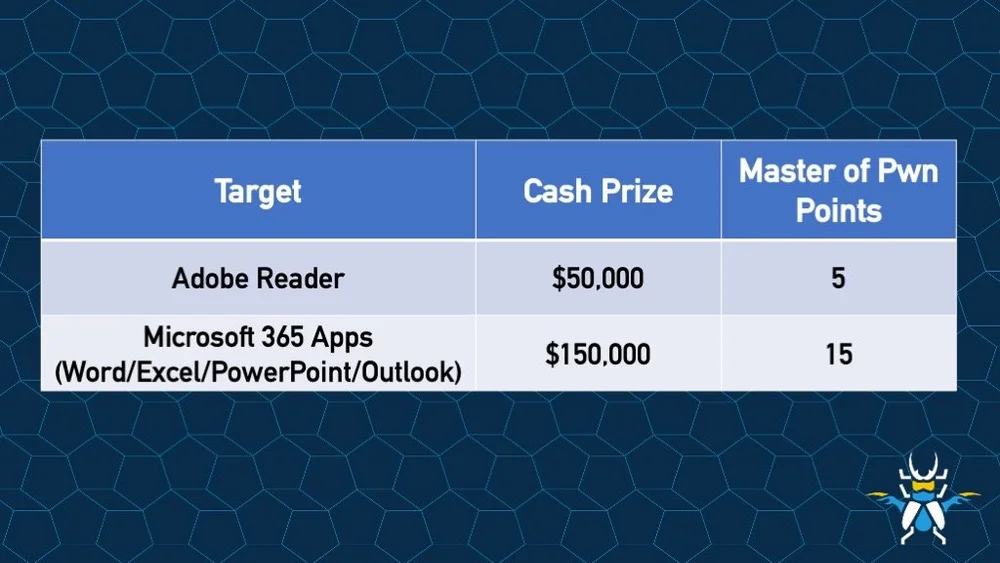
Pwn2Own Automotive 2026 - Day Three Results and the Master of Pwn

The last day of Pwn2Own Automotive 2026 saw the world’s top security researchers take their final shots at the latest automotive systems. Over three days of intense competition, $1,047,000 USD was awarded for 76 unique 0-day vulnerabilities, with bold exploits, clever techniques, and collisions keeping the action thrilling throughout.

By the end, Tobias Scharnowski (@ScepticCtf), Felix Buchmann (@diff_fusion), and Kristian Covic (@SeTcbPrivilege) of Fuzzware.io claimed the title of Master of Pwn, earning 28 points and $215,500 USD.

Follow the final updates on Twitter, Mastodon, LinkedIn, and Bluesky, and join the conversation using #Pwn2OwnAutomotive and #P2OAuto.

SUCCESS / COLLISON - Tobias Scharnowski (@ScepticCtf), Felix Buchmann (@diff_fusion), and Kristian Covic (@SeTcbPrivilege) of Fuzzware.io targeted the Alpine iLX-F511, demonstrating one vulnerability previously used by another contestant, earning $2,500 USD and 1 Master of Pwn point. #Pwn2Own #P2OAuto

SUCCESS / COLLISON - Slow Horses of Qrious Secure (@qriousec) targeted the Grizzl-E Smart 40A but encountered two bug collisions, still earning $5,000 USD and 2 Master of Pwn points.

SUCCESS / COLLISON - Team MST targeted the Kenwood DNR1007XR, demonstrating one bug but running into a collision, earning $2,500 USD and 1 Master of Pwn point.

SUCCESS - PetoWorks (@petoworks) targeted the Grizzl-E Smart 40A, exploiting one buffer overflow bug, and earned $10,000 USD and 4 Master of Pwn points.

SUCCESS - Bongeun Koo (@kiddo_pwn) and Evangelos Daravigkas (@freddo_1337) of Team DDOS targeted the Alpine iLX‑F511, exploiting a stack‑based buffer overflow to earn $5,000 USD and 2 Master of Pwn points.

SUCCESS - Viettel Cyber Security (@vcslab) targeted the Sony XAV‑9500ES, exploiting a heap‑based buffer overflow to achieve arbitrary code execution, earning $10,000 USD and 2 Master of Pwn points. #Pwn2Own #P2OAuto

SUCCESS / COLLISON - Qrious Secure (@qriousec) targeted the Kenwood system, demonstrating three bugs - one n-day and two unique vulnerabilities (incorrect permission assignment and a race condition), earning $4,000 USD and 1.75 Master of Pwn points.

SUCCESS - Boom! or shall we say Doom? Game On! Aapo Oksman, Elias Ikkelä-Koski and Mikael Kantola of Juurin Oy exploit the Alpitronic HYC50 with a TOCTOU bug - and installed a playable version of Doom to boot. They earn $20,000 and 4 Master of Pwn points. #Pwn2Own #P2OAuto

SUCCESS / COLLISON - Nguyen Thanh Dat (@rewhiles) of Viettel Cyber Security (@vcslab) targeted the Kenwood DNR1007XR, demonstrating one bug but encountering a collision, earning $2,500 USD and 1 Master of Pwn point.

SUCCESS / COLLISON - Autocrypt (Hoyong Jin, Jaewoo Jeong, Chanhyeok Jung, Minsoo Son, and Kisang Choi) targeted the Alpine iLX-F511, demonstrating two vulnerabilities to gain root access. One collided with a previously known issue, earning $3,000 USD and 1.25 Master of Pwn points.

SUCCESS - Elias Ikkelä-Koski and Aapo Oksman of Juurin Oy targeted the Kenwood DNR1007XR, demonstrating a link-following vulnerability to earn $5,000 USD and 2 Master of Pwn points.

SUCCESS - Nam Ha Bach and Vu Tien Hoa of the FPT NightWolf Team targeted the Alpine iLX-F511, exploiting one unique vulnerability to gain root access and earning $5,000 USD and 2 Master of Pwn points.

SUCCESS / COLLISON - Ryo Kato (@Pwn4S0n1c) targeted the Autel MaxiCharger AC Elite Home 40A, demonstrating a three-bug chain but encountering one collision, still earning $16,750 USD and 3.5 Master of Pwn points.

Pwn2Own Automotive 2026 - Day Two Results

Day Two of Pwn2Own Automotive 2026 was packed with action, and the stakes continued to rise. Security researchers returned to the Pwn2Own stage, probing and challenging the latest automotive systems as the competition intensified. New exploits, unexpected twists, and standout performances emerged throughout the day - follow along here for daily updates as the race for Master of Pwn heats up. 

Following an action-packed Day One, where $516,500 USD was awarded for 37 unique 0-day vulnerabilities, Day Two added another $439,250 USD and 29 unique 0-days, bringing the event totals to $955,750 USD with 66 unique vulnerabilities overall. Fuzzware.io holds a commanding lead for Master of Pwn, but with one day to go, anything can still happen. We’ll see what the final day of the contest brings. 

Stay up to date throughout Day Two by following us on Twitter, Mastodon, LinkedIn, and Bluesky, and join the conversation using #Pwn2Own Automotive and #P2OAuto. 

SUCCESS - Inhyung Lee, Seokhun Lee, Chulhan Park, Wooseok Kim, and Yeonseok Jang of Team MAMMOTH exploited a command injection vulnerability against the Alpine iLX-F511, earning $10,000 USD and 2 Master of Pwn points.

FAILURE - Autocrypt - Hoyong Jin, Jaewoo Jeong, Chanhyeok Jung, Minsoo Son, and Kisang Choi - targeted the Grizzl‑E Smart 40A with the Charging Connector Protocol/Signal Manipulation add‑on but were unable to demonstrate the vulnerability within the allotted time.

SUCCESS - Julien COHEN‑SCALI of FuzzingLabs (@FuzzingLabs) targeted the Phoenix Contact CHARX SEC‑3150, chaining two vulnerabilities - an authentication bypass and privilege escalation - to earn $20,000 USD and 4 Master of Pwn points.

SUCCESS - Neodyme AG (@Neodyme) exploited a buffer overflow vulnerability (CWE‑120) in Round 3 to achieve privileged code execution on the Sony XAV‑9500ES, earning $10,000 USD and 2 Master of Pwn points. #Pwn2Own #P2OAuto

SUCCESS - Hank Chen (@hank0438) of InnoEdge Labs exploited an exposed dangerous method against the Alpitronic HYC50 – Lab Mode, earning $40,000 USD and 4 Master of Pwn points.

SUCCESS / COLLISON - Nguyen Thanh Dat (@rewhiles) of Viettel Cyber Security (@vcslab) targeted the Alpine iLX-F511, hitting a one-vulnerability collision with a previous attempt and earning $2,500 USD and 1 Master of Pwn point.

SUCCESS / COLLISON - BoredPentester (@BoredPentester) targeted the Grizzl‑E Smart 40A with the Charging Connector Protocol/Signal Manipulation add‑on, combining two bugs to earn $20,000 USD and 3 Master of Pwn points. #Pwn2Own #P2OAuto

SUCCESS / COLLISON - Bongeun Koo (@kiddo_pwn) and Evangelos Daravigkas (@freddo_1337) of Team DDOS targeted the Kenwood DNR1007XR, exploiting an n‑day command injection to earn $4,000 USD and 1 Master of Pwn point.

SUCCESS - Sina Kheirkhah (@SinSinology) of Summoning Team (@SummoningTeam) targeted the Kenwood DNR1007XR in Round 6, exploiting a command injection vulnerability to earn $5,000 USD and 2 Master of Pwn points.

SUCCESS / COLLISON - Kazuki Furukawa (@N4NU) of GMO Cybersecurity by Ierae targeted the Alpine iLX-F511, hitting a one-vulnerability collision with a previous attempt and earning $2,500 USD and 1 Master of Pwn point. #Pwn2Own #P2OAuto

SUCCESS / COLLISON - Donggeon Kim (@gbdngb12), Hoon Nam (@pwnstar96), Jaeho Jeong (@jeongZero), Sangsoo Jeong (@sangs00Jeong), and Wonyoung Jung (@nonetype_pwn) of 78ResearchLab targeted the Kenwood DNR1007XR, exploiting one n-day vulnerability along with two collisions to earn $2,500 USD and 1 Master of Pwn point.

SUCCESS - Xilokar (xilokar@mamot.fr) targeted the Alpitronic HYC50 – Lab Mode, exploiting one bug to earn $20,000 USD and 4 Master of Pwn points.

SUCCESS / COLLISON - Hyeongseok Lee (@fluorite_pwn), Yunje Shin (@YunjeShin), Chaeeul Hyun (@yskm_Gunter), Ingyu Yang (@Mafty5275), Hoseok Kang (@cl4y419), Seungyeon Park (@vvsy46), and Wonjun Choi (@won6_choi) of BoB::Takedown targeted the Grizzl-E Smart 40A, hitting one collision and one unique 0-day, earning $15,000 USD and 3 Master of Pwn points.

SUCCESS - Tobias Scharnowski (@ScepticCtf), Felix Buchmann (@diff_fusion), and Kristian Covic (@SeTcbPrivilege) of Fuzzware.io targeted the Phoenix Contact CHARX SEC-3150 in Round 5, exploiting three bugs with two add-ons to earn $50,000 USD and 7 Master of Pwn points.

SUCCESS / COLLISON - Slow Horses of Qrious Secure (@qriousec) targeted the Alpine iLX-F511, resulting in a single vulnerability collision with a previous attempt, earning $2,500 USD and 1 Master of Pwn point.

FAILURE - Autocrypt (Hoyong Jin, Jaewoo Jeong, Chanhyeok Jung, Minsoo Son, and Kisang Choi) targeted the Autel MaxiCharger AC Elite Home 40A with the Charging Connector Protocol/Signal Manipulation add-on, but ran out of attempts before the exploit could be demonstrated.

SUCCESS - BoredPentester (@BoredPentester) targeted the Kenwood DNR1007XR, demonstrating a command injection vulnerability to earn $5,000 USD and 2 Master of Pwn points.

SUCCESS - Rob Blakely of Technical Debt Collectors targeted Automotive Grade Linux, chaining three bugs - an out-of-bounds read, memory exhaustion, and a heap overflow - to earn $40,000 USD and 4 Master of Pwnpoints. #Pwn2Own #P2OAuto

SUCCESS / COLLISON - PHP Hooligans / Midnight Blue (@midnightbluelab) targeted the Autel MaxiCharger AC Elite Home 40A with the Charging Connector Protocol/Signal Manipulation add-on, hitting a full collision on a two-bug chain, earning $20,000 USD and 3 Master of Pwn points. #Pwn2Own #P2OAuto

SUCCESS - Synacktiv (@synacktiv) targeted the Autel MaxiCharger AC Elite Home 40A with the Charging Connector Protocol/Signal Manipulation add‑on. In Round 2, they exploited one stack‑based buffer overflow, earning $30,000 USD and 5 Master of Pwn points.

SUCCESS - Tobias Scharnowski (@ScepticCtf), Felix Buchmann (@diff_fusion), and Kristian Covic (@SeTcbPrivilege) of Fuzzware.io targeted the ChargePoint Home Flex (CPH50-K) with the Charging Connector Protocol/Signal Manipulation add-on, exploiting one command injection bug to earn $30,000 USD and 5 Master of Pwn points. #Pwn2Own #P2OAuto

FAILURE - PetoWorks (@petoworks) targeted the Alpine iLX-F511 but was unable to demonstrate their exploit within the allotted time.

SUCCESS - Sina Kheirkhah (@SinSinology) of Summoning Team (@SummoningTeam) targeted the ChargePoint Home Flex (CPH50-K) with the Charging Connector Protocol/Signal Manipulation add-on, exploiting two bugs to earn $30,000 USD and 5 Master of Pwn points.

SUCCESS / COLLISON - PetoWorks (@petoworks) targeted the Kenwood DNR1007XR, hitting one bug collision earning $2,500 USD and 1 Master of Pwn point.

SUCCESS / COLLISON - Tobias Scharnowski (@ScepticCtf), Felix Buchmann (@diff_fusion), and Kristian Covic (@SeTcbPrivilege) of Fuzzware.io targeted the Grizzl-E Smart 40A with the Charging Connector Protocol/Signal Manipulation add-on, resulting in two bug collisions and earning $15,000 USD and 3 Master of Pwn points.

SUCCESS / COLLISON - Bongeun Koo (@kiddo_pwn) and Evangelos Daravigkas (@freddo_1337) of Team DDOS targeted the Phoenix Contact CHARX SEC-3150 with the Charging Connector Protocol/Signal Manipulation add-on, demonstrating six bugs but encountering a collision, still earning $19,250 USD and 4.75 Master of Pwn points.

SUCCESS - Sina Kheirkhah (@SinSinology) of Summoning Team (@SummoningTeam) targeted the Alpine iLX-F511, exploiting two unique vulnerabilities to gain root access, earning $5,000 USD and 2 Master of Pwn points.

SUCCESS / COLLISON - Evan Grant (@stargravy) targeted the Grizzl-E Smart 40A with the Charging Connector Protocol/Signal Manipulation add-on, hitting two bug collisions, still earning $15,000 USD and 3 Master of Pwn points.

SUCCESS / COLLISON - Hyeonjun Lee (@gul9ul), Younghun Kwon (@d0kk2bi), Hyeokjong Yun (@dig06161), Dohwan Kim (@neko__hat), Hanryeol Park (@hanR0724), Hyojin Lee (@meixploit), Jinyeong Yoon, and Youngmin Cho (@ZIEN0621) of ZIEN, Inc. targeted the ChargePoint Home Flex (CPH50-K), demonstrating two unique bugs (symlink following and command injection) but encountered a collision with a previous attempt - still earning $16,750 USD and 3.5 Master of Pwn points.

SUCCESS / COLLISON - Hyeongseok Lee (@fluorite_pwn), Yunje Shin (@YunjeShin), Chaeeul Hyun (@yskm_Gunter), Ingyu Yang (@Mafty5275), Hoseok Kang (@cl4y419), Seungyeon Park (@vvsy46), and Wonjun Choi (@won6_choi) of BoB::Takedown targeted the Phoenix Contact CHARX SEC-3150, demonstrating three bugs, but ran into two collisions, earning $6,750 USD and 2.75 Master of Pwn points.

Pwn2Own Automotive 2026 - Day One Results

Welcome to Day One of Pwn2Own Automotive 2026! Today, 30 entries took the Pwn2Own stage to target the latest automotive systems, as the world’s top security researchers push technology to its limits. Exploits, surprises, and breakthrough discoveries are unfolding.

After Day One, we awarded $516,500 for 37 unique 0-days! Fuzzware.io is currently in the lead for Master of Pwn, but Team DDOS is right on their heels. Stay tuned tomorrow for more results and surprises.

Stay up to date by following us on Twitter, Mastodon, LinkedIn, and Bluesky, and join the conversation using #Pwn2Own Automotive and #P2OAuto for continuous coverage. 

FAILURE - Unfortunately, Team Hacking Group targeting Kenwood DNR1007XR in the In-Vehicle Infotainment (IVI) category could not get their exploit working within the time allotted.

SUCCESS - Neodyme AG (@Neodyme) used a stack based buffer overflow to get a root shell on the Alpine iLX-F511, earning $20,000 USD and 2 Master of Pwn points.

SUCCESS - Fuzzware.io ( @ScepticCtf, @diff_fusion, @SeTcbPrivilege) chained two vulnerabilities (CWE-306, CWE-347) to achieve code execution on the Autel charger and manipulate the charging signal, earning $50,000 USD and 5 Master of Pwn points. Full win with the add-on.

SUCCESS - Taejin Kim (@tae3pwn), Junsu Yeo (@junactually), Sunmin Park (@sunminpark4503), Sungmin Son (@_ssm98), and Hoseok Lee of SKShieldus (@EQSTLab) of 299 exploited a hardcoded credential (CWE-798) to achieve code execution via CWE-494 on the Grizzl-E Smart 40A, earning $40,000 USD and 4 Master of Pwn points.

SUCCESS - Bongeun Koo (@kiddo_pwn) and Evangelos Daravigkas (@freddo_1337) of Team DDOS exploited two bugs, including a command injection, against the ChargePoint Home Flex. Add-on failed, but still earned $40,000 USD and 4 Master of Pwn points.

SUCCESS - Cyrill Bannwart, Emanuele Barbeno, Yves Bieri, Lukasz D., and Urs Mueller of Compass Security (@compasssecurity) exploited one exposed dangerous method/function bug on the Alpine iLX-F511, winning Round 2 for $10,000 USD and 2 Master of Pwn points.

SUCCESS - PetoWorks (@petoworks) chained three bugs - including Denial of Service (DoS), a race condition, and command injection - against the Phoenix Contact CHARX SEC-3150, winning Round 1 for $50,000 USD and 5 Master of Pwn points with the signal manipulation add-on.

SUCCESS - Synacktiv (@synacktiv) chained three vulnerabilities to gain root-level code execution on the Sony XAV-9500ES, earning a full win of $20,000 USD and 2 Master of Pwn points.

SUCCESS - Tobias Scharnowski (@ScepticCtf), Felix Buchmann (@diff_fusion), and Kristian Covic (@SeTcbPrivilege) of Fuzzware.io exploited an n-day command injection against Kenwood, earning $8,000 USD and 1 Master of Pwn point.

SUCCESS - Yannik Marchand (@kinnay) exploited a single out-of-bounds write to achieve a full win against the Kenwood DNR1007XR, earning $20,000 USD and 2 Master of Pwn points.

FAILURE - Hyunseok Yun, Heaeun Moon, and Eungyo Seo of CIS targeted the Alpine iLX-F511 but were unable to complete their exploit within the allotted time.

SUCCESS / COLLISON - Cyrill Bannwart, Emanuele Barbeno, Yves Bieri, Lukasz D., and Urs Mueller of Compass Security (@compasssecurity) earned $25,000 USD and 4 Master of Pwn points with the Charging Connector Protocol/Signal Manipulation add‑on against the Grizzl‑E Smart 40A, chaining an authentication bypass (CWE‑306) to remote code execution via CWE‑494.

FAILURE - Tobias Scharnowski (@ScepticCtf), Felix Buchmann (@diff_fusion), and Kristian Covic (@SeTcbPrivilege) of Fuzzware.io targeted the EMPORIA Pro Charger Level 2 with the Charging Connector Protocol/Signal Manipulation add‑on but were unable to complete their exploit within the allotted time.

SUCCESS / COLLISON - Kazuki Furukawa (@N4NU) of GMO Cybersecurity chained three bugs against Kenwood - including an n‑day hard‑coded credential, incorrect permissions on a critical resource, and command injection - to earn $8,000 USD and 1.75 Master of Pwn points.

SUCCESS / COLLISON - Bongeun Koo (@kiddo_pwn) and Evangelos Daravigkas (@freddo_1337) of Team DDOS targeted the Autel MaxiCharger AC Elite Home 40A with the Charging Connector Protocol/Signal Manipulation add-on. Due to a full collision with a previous attempt, they earned $10,000 USD and 2 Master of Pwn points.

SUCCESS / COLLISON - Chumy Tsai (@rm_rf_chumy), Jimmy Liu (@DrmnSamoLiu), and Jim Chen (@asef18766) of Cycraft Technology (@cycraft_corp) targeted the Grizzl-E Smart 40A. Due to a 2-bug collision, they earned $10,000 USD and 2 Master of Pwn points.

SUCCESS - Mia Miku Deutsch (@newbe3e) exploited a stack-based buffer overflow against the Alpine iLX‑F511, earning $10,000 USD and 2 Master of Pwn points.

SUCCESS - Synacktiv (@synacktiv) chained two vulnerabilities - an information leak and an out‑of‑bounds write - to achieve a full win in the Tesla Infotainment USB‑based Attack category, earning $35,000 USD and 3.5 Master of Pwn points.

SUCCESS / COLLISON - Donggeon Kim (@gbdngb12), Hoon Nam (@pwnstar96), Jaeho Jeong (@jeongZero), Sangsoo Jeong (@sangs00Jeong), and Wonyoung Jung (@nonetype_pwn) of 78ResearchLab hit a one‑vulnerability collision against the Alpine iLX‑F511, earning $5,000 USD and 1 Master of Pwn point.

SUCCESS - Giuseppe Calì (_gcali) and 8cf53a459714977f6bb11ee2d90416bf1675fa0e2451d80cf55a06d0b6ac2 of Team Zeroshi exploited five bugs against the Phoenix Contact CHARX SEC-3150, securing a Round 2 win for $20,000 USD and 4 Master of Pwn points.

SUCCESS / COLLISON - Bongeun Koo (@kiddo_pwn) and Evangelos Daravigkas (@freddo_1337) of Team DDOS hit a collision against the Grizzl-E Smart 40A with the Charging Connector Protocol/Signal Manipulation add-on, combining three duplicate bugs and one new bug to earn $22,500 USD and 3.5 Master of Pwn points.

FAILURE - Tobias Scharnowski (@ScepticCtf), Felix Buchmann (@diff_fusion), and Kristian Covic (@SeTcbPrivilege) of Fuzzware.io targeted Sony XAV-9500ES but were unable to get their exploit working within the allotted time.

FAILURE - Viettel Cyber Security (@vcslab) targeted the ChargePoint Home Flex (CPH50-K) but were unable to get their exploit working within the allotted time.

SUCCESS - Tobias Scharnowski (@ScepticCtf), Felix Buchmann (@diff_fusion), and Kristian Covic (@SeTcbPrivilege) of Fuzzware.io achieved a full win against the Alpitronic HYC50 - Field Mode, exploiting a single out-of-bounds write to earn $60,000 USD and 6 Master of Pwn points.

SUCCESS - Dong hee Kim (@heehee_0219_) and Jong geon Kim (@kimjor22) of Team K exploited two vulnerabilities - an out-of-bounds read and a stack-based buffer overflow - against the Alpine iLX-F511, earning $10,000 USD and 2 Master of Pwn points.

SUCCESS - Interrupt Labs (@InterruptLabs) scored a Round 3 win against the Kenwood DNR1007XR, exploiting a unique heap-based buffer overflow to earn $10,000 USD and 2 Master of Pwn points. #Pwn2Own #P2OAuto

FAILURE - Jonathan Conrad (@jwconrad.bsky.social) targeted the Grizzl-E Smart 40A but was unable to reproduce the vulnerability within the allotted time.

SUCCESS / COLLISON - TienPP of FPT NightWolf hit a collision against the Kenwood DNR1007XR, chaining three bugs - including an n‑day hard‑coded credential and two 0‑days (incorrect default permissions and symlink following) - to earn $8,000 USD and 1.75 Master of Pwn points.

SUCCESS - @ExLuck99 and @gr4ss341 of ANHTUD chained two vulnerabilities (CWE‑125 and CWE‑122) to achieve code execution on the Sony XAV‑9500ES, earning $10,000 USD and 2 Master of Pwn points in Round 2.

SUCCESS / COLLISON - Donggeon Kim (@gbdngb12), Hoon Nam (@pwnstar96), Jaeho Jeong (@jeongZero), Sangsoo Jeong (@sangs00Jeong), and Wonyoung Jung (@nonetype_pwn) of 78ResearchLab targeted the Phoenix Contact CHARX SEC‑3150, chaining four bugs (two unique and two collisions) to earn $15,000 USD and 3 Master of Pwn points.

Pwn2Own Automotive 2026 - The Full Schedule

おかえりなさい (Welcome back!) The third annual Pwn2Own Automotive competition has returned to Automotive World in Tokyo, and the excitement is building. This year marks a major milestone for Pwn2Own, with a record 73 entries. We’ve brought together some of the world’s most talented security researchers to take on the latest automotive components, pushing them to their limits in a real-world testing environment.

Earlier today, we held the random drawing to determine the order of attempts, setting the stage for an exciting lineup of demonstrations and discoveries. Below is the official schedule based on that draw. All times are listed in Tokyo local time and may change as the competition progresses - updates will be posted as the event unfolds.

In case you missed it, you can watch the draw here.

Jump to:    Day One           Day Two           Day Three

Day One

Wednesday, January 21 – 1100

Team Hacking Group targeting Kenwood DNR1007XR in the In-Vehicle Infotainment (IVI) category for a total of $20,000 and 2 Master of Pwn points.

Tobias Scharnowski (@ScepticCtf), Felix Buchmann (@diff_fusion), and Kristian Covic (@SeTcbPrivilege) of Fuzzware.io targeting Autel MaxiCharger AC Elite Home 40A EV Charger in the Level 2 Electric Vehicle Chargers category with the Charging Connector Protocol/Signal Manipulation add-on for a total of $50,000 and 5 Master of Pwn points.

Neodyme AG (@Neodyme) targeting Alpine iLX-F511 in the In-Vehicle Infotainment (IVI) category for a total of $20,000 and 2 Master of Pwn points.

Bongeun Koo (@kiddo_pwn) and Evangelos Daravigkas (@freddo_1337) of Team DDOS targeting ChargePoint Home Flex (Model CPH50-K) in the Level 2 Electric Vehicle Chargers category with the Charging Connector Protocol/Signal Manipulation add-on for a total of $50,000 and 5 Master of Pwn points.

Taejin Kim (@_tae3_), Junsu Yeo (@junactually), Sunmin Park (@sunminpark4503), Sungmin Son (@_ssm98), Hoseok Lee of SKShieldus (@EQSTLab) of 299 targeting Grizzl-E Smart 40A in the Level 2 Electric Vehicle Chargers category for a total of $40,000 and 4 Master of Pwn points.

Wednesday, January 21 – 1200

PetoWorks (@petoworks) targeting Phoenix Contact CHARX SEC-3150 in the Level 2 Electric Vehicle Chargers category with the Charging Connector Protocol/Signal Manipulation add-on for a total of $50,000 and 5 Master of Pwn points.

Wednesday, January 21 – 1230

Tobias Scharnowski (@ScepticCtf), Felix Buchmann (@diff_fusion), and Kristian Covic (@SeTcbPrivilege) of Fuzzware.io targeting Kenwood DNR1007XR in the In-Vehicle Infotainment (IVI) category for a total of $20,000 and 2 Master of Pwn points.

Synacktiv (@synacktiv) targeting Sony XAV-9500ES in the In-Vehicle Infotainment (IVI) category for a total of $20,000 and 2 Master of Pwn points.

Cyrill Bannwart, Emanuele Barbeno, Yves Bieri, Lukasz D., and Urs Mueller of Compass Security (@compasssecurity) targeting Alpine iLX-F511 in the In-Vehicle Infotainment (IVI) category for a total of $20,000 and 2 Master of Pwn points.

Wednesday, January 21 – 1400

Yannik Marchand (@kinnay) targeting Kenwood DNR1007XR in the In-Vehicle Infotainment (IVI) category for a total of $20,000 and 2 Master of Pwn points.

Hyunseok Yun, Heaeun Moon, Eungyo Seo of CIS targeting Alpine iLX-F511 in the In-Vehicle Infotainment (IVI) category for a total of $20,000 and 2 Master of Pwn points

Synacktiv (@synacktiv) targeting Infotainment USB-based Attack in the Tesla Infotainment category for a total of $35,000 and 3.5 Master of Pwn points.

Tobias Scharnowski (@ScepticCtf), Felix Buchmann (@diff_fusion), and Kristian Covic (@SeTcbPrivilege) of Fuzzware.io targeting EMPORIA Pro Charger Level 2 in the Level 2 Electric Vehicle Chargers category with the Charging Connector Protocol/Signal Manipulation add-on for a total of $50,000 and 5 Master of Pwn points.

Cyrill Bannwart, Emanuele Barbeno, Yves Bieri, Lukasz D., Urs Mueller of Compass Security (@compasssecurity) targeting Grizzl-E Smart 40A in the Level 2 Electric Vehicle Chargers category with the Charging Connector Protocol/Signal Manipulation add-on for a total of $50,000 and 5 Master of Pwn points.

Wednesday, January 21 – 1500

Bongeun Koo (@kiddo_pwn) and Evangelos Daravigkas (@freddo_1337) of Team DDOS targeting Autel MaxiCharger AC Elite Home 40A EV Charger in the Level 2 Electric Vehicle Chargers category with the Charging Connector Protocol/Signal Manipulation add-on for a total of $50,000 and 5 Master of Pwn points.

Wednesday, January 21 – 1530

Kazuki Furukawa (@_N4NU_) of GMO Cybersecurity by Ierae targeting Kenwood DNR1007XR in the In-Vehicle Infotainment (IVI) category for a total of $20,000 and 2 Master of Pwn points.

Mia Miku Deutsch (@newbe3e) targeting Alpine iLX-F511 in the In-Vehicle Infotainment (IVI) category for a total of $20,000 and 2 Master of Pwn points.

Tobias Scharnowski (@ScepticCtf), Felix Buchmann (@diff_fusion), and Kristian Covic (@SeTcbPrivilege) of Fuzzware.io targeting Alpitronic HYC50 - Field Mode in the Level 3 Electric Vehicle Chargers category for a total of $60,000 and 6 Master of Pwn points.

Chumy Tsai (@rm_rf_chumy), Jimmy Liu (@DrmnSamoLiu), and Jim Chen (@asef18766) at Cycraft Technology (@cycraft_corp) targeting Grizzl-E Smart 40A in the Level 2 Electric Vehicle Chargers category for a total of $40,000 and 4 Master of Pwn points.

Wednesday, January 21 – 1600

Team Zeroshi targeting Phoenix Contact CHARX SEC-3150 in the Level 2 Electric Vehicle Chargers category with the Charging Connector Protocol/Signal Manipulation add-on for a total of $50,000 and 5 Master of Pwn points.

Wednesday, January 21 – 1700

Interrupt Labs (@InterruptLabs) targeting Kenwood DNR1007XR in the In-Vehicle Infotainment (IVI) category for a total of $20,000 and 2 Master of Pwn points.

Donggeon Kim (@gbdngb12), Hoon Nam (@pwnstar96), Jaeho Jeong (@jeongZero), Sangsoo Jeong (@sangs00Jeong) and Wonyoung Jung (@nonetype_pwn) of 78ResearchLab targeting Alpine iLX-F511 in the In-Vehicle Infotainment (IVI) category for a total of $20,000 and 2 Master of Pwn points.

Bongeun Koo (@kiddo_pwn) and Evangelos Daravigkas (@freddo_1337) of Team DDOS targeting Grizzl-E Smart 40A in the Level 2 Electric Vehicle Chargers category with the Charging Connector Protocol/Signal Manipulation add-on for a total of $50,000 and 5 Master of Pwn points.

Wednesday, January 21 – 1730

Tobias Scharnowski (@ScepticCtf), Felix Buchmann (@diff_fusion), and Kristian Covic (@SeTcbPrivilege) of Fuzzware.io targeting Sony XAV-9500ES in the In-Vehicle Infotainment (IVI) category for a total of $20,000 and 2 Master of Pwn points.

Viettel Cyber Security (@vcslab) targeting ChargePoint Home Flex (Model CPH50-K) in the Level 2 Electric Vehicle Chargers category for a total of $40,000 and 4 Master of Pwn points.

Wednesday, January 21 – 1830

TienPP from FPT NightWolf targeting Kenwood DNR1007XR in the In-Vehicle Infotainment (IVI) category for a total of $20,000 and 2 Master of Pwn points.  

Dong hee Kim (@heehee_0219_) and Jong geon Kim (@kimjor22) targeting Alpine iLX-F511 in the In-Vehicle Infotainment (IVI) category for a total of $20,000 and 2 Master of Pwn points.  

Donggeon Kim (@gbdngb12), Hoon Nam (@pwnstar96), Jaeho Jeong (@jeongZero), Sangsoo Jeong (@sangs00Jeong) and Wonyoung Jung (@nonetype_pwn) of 78ResearchLab targeting Phoenix Contact CHARX SEC-3150 in the Level 2 Electric Vehicle Chargers category for a total of $40,000 and 4 Master of Pwn points.  

Jonathan Conrad (@jwconrad.bsky.social) targeting Grizzl-E Smart 40A in the Level 2 Electric Vehicle Chargers category for a total of $40,000 and 4 Master of Pwn points.

Wednesday, January 21 – 1900

@ExLuck99 and @gr4ss341 of ANHTUD targeting Sony XAV-9500ES in the In-Vehicle Infotainment (IVI) category for a total of $20,000 and 2 Master of Pwn points.

Back to top

Day Two

Thursday, January 22 – 1030

Bongeun Koo (@kiddo_pwn) and Evangelos Daravigkas (@freddo_1337) of Team DDOS targeting Kenwood DNR1007XR in the In-Vehicle Infotainment (IVI) category for a total of $20,000 and 2 Master of Pwn points.

Inhyung Lee, Seokhun Lee, Chulhan Park, Wooseok Kim, and Yeonseok Jang from Team MAMMOTH targeting Alpine iLX-F511 in the In-Vehicle Infotainment (IVI) category for a total of $20,000 and 2 Master of Pwn points.

Julien COHEN-SCALI from FuzzingLabs (@FuzzingLabs) targeting Phoenix Contact CHARX SEC-3150 in the Level 2 Electric Vehicle Chargers category for a total of $40,000 and 4 Master of Pwn points.  

Hank Chen (@hank0438) of InnoEdge Labs targeting Alpitronic HYC50 - Lab Mode in the Level 3 Electric Vehicle Chargers category for a total of $40,000 and 4 Master of Pwn points.   

Autocrypt (Hoyong Jin, Jaewoo Jeong, Chanhyeok Jung, Minsoo Son, and Kisang Choi) targeting Grizzl-E Smart 40A in the Level 2 Electric Vehicle Chargers category with the Charging Connector Protocol/Signal Manipulation add-on for a total of $50,000 and 5 Master of Pwn points.

Thursday, January 22 – 1130

Neodyme AG (@Neodyme) targeting Sony XAV-9500ES in the In-Vehicle Infotainment (IVI) category for a total of $20,000 and 2 Master of Pwn points.

Thursday, January 22 – 1200

Sina Kheirkhah (@SinSinology) of Summoning Team (@SummoningTeam) targeting Kenwood DNR1007XR in the In-Vehicle Infotainment (IVI) category for a total of $20,000 and 2 Master of Pwn points.

Nguyen Thanh Dat (@rewhiles) from Viettel Cyber Security (@vcslab) targeting Alpine iLX-F511 in the In-Vehicle Infotainment (IVI) category for a total of $20,000 and 2 Master of Pwn points.

BoredPentester (@BoredPentester) targeting Grizzl-E Smart 40A in the Level 2 Electric Vehicle Chargers category with the Charging Connector Protocol/Signal Manipulation add-on for a total of $50,000 and 5 Master of Pwn points.

Thursday, January 22 – 1230

Tobias Scharnowski (@ScepticCtf), Felix Buchmann (@diff_fusion), and Kristian Covic (@SeTcbPrivilege) of Fuzzware.io targeting Phoenix Contact CHARX SEC-3150 in the Level 2 Electric Vehicle Chargers category with the Charging Connector Attack and Charging Connector Protocol/Signal Manipulation add-on for a total of $70,000 and 7 Master of Pwn points.

Xilokar (xilokar@mamot.fr) targeting Alpitronic HYC50 - Lab Mode in the Level 3 Electric Vehicle Chargers category for a total of $40,000 and 4 Master of Pwn points.

Thursday, January 22 – 1300

PHP Hooligans / Midnight Blue (@midnightbluelab) targeting Autel MaxiCharger AC Elite Home 40A EV Charger in the Level 2 Electric Vehicle Chargers category with the Charging Connector Protocol/Signal Manipulation add-on for a total of $50,000 and 5 Master of Pwn points.

Thursday, January 22 – 1330

Donggeon Kim (@gbdngb12), Hoon Nam (@pwnstar96), Jaeho Jeong (@jeongZero), Sangsoo Jeong (@sangs00Jeong) and Wonyoung Jung (@nonetype_pwn) of 78ResearchLab targeting Kenwood DNR1007XR in the In-Vehicle Infotainment (IVI) category for a total of $20,000 and 2 Master of Pwn points.

Kazuki Furukawa (@_N4NU_) of GMO Cybersecurity by Ierae targeting Alpine iLX-F511 in the In-Vehicle Infotainment (IVI) category for a total of $20,000 and 2 Master of Pwn points.

Hyeongseok Lee (@fluorite_pwn), Yunje Shin (@YunjeShin), Chaeeul Hyun (@yskm_Gunter), Ingyu Yang (@Mafty5275), Hoseok Kang (@clay419), Seungyeon Park (@vvsy46), and Wonjun Choi (@won6_choi) of BoB::Takedown targeting Grizzl-E Smart 40A in the Level 2 Electric Vehicle Chargers category for a total of $40,000 and 4 Master of Pwn points.

Thursday, January 22 – 1430

Autocrypt (Hoyong Jin, Jaewoo Jeong, Chanhyeok Jung, Minsoo Son, and Kisang Choi) targeting Autel MaxiCharger AC Elite Home 40A EV Charger in the Level 2 Electric Vehicle Chargers category with the Charging Connector Protocol/Signal Manipulation add-on for a total of $50,000 and 5 Master of Pwn points.

Rob Blakely of Technical Debt Collectors targeting Automotive Grade Linux in the Operating System category for a total of $40,000 and 4 Master of Pwn points.

Tobias Scharnowski (@ScepticCtf), Felix Buchmann (@diff_fusion), and Kristian Covic (@SeTcbPrivilege) of Fuzzware.io targeting ChargePoint Home Flex (Model CPH50-K) in the Level 2 Electric Vehicle Chargers category with the Charging Connector Protocol/Signal Manipulation add-on for a total of $50,000 and 5 Master of Pwn points.

Thursday, January 22 – 1500

BoredPentester (@BoredPentester) targeting Kenwood DNR1007XR in the In-Vehicle Infotainment (IVI) category for a total of $20,000 and 2 Master of Pwn points.

Slow Horses of Qrious Secure (@qriousec) targeting Alpine iLX-F511 in the In-Vehicle Infotainment (IVI) category for a total of $20,000 and 2 Master of Pwn points.

Thursday, January 22 – 1600

Synacktiv (@synacktiv) targeting Autel MaxiCharger AC Elite Home 40A EV Charger in the Level 2 Electric Vehicle Chargers category with the Charging Connector Protocol/Signal Manipulation add-on for a total of $50,000 and 5 Master of Pwn points.

Bongeun Koo (@kiddo_pwn) and Evangelos Daravigkas (@freddo_1337) of Team DDOS targeting Phoenix Contact CHARX SEC-3150 in the Level 2 Electric Vehicle Chargers category with the Charging Connector Protocol/Signal Manipulation add-on for a total of $50,000 and 5 Master of Pwn points.

Thursday, January 22 – 1630

PetoWorks (@petoworks) targeting Alpine iLX-F511 in the In-Vehicle Infotainment (IVI) category for a total of $20,000 and 2 Master of Pwn points.

Sina Kheirkhah (@SinSinology) of Summoning Team (@SummoningTeam) targeting ChargePoint Home Flex (Model CPH50-K) in the Level 2 Electric Vehicle Chargers category with the Charging Connector Protocol/Signal Manipulation add-on for a total of $50,000 and 5 Master of Pwn points.

Thursday, January 22 – 1700

Tobias Scharnowski (@ScepticCtf), Felix Buchmann (@diff_fusion), and Kristian Covic (@SeTcbPrivilege) of Fuzzware.io targeting Grizzl-E Smart 40A in the Level 2 Electric Vehicle Chargers category with the Charging Connector Protocol/Signal Manipulation add-on for a total of $50,000 and 5 Master of Pwn points.

Thursday, January 22 – 1800

PetoWorks (@petoworks) targeting Kenwood DNR1007XR in the In-Vehicle Infotainment (IVI) category for a total of $20,000 and 2 Master of Pwn points.

Hyeongseok Lee (@fluorite_pwn), Yunje Shin (@YunjeShin), Chaeeul Hyun (@yskm_Gunter), Ingyu Yang (@Mafty5275), Hoseok Kang (@clay419), Seungyeon Park (@vvsy46), and Wonjun Choi (@won6_choi) of BoB::Takedown targeting Phoenix Contact CHARX SEC-3150 in the Level 2 Electric Vehicle Chargers category for a total of $40,000 and 4 Master of Pwn points.

Thursday, January 22 – 1830

Sina Kheirkhah (@SinSinology) of Summoning Team (@SummoningTeam) targeting Alpine iLX-F511 in the In-Vehicle Infotainment (IVI) category for a total of $20,000 and 2 Master of Pwn points.

Hyeonjun Lee (@gul9ul), Younghun Kwon (@d0kk2bi), Hyeokjong Yun (@dig06161), Dohwan Kim (@neko__hat), Hanryeol Park (@hanR0724), Hyojin Lee (@meixploit), Jinyeong Yoon, and Youngmin Cho (@ZIEN0621) of ZIEN, Inc. targeting ChargePoint Home Flex (Model CPH50-K) in the Level 2 Electric Vehicle Chargers category for a total of $40,000 and 4 Master of Pwn points.

Evan Grant (@stargravy) targeting Grizzl-E Smart 40A in the Level 2 Electric Vehicle Chargers category with the Charging Connector Protocol/Signal Manipulation add-on for a total of $50,000 and 5 Master of Pwn points.

Back to top

Day Three

Friday, January 23 – 1030

Team MST targeting Kenwood DNR1007XR in the In-Vehicle Infotainment (IVI) category for a total of $20,000 and 2 Master of Pwn points.

Viettel Cyber Security (@vcslab) targeting Sony XAV-9500ES in the In-Vehicle Infotainment (IVI) category for a total of $20,000 and 2 Master of Pwn points.

Tobias Scharnowski (@ScepticCtf), Felix Buchmann (@diff_fusion), and Kristian Covic (@SeTcbPrivilege) of Fuzzware.io targeting Alpine iLX-F511 in the In-Vehicle Infotainment (IVI) category for a total of $20,000 and 2 Master of Pwn points.

Slow Horses of Qrious Secure (@qriousec) targeting Grizzl-E Smart 40A in the Level 2 Electric Vehicle Chargers category for a total of $40,000 and 4 Master of Pwn points.

Friday, January 23 – 1200

Slow Horses of Qrious Secure (@qriousec) targeting Kenwood DNR1007XR in the In-Vehicle Infotainment (IVI) category for a total of $20,000 and 2 Master of Pwn points.

Bongeun Koo (@kiddo_pwn) and Evangelos Daravigkas (@freddo_1337) of Team DDOS targeting Alpine iLX-F511 in the In-Vehicle Infotainment (IVI) category for a total of $20,000 and 2 Master of Pwn points.

PetoWorks (@petoworks) targeting Grizzl-E Smart 40A in the Level 2 Electric Vehicle Chargers category with the Charging Connector Protocol/Signal Manipulation add-on for a total of $50,000 and 5 Master of Pwn points.

Friday, January 23 – 1300

Aapo Oksman, Elias Ikkelä-Koski and Mikael Kantola of Juurin Oy targeting the Alpitronic HYC50 - Lab Mode in the Level 3 Electric Vehicle Chargers category for a total of $40,000 and 4 Master of Pwn points.

Friday, January 23 – 1330

Nguyen Thanh Dat (@rewhiles) from Viettel Cyber Security (@vcslab) targeting Kenwood DNR1007XR in the In-Vehicle Infotainment (IVI) category for a total of $20,000 and 2 Master of Pwn points.

Autocrypt (Hoyong Jin, Jaewoo Jeong, Chanhyeok Jung, Minsoo Son, Kisang Choi) targeting Alpine iLX-F511 in the In-Vehicle Infotainment (IVI) category for a total of $20,000 and 2 Master of Pwn points.

Friday, January 23 – 1500

Elias Ikkelä-Koski and Aapo Oksman of Juurin Oy targeting Kenwood DNR1007XR in the In-Vehicle Infotainment (IVI) category for a total of $20,000 and 2 Master of Pwn points.

Ryo Kato (@Pwn4S0n1c) targeting the Autel MaxiCharger AC Elite Home 40A EV Charger in the Level 2 Electric Vehicle Chargers category for a total of $40,000 and 4 Master of Pwn points.

Nam Ha Bach and Vu Tien Hoa from FPT NightWolf Team targeting Alpine iLX-F511 in the In-Vehicle Infotainment (IVI) category for a total of $20,000 and 2 Master of Pwn points.

The Results 

Follow the action live! We’ll be posting real-time updates and results throughout the competition on our blog and across social media. Stay up to date by following us on Twitter, Mastodon, LinkedIn, and Bluesky, and join the conversation using #Pwn2Own Automotive and #P2OAuto for continuous coverage. 

The January 2026 Security Update Review

I may be in Tokyo preparing for Pwn2Own Automotive, but that doesn’t stop patch Tuesday from coming. Put aside your broken New Year’s resolutions for just a moment as we review the latest security patches from Adobe and Microsoft. If you’d rather watch the full video recap covering the entire release, you can check it out here:

Adobe Patches for January 2026

For January, Adobe released 11 bulletins addressing 25 unique CVEs in Adobe Dreamweaver, InDesign, Illustrator, InCopy, Bridge, Substance 3D Modeler, Substance 3D Stager, Substance 3D Painter, Substance 3D Sampler, Substance 3D Designer, and ColdFusion. The patch for ColdFusion fixes a single code execution bug, but the update is listed as Priority 1. It isn’t publicly known or under active attack, though. The fix for Dreamweaver corrects five Critical-rated code execution bugs. The update for InDesign also has five CVEs, but only four are rated Critical. The Substance 3D Modeler patch contains six fixes total, but only two are for arbitrary code execution.

The patch for Substance 3D Stager fixes a single, Critical-rated code execution bug. That’s the same story for Substance 3D Painter, Adobe Bridge, and InCopy. The patch for Substance 3D Sampler is a bit odd. It states that it was released in August but updated today. The CVE is from 2026, so this may just be a clerical error. The patch for Substance 3D Designer fixes a single Important-severity memory leak. Finally, the fix for Illustrator includes one Critical-rated and one Important-severity bug.

None of the bugs fixed by Adobe this month are listed as publicly known or under active attack at the time of release. Besides the fix for ColdFusion, all of the updates released by Adobe this month are listed as deployment priority 3.

Microsoft Patches for January 2026

Microsoft kicks off the new year with a bang, dropping 112 new CVEs in Windows and Windows components, Office and Office Components, Azure, Microsoft Edge (Chromium-based), SharePoint Server, SQL Server, SMB Server, and Windows Management Services.

One of these bugs came through the ZDI program. Of the patches released today, eight are rated Critical while the rest are rated Important in severity. Counting the third-party Chromium updates listed in the release, it brings to total number of CVEs to 114.

It’s not uncommon to see a large release in January. I suspect vendors hold off on certain updates through the holiday season to prevent disruptions should patches fail or cause application compatibility issues. This results in a large January release. Last year was Microsoft’s second busiest in terms of CVEs released. We’ll see if they top that in 2026.

Microsoft lists one bug under active attack, but two others as publicly known at the time of the release (although I think that number should be three). Let’s take a closer look at some of the more interesting updates for this month, starting with the bug under active attack:

-    CVE-2026-20805 - Desktop Window Manager Information Disclosure Vulnerability
It’s a bit unusual to see an information disclosure bug exploited in the wild, but that’s what we have here. This bug allows an attacker to leak a section address from a remote ALPC port. Presumably, threat actors would then use the address in the next stage of their exploit chain – probably gaining arbitrary code execution. This shows how memory leaks can be as important as code execution bugs since they make the RCEs reliable. As always, Microsoft offers no indication of how widespread these exploits may be, but considering the source, they are likely limited.

-    CVE-2026-21265 - Secure Boot Certificate Expiration Security Feature Bypass Vulnerability
While unlikely to be exploited, this bug could cause quite a bit of headaches for administrators. You will need to update the expiring certificates to continue receiving security updates or trusting new boot loaders. Again, the chances this CVE gets exploited are low. However, the chance this CVE gets ignored and devices using Secure Boot don’t receive patches is quite high. Also, this is listed as publicly known, but that just means Microsoft published information about this months ago.

-    CVE-2026-20952/202953 - Microsoft Office Remote Code Execution Vulnerability
Another month with Preview Pane exploit vectors in an Office bug. While we are still unaware of any exploitation of these bugs, they keep adding up. It’s only a matter of time until threat actors find a way to use these types of bugs in their exploits. If you are concerned about these, you can take the extra precaution of disabling the Preview Pane, which at least prevents exploitation without user interaction.

-    CVE-2026-20876 – Windows Virtualization-Based Security (VBS) Enclave Elevation of Privilege Vulnerability
VBS is a newer security feature in Windows, and Virtual Trust Levels (VTL) serve as different privilege levels. VTL2 is currently the highest privileged level, and this bug allows attackers to escalate to VTL2. Microsoft doesn’t say if you need to be at VTL0 or VTL1 to exploit this bug. As far as I can recall, this is the first VTL escalation bug patched within VBS. Microsoft lists this as CVSS 6.7, but I believe this is a scope change since you’re traversing VTL levels. Taking that into consideration makes the  CVSS score 8.2 (High).

Here’s the full list of CVEs released by Microsoft for January 2026:

CVE Title Severity CVSS Public Exploited Type
CVE-2026-20805 Desktop Window Manager Information Disclosure Vulnerability Important 5.5 No Yes Info
CVE-2023-31096 * MITRE: CVE-2023-31096 Windows Agere Soft Modem Driver Elevation of Privilege Vulnerability Important 7.8 Yes No EoP
CVE-2026-21265 † Secure Boot Certificate Expiration Security Feature Bypass Vulnerability Important 6.4 Yes No SFB
CVE-2024-55414 * Windows Motorola Soft Modem Driver Elevation of Privilege Vulnerability Important 7.8 Yes* No EoP
CVE-2026-20955 Microsoft Excel Remote Code Execution Vulnerability Critical 7.8 No No RCE
CVE-2026-20957 Microsoft Excel Remote Code Execution Vulnerability Critical 7.8 No No RCE
CVE-2026-20952 Microsoft Office Remote Code Execution Vulnerability Critical 8.4 No No RCE
CVE-2026-20953 Microsoft Office Remote Code Execution Vulnerability Critical 8.4 No No RCE
CVE-2026-20944 Microsoft Word Remote Code Execution Vulnerability Critical 7.8 No No RCE
CVE-2026-20822 Windows Graphics Component Elevation of Privilege Vulnerability Critical 7.8 No No EoP
CVE-2026-20854 Windows Local Security Authority Subsystem Service (LSASS) Remote Code Execution Vulnerability Critical 7.5 No No RCE
CVE-2026-20876 Windows Virtualization-Based Security (VBS) Enclave Elevation of Privilege Vulnerability Critical 6.7 No No EoP
CVE-2026-21224 Azure Connected Machine Agent Elevation of Privilege Vulnerability Important 7.8 No No EoP
CVE-2026-21226 Azure Core shared client library for Python Remote Code Execution Vulnerability Important 7.5 No No RCE
CVE-2026-20815 Capability Access Management Service (camsvc) Elevation of Privilege Vulnerability Important 7 No No EoP
CVE-2026-20830 Capability Access Management Service (camsvc) Elevation of Privilege Vulnerability Important 7 No No EoP
CVE-2026-21221 Capability Access Management Service (camsvc) Elevation of Privilege Vulnerability Important 7 No No EoP
CVE-2026-20835 Capability Access Management Service (camsvc) Information Disclosure Vulnerability Important 5.5 No No Info
CVE-2026-20851 Capability Access Management Service (camsvc) Information Disclosure Vulnerability Important 6.2 No No Info
CVE-2026-20871 Desktop Windows Manager Elevation of Privilege Vulnerability Important 7.8 No No EoP
CVE-2026-20814 DirectX Graphics Kernel Elevation of Privilege Vulnerability Important 7 No No EoP
CVE-2026-20836 DirectX Graphics Kernel Elevation of Privilege Vulnerability Important 7 No No EoP
CVE-2026-20962 Dynamic Root of Trust for Measurement (DRTM) Information Disclosure Vulnerability Important 4.4 No No Info
CVE-2026-20941 Host Process for Windows Tasks Elevation of Privilege Vulnerability Important 7.8 No No EoP
CVE-2026-21219 Inbox COM Objects (Global Memory) Remote Code Execution Vulnerability Important 7 No No RCE
CVE-2026-20812 LDAP Tampering Vulnerability Important 6.5 No No Tampering
CVE-2026-20842 Microsoft DWM Core Library Elevation of Privilege Vulnerability Important 7 No No EoP
CVE-2026-20946 Microsoft Excel Remote Code Execution Vulnerability Important 7.8 No No RCE
CVE-2026-20950 Microsoft Excel Remote Code Execution Vulnerability Important 7.8 No No RCE
CVE-2026-20956 Microsoft Excel Remote Code Execution Vulnerability Important 7.8 No No RCE
CVE-2026-20949 Microsoft Excel Security Feature Bypass Vulnerability Important 7.8 No No SFB
CVE-2026-20943 Microsoft Office Click-To-Run Elevation of Privilege Vulnerability Important 7 No No EoP
CVE-2026-20958 Microsoft SharePoint Information Disclosure Vulnerability Important 5.4 No No Info
CVE-2026-20963 Microsoft SharePoint Remote Code Execution Vulnerability Important 8.8 No No RCE
CVE-2026-20947 Microsoft SharePoint Server Remote Code Execution Vulnerability Important 8.8 No No RCE
CVE-2026-20951 Microsoft SharePoint Server Remote Code Execution Vulnerability Important 7.8 No No RCE
CVE-2026-20959 Microsoft SharePoint Server Spoofing Vulnerability Important 4.6 No No Spoofing
CVE-2026-20803 † Microsoft SQL Server Elevation of Privilege Vulnerability Important 7.2 No No EoP
CVE-2026-20847 Microsoft Windows File Explorer Spoofing Vulnerability Important 6.5 No No Spoofing
CVE-2026-20948 Microsoft Word Remote Code Execution Vulnerability Important 7.8 No No RCE
CVE-2026-20872 NTLM Hash Disclosure Spoofing Vulnerability Important 6.5 No No Spoofing
CVE-2026-20925 NTLM Hash Disclosure Spoofing Vulnerability Important 6.5 No No Spoofing
CVE-2026-20821 Remote Procedure Call Information Disclosure Vulnerability Important 6.2 No No Info
CVE-2026-20826 Tablet Windows User Interface (TWINUI) Subsystem Information Disclosure Vulnerability Important 7.8 No No EoP
CVE-2026-20827 Tablet Windows User Interface (TWINUI) Subsystem Information Disclosure Vulnerability Important 5.5 No No Info
CVE-2026-20829 TPM Trustlet Information Disclosure Vulnerability Important 5.5 No No Info
CVE-2026-20811 Win32k Elevation of Privilege Vulnerability Important 7.8 No No EoP
CVE-2026-20863 Win32k Elevation of Privilege Vulnerability Important 7 No No EoP
CVE-2026-20920 Win32k Elevation of Privilege Vulnerability Important 7.8 No No EoP
CVE-2026-20965 Windows Admin Center Elevation of Privilege Vulnerability Important 7.5 No No EoP
CVE-2026-20810 Windows Ancillary Function Driver for WinSock Elevation of Privilege Vulnerability Important 7.8 No No EoP
CVE-2026-20831 Windows Ancillary Function Driver for WinSock Elevation of Privilege Vulnerability Important 7 No No EoP
CVE-2026-20860 Windows Ancillary Function Driver for WinSock Elevation of Privilege Vulnerability Important 7.8 No No EoP
CVE-2026-20839 Windows Client-Side Caching (CSC) Service Information Disclosure Vulnerability Important 5.5 No No Info
CVE-2026-20844 Windows Clipboard Server Elevation of Privilege Vulnerability Important 7.4 No No EoP
CVE-2026-20857 Windows Cloud Files Mini Filter Driver Elevation of Privilege Vulnerability Important 7.8 No No EoP
CVE-2026-20940 Windows Cloud Files Mini Filter Driver Elevation of Privilege Vulnerability Important 7.8 No No EoP
CVE-2026-20820 Windows Common Log File System Driver Elevation of Privilege Vulnerability Important 7.8 No No EoP
CVE-2026-20864 Windows Connected Devices Platform Service Elevation of Privilege Vulnerability Important 7.8 No No EoP
CVE-2026-0386 † Windows Deployment Services Remote Code Execution Vulnerability Important 7.5 No No RCE
CVE-2026-20817 Windows Error Reporting Service Elevation of Privilege Vulnerability Important 7.8 No No EoP
CVE-2026-20808 Windows File Explorer Elevation of Privilege Vulnerability Important 7 No No EoP
CVE-2026-20823 Windows File Explorer Information Disclosure Vulnerability Important 5.5 No No Info
CVE-2026-20932 Windows File Explorer Information Disclosure Vulnerability Important 5.5 No No Info
CVE-2026-20937 Windows File Explorer Information Disclosure Vulnerability Important 5.5 No No Info
CVE-2026-20939 Windows File Explorer Information Disclosure Vulnerability Important 5.5 No No Info
CVE-2026-20804 Windows Hello Tampering Vulnerability Important 7.7 No No Tampering
CVE-2026-20852 Windows Hello Tampering Vulnerability Important 7.7 No No Tampering
CVE-2026-20929 Windows HTTP.sys Elevation of Privilege Vulnerability Important 7.5 No No EoP
CVE-2026-20825 Windows Hyper-V Information Disclosure Vulnerability Important 4.4 No No Info
CVE-2026-20816 Windows Installer Elevation of Privilege Vulnerability Important 7.8 No No EoP
CVE-2026-20849 Windows Kerberos Elevation of Privilege Vulnerability Important 7.5 No No EoP
CVE-2026-20833 † Windows Kerberos Information Disclosure Vulnerability Important 5.5 No No Info
CVE-2026-20818 Windows Kernel Information Disclosure Vulnerability Important 6.2 No No Info
CVE-2026-20838 Windows Kernel Information Disclosure Vulnerability Important 5.5 No No Info
CVE-2026-20809 Windows Kernel Memory Elevation of Privilege Vulnerability Important 7.8 No No EoP
CVE-2026-20859 Windows Kernel-Mode Driver Elevation of Privilege Vulnerability Important 7.8 No No EoP
CVE-2026-20875 Windows Local Security Authority Subsystem Service (LSASS) Denial of Service Vulnerability Important 7.5 No No DoS
CVE-2026-20869 Windows Local Session Manager (LSM) Elevation of Privilege Vulnerability Important 7 No No EoP
CVE-2026-20858 Windows Management Services Elevation of Privilege Vulnerability Important 7.8 No No EoP
CVE-2026-20861 Windows Management Services Elevation of Privilege Vulnerability Important 7.8 No No EoP
CVE-2026-20865 Windows Management Services Elevation of Privilege Vulnerability Important 7.8 No No EoP
CVE-2026-20866 Windows Management Services Elevation of Privilege Vulnerability Important 7.8 No No EoP
CVE-2026-20867 Windows Management Services Elevation of Privilege Vulnerability Important 7.8 No No EoP
CVE-2026-20873 Windows Management Services Elevation of Privilege Vulnerability Important 7.8 No No EoP
CVE-2026-20874 Windows Management Services Elevation of Privilege Vulnerability Important 7.8 No No EoP
CVE-2026-20877 Windows Management Services Elevation of Privilege Vulnerability Important 7.8 No No EoP
CVE-2026-20918 Windows Management Services Elevation of Privilege Vulnerability Important 7.8 No No EoP
CVE-2026-20923 Windows Management Services Elevation of Privilege Vulnerability Important 7.8 No No EoP
CVE-2026-20924 Windows Management Services Elevation of Privilege Vulnerability Important 7.8 No No EoP
CVE-2026-20862 Windows Management Services Information Disclosure Vulnerability Important 5.5 No No Info
CVE-2026-20837 Windows Media Remote Code Execution Vulnerability Important 7.8 No No RCE
CVE-2026-20936 Windows NDIS Information Disclosure Vulnerability Important 4.3 No No Info
CVE-2026-20840 Windows NTFS Remote Code Execution Vulnerability Important 7.8 No No RCE
CVE-2026-20922 Windows NTFS Remote Code Execution Vulnerability Important 7.8 No No RCE
CVE-2026-20824 Windows Remote Assistance Security Feature Bypass Vulnerability Important 5.5 No No SFB
CVE-2026-20832 Windows Remote Procedure Call Interface Definition Language (IDL) Elevation of Privilege Vulnerability Important 7.8 No No EoP
CVE-2026-20828 Windows rndismp6.sys Information Disclosure Vulnerability Important 4.6 No No Info
CVE-2026-20843 Windows Routing and Remote Access Service (RRAS) Elevation of Privilege Vulnerability Important 7.8 No No EoP
CVE-2026-20868 Windows Routing and Remote Access Service (RRAS) Remote Code Execution Vulnerability Important 8.8 No No RCE
CVE-2026-20856 Windows Server Update Service (WSUS) Remote Code Execution Vulnerability Important 8.1 No No RCE
CVE-2026-20927 Windows SMB Server Denial of Service Vulnerability Important 5.3 No No DoS
CVE-2026-20848 Windows SMB Server Elevation of Privilege Vulnerability Important 7.5 No No EoP
CVE-2026-20919 Windows SMB Server Elevation of Privilege Vulnerability Important 7.5 No No EoP
CVE-2026-20921 Windows SMB Server Elevation of Privilege Vulnerability Important 7.5 No No EoP
CVE-2026-20926 Windows SMB Server Elevation of Privilege Vulnerability Important 7.5 No No EoP
CVE-2026-20934 Windows SMB Server Elevation of Privilege Vulnerability Important 7.5 No No EoP
CVE-2026-20834 Windows Spoofing Vulnerability Important 4.6 No No Spoofing
CVE-2026-20931 Windows Telephony Service Elevation of Privilege Vulnerability Important 8 No No EoP
CVE-2026-20938 Windows Virtualization-Based Security (VBS) Enclave Elevation of Privilege Vulnerability Important 7.8 No No EoP
CVE-2026-20819 Windows Virtualization-Based Security (VBS) Information Disclosure Vulnerability Important 5.5 No No Info
CVE-2026-20935 Windows Virtualization-Based Security (VBS) Information Disclosure Vulnerability Important 6.2 No No Info
CVE-2026-20853 Windows WalletService Elevation of Privilege Vulnerability Important 7.4 No No EoP
CVE-2026-20870 Windows Win32 Kernel Subsystem Elevation of Privilege Vulnerability Important 7.8 No No EoP
CVE-2026-0628 * Chromium: CVE-2026-0628 Insufficient policy enforcement in WebView tag High N/A No No SFB

* Indicates this CVE had been released by a third party and is now being included in Microsoft releases.

† Indicates further administrative actions are required to fully address the vulnerability.


Moving on to the other Critical-rated bugs in this month’s release, there are a couple of odd Excel vulns receiving patches. Initially, I though the Preview Pane would be involved, but it isn’t. In fact, it’s not clear what makes these Critical at all. That’s not true for the Word bug, where the Preview Pane is an attack vector. The bug in LSASS allows for code execution over a network, but you need to be authenticated. The final Critical bug is a privilege escalation involving GPU paravirtualization and could lead to local users executing code as SYSTEM. For some reason, I feel like we have just scratched the surface with GPU-related bugs.

Taking a look at the other code execution vulnerabilities in this month’s release, there’s the standard open-and-own bugs in Word and Excel. The SharePoint bugs require authentication, but almost every authenticated user will have the needed permissions. There is an interesting SharePoint bug reported by former ZDI analyst Piotr Bazydło. This one doesn’t require authentication but does require user interaction such as importing a malicious WSDL or opening a file. The bug in WSUS looks frightening, but it requires a machine-in-the-middle (MiTM) to exploit the issue. The two bugs in NTFS require authentication. The vuln in Azure Core requires an attacker to change a valid token to be malicious, which requires “developer-type authentication” – whatever that means.

The final code execution bug for January requires extra steps for remediation. Microsoft is removing the hands-free deployment feature of Windows Deployment Services. This means you will need to audit your enterprise to find systems configured with hands-free deployments. From there, you’ll need to opt if for protection in the immediate future. You’ll also need to have a plan to migrate these systems to something other than hands free prior to Microsoft removing the feature in mid-2026.

Elevation of Privilege (EoP) bugs make up the vast majority of this release, but most simply lead to local attackers executing their code at SYSTEM-level privileges or administrative privileges. There are also quite a few bugs that allow attackers to move from Low to Medium integrity to escape AppContainer isolation. These bugs are mostly in the Windows Management Services. There is one bug that leads to “Kernel Memory Access” – whatever that means. There’s another bug that leads to change VTL levels, but this one only gets you VTL1 access. The bug in the Windows Admin Center (WAC) is interesting as it could allow attackers to gain local admin privileges on targeted WAC-managed machines within a tenant. This gives the attacker the ability to interact with other tenant’s applications and content. The bug in WalletService only leads to the privileges of the compromised user. That’s the same for the File Explorer bug. The bug in SQL Server allows an attacker to gain debugging privileges, including the ability to dump memory. As always, SQL admins will need to take extra steps for full remediation of this issue. The final EoP is actually from 2024. Microsoft doesn’t list this as public, but I do. There have already been press articles describing this vulnerability. The bug is in the Motorola Soft Modem drivers, which ship be default on supported Windows OS systems. It’s a deprecated piece of gear, so rather than fix the driver, Microsoft is simply removing the driver completely.

There are a couple of additional security feature bypass bugs to discuss. The first is in Excel, and it could allow attackers to bypass macro protections. It also requires some user interaction, so it’s not just an open-and-own bug. The bug in Remote Assistance allows attacker to evade Mark of the Web (MotW) protections.

There are quite a few information disclosure bug receiving fixes this month. Many only result in info leaks consisting of unspecified memory contents or memory addresses, but there are multiple exceptions. The bug in CamSvc discloses the ever popular “sensitive information”. Another CamSvc bug discloses the memory of the Capability Access Manager service. There are a couple of bugs that allow someone in VTL0 to view VTL1 data – again, a first as far as I know. Windows File Explorer has a few bugs that could disclose an address outside of a sandbox. That would certainly be useful for sandbox escapes. The bug in Kerberos doesn’t sound all that exciting, but it requires additional steps after installing the patch. The bug in TPM allows attacker to disclose “secrets or privileged information belonging to the user of the affected application.” The vulnerability in the Dynamic Root of Trust for Measurement (DRTM) component discloses cryptographic secrets. The Hyper-V bug is fascinating as it allows attackers to disclose data from a Guest VM to Hyper-V host server, bypassing the virtualization security boundary. Finally, the SharePoint info disclosure is interesting as it allows the exposure of data returned from outbound requests SharePoint makes on the attacker’s behalf. It’s like the attacker can use an affected system to perform reconnaissance on their behalf.

The January release contains five fixes for spoofing bugs, although some of the descriptions about the bugs themselves are quite obtuse. We can say the bug in SharePoint is a cross-site scripting (XSS) bug. Two of the bugs simply state that they allow spoofing over a network. The bugs in NTLM Hash Disclosure are least list the fact that user interaction is required.

Speaking of unclear descriptions, there are three bugs with the ever-ineffable Tampering impact. Two are in Windows Hello and allow “an unauthorized attacker to perform tampering locally.” That likely means they can abuse the Hello component to bypass it, but that’s not clearly stated. Similarly, the LDAP bug just states it could allow tampering over a network.

Finally, there are two denial-of-service bugs in SMB and LSASS. However, Microsoft provides no real information about these bugs, just that an attacker could use them to deny service over a network. At least they note the SMB bug requires authentication.

No new advisories are being released this month.

Looking Ahead

Assuming I survive Pwn2Own automotive and haven’t transformed into a giant piece of sushi, I’ll be back for the February release on the 10th. Until then, stay safe, happy patching, and may all your reboots be smooth and clean!

The December 2025 Security Update Review

It’s the final patch Tuesday of 2025, but that doesn’t make it any less exciting. Put aside your holiday planning for just a moment as we review the latest security offering from Adobe and Microsoft. If you’d rather watch the full video recap covering the entire release, you can check it out here:

Adobe Patches for December 2025

For December, Adobe released five bulletins addressing 139 unique CVEs in Adobe Reader, ColdFusion, Experience Manager, Creative Cloud Desktop, and the Adobe DNG Software Development Kit (SDK). Don’t panic at that large of a CVE count. Most of those are simple cross-site scripting (XSS) bugs in Adobe Experience Manager. There are a few Critical-rated DOM-based XSS bugs in the mix, so don’t ignore this patch by any means – just don’t panic at the large number of CVEs. I wouldn’t panic over the update for ColdFusion either, but Adobe does set the deployment priority for this fix as 1. They note there are no known active attacks for the CVEs, but there are several arbitrary code execution bugs being fixed. Also, if you’re running ColdFusion, make sure you check out one of their lockdown guides. The one for ColdFusion 2025 can be found here.

The update for Adobe Reader is smaller than expected, with only two of the four CVEs addressed leading to code execution. Not that I’m complaining – I just expected more. The patch for the Adobe DNG Software Development Kit also fixes four CVEs, with one of those leading to code execution. Finally, the update for Creative Cloud Desktop fixes a single Important-rated bug.

None of the bugs fixed by Adobe this month are listed as publicly known or under active attack at the time of release. Besides the fix for ColdFusion, all of the updates released by Adobe this month are listed as deployment priority 3.

Microsoft Patches for December 2025

Microsoft ends the year by releasing a paltry 56 new CVEs in Windows and Windows components, Office and Office Components, Microsoft Edge (Chromium-based), Exchange Server, Azure, Copilot, PowerShell, and Windows Defender. One of these bugs came through the ZDI program. Of the patches released today, three are rated Critical while the rest are rated Important in severity. Counting the third-party Chromium updates listed in the release, it brings to total number of CVEs to 70.

Counting the CVEs released today, that being Microsoft’s total count to 1,139 CVEs patched in 2025. Again, this is not counting the numerous updates for Azure Linux and CBL Mariner released earlier this month as these should be considered Linux CVEs being applied to Azure properties. That makes 2025 the second-largest year in volume, trailing 2020 by a mere 111 CVEs. AS Microsoft’s portfolio continues to increase and as AI bugs become more prevalent, this number is likely to go higher in 2026.

Microsoft lists one bug under active attack, but two others as publicly known at the time of the release. Let’s take a closer look at some of the more interesting updates for this month, starting with the bug under active attack:

-    CVE-2025-62221 - Windows Cloud Files Mini Filter Driver Elevation of Privilege Vulnerability
This is the only bug listed as under active attack for this month, and – at least on the surface – looks similar to a bug patched in October. However, the bug back in October was a race condition where this is a Use After Free (UAF). It allows an attacker to perform a privilege escalation on an affected system. These types of bugs are often combined with a code execution bug to take over a system. It appears to affect every supported version of Windows, so if you must prioritize, this should be on the top of your list.

-    CVE-2025-62554/62557 - Microsoft Office Remote Code Execution Vulnerability
Here we are again, looking at two Office bugs where the Preview Pane is an attack vector. For those counting (like me), that makes 11 months in a row with a Critical-rated Office bug, including the Preview Pane as an attack vector. If you’re a Mac user, you are out of luck, as updates for Office LTSC for Mac 2021 and 2024 are not available. Let’s hope Microsoft gets those out before exploitation begins.

-    CVE-2025-62562 - Microsoft Outlook Remote Code Execution Vulnerability
At first glance, I thought this was another Preview Pane issue, but it isn’t. In fact, this is only rated Critical for SharePoint Enterprise Server 2016 – it’s rated Important for everything else. However, the CVSS is the same (7.8) for all affected platforms. For this bug, the attacker would need to convince a user to reply to a specially crafted email. It’s not clear why this is worse on SharePoint 2016, but if you are running this version in your enterprise, don’t skip this update.

-    CVE-2025-64671 - GitHub Copilot for Jetbrains Remote Code Execution Vulnerability
This is the bug listed as publicly known, and it’s a command injection bug in Copilot that allows an unauthorized user to execute their code on an affected system. It’s listed as local, but it’s likely that a remote attacker could socially engineer someone to trigger the command injection. By exploiting a malicious cross-prompt injection in untrusted files or Model Context Protocol (MCP) servers, an attacker could piggyback extra commands onto those permitted by the user’s terminal auto-approve settings, causing them to be executed without further confirmation. I expect we’ll see many more bugs like these in 2026.

Here’s the full list of CVEs released by Microsoft for December 2025:

CVE Title Severity CVSS Public Exploited Type
CVE-2025-62221 Windows Cloud Files Mini Filter Driver Elevation of Privilege Vulnerability Important 7.8 No Yes EoP
CVE-2025-64671 GitHub Copilot for Jetbrains Remote Code Execution Vulnerability Important 8.4 Yes No RCE
CVE-2025-54100 † PowerShell Remote Code Execution Vulnerability Important 7.8 Yes No RCE
CVE-2025-62554 Microsoft Office Remote Code Execution Vulnerability Critical 8.4 No No RCE
CVE-2025-62557 Microsoft Office Remote Code Execution Vulnerability Critical 8.4 No No RCE
CVE-2025-62562 Microsoft Outlook Remote Code Execution Vulnerability Critical 7.8 No No RCE
CVE-2025-62572 Application Information Service Elevation of Privilege Vulnerability Important 7.8 No No EoP
CVE-2025-62550 Azure Monitor Agent Remote Code Execution Vulnerability Important 8.8 No No RCE
CVE-2025-62463 DirectX Graphics Kernel Denial of Service Vulnerability Important 6.5 No No DoS
CVE-2025-62465 DirectX Graphics Kernel Denial of Service Vulnerability Important 6.5 No No DoS
CVE-2025-62573 DirectX Graphics Kernel Elevation of Privilege Vulnerability Important 7 No No EoP
CVE-2025-62552 Microsoft Access Remote Code Execution Vulnerability Important 7.8 No No RCE
CVE-2025-62469 Microsoft Brokering File System Elevation of Privilege Vulnerability Important 7 No No EoP
CVE-2025-62569 Microsoft Brokering File System Elevation of Privilege Vulnerability Important 7 No No EoP
CVE-2025-62553 Microsoft Excel Remote Code Execution Vulnerability Important 7.8 No No RCE
CVE-2025-62556 Microsoft Excel Remote Code Execution Vulnerability Important 7.8 No No RCE
CVE-2025-62560 Microsoft Excel Remote Code Execution Vulnerability Important 7.8 No No RCE
CVE-2025-62561 Microsoft Excel Remote Code Execution Vulnerability Important 7.8 No No RCE
CVE-2025-62563 Microsoft Excel Remote Code Execution Vulnerability Important 7.8 No No RCE
CVE-2025-62564 Microsoft Excel Remote Code Execution Vulnerability Important 7.8 No No RCE
CVE-2025-64666 † Microsoft Exchange Server Elevation of Privilege Vulnerability Important 7.5 No No EoP
CVE-2025-64667 † Microsoft Exchange Server Spoofing Vulnerability Important 5.3 No No Spoofing
CVE-2025-62455 Microsoft Message Queuing (MSMQ) Elevation of Privilege Vulnerability Important 7.8 No No EoP
CVE-2025-64672 Microsoft SharePoint Server Spoofing Vulnerability Important 8.8 No No Spoofing
CVE-2025-62555 Microsoft Word Remote Code Execution Vulnerability Important 7 No No RCE
CVE-2025-62558 Microsoft Word Remote Code Execution Vulnerability Important 7.8 No No RCE
CVE-2025-62559 Microsoft Word Remote Code Execution Vulnerability Important 7.8 No No RCE
CVE-2025-62458 Win32k Elevation of Privilege Vulnerability Important 7.8 No No EoP
CVE-2025-62570 Windows Camera Frame Server Monitor Information Disclosure Vulnerability Important 7.1 No No Info
CVE-2025-62466 Windows Client-Side Caching Elevation of Privilege Vulnerability Important 7.8 No No EoP
CVE-2025-62454 Windows Cloud Files Mini Filter Driver Elevation of Privilege Vulnerability Important 7.8 No No EoP
CVE-2025-62457 Windows Cloud Files Mini Filter Driver Elevation of Privilege Vulnerability Important 7.8 No No EoP
CVE-2025-62470 Windows Common Log File System Driver Elevation of Privilege Vulnerability Important 7.8 No No EoP
CVE-2025-62468 Windows Defender Firewall Service Information Disclosure Vulnerability Important 4.4 No No Info
CVE-2025-64670 Windows DirectX Information Disclosure Vulnerability Important 6.5 No No Info
CVE-2025-64679 Windows DWM Core Library Elevation of Privilege Vulnerability Important 7.8 No No EoP
CVE-2025-64680 Windows DWM Core Library Elevation of Privilege Vulnerability Important 7.8 No No EoP
CVE-2025-62565 Windows File Explorer Elevation of Privilege Vulnerability Important 7.3 No No EoP
CVE-2025-64658 Windows File Explorer Elevation of Privilege Vulnerability Important 7.5 No No EoP
CVE-2025-62567 Windows Hyper-V Denial of Service Vulnerability Important 5.3 No No DoS
CVE-2025-62571 Windows Installer Elevation of Privilege Vulnerability Important 7.8 No No EoP
CVE-2025-55233 Windows Projected File System Elevation of Privilege Vulnerability Important 7.8 No No EoP
CVE-2025-62461 Windows Projected File System Elevation of Privilege Vulnerability Important 7.8 No No EoP
CVE-2025-62462 Windows Projected File System Elevation of Privilege Vulnerability Important 7.8 No No EoP
CVE-2025-62464 Windows Projected File System Elevation of Privilege Vulnerability Important 7.8 No No EoP
CVE-2025-62467 Windows Projected File System Elevation of Privilege Vulnerability Important 7.8 No No EoP
CVE-2025-62472 Windows Remote Access Connection Manager Elevation of Privilege Vulnerability Important 7.8 No No EoP
CVE-2025-62474 Windows Remote Access Connection Manager Elevation of Privilege Vulnerability Important 7.8 No No EoP
CVE-2025-62456 Windows Resilient File System (ReFS) Remote Code Execution Vulnerability Important 8.8 No No RCE
CVE-2025-62473 Windows Routing and Remote Access Service (RRAS) Information Disclosure Vulnerability Important 6.5 No No Info
CVE-2025-62549 Windows Routing and Remote Access Service (RRAS) Remote Code Execution Vulnerability Important 8.8 No No RCE
CVE-2025-64678 Windows Routing and Remote Access Service (RRAS) Remote Code Execution Vulnerability Important 8.8 No No EoP
CVE-2025-64661 Windows Shell Elevation of Privilege Vulnerability Important 7.8 No No EoP
CVE-2025-59516 Windows Storage VSP Driver Elevation of Privilege Vulnerability Important 7.8 No No EoP
CVE-2025-59517 Windows Storage VSP Driver Elevation of Privilege Vulnerability Important 7.8 No No EoP
CVE-2025-64673 Windows Storage VSP Driver Elevation of Privilege Vulnerability Important 7.8 No No EoP
CVE-2025-62223 * Microsoft Edge (Chromium-based) for Mac Spoofing Vulnerability Low 4.3 No No Spoofing
CVE-2025-13630 * Chromium: CVE-2025-13630 Type Confusion in V8 High N/A No No RCE
CVE-2025-13631 * Chromium: CVE-2025-13631 Inappropriate implementation in Google Updater High N/A No No RCE
CVE-2025-13632 * Chromium: CVE-2025-13632 Inappropriate implementation in DevTools High N/A No No RCE
CVE-2025-13633 * Chromium: CVE-2025-13633 Use after free in Digital Credentials High N/A No No RCE
CVE-2025-13634 * Chromium: CVE-2025-13634 Inappropriate implementation in Downloads Medium N/A No No Info
CVE-2025-13720 * Chromium: CVE-2025-13720 Bad cast in Loader Medium N/A No No SFB
CVE-2025-13721 * Chromium: CVE-2025-13721 Race in v8 Medium N/A No No RCE
CVE-2025-13635 * Chromium: CVE-2025-13635 Inappropriate implementation in Downloads Low N/A No No Info
CVE-2025-13636 * Chromium: CVE-2025-13636 Inappropriate implementation in Split View Low N/A No No Info
CVE-2025-13637 * Chromium: CVE-2025-13637 Inappropriate implementation in Downloads Low N/A No No Info
CVE-2025-13638 * Chromium: CVE-2025-13638 Use after free in Media Stream Low N/A No No RCE
CVE-2025-13639 * Chromium: CVE-2025-13639 Inappropriate implementation in WebRTC Low N/A No No Info
CVE-2025-13640 * Chromium: CVE-2025-13640 Inappropriate implementation in Passwords Low N/A No No Info

* Indicates this CVE had been released by a third party and is now being included in Microsoft releases.

† Indicates further administrative actions are required to fully address the vulnerability.


Since we’ve already covered all of the Critical-rated CVEs, let’s move straight into looking at the other code execution bugs patched in the December release. As expected, most are Office-related open-and-own bugs where the Preview Pane is not an attack vector. There’s also the now ubiquitous bug in the RRaS service. There’s a bug in the Windows Resilient File System (ReFS) resulting from a heap overflow that could be reached over the network, but authentication is required. That’s similar to the bug in Azure Monitor. According to Microsoft, “An attacker with local network access to an Azure Linux Virtual Machine running Azure Monitor could exploit a heap overflow to escalate privileges to the syslog user, enabling execution of arbitrary commands.” The fix for the PowerShell bug is the other publicly known vulnerability this month and will require more than just a patch. The bug itself is a simple command injection, but after applying the update, when you use the Invoke-WebRequest command, you’ll receive a security warning message. You’ll also likely need to reboot after installing the patch, so make sure you complete that to fully address the vulnerability.

Moving on to the privilege escalation bugs receiving patches this month, most simply lead to SYSTEM-level code execution or administrative privileges if an authenticated user runs specially crafted code. The bug in Windows Shell could lead to elevating levels of code execution integrity – moving from Low to Medium integrity to escape AppContainer isolation. The vulnerability in RRAS requires an authenticated and domain-joined user, but it could allow an attacker to execute code on a target system. There’s an odd bug in the Brokering File System that’s listed as Elevation of Privilege, but it reads as a Denial of Service (DoS). A standard user could crash a system through a UAF. That sure does sound like a local DoS to me. Finally, there’s a bug in Exchange server that was reported by the National Security Agency (NSA). Microsoft says exploitation is unlikely, but NSA. It does seem like a fair amount of preparation is needed to exploit this bug, but NSA. Also, updates for Exchange Server 2016 and 2019 are not available as they are out of support. If you’re still using those you need to upgrade to the Extended Security Update (ESU) program.

Speaking of Exchange, there’s also a spoofing bug in the server that allows attackers to spoof the “From” email address displayed to the user. This bug was not reported by the NSA, but still, the UI misrepresentation could be used by attackers to spoof critical information. Kudos to Microsoft for deciding to fix the issue. The other spoofing bug corrected this month is in SharePoint and manifests as a cross-site scripting (XSS) bug.  

There are only four information disclosure bugs getting patched this month, and fortunately, all of these bugs only result in info leaks consisting of unspecified memory contents or memory addresses. The bug in Windows Defender also requires the attacker to be a part of a specific user group.

The December release contains fixes for three Denial-of-Service (DoS) bugs, and their descriptions mirror what we saw in the November release. While they all state that an attacker could deny service over a network (or locally) to that component, the two DirectX Graphics Kernel bugs state they could be used by a low-privilege Hyper-V guest to cause a DoS on the Hyper-V environment. It’s not clear how this would occur, but it if you’re running Hyper-V, don’t overlook these patches.

No new advisories are being released this month.

Looking Ahead

We start the patch process again in 2026 on January 13, and I’ll be back then with my analysis and thoughts about the release. Until then, merry christmahanakwanzika, stay safe, happy patching, and may all your reboots be smooth and clean!
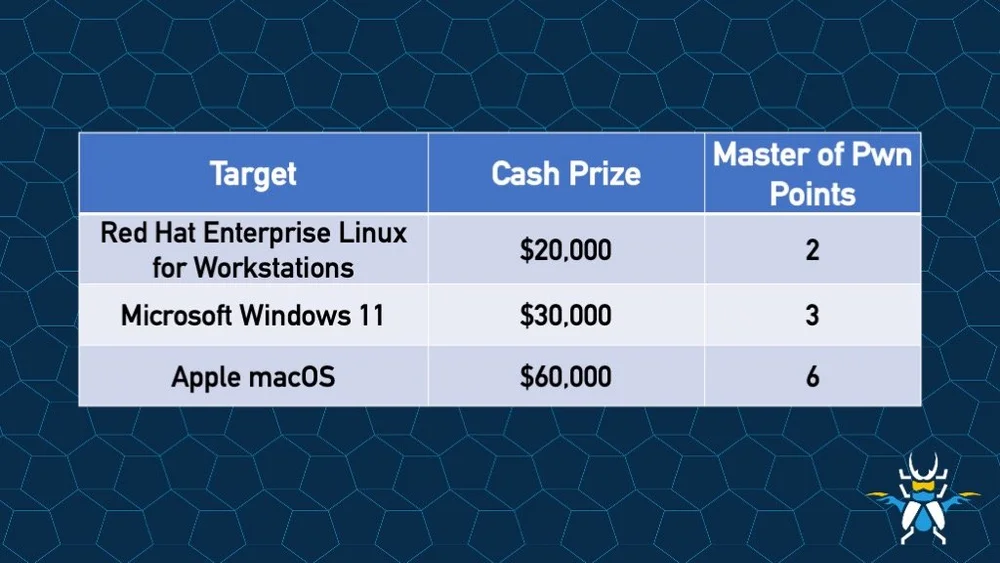
The November 2025 Security Update Review

I’ve made it through Pwn2Own Ireland, and while many are celebrated those who served their country in the armed services, patch Tuesday stops for no one. So affix your poppy accordingly, and let’s take a look at the latest security offerings from Adobe and Microsoft. If you’d rather watch the full video recap covering the entire release, you can check it out here:

Adobe Patches for November 2025

For November, Adobe released eight bulletins addressing 29 unique CVEs in Adobe InDesign, InCopy, Photoshop, Illustrator, Illustrator Mobile, Substance 3D Stager, Format Plugins, and Adobe Pass. Nine of these CVEs were reported by Trend ZDI researcher Michel DePlante. He discovered the bugs fixed by the patch for Adobe Format Plugins. If you must prioritize, the update for InDesign fixes four Critical-rated bugs. All could lead to arbitrary code execution. The fix for Illustrator for iPad also fixes five Critical-rated code execution bugs. However, the update for Illustrator only has two code execution CVEs. It’s interesting to see the difference between the mobile and desktop versions. The patch for Photoshop addresses a single code execution bug. There are four Critical-rated code execution bugs fixed by the Substance 3D Stager update. The patch for InCopy corrects three code execution bugs. The final patch from Adobe this month fixes a privilege escalation bug in Adobe Pass.

Overall, this month’s Adobe release is (thankfully) not that exciting. None of the bugs fixed by Adobe this month are listed as publicly known or under active attack at the time of release. All of the updates released by Adobe this month are listed as deployment priority 3.

Microsoft Patches for November 2025

This month, Microsoft took pity on patch managers around the world and released a mere 63 CVEs Windows and Windows Components, Office and Office Components, Microsoft Edge (Chromium-based), Azure Monitor Agent, Dynamics 365, Hyper-V, SQL Server, and the Windows Subsystem for Linux GUI. Of the patches released today, four are rated Critical and 59 are rated Important in severity. One of these CVEs came through the Trend ZDI program. Counting the third-party Chromium updates listed in the release, it brings to total number of CVEs to 68.

This release is a far cry from the 177 CVEs we saw last month, although I don’t think anyone will complain. That brings the total CVEs addressed by Microsoft so far this year to 1,084. This is not counting the numerous updates for Azure Linux and CBL Mariner released earlier this month, as these should be considered Linux CVEs being applied to Azure properties. This drop could also be due to the fact that this is the first month where Windows 10 is not receiving updates. We will see what December brings and how close we end up to the record total of CVEs set back in 2020.  

Microsoft lists one bug under active attack, but none are publicly known at the time of release. Let’s take a closer look at some of the more interesting updates for this month, starting with the bug under active attack:

-    CVE-2025-62215 - Windows Kernel Elevation of Privilege Vulnerability
This is the bug currently under exploit, but Microsoft offers no indication of the extent of the exploitation. It’s also interesting to note there’s a race condition here, and it shows that some race conditions are more reliable than others. Bugs like these are often paired with a code execution bug by malware to completely take over a system. If you must prioritize, this should be at the top of your list.

-    CVE-2025-62199 - Microsoft Office Remote Code Execution Vulnerability
Another month – another Office bug where the Preview Pane is an attack vector. Interestingly, Microsoft notes user interaction is required despite the Preview Pane, so it’s not clear how this would be exploited. Maybe if a user previews an attachment? Still, at this point, it’s time to consider disabling the Preview Pane in Office until Microsoft clears these bugs up.

-    CVE-2025-60709 - Windows Common Log File System (CLFS) Driver Elevation of Privilege Vulnerability
While this bug is not under active attack and simply leads to executing code as SYSTEM, I highlight this bug as CLFS has been exploited multiple times over the last few years. I will admit that I may have some recency bias with this as I just saw a presentation at the Countermeasure conference in Ottawa discussing CLFS exploitation. Still, the presentation showed how CLFS has been recently abused by threat actors.

 -    CVE-2025-62222 - Agentic AI and Visual Studio Code Remote Code Execution Vulnerability
While there have been a few bugs impacting CoPilot, this is the first bug specifically calling out Agentic AI with a code execution bug. Based on the description, exploitation of this vulnerability would not be trivial. However, with a little bit of social engineering, it could allow remote attackers to execute their code on a target GitHub repository. There are several bugs impacting CoPilot receiving patches this month, but this one stands out above the others. If you’re using Agentic AI, pay attention here, or you could find yourself dealing with something more than just AI hallucinations.

Here’s the full list of CVEs released by Microsoft for November 2025:

CVE Title Severity CVSS Public Exploited Type
CVE-2025-62215 Windows Kernel Elevation of Privilege Vulnerability Important 7 No Yes EoP
CVE-2025-60716 DirectX Graphics Kernel Elevation of Privilege Vulnerability Critical 7 No No EoP
CVE-2025-62199 Microsoft Office Remote Code Execution Vulnerability Critical 7.8 No No RCE
CVE-2025-30398 † Nuance PowerScribe 360 Information Disclosure Vulnerability Critical 8.1 No No Info
CVE-2025-62214 Visual Studio Remote Code Execution Vulnerability Critical 6.7 No No RCE
CVE-2025-62222 Agentic AI and Visual Studio Code Remote Code Execution Vulnerability Important 8.8 No No RCE
CVE-2025-59504 Azure Monitor Agent Remote Code Execution Vulnerability Important 7.3 No No RCE
CVE-2025-47179 Configuration Manager Elevation of Privilege Vulnerability Important 6.7 No No EoP
CVE-2025-59512 Customer Experience Improvement Program (CEIP) Elevation of Privilege Vulnerability Important 7.8 No No EoP
CVE-2025-60723 DirectX Graphics Kernel Denial of Service Vulnerability Important 6.3 No No DoS
CVE-2025-59506 DirectX Graphics Kernel Elevation of Privilege Vulnerability Important 7 No No EoP
CVE-2025-62210 † Dynamics 365 Field Service (online) Spoofing Vulnerability Important 7.3 No No Spoofing
CVE-2025-62211 † Dynamics 365 Field Service (online) Spoofing Vulnerability Important 8.7 No No Spoofing
CVE-2025-60724 GDI+ Remote Code Execution Vulnerability Important 9.8 No No RCE
CVE-2025-62453 GitHub Copilot and Visual Studio Code Security Feature Bypass Vulnerability Important 5 No No SFB
CVE-2025-60710 Host Process for Windows Tasks Elevation of Privilege Vulnerability Important 7.8 No No EoP
CVE-2025-62206 Microsoft Dynamics 365 (On-Premises) Information Disclosure Vulnerability Important 6.5 No No Info
CVE-2025-59240 Microsoft Excel Information Disclosure Vulnerability Important 5.5 No No Info
CVE-2025-60726 Microsoft Excel Information Disclosure Vulnerability Important 7.1 No No Info
CVE-2025-60728 Microsoft Excel Information Disclosure Vulnerability Important 4.3 No No Info
CVE-2025-62202 Microsoft Excel Information Disclosure Vulnerability Important 7.1 No No Info
CVE-2025-60727 Microsoft Excel Remote Code Execution Vulnerability Important 7.8 No No RCE
CVE-2025-62200 Microsoft Excel Remote Code Execution Vulnerability Important 7.8 No No RCE
CVE-2025-62201 Microsoft Excel Remote Code Execution Vulnerability Important 7.8 No No RCE
CVE-2025-62203 Microsoft Excel Remote Code Execution Vulnerability Important 7.8 No No RCE
CVE-2025-62205 Microsoft Office Remote Code Execution Vulnerability Important 7.8 No No RCE
CVE-2025-62216 Microsoft Office Remote Code Execution Vulnerability Important 7.8 No No RCE
CVE-2025-60722 Microsoft OneDrive for Android Elevation of Privilege Vulnerability Important 6.5 No No EoP
CVE-2025-62204 Microsoft SharePoint Remote Code Execution Vulnerability Important 8 No No RCE
CVE-2025-59499 † Microsoft SQL Server Elevation of Privilege Vulnerability Important 8.8 No No EoP
CVE-2025-59514 Microsoft Streaming Service Proxy Elevation of Privilege Vulnerability Important 7.8 No No EoP
CVE-2025-62449 Microsoft Visual Studio Code CoPilot Chat Extension Security Feature Bypass Vulnerability Important 6.8 No No SFB
CVE-2025-62218 Microsoft Wireless Provisioning System Elevation of Privilege Vulnerability Important 7 No No EoP
CVE-2025-62219 Microsoft Wireless Provisioning System Elevation of Privilege Vulnerability Important 7 No No EoP
CVE-2025-60707 Multimedia Class Scheduler Service (MMCSS) Driver Elevation of Privilege Vulnerability Important 7.8 No No EoP
CVE-2025-60708 Storvsp.sys Driver Denial of Service Vulnerability Important 6.5 No No DoS
CVE-2025-60718 Windows Administrator Protection Elevation of Privilege Vulnerability Important 7.8 No No EoP
CVE-2025-60721 Windows Administrator Protection Elevation of Privilege Vulnerability Important 7.8 No No EoP
CVE-2025-60719 Windows Ancillary Function Driver for WinSock Elevation of Privilege Vulnerability Important 7 No No EoP
CVE-2025-62213 Windows Ancillary Function Driver for WinSock Elevation of Privilege Vulnerability Important 7 No No EoP
CVE-2025-62217 Windows Ancillary Function Driver for WinSock Elevation of Privilege Vulnerability Important 7 No No EoP
CVE-2025-59513 Windows Bluetooth RFCOM Protocol Driver Information Disclosure Vulnerability Important 5.5 No No Info
CVE-2025-59515 Windows Broadcast DVR User Service Elevation of Privilege Vulnerability Important 7 No No EoP
CVE-2025-60717 Windows Broadcast DVR User Service Elevation of Privilege Vulnerability Important 7 No No EoP
CVE-2025-60705 Windows Client-Side Caching Elevation of Privilege Vulnerability Important 7.8 No No EoP
CVE-2025-60709 Windows Common Log File System Driver Elevation of Privilege Vulnerability Important 7.8 No No EoP
CVE-2025-60706 Windows Hyper-V Information Disclosure Vulnerability Important 5.5 No No Info
CVE-2025-60704 Windows Kerberos Elevation of Privilege Vulnerability Important 7.5 No No EoP
CVE-2025-62208 Windows License Manager Information Disclosure Vulnerability Important 5.5 No No Info
CVE-2025-62209 Windows License Manager Information Disclosure Vulnerability Important 5.5 No No Info
CVE-2025-60714 Windows OLE Remote Code Execution Vulnerability Important 7.8 No No RCE
CVE-2025-60703 Windows Remote Desktop Services Elevation of Privilege Vulnerability Important 7.8 No No EoP
CVE-2025-59510 Windows Routing and Remote Access Service (RRAS) Denial of Service Vulnerability Important 5.5 No No DoS
CVE-2025-60713 Windows Routing and Remote Access Service (RRAS) Elevation of Privilege Vulnerability Important 7.8 No No EoP
CVE-2025-60715 Windows Routing and Remote Access Service (RRAS) Remote Code Execution Vulnerability Important 8 No No RCE
CVE-2025-62452 Windows Routing and Remote Access Service (RRAS) Remote Code Execution Vulnerability Important 8 No No RCE
CVE-2025-59505 Windows Smart Card Reader Elevation of Privilege Vulnerability Important 7.8 No No EoP
CVE-2025-59508 Windows Speech Recognition Elevation of Privilege Vulnerability Important 7 No No EoP
CVE-2025-59509 Windows Speech Recognition Information Disclosure Vulnerability Important 5.5 No No Info
CVE-2025-59507 Windows Speech Runtime Elevation of Privilege Vulnerability Important 7 No No EoP
CVE-2025-62220 † Windows Subsystem for Linux GUI Remote Code Execution Vulnerability Important 8.8 No No RCE
CVE-2025-60720 Windows Transport Driver Interface (TDI) Translation Driver Elevation of Privilege Vulnerability Important 7.8 No No EoP
CVE-2025-59511 Windows WLAN Service Elevation of Privilege Vulnerability Important 7.8 No No EoP
CVE-2025-12725 * Chromium: CVE-2025-12725 Out of bounds write in WebGPU High N/A No No RCE
CVE-2025-12726 * Chromium: CVE-2025-12726 Inappropriate implementation in Views. High N/A No No RCE
CVE-2025-12727 * Chromium: CVE-2025-12727 Inappropriate implementation in V8 High N/A No No RCE
CVE-2025-12728 * Chromium: CVE-2025-12728 Inappropriate implementation in Omnibox Medium N/A No No RCE
CVE-2025-12729 * Chromium: CVE-2025-12729 Inappropriate implementation in Omnibox Medium N/A No No RCE

* Indicates this CVE had been released by a third party and is now being included in Microsoft releases.

† Indicates further administrative actions are required to fully address the vulnerability.


Looking at the remaining Critical patches, the update for Nuance PowerScribe 360 stands out not for impact, but for servicing. To update to a non-affected version, you will need to either contact your Customer Success Manager (CSM) or Technical Support for the latest version. So much for “just patch”. There’s an elevation of privilege (EoP) in DirectX that could lead to SYSTEM privileges, but there’s no indication why this one is Critical while an identical one is Important. The final Critical patch for November addresses a command injection in Visual Studio. The only interesting thing here is that exploitation would require prompt injection, CoPilot Agent interaction, and triggering a build. That’s far from trivial, but I would love to see what sort of CoPilot interaction is required.

Moving on to the remaining code execution bugs, there are a half-dozen open-and-own in various Office components. In these cases, the Preview Pane is not an attack vector. The bug in Azure Monitor Agent sounds more severe than its Important rating. An unauthenticated attacker could execute their code on affected systems without user interaction. While it doesn’t fall into the realm of wormable, it definitely lands in the world of yikes. The bug in GDI+ also garners a yikes from me as it gets the highest CVSS rating this month at 9.8. An attacker could get code execution over the network without user interaction. GDI+ bugs typically involve viewing an image, but this bug could impact web services that “are parsing documents that contain a specially crafted metafile, without the involvement of a victim user.” The SharePoint bug is another deserialization bug – similar to the one we saw exploited in-the-wild back in July. This requires authentication, but in previous attacks, this type of bug was paired with an auth bypass to exploit affected systems. The bug in the Windows Subsystem for Linux GUI requires user interaction, but patching means updating from the command line versus installing a patch. Finally, there are a couple of bugs in the RRAS protocol, which always seem to have something fixed each month.

Looking at the privilege escalation bugs receiving patches this month, most simply lead to SYSTEM-level code execution or administrative privileges if an authenticated user runs specially crafted code. Others could lead to elevating levels of code execution integrity – moving from Low to Medium integrity or Medium to Local System for code execution. The EoP in Configuration Manager allows attackers to get configuration manager administrator privileges. The bugs in Administration Protection could allow an attack to bypass these protections and execute code as an administrator. There’s an interesting bug in OneDrive for Android that allows attackers to “gain unauthorized access to system resources,” which could then be used for further compromise. Finally, the patch for SQL Server corrects a SQL injection bug. The attacker would get the privileges of the process running the query, so if the query has elevated privileges, so does the attacker.

There are only two Security Feature Bypass (SFB) patches in November, and both have CoPilot as a component. One is a simple path traversal in the Visual Studio Code CoPilot Chat Extension. An attacker could use this to bypass file protections. The other bug is due to the improper validation of generative AI output by CoPilot on Visual Studio. This could also be used to bypass file protections.

There are only a few information disclosure bugs getting patched this month, and fortunately, the majority of these bugs only result in info leaks consisting of unspecified memory contents or memory addresses. The bug in Dynamics 365 (On-Premises) leaks the ever-elusive “sensitive information”. I should also point out that the bugs in License Manager were silently patched last month and are now being documented. I won’t shout from this soapbox for too long, but these are definitely a bad thing™ and should not be done.

The November release contains fixes for three Denial-of-Service (DoS) bugs, and their descriptions are somewhat – obtuse. While they all state that an attacker could deny service over a network (or locally) to that component, two of them state they could be used by a low-privilege Hyper-V guest to cause a DoS on the Hyper-V environment. It’s not clear how this would occur, but it if you’re running Hyper-V, don’t overlook these patches.

Finally, there are two spoofing bugs in Dynamics 365 Field Service (online) that manifest as cross-site scripting (XSS) bugs. Of course, a simple patch won’t fix these. Instead, you’ll need to go to the Power Platform admin center and apply the updates from there.

No new advisories are being released this month. However, there was an update to the latest servicing stack updates ADV990001.

Looking Ahead

The final Patch Tuesday of 2025 will be on December 9, and I’ll be back then with my analysis and thoughts about the release. Until then, stay safe, happy patching, and may all your reboots be smooth and clean!

Pwn2Own Ireland 2025: Day Three and Master of Pwn

Welcome to the third and final day of Pwn2Own Ireland 2025. So far, we’ve awarded $792,750 for 56 unique 0-day bugs, and we still have 17 attempts to go! We’ll be updating this blog with live results as we have them, so refresh often.


That’s all folks! Pwn2Own Ireland has come to a close. In total, we awarded $1,024,750 for 73 unique 0-day bugs. We’ve seen some amazing research over the last few day, and we can’t thank our competitors enough for bringing their hard work and innovation to the contest. We also thanks all of the vendors who participated and special thanks to our partner Meta and co-sponsors Synology and QNAP. Their support has been invaluable in the success of the event. And of course - we have to congratulate the Summoning Team for winning Master of Pwn. They had some great bugs in multiple categories, and winning Master of Pwn shows their hard work preparing for the contest paid off. Here are the final Master of Pwn standings:

Our next event will be in Tokyo on January 21-23, 2026.. Join us for Pwn2Own Automotive then. See you in Japan!


WITHDRAW - CyCraft Technology has withdrawn their attempt against the Amazon Smart Plug.

FAILURE - Unfortunately, Daniel Frederic and Julien Cohen-Scali of Fuzzinglabs could not get their exploit of the QNAP TS-453E working within the time allotted.

SUCCESS/COLLISION - Xilokar (@Xilokar) used four bugs - including a auth bypass and an underflow - to exploit the Phillips Hue Bridge, but one of the bugs collided with a previous entry. He still earns $17,500 and 3.5 Master of Pwn points.

SUCCESS - Chris Anastasio of Team Cluck used a single type confusion bug to exploit the Lexmark CX532adwe printer. He earns himself $20,000 and 2 Master of Pwn points.

SUCCESS - Ben R. And Georgi G. of Interrupt Labs used an improper input validation bug to take over the Samsung Galaxy S25 - enabling the camera and location tracking in the process. They earn $50,000 and 5 Master of Pwn points.

SUCCESS/COLLISION - Yannik Marchand (kinnay) used three bugs - including an Incorrect Implementation of Authentication Algorithm - to exploit the Phillips Hue Bridge, but the other two bugs collided with bugs seen previously in the contest. He still earns $13,500 and 2.75 Master of Pwn points.

SUCCESS - David Berard of Synacktiv used a pair of bugs to exploit the Ubiquiti AI Pro in the Surveillance Systems category. The impressive display (including a round of Baby Shark) earns him $30,000 and 3 Master of Pwn Points.

SUCCESS - Sina Kheirkhah (@SinSinology) of Summoning Team (@SummoningTeam) used a hard-coded cred and an injection to take over the QNAP TS-453E. These unique bugs earn him $20,000 and 4 Master of Pwn points.

SUCCESS/COLLISION - Team Viettel used two bugs to exploit the Lexmark CX532adwe. While their heap based buffer over was unique, the other bug has been seen earlier in the contest. They still earn $7,500 and 1.5 Master of Pwn points. #Pwn2Own

SUCCESS - Team @Neodyme used a single integer overflow to exploit the Canon imageCLASS MF654Cdw. Their unique bugs earns them $10,000 for the 8th round win and 2 Master of Pwn points. #Pwn2Own

SUCCESS - Interrupt Labs combined a path traversal and an untrusted search path bug to exploit the Lexmark CX532adwe. They got a reverse shell and loaded Doom on the LCD. We couldn't play it though. Still awesome to see. They earn themselves $10,000 and 2 Master of Pwn points.

SUCCESS/COLLISION - The Thalium team from Thales Group (@thalium_team) needed 3 bugs to exploit the Phillips Hue Bridge, but only their heap based buffer overflow was unique. The others were seen earlier in the contest. They still earn $13,500 and 2.75 Master of Pwn points.

COLLISION - Evan Grant used a single bug to exploit the QNAP TS-453E, but, unfortunately, it had been used earlier in the contest. He still earns $10,000 and 2 Master of Pwn points. #Pwn2Own

SUCCESS - namnp of Viettel Cyber Security used a crypto bypass and a heap overflow to exploit the Phillips Hue Bridge. They earn $20,000 and 4 Master of Pwn points, which catapults them in the Top 5 in Master of Pwn standings.

WITHDRAW - Team Z3 has withdrawn their WhatsApp entry.

COLLISION - Bongeun Koo (@kiddo_pwn) and Evangelos Daravigkas (@freddo_1337) of Team DDOS used a single bug to exploit the QNAP TS-453E, but the bug has been previously seen in the contest. Their work still earns them $10,000 and 2 Master of Pwn points.

FAILURE - Unfortunately, Frisk and Opcode from the Inequation Group ctf team could not get their exploit of the Meta Quest 3S working within the time time allotted. They were able to cause a DoS, but did not achieve code execution.

Pwn2Own Ireland 2025 - Day Two Results

Welcome to Day Two of Pwn2Own Ireland 2025. Yesterday, we awarded $522,500 for 34 unique 0-day bugs. The Summoning Team took a slim lead in the Master of Pwn, but big changes could happen today as we have 19 more attempts today. We’ll be updating this blog with results as they come in, so refresh often!


Day Two of Pwn2Own Ireland 2025 is complete! We saw some great work today, with the exploit of the Samsung Galaxy being the big highlight. So far, we have awarded $792,750 for 56 unique 0-days. Tomorrow look to be even more exciting with another Galaxy attempt, a Met Quest attempt, and (of course) that big WhatsApp exploit everyone is talking about. Saty tuned as we provide real-time results throughout the day. Here’s the current Master of Pwn leader board. The Summoning Team has a commanding lead, but with WhatsApp being worth 100 points, anything can happen.

SUCCESS - Pwn2Own veterans PHP Hooligans used an OOB Write bug to exploit the Canon imageCLASS MF654Cdw printer. Their fifth round win earns them $10,000 and 2 Master of Pwn points.

Veteran competitors showing their skills

SUCCESS/COLLISION - Dinh Ho Anh Khoa and Phan Vinh Khang of Viettel Cyber Security used a unique command injection and two bugs that collided with previous bugs to exploit the Home Automation Green. They earn $12,500 and 2.75 Master of Pwn points.

Returning Master of Pwn champs getting started with a win

SUCCESS/COLLISION - Ho Xuan Ninh (@Xuanninh1412), Hoang Hai Long (@seadragnol) from Qrious Secure used 5 bugs to exploit the Phillips Hue Bridge, but only 3 were unique. They still earn $16,000 and 3.75 Master of Pwn points.

SUCCESS - Chumy Tsai (http://github.com/Jimmy01240397) of CyCraft Technology used a single code injection bug to exploit the QNAP TS-453E. His unique bug earns him $20,000 and 4 Master of Pwn points.

A canine confirmation for CyCraft Technologies

OUT OF SCOPE - Although Sina Kheirkhah's exploit of the Synology BeeStation Plus was successful, the entry was ruled out of scope for the competition.

SUCCESS/COLLISION - Team Neodyme used two bugs to exploit the Home Assistant Green, but only one was unique. They still earn $15,000 and 3 Master of Pwn points.

SUCCESS - TwinkleStar03 (@_twinklestar03) from the DEVCORE Intern Program used a unique stack based buffer overflow to get a sixth round win against the Canon imageCLASS MF654Cdw. He earns $10,000 and 2 Master of Pwn points.

COLLISION - Rafal Goryl from PixiePoint Security succeeded in exploiting the Phillips Hue Bridge, but the bugs he used were collisions with a previous entry. He still earns $10,000 and 2 Master of Pwn points.

COLLISION - Enrique Castillo (@hyprdude), McCaulay Hudson (@_mccaulay), Sina Kheirkhah (@SinSinology) of Summoning Team (@SummoningTeam) successfully exploited the Synology CC400W camera, but the bug they used was known to the vendor. They still earn $15,000 and 1.5 Master of Pwn points.

SUCCESS - Le Trong Phuc (chanze@VRC) and Cao Ngoc Quy (Chino Kafuu) of Verichains Cyber Force chained two unique bugs - including an auth bypass - to exploit the Synology DS925+ and run code as root. Their work earns them $20,000 and 4 Master of Pwn points.

FAILURE - Unfortunately, Tri Dang from Qrious Secure could not get his exploit of the Samsung Galaxy S25 in the time allotted. #Pwn2Own

SUCCESS - Ken Gannon / 伊藤 剣 of Mobile Hacking Lab, and Dimitrios Valsamaras of Summoning Team used five different bugs to exploit the Samsung Galaxy S25. They earn $50,000 and 5 Master of Pwn points.

COLLISION The PHP Hooligans used a buffer overflow to exploit the Phillips Hue Bridge, but the bug had been previously seen in the contest. They still earn $10,000 and 2 Master of Pwn points.

SUCCESS - Mehdi & Matthieu from team Synacktiv used a buffer overflow to exploit the Phillips Hue Bridge. Their unique bug earns them $20,000 and 4 Master of Pwn points.

SUCCESS - Team Neodyme (@Neodyme) used three bugs to exploit the Amazon Smart plug. In doing so, they earn themselves $20,000 and 2 Master of Pwn points.

COLLISION - The PHP Hooligans did exploit the QNAP TS-453E, but the bug they used was previously seen in the contest. They still earn $10,000 and 2 Master of Pwn points. #Pwn2Own

SUCCESS - Nao and @ExLuck99 from ANHTUD used a heap-based buffer overflow to exploit the Lexmark CX532adwe, but we penalized for a rules violation. The still earn $10,000 and 2 Master of Pwn points.

SUCCESS/COLLISION - ChatGPT helped Team ANHTUD as they used 3 bugs - 1 collision, 1 unique SSRF and 1 cleartext storage of sensitive information - to exploit Home Automation Green. They finished with just 45 seconds remaining. Their work earns them $16,750 and 3.75 Master of Pwn points.

COLLISION - Our final attempt of the day is a collision. Le Tran Hai Tung (@tacbliw), namnp and Le Duc Anh Vu (@vulda) of Viettel Cyber Security collided with a previous entry while exploiting the Canon mageCLASS MF654Cdw. They still earn $5,000 and 1 Master of Pwn points.

Pwn2Own Ireland 2025: Day One Results

Welcome to Day One of Pwn2Own Ireland 2025! We have 17 attempts today with some exciting research on display. We’ll be posting results here as we have them, and follow us on Twitter, Mastodon, and Bluesky.


Day One has come to a close and we haven’t had a single failure! We awarded $522,500 for 34 unique bugs on the first day of the contest. Here’s how the Master of Pwn leader board currently sits:

Of course, there’s plenty of time left with some big exploits still to come. Stay tuned for the results from Day Two and Three!


SUCCESS - Team Neodyme used a stack based buffer overflow to exploit the HP DeskJet 2855e. They earn $20,000 and 2 Master of Pwn points.

Daniel Kilimnik of Team Neodyme shows off his successful exploitation

SUCCESS - Nguyen Hoang Thach (@hi_im_d4rkn3ss), Tan Ze Jian, Lin Ze Wei, Cherie-Anne Lee, Gerrard Tai of STARLabs (@starlabs_sg) used a heap based buffer overflow to exploit the @CanonUSA imageCLASS MF654Cdw. They earn themselves $20,000 and 2 Master of Pwn points.

A successful attempt against the Canon printer

SUCCESS - @Tek_7987 & @_Anyfun (@Synacktiv) used a stack overflow to achieve rootlevel code execution on the Synology BeeStation Plus. They earn $40,000 and 4 Master of Pwn points in the process.

Pwned by Synactiv

SUCCESS - Bongeun Koo (@kiddo_pwn) and Evangelos Daravigkas (@freddo_1337) of Team DDOS used a magnificent eight different bugs - including multiple injections - to complete their SOHO Smashup of the QNAP Qhora-322 + QNAP TS-453E. They earn $100,000 and 10 Master of Pwn points.

Demonstrating root level access

ZDI Analysts Neal Brown (left) and Mat Powell observe Bongeun Koo and Evangelos Daravigkas of Team DDOS

WITHDRAW - Bongeun Koo (@kiddo_pwn) and Evangelos Daravigkas (@freddo_1337) of Team DDOS was withdrawn their attempt of the Philips Hue Bridge.

SUCCESS - SHIMIZU Yutaro (@shift_crops) of GMO Cybersecurity by Ierae, Inc. used a stack based buffer overflow to exploit the Canon imageCLASS MF654Cdw. Their second round win earns them $10,000 and 2 Master of Pwn points.

Nyan cat makes an appearance courtesy of GMO Cybersecurity

SUCCESS - Sina Kheirkhah (@SinSinology) of Summoning Team (@SummoningTeam) used a pair of bugs to gain code execution on the Synology DiskStation DS925+. He earns himself $40,000 and 4 Master of Pwn points

The Summoning Team has root access on the Synology

ZDI Analysts Vincent Lee and Mat Powell observe the attempt from Sina Kheirkhah

SUCCESS - Stephen Fewer (@stephenfewer) of Rapid7 (@rapid7) used three bugs, including an SSRF and a command injection, to exploit the Home Assistant Green (which isn't actually green). He earns himself $40,000 and 4 Master of Pwn points.

Stephen Fewer has root on the Home Assistant Green

SUCCESS - Sang Nguyen Thien (@gnas0x0018) and mistsu of Team ANHTUD used four bugs - including multiple types overflows and an OOB Read - to exploit the Phillips Hue Bridge. Their outstanding work earns them $40,000 and 4 Master of Pwn points.

Team ANHTUD’s winning entry

SUCCESS/COLLISON - McCaulay Hudson (@_mccaulay) of Summoning Team (@SummoningTeam) successfully exploited the Home Assistant Green with four bugs - one unique SSRF and three bug collisions. They still earn $12,500 and 2.5 Master of Pwn points.

Summoning Team was here - again

SUCCESS - dmdung (@_piers2) of STAR Labs SG Pte. Ltd used a single OOB access bug to exploit the Sonos Era 300 smart speaker. In doing so, he earns $50,000 and 5 Master of Pwn points.

uid=0 means dmdung has root on the Sonos speaker

SUCCESS - Team PetoWorks [SungJun Park (@howrealsung), Wonbeen Im (@D0b6y), Dohyun Kim (@d0now_kim), and Juyeong Lee (@ju_cheda)] used a Release of Invalid Pointer or Reference bug to exploit the Canon printer at Pwn2Own. They $10,000 and two Master of Pwn points for their third round win.

Configuration issues couldn’t stop Team PetoWorks

SUCCESS - YingMuo (@YingMuo), HexRabbit (@h3xr4bb1t), LJP (@ljp_tw) from DEVCORE Research Team and nella17 (@nella17tw) from DEVCORE Intern Program used multiple injections and a format string bug(!) to exploit the QNAP TS-453E. Their unique bugs earn them $40,000 and 4 Master of Pwn points.

Who said format string bugs don’t exist anymore?

SUCCESS - Hank Chen (@hank0438) of InnoEdge Labs used an auth bypass and an OOB write to exploit the Phillips Hue Bridge. His second round win earns $20,000 and 4 Master of Pwn points.

Hank Chen provides an enlightening exploit

SUCCESS - Sina Kheirkhah (@SinSinology) and McCaulay Hudson (@_mccaulay) of Summoning Team (@SummoningTeam) used a pair of bugs to exploit of the Synology ActiveProtect Appliance DP320. That rounds their day off with another $50,000 and 5 more Master of Pwn points.

Fingerprints on the screen can’t hide root access

SUCCESS - Emanuele Barbeno, Cyrill Bannwart, Yves Bieri, Lukasz D., Urs Mueller of Compass Security (@compasssecurity) combined an arbitrary file write and cleartext transmission of sensitive data to exploit the Home Assistant Green. The unique bugs in their third round win earns them $20,000 and four Master of Pwn points.

ZDI Analyst Bobby Gould (right) overlooks the work done by the Compass Team

SUCCESS - Nguyen Ba Nam Dung and Vu Chi Thanh from Team ANTHUD used a single heap based buffer overflow to exploit the Canon imageCLASS MF654Cdw on their third and final attempt. Their fourth round win earns them $10,000 and 2 Master of Pwn points.

Third time’s a charm

Pwn2Own Ireland 2025: The Full Schedule

Welcome to Pwn2Own Ireland 2025! We have some amazing spooky entries for this year’s contest, and a potential of up to $2,000,000 - including our largest ever single prize for a 0-click in WhatsApp for $1,000,000. As always, we began our contest with a random drawing to determine the order of attempts. If you missed it, you can watch the replay here.

The complete schedule for the contest is below (all times Irish Standard Time [UTC +1]).

Note: All times subject to change

Tuesday, October 21 – 0930

Bongeun Koo (@kiddo_pwn) and Evangelos Daravigkas (@freddo_1337) of Team DDOS targeting SOHO SMASHUP (QNAP Qhora-322 + QNAP TS-453E) in the SOHO category for $100,000 and 10 Master of Pwn Points.

Team Neodyme (@Neodyme) targeting HP DeskJet 2855e in the Printers category for $20,000 and 2 Master of Pwn Points.

Nguyen Hoang Thach (@hi_im_d4rkn3ss), Tan Ze Jian, Lin Ze Wei, Cherie-Anne Lee, Gerrard Tai of STARLabs (@starlabs_sg) targeting Canon imageCLASS MF654Cdw in the Printers category for $20,000 and 2 Master of Pwn Points.

@Tek_7987 and @_Anyfun (both working at @Synacktiv) targeting Synology BeeStation Plus in the Network Attached Storage category for $40,000 and 4 Master of Pwn Points.

Tuesday, October 21 – 1130

Stephen Fewer (@stephenfewer) of Rapid7 (@rapid7) targeting Home Assistant Green in the Smart Home category for $40,000 and 4 Master of Pwn Points.

SHIMIZU Yutaro (@shift_crops) of GMO Cybersecurity by Ierae, Inc. targeting Canon imageCLASS MF654Cdw in the Printers category for $20,000 and 2 Master of Pwn Points.

Sina Kheirkhah (@SinSinology) of Summoning Team (@SummoningTeam) targeting Synology DiskStation DS925+ in the Network Attached Storage category for $40,000 and 4 Master of Pwn Points.

Bongeun Koo (@kiddo_pwn) and Evangelos Daravigkas (@freddo_1337) of Team DDOS targeting Philips Hue Bridge in the Smart Home category for $40,000 and 4 Master of Pwn Points.

Tuesday, October 21 – 1400

Team PetoWorks (SungJun Park(@howrealsung), Wonbeen Im(@D0b6y), Dohyun Kim(@d0now_kim), Juyeong Lee(@ju_cheda)) targeting Canon imageCLASS MF654Cdw in the Printers category for $20,000 and 2 Master of Pwn Points.

McCaulay Hudson (@_mccaulay) of Summoning Team (@SummoningTeam) targeting Home Assistant Green in the Smart Home category for $40,000 and 4 Master of Pwn Points.

Team ANHTUD targeting Philips Hue Bridge in the Smart Home category for $40,000 and 4 Master of Pwn Points.

dmdung (@_piers2) of STAR Labs SG Pte. Ltd targeting Sonos Era 300 in the Smart Home category for $50,000 and 5 Master of Pwn Points.

You can watch the live stream of this attempt here.

Tuesday, October 21 – 1500

YingMuo (@YingMuo), HexRabbit (@h3xr4bb1t), LJP (@ljp_tw) from DEVCORE Research Team and nella17 (@nella17tw) from DEVCORE Intern Program targeting QNAP TS-453E in the Network Attached Storage category for $40,000 and 4 Master of Pwn Points.

Tuesday, October 21 – 1600

Emanuele Barbeno, Cyrill Bannwart, Yves Bieri, Lukasz D., Urs Mueller of Compass Security (@compasssecurity) targeting Home Assistant Green in the Smart Home category for $40,000 and 4 Master of Pwn Points.

Hank Chen (@hank0438) of InnoEdge Labs targeting Philips Hue Bridge in the Smart Home category for $40,000 and 4 Master of Pwn Points.

Team ANHTUD targeting Canon imageCLASS MF654Cdw in the Printers category for $20,000 and 2 Master of Pwn Points.

Sina Kheirkhah (@SinSinology) and McCaulay Hudson (@_mccaulay) of Summoning Team (@SummoningTeam) targeting Synology ActiveProtect Appliance DP320 in the Network Attached Storage category for $50,000 and 5 Master of Pwn Points.

Wednesday, October 22 – 0930

Viettel Cyber Security targeting Home Assistant Green in the Smart Home category for $40,000 and 4 Master of Pwn Points.

PHP HOOLIGANS targeting Canon imageCLASS MF654Cdw in the Printers category for $20,000 and 2 Master of Pwn Points.

Ho Xuan Ninh (@Xuanninh1412), Hoang Hai Long (@seadragnol) from Qrious Secure targeting Philips Hue Bridge in the Smart Home category for $40,000 and 4 Master of Pwn Points.

Wednesday, October 22 – 1000

Sina Kheirkhah (@SinSinology) of Summoning Team (@SummoningTeam) targeting Synology BeeStation Plus in the Network Attached Storage category for $40,000 and 4 Master of Pwn Points.

Wednesday, October 22 – 1100

Chumy Tsai (github.com/Jimmy01240397) @ CyCraft Technology Intern targeting QNAP TS-453E in the Network Attached Storage category for $40,000 and 4 Master of Pwn Points.

Wednesday, October 22 – 1130

Team Neodyme (@Neodyme) targeting Home Assistant Green in the Smart Home category for $40,000 and 4 Master of Pwn Points.

TwinkleStar03 (@_twinklestar03) from DEVCORE Intern Program targeting Canon imageCLASS MF654Cdw in the Printers category for $20,000 and 2 Master of Pwn Points.

Rafal Goryl (@voix44er) of PixiePoint Security targeting Philips Hue Bridge in the Smart Home category for $40,000 and 4 Master of Pwn Points.

Wednesday, October 22 – 1200

Enrique Castillo (@hyprdude), McCaulay Hudson (@_mccaulay), Sina Kheirkhah (@SinSinology) of Summoning Team (@SummoningTeam) targeting Synology CC400W in the Surveillance Systems category for $30,000 and 3 Master of Pwn Points.

Wednesday, October 22 – 1300

Le Trong Phuc (chanze@VRC) and Cao Ngoc Quy (Chino Kafuu) of Verichains Cyber Force targeting Synology DiskStation DS925+ in the Network Attached Storage category for $40,000 and 4 Master of Pwn Points.

Wednesday, October 22 – 1400

Team ANHTUD targeting Lexmark CX532adwe in the Printers category for $20,000 and 2 Master of Pwn Points.

Ken Gannon / 伊藤 剣 (@yogehi) of Mobile Hacking Lab, and Dimitrios Valsamaras (@Ch0pin) of Summoning Team (@SummoningTeam) targeting Samsung Galaxy S25 - Remote in the Mobile Phones category for $50,000 and 5 Master of Pwn Points.

You can watch a live stream of this attempt here.

Mehdi & Matthieu @Synacktiv targeting Philips Hue Bridge in the Smart Home category for $40,000 and 4 Master of Pwn Points.

Wednesday, October 22 – 1430

Team Neodyme (@Neodyme) targeting Amazon Smart Plug in the Smart Home category for $20,000 and 2 Master of Pwn Points.

Wednesday, October 22 – 1500

PHP HOOLIGANS targeting QNAP TS-453E in the Network Attached Storage category for $40,000 and 4 Master of Pwn Points.

Wednesday, October 22 – 1600

Team ANHTUD targeting Home Assistant Green in the Smart Home category for $40,000 and 4 Master of Pwn Points.

Tri Dang (@trichimtrich) from Qrious Secure targeting Samsung Galaxy S25 - Remote in the Mobile Phones category for $50,000 and 5 Master of Pwn Points.

You can watch a live stream of this attempt here.

Wednesday, October 22 – 1700

PHP HOOLIGANS targeting Philips Hue Bridge in the Smart Home category for $40,000 and 4 Master of Pwn Points.

Wednesday, October 22 – 1800

Viettel Cyber Security targeting Canon imageCLASS MF654Cdw in the Printers category for $20,000 and 2 Master of Pwn Points.

Thursday, October 23 – 0930

Chris Anastasio of Team Cluck targeting Lexmark CX532adwe in the Printers category for $20,000 and 2 Master of Pwn Points.

Daniel Frederic and Julien Cohen-Scali of Fuzzinglabs (@fuzzinglabs) targeting QNAP TS-453E in the Network Attached Storage category for $40,000 and 4 Master of Pwn Points.

Xilokar (@xilokar@mamot.fr) targeting Philips Hue Bridge in the Smart Home category for $40,000 and 4 Master of Pwn Points.

CyCraft Technology targeting Amazon Smart Plug in the Smart Home category for $20,000 and 2 Master of Pwn Points.

Thursday, October 23 – 1030

Interrupt Labs targeting Samsung Galaxy S25 - Remote in the Mobile Phones category for $50,000 and 5 Master of Pwn Points.

You can watch a live stream of this attempt here.

Thursday, October 23 – 1130

Viettel Cyber Security targeting Lexmark CX532adwe in the Printers category for $20,000 and 2 Master of Pwn Points.

Sina Kheirkhah (@SinSinology) of Summoning Team (@SummoningTeam) targeting QNAP TS-453E in the Network Attached Storage category for $40,000 and 4 Master of Pwn Points.

Yannik Marchand (kinnay) targeting Philips Hue Bridge in the Smart Home category for $40,000 and 4 Master of Pwn Points.

David BERARD of @synacktiv targeting Ubiquiti AI Pro in the Surveillance Systems category for $30,000 and 3 Master of Pwn Points.

Thursday, October 23 – 1230

Team Neodyme (@Neodyme) targeting Canon imageCLASS MF654Cdw in the Printers category for $20,000 and 2 Master of Pwn Points.

Thursday, October 23 – 1330

Interrupt Labs targeting Lexmark CX532adwe in the Printers category for $20,000 and 2 Master of Pwn Points.

Evan Grant (@stargravy) targeting QNAP TS-453E in the Network Attached Storage category for $40,000 and 4 Master of Pwn Points.

Thalium team from Thales Group (@thalium_team) targeting Philips Hue Bridge in the Smart Home category for $40,000 and 4 Master of Pwn Points.

Thursday, October 23 – 1500

Eugene (@3ugen3) of Team Z3 targeting WhatsApp - Zero-Click Remote Code Execution in the Messaging category for $1,000,000 and 100 Master of Pwn Points.

Thursday, October 23 – 1530

Bongeun Koo (@kiddo_pwn) and Evangelos Daravigkas (@freddo_1337) of Team DDOS targeting QNAP TS-453E in the Network Attached Storage category for $40,000 and 4 Master of Pwn Points.

Viettel Cyber Security targeting Philips Hue Bridge in the Smart Home category for $40,000 and 4 Master of Pwn Points.

Thursday, October 23 – 1700

Frisk and Opcode from the Inequation Group ctf team targeting Meta Quest 3S - No Interaction LPE - Self Jailbreak in the Wearables category for $30,000 and 3 Master of Pwn Points.

Pwn2Own Automotive Returns to Tokyo with Expanded Chargers and More!

If you just want to read the rules, click here. Updated as of November 21 to expand the Alpitronic target scope and to clarify the model of the ChargePointHome Flex model number.

 Now entering its third year, Pwn2Own Automotive returns to Automotive World in Tokyo on January 21 – 23, 2026. Over the last two years, we’ve awarded more than $2,000,000 for the latest in automotive exploitations, and this year looks to be even better.

As always, we’re pleased to be working with our cohorts over at VicOne again. Their help was instrumental in the success we had at our first event, and we’re glad to be partnering with them once more. Tesla also returns as a sponsor. They’ve worked with us since 2019, and their help has been crucial in advancing the state of the art in automotive research. This year, we’re introducing a new supercharger category, and Alpitronic has joined as a partner and provided their Level 3 charger as a target. Superchargers are a whole new level of targets, and we’re interested to see what researchers bring. Finally, the Open Charge Alliance joins as a partner and brings their OCPP Compliance Test Tool (OCTT) as a target. To say that we’re charged up for this year’s event is a horrible pun, but a true statement. We can’t wait to see what researchers bring to the contest.

As with other Pwn2Own events, we’ll have a random drawing to determine the schedule of attempts the day before the contest, and we will proceed from there. As always, if you have questions, don't hesitate to get in touch with us at pwn2own@trendmicro.com. We will be happy to address your issues or concerns directly.

Now on to the six categories we’ll have for this year’s Pwn2Own Automotive event:

-- Tesla
-- In-Vehicle Infotainment (IVI)
-- Level 3 Electric Vehicle (EV) Chargers
-- Level 2 Electric Vehicle (EV) Chargers
-- Open Charge Alliance
-- Automotive Operating Systems

Let's start with everyone's favorite category.

Tesla

Since its introduction to Pwn2Own in 2019, the Tesla category has always been a highlight, with some of the most innovative research being demonstrated on the EV. At the inaugural Pwn2Own Automotive, the team from Synacktiv exploited it twice on their way to winning Master of Pwn. Contestants can register an entry against the Tesla Model 3/Y (Ryzen-based) equivalent bench top unit, and it wouldn’t surprise me if someone needs to run their exploits in an RF enclosure to prevent interference with vehicles that might be driving by.  Also note that while a Tesla is available as a prize, not every successful attempt will win the vehicle itself. Some targets will require you to exploit multiple subsystems to reach the selected target. The prize amount is based on where the final code execution occurs. Some of the targets have add-ons available, but to drive away in your new ride, you need to target one of the entries marked “Vehicle Included” in the table below. Also note that the targets have changed a bit this year to keep things interesting.

As usual, there are a few “add-ons” you can go for if you really want to show your stuff.

Back to top

In-Vehicle Infotainment (IVI) Systems

Other highlights from the inaugural contest were found in the IVI category, which saw the NCC Group put a playable version of Doom on an Alpine system. More than just stereos, the modern IVI is the gateway to your car’s internal systems. Navigation, in-car internet, and Wi-Fi are provided through these devices, but they also serve a connection to other vehicle systems through the CAN bus – making them a ripe target for attackers. These devices are also retrofitted to existing vehicles to modern capabilities – and perhaps modern vulnerabilities as well. This year, we’ve made it a little more complicated than in year’s past, so be sure to review the rules for the full details. Here are the systems available as targets in the IVI category:

Back to top

Level 3 Electric Vehicle (EV) Chargers Category

This is a new category for us this year and is brought to us by our new partner Aplitronic. Level 3 chargers are usually referred to as “superchargers”, and we expect some super exploits to be demonstrated at the event. We’ll have two options for this category: Field Mode and Lab Mode. For the Field Mode option, the door of the target will be closed, with no access to internal components. An attempt against this target must be launched against one of the following attack surfaces:  Charging Connector, NFC, or Touch Screen. The LAN interface is out of scope for this option. For the Lab Mode option, the door of the target will be opened, and the charger internals will be accessible to the contestant. An attempt against this target may be launched against the one following attack surfaces in addition to the ones listed in the Field Mode option: LAN(s), USB, CAN, or JTAG. 

For both options, entries requiring ARP spoofing, DNS spoofing, MITM, software downgrade attack, System on Module (SoM) swap attack, WAN/SIM(s) attack, Payment Terminal, or any assumptions involving control over external infrastructure are out of scope. For the field mode, NFC card cloning is out of scope.

Back to top

Level 2 Electric Vehicle (EV) Chargers Category

At previous Pwn2Own Automotive events, this proved to be the most popular category with every charger targeted at least once. Last year, contestants also demonstrated how the EV chargers could be used to communicate – and thus exploit – to the vehicle itself. The Tesla wall charger returns as a target, and it is joined by the Ford Connected Charger as well. Attack surfaces in scope for the contest include mobile apps, Bluetooth Low Energy (BLE) connections, and the OCPP protocol could all allow threat actor to cause harm to an EV. There’s no official bonus for style points; but we always love exploits that make us laugh. An attempt in this category must be launched against the target's exposed services or against the target’s communication protocols/physical interfaces that are accessible to a typical user.

As we did last year, there are a couple of additional challenges you can add on to your attempt. The first extra challenge is a Charging Connector Protocol/Signal Manipulation attack. The entry must gain code execution on the EV Charger and the resulting payload must manipulate the protocol and/or signals being transmitted via the Charging Connector. If you can accomplish this, you’ll earn an extra $10,000 and 1 more Master of Pwn point. Really want a challenge? Then go for the Charging Connector Attack. For this one, the entry must originate from the Charging Connector and compromise the EV Charger. If you accomplish this one, it earns you an additional $20,000 and 2 more Master of Pwn points.

Back to top

Open Charge Alliance

New for this year’s event is the Open Charge Alliance category. According to their charter, “The goal of the Open Charge Point Protocol (OCPP) is to provide a uniform method of communication between charge points and central systems.” As such, the protocol could prove an attractive attack surface for attackers. The OCPP Compliance Test Tool (OCTT) is the target in this category with a $15,000 award. As this is a new category, please read the rules carefully and ask any questions you may have to ensure your entry is valid.

Back to top

Automotive Operating Systems

It’s odd to think of operating systems within a car, but they are there – and they’re there in abundance. If you drive a recent Mercedes, Subaru, Mazda, or Toyota, there’s a good chance you’re also driving something with Automotive Grade Linux (AGL) installed. How do these onboard OSes compare to their desktop counterparts? Previous events saw AGL successfully targeted. This year, Entries against the AGL target are eligible for an additional $10,000 bonus if the entry leverages vulnerabilities in the BlueZ or the ConnMan subsystems. It will be intriguing to see if the other OSes are targeted this year. An attempt in this category must be launched against the target's exposed services/features or launched against the target’s communication protocols that are accessible to a typical user.

Back to top

Master of Pwn

No Pwn2Own contest would be complete without crowning a Master of Pwn, which signifies the overall winner of the competition. Earning the title results in a slick trophy, a different sort of wearable, and brings with it an additional 65,000 ZDI reward points (instant Platinum status in 2026).

For those not familiar with how it works, points are accumulated for each successful attempt. While only the first demonstration in a category wins the full cash award, each successful entry claims the full number of Master of Pwn points. Since the order of attempts is determined by a random draw, those who receive later slots can still claim the Master of Pwn title – even if they earn a lower cash payout. As with previous contests, there are penalties for withdrawing from an attempt once you register for it. If the contestant decides to remove an Add-on Bonus during their attempt, the Master of Pwn points for that Add-on Bonus will be deducted from the final point total for that attempt.

The Complete Details

The full set of rules for Pwn2Own Automotive 2026 can be found here. They may be changed at any time without notice. We highly encourage potential entrants to read the rules thoroughly and completely should they choose to participate. We also encourage contestants to read this blog covering what to expect when participating in Pwn2Own.

Registration is required to ensure we have sufficient resources on hand at the event. Please contact ZDI at pwn2own@trendmicro.com to begin the registration process. (Email only, please; queries via social media, blog post, or other means will not be acknowledged or answered.) If we receive more than one registration for any category, we’ll hold a random drawing the day before the contest to determine the contest order. Registration closes at 5:00 p.m. Japanese Standard Time on January 15, 2026.

The Results

We’ll be blogging and tweeting results in real-time throughout the competition. Be sure to keep an eye on the blog for the latest information. We’ll also be posting live results on Twitter, Mastodon, LinkedIn, and Bluesky, so follow us on your favorite social platform for the latest news, and keep an eye on the #P2OAuto hashtag for continuing coverage.

We look forward to seeing everyone in Tokyo, and we look forward to seeing what new exploits and attack techniques they bring with them.

With special thanks to our Pwn2Own Automotive 2025 partners, Tesla, Alpitronics and the Open Charge Alliance, for providing their assistance and technology. Thanks also to the researchers from VicOne for their guidance and recommendations.

The October 2025 Security Update Review

I’m currently in Cork, Ireland as we prepare for Pwn2Own Ireland, but that doesn’t stop patch Tuesday from coming. Take a break from your scheduled activities and let’s take a look at the latest security offerings from Adobe and Microsoft. If you’d rather watch the full video recap covering the entire release, you can check it out here:

Adobe Patches for October 2025

For October, Adobe released 12 bulletins addressing 36 unique CVEs in Adobe Connect, Commerce, Creative Cloud Desktop, Bridge, Animate, Experience Manager Screens, Substance 3D Viewer, Substance 3D Modeler, FrameMaker, Illustrator, Dimension, and Substance 3D Stager. Likely the most important of these is the update for Substance 3D Stager, which addresses five Critical-rated code execution bugs. The fix for Dimension corrects four code execution bugs. The patch for Illustrator contains only two bugs, but both lead to code execution. The update for Commerce should also be given priority as it fixes five different CVEs, including two security feature bypasses. The patch for FrameMaker fixes two Critical-rated code execution bugs.

The update for Connect has three bugs, but two are simply cross-site scripting (XSS) issues. The fix for Animate has four bugs, but only two are Critical. Three out of the four bugs in Substance 3D Viewer are rated Critical. The patch for Experience Manager Screens takes out three XSS bugs. The Substance 3D Modeler patch fixes a single code execution bug. There’s also just a single bug addressed by the Creative Cloud patch. And finally, the update for Bridge corrects one code execution and one memory leak.

None of the bugs fixed by Adobe this month are listed as publicly known or under active attack at the time of release. All of the updates released by Adobe this month are listed as deployment priority 3.

Microsoft Patches for October 2025

This month, Microsoft released a monstrous 177 new CVEs in Windows and Windows Components, Office and Office Components, Microsoft Edge (Chromium-based), Azure, Hyper-V, .NET and Visual Studio, Github, Exchange Server, BitLocker, and Xbox. Of the patches released today, 16 are rated Critical, one is rated Moderate, and the rest are rated Important in severity. One of these CVEs came through the Trend ZDI program. Counting the third-party updates listed in the release, it brings to total number of CVEs to a staggering 195.

This release represents the largest monthly release of all time for Microsoft and puts them one above the number of CVEs they released last year. With two months left in 2025, this will at least be the second busiest year of security patches from Microsoft with an outside shot of passing 2020 (1,250 total CVEs). This month’s huge volume could be related to the end of Windows 10 support. Microsoft could be pushing as much as possible for those still running the OS. Otherwise, it seems that large releases are the new normal for Microsoft. Let’s hope these are quality updates that do not cause harm or regressions in other software. The last thing we need is (more) people afraid of applying security patches.

Microsoft lists three bugs under active attack at the time of releases and three others as publicly known. Let’s take a closer look at some of the more interesting updates for this month, starting with the bugs under active attack:

-    CVE-2025-24990 - Windows Agere Modem Driver Elevation of Privilege Vulnerability
This bug allows attackers to elevate to administrative privileges on systems where the Agere modem drivers are installed. The problem is that these drivers ship natively on supported Windows versions. Since these are legacy drivers, the solution is to remove the offending files. Microsoft gives no indication of how widespread these attacks are, but considering the vulnerable files are on all Windows systems, you should treat this as a broad attack and update quickly.

-    CVE-2025-59230 - Windows Remote Access Connection Manager Elevation of Privilege Vulnerability
This privilege escalation bug allows threat actors to execute their code as SYSTEM on an affected target. These types of bugs are often paired with a code execution bug to completely take over a system. Again, there’s no indication on how widespread these attacks may be, so test and deploy these patches rapidly – especially since all versions of Windows are impacted.

-    CVE-2025-47827 - MITRE CVE-2025-47827: Secure Boot bypass in IGEL OS before 11
This one is a bit of an odd duck, but I’m fascinated by it. IGEL is a Linux-based OS designed to be app centric and modular. According to the vendor, apps can be delivered irrespective of the underlying OS. If anything, that makes this even more intriguing. Somehow, an attacker was able to get physical access to a device in this configuration and bypass the secure boot feature to gain access. Marvelous. I would suspect this to be an extremely targeted attack, but this impacts all supported versions of Windows, so don’t sleep on the patch.

-    CVE-2025-59287 - Windows Server Update Service (WSUS) Remote Code Execution Vulnerability
This bug is not listed as being under active attack, but I suspect it will be targeted soon. This is a CVSS 9.8 bug that allows remote, unauthenticated attackers to exploit code with elevated privileges without user interaction. That means this is wormable between affected WSUS servers. Since WSUS remains a critical piece of anyone’s infrastructure, it’s an attractive target for those looking to do harm. If you use WSUS, don’t hesitate to test and deploy this update quickly.

Here’s the full list of CVEs released by Microsoft for October 2025:

CVE Title Severity CVSS Public Exploited Type
CVE-2025-47827 * MITRE CVE-2025-47827: Secure Boot bypass in IGEL OS before 11 Important 4.6 No Yes SFB
CVE-2025-24990 Windows Agere Modem Driver Elevation of Privilege Vulnerability Important 7.8 No Yes EoP
CVE-2025-59230 Windows Remote Access Connection Manager Elevation of Privilege Vulnerability Important 7.8 No Yes EoP
CVE-2025-0033 * AMD CVE-2025-0033: RMP Corruption During SNP Initialization Critical 8.2 Yes No RCE
CVE-2025-2884 * Cert CC: CVE-2025-2884 Out-of-Bounds read vulnerability in TCG TPM2.0 reference implementation Important 5.3 Yes No Info
CVE-2025-24052 Windows Agere Modem Driver Elevation of Privilege Vulnerability Important 7.8 Yes No EoP
CVE-2025-59292 Azure Compute Gallery Elevation of Privilege Vulnerability Critical 8.2 No No EoP
CVE-2025-59218 Azure Entra ID Elevation of Privilege Vulnerability Critical 9.6 No No EoP
CVE-2025-59246 Azure Entra ID Elevation of Privilege Vulnerability Critical 9.8 No No EoP
CVE-2025-55321 Azure Monitor Log Analytics Spoofing Vulnerability Critical 8.7 No No Spoofing
CVE-2025-59247 Azure PlayFab Elevation of Privilege Vulnerability Critical 8.8 No No EoP
CVE-2025-59291 Confidential Azure Container Instances Elevation of Privilege Vulnerability Critical 8.2 No No EoP
CVE-2025-59272 Copilot Spoofing Vulnerability Critical 6.5 No No Spoofing
CVE-2025-59286 Copilot Spoofing Vulnerability Critical 6.5 No No Spoofing
CVE-2025-59252 M365 Copilot Spoofing Vulnerability Critical 6.5 No No Spoofing
CVE-2025-59236 Microsoft Excel Remote Code Execution Vulnerability Critical 8.4 No No RCE
CVE-2025-59227 Microsoft Office Remote Code Execution Vulnerability Critical 7.8 No No RCE
CVE-2025-59234 Microsoft Office Remote Code Execution Vulnerability Critical 7.8 No No RCE
CVE-2016-9535 * MITRE CVE-2016-9535: LibTIFF Heap Buffer Overflow Vulnerability Critical 4 No No RCE
CVE-2025-59271 Redis Enterprise Elevation of Privilege Vulnerability Critical 8.7 No No EoP
CVE-2025-49708 Windows Graphics Component Remote Code Execution Vulnerability Critical 9.9 No No RCE
CVE-2025-59287 Windows Server Update Service (WSUS) Remote Code Execution Vulnerability Critical 9.8 No No RCE
CVE-2025-55247 .NET Elevation of Privilege Vulnerability Important 7.3 No No EoP
CVE-2025-55248 .NET, .NET Framework, and Visual Studio Information Disclosure Vulnerability Important 4.8 No No Info
CVE-2025-58724 Arc Enabled Servers - Azure Connected Machine Agent Elevation of Privilege Vulnerability Important 7.8 No No EoP
CVE-2025-55315 † ASP.NET Security Feature Bypass Vulnerability Important 9.9 No No SFB
CVE-2025-47989 † Azure Connected Machine Agent Elevation of Privilege Vulnerability Important 7 No No EoP
CVE-2025-55697 Azure Local Elevation of Privilege Vulnerability Important 7.8 No No EoP
CVE-2025-59285 Azure Monitor Agent Elevation of Privilege Vulnerability Important 7 No No EoP
CVE-2025-59494 Azure Monitor Agent Elevation of Privilege Vulnerability Important 7.8 No No EoP
CVE-2025-55320 Configuration Manager Elevation of Privilege Vulnerability Important 7.2 No No EoP
CVE-2025-59213 Configuration Manager Elevation of Privilege Vulnerability Important 8.4 No No EoP
CVE-2025-59200 Data Sharing Service Spoofing Vulnerability Important 7.7 No No Spoofing
CVE-2025-55681 Desktop Windows Manager Elevation of Privilege Vulnerability Important 7 No No EoP
CVE-2025-55698 DirectX Graphics Kernel Denial of Service Vulnerability Important 7.7 No No DoS
CVE-2025-55678 DirectX Graphics Kernel Elevation of Privilege Vulnerability Important 7 No No EoP
CVE-2025-54132 * GitHub CVE-2025-54132: Arbitrary Image Fetch in Mermaid Diagram Tool Important 4.4 No No Info
CVE-2025-58730 Inbox COM Objects (Global Memory) Remote Code Execution Vulnerability Important 7 No No RCE
CVE-2025-58731 Inbox COM Objects (Global Memory) Remote Code Execution Vulnerability Important 7 No No RCE
CVE-2025-58732 Inbox COM Objects (Global Memory) Remote Code Execution Vulnerability Important 7 No No RCE
CVE-2025-58733 Inbox COM Objects (Global Memory) Remote Code Execution Vulnerability Important 7 No No RCE
CVE-2025-58734 Inbox COM Objects (Global Memory) Remote Code Execution Vulnerability Important 7 No No RCE
CVE-2025-58735 Inbox COM Objects (Global Memory) Remote Code Execution Vulnerability Important 7 No No RCE
CVE-2025-58736 Inbox COM Objects (Global Memory) Remote Code Execution Vulnerability Important 7 No No RCE
CVE-2025-58738 Inbox COM Objects (Global Memory) Remote Code Execution Vulnerability Important 7 No No RCE
CVE-2025-59282 Internet Information Services (IIS) Inbox COM Objects (Global Memory) Remote Code Execution Vulnerability Important 7 No No RCE
CVE-2025-59250 JDBC Driver for SQL Server Spoofing Vulnerability Important 8.1 No No Spoofing
CVE-2025-48004 Microsoft Brokering File System Elevation of Privilege Vulnerability Important 7.4 No No EoP
CVE-2025-59189 Microsoft Brokering File System Elevation of Privilege Vulnerability Important 7.4 No No EoP
CVE-2025-59497 Microsoft Defender for Linux Denial of Service Vulnerability Important 7 No No DoS
CVE-2025-58722 Microsoft DWM Core Library Elevation of Privilege Vulnerability Important 7.8 No No EoP
CVE-2025-59254 Microsoft DWM Core Library Elevation of Privilege Vulnerability Important 7.8 No No EoP
CVE-2025-59217 Microsoft Dynamics 365 (on-premises) Cross-site Scripting Vulnerability Important 7.6 No No XSS
CVE-2025-59232 Microsoft Excel Information Disclosure Vulnerability Important 7.1 No No Info
CVE-2025-59235 Microsoft Excel Information Disclosure Vulnerability Important 7.1 No No Info
CVE-2025-59223 Microsoft Excel Remote Code Execution Vulnerability Important 7.8 No No RCE
CVE-2025-59224 Microsoft Excel Remote Code Execution Vulnerability Important 7.8 No No RCE
CVE-2025-59225 Microsoft Excel Remote Code Execution Vulnerability Important 7.8 No No RCE
CVE-2025-59231 Microsoft Excel Remote Code Execution Vulnerability Important 7.8 No No RCE
CVE-2025-59233 Microsoft Excel Remote Code Execution Vulnerability Important 7.8 No No RCE
CVE-2025-59243 Microsoft Excel Remote Code Execution Vulnerability Important 7.8 No No RCE
CVE-2025-53782 Microsoft Exchange Server Elevation of Privilege Vulnerability Important 8.4 No No EoP
CVE-2025-59249 Microsoft Exchange Server Elevation of Privilege Vulnerability Important 8.8 No No EoP
CVE-2025-59248 Microsoft Exchange Server Spoofing Vulnerability Important 7.5 No No Spoofing
CVE-2025-47979 † Microsoft Failover Cluster Information Disclosure Vulnerability Important 5.5 No No Info
CVE-2025-59188 Microsoft Failover Cluster Information Disclosure Vulnerability Important 5.5 No No Info
CVE-2025-59260 Microsoft Failover Cluster Virtual Driver Information Disclosure Vulnerability Important 5.5 No No Info
CVE-2025-59195 Microsoft Graphics Component Denial of Service Vulnerability Important 7 No No DoS
CVE-2025-59229 Microsoft Office Denial of Service Vulnerability Important 5.5 No No DoS
CVE-2025-59226 Microsoft Office Visio Remote Code Execution Vulnerability Important 7.8 No No RCE
CVE-2025-59238 Microsoft PowerPoint Remote Code Execution Vulnerability Important 7.8 No No RCE
CVE-2025-59228 Microsoft SharePoint Remote Code Execution Vulnerability Important 8.8 No No RCE
CVE-2025-59237 Microsoft SharePoint Remote Code Execution Vulnerability Important 8.8 No No RCE
CVE-2025-58739 Microsoft Windows File Explorer Spoofing Vulnerability Important 6.5 No No Spoofing
CVE-2025-59214 Microsoft Windows File Explorer Spoofing Vulnerability Important 6.5 No No Spoofing
CVE-2025-59221 Microsoft Word Remote Code Execution Vulnerability Important 7 No No RCE
CVE-2025-59222 Microsoft Word Remote Code Execution Vulnerability Important 7.8 No No RCE
CVE-2025-54957 * MITRE CVE-2025-54957: Integer overflow in Dolby Digital Plus audio decoder Important 7 No No RCE
CVE-2025-59489 * MITRE: CVE-2025-59489 Unity Gaming Engine Editor vulnerability Important 8.4 No No EoP
CVE-2025-59201 Network Connection Status Indicator (NCSI) Elevation of Privilege Vulnerability Important 7.8 No No EoP
CVE-2025-59185 NTLM Hash Disclosure Spoofing Vulnerability Important 6.5 No No Spoofing
CVE-2025-59244 NTLM Hash Disclosure Spoofing Vulnerability Important 6.5 No No Spoofing
CVE-2025-55696 NtQueryInformation Token function (ntifs.h) Elevation of Privilege Vulnerability Important 7.8 No No EoP
CVE-2025-25004 PowerShell Elevation of Privilege Vulnerability Important 7.3 No No EoP
CVE-2025-58718 Remote Desktop Client Remote Code Execution Vulnerability Important 8.8 No No RCE
CVE-2025-58737 Remote Desktop Protocol Remote Code Execution Vulnerability Important 7 No No RCE
CVE-2025-59502 Remote Procedure Call Denial of Service Vulnerability Important 7.5 No No DoS
CVE-2025-59199 Software Protection Platform (SPP) Elevation of Privilege Vulnerability Important 8.4 No No EoP
CVE-2025-59184 Storage Spaces Direct Information Disclosure Vulnerability Important 5.5 No No Info
CVE-2025-59192 Storport.sys Driver Elevation of Privilege Vulnerability Important 7.8 No No EoP
CVE-2025-55240 Visual Studio Elevation of Privilege Vulnerability Important 7.3 No No EoP
CVE-2025-59258 Windows Active Directory Federation Services (ADFS) Information Disclosure Vulnerability Important 6.2 No No Info
CVE-2025-58714 Windows Ancillary Function Driver for WinSock Elevation of Privilege Vulnerability Important 7.8 No No EoP
CVE-2025-59242 Windows Ancillary Function Driver for WinSock Elevation of Privilege Vulnerability Important 7.8 No No EoP
CVE-2025-55701 Windows Authentication Elevation of Privilege Vulnerability Important 7.8 No No EoP
CVE-2025-59275 Windows Authentication Elevation of Privilege Vulnerability Important 7.8 No No EoP
CVE-2025-59277 Windows Authentication Elevation of Privilege Vulnerability Important 7.8 No No EoP
CVE-2025-59278 Windows Authentication Elevation of Privilege Vulnerability Important 7.8 No No EoP
CVE-2025-55330 Windows BitLocker Security Feature Bypass Vulnerability Important 6.1 No No SFB
CVE-2025-55332 Windows BitLocker Security Feature Bypass Vulnerability Important 6.1 No No SFB
CVE-2025-55333 Windows BitLocker Security Feature Bypass Vulnerability Important 6.1 No No SFB
CVE-2025-55337 Windows BitLocker Security Feature Bypass Vulnerability Important 6.1 No No SFB
CVE-2025-55338 Windows BitLocker Security Feature Bypass Vulnerability Important 6.1 No No SFB
CVE-2025-55682 Windows BitLocker Security Feature Bypass Vulnerability Important 6.1 No No SFB
CVE-2025-58728 Windows Bluetooth Service Elevation of Privilege Vulnerability Important 7.8 No No EoP
CVE-2025-59289 Windows Bluetooth Service Elevation of Privilege Vulnerability Important 7 No No EoP
CVE-2025-59290 Windows Bluetooth Service Elevation of Privilege Vulnerability Important 7.8 No No EoP
CVE-2025-55680 Windows Cloud Files Mini Filter Driver Elevation of Privilege Vulnerability Important 8.4 No No EoP
CVE-2025-55336 Windows Cloud Files Mini Filter Driver Information Disclosure Vulnerability Important 5.5 No No Info
CVE-2025-58725 Windows COM+ Event System Service Elevation of Privilege Vulnerability Important 7 No No EoP
CVE-2025-48813 Windows Confidential Virtual Machines Spoofing Vulnerability Important 6.3 No No Spoofing
CVE-2025-55326 Windows Connected Devices Platform Service (Cdpsvc) Remote Code Execution Vulnerability Important 7.5 No No RCE
CVE-2025-58719 Windows Connected Devices Platform Service Elevation of Privilege Vulnerability Important 4.7 No No EoP
CVE-2025-58727 Windows Connected Devices Platform Service Elevation of Privilege Vulnerability Important 7 No No EoP
CVE-2025-59191 Windows Connected Devices Platform Service Elevation of Privilege Vulnerability Important 7.8 No No EoP
CVE-2025-58720 Windows Cryptographic Services Information Disclosure Vulnerability Important 7.8 No No Info
CVE-2025-50174 Windows Device Association Broker Service Elevation of Privilege Vulnerability Important 7 No No EoP
CVE-2025-55677 Windows Device Association Broker Service Elevation of Privilege Vulnerability Important 7.8 No No EoP
CVE-2025-50175 Windows Digital Media Elevation of Privilege Vulnerability Important 7.8 No No EoP
CVE-2025-53150 Windows Digital Media Elevation of Privilege Vulnerability Important 7.8 No No EoP
CVE-2025-59255 Windows DWM Core Library Elevation of Privilege Vulnerability Important 7.8 No No EoP
CVE-2025-55692 Windows Error Reporting Service Elevation of Privilege Vulnerability Important 7.8 No No EoP
CVE-2025-55694 Windows Error Reporting Service Elevation of Privilege Vulnerability Important 7.8 No No EoP
CVE-2025-59197 Windows ETL Channel Information Disclosure Vulnerability Important 5.5 No No Info
CVE-2025-59205 Windows Graphics Component Elevation of Privilege Vulnerability Important 7 No No EoP
CVE-2025-59261 Windows Graphics Component Elevation of Privilege Vulnerability Important 7 No No EoP
CVE-2025-59241 Windows Health and Optimized Experiences Elevation of Privilege Vulnerability Important 7.8 No No EoP
CVE-2025-53139 Windows Hello Security Feature Bypass Vulnerability Important 7.7 No No SFB
CVE-2025-55328 Windows Hyper-V Elevation of Privilege Vulnerability Important 7.8 No No EoP
CVE-2025-50152 Windows Kernel Elevation of Privilege Vulnerability Important 7.8 No No EoP
CVE-2025-55693 Windows Kernel Elevation of Privilege Vulnerability Important 7.4 No No EoP
CVE-2025-59187 Windows Kernel Elevation of Privilege Vulnerability Important 7.8 No No EoP
CVE-2025-59194 Windows Kernel Elevation of Privilege Vulnerability Important 7 No No EoP
CVE-2025-59207 Windows Kernel Elevation of Privilege Vulnerability Important 7.8 No No EoP
CVE-2025-55679 Windows Kernel Information Disclosure Vulnerability Important 5.1 No No Info
CVE-2025-55683 Windows Kernel Information Disclosure Vulnerability Important 5.5 No No Info
CVE-2025-55699 Windows Kernel Information Disclosure Vulnerability Important 5.5 No No Info
CVE-2025-59186 Windows Kernel Information Disclosure Vulnerability Important 5.5 No No Info
CVE-2025-55334 Windows Kernel Security Feature Bypass Vulnerability Important 6.2 No No SFB
CVE-2025-58729 Windows Local Session Manager (LSM) Denial of Service Vulnerability Important 6.5 No No DoS
CVE-2025-59257 Windows Local Session Manager (LSM) Denial of Service Vulnerability Important 6.5 No No DoS
CVE-2025-59259 Windows Local Session Manager (LSM) Denial of Service Vulnerability Important 6.5 No No DoS
CVE-2025-59193 Windows Management Services Elevation of Privilege Vulnerability Important 7 No No EoP
CVE-2025-59204 Windows Management Services Information Disclosure Vulnerability Important 5.5 No No Info
CVE-2025-59208 Windows MapUrlToZone Information Disclosure Vulnerability Important 7.1 No No Info
CVE-2025-55339 Windows Network Driver Interface Specification Driver Elevation of Privilege Vulnerability Important 7.8 No No EoP
CVE-2025-55335 Windows NTFS Elevation of Privilege Vulnerability Important 7.4 No No EoP
CVE-2025-59284 Windows NTLM Spoofing Vulnerability Important 3.3 No No Spoofing
CVE-2025-55331 Windows PrintWorkflowUserSvc Elevation of Privilege Vulnerability Important 7 No No EoP
CVE-2025-55684 Windows PrintWorkflowUserSvc Elevation of Privilege Vulnerability Important 7 No No EoP
CVE-2025-55685 Windows PrintWorkflowUserSvc Elevation of Privilege Vulnerability Important 7 No No EoP
CVE-2025-55686 Windows PrintWorkflowUserSvc Elevation of Privilege Vulnerability Important 7 No No EoP
CVE-2025-55688 Windows PrintWorkflowUserSvc Elevation of Privilege Vulnerability Important 7 No No EoP
CVE-2025-55689 Windows PrintWorkflowUserSvc Elevation of Privilege Vulnerability Important 7 No No EoP
CVE-2025-55690 Windows PrintWorkflowUserSvc Elevation of Privilege Vulnerability Important 7 No No EoP
CVE-2025-55691 Windows PrintWorkflowUserSvc Elevation of Privilege Vulnerability Important 7 No No EoP
CVE-2025-59209 Windows Push Notification Information Disclosure Vulnerability Important 5.5 No No Info
CVE-2025-59211 Windows Push Notification Information Disclosure Vulnerability Important 5.5 No No Info
CVE-2025-55340 Windows Remote Desktop Protocol Security Feature Bypass Important 7 No No SFB
CVE-2025-59202 Windows Remote Desktop Services Elevation of Privilege Vulnerability Important 7 No No EoP
CVE-2025-59206 Windows Resilient File System (ReFS) Deduplication Service Elevation of Privilege Vulnerability Important 7.4 No No EoP
CVE-2025-59210 Windows Resilient File System (ReFS) Deduplication Service Elevation of Privilege Vulnerability Important 7.4 No No EoP
CVE-2025-55687 Windows Resilient File System (ReFS) Elevation of Privilege Vulnerability Important 7.4 No No EoP
CVE-2025-55700 Windows Routing and Remote Access Service (RRAS) Information Disclosure Vulnerability Important 6.5 No No Info
CVE-2025-58717 Windows Routing and Remote Access Service (RRAS) Information Disclosure Vulnerability Important 6.5 No No Info
CVE-2025-59190 Windows Search Service Denial of Service Vulnerability Important 5.5 No No DoS
CVE-2025-59198 Windows Search Service Denial of Service Vulnerability Important 5 No No DoS
CVE-2025-59253 Windows Search Service Denial of Service Vulnerability Important 5.5 No No DoS
CVE-2025-59196 Windows Simple Search and Discovery Protocol (SSDP) Service Elevation of Privilege Vulnerability Important 7 No No EoP
CVE-2025-59280 Windows SMB Client Tampering Vulnerability Important 3.1 No No Tampering
CVE-2025-58726 Windows SMB Server Elevation of Privilege Vulnerability Important 7.5 No No EoP
CVE-2025-58715 Windows Speech Runtime Elevation of Privilege Vulnerability Important 8.8 No No EoP
CVE-2025-58716 Windows Speech Runtime Elevation of Privilege Vulnerability Important 8.8 No No EoP
CVE-2025-59203 Windows State Repository API Server File Information Disclosure Vulnerability Important 5.5 No No Info
CVE-2025-55325 Windows Storage Management Provider Information Disclosure Vulnerability Important 5.5 No No Info
CVE-2025-59294 Windows Taskbar Live Preview Information Disclosure Vulnerability Important 2.1 No No Info
CVE-2025-59295 Windows URL Parsing Remote Code Execution Vulnerability Important 8.8 No No RCE
CVE-2025-55676 Windows USB Video Class System Driver Information Disclosure Vulnerability Important 5.5 No No Info
CVE-2025-53717 † Windows Virtualization-Based Security (VBS) Enclave Elevation of Privilege Vulnerability Important 7 No No EoP
CVE-2025-55695 Windows WLAN AutoConfig Service Information Disclosure Vulnerability Important 5.5 No No Info
CVE-2025-59281 Xbox Gaming Services Elevation of Privilege Vulnerability Important 7.8 No No EoP
CVE-2025-53768 Xbox IStorageService Elevation of Privilege Vulnerability Important 7.8 No No EoP
CVE-2025-59288 Playwright Spoofing Vulnerability Moderate 5.3 No No Spoofing
CVE-2025-11205 * Chromium: CVE-2025-11205 Heap buffer overflow in WebGPU High N/A No No N/A
CVE-2025-11206 * Chromium: CVE-2025-11206 Heap buffer overflow in Video High N/A No No N/A
CVE-2025-11458 * Chromium: CVE-2025-11458 Heap buffer overflow in Sync High N/A No No N/A
CVE-2025-11460 * Chromium: CVE-2025-11460 Use after free in Storage High N/A No No N/A
CVE-2025-11207 * Chromium: CVE-2025-11207 Side-channel information leakage in Storage Medium N/A No No N/A
CVE-2025-11208 * Chromium: CVE-2025-11208 Inappropriate implementation in Media Medium N/A No No N/A
CVE-2025-11209 * Chromium: CVE-2025-11209 Inappropriate implementation in Omnibox Medium N/A No No N/A
CVE-2025-11210 * Chromium: CVE-2025-11210 Side-channel information leakage in Tab Medium N/A No No N/A
CVE-2025-11211 * Chromium: CVE-2025-11211 Out of bounds read in Media Medium N/A No No N/A
CVE-2025-11212 * Chromium: CVE-2025-11212 Inappropriate implementation in Media Medium N/A No No N/A
CVE-2025-11213 * Chromium: CVE-2025-11213 Inappropriate implementation in Omnibox Medium N/A No No N/A
CVE-2025-11215 * Chromium: CVE-2025-11215 Off by one error in V8 Medium N/A No No N/A
CVE-2025-11216 * Chromium: CVE-2025-11216 Inappropriate implementation in Storage Low N/A No No N/A
CVE-2025-11219 * Chromium: CVE-2025-11219 Use after free in V8 Low N/A No No N/A

* Indicates this CVE had been released by a third party and is now being included in Microsoft releases.

† Indicates further administrative actions are required to fully address the vulnerability.


Looking at the remaining Critical patches, there are multiple Office patches leading to code execution where the Preview Pane is an attack vector. These continue to haunt Microsoft month after month, so hopefully they can know these out soon. There’s a bug in the Graphics component that rates a CVSS 9.9, but the description does little to detail why this rating is so high. There are several Azure bugs listed in this release, but they have already been resolved and require to further action. An Azure bug you will need to patch is in the Container Instances and would allow and attacker to execute code in the targeted guest environment. That’s the same for the final Critical-rated bug in the Azure Compute Gallery. There’s also a third-party AMD bug that should get some attention. According to Microsoft, “Updates to mitigate this vulnerability in Azure Confidential Computing's (ACC) AMD-based clusters are being developed but are not yet complete.” However, it is public, so watch for any news about exploitation.

Moving on to the other code execution bugs, there are only around 30 in this month’s release and most of these are simple open-and-own in various Office components. In these cases, the Preview Pane is not an attack vector. The bugs in SharePoint Server to require authentication, but the level of privileges needed is not high. There’s a bug in the RDP client, but it requires connecting to a malicious RDP server to exploit. Stepping into the wayback machine, we see several bugs in the Internet Information Services (IIS) that could lead to code execution if a user opened a maliciously crafted file. That’s the same exploit scenario for the bug in the Remote Desktop Protocol. Finally, Microsoft celebrates Halloween by resurrecting Internet Explorer one more time for a patch. Just when you thought IE was gone, it always returns – like Michael Myers chasing the Final Girl, it’s unstoppable.

This month’s batch of Elevation of Privilege (EoP) makes up over half of this release with over 80 patches. Fortunately, most of these bugs lead to SYSTEM-level code execution or administrative privileges if an authenticated user runs specially crafted code. Others could lead to elevating levels of code execution integrity – moving from Low to Medium integrity or Medium to Local System for code execution. I should point out that the updates for Bluetooth were silently patched in September and are now just being documented. This is a terrible practice for many reasons, but I won’t go down that rabbit hole right now. Notable exceptions to these are the bugs in Exchange Server. An attacker could use these bugs to take over the mailboxes of all Exchange users, read emails, or download attachments. The bug in the Azure Monitor Agent would allow a threat actor to any read a file on the system with NT SYSTEM privileges from an ARC-enabled VM. Two of the kernel bugs allow any user to crash a system, which sounds like a DoS to me rather than an EoP. There are a couple of bugs that require extra work, too. The vulnerability in Azure Connected Machine Agent need to upgrade to the latest version. For the Virtual Based Security (VBS) enclave, in addition to the patch, you need to apply the Guidance for blocking rollback of Virtualization-based Security (VBS) related security updates, which has been updated to account for the latest changes. Finally, the bug in the Xbox gaming service allows an attacker to delete a specific file, which could be turned into an EoP by those who know.

There are 10 security feature bypass (SFB) patches in this month’s release, with six of those being bypasses of Windows BitLocker. Obviously, these require physical access to a device, but considering one of the actively attacked bugs this month has the same constraint, I wouldn’t ignore these. The bug in Windows Hello could bypass facial or fingerprint recognition. The bypass in ASP.NET could smuggle an HTTP request to bypass front-end security controls or hijack other users’ credentials. For this patch, you’ll also need to take extra steps to ensure your ASP.NET Core application is protected. These steps are listed in the bulletin and vary based on implementation. The bug in RDP could allow an attacker to bypass RDP authentication. The last SFB for the month is in the kernel and allows attackers to decrypt driver settings that would otherwise be obfuscated.

The October release contains over a dozen information disclosure updates, and as expected, most of these bugs only result in info leaks consisting of unspecified memory contents or memory addresses. There are (of course) some notable exceptions. The bug in Cryptographic services could leak secrets or privileged information belonging to the user of the affected application. The vulnerability in ADFS could allow an attacker to obtain Single Sign-On (SSO) cookies in ADFS logs. The bug in the Failover Cluster component could expose any data that is put in the system logs on the Compute Instance including cleartext passwords. In addition to the patch, you should have all impacted users change their passwords. The bug in the Windows Push Notifications exposes memory addresses belonging to the “EventLog” Windows service. There’s a flaw in .NET, .NET Framework, and Visual Studio that could expose PII on affected systems. Finally, the bug in the Taskbar could expose “secrets or privileged information” – for whatever that’s worth.

This month contains 10 different spoofing bugs that require attention (and three that don’t). The bug in the JDBC Driver for SQL allows attackers to trick a target into connecting to a malicious server. There’s not much data about the Data Sharing bug, but authentication is required. The Exchange bug just states, “unauthorized attacker to perform spoofing over a network.” That’s the same description for the NTLM Hash Disclosure and File Explorer bugs. The bug in Confidential Virtual Machines restricts that statement to local users, and the Playwright bug restricts it to adjacent networks.

There are 10 patches for Denial-of-Service (DoS) bugs in this release. As usual, Microsoft provides no actionable information about these bugs. Instead, they simply state that an attacker could deny service over a network (or locally) to that component. The only patch of note is for Office, which states that the Preview Pane is an attack vector – although Microsoft also notes user interaction is required, so it’s not clear how the DoS is triggered.

There’s a Tampering bug in the SMB client, but it requires a machine-in-the-middle (MITM) to be exploited. The October release is rounded out with a cross-site scripting (XSS) bug in Dynamics 365 (on-prem).

No new advisories are being released this month.

Looking Ahead

The next Patch Tuesday of 2025 will be on November 11, and assuming I survive Pwn2Own Ireland, I’ll be back then with my analysis and thoughts about the release. Until then, stay safe, happy patching, and may all your reboots be smooth and clean!
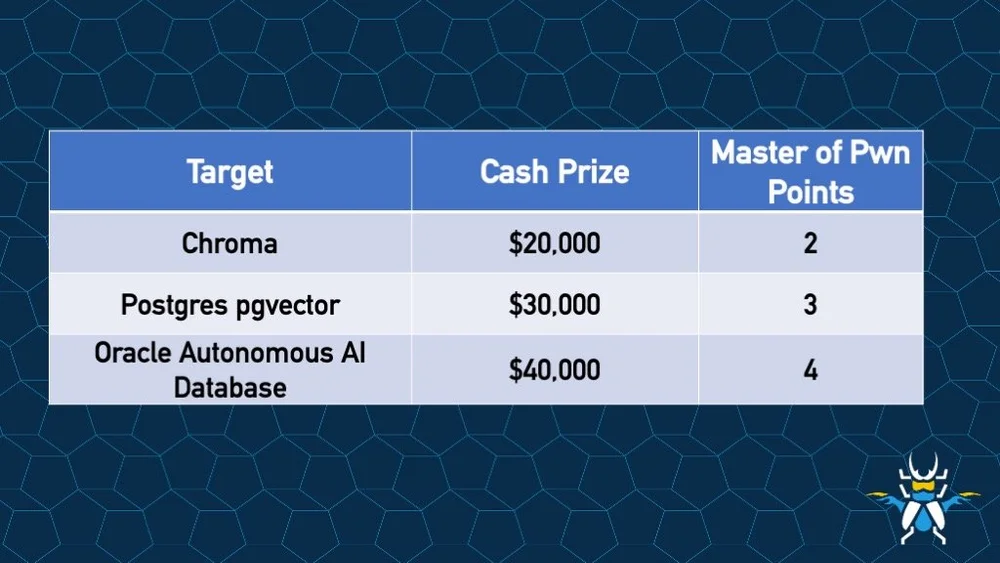
The September 2025 Security Update Review

There’s a crispness in the air – at least here in North America – and with it comes the latest security patches from Adobe and Microsoft. Take a break from your scheduled activities and join us as we review the details of their latest security alerts. If you’d rather watch the full video recap covering the entire release, you can check it out here:

Adobe Patches for September 2025

For September, Adobe released nine bulletins addressing 22 unique CVEs in Adobe Acrobat Reader, After Effects, Premiere Pro, Commerce, Substance 3D Viewer, Experience Manager, Dreamweaver, Adobe 3D Substance Modeler, and ColdFusion. Of these, the ColdFusion update is the only Priority 1 patch, although Adobe notes no exploitation has been detected. The patch for Commerce addresses a single, Critical-rated bug that is rated a priority 2. Again, no exploitation is noted. Also of note is the update for Acrobat, which fixes one Critical and one Moderate-rated bugs.

 The patch for After Effects fixes three Important-rated bug fixes three Important-rated bugs. There’s a single bug in Premiere Pro that could lead to code execution. The fix for Substance 3D Viewer addresses three separate code execution bugs. That’s the same for the patch for Substance 3D Modeler. The fix for Experience Manager is the largest patch this month, with seven fixes. However, only one of these is rated Critical. The bug is Dreamweaver corrects a single Cross-Site Request Forgery (CSRF) bug.

 None of the bugs fixed by Adobe this month are listed as publicly known or under active attack at the time of release. Besides the patches for ColdFusion and Commerce, all updates are listed as deployment priority 3.

Microsoft Patches for September 2025

This month, Microsoft released 80 new CVEs in Windows and Windows Components, Office and Office Components, Microsoft Edge (Chromium-based), Azure, Hyper-V, SQL Server, Defender Firewall Service, and Xbox (yup – Xbox!). Of the patches released today, eight are rated Critical, and the rest are rated Important in severity. This puts Microsoft about 100 CVEs ahead of where they were last year in terms of volume. We’ll see if this level of patches remains high throughout the rest of the year.

Microsoft lists one bug as being publicly known at the time of release, but nothing is noted as being under active attack. Let’s take a closer look at some of the more interesting updates for this month, starting with a bug rated as a CVSS 9.8:

-    CVE-2025-55232 - Microsoft High Performance Compute (HPC) Pack Remote Code Execution Vulnerability
This is the highest severity bug by CVSS (9.8) for this month, and it certainly earns it. A remote, unauthenticated attacker could gain code execution on affected systems without user interaction, which makes this potentially wormable between systems with the HPC pack installed. Microsoft recommends ensuring HPC Pack clusters are only deployed in secure enclaves. They also recommend blocking TCP port 5999. If you use HPC Pack clusters, definitely put this on the top of your patching list.

-   CVE-2025-54910- Microsoft Office Remote Code Execution Vulnerability
This is now the eighth month in a row where at least one Office component allowed code execution through the Preview Pane. It would be nice is Microsoft could consolidate some of these fixes rather than dragging them out month after month, but I doubt that will happen. I’m getting very close to recommending disabling the Preview Pane for a bit while Microsoft sorts this out.

-    CVE-2025-54918 - Windows NTLM Elevation of Privilege Vulnerability
This privilege escalation allows an authenticated threat actor to escalate to SYSTEM on affected systems over the network. While not a scope change, going from a standard Windows user to SYSTEM is handy. Microsoft also notes that exploit complexity is low, so expect to see threat actors target this one. Definitely test and deploy this update quickly.

Here’s the full list of CVEs released by Microsoft for September 2025:

CVE Title Severity CVSS Public Exploited Type
CVE-2025-55234 † Windows SMB Elevation of Privilege Vulnerability Important 8.8 Yes No EoP
CVE-2025-55226 Graphics Kernel Remote Code Execution Vulnerability Critical 6.7 No No RCE
CVE-2025-55236 Graphics Kernel Remote Code Execution Vulnerability Critical 7.3 No No RCE
CVE-2025-54910 Microsoft Office Remote Code Execution Vulnerability Critical 8.4 No No RCE
CVE-2025-53800 Windows Graphics Component Elevation of Privilege Vulnerability Critical 7.8 No No EoP
CVE-2025-55228 Windows Graphics Component Remote Code Execution Vulnerability Critical 7.8 No No RCE
CVE-2025-55224 Windows Hyper-V Remote Code Execution Vulnerability Critical 7.8 No No RCE
CVE-2025-53799 Windows Imaging Component Information Disclosure Vulnerability Critical 5.5 No No Info
CVE-2025-54918 Windows NTLM Elevation of Privilege Vulnerability Critical 8.8 No No EoP
CVE-2025-55316 Azure Arc Elevation of Privilege Vulnerability Important 7.8 No No EoP
CVE-2025-49692 † Azure Connected Machine Agent Elevation of Privilege Vulnerability Important 7.8 No No EoP
CVE-2025-54108 Capability Access Management Service (camsvc) Elevation of Privilege Vulnerability Important 7 No No EoP
CVE-2025-55223 DirectX Graphics Kernel Elevation of Privilege Vulnerability Important 7 No No EoP
CVE-2025-53805 HTTP.sys Denial of Service Vulnerability Important 7.5 No No DoS
CVE-2025-53809 Local Security Authority Subsystem Service (LSASS) Denial of Service Vulnerability Important 6.5 No No DoS
CVE-2025-54894 Local Security Authority Subsystem Service Elevation of Privilege Vulnerability Important 7.8 No No EoP
CVE-2025-54107 MapUrlToZone Security Feature Bypass Vulnerability Important 4.3 No No SFB
CVE-2025-54917 MapUrlToZone Security Feature Bypass Vulnerability Important 4.3 No No SFB
CVE-2025-55317 Microsoft AutoUpdate (MAU) Elevation of Privilege Vulnerability Important 7.8 No No EoP
CVE-2025-54105 Microsoft Brokering File System Elevation of Privilege Vulnerability Important 7 No No EoP
CVE-2025-53801 Microsoft DWM Core Library Elevation of Privilege Vulnerability Important 7.8 No No EoP
CVE-2025-54901 Microsoft Excel Information Disclosure Vulnerability Important 5.5 No No Info
CVE-2025-54896 Microsoft Excel Remote Code Execution Vulnerability Important 7.8 No No RCE
CVE-2025-54898 Microsoft Excel Remote Code Execution Vulnerability Important 7.8 No No RCE
CVE-2025-54899 Microsoft Excel Remote Code Execution Vulnerability Important 7.8 No No RCE
CVE-2025-54900 Microsoft Excel Remote Code Execution Vulnerability Important 7.8 No No RCE
CVE-2025-54902 Microsoft Excel Remote Code Execution Vulnerability Important 7.8 No No RCE
CVE-2025-54903 Microsoft Excel Remote Code Execution Vulnerability Important 7.8 No No RCE
CVE-2025-54904 Microsoft Excel Remote Code Execution Vulnerability Important 7.8 No No RCE
CVE-2025-55232 Microsoft High Performance Compute (HPC) Pack Remote Code Execution Vulnerability Important 9.8 No No RCE
CVE-2025-54906 Microsoft Office Remote Code Execution Vulnerability Important 7.8 No No RCE
CVE-2025-54907 Microsoft Office Visio Remote Code Execution Vulnerability Important 7.8 No No RCE
CVE-2025-55243 Microsoft OfficePlus Spoofing Vulnerability Important 7.5 No No Spoofing
CVE-2025-54908 Microsoft PowerPoint Remote Code Execution Vulnerability Important 7.8 No No RCE
CVE-2025-54897 Microsoft SharePoint Remote Code Execution Vulnerability Important 8.8 No No RCE
CVE-2025-55227 † Microsoft SQL Server Elevation of Privilege Vulnerability Important 8.8 No No EoP
CVE-2025-47997 † Microsoft SQL Server Information Disclosure Vulnerability Important 6.5 No No Info
CVE-2025-54112 Microsoft Virtual Hard Disk Elevation of Privilege Vulnerability Important 7 No No EoP
CVE-2025-54905 Microsoft Word Information Disclosure Vulnerability Important 7.1 No No Info
CVE-2025-49734 PowerShell Direct Elevation of Privilege Vulnerability Important 7 No No EoP
CVE-2025-54895 SPNEGO Extended Negotiation (NEGOEX) Security Mechanism Elevation of Privilege Vulnerability Important 7.8 No No EoP
CVE-2025-54099 Windows Ancillary Function Driver for WinSock Elevation of Privilege Vulnerability Important 7 No No EoP
CVE-2025-54911 Windows BitLocker Elevation of Privilege Vulnerability Important 7.3 No No EoP
CVE-2025-54912 Windows BitLocker Elevation of Privilege Vulnerability Important 7.8 No No EoP
CVE-2025-53802 Windows Bluetooth Service Elevation of Privilege Vulnerability Important 7 No No EoP
CVE-2025-54114 Windows Connected Devices Platform Service (Cdpsvc) Denial of Service Vulnerability Important 7 No No DoS
CVE-2025-54102 Windows Connected Devices Platform Service Elevation of Privilege Vulnerability Important 7.8 No No EoP
CVE-2025-53808 Windows Defender Firewall Service Elevation of Privilege Vulnerability Important 6.7 No No EoP
CVE-2025-53810 Windows Defender Firewall Service Elevation of Privilege Vulnerability Important 6.7 No No EoP
CVE-2025-54094 Windows Defender Firewall Service Elevation of Privilege Vulnerability Important 6.7 No No EoP
CVE-2025-54104 Windows Defender Firewall Service Elevation of Privilege Vulnerability Important 6.7 No No EoP
CVE-2025-54109 Windows Defender Firewall Service Elevation of Privilege Vulnerability Important 6.7 No No EoP
CVE-2025-54915 Windows Defender Firewall Service Elevation of Privilege Vulnerability Important 6.7 No No EoP
CVE-2025-53807 Windows Graphics Component Elevation of Privilege Vulnerability Important 7 No No EoP
CVE-2025-54919 Windows Graphics Component Remote Code Execution Vulnerability Important 7.5 No No RCE
CVE-2025-54091 Windows Hyper-V Elevation of Privilege Vulnerability Important 7.8 No No EoP
CVE-2025-54092 Windows Hyper-V Elevation of Privilege Vulnerability Important 7.8 No No EoP
CVE-2025-54098 Windows Hyper-V Elevation of Privilege Vulnerability Important 7.8 No No EoP
CVE-2025-54115 Windows Hyper-V Elevation of Privilege Vulnerability Important 7 No No EoP
CVE-2025-54110 Windows Kernel Elevation of Privilege Vulnerability Important 8.8 No No EoP
CVE-2025-53803 Windows Kernel Memory Information Disclosure Vulnerability Important 5.5 No No Info
CVE-2025-53804 Windows Kernel-Mode Driver Information Disclosure Vulnerability Important 5.5 No No Info
CVE-2025-54103 Windows Management Service Elevation of Privilege Vulnerability Important 7.4 No No EoP
CVE-2025-54116 Windows MultiPoint Services Elevation of Privilege Vulnerability Important 7.3 No No EoP
CVE-2025-54916 Windows NTFS Remote Code Execution Vulnerability Important 7.8 No No RCE
CVE-2025-53796 Windows Routing and Remote Access Service (RRAS) Information Disclosure Vulnerability Important 6.5 No No Info
CVE-2025-53797 Windows Routing and Remote Access Service (RRAS) Information Disclosure Vulnerability Important 6.5 No No Info
CVE-2025-53798 Windows Routing and Remote Access Service (RRAS) Information Disclosure Vulnerability Important 6.5 No No Info
CVE-2025-53806 Windows Routing and Remote Access Service (RRAS) Information Disclosure Vulnerability Important 6.5 No No Info
CVE-2025-54095 Windows Routing and Remote Access Service (RRAS) Information Disclosure Vulnerability Important 6.5 No No Info
CVE-2025-54096 Windows Routing and Remote Access Service (RRAS) Information Disclosure Vulnerability Important 6.5 No No Info
CVE-2025-54097 Windows Routing and Remote Access Service (RRAS) Information Disclosure Vulnerability Important 6.5 No No Info
CVE-2025-55225 Windows Routing and Remote Access Service (RRAS) Information Disclosure Vulnerability Important 6.5 No No Info
CVE-2025-54106 Windows Routing and Remote Access Service (RRAS) Remote Code Execution Vulnerability Important 8.8 No No RCE
CVE-2025-54113 Windows Routing and Remote Access Service (RRAS) Remote Code Execution Vulnerability Important 7.5 No No RCE
CVE-2025-54101 Windows SMB Client Remote Code Execution Vulnerability Important 4.8 No No RCE
CVE-2025-54093 Windows TCP/IP Driver Elevation of Privilege Vulnerability Important 7 No No EoP
CVE-2025-54913 Windows UI XAML Maps MapControlSettings Elevation of Privilege Vulnerability Important 7.8 No No EoP
CVE-2025-54111 Windows UI XAML Phone DatePickerFlyout Elevation of Privilege Vulnerability Important 7.8 No No EoP
CVE-2025-55245 Xbox Live Auth Manager for Windows Elevation of Privilege Vulnerability Important 7.8 No No EoP
CVE-2024-21907 * VulnCheck: CVE-2024-21907 Improper Handling of Exceptional Conditions in Newtonsoft.Json N/A 7.5 No No DoS

* Indicates this CVE had been released by a third party and is now being included in Microsoft releases.

† Indicates further administrative actions are required to fully address the vulnerability.


Looking at the remaining Critical patches, there are several in the Graphics Component and Graphics Kernel, but these require an authenticated user and could be considered privilege escalations as much as code execution bugs. There’s also a Critical-rated info leak in the Windows Imaging Component, but considered this only leaks random portions or memory, it’s not clear why this is rated Critical.

Moving on to other code execution bugs, there are quite a few open-and-own bugs in Office components, mostly Excel. There’s the monthly RRAS bugs. There’s a frightening looking bug in SMB Client, but it requires authentication. That’s also true for the NTFS bug. The bug in SharePoint requires Site Owner permissions, but any user who has the ability to create a site on SharePoint has these privileges. The final code execution bug is in the Windows Graphics Component and requires user interaction. All in all, it’s a petty light month for code execution bugs.

That same thing can’t be said about Elevation of Privilege (EoP) bugs, which make up almost half of this month’s release. Fortunately, most of these bugs lead to SYSTEM-level code execution or administrative privileges if an authenticated user runs specially crafted code. There are six bugs in the Defender Firewall Service that allow an attacker to escalate from executing code at Medium Integrity to Local Service. The bug in Azure Arc is interesting as it could allow threat actors to add VM Extensions on affected servers. The bug in Azure Connected Machine Agent only leads to SYSTEM, but you’ll need to update the system to the latest version of Azure Connected Machine Agent by hand. The vulnerability in Microsoft AutoUpdate (MAU) for Mac has an unlikely attack scenario but could lead to root on impacted systems. The bug in Virtual Hard Disk could cause a system to crash. That’s also true for the bug in Windows UI XAML Phone DatePickerFlyout, but this could also be leveraged for an AppContainer escape. One of the kernel bugs could also be leveraged for an AppContainer escape as well.

The bug in MultiPoint Services allows an attacker to delete a file, which as we’ve seen, can be used for privilege escalation. The bug in Xbox also allows for a targeted file delete, but it’s unclear if you could turn this into an EoP. For the bug in SMB, I would consider this to be a Spoofing bug since you gain the privileges of the compromised user. There are extra steps available for hardening against relay attacks, and if you haven’t already, you should do those as well. Similar to last month, the patch for SQL Server will take extra handling to ensure you have the correct versions installed. The bug in PowerShell is quite interesting, and (again) some might consider it a Spoofing attack. The bug allows an attacker to hijack a PowerShell Direct session between the admin user on host and a guest VM. This allows an authenticated user to impersonate the admin host user and take any actions to control guest-side operations. Neat.

The September release contains over a dozen information disclosure updates, and as expected, most of these bugs only result in info leaks consisting of unspecified memory contents or memory addresses. This is useful info to have when exploiting components on a system, but otherwise not quite exciting. Other than the Critical-rated bugs already mentioned, the only exception to this is the bug in SQL Server, which could disclose the ever ephemeral “sensitive information”.  ¯\_(ツ)_/¯

There are two Security Feature Bypass (SFB) bugs in this month’s release, and both impact the MapUrlToZone component. As the name infers, these bugs allow URLs to be mapped to the incorrect security zone.

There’s not much information available about the spoofing bug in Office Plus. If you aren’t familiar with it (I wasn’t), Office Plus is a product launched by the Microsoft China team in 2022. It mainly provides users with Office templates, such as PowerPoint templates, through the web version. Based on this, I’m guessing attackers could spoof legitimate users to gain access to Office Plus resources.

There are only three patches for Denial-of-Service (DoS) bugs in this release. As usual, Microsoft provides no actionable information about these bugs. Instead, they simply state that an attacker could deny service over a network to that component.

No new advisories are being released this month.

Looking Ahead

The next Patch Tuesday of 2025 will be on October 14, and I’ll be back then with my analysis and thoughts about the release. Until then, stay safe, happy patching, and may all your reboots be smooth and clean!
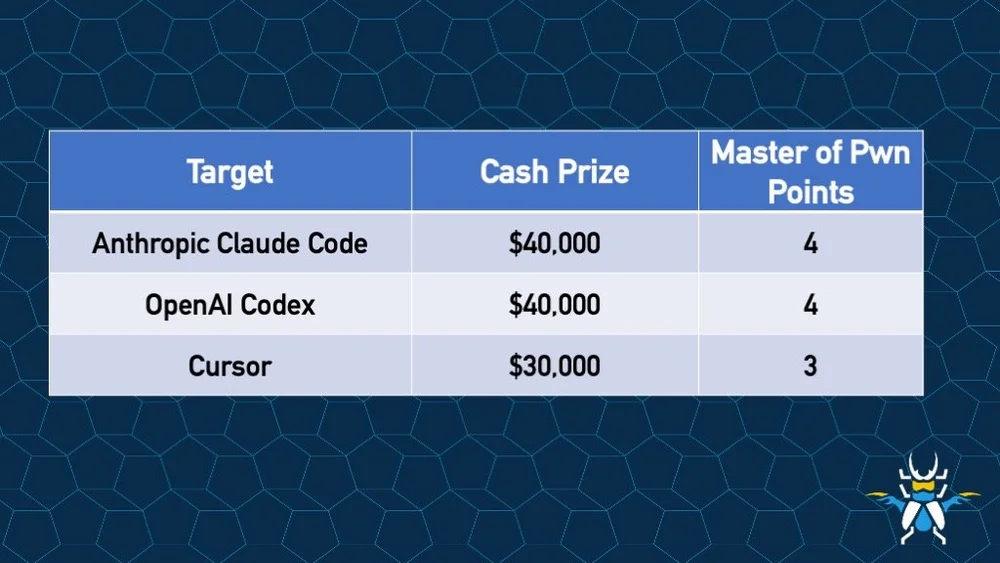
The August 2025 Security Update Review

We’ve made it through hacker summer camp and made our way to the second Tuesday of the month. Adobe and Microsoft seemed to have survived as well, as they released their latest security patches. Take a break from your scheduled activities and join us as we review the details of their latest security alerts. If you’d rather watch the full video recap covering the entire release, you can check it out here:

Adobe Patches for August 2025

For August, Adobe released 13 bulletins addressing 68 unique CVEs in Commerce, Substance 3D Viewer, Animate, Illustrator, Photoshop, Substance 3D Modeler, Substance 3D Painter, Substance 3D Sampler, InDesign, InCopy, Substance 3D Stager, FrameMaker, and Dimension. If you’re looking to prioritize, start with the update for Commerce, which fixes six bugs and is listed as Priority 2. There are eight bugs in the patch for InCopy and all are rated Critical and lead to code execution. The patch for InDesign is quite large with 14 different CVEs being addressed – 12 of which are Critical. The fix for Substance 3D Modeler is also quite large with 13 CVEs. However, most of these are rated Important. That’s a similar story for the fix in Substance 3D Painter. Of the nine CVEs fixed, only one is Critical. There’s also one Critical fix in the patch for Substance 3D Stager, which fixes two bugs in total. The patch for Substance 3D Sampler fixes a single, Important CVE. The Substance 3D family is rounded out with two Critical CVEs for Substance 3D Viewer.

The fix for Animate addresses two bugs, one of which is Critical. The patch for Illustrator contains four fixes. Two of those bugs lead to arbitrary code execution. The single fix for Photoshop also addresses a bug that could lead to code execution. Both of these are typical open-and-own exploits. The patch for FrameMaker contains fixes for five CVEs. The final patch from Adobe this month fixes a single Important-rated bug in Dimension.

None of the bugs fixed by Adobe this month are listed as publicly known or under active attack at the time of release. Besides the patch for Commerce, all updates are listed as deployment priority 3.

Microsoft Patches for August 2025

This month, Microsoft released a whopping 107 new CVEs in Windows and Windows Components, Office and Office Components, Microsoft Edge (Chromium-based), Azure, GitHub Copilot, Dynamics 365, SQL Server, and Hyper-V Server. Seven of these bugs were submitted through the Trend ZDI program.

Of the patches released today, 12 are rated Critical, one is rated Moderate, one is rated Low, and the rest are rated Important in severity. This puts Microsoft slightly ahead of where they were last year in terms of volume. In fact, this year is the largest volume of fixes from Redmond since 2020, although it’s unlikely they will eclipse that total.

Microsoft lists one bug as being publicly known at the time of release, but nothing is noted as being under active attack. Let’s take a closer look at some of the more interesting updates for this month, starting with a bug rated as a CVSS 9.8:

-   CVE-2025-53766 - GDI+ Remote Code Execution Vulnerability
As mentioned, this bug is a CVSS 9.8 as it allows for code execution just by browsing to a malicious webpage. An attacker could also embed a specially crafted metafile into a document and have the target open the file. A worst-case scenario would be an attacker uploading something through an ad network that is served up to users. Ad blockers aren’t just to remove annoyances; they also protect for malicious ads. They’re rare, but they have occurred in the past. Since GDI+ touches so many different components (and users tend to click on anything), test and deploy this one quickly.

-   CVE-2025-50165 - Windows Graphics Component Remote Code Execution Vulnerability
Speaking of browse-and-own, that's exactly what this bug allows as well. Rating a CVSS 9.8, this could lead to code execution by viewing a specially crafted image. Browse-and-own bugs always gain attention from researchers, so even though this is listed as “exploitation less likely”, I would treat this as a critical patch for deployment. 

-    CVE-2025-53731/ CVE-2025-53740 - Microsoft Office Remote Code Execution Vulnerability
This is the seventh month in a row where at least one Office component allowed code execution through the Preview Pane. With so many different components impacted, I doubt these are all patch bypasses. Instead, it appears attackers are mining code that hasn’t been looked at much and finding some gems. Perhaps it’s time to consider disabling the Preview Pane for a bit while the security gnomes in Redmond sort this out.

-    CVE-2025-49712 - Microsoft SharePoint Remote Code Execution Vulnerability
SharePoint has definitely been a hot topic over the last month, with exploits hitting several U.S. government targets. While this bug is not listed as under active attack, it is the same type of bug used in the second stage of existing exploits. The first stage is an authentication bypass, as this vulnerability does require authentication. However, several auth bypasses are publicly known (and patched). Be sure you are up-to-date with ALL of your SharePoint patches and reconsider having them be internet accessible.

Here’s the full list of CVEs released by Microsoft for August 2025:

CVE Title Severity CVSS Public Exploited Type
CVE-2025-53779 Windows Kerberos Elevation of Privilege Vulnerability Moderate 7.2 Yes No EoP
CVE-2025-50176 DirectX Graphics Kernel Remote Code Execution Vulnerability Critical 7.8 No No RCE
CVE-2025-53766 GDI+ Remote Code Execution Vulnerability Critical 9.8 No No RCE
CVE-2025-50177 Microsoft Message Queuing (MSMQ) Remote Code Execution Vulnerability Critical 8.1 No No RCE
CVE-2025-53731 Microsoft Office Remote Code Execution Vulnerability Critical 8.4 No No RCE
CVE-2025-53740 Microsoft Office Remote Code Execution Vulnerability Critical 8.4 No No RCE
CVE-2025-53733 Microsoft Word Remote Code Execution Vulnerability Critical 8.4 No No RCE
CVE-2025-53784 Microsoft Word Remote Code Execution Vulnerability Critical 8.4 No No RCE
CVE-2025-53781 Windows Hyper-V Information Disclosure Vulnerability Critical 7.7 No No Info
CVE-2025-49707 Windows Hyper-V Spoofing Vulnerability Critical 7.9 No No Spoofing
CVE-2025-48807 Windows Hyper-V Remote Code Execution Vulnerability Critical 7.5 No No RCE
CVE-2025-53778 Windows NTLM Elevation of Privilege Vulnerability Critical 8.8 No No EoP
CVE-2025-53793 Azure Stack Hub Information Disclosure Vulnerability Critical 7.5 No No Info
CVE-2025-53765 Azure Stack Hub Information Disclosure Vulnerability Important 4.4 No No Info
CVE-2025-50153 Desktop Windows Manager Elevation of Privilege Vulnerability Important 7.8 No No EoP
CVE-2025-53152 Desktop Windows Manager Remote Code Execution Vulnerability Important 7.8 No No RCE
CVE-2025-50172 DirectX Graphics Kernel Denial of Service Vulnerability Important 6.5 No No DoS
CVE-2025-53135 DirectX Graphics Kernel Elevation of Privilege Vulnerability Important 7 No No EoP
CVE-2025-53773 GitHub Copilot and Visual Studio Remote Code Execution Vulnerability Important 7.8 No No RCE
CVE-2025-53149 Kernel Streaming WOW Thunk Service Driver Elevation of Privilege Vulnerability Important 7.8 No No EoP
CVE-2025-53716 Local Security Authority Subsystem Service (LSASS) Denial of Service Vulnerability Important 6.5 No No DoS
CVE-2025-53729 Microsoft Azure File Sync Elevation of Privilege Vulnerability Important 7.8 No No EoP
CVE-2025-53142 Microsoft Brokering File System Elevation of Privilege Vulnerability Important 7 No No EoP
CVE-2025-49745 Microsoft Dynamics 365 (on-premises) Cross-site Scripting Vulnerability Important 5.4 No No XSS
CVE-2025-53728 Microsoft Dynamics 365 (On-Premises) Information Disclosure Vulnerability Important 6.5 No No Info
CVE-2025-53735 Microsoft Excel Remote Code Execution Vulnerability Important 7.8 No No RCE
CVE-2025-53737 Microsoft Excel Remote Code Execution Vulnerability Important 7.8 No No RCE
CVE-2025-53739 Microsoft Excel Remote Code Execution Vulnerability Important 7.8 No No RCE
CVE-2025-53741 Microsoft Excel Remote Code Execution Vulnerability Important 7.8 No No RCE
CVE-2025-53759 Microsoft Excel Remote Code Execution Vulnerability Important 7.8 No No RCE
CVE-2025-53786 † Microsoft Exchange Server Hybrid Deployment Elevation of Privilege Vulnerability Important 8 No No EoP
CVE-2025-33051 Microsoft Exchange Server Information Disclosure Vulnerability Important 7.5 No No Info
CVE-2025-25006 Microsoft Exchange Server Spoofing Vulnerability Important 5.3 No No Spoofing
CVE-2025-25007 Microsoft Exchange Server Spoofing Vulnerability Important 5.3 No No Spoofing
CVE-2025-25005 Microsoft Exchange Server Tampering Vulnerability Important 6.5 No No Tampering
CVE-2025-53143 Microsoft Message Queuing (MSMQ) Remote Code Execution Vulnerability Important 8.8 No No RCE
CVE-2025-53144 Microsoft Message Queuing (MSMQ) Remote Code Execution Vulnerability Important 8.8 No No RCE
CVE-2025-53145 Microsoft Message Queuing (MSMQ) Remote Code Execution Vulnerability Important 8.8 No No RCE
CVE-2025-53732 Microsoft Office Remote Code Execution Vulnerability Important 7.8 No No RCE
CVE-2025-53730 Microsoft Office Visio Remote Code Execution Vulnerability Important 7.8 No No RCE
CVE-2025-53734 Microsoft Office Visio Remote Code Execution Vulnerability Important 7.8 No No RCE
CVE-2025-53761 Microsoft PowerPoint Remote Code Execution Vulnerability Important 7.8 No No RCE
CVE-2025-53760 Microsoft SharePoint Elevation of Privilege Vulnerability Important 8.2 No No EoP
CVE-2025-49712 Microsoft SharePoint Remote Code Execution Vulnerability Important 8.8 No No RCE
CVE-2025-24999 † Microsoft SQL Server Elevation of Privilege Vulnerability Important 8.8 No No EoP
CVE-2025-47954 † Microsoft SQL Server Elevation of Privilege Vulnerability Important 8.8 No No EoP
CVE-2025-49758 † Microsoft SQL Server Elevation of Privilege Vulnerability Important 8.8 No No EoP
CVE-2025-49759 † Microsoft SQL Server Elevation of Privilege Vulnerability Important 8.8 No No EoP
CVE-2025-53727 † Microsoft SQL Server Elevation of Privilege Vulnerability Important 8.8 No No EoP
CVE-2025-53783 Microsoft Teams Remote Code Execution Vulnerability Important 7.5 No No RCE
CVE-2025-50154 Microsoft Windows File Explorer Spoofing Vulnerability Important 7.5 No No Spoofing
CVE-2025-53736 Microsoft Word Information Disclosure Vulnerability Important 6.8 No No Info
CVE-2025-53738 Microsoft Word Remote Code Execution Vulnerability Important 7.8 No No RCE
CVE-2025-53136 NT OS Kernel Information Disclosure Vulnerability Important 5.5 No No Info
CVE-2025-50159 Remote Access Point-to-Point Protocol (PPP) EAP-TLS Elevation of Privilege Vulnerability Important 7.3 No No EoP
CVE-2025-50171 Remote Desktop Spoofing Vulnerability Important 9.1 No No Spoofing
CVE-2025-53772 Web Deploy Remote Code Execution Vulnerability Important 8.8 No No RCE
CVE-2025-50161 Win32k Elevation of Privilege Vulnerability Important 7.3 No No EoP
CVE-2025-50168 Win32k Elevation of Privilege Vulnerability Important 7.8 No No EoP
CVE-2025-53132 Win32k Elevation of Privilege Vulnerability Important 8 No No EoP
CVE-2025-49762 Windows Ancillary Function Driver for WinSock Elevation of Privilege Vulnerability Important 7 No No EoP
CVE-2025-53134 Windows Ancillary Function Driver for WinSock Elevation of Privilege Vulnerability Important 7 No No EoP
CVE-2025-53137 Windows Ancillary Function Driver for WinSock Elevation of Privilege Vulnerability Important 7 No No EoP
CVE-2025-53141 Windows Ancillary Function Driver for WinSock Elevation of Privilege Vulnerability Important 7.8 No No EoP
CVE-2025-53147 Windows Ancillary Function Driver for WinSock Elevation of Privilege Vulnerability Important 7 No No EoP
CVE-2025-53154 Windows Ancillary Function Driver for WinSock Elevation of Privilege Vulnerability Important 7.8 No No EoP
CVE-2025-53718 Windows Ancillary Function Driver for WinSock Elevation of Privilege Vulnerability Important 7 No No EoP
CVE-2025-50170 Windows Cloud Files Mini Filter Driver Elevation of Privilege Vulnerability Important 7.8 No No EoP
CVE-2025-53721 Windows Connected Devices Platform Service Elevation of Privilege Vulnerability Important 7 No No EoP
CVE-2025-50166 Windows Distributed Transaction Coordinator (MSDTC) Information Disclosure Vulnerability Important 6.5 No No Info
CVE-2025-49743 Windows Graphics Component Elevation of Privilege Vulnerability Important 6.7 No No EoP
CVE-2025-50165 Windows Graphics Component Remote Code Execution Vulnerability Important 9.8 No No RCE
CVE-2025-49751 Windows Hyper-V Denial of Service Vulnerability Important 6.8 No No DoS
CVE-2025-50167 Windows Hyper-V Elevation of Privilege Vulnerability Important 7.5 No No EoP
CVE-2025-53155 Windows Hyper-V Elevation of Privilege Vulnerability Important 7.8 No No EoP
CVE-2025-53723 Windows Hyper-V Elevation of Privilege Vulnerability Important 8.8 No No EoP
CVE-2025-50173 Windows Installer Elevation of Privilege Vulnerability Important 7.8 No No EoP
CVE-2025-49761 Windows Kernel Elevation of Privilege Vulnerability Important 7.8 No No EoP
CVE-2025-53151 Windows Kernel Elevation of Privilege Vulnerability Important 8.4 No No EoP
CVE-2025-53140 Windows Kernel Transaction Manager Elevation of Privilege Vulnerability Important 7 No No EoP
CVE-2025-53131 Windows Media Remote Code Execution Vulnerability Important 8.8 No No RCE
CVE-2025-50158 Windows NTFS Information Disclosure Vulnerability Important 7 No No Info
CVE-2025-53133 Windows PrintWorkflowUserSvc Elevation of Privilege Vulnerability Important 7.8 No No EoP
CVE-2025-50155 Windows Push Notifications Apps Elevation of Privilege Vulnerability Important 7.8 No No EoP
CVE-2025-53724 Windows Push Notifications Apps Elevation of Privilege Vulnerability Important 7.8 No No EoP
CVE-2025-53725 Windows Push Notifications Apps Elevation of Privilege Vulnerability Important 7.8 No No EoP
CVE-2025-53726 Windows Push Notifications Apps Elevation of Privilege Vulnerability Important 7.8 No No EoP
CVE-2025-53722 Windows Remote Desktop Services Denial of Service Vulnerability Important 7.5 No No DoS
CVE-2025-50156 Windows Routing and Remote Access Service (RRAS) Information Disclosure Vulnerability Important 5.7 No No Info
CVE-2025-50157 Windows Routing and Remote Access Service (RRAS) Information Disclosure Vulnerability Important 5.7 No No Info
CVE-2025-53138 Windows Routing and Remote Access Service (RRAS) Information Disclosure Vulnerability Important 5.7 No No Info
CVE-2025-53148 Windows Routing and Remote Access Service (RRAS) Information Disclosure Vulnerability Important 5.7 No No Info
CVE-2025-53153 Windows Routing and Remote Access Service (RRAS) Information Disclosure Vulnerability Important 5.7 No No Info
CVE-2025-53719 Windows Routing and Remote Access Service (RRAS) Information Disclosure Vulnerability Important 5.7 No No Info
CVE-2025-49757 Windows Routing and Remote Access Service (RRAS) Remote Code Execution Vulnerability Important 8.8 No No RCE
CVE-2025-50160 Windows Routing and Remote Access Service (RRAS) Remote Code Execution Vulnerability Important 8 No No RCE
CVE-2025-50162 Windows Routing and Remote Access Service (RRAS) Remote Code Execution Vulnerability Important 8 No No RCE
CVE-2025-50163 Windows Routing and Remote Access Service (RRAS) Remote Code Execution Vulnerability Important 8.8 No No RCE
CVE-2025-50164 Windows Routing and Remote Access Service (RRAS) Remote Code Execution Vulnerability Important 8 No No RCE
CVE-2025-53720 Windows Routing and Remote Access Service (RRAS) Remote Code Execution Vulnerability Important 8 No No RCE
CVE-2025-53769 Windows Security App Spoofing Vulnerability Important 5.5 No No Spoofing
CVE-2025-50169 Windows SMB Remote Code Execution Vulnerability Important 7.5 No No RCE
CVE-2025-53789 Windows StateRepository API Server file Elevation of Privilege Vulnerability Important 7.8 No No EoP
CVE-2025-53156 Windows Storage Port Driver Information Disclosure Vulnerability Important 5.5 No No Info
CVE-2025-53788 Windows Subsystem for Linux (WSL2) Kernel Elevation of Privilege Vulnerability Important 7 No No EoP
CVE-2025-49736 Microsoft Edge (Chromium-based) for Android Spoofing Vulnerability Moderate 4.3 No No Spoofing
CVE-2025-49755 Microsoft Edge (Chromium-based) for Android Spoofing Vulnerability Low 4.3 No No Spoofing

† Indicates further administrative actions are required to fully address the vulnerability.


Looking at the remaining Critical patches, there are two for Word that also include the Preview Pane as an attack vector. There are three Critical bugs in Hyper-V. One could disclose the ever mysterious “sensitive information” while the other allows VM to spoof their identity in communications with external systems. The other allows code execution on the hypervisor from a guest. The bug in Azure Stack also allows an attacker to disclose information over a network. There’s a juicy code execution bug in the DirectX Graphics Kernel, but it does require authentication. The bug in NLTM is an interesting case. It allows an authenticated attacker to elevate privileges over the network. We’re used to seeing these as local exploits only. Lastly, there’s a Use-After-Free bug in the Windows Message Queuing (MSMQ) component. In this case, the attacker would need to series of specially crafted MSMQ packets in a rapid sequence over HTTP to an affected server. The attacker still needs to win a race condition, but we’ve seen plenty of race condition bugs win Pwn2Own, so don’t rely on that alone.

Including those already discussed, there are over 30 code execution bugs receiving fixes this month. The Important-rated Office components do not have Preview Pane as an attack vector and are the open-and-own variety. There’s also this month’s crop of RRAS fixes. I’m still waiting for any of these to be exploited in the wild, but I’m not holding my breath. There are three additional bugs in MSMQ. Their description seems identical to the Critical-rated bug already discuss, so it’s not clear why these are only listed as Important. If you’re running Web Deploy (msdeploy), you definitely want to test and deploy the patch quickly. An unauthenticated attacker could get code execution simply by sending specially crafted requests to an affected server. The SMB bug requires a user to initiate a connection to an SMB server – usually by clicking a link in email. The bug in Teams came through ZDI. The bug exists within the real time media manager. The issue results from the lack of proper validation of user-supplied data, which can result in an integer underflow before writing to memory. The bug in Desktop Windows Manager requires authentication and reads more like an LPE. The final code execution bug is an AI bug in GitHub Copilot and Visual Studio. It does require a user to trigger the payload, so some form of social engineering will be involved. Still – AI bug – woo hoo!

There are more than 40 elevation of privilege (EoP) bugs in the July release. Thankfully, most of these bugs lead to SYSTEM-level code execution or administrative privileges if an authenticated user runs specially crafted code. The bugs in SQL Server allow an attacker to gain sysadmin privileges. These bugs also require special attention when patching, so pay close attention to version numbers to ensure you are fully protected. There’s a bug in Hyper-V that could allow attackers to overwrite arbitrary file content in the security context of the local system. The SharePoint vulnerability would let attackers gain the privileges of the compromised user. The four bugs in Push Notifications allow for sandbox escapes. The vulnerability in the Connected Devices Platform Service allows someone to go from Medium Integrity Level to Local Service. The bug in Desktop Windows Manager just states that an attacker could gain access to “system resources” leading to further compromise. The EoP in StateRepository API Server file could lead to accessing the rights of the user that is running the affected application. Lastly, if you are an Exchange admin, you have some work ahead of you. Microsoft released a hot fix back in April and is making that change more official. You’ll need to apply the hot fix and implement changes in your Exchange Server and hybrid environment. Dominus tecum.

The August release contains more than a dozen information disclosure patches. As expected, most of these only result in info leaks consisting of unspecified memory contents or memory addresses. This is useful info to have when exploiting components on a system, but otherwise not quite riveting. There are a few exceptions. The info disclosure bug in Exchange allows attackers to determine if an email address is valid. The bugs in MSDTC and Dynamics 365 could leak the ephemeral “sensitive information”. One of the bugs in Azure is listed as public and could leak deployment API and system internal configurations. The bug in Azure Stack Hub is more serious as it could leak administrator account passwords in the logs.

There are only four patches for Denial-of-Service (DoS) bugs in this release. However, Microsoft provides no actionable information about these bugs. Instead, they simply state that an attacker could deny service over a network to that component. The only exception is the bug in Hyper-V. In this case, a low-privileged guest VM could deny service on the Hyper-V host environment.

Moving on to the spoofing bugs in this month’s release, the bug in Remote Desktop manifests as an authorization bypass. Not much is clear around the File Explorer bug other than that user interaction is required. There’s no clear info of the bug in the Security App either, but one could assume an attacker could bypass Security App protections. The spoofing bugs in Exchange are a bit clearer. These vulns allow an attacker to spoof the “5322.From” email address that is displayed to a user – a handy trick for social engineering. Finally, the spoofing bug in Edge would allow for a traffic redirect.

There’s a single tampering bug in Microsoft Exchange, but the only information Microsoft provides in that, “an authorized attacker to perform tampering over a network.” I would guess that means they could mess with people’s inboxes and/or calendars, but who knows. The August release is rounded out by a single cross-site scripting (XSS) bug in Dynamics 365.

No new advisories are being released this month.

Looking Ahead

The next Patch Tuesday of 2025 will be on September 9, and I’ll be back then with my analysis and thoughts about the release. Until then, stay safe, happy patching, and may all your reboots be smooth and clean!
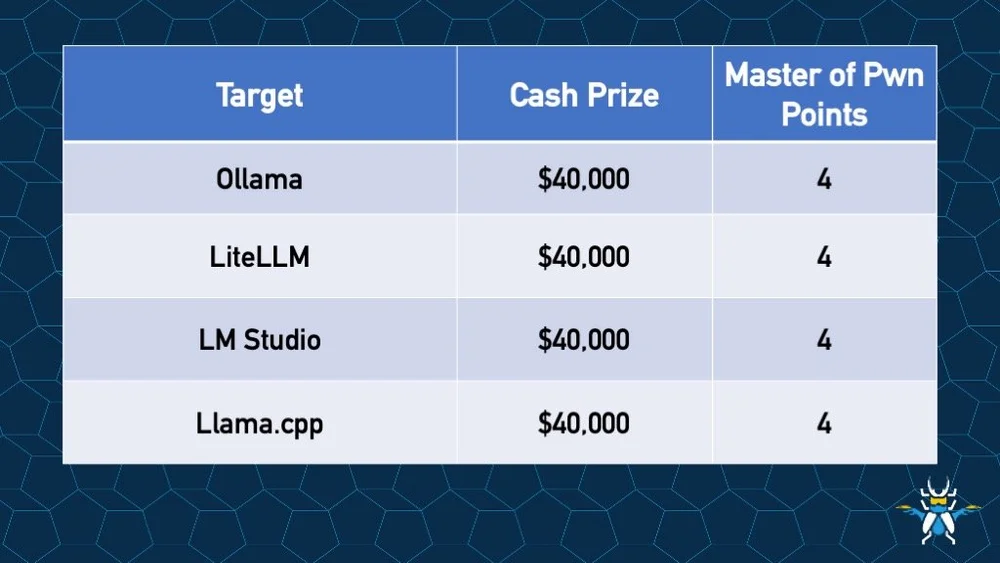
Pwn2Own Returns to Ireland with a One Million Dollar WhatsApp Target

If you just want to read the rules, you can find them here. Updated on 8/15 to clarify printer target models. Updated on 8/22 to clarify scoping for WhatsApp for Windows.

Last year, we moved our consumer-focused Pwn2Own event to our offices in Cork, Ireland, and the event could not have gone better. Despite some dreary Irish skies, much fun was had as researchers from around the world demonstrated their best exploits – and we were reminded that electricity works a little differently in Europe. With that in mind, we’re excited to return to Cork this fall for yet another great Pwn2Own event. We’ll also be returning to some of the great pubs Ireland has to offer in the evenings and wrapping the event up at the historic Cork City Goal.

As you might have guessed from the title, we’re excited to announce that Meta is co-sponsoring this year’s event, and they are hoping to see some great WhatsApp exploits. They are so excited for it, we’re putting up $1,000,000 for a 0-click WhatsApp bug that leads to code execution. We also will have lesser cash awards for other WhatsApp exploits, so be sure to check out the Messaging section for full details. We introduced this category last year, but no one attempted it. Perhaps a number with two commas will provide the needed motivation. We’re also happy to announce the return of Synology and QNAP as co-sponsors of the event. They were amazingly helpful in the setup and configuration of devices last year, and we’re happy to be working with them again.

As for the contest itself, it will run from October 21-24, 2025. As always, the SOHO Smashup category returns, but there are a few tweaks this year that should make it more challenging. We’ve also tweaked the mobile category a bit by adding a new USB attack vector for the phones. Hopefully, we’ll see some interesting research come in demonstrating what could happen if a threat actor has physical access to your device. Last year, we awarded $1,066,625 USD for over 70 unique 0-day vulnerabilities at the contest. We can’t wait to see if 2025 tops that number – especially with a million dollar bounty on the table.

As always, we’ll have a random drawing to determine the schedule of attempts on the first day of the contest, and we will proceed from there. Registration closes at 5:00 p.m. Irish Standard Time on Oct 16th, 2025. There are no exceptions for late entries, so if you have questions, please contact us at pwn2own@trendmicro.com (note the address). We will be happy to address your issues or concerns directly.

Now on to the specific target categories. We’ll have eight different categories for this year’s event:

-- Mobile Phones
-- Messaging Category
-- The SOHO Smashup
-- Smart Home Devices
-- Printers
-- NAS Devices
-- Surveillance System Devices
-- Wearables Category

Let's take a look at each category in more detail, starting with mobile phones.

The Target Phones

 Back in Amsterdam, where this contest originated, it was originally dubbed “Mobile Pwn2Own” and our focus was strictly on phones. Mobile handsets remain at the heart of this event, and some of the Samsung entries from last year were absolutely smashing. As always, these phones will be running the latest version of their respective operating systems with all available updates installed.

This year, we’re introducing the USB port as an attack vector. The exploits must attack only the USB port exposed to the end user. The target handset will be locked at the start of the attempt. And forget about using fake masks or wonky fingerprints – those attacks are out of scope. Be sure to check out the rules for full details.

Otherwise, contestants must compromise the device by browsing to content in the default browser for the target under test or by communicating with the following short-distance protocols: near field communication (NFC), Wi-Fi, Bluetooth, or Baseband. The awards for this category are:

Back to top

The Messaging Category

My first Pwn2Own experience was in 2009, where just $20,000 was awarded. How times change. WhatsApp is used by more than three billion people globally, and some of the messages transmitted can be quite sensitive. That’s one reason why it’s such a target for a certain sector of threat actors. We offered $300,000 for a 0-click exploit last year, but it appears that didn’t quite meet the “bugs to exploit” equation. Thanks to our partnership with Meta, we have substantially increased that number. We’re also introducing other-than-code execution bugs as prize winners. Since this is a big change and the award amounts are substantial, please contact us with questions prior to the contest so we can clear up any issues or misconceptions. Different phones and operating systems may be used for the targets. For WhatsApp for Windows, both “WhatsApp” and the “WhatsApp Beta” applications are in scope. Check out the rules for the full list. Here’s the full prize list for the Messaging category:

Back to top

The SOHO Smashup

The proliferation of WFH resulted in many enterprises finding their network perimeter relocated to the home office. Threat actors exploiting home routers and consumer devices can use these as a launch point for lateral movements into enterprise resources. We wanted to demonstrate this during the contest, which means the SOHO Smashup category continues to be relevant. You’ll notice this year’s list of eligible devices is quite smaller (and hopefully more complex) than last year’s. We really want to up the difficulty level and really challenge researchers to bring their very best to the contest. If they get both devices within 30 minutes, they earn $100,000 and 10 Master of Pwn points.

Back to top

Smart Home Devices

Technically, this is a new category for this year, but it’s really just combining a couple of other categories we previously had. An attempt in this category must be launched against the target’s exposed network services, RF attack surface, or exposed features from the contestant’s laptop within the contest network.

Back to top

Rage Against the Printers

Printers have long been the source of jokes and memes, but they are also an often overlooked attack surface in your office. The printer category always produces some interesting results, often by playing music it shouldn’t or the occasional Rick Roll. Brother also joins this year’s event as a new target. It will be interesting to see what exploits (and flair) the contestants come up with this year.

Back to top

Network Attached Storage (NAS) Devices

NAS devices make their return to Pwn2Own. This year, QNAP enters as a target alongside the returning Synology devices. An attempt in this category must be launched against the target’s exposed network services, RF attack surface, or from the contestant’s laptop within the contest network. For the Synology DiskStation target, we’ll have several packages enabled and in scope. These packages are as follows:

·      Synology MailPlus Server
·      Synology Drive Server
·      Virtual Machine Manager
·      Snapshot Replication
·      Surveillance Station
·      Synology Photos
·      Synology Office
·      Synology AI Console

Here’s the full table of targets in the NAS category for 2025:

Back to top

Surveillance System Devices

We’ve moved beyond just wireless cameras and decided to consolidate them into the Surveillance category. To have a win in this category, you must target the device that is fully integrated into a surveillance system during the normal state of operations with all necessary configurations completed. Entries that require physical access are out of scope, so no more hitting the reset button on cameras. An attempt in this category must be launched against the target’s exposed network services, RF attack surface, or exposed features from the contestant’s laptop within the contest network.

Back to top

Wearable Devices

We’ve dabbled with wearable devices in the past, but the latest tech from Meta piqued our interest once more. For this year’s event, we are including the Meta Ray-Ban Smart Glasses and the Meta Quest 3/3S as targets. We also have two levels of winning – the bigger prize will go to exploits that require no interaction, but we’ll also award one-interaction exploits as well. Additionally, each target can be targeted remotely, in close proximity, or with limited physical access. We’re hoping that with so many different options to choose from, contestants will bring something interesting for us to see. Here’s the award breakdown for the Wearable Devices category:

Back to top

Master of Pwn

No Pwn2Own contest would be complete without crowning a Master of Pwn, which signifies the overall winner of the competition. Earning the title results in a slick trophy, a different sort of wearable, and brings with it an additional 65,000 ZDI reward points (instant Platinum status in 2026).

For those not familiar with how it works, points are accumulated for each successful attempt. While only the first demonstration in a category wins the full cash award, each successful entry claims the full number of Master of Pwn points. Since the order of attempts is determined by a random draw, those who receive later slots can still claim the Master of Pwn title – even if they earn a lower cash payout. As with previous contests, there are penalties for withdrawing from an attempt once you register for it.

The Complete Details

 The full set of rules for Pwn2Own Ireland 2025 can be found here. They may be changed at any time without notice. We highly encourage potential entrants to read the rules thoroughly and completely, should they choose to participate. We also encourage contestants to read this blog covering what to expect when participating in Pwn2Own.

Registration is required to ensure we have sufficient resources on hand at the event. Please contact ZDI at pwn2own@trendmicro.com to begin the registration process. (Email only, please; queries via social media, blog post, or other means will not be acknowledged or answered.) If we receive more than one registration for any category, we’ll hold a random drawing to determine the contest order. Registration closes at 5:00 p.m. Irish Standard Time on Oct 16th, 2025.

The Results

We’ll be blogging and tweeting results in real-time throughout the competition. Be sure to keep an eye on the blog for the latest information. Follow us on Twitter at @thezdi and @trendmicro, and keep an eye on the #P2OIreland hashtag for continuing coverage.

We look forward to seeing everyone in Cork, and we look forward to seeing what new exploits and attack techniques they bring with them.

With special thanks to our Pwn2Own Ireland partner Meta

And co-sponsors, Synology and QNAP, for providing their assistance and technology.


©2025 Trend Micro Incorporated. All rights reserved. PWN2OWN, ZERO DAY INITIATIVE, ZDI, and Trend Micro are trademarks or registered trademarks of Trend Micro Incorporated. All other trademarks and trade names are the property of their respective owners.


❌