Visualização de leitura

Threat Landscape March 2026: Ransomware Dominance, Access Brokers, Data Leaks, and Critical Exploitation Trends
Monthly Threat Landscape, March 2026,

Cyble Research & Intelligence Labs (CRIL) in its monthly threat landscape analysis observed a highly active threat environment throughout March 2026, shaped by large-scale ransomware campaigns, persistent data breach activity, growing initial access brokerage markets, and exploitation of critical vulnerabilities affecting widely deployed enterprise systems.

Threat actors continued to prioritize financial extortion, credential access, and operational disruption, while increasingly targeting sectors rich in sensitive data or dependent on business continuity.

Quick Summary

Key threat trends identified during March 2026 include:

  • 702 ransomware attacks recorded globally.
  • 54 major data breach and leak incidents observed.
  • 20 compromised access sale listings tracked across cybercrime forums.
  • High concentration of attacks against Professional Services, Manufacturing, Retail, and Government sectors.
  • Continued exploitation of vulnerabilities listed in CISA’s Known Exploited Vulnerabilities (KEV) catalog.
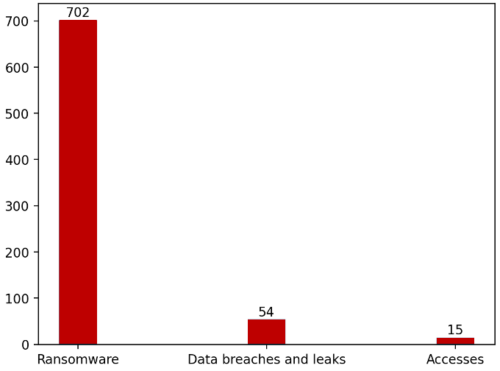
Fig 1. Cyber incidents recorded in March 2026 (Data Source: Cyble Blaze AI)

These trends indicate a mature cybercriminal ecosystem where access brokers, ransomware operators, and data leak actors increasingly operate in parallel.

Ransomware Activity Remained the Dominant Threat

CRIL recorded 702 ransomware attacks worldwide in March 2026, reflecting sustained aggression from both established groups and emerging operators.

Top Ransomware Groups

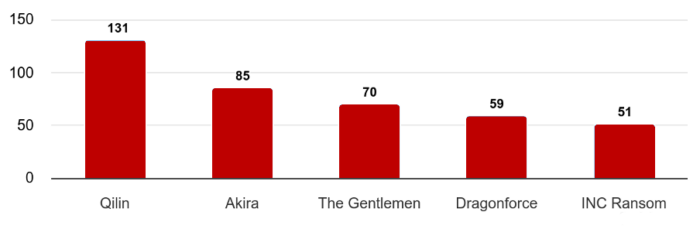
Qilin, Akira, The Gentlemen, Dragonforce, and INC Ransom were the top five most active ransomware actors in March 2026.
Monthly Threat Landscape, Top Ransomware Actors
Fig 2. Top five ransomware actors (Data Source: Cyble Blaze AI)

Together, the top five groups accounted for more than 56% of observed ransomware activity, highlighting strong operational scale and affiliate ecosystems.

Most Targeted Industries

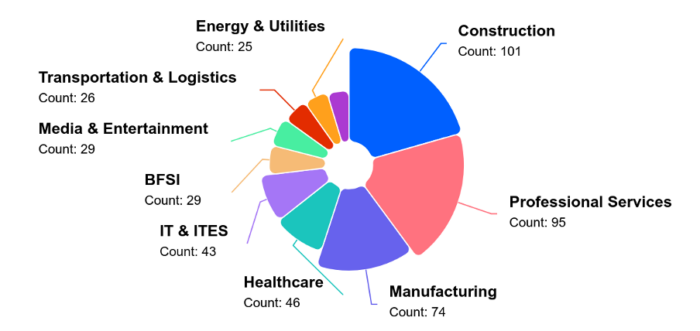
Construction, Professional Services, Manufacturing, Healthcare, and Energy & Utilities were the most targeted sectors by ransomware actors in March 2026.
Monthly Threat Landscape
Fig 3. Top 10 industry-wise attacks by ransomware actors (Data Source: Cyble Blaze AI)

Threat actors continued using data theft + operational disruption as dual-extortion pressure tactics.

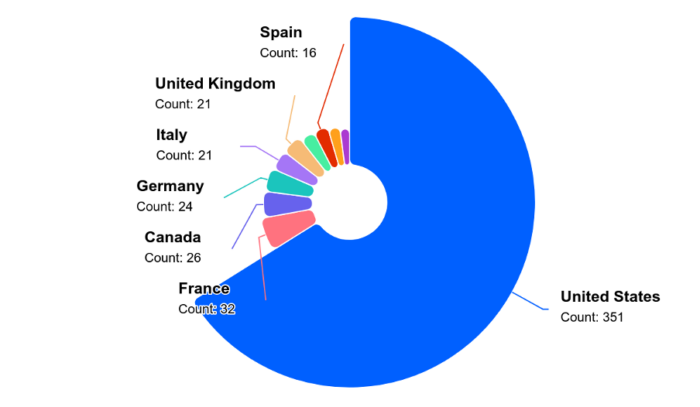
And when it came to country-wise split-up, the United States remained the focal point amid the ongoing geopolitical issues with Iran.
Monthly Threat Landscape
Fig 4. Top 10 country-wise attacks by ransomware actors (Data Source: Cyble Blaze AI)

Compromised Access Market Expanded

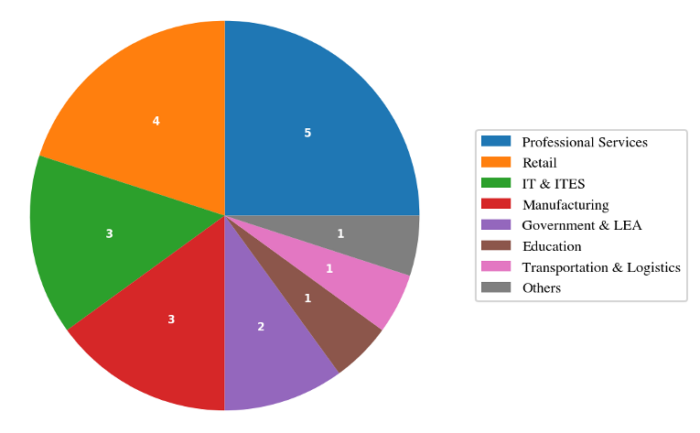
CRIL tracked 20 distinct incidents involving the sale of unauthorized network access on underground forums.

Most Targeted Sectors

  • Professional Services – 25%
  • Retail – 20%
  • IT & ITES
  • Manufacturing

Monthly Threat Landscape
Fig 5. Sector-wise compromised accesses recorded (Data Source: Cyble Blaze AI)

Leading Access Sellers

A small group of actors dominated this market:

  • vexin
  • holyduxy
  • algoyim

These three actors were responsible for over 55% of observed access listings.

This reinforces the role of access brokers as upstream enablers for ransomware, espionage, and fraud operations.

Data Breaches and Leak Markets Remained Active

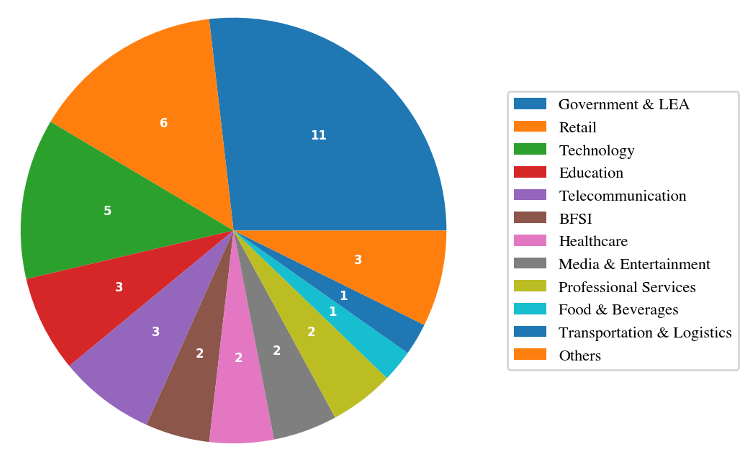
CRIL observed 54 significant breach and leak incidents during the month.

Most Targeted Sectors

  • Government & Law Enforcement
  • Retail
  • Technology

Monthly Threat Landscape
Fig 6. Sector-wise data breaches and leaks recorded (Data Source: Cyble Blaze AI)

Notable Incidents

Hospitality Holdings – TA Claimed 5TB Leak

Threat actor “nightly” claimed theft of over 5TB of data, including biometric records, CCTV footage, and financial documents.

South African Government Dataset for Sale

Threat actor XP95 advertised 3.8TB of allegedly stolen provincial government data.

Travel Data Leak

Over 95,000 travel-related records were reportedly exposed, including passports and payment data.

Exploited Vulnerabilities Accelerated Risk

March also saw active exploitation of critical vulnerabilities affecting enterprise technologies.

Notable KEV-listed vulnerabilities included:

  • CVE-2026-20131 – Cisco Secure Firewall Management Center
  • CVE-2025-53521 – F5 BIG-IP APM
  • CVE-2026-20963 – Microsoft SharePoint Server
  • CVE-2026-33017 – Langflow AI
  • CVE-2021-22681 – Rockwell Automation ICS

Key Trend

Attackers exploited both:

  • Newly disclosed zero-days
  • Legacy vulnerabilities from prior years

This showcases widespread failures in patch management and exposure reduction.

Emerging Strategic Threat Developments

AI-Augmented Offensive Operations

Threat actors reportedly used CyberStrikeAI, an open-source AI-native security testing framework, in attacks against Fortinet FortiGate devices across 55 countries, compromising more than 600 appliances.

Supply Chain Malware via npm

North Korean actors were linked to 26 malicious npm packages distributing RAT malware through Pastebin/Vercel-based infrastructure.

Geopolitical Cyber Risk

Iran-linked cyber operations were assessed as likely to increase following regional tensions, with potential ransomware and hacktivist targeting across the Middle East.

Industries Facing Highest Risk

Based on March activity, organizations in the following sectors faced elevated risk:

  • Professional Services
  • Government
  • Manufacturing
  • Retail
  • Healthcare
  • Critical Infrastructure
  • Transportation & Logistics

These sectors combine valuable data, high uptime requirements, or complex supply chains.

Conclusion

The March 2026 threat landscape was defined by scale, specialization, and speed.

Threat actors increasingly leveraged:

  • Access brokerage markets
  • High-volume ransomware operations
  • Large-scale data theft
  • Rapid weaponization of critical vulnerabilities
  • AI-enhanced offensive tooling

The combination of concentrated criminal ecosystems and widespread enterprise exposure creates a sustained high-risk environment for organizations globally.

Key Recommendations

  • Prioritize remediation of KEV-listed vulnerabilities
  • Strengthen identity security and MFA across remote access platforms
  • Monitor for exposed credentials and access sale activity
  • Segment critical networks to reduce lateral movement
  • Conduct tabletop exercises for ransomware response
  • Improve backup resilience and recovery testing
  • Monitor software supply chain ecosystems
  • Expand threat intelligence coverage across dark web and leak forums

Cyble’s threat intelligence, ransomware monitoring, vulnerability intelligence, and attack surface management solutions help organizations proactively identify risks, prioritize remediation, and defend against evolving global threats.

Book your demo now to see it in action!!!

The post Threat Landscape March 2026: Ransomware Dominance, Access Brokers, Data Leaks, and Critical Exploitation Trends appeared first on Cyble.

Critical Infrastructure Attacks Became Routine for Hacktivists in 2025

Hacktivists

Hacktivists moved well beyond their traditional DDoS attacks and website defacements in 2025, increasingly targeting industrial control systems (ICS), ransomware, breaches, and data leaks, as their sophistication and alignment with nation-state interests grew. 

That was one of the conclusions in Cyble’s exhaustive new 2025 Threat Landscape report, from which this blog was adapted. 

Looking ahead to 2026 and beyond, Cyble expects critical infrastructure attacks by hacktivists to continue to grow, increasing use of custom tools by hacktivists, and deepening alignment between nation-state interests and hacktivists. 

ICS Attacks by Hacktivists Surge 

Between December 2024 and December 2025, several hacktivist groups increased their focus on ICS and operational technology (OT) attacks. Z-Pentest was the most active actor, conducting repeated intrusions against a wide range of industrial technologies. Dark Engine (Infrastructure Destruction Squad) and Sector 16 persistently targeted ICS, primarily exposing Human Machine Interfaces (HMI). 

A secondary tier of groups, including Golden Falcon Team, NoName057 (16), TwoNet, RipperSec, and Inteid, also claimed to have conducted recurrent ICS-disrupting attacks, albeit on a smaller scale. 

HMI and web-based Supervisory Control and Data Acquisition (SCADA) interfaces were the most frequently targeted systems, followed by a limited number of Virtual Network Computing (VNC) compromises, which posed the greatest operational risks to several industries. 

Building Management System (BMS) platforms and Internet of Things (IoT) or edge-layer controllers were also targeted in increasing numbers, reflecting the broader exploitation of weakly secured IoT interfaces. 

Europe remained the primary region affected by pro-Russian hacktivist groups, with sustained targeting of Spain, Italy, the Czech Republic, France, Poland, and Ukraine contributing to the highest concentration of ICS-related intrusions. 

The Intersection of State Interests and Hacktivism 

State-aligned hacktivist activity remained persistent throughout 2025. Operation Eastwood (14–17 July) disrupted NoName057(16)’s DDoS infrastructure, prompting swift retaliatory attacks from the hacktivist group. The group rapidly rebuilt capacity and resumed operations against Ukraine, the EU, and NATO, underscoring the resilience of state-directed ecosystems. 

U.S. indictments and sanctions further exposed alleged structured cooperation between Russian intelligence services and pro-Kremlin hacktivist fronts. The Justice Department detailed GRU-backed financing and tasking of the Cyber Army of Russia Reborn (CARR), as well as the state-sanctioned development of NoName057(16)’s DDoSia platform. 

Z-Pentest, identified as part of the same CARR ecosystem and attributed to GRU, continued targeting EU and NATO critical infrastructure, reinforcing the convergence of activist personas, state mandates, and operational doctrine. 

Pro-Ukrainian hacktivist groups, though not formally state-directed, conducted sustained, destructive operations against networks linked to the Russian military. The BO Team and the Ukrainian Cyber Alliance conducted several data destruction and wiper attacks, encrypting key Russian businesses and state machinery. Ukrainian actors repeatedly stated that exfiltrated datasets were passed to national intelligence services. 

Hacktivist groups Cyber Partisans BY (Belarus) and Silent Crow claimed a year-long Tier-0 compromise of Aeroflot’s IT environment, allegedly exfiltrating more than 20TB of data, sabotaging thousands of servers, and disrupting core airline systems, a breach that Russia’s General Prosecutor confirmed caused significant operational outages and flight cancellations. 

Research into BQT.Lock (BaqiyatLock) suggests a plausible ideological alignment with Hezbollah, as evidenced by narrative framing and targeting posture. However, no verifiable technical evidence has confirmed a direct organizational link. 

Cyb3r Av3ngers, associated with the Islamic Revolutionary Guard Corps (IRGC), struck critical infrastructure assets, including electrical networks and water utilities in Israel, the United States, and Ireland. After being banned on Telegram, the group resurfaced under the alias Mr. Soul Team. 

Tooling and capability development by hacktivist groups also grew significantly in 2025. Observed activities have included: 

  • Notable growth in custom tool creation (e.g., BQT Locker and associated utilities), including the adoption of ransomware as a hacktivist mechanism. 

  • Actors are increasingly using AI-generated text and imagery for propaganda and spreading misinformation and disinformation. 

  • Tool promotion and marketing is becoming an emerging driver fueling hacktivism. 

Cyble Annual Threat Landscape Report

 Hacktivist Sightings Surged 51% in 2025 

In 2025, hacktivism evolved into a globally coordinated threat, closely tracking geopolitical flashpoints. Armed conflicts, elections, trade disputes, and diplomatic crises fueled intensified campaigns against state institutions and critical infrastructure, with hacktivist groups weaponizing cyber-insurgency to advance their propaganda agendas. 

Pro-Ukrainian, pro-Palestinian, pro-Iranian, and other nationalist groups launched ideologically driven campaigns tied to the Russia-Ukraine War, the Israel-Hamas conflict, Iran-Israel tensions, South Asian tensions, and the Thailand-Cambodia border crisis. Domestic political unrest in the Philippines and Nepal triggered sustained attacks on government institutions. 

Cyble recorded a 51% increase in hacktivist sightings in 2025, from 700,000 in 2024 to 1.06 million in 2025, with the bulk of activity focused on Asia and Europe (chart below). 

Hacktivism in 2024 and 2025

Pro-Russian state-aligned hacktivists and pro-Palestinian, anti-Israel collectives continued to be the primary drivers of hacktivist activity throughout 2025, shaping the operational tempo and geopolitical focus of the threat landscape. 

Alongside these dominant ecosystems, Cyble observed a marked increase in operations by Kurdish hacktivist groups and emerging Cambodian clusters, both of which conducted campaigns closely aligned with regional strategic interests. 

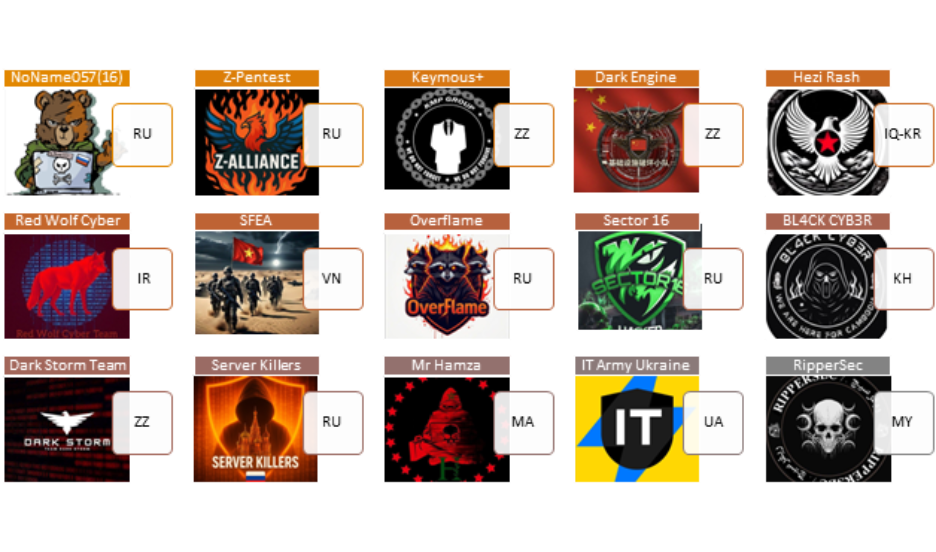
Below are some of the major hacktivist groups of 2025: 

major hacktivist groups of 2025

India, Ukraine, and Israel were the countries most impacted by hacktivist activity in 2025 (country breakdown below). 

countries most impacted by hacktivist activity in 2025

Among global regions targeted, Europe and NATO faced a sustained pro-Russian campaign marked by coordinated DDoS attacks, data leaks, and escalating ICS intrusions against NATO and EU member states. Government & LEA, Energy & Utilities, Manufacturing, and Transportation were consistent targets. 

In the Middle East, Israel remains the principal target amid the Gaza conflict-related escalation, Iran-Israel confrontation, and Yemen-Saudi hostilities. Saudi Arabia, UAE, Egypt, Jordan, Iraq, Syria, and Yemen faced sustained DDoS attacks, defacements, data leaks, and illicit access to exposed ICS assets from ideologically aligned coalitions operating across the region. 

In South Asia, India-Pakistan and India-Bangladesh tensions fueled high-volume, ideologically framed offensives, peaking around political flashpoints and militant incidents. Activity concentrated on Government & LEA, BFSI, Telecommunication, and Education. 

In Southeast Asia, border tensions and domestic unrest shaped a fragmented but active theatre: Thailand-Cambodia conflicts triggered reciprocal DDoS and defacements; Indonesia & Malaysia incidents stemmed from political and social disputes; the Philippines saw attacks linked to internal instability; and Taiwan emerged as a recurring target for pro-Russian actors.  

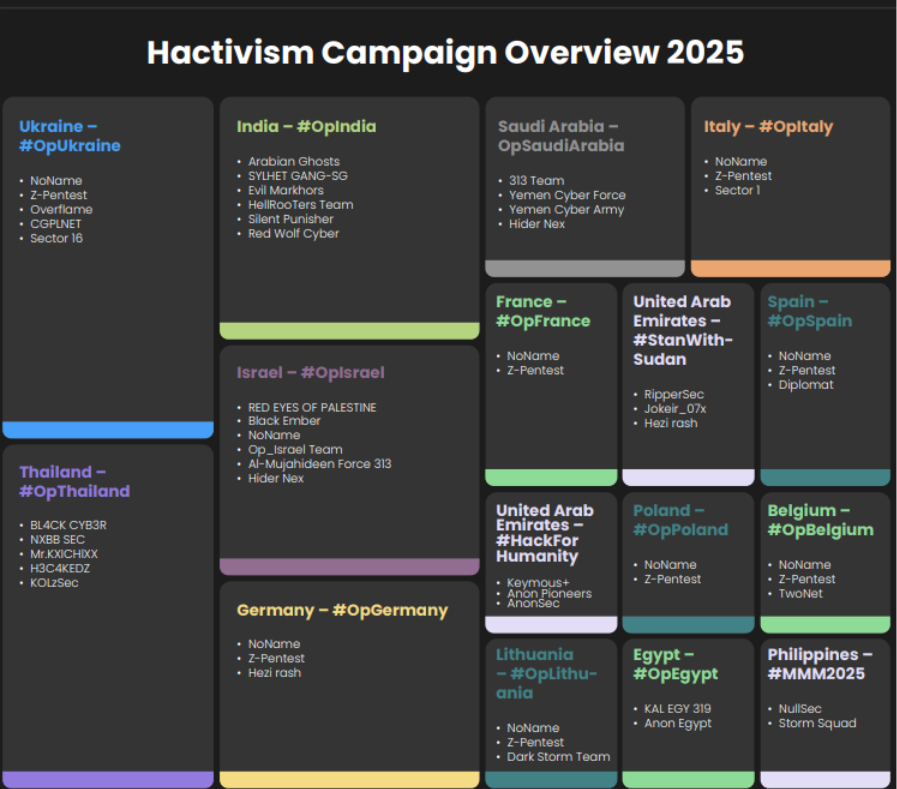
 Below are some of the major hacktivist campaigns of 2025: 

hacktivist campaigns of 2025

Most Impacted Industries and Sectors 

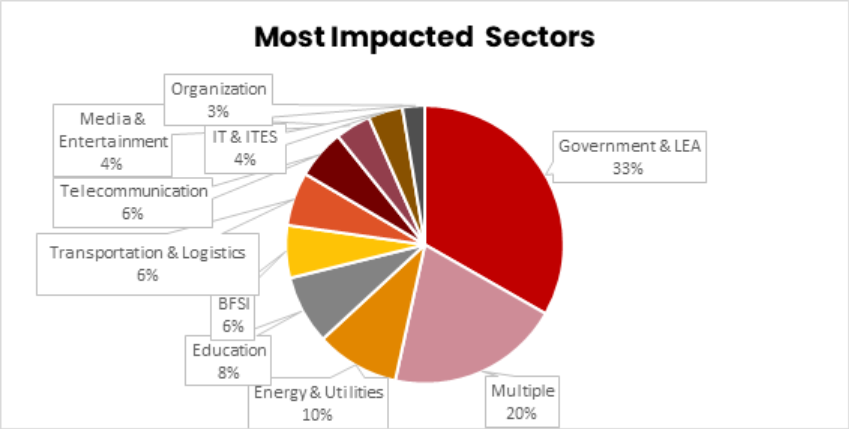
2025 witnessed a marked expansion of hacktivist focus across multiple industries. Government & LEA, Energy & Utilities, Education, IT & ITES, Transportation & Logistics, and Manufacturing experienced the most pronounced growth in targeting, driving the year’s overall increase in operational activity. 

The dataset also reveals a broadened attack surface, with several new or significantly expanded categories, including Agriculture & Livestock, Food & Beverages, Hospitality, Construction, Automotive, and Real Estate. 

Government & LEA was the most impacted sector by a wide margin, followed by Energy & Utilities (chart below). 

most impacted sectors of 2025

The Evolution of Hacktivism 

Hacktivism has evolved into a geopolitically charged, ICS-focused threat, continuing to exploit exposed OT environments and increasingly weaponizing ransomware as a protest mechanism. 

In 2026, hacktivists and cybercriminals will increasingly target exposed HMI/SCADA systems and VNC takeovers, aided by public PoCs and automated scanning templates, creating ripple effects across the energy, water, transportation, and healthcare sectors. 

Hacktivists and state actors will increasingly employ financially motivated tactics and appearances. State actors in Iran, Russia, and North Korea will increasingly adopt RaaS platforms to fund operations and maintain plausible deniability. Critical infrastructure attacks in Taiwan, the Baltic states, and South Korea will appear financially motivated while serving geopolitical objectives, complicating attribution and response. 

Critical assets should be isolated from the Internet wherever possible, and operational technology (OT) and IT networks should be segmented and protected with Zero Trust access controls. Vulnerability management, along with network and endpoint monitoring and hardening, is another critical cybersecurity best practice. 

Cyble’s comprehensive attack surface management solutions can help by scanning network and cloud assets for exposures and prioritizing fixes, in addition to monitoring for leaked credentials and other early warning signs of major cyberattacks. Get a free external threat profile for your organization today. 

The post Critical Infrastructure Attacks Became Routine for Hacktivists in 2025 appeared first on Cyble.
Ransomware and Supply Chain Attacks Soared in 2025

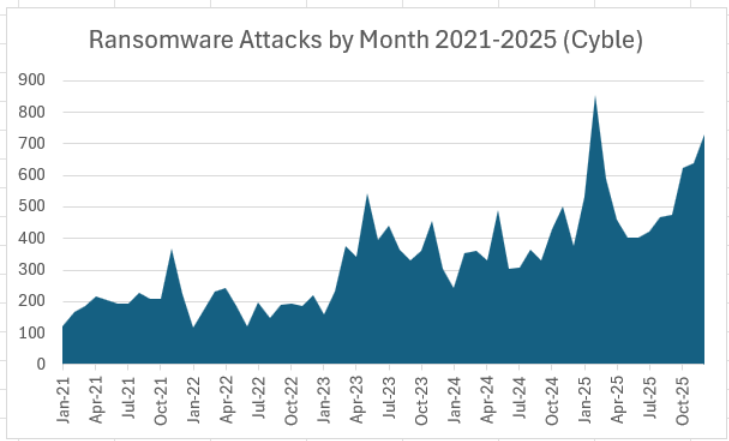
ransomware attacks in 2025

Overview 

Ransomware and supply chain attacks soared in 2025, and persistently elevated attack levels suggest that the global threat landscape will remain perilous heading into 2026. 

Cyble recorded 6,604 ransomware attacks in 2025, up 52% from the 4,346 attacks claimed by ransomware groups in 2024. The year ended with a near-record 731 ransomware attacks in December, second only to February 2025’s record totals (chart below). 

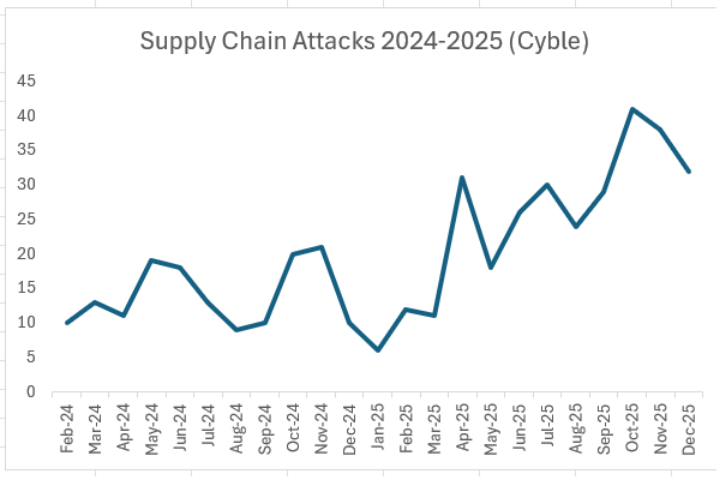
Supply chain attacks nearly doubled in 2025, as Cyble dark web researchers recorded 297 supply chain attacks claimed by threat groups in 2025, up 93% from 154 such events in 2024 (chart below). As ransomware groups are consistently behind more than half of supply chain attacks, the two attack types have become increasingly linked. 

While supply chain attacks have declined in the two months since October’s record, they remain above even the elevated trend that began in April 2025

We’ll take a deeper look at ransomware and supply chain attack data, including targeted sectors and regions, attack trends, and leading threat actors. Some of the data and insights come from Cyble’s new Annual Threat Landscape Report covering cybercrime, ransomware, vulnerabilities, and other 2025-2026 cyber threat trends. 

Qilin Dominated After RansomHub Declined 

Qilin emerged as the leading ransomware group in April after RansomHub went offline amid possible sabotage by rival Dragonforce. Qilin has remained on top in every month but one since, and was once again the top ransomware group in December with 190 claimed victims (December chart below). 

December was also noteworthy for the long-awaited resurgence of Lockbit and the continued emergence of Sinobi

For full-year 2025, Qilin dominated, claiming 17% of all ransomware victims (full-year chart below). Of the top five ransomware groups in 2025, only Akira and Play also made the top five in 2024, as RansomHub, Lockbit and Hunters all fell from the top five. Lockbit was hampered by repeated law enforcement actions, while Hunters announced it was shutting down in mid-2025. 

Cyble documented 57 new ransomware groups and 27 new extortion groups in 2025, including emerging leaders like Sinobi and The Gentlemen. Over 350 new ransomware strains were discovered in 2025, largely based on the MedusaLocker, Chaos, and Makop ransomware families. 

Among newly emerged ransomware groups, Cyble observed heightened attacks on critical infrastructure industries (CII), especially in Government & LEA and Energy & Utilities, by groups such as Devman, Sinobi, Warlock, and Gunra. Several newly emerged groups targeted the software supply chain, among them RALord/Nova, Warlock, Sinobi, The Gentlemen, and BlackNevas, with a particular focus on the IT & ITES, Technology, and Transportation & Logistics sectors. 

Cl0p’s Oracle E-Business Suite vulnerability exploitation campaign led to a supply-chain impact on more than 118 entities globally, including those in the IT & ITES sector. Among these, six entities from the critical infrastructure industries (CII) were observed to have fallen victim to this exploitation campaign. The Fog ransomware group also leaked multiple GitLab source codes from several IT companies. 

The U.S. remains by far the most frequent target of ransomware groups, accounting for 55% of ransomware attacks in 2025 (chart below). Canada, Germany, the UK, Italy, and France were also consistent targets for ransomware groups

Cyble Annual Threat Landscape Report

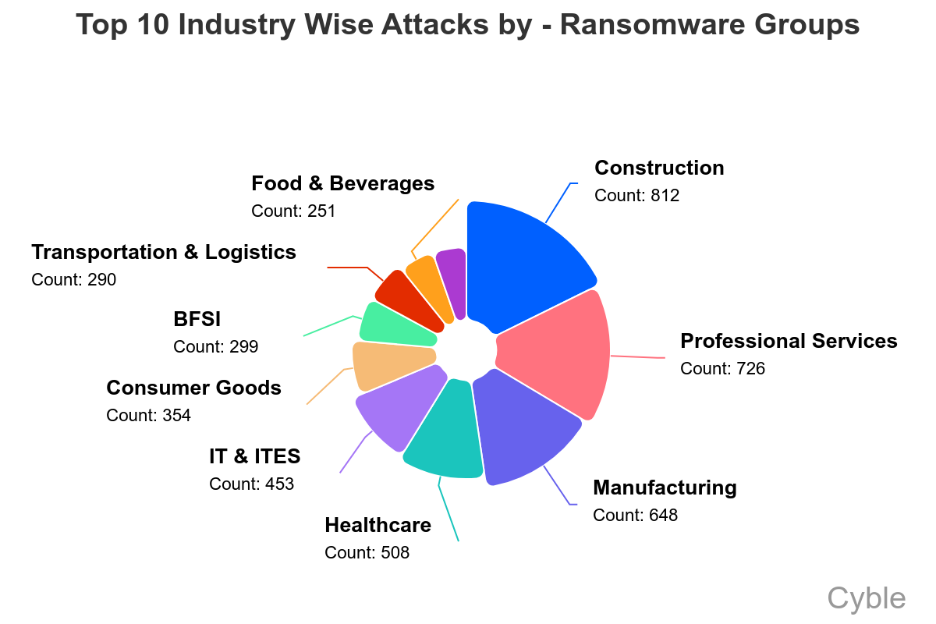
Construction, professional services, and manufacturing were consistently the sectors most targeted by ransomware groups, with healthcare and IT rounding out the top five (chart below). 

Supply Chain Attacks Hit Every Industry and Sector in 2025 

Every sector tracked by Cyble was hit by a software supply chain attack in 2025 (chart below), but because of the rich target they represent and their significant downstream customer base, the IT and Technology sectors were by far the most frequently targeted, accounting for more than a third of supply chain attacks. 

Supply chain intrusions in 2025 expanded far beyond traditional package poisoning, targeting cloud integrations, SaaS trust relationships, and vendor distribution pipelines. 

Adversaries are increasingly abusing upstream services—such as identity providers, package registries, and software delivery channels—to compromise downstream environments on a large scale. 

A few examples highlighting the evolving third-party risk landscape include: 

Attacks targeting Salesforce data via third-party integrations did not modify code; instead, they weaponized trust between SaaS platforms, illustrating how OAuth-based integrations can become high-impact supply chain vulnerabilities when third-party tokens have been compromised. 

The nation-state group Silk Typhoon intensified operations against IT and cloud service providers, exploiting VPN zero-days, password-spraying attacks, and misconfigured privileged access systems. After breaching upstream vendors such as MSPs, remote-management platforms, or PAM service providers, the group pivoted into customer environments via inherited admin credentials, compromised service principals, and high-privilege cloud API permissions. 

A China-aligned APT group, PlushDaemon, compromised the distribution channel of a South Korean VPN vendor, replacing legitimate installers with a trojanized version bundling the SlowStepper backdoor. The malicious installer, delivered directly from the vendor’s website, installed both the VPN client and a modular surveillance framework supporting credential theft, keylogging, remote execution, and multimedia capture. By infiltrating trusted security software, the attackers gained persistent access to organizations relying on the VPN for secure remote connectivity, turning a defensive tool into an espionage vector. 

Conclusion 

The significant supply chain and ransomware threats facing security teams as we enter 2026 require a renewed focus on cybersecurity best practices that can help protect against a wide range of cyber threats. These practices include: 

  • Protecting web-facing assets. 

  • Segmenting networks and critical assets. 

  • Hardening endpoints and infrastructure. 

  • Strong access controls, allowing no more access than is required, with frequent verification. 

  • A strong source of user identity and authentication, including multi-factor authentication and biometrics, as well as machine authentication with device compliance and health checks. 

  • Encryption of data at rest and in transit. 

  • Ransomware-resistant backups that are immutable, air-gapped, and isolated as much as possible. 

  • Honeypots that lure attackers to fake assets for early breach detection. 

  • Proper configuration of APIs and cloud service connections. 

  • Monitoring for unusual and anomalous activity with SIEM, Active Directory monitoring, endpoint security, and data loss prevention (DLP) tools. 

  • Routinely assessing and confirming controls through audits, vulnerability scanning, and penetration tests. 

Cyble’s comprehensive attack surface management solutions can help by scanning network and cloud assets for exposures and prioritizing fixes, in addition to monitoring for leaked credentials and other early warning signs of major cyberattacks. Additionally, Cyble’s third-party risk intelligence can help organizations carefully vet partners and suppliers, providing an early warning of potential risks. 

The post Ransomware and Supply Chain Attacks Soared in 2025 appeared first on Cyble.

Initial Access Sales Accelerated Across Australia and New Zealand in 2025

Initial Access Australia and New Zealand Region

The cyber threat environment in Australia and New Zealand experienced a new escalation throughout 2025, driven by a surge in initial access sales, ransomware operations, and high-impact data breaches. According to our Threat Landscape Report Australia and New Zealand 2025, threat activity observed between January and November 2025 reveals a complex and commercialized underground ecosystem, where compromised network access is actively bought, sold, and exploited across multiple sectors. 

The threat landscape report identifies a persistent focus on data-rich industries, with threat actors disproportionately targeting Retail, Banking, Financial Services, and Insurance (BFSI), Professional Services, and Healthcare organizations. These sectors continue to attract attackers due to the volume of sensitive personally identifiable information (PII), financial data, and downstream access opportunities they offer. 

Growth of Initial Access Sales in 2025 

A central finding of the report is the continued growth of the initial access market. Cyble Research and Intelligence Labs (CRIL) documented 92 instances of compromised access sales affecting organizations in Australia and New Zealand during 2025. Retail organizations were the most heavily targeted, accounting for 31 incidents, or approximately 34% of all observed activity. This figure is more than three times higher than that of the next most targeted sector. 

The BFSI sector recorded nine compromised access listings, followed by Professional Services with seven incidents. Combined, these three sectors accounted for more than half of all initial access listings observed in the region during the reporting period. 

This concentration reflects a strategic approach by initial access brokers. Retail and BFSI organizations routinely handle large volumes of customer data and payment information, making them valuable targets for monetization or follow-on ransomware attacks. Professional Services firms, meanwhile, often provide access to client environments, creating opportunities for supply chain exploitation. 

A Fragmented but Active Access Brokerage Market 

Analysis of the compromised access marketplace reveals a highly fragmented ecosystem rather than one dominated by a small number of major actors. The threat actor known as “cosmodrome” emerged as the most prolific seller of compromised access during the period, followed closely by an actor operating under the alias “shopify.” 

Despite their activity, these actors did not control the market. The top seven most active sellers were collectively responsible for only about 26% of the observed access listings. The remaining activity originated from dozens of individual threat actors who posted listings once or twice, suggesting a low barrier to entry and a marketplace populated by both specialized brokers and opportunistic participants. 

This structure indicates that initial access sales have become an accessible revenue stream for a wide range of threat actors, reinforcing the resilience and scalability of the underground economy. 

High-Impact Incidents Highlight Broader Risks 

Several notable incidents documented in the threat landscape report illustrate how initial access is translated into real-world impact. 

In June 2025, the threat group Scattered Spider was suspected of orchestrating a cyberattack against a major Australian airline. Attackers reportedly gained unauthorized access to a customer service portal, resulting in a data breach that exposed records belonging to nearly six million customers. The compromised data included names, email addresses, phone numbers, dates of birth, and frequent flyer numbers. 

The airline confirmed that more sensitive information, such as credit card details, financial records, and passport data, was not affected because it was not stored in the breached system. Investigators believe the incident may be part of a broader campaign targeting the aviation sector. 

In March, threat actor “Stari4ok” advertised the sale of unauthorized access to a large Australian retail chain on the Russian-language cybercrime forum Exploit. The actor claimed the access involved a hosting server containing approximately 250 GB of data, including a 30 GB SQL database with a user table of around 71,000 records. Based on the claimed annual revenue of USD 2.6 billion and the described industry, the victim appears to be a major retailer, although this has not been independently confirmed. The access was listed for auction with a starting price of USD 1,500. 

Another listing emerged in May when the threat actor “w_tchdogs” offered unauthorized access to a portal belonging to an Australian telecommunications provider on the English-language forum Darkforums. The actor claimed the access provided entry to domain administration tools and critical network information. The listing price was USD 750. 

Data Breaches and Hacktivist Activity 

Not all incidents were tied directly to access sales. In mid-April, unidentified threat actors gained unauthorized access to the IT systems of a prominent accounting firm operating across Australia and New Zealand. The organization publicly confirmed the breach, stating that some data may have been compromised and that an investigation was ongoing. While business operations continued, the firm warned clients of potential phishing attempts and obtained court injunctions in both countries to prevent the dissemination of affected data. As of the time of reporting, no threat group had claimed responsibility. 

Hacktivist activity also remained visible. In January 2025, the group RipperSec claimed to have accessed an optical-fiber network monitoring device belonging to an Australian cable and media services provider. The device was reportedly no longer supported by its vendor. As proof, the group released images suggesting internal defacement and possible data manipulation. 

Want a deeper insight into these threats? Check out Cyble’s Australia and New Zealand Threat Landscape Report 2025 or schedule a demo to see check out how Cyble can protect your organization against these threats. 

The post Initial Access Sales Accelerated Across Australia and New Zealand in 2025 appeared first on Cyble.

❌