 Entrar
CISA Launches CI Fortify to Defend Critical Infrastructure From Nation-State Cyber Threats
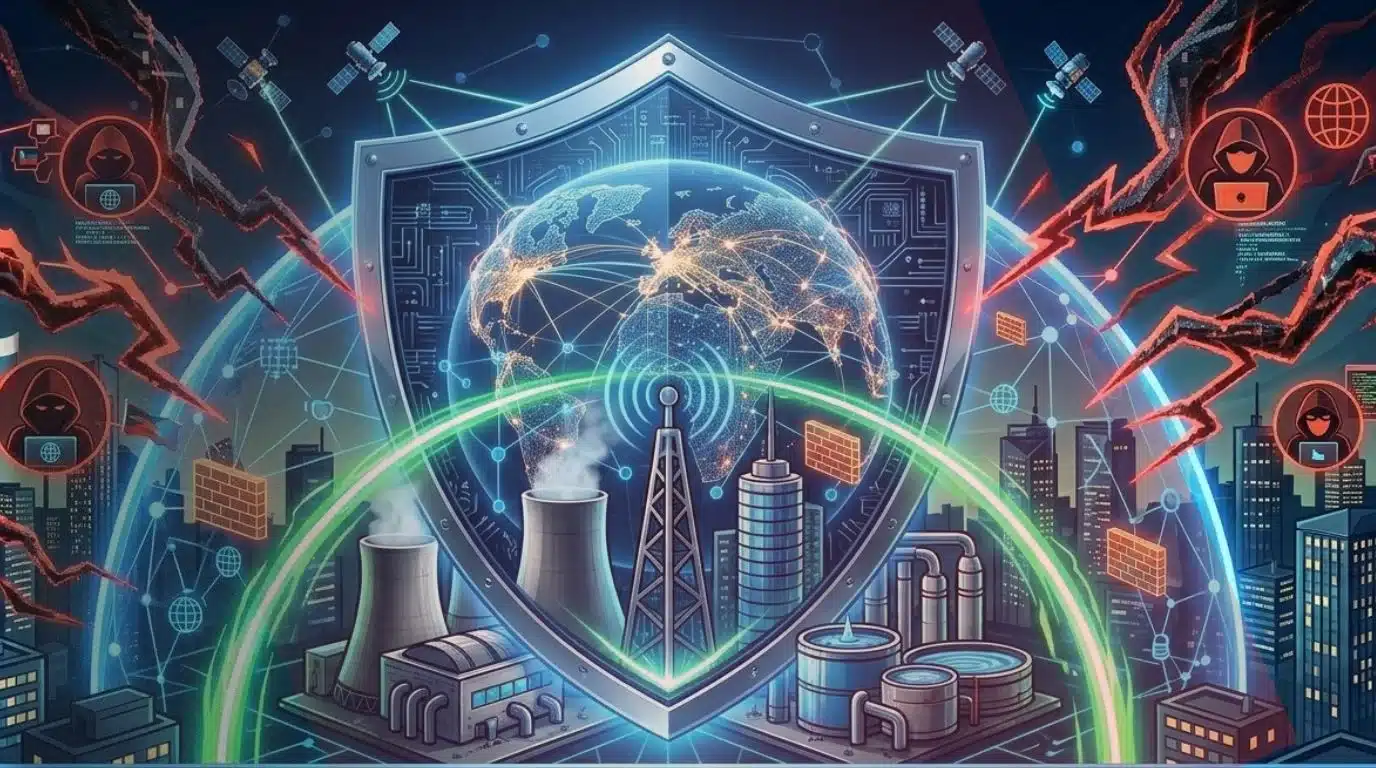

Trump’s proposed budget cuts to CISA raise concerns about U.S. cyber defense, as experts warn of reduced collaboration and threat intelligence sharing.
The post Trump’s Proposed CISA Cuts Spark Alarm Among Cybersecurity Experts appeared first on TechRepublic.
The Council of the European Union has imposed sanctions on three companies and two individuals linked to cyberattacks against EU countries and partners.
“The Council adopted today restrictive measures against three entities and two individuals responsible for cyber-attacks carried out against EU member states and EU partners.” reads the press release.
The first sanctioned China-based company is Integrity Technology Group, which supported operations that compromised over 65,000 devices across six EU member states between 2022 and 2023. In January 2025, the U.S. Treasury sanctioned Integrity Tech for links to cyberattacks by China’s state-backed Flax Typhoon APT group (also called Ethereal Panda or RedJuliett).
The China-linked APT group used Integrity Tech’s infrastructure to launch cyberattacks on European and U.S. networks since the summer of 2022. Flax Typhoon is a China-linked hacking group that has been active since 2021, it targets critical infrastructure globally, exploiting vulnerabilities for persistent access.
The second sanctioned China-based firm is Anxun Information Technology, which provided hacking services targeting critical infrastructure. Two Chinese co-founders were sanctioned for directly participating in cyberattacks against EU member states. In March 2025, the U.S. sanctioned Anxun Information Technology (i-Soon) for offering hacker-for-hire services and conducting cyberattacks since 2011. A 2024 data leak exposed its internal operations and tools.
The sanctioned company is the Iranian firm Emennet Pasargad, which breached a French subscriber database and tried to sell the data online. It also spread disinformation by hacking advertising billboards during the Paris 2024 Olympic Games and disrupted a Swedish SMS service, affecting many EU citizens.
Those sanctioned face asset freezes, while EU citizens and companies are banned from providing them funds or resources. Individuals are also subject to travel bans within the EU. With these additions, the EU cyber sanctions regime now covers 19 individuals and 7 entities.
“The move highlights the EU’s commitment to responding firmly to ongoing cyber threats and working with international partners to ensure a secure and stable cyberspace.
“Today’s decision confirms EU’s and its member states’ willingness to provide a strong and sustained response to persistent malicious cyber activities targeting the EU, its member states and partners.” concludes the press release. “The EU and its member states will continue to cooperate with our international partners to promote an open, free, stable and secure cyberspace.”
The EU created its “cyber diplomacy toolbox” in 2017 to prevent and respond to cyber threats using diplomatic and restrictive measures. In 2019, it added a sanctions framework to target cyberattacks posing external threats to the EU and its members.
(SecurityAffairs – hacking, EU critical infrastructure)
Industrial systems face rising cyber threats as OT security lags modernization. A new survey reveals widespread breaches and growing risks to critical infrastructure.
The post Industrial Systems Under Siege: 77% of OT Environments Suffer Cyber Breaches appeared first on TechRepublic.
GitGuardian’s latest Secrets Sprawl report found more than 28 million new secrets exposed via public GitHub commits in 2025, a 34% increase over 2024 and the largest annual jump the company has recorded. The spike reflects a broader transformation in software creation, as AI tools lower the barrier to coding.
The post Exposed Developer Secrets Surge: AI Drives 34% Increase in 2025 appeared first on The Security Ledger with Paul F. Roberts.

Europe’s plan to build sovereign search infrastructure highlights a growing security concern: dependence on foreign platforms for access to information and AI knowledge may represent a systemic vulnerability.
The post Europe’s Sovereign Search Plan is Really a Security Strategy appeared first on Security Boulevard.
Palo Alto Networks says an Asian cyber espionage campaign breached 70 organizations in 37 countries, targeting government agencies and critical infrastructure.
The post Asian Cyber Espionage Campaign Breached 37 Countries appeared first on TechRepublic.
Can a remote software attack send a power wheelchair tumbling down a staircase? Sadly: the answer is “yes.” Check out our latest podcast interview with Billy Rios and Brandon Rothel of QED Secure Solutions. Billy and Brandon discuss their research into security flaws in power wheelchairs by the Japanese firm WHILL.
The post When Cybersecurity Breaks Mobility: The Hidden Risks of Software-Powered Wheelchairs appeared first on The Security Ledger with Paul F. Roberts.
Stranger Things concept of the “Upside Down” is a useful way to think about the risks lurking in the software we all rely on. A new report from ReversingLabs shines a light into that dark world.
The post Technology’s “Upside Down”? Software Supply Chain appeared first on The Security Ledger with Paul F. Roberts.
Security researcher Jon “Gainsec” Gaines and YouTuber Benn Jordan discuss their examination of Flock Safety’s AI-powered license plate readers and how cost-driven design choices, outdated software, and weak security controls expose them to abuse.
The post AI Surveillance: Unmasking Flock Safety’s Insecurities appeared first on The Security Ledger with Paul F. Roberts.
A recent CISA red team assessment of a United States critical infrastructure organization revealed systemic vulnerabilities in modern cybersecurity. Among the most pressing issues was a heavy reliance on endpoint detection and response (EDR) solutions, paired with a lack of network-level protections.
These findings underscore a familiar challenge: Why do organizations place so much trust in EDR alone, and what must change to address its shortcomings?
A cornerstone of cyber resilience strategy, EDR solutions are prized for their ability to monitor endpoints for malicious activity. But as the CISA report demonstrated, this reliance can become a liability when paired with inadequate network defenses. Here’s why:
The challenges highlighted in the CISA report mirror broader issues organizations face with EDR:
Recognizing these shortcomings, cybersecurity is rapidly evolving beyond traditional EDR. Here’s how:
Even with these advancements, many organizations struggle to fully address EDR’s limitations:
The CISA red team findings are a wake-up call: Endpoint protection alone is no longer enough. To outsmart today’s sophisticated adversaries, organizations must adopt a layered defense strategy that integrates endpoint, network and cloud security. Solutions like XDR, zero trust principles and advanced behavioral analysis offer a path forward — but they require strategic investments and cultural shifts.
The post Insights from CISA’s red team findings and the evolution of EDR appeared first on Security Intelligence.
On September 25, CISA issued a stark reminder that critical infrastructure remains a primary target for cyberattacks. Vulnerable systems in industrial sectors, including water utilities, continue to be exploited due to poor cyber hygiene practices. Using unsophisticated methods like brute-force attacks and leveraging default passwords, threat actors have repeatedly managed to compromise operational technology (OT) and industrial control systems (ICS).
Attacks on the industrial sector have been particularly costly. The 2024 IBM Cost of a Data Breach report found the average total cost of a data breach in the industrial sector was $5.56 million — an 18% increase for the industry compared to 2023. This represents the highest data breach cost increase of all industries surveyed in the report, rising by an average of $830,000 per breach over last year.
Ongoing vulnerabilities pose a serious threat to public safety and national security, especially as water systems and other critical infrastructure providers remain underprepared in the current threat landscape. Let’s take a closer look at the current state of critical infrastructure security, highlighting recent incidents, efforts to address vulnerabilities and the need for further collaboration between the government and private sectors.
The cybersecurity incident at the Arkansas City Water Treatment Facility on September 22 exemplifies the growing risks. While city officials emphasized that the water supply remained safe and no disruption to service occurred, the breach still forced the facility to switch to manual operations. The incident is currently under investigation, with local authorities and cybersecurity experts collaborating to resolve the issue and prevent further attacks. But the Arkansas City breach is not an isolated incident; it mirrors a larger trend of attacks on water systems.
CISA has issued multiple warnings regarding the susceptibility of water and wastewater systems to cyber threats. Intruders often exploit outdated and unsecured OT and ICS environments, where systems are exposed to the internet or still using default credentials. This means cyber criminals can gain access using relatively simple techniques, which raises concerns about the overall preparedness of critical infrastructure operators.
CISA’s September alert is not the first indication of the heightened threat to water and other critical infrastructure providers. Earlier in 2024, the agency warned that Russia-affiliated hacktivists were actively targeting ICS and OT environments in U.S. critical infrastructure facilities. Water systems, dams and sectors, such as energy and food, were particularly vulnerable to these attacks.
The situation worsened with the rise of the Cyber Army of Russia Reborn, a hacktivist group tied to Advanced Persistent Threat 44 (APT44), commonly known as Sandworm. The group has been quite busy exploiting weak cybersecurity postures of smaller water systems that lack adequate cyber defense resources.
According to Keith Lunden of Mandiant, “We expect these attacks to continue for the foreseeable future given the lack of dedicated cybersecurity personnel for many small- and mid-sized organizations operating OT.” Unfortunately, hacktivist groups have exploited these gaps with relative ease. And without rapid intervention, these attacks will likely continue.
Read the Threat Intelligence IndexAmidst the growing cyber threats, the U.S. Department of Homeland Security (DHS) has recognized the need for more support for state and local government cybersecurity. In fiscal year 2024, DHS announced the allocation of $280 million in grant funding for the State and Local Cybersecurity Grant Program (SLCGP). This funding aims to assist state, local, tribal and territorial governments in enhancing their cyber resilience. A special emphasis has been placed on protecting critical infrastructure systems like water utilities, energy grids and emergency services.
These grants will help organizations improve monitoring systems, patch vulnerabilities and implement critical cybersecurity measures such as multi-factor authentication and regular system audits. In states like Michigan, for example, government agencies are already working with local water utilities to provide cybersecurity training and support. The DHS funding could greatly expand these efforts, offering a much-needed boost to the security posture of critical infrastructure providers.
In 2019, the Cyberspace Solarium Commission (CSC) was established by the U.S. Congress to develop a national cyber defense strategy. Currently, approximately 80% of its recommendations have been implemented. However, a final push is needed to address critical gaps, particularly regarding private-sector collaboration and insurance reforms.
One major challenge is identifying the “minimum security burdens” for systemically important entities critical to national security. This would ensure that high-priority infrastructure providers, such as key transportation systems and water utilities, receive the necessary support to prevent catastrophic events.
The CSC also highlighted the need to develop an economic continuity plan for cyber events. This would be nothing less than an incident response and resilience plan to protect the U.S. economy in the face of a major cyberattack. The commission also emphasized the need for better information sharing between government agencies, private industries and international partners to protect critical infrastructure from evolving cyber threats.
During a recent panel discussion, Senator Angus King, co-chair of CSC 2.0, pointed to the difficulties of building trust between the government and private sectors. Private entities own and operate the majority of the nation’s critical infrastructure, but historical tensions make collaboration challenging. King noted that the situation mirrors early tensions that existed between state officials and CISA. Nonetheless, the collaboration between private industry and government is essential to address the growing threat to critical infrastructure.
The cybersecurity posture of U.S. critical infrastructure remains a concern. As seen in attacks like the Arkansas City Water Treatment Facility and other incidents targeting internet service providers, threat actors are increasingly focusing on essential services. These attacks are not limited to small municipalities. Larger-scale infrastructure providers, including ISPs and managed service providers, have also been targets.
The FBI recently disclosed that China-linked hackers compromised more than 260,000 network devices, underscoring the scale of the problem. Meanwhile, attacks attributed to the Chinese government have targeted ISPs and managed service providers through vulnerabilities in Versa Networks’ SD-WAN software, demonstrating the growing sophistication of these threats.
While the U.S. government is actively working to improve critical infrastructure cybersecurity, the attacks on water treatment systems and other essential services clearly reveal that more needs to be done. The DHS grant program and the recommendations of the Cyberspace Solarium Commission represent critical steps in this effort, but collaboration between government, private industry and international partners will be key to building a resilient defense against evolving threats.
The safety of critical infrastructure remains a pressing concern. Recent events should serve as a wake-up call for operators, policymakers and the public to take action before a cyberattack occurs that impacts human life and health. Undoubtedly, the threats are real — and any meaningful response requires a concerted effort.
The post Is the water safe? The state of critical infrastructure cybersecurity appeared first on Security Intelligence.
