Visualização de leitura

Kenyan Weapons Linked to Sudan’s Civil War

Bellingcat and our partners at Kenya’s Daily Nation have identified Kenyan-labelled crates of ammunition inside an alleged RSF depot close to the recently recaptured Sudanese capital Khartoum.

Although we couldn’t independently verify the contents of every crate identified, tins with ammunition matching the labels on the crates were found nearby among the captured weapons displayed by the Sudanese Armed Forces (SAF).

The confirmation of ammunition crates inside Sudan raises new questions about Kenya’s involvement in the conflict following a high-profile visit by Rapid Support Forces leader General Mohamed Hamdan Dagalo to Nairobi earlier this year.

In response to the visit, the Sudanese government banned all imports from Kenya amid a perception of close ties between the Ruto government and General Dagalo, widely known as Hemedti. 

The Kenyan government defended the decision to host Hemedti, stating that their aim was to promote dialogue and peace and emphasising the importance of engaging all parties involved in the conflict.
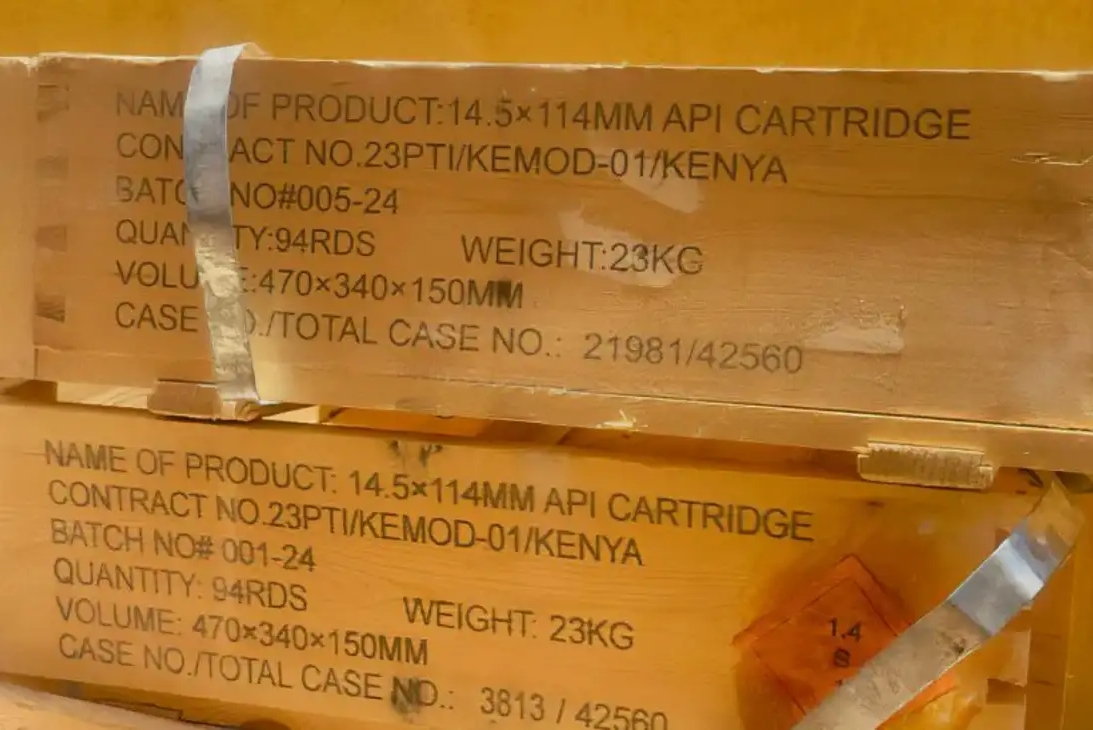
Examples of images of Kenyan MOD-labelled ammunition crates. These images had been circulating on social media, allegedly showing ammunition left behind by the RSF. Credit: posted on X

While the Kenya Ordnance Factories Corporation (KOFC) states on its website that it produces small arms ammunition, it does not indicate manufacturing higher-calibre 14.5×114 mm cartridges and the Chinese-made HE PP87 mortar bombs identified in this investigation.

Our partners at Daily Nation reached out to the Ministry of Defence (MoD) of Kenya to ask about the crates we identified and how they ended up in Sudan. We also asked whether it was Kenyan government policy to supply ammunition or weapons to the Rapid Support Forces and how this comports with the government’s public commitment to facilitating peace and dialogue in Sudan.

Support Bellingcat

Your donations directly contribute to our ability to publish groundbreaking investigations and uncover wrongdoing around the world.

In its response, the Ministry of Defence said it did not recognise the crates or labels on them and distanced itself from the allegations. Its answer appears to be limited to nationally produced ammunition only as well as internal protocols. It didn’t mention if Kenya has done any imports, international transfers or diversions of the weapons or ammunition in question. A statement that leaves key concerns about the Sudan connection unclear.

“Upon examination of the photographs provided, we wish to state that we do not recognize the crates nor the inscriptions on them.

The Kenya Ordinance Factory Corporation and, by extension, the Ministry is alive to the sensitive nature of the ammunition it manufactures, and as a result, it has clear records of its supplies within and beyond Kenya. Alongside this, and to guarantee public safety, audits of the factory’s operations are frequently conducted by the managing and external oversight authorities.

The Ministry of Defence, therefore, distances itself from the allegations you sent earlier. 

Further, we remain fully committed to upholding the rule of law and continue to operate strictly within the mandate granted by the Constitution and applicable authorizations.”

Justin Lynch, Managing Director of the Conflict Insights Group and a Sudan researcher, told Bellingcat the discovery of the crates is further evidence of Kenya’s political and logistical support for the RSF.

A Country at War, Awash with Foreign Weapons

Sudan is in the midst of an ongoing civil war between two rival factions, the Sudanese Armed Forces (SAF) and the paramilitary Rapid Support Forces (RSF).

The stash of ammunition crates located near Sudan’s capital was filmed by Sudanese Armed Forces (SAF) soldiers who took part in the final push to retake the city from the RSF who have controlled Khartoum and its surrounding cities for much of the civil war.

The SAF declared it had retaken the final areas of resistance in Khartoum, its twin city of Omdurman, and the neighbouring city of Bahri on May 20, stating the three areas were now completely free of RSF forces.

The re-taking of the capital has led to much footage and images being released. Including footage that appears to show supplies used by the RSF.

A 2005 UN arms embargo remains in place prohibiting any country from supplying weapons to Darfur, Sudan, an area that has seen intense fighting since the outbreak of the civil war.

However both Amnesty International and Human Rights Watch have identified weapons produced in China, Iran, Russia, Serbia and the UAE being used in the conflict. 

The Sudanese government brought a case before the International Court of Justice in The Hague in May, accusing the UAE of complicity in genocide for its role in supporting the RSF. The UAE has categorically denied supporting the RSF. The case was dismissed as the UAE has not signed Article 9 of the Genocide Convention.

Both sides of the conflict have been accused of war crimes, and the RSF has been accused of ethnic cleansing in certain areas, including around Darfur. The UN says more than 24,000 people have been killed since fighting began in 2023 following a peaceful uprising by civilians against dictator Omar al-Bashir. More than 11 million people have reportedly been displaced. 

While there is detailed reporting on routes between the UAE and Sudan’s neighbouring countries, including Chad, being used for weapons transfers, specific details about how the Kenyan ammunition crates ended up in the country remain scarce.

How Do We Know the Ammunition Crates Were in the Vicinity of Khartoum?

On May 19, after weeks of reported intense fighting with the RSF, SAF soldiers and allied forces posted video clips claiming they were inside the Salha area in southern Omdurman, located across the Nile from Khartoum.

Bellingcat and Daily Nation have identified three videos containing Kenyan MOD-labelled ammunition crates allegedly left behind by the RSF inside an unknown depot most likely in Salha.

Using social media, we identified soldiers seen in the depot next to the ammunition: A Major from the SAF’s General Intelligence Service (GIS) and at least one other young Sudanese soldier. Both appear to have been in the depot during the same time the operation in Salha was taking place.

Video 1, Video 2 and Video 3 show soldiers rummaging through several rooms containing crates and talking about the armour allegedly left behind by the RSF. Photos of the same type of crates with the same label from the Kenyan MOD had been circulating on social media for some time earlier this year. But it had been difficult to geolocate inside Sudan before these more recent videos emerged.

In video 3, the speaker mentions the ammunition discovery and repeats ‘Salha’, the location, several times. 

In video 1, an Arabic speaker can be heard saying: “But I swear to God, you can’t fight again and you won’t defeat us, is this the work (equipment) you leave?”
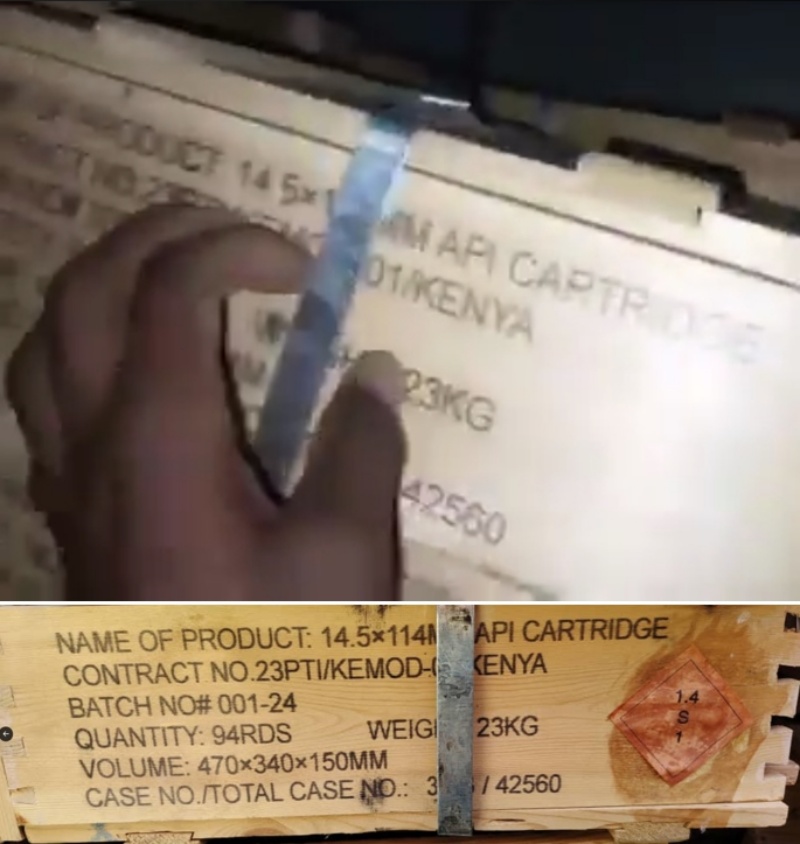
Above: Example of one of the crates featured in one of the videos filmed inside the dark depot. Below: The stencil label appears to be the same as seen in other previous pictures circulating earlier on social media. Credit: X

Video 1 shows a man inside the depot wearing a fatigued t-shirt, glasses and white Tasbih prayer beads. We found further footage showing what appears to be the same man wearing the same clothes and accessories. Elements in the background tell us that the video was indeed filmed in Salha, Omdurman, along the main road (15.5479, 32.4273).

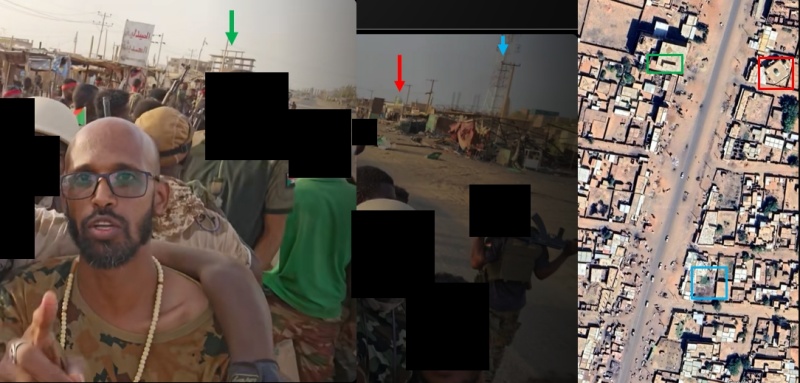
Left: Soldier in the armour depot. Right: Stitched frames of a video showing the same soldier wearing the same clothes and accessories but on this occasion in an outdoor setting. Credit: X, Facebook
The outdoor setting was geolocated to Salha, Omdurman (15.5479, 32.4273). Credit: Facebook, Google Earth

We identified the soldier above as a Major (Ra’id) from the SAF’s General Intelligence Service, as indicated by his uniform insignias and patches seen in another video circulating on May 20. His name appears to be Al-Makki Abdul Quddus Ahmed.
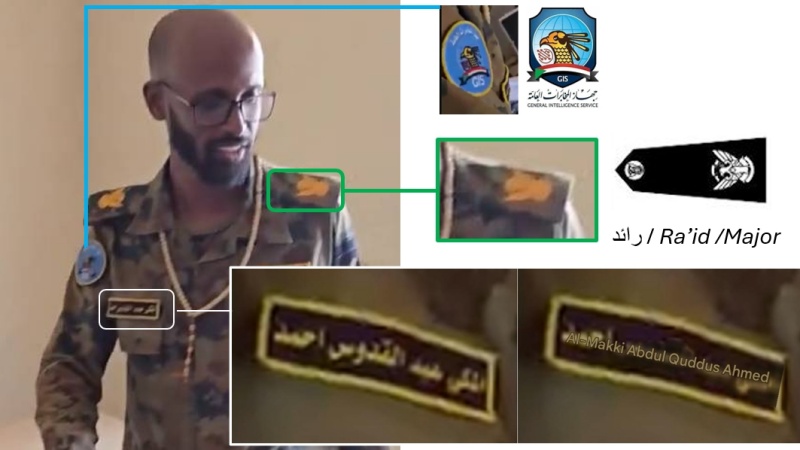
A video showing a man with the same characteristics as the soldier from the depot is wearing a uniform featuring an insignia consistent with a Rai’d/Major rank used by the Sudanese Armed Forces and a patch from the General Intelligence Service of Sudan. Using Optical Character Recognition, his name appears to read Al-Makki Abdul Quddus Ahmed. Credit: X, globalsecurity.org, gis.gov.sd

Similarly, in another video filmed approx 150m from Major Al-Makki, here (15.546947, 32.427022), we identified a second man seen in the ammunition depot videos. In both videos, he is seen wearing the same clothes with a small Sudanese flag on his left shoulder.

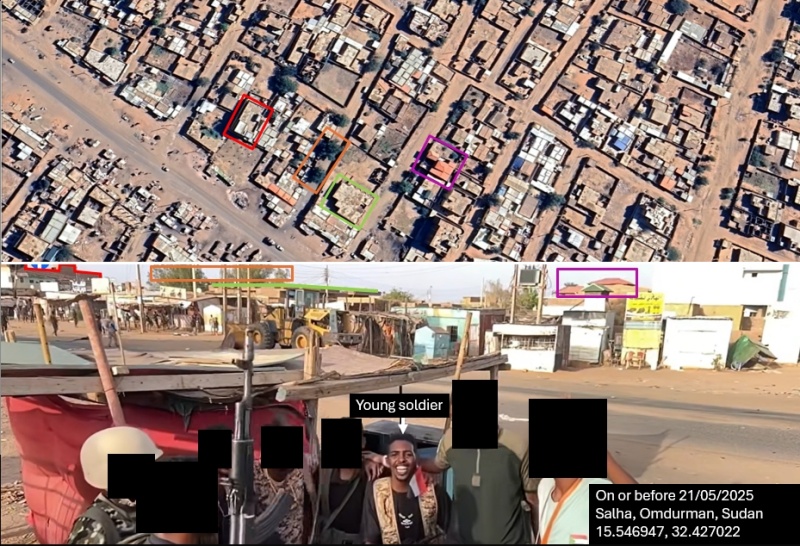
A young soldier who was in the ammo depot was also seen outdoors in a street scene celebrating with other soldiers and wearing the same outfit and accessories as in the depot.
We geolocated the young soldier just 150m from Major Al-Makki in Salha, Omdurman. Credit: Facebook/Google Earth Pro

All the videos analysed were posted between May 19 and May 21. We geolocated the soldiers in a market area of southern Omdurman’s Salha district. This is consistent with the Sudanese Armed Forces retaking the city. Aljazeera reported that SAF had regained full control of the area by May 20.

Although we were unable to confirm the exact location of the depot, corroborating the presence of soldiers in the Salha area, along with open source information, strongly indicates that the depot is indeed located in the Salha neighbourhood of Omdurman.

From Sudan to the World: International Connections of the Weapons Crates

We compared the labels of the crates located near the Khartoum depot with other images of Kenyan munition crates circulating online, reportedly also from Sudan. On the labels, we can see English wording that includes the name of the product, contract number, batch number, quantity, volume, case number and total case number. 

To be clear, although the crates are labelled with contractual and technical information, we are not able to say with certainty the origin or producer of the munitions. However, there are important details to highlight.

Bellingcat and our partners at Daily Nation shared images of the crates with three independent armament experts. All confirmed that the markings indicated the ammunition crates were part of the same contract (No. 23PTI) and were delivered to the Kenyan Ministry of Defence (KEMOD-01). 

Australian-based Armament Research Services (ARES) told us: “The markings on this crate are consistent with other crates we have seen that we believe to be delivered on a Kenyan contract.”
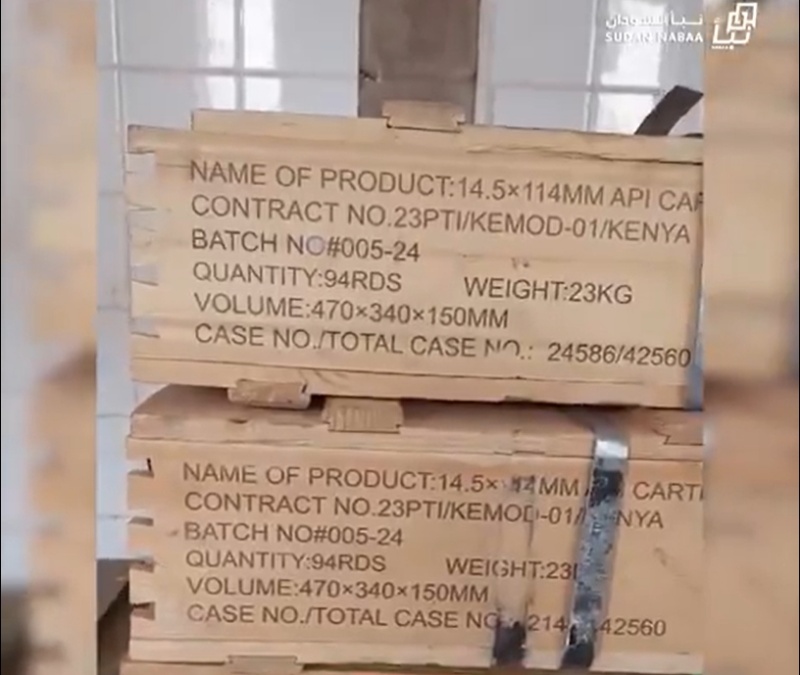
Still of video showing Kenyan MOD-labelled ammunition crates. These images had been circulating on social media, allegedly showing ammunition allegedly captured by SAF in Khartoum. Credit: X, Sudan Nabaa

Upon examining the images, the weapons experts also told us that many of the crates indicate delivery during or after 2024 – when the civil war in Sudan was well underway.

Former Royal Artillery Army officer and director of Chiron Resources, Chris Cobb-Smith said: “The batch number suggests they were packed in 2024 – delivery date to Kenya would probably have been the same year. When delivered to Sudan is not known.” 

All three experts agreed that the type of ammunition indicated on the labels was 57 calibre (14.5×114mm) armour-piercing incendiary (API) cartridges.

Cobb said that 14.5×114mm (.57 calibre) is a heavy machine gun and anti-material rifle cartridge used by the Soviet Union, the former Warsaw Pact states, modern Russia, and other countries.

Although not specified on the crates, Cobb added that this type of cartridge has been manufactured in Bulgaria, China, Egypt, Hungary, Iraq, North Korea, Poland, Romania, Russia, and the former Czechoslovakia.

One of the videos we found with these crates inside a depot in Salha, Omdurman, showed cans inside the crates and at least one open can next to the crates had visible ammunition consistent with the specifications on the label. The ammunition visible appears to have a green case and what appears to be a standard black-tip.

Several cans were visible inside crates in the depot. At least one open can located next to the crates had visible ammunition consistent with the specs on the label. Credit: X
Left and centre: screenshots from Salha depot Video 1, showing a round next to the Kenyan MOD-labelled crates. The bullet appears to feature a green-coloured case and a black marking on the tip. Right: Example of a 14.5×114 MM API cartridge. Credit: X, cjaie.com

We were also able to identify two additional green crates seen in a video showing the Salha depot. The label appears to indicate the boxes likely contain (or at least contained) an explosive with the specification “82mm HE Mortar Bomb Type PP87”.
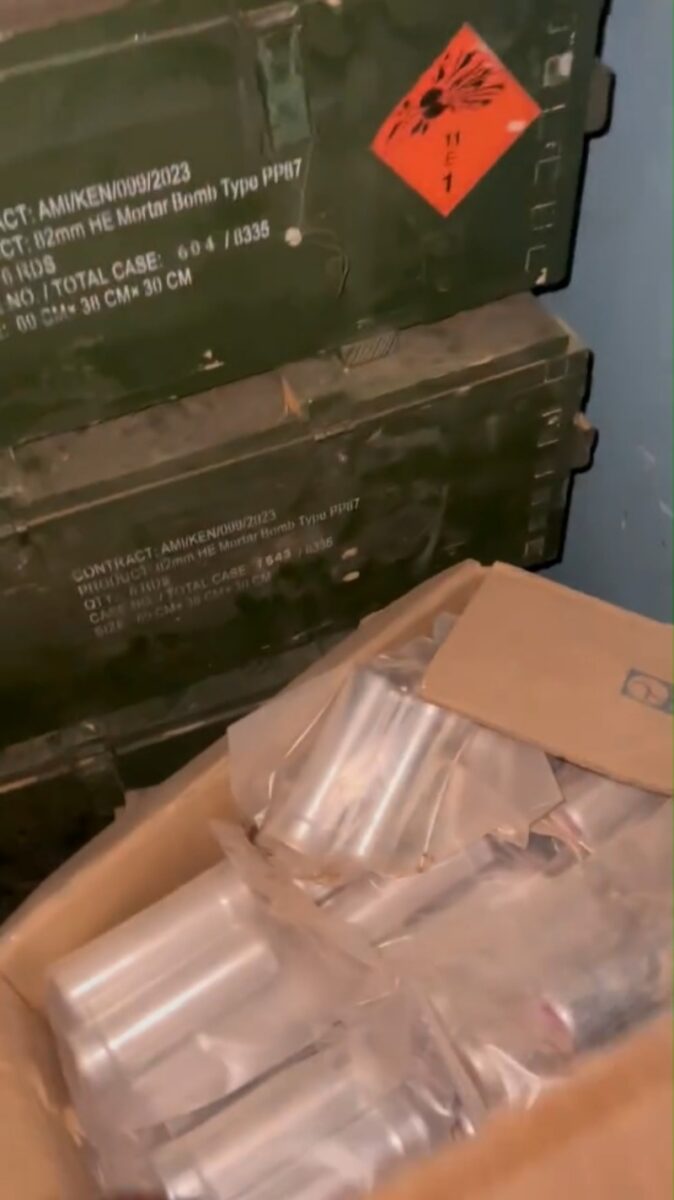
Two additional green crates are seen in one of the videos showing the Salha depot. The label on the Kenyan-labelled crate reads 82 mm HE Mortar Bomb Type PP87. Credit: X

According to weapons experts, the markings on the crate suggest the box and its contents were likely initially delivered to Kenyan authorities under contract AMI/KEN/099/2023.

Director of Chiron Resources, Chris Cobb-Smith told Bellingcat that the contract number on these crates indicates the Kenyan MOD purchased mortar bombs from China in 2023. He added that it would be impossible to say whether they were immediately diverted or not.

Human Rights Watch reported in 2024 that RSF appeared to be using this Chinese-made mortar ammunition. This video shows a man in RSF camouflage and another in civilian clothes unpacking 82mm HE Mortar Bomb Type PP87. HRW was unable to verify RSF claims that it captured this new mortar munition from the SAF. Amnesty International has also reported the use of this weapon in Sudan.
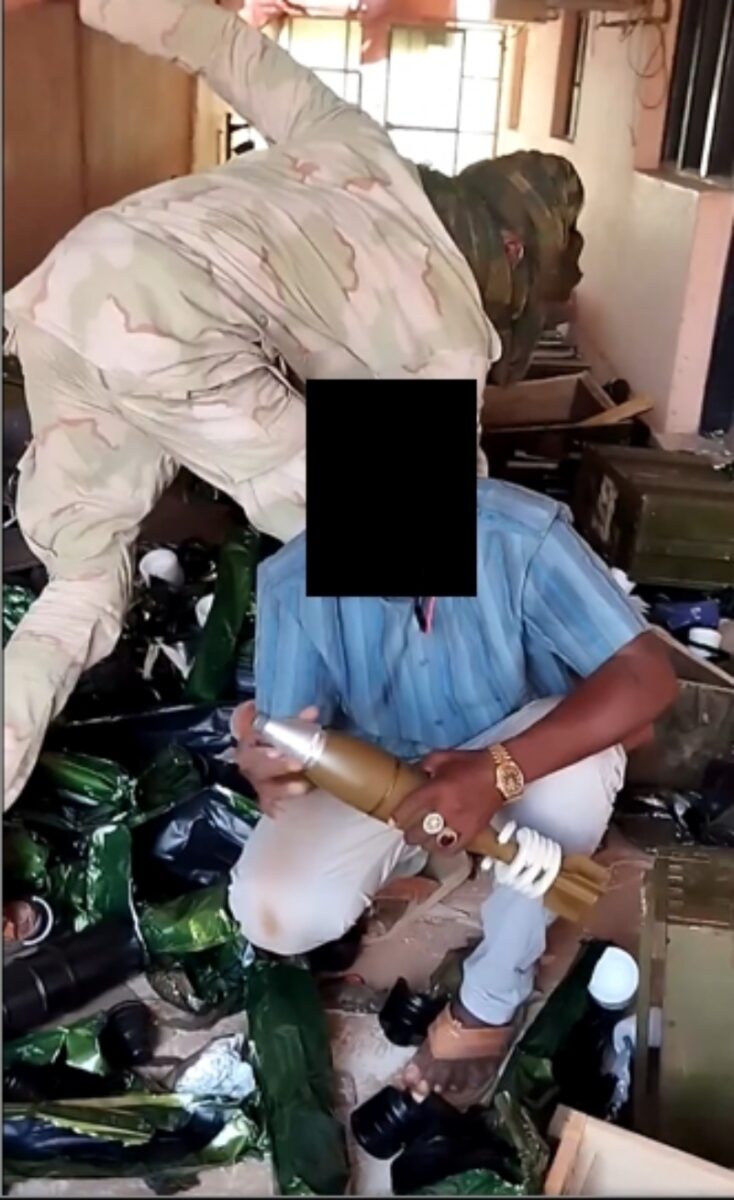
Still image of a video from June 2024 showing a man in RSF camouflage and another in civilian clothes unpacking 82mm HE Mortar Bomb Type PP87. Credit: X

We also found another sample of these bombs among other SAF-captured ammo displayed in early May in Khartoum. The Chinese-made bomb was photographed next to another Kenyan labelled crate stating it contained 7.62mm SMG (submachine guns or self-loaded rifles) TYPE CS/LR11- sold by the intermediary China Jing An Import & Export Corporation (CJAIE).

82mm HE Mortar Bomb Type PP87 photographed next to another Kenyan-labelled crate stating it contained: 7.62mm SMG TYPE CS/LR11 – a submachine gun or self-loaded rifle (SMG) sold by the intermediary China Jing An Import & Export Corporation (CJAIE). Credit: China Xinhua News, Facebook

There have been several reports identifying Chinese-made weapons in the arms of the RSF. In April, China’s charge d’affaires in Port Sudan was summoned by the Sudanese government over the RSF’s use of Chinese-made drones. China has stressed they have “nothing to do with the presence of these drones and has no connection with the RSF”. Earlier this month Sudanese media outlet Ayin used open sources to identify Chinese-made weapons in the hands of RSF fighters.

Chadian Labelled Crates

In a separate alleged capture of weapons and ammunition displayed by the SAF at the Engineering Corps building in Omdurman (15.609734, 32.480369), similar crates were seen but with the stencil label removed.
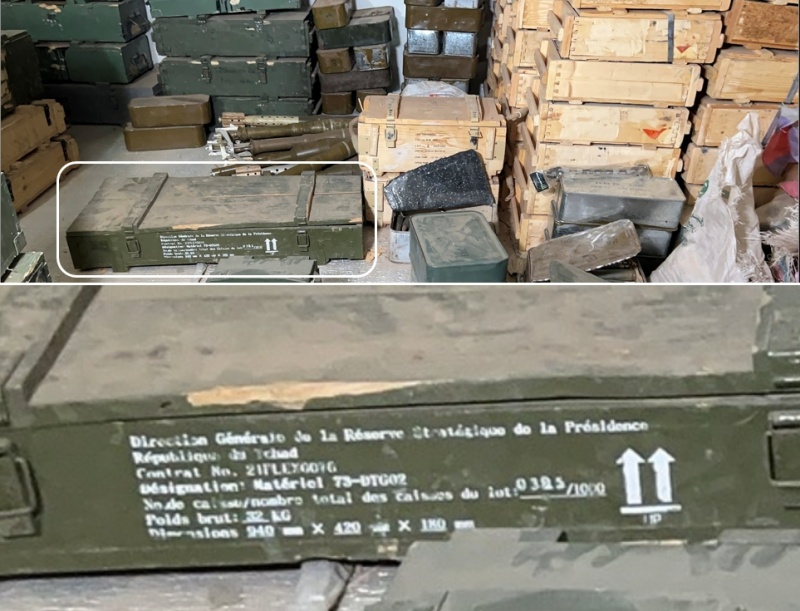
The Sudanese army displays weapons allegedly captured from Rapid Support Forces (RSF) in Omdurman in mid-May 2025. Source: Facebook

Next to the crates, a green box is seen with a stencil label that appears to read:

 “Direction Générale de la réserve Stratégique de la Présidence … République du Tchad”: General Directorate of Strategic Reserves (DGRS) of the Presidency… Republic of Chad.

The label on this box indicates a different designation  “73-DTG02”. According to the Collective Awareness to Unexploded Ordnance (CAT-UXO), this designation is believed to be a Chinese 73mm High-Explosive-Dual-Purpose (HEDP), High-Explosive-Anti-Tank (HEAT) with Anti-Personnel (AP) HE-Frag, fin-stabilised Rocket.

The UAE has been accused of supplying Sudan’s RSF via a Chad airstrip. Dozens of flights from the UAE appear to have used an airstrip at Amdjarass in eastern Chad since the war began in April 2023.

Weapons Continue to Fuel Suffering

The discovery of the Kenyan-labelled munitions crates is further evidence of Kenya’s political and logistical support to the RSF, Justin Lynch, Managing Director of Conflict Insights Group and Sudan researcher, told Bellingcat.

He said the UAE has used Kenya and other African states as a political and logistical hub to support the Rapid Support Forces.

“It seems hardly a coincidence that RSF public conferences in Nairobi were immediately followed by a $1.5 billion loan from the UAE and a surge in suspicious UAE-to-RSF shipments transiting through Kenya,” Lynch said.

Kenya is reported to draw down next week the first portion of $500 million from the $1.5 billion United Arab Emirates (UAE) – backed commercial loan.

Delegates affiliated to Sudan’s Rapid Support Forces (RSF) react during a meeting for the planned signing, later postponed, of a political charter that would provide for a “Government of Peace and Unity” to govern the territories the force controls in Nairobi, Kenya, February 18, 2025. REUTERS/Monicah Mwangi

Despite losing control of the beating heart of the country, the RSF still rules huge swathes of Sudan including Darfur in the country’s southwest where violence is causing one of the world’s worst humanitarian crises, according to the UN.

As long as the conflict continues, questions about who is providing weapons and support to the warring sides will remain.

This article has been updated to reflect new information.


Bellingcat would like to thank our partners at the Daily Nation Forensics Unit for collaborating on this investigation.

Pooja Chaudhuri, Youri van der Weide and Jake Godin contributed to this report.

Bellingcat is a non-profit and the ability to carry out our work is dependent on the kind support of individual donors. If you would like to support our work, you can do so here. You can also subscribe to our Patreon channel here. Subscribe to our Newsletter and follow us on Bluesky here and Mastodon here.

The post Kenyan Weapons Linked to Sudan’s Civil War appeared first on bellingcat.
What Audio Analysis Reveals About Aid Workers Killed in Gaza

On March 23, the Israel Defense Forces (IDF) announced an operation in southern Gaza’s Tal as-Sultan neighborhood and urged civilians to evacuate using a road north to a humanitarian zone. Hours before the statement was shared online, a rescue convoy was traveling along that same road before all contact was lost. The convoy was made up of aid workers from the Palestine Red Crescent Society (PRCS), Palestine Civil Defense and the United Nations. 

At least four vehicles, clearly marked by their emergency flashing lights, were present and had stopped beside another vehicle that was located just off the road when the shooting started.

An almost seven-minute video, recovered from a phone on one of the bodies of the deceased and released by the PRCS recorded what happened next. Although much of the footage is dark, the audio provides some clues about events that unfolded. An extended 20-minute version of the original seven-minute video has since been released by the PRCS on April 8. 

Bellingcat conducted a preliminary analysis of the recording and broke down the audio. We then consulted two audio forensic experts who confirmed the total shots fired numbered in the hundreds. 

The majority of gunshots heard during the shooting appear to feature supersonic shockwaves, which seems to indicate bullets travelled toward the recording microphone held by the aid worker. The audio evidence also appears to confirm that the first shots were aimed at the medics’ convoy from a distance of approximately 40 to 45 metres. 

Following the incident, IDF spokesperson Lieutenant Colonel Nadav Shoshani initially denied the PRCS ambulances were randomly fired upon and claimed the vehicles were “advancing suspiciously toward IDF troops without headlights or emergency signals.” Following this, troops opened fire on the vehicles. 

However, after the emergence of the seven-minute video recorded by one of the PRCS members — first reported by The New York Times and then released by the PRCS — which showed the vehicles had their emergency lights and headlights on, the IDF released another statement on April 7. This outlined that, following a preliminary inquiry into the incident, the Chief of the General Staff had instructed that a more in-depth investigation would be carried out by the General Staff investigation mechanism. This process is typically enacted by the IDF to determine whether a criminal investigation should be opened into an incident. 

A video shared by the United Nations on March 30 showed bodies clad in emergency vests as they were retrieved from a shallow grave. The remains of emergency vehicles were also retrieved.  

Geolocating the Seven-Minute Video 

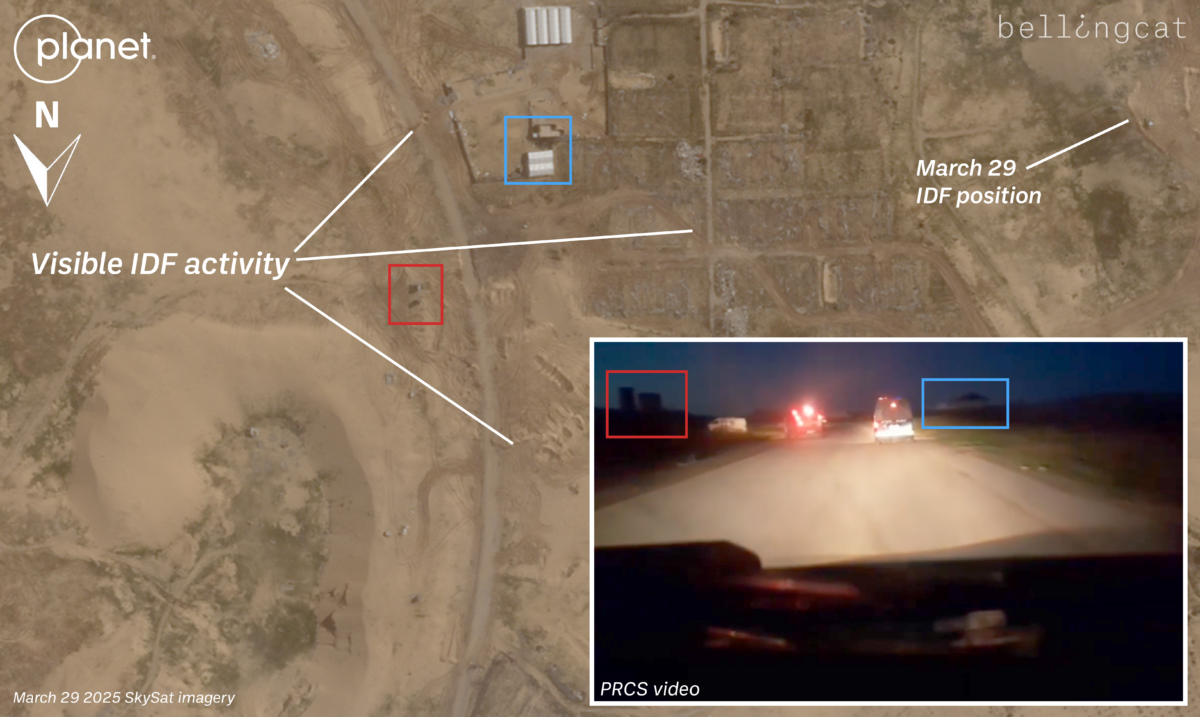
We were able to confirm where the footage was filmed using two large concrete structures silhouetted on the horizon to the left of the road (highlighted below in red). There are also newer temporary structures visible on the right hand side of the road (highlighted in blue). We matched these identifiers from the video with more recent SkySat imagery from Planet Labs, finding they lined up with an area on Gush Katif Road just north of Tal as-Sultan.

Satellite imagery from Planet Labs shows the location of the shooting of the aid worker convoy near Tal as-Sultan on March 23, 2025. The satellite image, captured on March 29, shows matching features visible in the video, as well as tracks and moved earth, showing IDF activity in the area. Credit: PlanetLabs and PRCS.

Using the chronolocation tool SunCalc, Bellingcat was also able to confirm the video was filmed in the early hours of the morning — something also confirmed by The New York Times. The video shows sunlight on the horizon to the east, and computing the sunlight for March 23 at 5:00am local time for this location shows that the sun would be in around the same position. 

Breaking Down the Audio

Bellingcat has previously used audio forensic analysis to investigate the killing of journalists Shireen Abu Akleh and Abelardo Liz and has compared the sound of live rounds against witness testimonies and official statements.

Most rifle ammunition available today is faster than the speed of sound (supersonic). The muzzle velocities of bullets fired by such rifles are typically in the range of 650 to 1,000 metres per second (m/s).

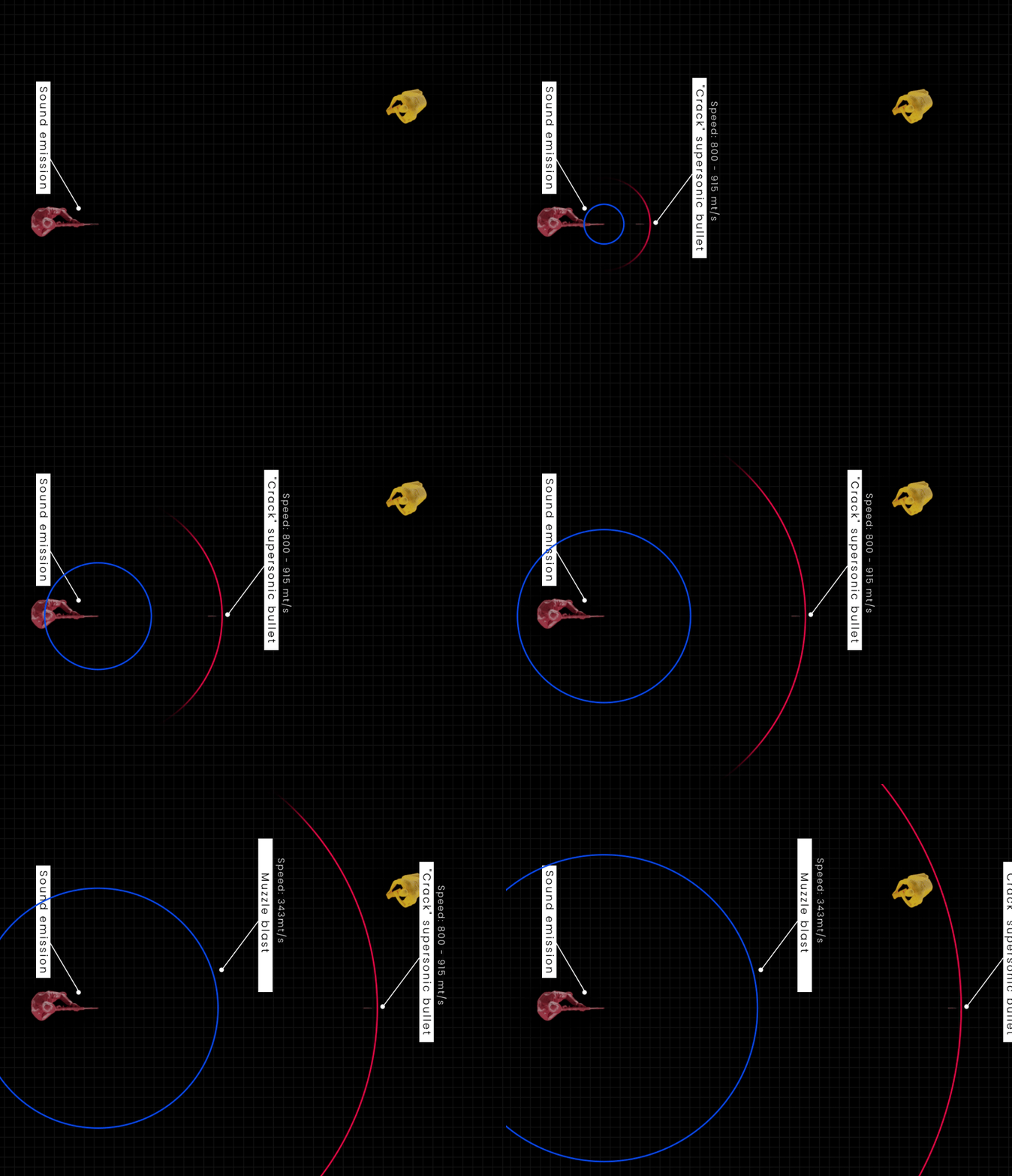
When supersonic rounds are fired, the first thing heard by a person — or camera —  in the line of fire is the shockwave (crack sound) caused by the passing bullet, followed by the respective muzzle blast (bang sound) which travels much slower at the speed of sound. There is a time gap or delay between both since the bullet travels faster than the bang. Watch our video from a previous investigation for a more detailed explanation.

Gif showing the time gap between a bullet travelling at supersonic speed (crack sound)  followed by the muzzle blast (bang) travelling much slower at the speed of sound. Credit: Diego Forero/Cerosetenta.

We noted that the first minute of the seven-minute video recording released by the PRCS shows the vehicles driving along the road and no gunfire can be heard. 

The shooting recorded in the video begins at approximately 1:17, with a series of rapid gunshots featuring what appears to be shockwaves (cracks).

How Many Shots were Fired?

We counted approximately 150 of these crack sounds during the first 30 seconds of the shooting. However, this estimate likely includes not only primary gunshot shockwaves but also some echoes and reflections, which are difficult to differentiate as the highly overlapped series evolved.

Audio forensic experts Dr Robert Maher, Professor of Electrical and Computer Engineering at the State University of Montana, and Steven Beck of Beck Audio Forensics told Bellingcat there were likely hundreds of gunshots fired during the approximately five minute incident. 

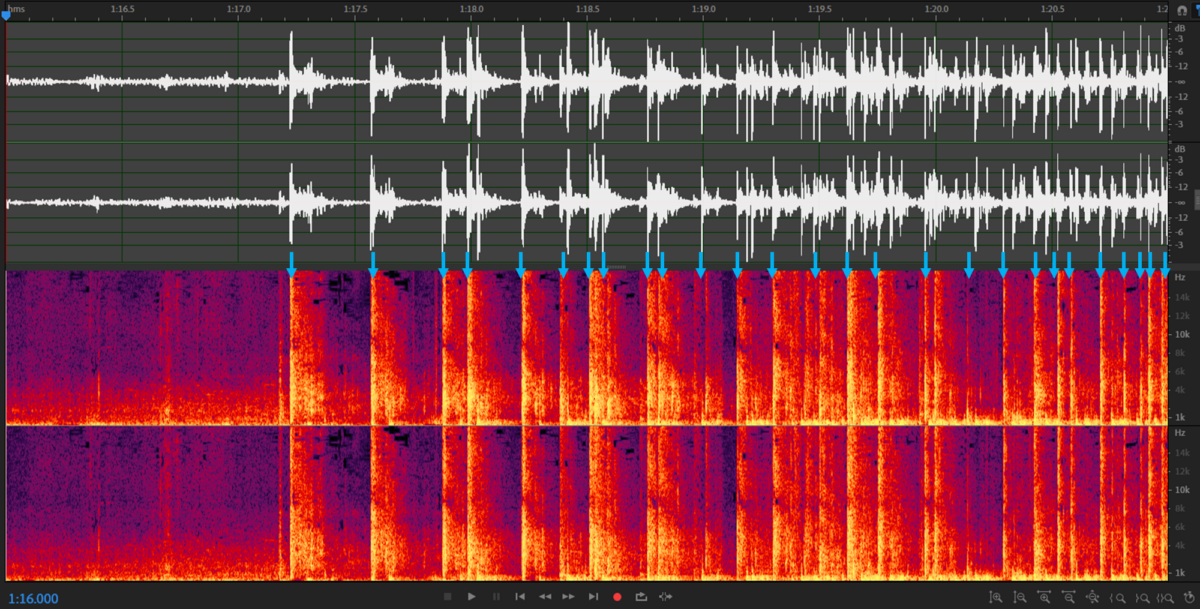
Dr Maher told us that 27 of these gunshots appeared to occur in the first three seconds of the shooting alone.

A spectrogram of the first three seconds of the shooting, showing that 27 gunshots were fired in this period. Courtesy of: Dr Robert Maher.

The Shooters 

The majority of gunshots heard during the shooting appear to feature supersonic shockwaves. Dr Maher explains that the audible gunshots have the “crack-bang” characteristic, indicating bullets were traveling generally toward the recording microphone, which on this occasion was held by the aid worker.

Bellingcat noticed there were different time gaps between crack sounds and the respective muzzle blasts in the audio. We shared instances of these gunshots with the experts to calculate the distance to the shooters during those moments.

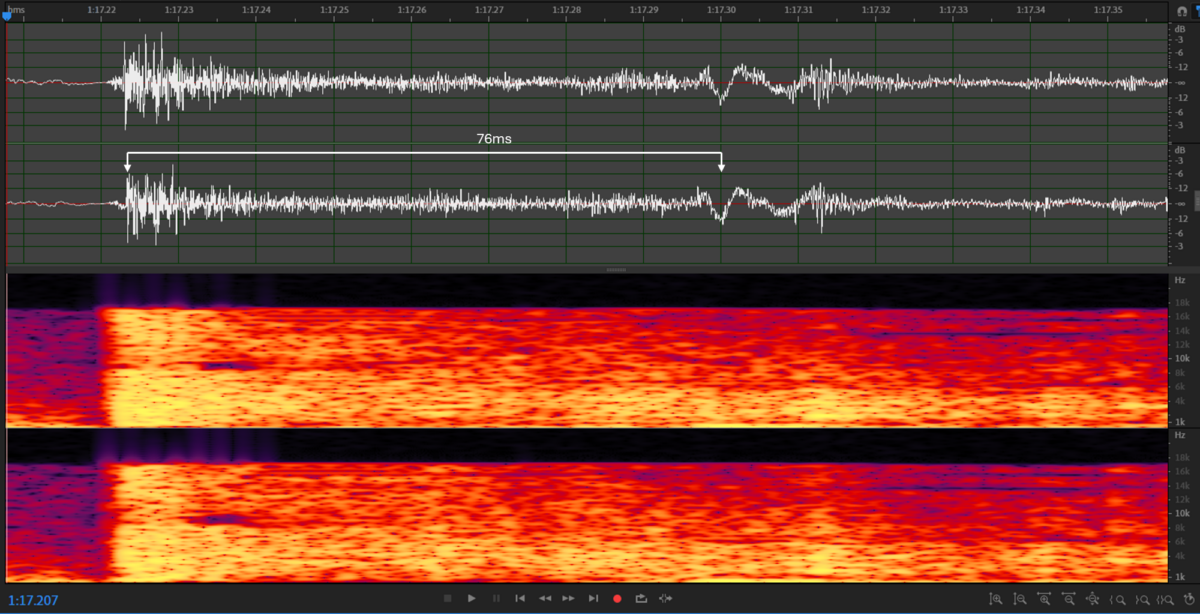
Dr Maher measured the crack-muzzle blast timing of the first gunshots to be about 76 or 77 milliseconds and that the firearm appears to have been about 45 metres from the microphone. Steven Beck estimated the distance to be 40 metres. According to Beck there appeared to be at least three shooters at the start of the shooting. Both experts assumed a bullet speed of 800-1000 m/s respectively for their calculations.  

These distances are consistent with one eyewitness, who, according to The New York Times, was being held nearby by the IDF at the time. He was quoted as saying that Israeli soldiers opened heavy fire on the aid workers from a distance of approximately 50 metres. 

A spectrogram of the first seconds of shooting, showing the time gap between the supersonic shockwave and the respective muzzle blast. This time gap is used by audio forensic experts to calculate the approximate distance between the camera and the shooter. Courtesy of: Dr Robert Maher.

In a later sequence at minute 4:10 in the seven-minute footage, there is a five-shot sequence with various apparent shock waves and muzzle blasts. Both audio forensic experts found the timing between these sounds to be about 50 milliseconds, suggesting a distance of 30 metres.

In other instances towards the end of the video, the timing between the cracks and the muzzle blasts appears to be narrower (42 and 20 milliseconds), meaning these weapons were likely closer to the aid workers’ convoy.

Dr Maher indicated that given the vast number of gunshots, it seems there were likely multiple shooters involved over a range of distances. 

Without any visual evidence, it is not clear if the shooters were getting closer to the aid convoy as they fired. It’s also not possible to rule out an exchange of gunfire due to the high number of shots and overlapping sounds. However, details from the audio indicate that on at least two occasions the shooting heard was initiated by gunmen who were firing in the direction of the convoy as opposed to firing from the convoy.

Shooting Patterns and Weapons Used

The shooting, heard in the recording, lasted approximately five minutes and included several intervals of heavy and intermittent fire as well as some pauses. 

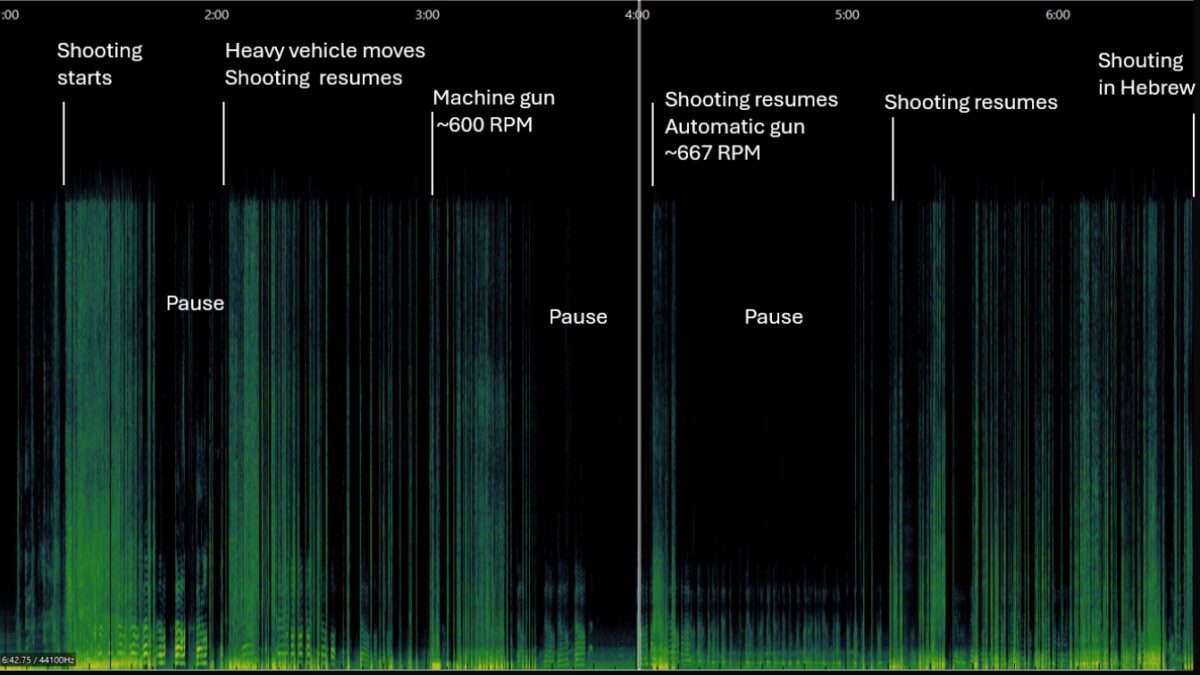
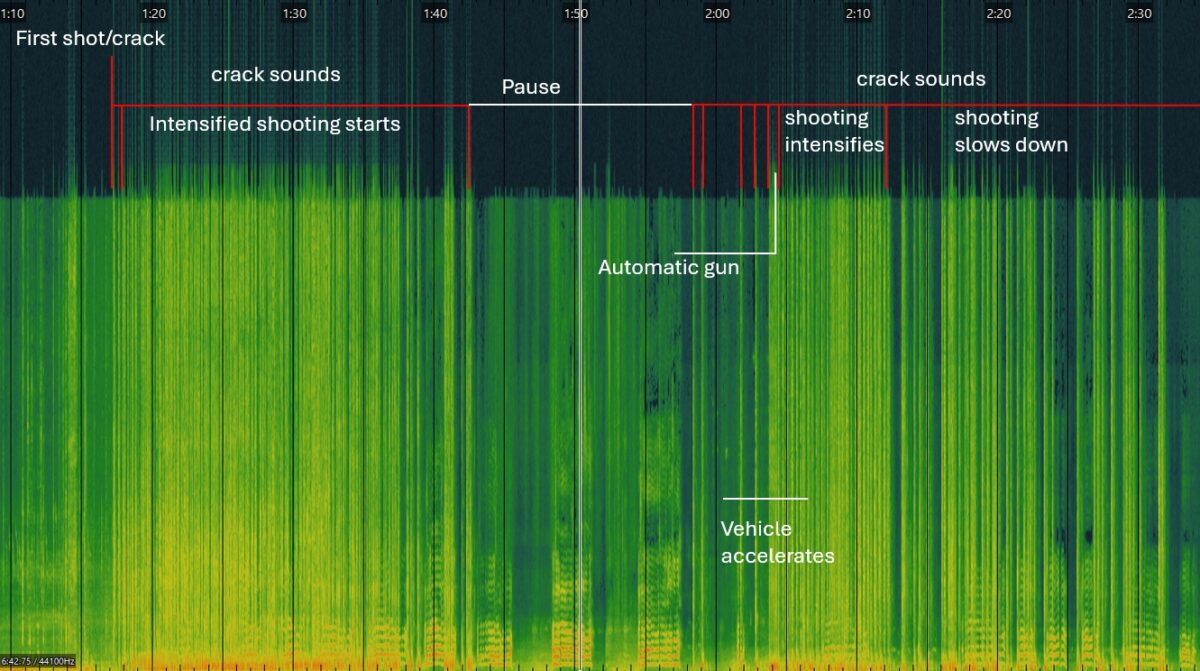
A spectrogram showing the entire five-minute shooting. There were at least three pause intervals, after which the gunfire appeared to resume with gunshots featuring supersonic shockwaves.

After the initial intense burst of gunfire, there is a pause lasting about 15 seconds. You can hear this at 1:43 in the recording. At approximately 1:58 the shooting resumed. Again, the gunshots appear to feature crack sounds, and at least one ricochet, which seems to indicate that bullets were likely shot in the direction of the aid workers’ convoy.

A spectrogram of the first minutes of shooting, showing the start of the shooting at 1:17, followed by a pause of 20 seconds, and at 1:58 the shooting resumes, featuring supersonic shockwaves or ‘crack’ sounds. The presence of these cracks appears to indicate bullets were passing by the aid workers. 

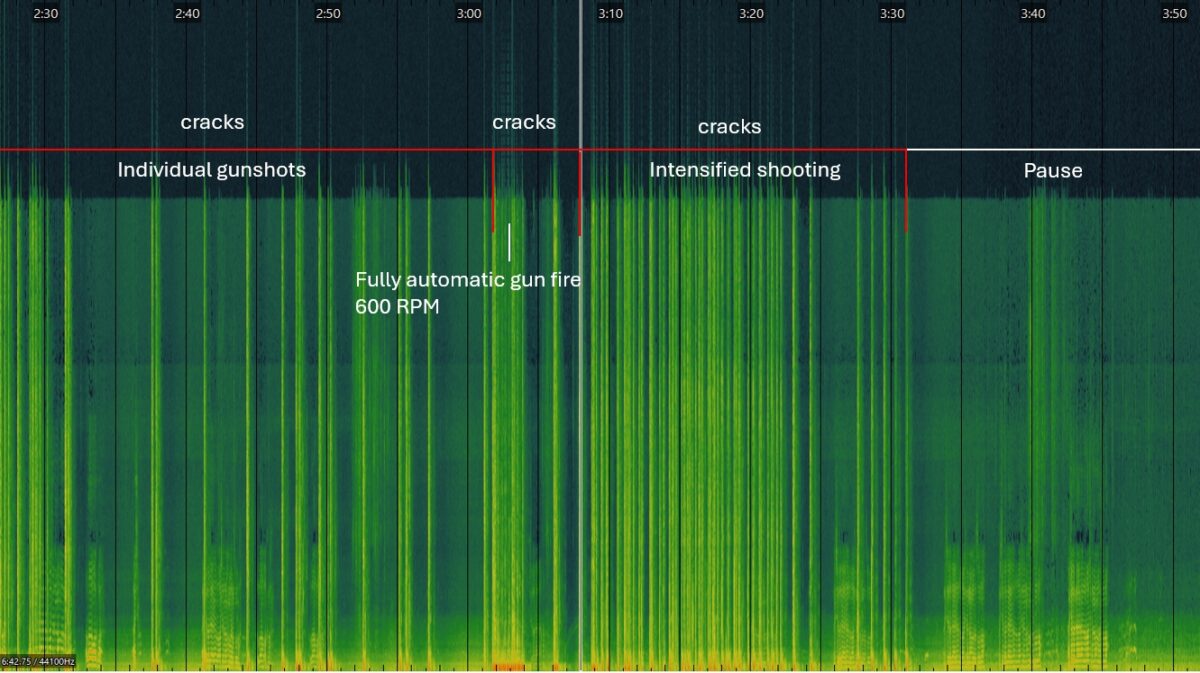
Between 2:35 and 2:57 there appear to be 14 gunshots from a firearm, also featuring very consistent ballistic shockwaves, which, according to Beck, all are from about the same distance of approximately 40 metres from the convoy.  

Right after this, at 3:01, a more rapid burst of gunfire is heard.  Both experts estimated this to be consistent with a machine gun firing at 600 rounds per minute (22 shots in 2 seconds) and featuring supersonic shockwaves. We identified another potential automatic gun resuming fire towards the convoy after a pause at 4:05.

A spectrogram showing a section of the shooting between 2:30 and 3:50. After a series of 14 gunshots fired towards the aid workers’ convoy, a fully automatic gun is then heard firing at 600 RPM towards their location.

Our analysis shows that even after brief pauses in the shooting, it resumed several times over the course of approximately five minutes. It is not clear from the available data why the shooting continued for such a sustained period and seems to have included the use of machine guns. 

IDF Response

Bellingcat asked the IDF if there was any evidence that anyone in the convoy was armed or returned fire during the incident and whether they believed their response in this case was proportional to the threat posed.

In response, the IDF told Bellingcat the incident is still under examination. On Monday, April 7, the IDF released a statement saying that following a preliminary inquiry into the incident the Chief of the General Staff has instructed that a more in-depth investigation would be carried out by the General Staff investigation mechanism.

This process is typically enacted by the IDF to determine whether a criminal investigation should be opened into the incident. 

The IDF’s statement on Monday outlined that the “preliminary inquiry indicated that the troops opened fire due to a perceived threat following a previous encounter in the area.” Adding that six of the people killed were identified as Hamas members. Though the IDF did not provide evidence to support this. 

“All the claims raised regarding the incident will be examined through the mechanism and presented in a detailed and thorough manner for a decision on how to handle the event,” they said.

The claim that any of the workers were militants has been denied by a survivor of an earlier attack PRCS paramedic Munther Abed, who said the entire crew was civilian. 

The Palestine Red Crescent has called for an independent investigation into the incident.

Protection of Medics Under International Law

Though only a preliminary analysis of the audio from one recording at the scene, this evidence indicates that a huge number of shots were fired towards the aid workers, who were clearly marked. Audio experts also suggested there were multiple shooters involved.

We presented the available evidence to Morris Tidball-Binz, UN Special Rapporteur on extrajudicial, summary or arbitrary executions who told us: 

“The arbitrary killing of health workers amounts to a grave violation of international human rights law (i.e. the absolute and inderogabile prohibition of arbitrary killings); a grave breach of International Humanitarian Law and of international criminal law; and it amounts to the war crime of willful killing and of intentional attack against protected medical personnel and transport carrying an emblem of the Geneva Convention.”

He told us the incident must be thoroughly investigated, and a failure to do so may constitute a violation of the right to life under international law.


Bellingcat is a non-profit and the ability to carry out our work is dependent on the kind support of individual donors. If you would like to support our work, you can do so here. You can also subscribe to our Patreon channel here. Subscribe to our Newsletter and follow us on Bluesky here and Mastodon here.

The post What Audio Analysis Reveals About Aid Workers Killed in Gaza appeared first on bellingcat.

US Border Patrol Called Raid 300 Miles From Border ‘Targeted’. Open Source Evidence Suggests Otherwise

In early January, agents from the El Centro division of US Customs and Border Protection (CBP) descended on the central Californian city of Bakersfield and the surrounding Kern County as part of “Operation Return to Sender”. The unit said the mission was highly targeted and aimed to apprehend immigrants with criminal records. 

Yet exactly how targeted the mission was has become a point of significant tension, with rights and labour groups claiming it was anything but.

El Centro sector, which is based in the southern United States border city of the same name, said the operation resulted in the arrest of 78 people. Most were Mexican nationals and many had lived in the US for decades. According to a lawsuit, 40 people were deported after the operation. Some were removed from the US within days of being arrested.

The raids – which saw officers operating at gas stations, a Latino shopping market and during traffic stops – shocked many in Bakersfield. They were also unique given they were carried out by CBP officers, rather than by Immigration and Customs Enforcement (ICE), many hundreds of miles from the southern border. 

Bellingcat worked with our partners at Evident and CalMatters, two US-based nonprofit newsrooms, to build a picture of the raids from available social media footage. We analysed close to 90 videos and geolocated just over 50 of them, highlighting 24 unique spots where CBP units were operating during the mission.

Evident and CalMatters also visited El Centro and spoke to border agents, including the unit’s leader.

While they claimed to have a targeted list of people they wanted to arrest, CBP documents obtained by Evident and CalMatters appear to reveal that there was no prior knowledge of criminal or immigration history for 77 of the 78 people arrested. Only one had been flagged for prior removal, suggesting that the rest had been captured after chance encounters or stops by border agents. 

Gregory Bovino, the head of the El Centro CBP sector, said that any immigrants that agents encounter during the course of their work can expect to be arrested given they have already broken the law simply by entering the US.

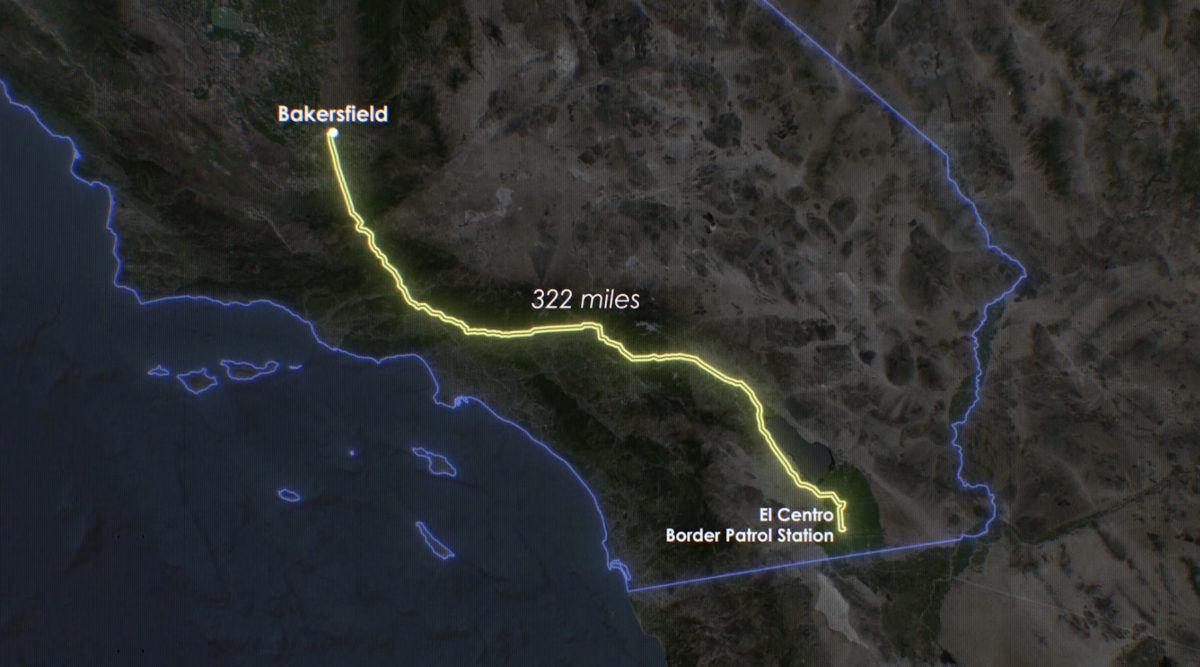
CBP units conducting an operation so far in land (more than 320 miles from El Centro and the border with Mexico as well as over 100 miles of the California coast) was also something that Bovino suggested could continue further north in California.

Graphic Credit: Evident/Jennifer Smart

But groups like the Americans for Civil Liberties Union (ACLU) have vowed to fight such tactics, telling Evident and CalMatters that they are a violation of constitutional rights and an overreach by CBP.

Bree Bernwanger, Senior Staff Attorney at the ACLU for northern California said that there is some authority for CBP to make immigration arrests. But Bernwagner added that the incidents in Bakersfield and the surrounding area were not “rooted in law”. 

“There’s a limit on their ability to arrest people without a warrant. They have to figure out if they’re a flight risk first. That means asking them about their community ties. It means trying to figure out are they going to escape, or are they just going to go home and live with their families,” Bernwagner said.

The ACLU has since asked for a temporary injunction to halt CBP units using such tactics.

But for those deported in the Bakersfield operation, it is already too late.

“Their families, their homes are left behind, and the community is devastated. That is not public safety”, Bernwanger said.

Watch the full Evident documentary here and read CalMatters’ version of the story here.


Sergio Olmos and Wendy Fry reported this story for CalMatters. Kevin Clancy reported for Evident.

Bellingcat is a non-profit and the ability to carry out our work is dependent on the kind support of individual donors. If you would like to support our work, you can do so here. You can also subscribe to our Patreon channel here. Subscribe to our Newsletter and follow us on Bluesky here, Instagram here and YouTube here.

The post US Border Patrol Called Raid 300 Miles From Border ‘Targeted’. Open Source Evidence Suggests Otherwise appeared first on bellingcat.

❌