The Norway social media age limit is moving closer to becoming law, with the government confirming it will introduce legislation this year to restrict access for children under 16. The proposal, expected to be presented to Parliament (Stortinget), aims to reshape how young users interact with digital platforms and place greater responsibility on technology companies for enforcing age restrictions.
Prime Minister Jonas Gahr Støre said the move is designed to protect childhood experiences from being dominated by screens and algorithms.
He emphasized that children should have space for play, friendships, and offline development, positioning the Norway social media age limit as a safeguard rather than a restriction.
How the Norway Social Media Age Limit Will Work
Under the proposed law, the Norway social media age limit will apply from January 1 of the year a child turns 16. This means access will be granted based on birth year rather than exact birthdate, ensuring that entire school cohorts are treated equally. In practice, most children will be at least 15 years old when they gain access.
Minister for Children and Families Lene Vågslid explained that this approach addresses concerns raised during public consultations. Many respondents argued that differences based on birthdates could create social divides among peers. By aligning access with school cohorts, the government aims to balance protection with inclusion.
“For me, it is important both to give better protection for children in the digital world and to listen to what young people are saying. I understand that social media can be an important social arena. We want to ensure inclusion and a sense of community. That is why we are proposing that the cutoff be based on the year of birth rather than the exact birth date, so that cohorts are given equal opportunities, regardless of when each person is born,” said Minister for Children and Families Lene Vågslid (Labour).
At the same time, officials acknowledge that social media plays a role in young people’s social lives. The policy attempts to maintain that balance while reducing early exposure to potential harms linked to excessive screen time and online interactions.
Tech Companies to Enforce the Norway Social Media Age Limit
A key feature of the Norway social media age limit is the shift in responsibility to technology companies. Platforms will be required to implement effective age verification systems at login, ensuring that underage users cannot bypass restrictions.
Minister of Digitalisation and Public Governance Karianne Tung made it clear that enforcement will not rely on children or parents alone. She stated that companies must take full responsibility for compliance and ensure that safeguards are operational from the first day the law takes effect.
“I expect technology companies to ensure that the age limit is respected. Children cannot be left with the responsibility for staying away from platforms they are not allowed to use. That responsibility rests with the companies providing these services. They must implement effective age verification and comply with the law from day one,” said Minister of Digitalisation and Public Governance Karianne Tung (Labour).
This approach aligns with broader European regulatory trends, particularly the Digital Services Act, which is expected to require platforms to take stronger accountability for user safety, including age verification measures.
Part of a Wider European Push
Norway is among the first countries in Europe to move forward with a nationwide social media restriction of this kind. However, it is not acting in isolation. Several European governments are exploring or advancing similar policies.
In France, lawmakers have already backed a proposal to restrict social media use for children under 15, with strong support from President Emmanuel Macron. Spain has also announced plans to block access for users aged 15 and under, while the Netherlands is considering a minimum age of 15.
In the United Kingdom, Prime Minister Keir Starmer has supported tighter controls, with pilot programs underway to assess the impact of limiting social media use among teenagers.
These developments suggest that the Norway social media age limit is part of a broader shift across Europe toward stricter regulation of digital platforms and greater protection for minors.
Implementation Timeline and Next Steps
The Norwegian government plans to send the proposed legislation for consultation within the European Economic Area before the summer. This process typically lasts around three months. Full enforcement of the Norway social media age limit is expected once the Digital Services Act is incorporated into Norwegian law.
Officials say recent trends support the move. Data indicates a decline in the number of children owning smartphones and using social media, partly due to national screen-time guidelines and initiatives such as mobile-free schools.
The government intends to implement the policy in stages, but it has made clear that service providers are expected to begin compliance preparations immediately.
A Shift in Digital Policy
The Norway social media age limit reflects growing concern among policymakers about the impact of digital platforms on children’s mental health, privacy, and development. By placing legal responsibility on technology companies and aligning with European regulation, Norway is positioning itself at the forefront of this policy shift.
As similar measures gain traction across Europe, the effectiveness of age verification and enforcement will be closely watched.
The Norwegian model could become a reference point for other countries seeking to balance digital access with child protection.
A landmark jury verdict has found Meta and YouTube negligent in a social media addiction case, raising major questions about platform accountability and legal protections under Section 230. This episode covers the details of the case, why the ruling is significant, and what it could mean for the future of social media, privacy, and cybersecurity. […]
As strikes continue on Iran’s nuclear facilities, the real danger isn’t the explosion, but what happens if critical safety systems fail—and how that risk could spread across the Gulf.
In episode 84 of The AI Fix, Graham and Mark stare straight into the digital abyss and ask the most important question of our age: "Is AI just a hungry ghost trapped in a jar?"
Also this week, we explore how a shadowy group of disgruntled insiders trying to destroy AI by poisoning its training data, how "vibe-coding" has stopped being a joke with even Linus Torvalds joining in, how Google’s AI health advice could have endangered lives, and why simply asking an AI the same question twice can turn it from clueless to near-omniscient.
Oh, and AI has managed to crack some famously unsolved maths problems in minutes, and Grok gains access to all of the Pentagon's networks? What could possibly go wrong?
All this and much more is discussed in the latest edition of "The AI Fix" podcast by Graham Cluley and Mark Stockley.
In episode 83 of The AI Fix, Graham reveals he's taken up lying to LLMs, and shows how a journalist exposed AI bluffers with a made-up idiom. Meanwhile Mark invents a "Godwin's Law" for AI, and explains how to ruin any LLM with humus.
Also in this episode, a marriage is declared invalid thanks to ChatGPT, an AI barman looks for a job in a quiet pub, OpenAI finally unveils ChatGPT Health, and why news of the death of Stack Overflow may be greatly exaggerated.
All this and much more is discussed in the latest edition of "The AI Fix" podcast by Graham Cluley and Mark Stockley.
How comfortable are you with sharing your medical history with an AI?
I’m certainly not.
OpenAI’s announcement about its new ChatGPT Health program prompted discussions about data privacy and how the company plans to keep the information users submit safe.
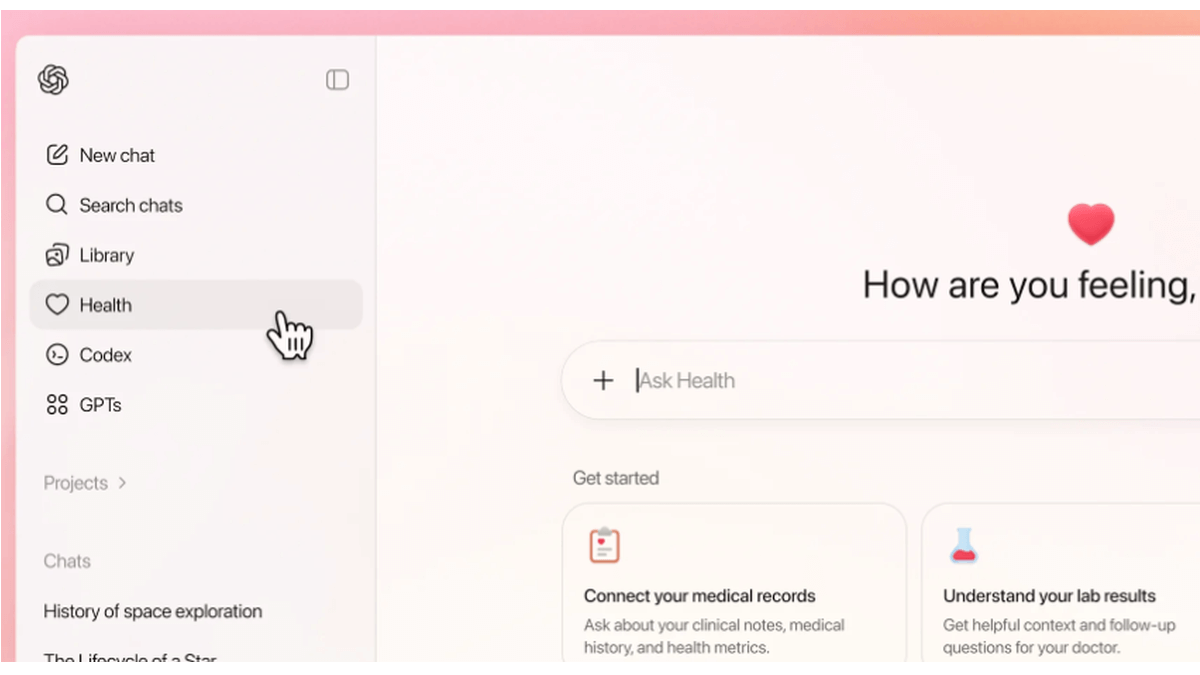
ChatGPT Health is a dedicated “health space” inside ChatGPT that lets users connect their medical records and wellness apps so the model can answer health and wellness questions in a more personalized way.
OpenAI promises additional, layered protections designed specifically for health, “to keep health conversations protected and compartmentalized.”
First off, it’s important to understand that this is not a diagnostic or treatment system. It’s framed as a support tool to help understand health information and prepare for care.
But this is the part that raised questions and concerns:
“You can securely connect medical records and wellness apps to ground conversations in your own health information, so responses are more relevant and useful to you.”
In other words, ChatGPT Health lets you link medical records and apps such as Apple Health, MyFitnessPal, and others so the system can explain lab results, track trends (e.g., cholesterol), and help you prepare questions for clinicians or compare insurance options based on your health data.
Given our reservations about the state of AI security in general and chatbots in particular, this is a line that I don’t dare cross. For now, however, I don’t even have the option, since only users with ChatGPT Free, Go, Plus, and Pro plans outside of the European Economic Area, Switzerland, and the United Kingdom can sign up for the waitlist.
OpenAI only uses partners and apps in ChatGPT Health that meet OpenAI’s privacy and security requirements, which, by design, shifts a great deal of trust onto ChatGPT Health itself.
Users should realize that health information is very sensitive and as Sara Geoghegan, senior counsel at the Electronic Privacy Information Center told The Record: by sharing their electronic medical records with ChatGPT Health, users in the US could effectively remove the HIPAA protection from those records, which is a serious consideration for anyone sharing medical data.
She added:
“ChatGPT is only bound by its own disclosures and promises, so without any meaningful limitation on that, like regulation or a law, ChatGPT can change the terms of its service at any time.”
Should you decide to try this new feature out, we would advise you to proceed with caution and take the advice to enable 2FA for ChatGPT to heart. OpenAI claims 230 million users already ask ChatGPT health and wellness questions each week. I’d encourage them to do the same.
We don’t just report on data privacy—we help you remove your personal information
Cybersecurity risks should never spread beyond a headline. With Malwarebytes Personal Data Remover, you can scan to find out which sites are exposing your personal information, and then delete that sensitive data from the internet.
Think your Kindle is harmless? Think again! In this episode, we unpack a Black Hat Europe talk revealing how a boobytrapped audiobook could exploit the Amazon eBook reader - potentially letting an attacker break into your account and seize control of your credit card.
Plus a blast from 2021's "summer of ransomware" returns to haunt Ireland's Health Service Executive, as victims are offered €750 each.
And because it's the last show before the Christmas break, there's also a Pick of the Week that veers from cosy rom-com comfort to pointy-polygon nostalgia.
All this and much more is discussed in the latest edition of the award-winning "Smashing Security" podcast with computer security veteran Graham Cluley, joined this week by special guest Danny Palmer.
Gathering data used to be a fringe pursuit of Silicon Valley nerds. Now we’re all at it, recording everything from menstrual cycles and mobility to toothbrushing and time spent in daylight. Is this just narcissism redesigned for the big tech age?
I first heard about my friend Adam’s curious new habit in a busy pub. He said he’d been doing it for over a year, but had never spoken to anyone about it before. He had a furtive look around, then took out his phone and showed me the product of his burning obsession: a spreadsheet.
This was not a record of his annual tax return or numbers he was crunching for work (Adam is a data scientist). Instead, it was a spreadsheet recording the minutiae of his life, with dozens of columns tracking every element of his daily routine. It all started, he told me, because of a recurring argument with his boyfriend. His partner didn’t think they spent enough time together, but Adam thought that they did. There was only one way to settle this, he decided: cold, hard data. So he began keeping a note of the days they saw each other and the days they didn’t.

 Entrar