Researchers have documented a long‑running campaign that uses fake CAPTCHA pages to trick mobile users into sending dozens of international SMS messages in the background.
If you’ve spent any time on today’s web, CAPTCHAs may seem like background noise: click a few traffic lights, prove you’re human, move on. Something scammers have learned to abuse in ClickFix campaigns where they lure victims into infecting their own machines.
Recently, though, researchers found a twist where “prove you’re human” quietly turns into “run up an international phone bill.” The research describes an International Revenue Share Fraud (IRSF) campaign. IRSF, also known as SMS pumping fraud, abuses the complex pricing structures of international calls and SMS traffic to generate revenue by inflating message volume to particular destinations.
Instead of installing malware on the victim’s device, the scam exploits how telecom billing and affiliate networks work, turning ordinary web traffic into premium SMS revenue for cybercriminals.
How it works
A typical flow for the scam looks like this:
Victims arrive via malvertising or TDS redirects, often from typosquatted telecom domains, onto a page that looks like a basic image‑selection or quiz CAPTCHA.
To “continue,” they’re prompted to tap a button that opens their SMS app with a prefilled message and recipient list.
This isn’t one SMS to one number. The fake CAPTCHA runs through multiple steps, and each message is preconfigured with more than a dozen international numbers across 17 countries known for high termination fees, including Azerbaijan, Myanmar, and Egypt.
On a typical consumer plan, that can translate to roughly $30 in international SMS charges per person, with a slice of the termination fees flowing back to the attacker via revenue‑sharing agreements.
To keep you from simply backing out, the pages deploy dedicated back‑button hijacking. JavaScript rewrites browser history and bounces you back to the scam when you try to leave. The researchers also found the campaign was plugged into a Click2SMS‑style affiliate network that advertises “all kinds of traffic allowed” and carrier billing, effectively packaging IRSF as another monetization option for shady publishers.
This operation defrauds both individuals and telecom carriers. Victims face unexpected premium SMS charges on their bills and may struggle to trace the cause. Carriers pay revenue shares to the perpetrators and may absorb losses from customer disputes or chargebacks.
Never send an SMS to “prove you’re human.” Legitimate CAPTCHAs run entirely in your browser. They won’t open your SMS or dialer app.
Check your mobile bill regularly for small, unfamiliar international SMS charges, not just big spikes. If you see anything suspicious, dispute it quickly and ask your provider to block international or premium SMS if you don’t need it.
Use a mobile protection app that blocks known malicious sites, like these domains involved in this campaign:
sweeffg[.]online
colnsdital[.]com
zawsterris[.]com
megaplaylive[.]com
ruelomamuy[.]com
Malwarebytes blocks ruelomamuy[.]com
Scammers know more about you than you think.
Malwarebytes Mobile Security protects you from phishing, scam texts, malicious sites, and more. With real-time AI-powered Scam Guard built right in.
Research from Infoblox reveals a massive Click2SMS fraud scheme using fake CAPTCHAs and back button hijacking to trick victims into sending costly international texts.
Baseline coding agents didn’t fare too well against purpose-built AI security agents in detecting flaws in DeFi contracts underscoring that organizations must not rely on audits and must press AI into use for detecting vulnerabilities.
In August 2025, we discovered a campaign targeting individuals in Turkey with a new Android banking Trojan we dubbed “Frogblight”. Initially, the malware was disguised as an app for accessing court case files via an official government webpage. Later, more universal disguises appeared, such as the Chrome browser.
Frogblight can use official government websites as an intermediary step to steal banking credentials. Moreover, it has spyware functionality, such as capabilities to collect SMS messages, a list of installed apps on the device and device filesystem information. It can also send arbitrary SMS messages.
Another interesting characteristic of Frogblight is that we’ve seen it updated with new features throughout September. This may indicate that a feature-rich malware app for Android is being developed, which might be distributed under the MaaS model.
This threat is detected by Kaspersky products as HEUR:Trojan-Banker.AndroidOS.Frogblight.*, HEUR:Trojan-Banker.AndroidOS.Agent.eq, HEUR:Trojan-Banker.AndroidOS.Agent.ep, HEUR:Trojan-Spy.AndroidOS.SmsThief.de.
Technical details
Background
While performing an analysis of mobile malware we receive from various sources, we discovered several samples belonging to a new malware family. Although these samples appeared to be still under development, they already contained a lot of functionality that allowed this family to be classified as a banking Trojan. As new versions of this malware continued to appear, we began monitoring its development. Moreover, we managed to discover its control panel and based on the “fr0g” name shown there, we dubbed this family “Frogblight”.
Initial infection
We believe that smishing is one of the distribution vectors for Frogblight, and that the users had to install the malware themselves. On the internet, we found complaints from Turkish users about phishing SMS messages convincing users that they were involved in a court case and containing links to download malware. versions of Frogblight, including the very first ones, were disguised as an app for accessing court case files via an official government webpage and were named the same as the files for downloading from the links mentioned above.
While looking for online mentions of the names used by the malware, we discovered one of the phishing websites distributing Frogblight, which disguises itself as a website for viewing a court file.
The phishing website distributing Frogblight
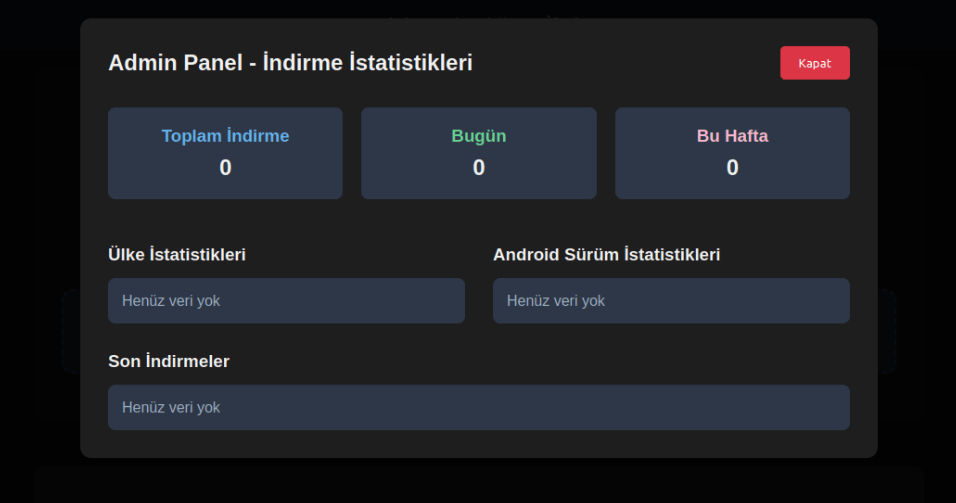
We were able to open the admin panel of this website, where it was possible to view statistics on Frogblight malware downloads. However, the counter had not been fully implemented and the threat actor could only view the statistics for their own downloads.
The admin panel interface of the website from which Frogblight is downloaded
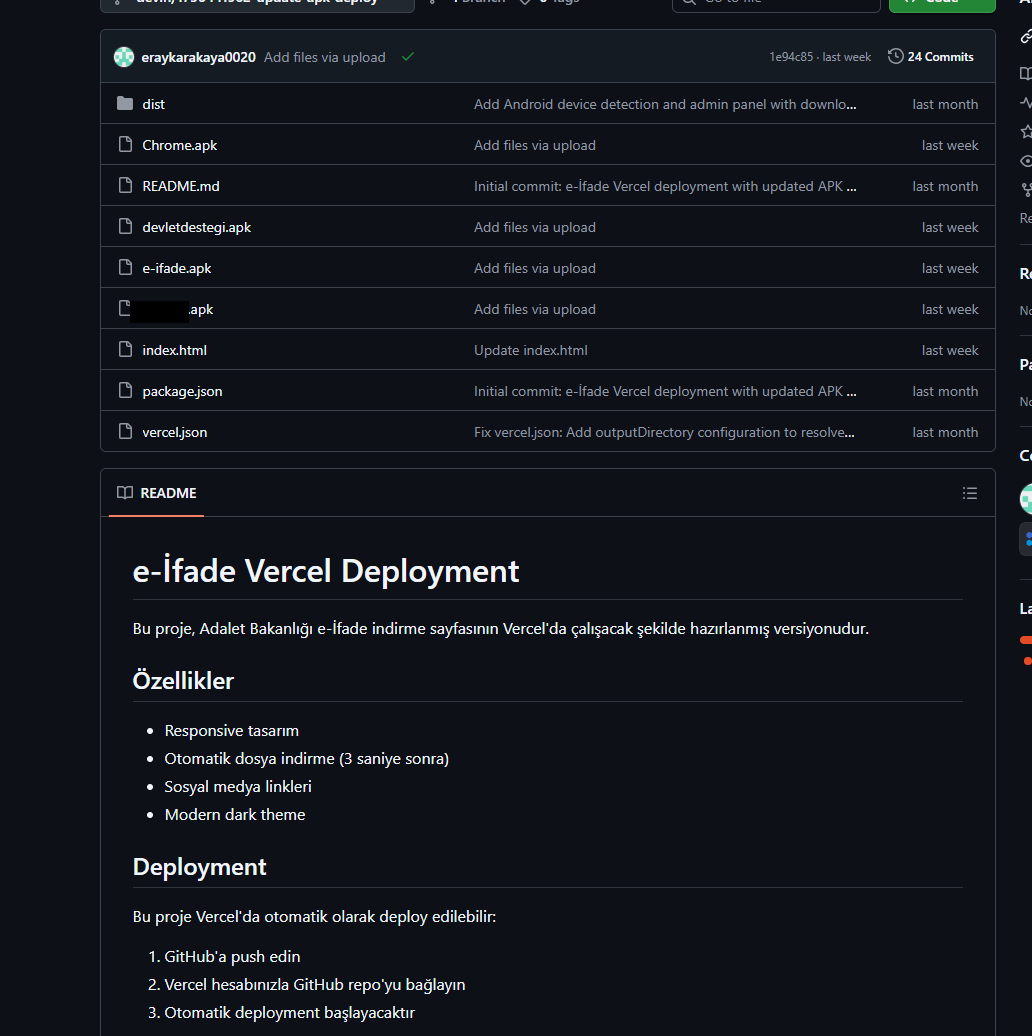
Additionally, we found the source code of this phishing website available in a public GitHub repository. Judging by its description, it is adapted for fast deployment to Vercel, a platform for hosting web apps.
The GitHub repository with the phishing website source code
App features
As already mentioned, Frogblight was initially disguised as an app for accessing court case files via an official government webpage. Let’s look at one of the samples using this disguise (9dac23203c12abd60d03e3d26d372253). For analysis, we selected an early sample, but not the first one discovered, in order to demonstrate more complete Frogblight functionality.
After starting, the app prompts the victim to grant permissions to send and read SMS messages, and to read from and write to the device’s storage, allegedly needed to show a court file related to the user.
The full list of declared permissions in the app manifest file is shown below:
MANAGE_EXTERNAL_STORAGE
READ_EXTERNAL_STORAGE
WRITE_EXTERNAL_STORAGE
READ_SMS
RECEIVE_SMS
SEND_SMS
WRITE_SMS
RECEIVE_BOOT_COMPLETED
INTERNET
QUERY_ALL_PACKAGES
BIND_ACCESSIBILITY_SERVICE
DISABLE_KEYGUARD
FOREGROUND_SERVICE
FOREGROUND_SERVICE_DATA_SYNC
POST_NOTIFICATIONS
QUICKBOOT_POWERON
RECEIVE_MMS
RECEIVE_WAP_PUSH
REQUEST_IGNORE_BATTERY_OPTIMIZATIONS
SCHEDULE_EXACT_ALARM
USE_EXACT_ALARM
VIBRATE
WAKE_LOCK
ACCESS_NETWORK_STATE
READ_PHONE_STATE
After all required permissions are granted, the malware opens the official government webpage for accessing court case files in WebView, prompting the victim to sign in. There are different sign-in options, one of them via online banking. If the user chooses this method, they are prompted to click on a bank whose online banking app they use and fill out the sign-in form on the bank’s official website. This is what Frogblight is after, so it waits two seconds, then opens the online banking sign-in method regardless of the user’s choice. For each webpage that has finished loading in WebView, Frogblight injects JavaScript code allowing it to capture user input and send it to the C2 via a REST API.
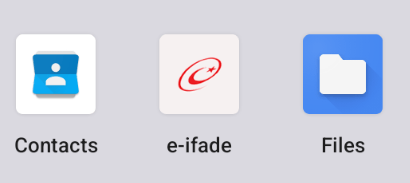
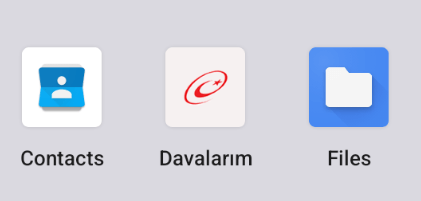
The malware also changes its label to “Davalarım” if the Android version is newer than 12; otherwise it hides the icon.
The app icon before (left) and after launching (right)
In the sample we review in this section, Frogblight uses a REST API for C2 communication, implemented using the Retrofit library. The malicious app pings the C2 server every two seconds in foreground, and if no error is returned, it calls the REST API client methods fetchOutbox and getFileCommands. Other methods are called when specific events occur, for example, after the device screen is turned on, the com.capcuttup.refresh.PersistentService foreground service is launched, or an SMS is received. The full list of all REST API client methods with parameters and descriptions is shown below.
REST API client method
Description
Parameters
fetchOutbox
Request message content to be sent via SMS or displayed in a notification
device_id: unique Android device ID
ackOutbox
Send the results of processing a message received after calling the API method fetchOutbox
device_id: unique Android device ID
msg_id: message ID
status: message processing status
error: message processing error
getAllPackages
Request the names of app packages whose launch should open a website in WebView to capture user input data
action: same as the API method name
getPackageUrl
Request the website URL that will be opened in WebView when the app with the specified package name is launched
action: same as the API method name
package: the package name of the target app
getFileCommands
Request commands for file operations
Available commands:
● download: upload the target file to the C2
● generate_thumbnails: generate thumbnails from the image files in the target directory and upload them to the C2
● list: send information about all files in the target directory to the C2
● thumbnail: generate a thumbnail from the target image file and upload it to the C2
device_id: unique Android device ID
pingDevice
Check the C2 connection
device_id: unique Android device ID
reportHijackSuccess
Send captured user input data from the website opened in a WebView when the app with the specified package name is launched
action: same as the API method name
package: the package name of the target app
data: captured user input data
saveAppList
Send information about the apps installed on the device
device_id: unique Android device ID app_list: a list of apps installed on the device
app_count: a count of apps installed on the device
saveInjection
Send captured user input data from the website opened in a WebView. If it was not opened following the launch of the target app, the app_name parameter is determined based on the opened URL
device_id: unique Android device ID app_name: the package name of the target app
form_data: captured user input data
savePermission
Unused but presumably needed for sending information about permissions
device_id: unique Android device ID permission_type: permission type
status: permission status
sendSms
Send information about an SMS message from the device
device_id: unique Android device ID sender: the sender’s/recipient’s phone number
message: message text
timestamp: received/sent time
type: message type (inbox/sent)
sendTelegramMessage
Send captured user input data from the webpages opened by Frogblight in WebView
device_id: unique Android device ID
url: website URL
title: website page title
input_type: the type of user input data
input_value: user input data
final_value: user input data with additional information
timestamp: the time of data capture
ip_address: user IP address
sms_permission: whether SMS permission is granted
file_manager_permission: whether file access permission is granted
updateDevice
Send information about the device
device_id: unique Android device ID
model: device manufacturer and model
android_version: Android version
phone_number: user phone number
battery: current battery level
charging: device charging status
screen_status: screen on/off
ip_address: user IP address
sms_permission: whether SMS permission is granted
file_manager_permission: whether file access permission is granted
updatePermissionStatus
Send information about permissions
device_id: unique Android device ID
permission_type: permission type
status: permission status
timestamp: current time
uploadBatchThumbnails
Upload thumbnails to the C2
device_id: unique Android device ID
thumbnails: thumbnails
uploadFile
Upload a file to the C2
device_id: unique Android device ID
file_path: file path
download_id: the file ID on the C2
The file itself is sent as an unnamed parameter
uploadFileList
Send information about all files in the target directory
device_id: unique Android device ID
path: directory path
file_list: information about the files in the target directory
uploadFileListLog
Send information about all files in the target directory to an endpoint different from uploadFileList
device_id: unique Android device ID
path: directory path
file_list: information about the files in the target directory
uploadThumbnailLog
Unused but presumably needed for uploading thumbnails to an endpoint different from uploadBatchThumbnails
device_id: unique Android device ID
thumbnails: thumbnails
Remote device control, persistence, and protection against deletion
The app includes several classes to provide the threat actor with remote access to the infected device, gain persistence, and protect the malicious app from being deleted.
capcuttup.refresh.AccessibilityAutoClickService
This is intended to prevent removal of the app and to open websites specified by the threat actor in WebView upon target apps startup. It is present in the sample we review, but is no longer in use and deleted in further versions.
capcuttup.refresh.PersistentService
This is a service whose main purpose is to interact with the C2 and to make malicious tasks persistent.
capcuttup.refresh.BootReceiver
This is a broadcast receiver responsible for setting up the persistence mechanisms, such as job scheduling and setting alarms, after device boot completion.
Further development
In later versions, new functionality was added, and some of the more recent Frogblight variants disguised themselves as the Chrome browser. Let’s look at one of the fake Chrome samples (d7d15e02a9cd94c8ab00c043aef55aff).
In this sample, new REST API client methods have been added for interacting with the C2.
REST API client method
Description
Parameters
getContactCommands
Get commands to perform actions with contacts
Available commands:
● ADD_CONTACT: add a contact to the user device
● DELETE_CONTACT: delete a contact from the user device
● EDIT_CONTACT: edit a contact on the user device
device_id: unique Android device ID
sendCallLogs
Send call logs to the C2
device_id: unique Android device ID
call_logs: call log data
sendNotificationLogs
Send notifications log to the C2. Not fully implemented in this sample, and as of the time of writing this report, we hadn’t seen any samples with a full-fledged implementation of this API method
action: same as the API method name
notifications: notification log data
Also, the threat actor had implemented a custom input method for recording keystrokes to a file using the com.puzzlesnap.quickgame.CustomKeyboardService service.
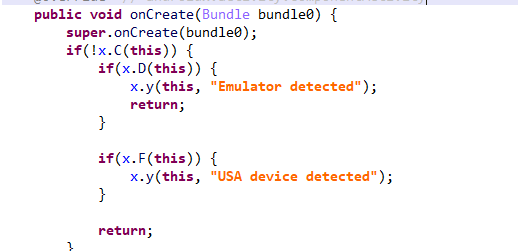
Another Frogblight sample we observed trying to avoid emulators and using geofencing techniques is 115fbdc312edd4696d6330a62c181f35. In this sample, Frogblight checks the environment (for example, device model) and shuts down if it detects an emulator or if the device is located in the United States.
Part of the code responsible for avoiding Frogblight running in an undesirable environment
Later on, the threat actor decided to start using a web socket instead of the REST API. Let’s see an example of this in one of the recent samples (08a3b1fb2d1abbdbdd60feb8411a12c7). This sample is disguised as an app for receiving social support via an official government webpage. The feature set of this sample is very similar to the previous ones, with several new capabilities added. Commands are transmitted over a web socket using the JSON format. A command template is shown below:
It is also worth noting that some commands in this version share the same meaning but have different structures, and the functionality of certain commands has not been fully implemented yet. This indicates that Frogblight was under active development at the time of our research, and since no its activity was noticed after September, it is possible that the malware is being finalized to a fully operational state before continuing to infect users’ devices. A full list of commands with their parameters and description is shown below:
Command
Description
Parameters
connect
Send a registration message to the C2
–
connection_success
Send various information, such as call logs, to the C2; start pinging the C2 and requesting commands
–
auth_error
Log info about an invalid login key to the Android log system
–
pong_device
Does nothing
–
commands_list
Execute commands
List of commands
sms_send_command
Send an arbitrary SMS message
recipient: message destination
message: message text
msg_id: message ID
bulk_sms_command
Send an arbitrary SMS message to multiple recipients
recipients: message destinations
message: message text
get_contacts_command
Send all contacts to the C2
–
get_app_list_command
Send information about the apps installed on the device to the C2
–
get_files_command
Send information about all files in certain directories to the C2
–
get_call_logs_command
Send call logs to the C2
–
get_notifications_command
Send a notifications log to the C2. This is not fully implemented in the sample at hand, and as of the time of writing this report, we hadn’t seen any samples with a full-fledged implementation of this command
–
take_screenshot_command
Take a screenshot. This is not fully implemented in the sample at hand, and as of the time of writing this report, we hadn’t seen any samples with a full-fledged implementation of this command
–
update_device
Send registration message to the C2
–
new_webview_data
Collect WebView data. This is not fully implemented in the sample at hand, and as of the time of writing this report, we hadn’t seen any samples with a full-fledged implementation of this command
–
new_injection
Inject code. This is not fully implemented in the sample at hand, and as of the time of writing this report, we hadn’t seen any samples with a full-fledged implementation of this command
code: injected code
target_app: presumably the package name of the target app
add_contact_command
Add a contact to the user device
name: contact name
phone: contact phone
email: contact email
contact_add
Add a contact to the user device
display_name: contact name
phone_number: contact phone
email: contact email
contact_delete
Delete a contact from the user device
phone_number: contact phone
contact_edit
Edit a contact on the user device
display_name: new contact name
phone_number: contact phone
email: new contact email
contact_list
Send all contacts to the C2
–
file_list
Send information about all files in the specified directory to the C2
path: directory path
file_download
Upload the specified file to the C2
file_path: file path
download_id: an ID that is received with the command and sent back to the C2 along with the requested file. Most likely, this is used to organize data on the C2
file_thumbnail
Generate a thumbnail from the target image file and upload it to the C2
file_path: image file path
file_thumbnails
Generate thumbnails from the image files in the target directory and upload them to the C2
folder_path: directory path
health_check
Send information about the current device state: battery level, screen state, and so on
–
message_list_request
Send all SMS messages to the C2
–
notification_send
Show an arbitrary notification
title: notification title
message: notification message
app_name: notification subtext
package_list_response
Save the target package names
packages: a list of all target package names.
Each list element contains:
package_name: target package name
active: whether targeting is active
delete_contact_command
Delete a contact from the user device. This is not fully implemented in the sample at hand, and as of the time of writing this report, we hadn’t seen any samples with a full-fledged implementation of this command
contact_id: contact ID
name: contact name
file_upload_command
Upload specified file to the C2. This is not fully implemented in the sample at hand, and as of the time of writing this report, we hadn’t seen any samples with a full-fledged implementation of this command
file_path: file path
file_name: file name
file_download_command
Download file to user device. This is not fully implemented in the sample at hand, and as of the time of writing this report, we hadn’t seen any samples with a full-fledged implementation of this command
file_url: the URL of the file to download
download_path: download path
download_file_command
Download file to user device. This is not fully implemented in the sample at hand, and as of the time of writing this report, we hadn’t seen any samples with a full-fledged implementation of this command
file_url: the URL of the file to download
download_path: downloading path
get_permissions_command
Send a registration message to the C2, including info about specific permissions
–
health_check_command
Send information about the current device state, such as battery level, screen state, and so on
–
connect_error
Log info about connection errors to the Android log system
A list of errors
reconnect
Send a registration message to the C2
–
disconnect
Stop pinging the C2 and requesting commands from it
–
Authentication via WebSocket takes place using a special key.
The part of the code responsible for the WebSocket authentication logic
At the IP address to which the WebSocket connection was made, the Frogblight web panel was accessible, which accepted the authentication key mentioned above. Since only samples using the same key as the webpanel login are controllable through it, we suggest that Frogblight might be distributed under the MaaS model.
The interface of the sign-in screen for the Frogblight web panel
Judging by the menu options, the threat actor can sort victims’ devices by certain parameters, such as the presence of banking apps on the device, and send bulk SMS messages and perform other mass actions.
Victims
Since some versions of Frogblight opened the Turkish government webpage to collect user-entered data on Turkish banks’ websites, we assume with high confidence that it is aimed mainly at users from Turkey. Also, based on our telemetry, the majority of users attacked by Frogblight are located in that country.
Attribution
Even though it is not possible to provide an attribution to any known threat actor based on the information available, during our analysis of the Frogblight Android malware and the search for online mentions of the names it uses, we discovered a GitHub profile containing repos with Frogblight, which had also created repos with Coper malware, distributed under the MaaS model. It is possible that this profile belongs to the attackers distributing Coper who have also started distributing Frogblight.
GitHub repositories containing Frogblight and Coper malware
Also, since the comments in the Frogblight code are written in Turkish, we believe that its developers speak this language.
Conclusions
The new Android malware we dubbed “Frogblight” appeared recently and targets mainly users from Turkey. This is an advanced banking Trojan aimed at stealing money. It has already infected real users’ devices, and it doesn’t stop there, adding more and more new features in the new versions that appear. It can be made more dangerous by the fact that it may be used by attackers who already have experience distributing malware. We will continue to monitor its development.
A expansão internacional do grupo de cibercriminosos conhecido como Scattered Spider acendeu um sinal de alerta entre empresas latino-americanas. Especialistas em segurança apontam que, embora não haja registros confirmados de ataques desse grupo no Brasil ou vizinhos até o momento, seu alcance global e métodos sofisticados representam um risco iminente para organizações na região.
Com táticas de engenharia social elaboradas e capacidade de driblar defesas tradicionais, o Scattered Spider tem mirado grandes empresas em diversos países. “A questão não é mais ‘se’ seremos atacados, mas de ‘quando’ e ‘como’, afirma Felipe Guimarães, Chief Information Security Officer da Solo Iron. “As táticas empregadas pelo grupo exploram fragilidades universais, presentes em empresas em todo o mundo – o que inclui as empresas latino-americanas”, pondera o especialista.
Um dos maiores riscos é que os setores visados pelo Scattered Spider no exterior também são pilares econômicos na América Latina. O grupo historicamente focou suas ações em empresas de telecomunicações, terceirização de processos de negócios (BPO) e grandes empresas de tecnologia – indústrias que possuem ampla presença na região. Nos últimos tempos, foi observado um aumento de interesse do grupo pelo setor financeiro global, o que inclui bancos e instituições presentes no Brasil e países vizinhos.
“Isso significa que companhias latino-americanas, seja diretamente ou através de filiais e parceiras, podem entrar na mira à medida que o Scattered Spider amplia seu raio de atuação. Mesmo empresas que não operam internacionalmente devem se precaver, pois os criminosos podem enxergar organizações locais como pontes de entrada para fornecedores ou clientes globais, ou simplesmente como alvos lucrativos por si sós, caso identifiquem falhas de segurança exploráveis”, pontua Guimarães.
Na mira das agências de inteligência
Relatórios do FBI e da Agência de Segurança Cibernética e de Infraestrutura (CISA) dos EUA descrevem o Scattered Spider como “especialista em engenharia social”, empregando diversas técnicas para roubar credenciais e burlar autenticações.
Entre os métodos documentados estão phishing por e-mail e SMS (smishing), ataques de vishing (ligações telefônicas fraudulentas) em que os criminosos se passam por equipe de TI da própria empresa, e até esquemas elaborados de SIM swap – quando convencem operadoras de telefonia a transferir o número de celular de uma vítima para um chip sob controle deles. Essas táticas permitem interceptar códigos de autenticação multifator (MFA) enviados via SMS ou aplicativos, dando aos invasores as chaves para acessar sistemas internos.
Ainda segundo o especialista, o modelo de ataque do Scattered Spider pode inspirar quadrilhas locais. “As táticas de engenharia social eficazes tendem a se espalhar rapidamente nos submundos virtuais. Mesmo que o próprio grupo original não atue diretamente na América Latina, outros agentes maliciosos regionais podem adotar técnicas semelhantes – como push bombing de MFA ou golpes contra centrais de atendimento – ao verem o sucesso obtido lá fora”, explica Guimarães.
Alguns incidentes recentes no cenário latino-americano já envolveram vetores parecidos, como uso de ferramentas legítimas em ataques e exploração de credenciais vazadas, o que reforça a necessidade de vigilância. Em 2024, por exemplo, houve casos de gangues de ransomware operando na região que abusaram de softwares legítimos e brechas em procedimentos internos de empresas, aplicando práticas muito similares ao do Scattered Spider.
Estratégias de mitigação
Diante da crescente ameaça representada por grupos como o Scattered Spider, Guimarães recomenda a adoção de estratégias com foco especial em fortalecer métodos avançados de autenticação multifator (MFA), preferencialmente resistentes a phishing, como chaves físicas de segurança ou soluções baseadas em certificados digitais. Técnicas como MFA com validação numérica e a restrição do uso de SMS para autenticação são essenciais para reduzir o risco de engenharia social e ataques por fadiga de notificações, muito usados pelo grupo.
Além disso, a adoção de uma abordagem mais robusta em relação à gestão de identidades e acessos (IAM) é uma estratégia muito importante na contenção desse tipo de ameaça. “As identidades digitais estão se tornando uma nova superfície de ataque; por isso, é fundamental que as empresas implementem políticas rígidas de gestão de identidades, controle granular de acessos e monitoramento contínuo das atividades dos usuários”, destaca.
“Também é muito importante o controle rigoroso sobre ferramentas de acesso remoto e a implantação de monitoramento avançado. É recomendável que as organizações restrinjam o uso dessas ferramentas por meio de listas autorizadas e adotem sistemas robustos como EDR e DLP para identificar rapidamente atividades suspeitas”, finaliza o especialista.
A Cyberint, empresa adquirida pela Check Point Software em agosto de 2024, detectou um aumento nas campanhas de phishing que utilizam técnicas de smishing (mensagens SMS maliciosas) e vishing (chamadas ou mensagens de voz fraudulentas) como vetores alternativos aos ataques por e-mail.
Segundo dados do relatório do Anti-Phishing Working Group – APWG 2024, as campanhas de vishing cresceram 442% no segundo trimestre do ano passado, e o smishing segue em expansão desde o começo da década. Ambos os tipos de ameaça exploram a confiança que os usuários depositam em seus dispositivos móveis, difíceis de proteger com ferramentas tradicionais de cibersegurança.
Imagem 1. Ataques de phishing registrados em 2024
Por meio de chamadas que simulam ser de departamentos de suporte ou mensagens SMS que se passam por bancos, fornecedores ou executivos, os atacantes conseguem enganar as vítimas para obter credenciais ou instalar malware, e essas técnicas dificultam a detecção.
Principais alvos do smishing e do vishing
Os setores mais visados no mundo incluem SaaS/Webmail, redes sociais, finanças e varejo, segundo o mesmo relatório de phishing do AWPG. Dentro desse conjunto, o setor financeiro se destaca pelo valor dos dados que gerencia: obter acesso a contas bancárias representa um objetivo especialmente lucrativo para os criminosos.
Isso se comprova no Brasil, onde os principais golpes digitais apontados pela Febraban (Federação Brasileira de Bancos) entre setembro de 2024 e março de 2025, indicam o smishing em quinto lugar e crescendo:
. Clonagem ou troca de cartão (40%)
. Golpe do WhatsApp, em que alguém se faz passar por um conhecido solicitando dinheiro (28%)
. Falsa central de atendimento (26%)
. Golpe do Pix (16%)
. Golpe via SMS (11%)
Imagem 2. Setores mais atacados no quarto trimestre de 2024
Por sua vez, o varejo tornou-se um alvo prioritário devido ao crescimento do comércio eletrônico e à quantidade de informações pessoais que os clientes compartilham com as marcas. Essa realidade facilita campanhas de falsificação de identidade, nas quais os cibercriminosos se fazem passar por lojas legítimas. Além disso, geralmente reforçam a credibilidade desses ataques usando contas falsas em redes sociais ou plataformas de e-mail, aumentando assim a eficácia do golpe.
Os Estados Unidos continuam sendo o país mais visado por campanhas de smishing e vishing, seguidos de outras economias desenvolvidas. Embora as técnicas estejam em constante evolução, os alvos geográficos permanecem relativamente estáveis. Entre os incidentes mais relevantes, destaca-se o uso de vishing pelo grupo Scattered Spider, que conseguiu acessar redes corporativas no Reino Unido e nos Estados Unidos ao se passar por funcionários em chamadas para serviços de suporte. Em alguns casos, também recorreram ao SIM swapping, reforçando a identidade falsa com a ajuda de colaboradores internos em empresas de telecomunicações.
IA e mensageria em massa: dois facilitadores da fraude
O surgimento de ferramentas como o Xanthorox AI, uma plataforma de ciberataques baseada em inteligência artificial construída do zero, permitiu que os criminosos cibernéticos automatizassem e ampliassem campanhas de engenharia social. Paralelamente, serviços de mensageria como Textedly ou ClickSend, embora legais, podem ser utilizados com fins maliciosos para enviar mensagens SMS ou chamadas em massa a custos muito baixos.
A Check Point Software destaca que as estratégias de proteção devem se concentrar em detectar e bloquear o smishing e o vishing o mais cedo possível, com práticas como:
Monitorar a dark web em busca de kits de phishing, domínios falsos e campanhas em redes como Telegram ou WhatsApp.
Simular ataques com IA para avaliar a resposta do SOC (Centro de Operações de Segurança).
Fortalecer a proteção de endpoints e limitar o acesso a dados sensíveis.
Conscientizar os funcionários sobre a verificação de chamadas e SMS suspeitos.
Eliminar credenciais desnecessárias em repositórios internos.
Manter atualizadas as capacidades de detecção por engano (threat deception) com assinaturas e modelos comportamentais adaptados a ataques assistidos por IA e entradas multimodais (voz, imagem, código).
Para os especialistas da Check Point Software, a sofisticação e escalabilidade que a IA e os serviços de mensageria em massa proporcionam fazem com que o smishing e o vishing representem uma ameaça real para empresas e consumidores. A chave para conter essas campanhas está em se antecipar a elas por meio de tecnologia, vigilância contínua e treinamento constante.
Sobre a Check Point Software Technologies Ltd.
A Check Point Software Technologies Ltd é líder na proteção da confiança digital (digital trust), utilizando soluções de segurança cibernética com tecnologia de IA para proteger mais de 100.000 organizações em todo o mundo. Por meio de sua Plataforma Infinity e de um ecossistema aberto, a abordagem de prevenção em primeiro lugar da Check Point Software oferece eficácia de segurança líder do setor, reduzindo riscos. Empregando uma arquitetura de rede de malha (mesh) híbrida com SASE como núcleo, a Plataforma Infinity unifica o gerenciamento de ambientes locais, na nuvem e em ambientes de trabalho, oferecendo flexibilidade, simplicidade e escala para empresas e provedores de serviços.
Se você já leu ou ouviu o termo “ataque cibernético” pode ter se perguntado como esse tipo de ataque acontece no mundo real e quais os reais impactos eles podem gerar, seja para as empresas que sofreram o golpe ou para as pessoas de maneira geral.
Recentemente, a Apura Cyber Intelligence apresentou seu relatório sobre o panorama da cibersegurança no mundo no último ano, em que aborda uma série de incidentes que aconteceram durante o ano. O relatório mostra como os criminosos realizaram tais ataques e quais foram as consequências para as empresas e indivíduos atingidos. Além disso, o relatório também abordou uma série de operações realizadas por autoridades contra grupos cibercriminosos.
Marco Romer, Coordenador de Reports na Apura, explica que, cada vez que um ataque é deflagrado, empresas de cibersegurança como a Apura estudam o caso para poder entender onde houve falhas e, assim, desenvolver técnicas mais refinadas que aumentem a efetividade das medidas de seguranças contra esses tipos de ataques.
Alguns incidentes no Brasil e no mundo
Em um dos acontecimentos mais importantes de 2024 no setor de tecnologia, a Snowflake, renomada empresa de computação em nuvem, enfrentou um grave vazamento de dados. A Mandiant, empresa de segurança pertencente ao Google, identificou que aproximadamente 165 clientes potenciais da Snowflake, incluindo a Pure Storage, a Neiman Marcus e a AT&T, foram alvo de uma campanha coordenada de exploração de credenciais roubadas. O caso foi agravado por falhas na implementação de medidas de segurança essenciais, como a adoção de autenticação multifatorial, e pela reutilização de senhas antigas.
“A investigação conduzida pela Mandiant, identificou que a ação comprometeu dados de aproximadamente 110 milhões de clientes apenas da AT&T, abrangendo praticamente toda a base de usuários da operadora. O volume de informações expostas demonstra a extensão e a gravidade do incidente, evidenciando o potencial de alcance de ataques cibernéticos bem-sucedidos”, explica Romer. “Fica claro também, que o ataque a uma única empresa, neste caso a Snowflake, pode atingir várias outras, demonstrando a necessidade de a segurança cibernética ser pensada e estruturada ao longo de toda a cadeia de suprimentos”, acrescenta.
Outro incidente ocorreu com a Ascension Healthcare, uma das principais operadoras de saúde dos EUA, que enfrentou um ataque de ransomware que paralisou suas operações clínicas. O episódio, detectado em maio, interrompeu serviços importantes, como registros médicos eletrônicos, forçando os hospitais a recorrerem a métodos manuais, como notas manuscritas, o que aumentou os riscos de erros médicos. Em um caso angustiante, um enfermeiro no Kansas quase cometeu um grave erro de dosagem devido à confusão causada pela falta dos sistemas eletrônicos.
No Brasil, uma onda de o golpe por SMS, também conhecido como “smishing”, se destacou pela velocidade e alcance. Criminosos exploraram mensagens SMS para enganar milhares de pessoas. Entre as principais modalidades de fraude, só neste ano, centenas de sites falsos foram criados para enganar vítimas por meio de falsas notificações de encomendas, avisos de valores a receber e alertas de cassação da CNH encheram as caixas de entrada dos brasileiros. As mensagens continham links que levavam a sites fraudulentos, semelhantes a portais de empresas de logística e órgãos governamentais, induzindo as vítimas a pagar supostas taxas por meio de boleto ou pagamento instantâneo.
Os golpes por SMS continuam a representar uma séria ameaça à segurança digital dos brasileiros em 2025. Segundo pesquisa da Norton divulgada em março, 54% das tentativas de fraude no país foram feitas por SMS, sendo que 43% das pessoas que receberam essas mensagens acabaram caindo no golpe. Mais alarmante: 77% dessas vítimas sofreram prejuízos financeiros, com perdas que vão de R$ 1,2 mil a até R$ 40 mil. De acordo com a Febraban, o total de perdas financeiras causadas por golpes no Brasil saltou de R$ 8,6 bilhões, em 2023, para R$ 10,1 bilhões em 2024 — um crescimento de 17%.
“Conseguimos identificar com o auxílio de nossa ferramenta de inteligência de ameaças e técnicas de investigação em fontes abertas que mais de 300 domínios falsos foram usados apenas em campanhas que simulavam comunicações dos Correios, ampliando significativamente o alcance e o impacto dos golpes”, diz o coordenador.
Em abril de 2024, o sistema financeiro do Governo Federal, conhecido como SIAFI, foi alvo de um ousado esquema de desvio de recursos. Criminosos conseguiram alterar dados bancários de um fornecedor, desviando R$ 3,5 milhões do Ministério da Gestão e Inovação. Para isso, utilizaram técnicas como phishing e certificados digitais falsos, aproveitando-se de credenciais de servidores públicos.
Operações contra grupos de cibercriminosos
No caso do SIAFI, a investigação da Polícia Federal revelou um esquema criminoso que desviava recursos destinados ao pagamento dos salários de servidores públicos, utilizando contas de “laranjas” para ocultar as transações. Esses recursos eram posteriormente convertidos em criptomoedas através de exchanges e instituições de pagamento especializadas.
Durante a operação, foram cumpridos 19 mandados de busca e apreensão e três de prisão temporária em diversos estados, incluindo Minas Gerais, Bahia, Rio de Janeiro, São Paulo e o Distrito Federal. Em resposta ao ocorrido, o Tesouro Nacional, responsável pelo SIAFI, implementou medidas adicionais de segurança, como a autenticação com múltiplos fatores (MFA) para usuários autorizados, visando reforçar a proteção do sistema e prevenir futuros incidentes.
Outras ações bem sucedidas implementadas pelas autoridades com a colaboração de empresas de cibersegurança foram realizadas em 2024. Operações nacionais e internacionais contra o cibercrime tiveram como foco o combate a grupos de ransomware e a grupos especializados em ataques DDoS.
A “Operação Cronos”, por exemplo, marcou um ponto de virada na luta contra o grupo LockBit, temido por sua série de ataques de ransomware desde 2019. As forças da lei dos EUA, do Reino Unido e da União Europeia conseguiram apreender domínios e revelar a identidade do líder do grupo, Dmitry Yuryevich Khoroshev. Vários afiliados foram presos, e a operação demonstrou a colaboração global necessária para combater o cibercrime.
Simultaneamente, a “Operação PowerOFF” desmantelou 27 serviços de aluguel de ataques DDoS em uma ação coordenada entre 15 países. Além de remover plataformas online usadas para fins maliciosos, a operação prendeu indivíduos-chave e responsabilizou centenas de usuários.
Outra vitória significativa ocorreu com a “Operação Magnus”, que focou nos malwares Redline e Meta Infostealer, dois dos mais utilizados para roubo de informações pessoais em todo o mundo. A polícia holandesa e o FBI apreenderam servidores e emitiram alertas globais, culminando na acusação do desenvolvedor russo Maxim Rudometov.
“As operações realizadas em 2024 reforçam a importância da cooperação internacional na luta contra o cibercrime, não só entre as nações, mas também do setor público com o privado. Se os criminosos evoluem em ousadia e táticas a cada ano, as forças da lei estão sempre empenhadas em provar que é só uma questão de tempo até que estes criminosos sejam inevitavelmente levados a encarar a justiça e a pagar por seus crimes”, ressalta Romer.

 Entrar
![Malwarebytes blocks ruelomamuy[.]com](https://www.malwarebytes.com/wp-content/uploads/sites/2/2026/04/ruelomamuycomblock.png)