Visualização de leitura

Agents of Chaos: Unpacking the Actions of Border Patrol Agents Across the US

This investigation is part of a collaboration between Bellingcat, Evident Media and CalMatters. You can watch Evident’s investigative video here, and read CalMatters’ report here.

In early January 2025, a gardener named Ernesto Campos was pulled over by Border Patrol agents in the city of Bakersfield, California. 

The agents were a long way from home: Bakersfield is over 240 miles (386km) from the US border with Mexico.

They were there as part of Operation Return to Sender, a Border Patrol surge in the city that acted as a portent of what was to come across the US in 2025.

Support Bellingcat

Your donations directly contribute to our ability to publish groundbreaking investigations and uncover wrongdoing around the world.

Video footage shows one agent threatening to break Campos’ car window as they believed he was transporting an undocumented individual. 

Campos filmed the agents, who he said slashed his tyres before arresting him and a passenger. The agents’ faces later appeared on local news reports detailing the incident.

Ten months later, two of the agents visible in footage recorded by Campos were filmed in Chicago as Border Patrol agents descended on the city for what was dubbed “Operation Midway Blitz”.

One was seen grabbing a man by the throat before slamming him to the ground with help from other agents.

@govpritzker.illinois.gov 37 and Kedzie, East Garfield, Illinois. This is assault.

[image or embed]

— Daniel Connerton (@lordnad.bsky.social) 4 October 2025 at 20:56

The other was seen punching a man in the face before pulling his gun on protesters in a Chicago suburb.

These confrontations were not isolated incidents.

An image from court documents shows a Border Patrol agent unholstering his gun at an incident in Evanston, Illinois.

A federal judge in Illinois said in November that the use of force by federal agents in Chicago – including the use of tear gas and other less lethal munitions on multiple occasions –  “shocks the conscience”.    

A restraining order issued by that Illinois judge was vacated on appeal earlier this month. But what took place on the streets of Chicago also happened in other locations, with some of the same agents involved.

Bellingcat has worked with our partners at Evident Media and CalMatters to analyse over 85 hours of social media and bodycam footage, as well as court documents and incident reports, to try to unpack the actions of Border Patrol agents across the country. 

With agents often masked and badge or identification numbers not always visible, understanding exactly who has enforced the immigration surges of the past year has been difficult. This, in turn, has made public questioning and accountability around use-of-force incidents challenging. 

Subscribe to the Bellingcat newsletter

Subscribe to our newsletter for first access to our published content and events that our staff and contributors are involved with, including interviews and training workshops.

Nonetheless, we observed over 25 agents who appeared in more than one city, either by recognising their faces or matching badge numbers that were visible on their vests or arm patches. Many were seen alongside former Border Patrol Commander at Large, Gregory Bovino, on at least one occasion. 

But this is likely just a fraction of the agents who moved around the country to take part in Border Patrol surges in cities like Los Angeles, Chicago and Minneapolis. When speaking to reporters in January, Border Czar Tom Homan said he had spoken to some agents who had “been in theatre for eight months”. Many wore masks in the videos viewed by Bellingcat, and it was not always possible to identify number patches from social media or bodycam footage alone.

Although some of the agents we logged appeared on neighbourhood walkabouts or in footage where little happened, others could be seen using force on multiple occasions. For this story, we have focused on the actions of five agents whom we have been able to identify and who appear to have repeatedly used force in at least two, but often more, locations. We have decided to name those we have been able to identify just as we would name any officer involved in incidents like those detailed. But these were by no means the only agents whom we saw using force across one or multiple cities.

The footage we analysed also appears to show a steady escalation of violence and confrontational incidents as 2025 progressed, culminating in widespread use-of-force incidents in Chicago and Minneapolis, where two people, Renee Good and Alex Pretti, were killed by Immigration and Customs Enforcement (ICE) and Border Patrol agents, respectively, in early 2026.

Agents on the Move

While former Border Patrol Commander at Large Gregory Bovino is no longer in a national role, some of the agents observed and documented for this report appear to have travelled from his El Centro sector over the past year.

These included agent Timothy Donahue and Georgy Simeon, who were filmed by Ernesto Campos in Bakersfield. Donahue was the agent who was subsequently pictured pointing his gun at citizens just outside Chicago after a traffic incident (Donahue stated in his incident report that his car was rammed by an activist – something also described in Illinois federal judge Sara Ellis’ opinion – although Donahue’s report made no mention of punching a man in the face or unholstering his weapon). It was Simeon, meanwhile, who was filmed slamming a man to the ground after grabbing him by the throat.

Donahue was also spotted in social media footage in Los Angeles in June last year pushing a citizen who was blocking his vehicle, as well as grabbing a man on an immigration raid inside a car wash.

The Chicago publication, Unraveled Press, previously reported that Donahue was the owner of a social media account that made seemingly racist and sexist posts. Bellingcat and others have checked this account and found that an old profile picture showed an image of Donahue. Bodycam footage from outside a detention centre near Chicago also showed Donahue tackle a journalist from Unraveled without apparent warning.

Footage from Donahue’s own bodycam on Oct. 3 also appears to show him compiling an incident report with ChatGPT. The possibility of CBP agents using ChatGPT to compile incident reports was addressed by Judge Ellis in her ruling issuing a restraining order in November. She wrote that using ChatGPT to write reports “undermines their credibility and may explain the inaccuracy of some reports filed by CBP officers”.

The evidence doesn’t enable us to determine if Donahue used ChatGPT to compile the Oct. 31 incident report in which he did not mention he punched a man and unholstered his gun. 

Bodycam footage released with court documents shows a Border Patrol agent using ChatGPT to compile an incident report. 

Our reporting partners CalMatters emailed and called Donahue prior to publication. The email received no response. Donahue answered his cellphone but said, “never, ever call my cellphone again,” and hung up.

Simeon did not respond to emailed questions prior to publication, and calls to a number listed under his name went unanswered. 

The Department of Homeland Security (DHS) did not respond to questions posed about the actions of Donahue and Simeon detailed in this report or the agency’s use-of-force policies. They also did not respond to questions about whether it was permissible for agents to use generative AI platforms like ChatGPT to compile incident reports.

While the actions of Donahue and Simeon made news reports in various cities, the pair were far from alone in having their actions filmed and documented across the country. 

Kristopher Hewson, a supervisory agent based out of Bovino’s El Centro sector, was seen on bodycam footage in Chicago spraying an individual who was being held down by agents with what he detailed in his incident report as oleoresin capsicum (OC), also known as pepper spray, from what appears to be just a few inches away. The individual was on the ground and had one hand behind his back, but agents could be heard asking for his other hand during the incident. Hewson said in his incident report (see here and here) that the individual had been resisting arrest, but he also stated that he deployed the pepper spray from two feet away. Bodycam footage (see below) showed the canister beside the individual’s head right after a burst of spray can be heard.

Bodycam footage shows an individual being held down before pepper spray is released while he remains on the ground. Annotations after 15 seconds made by Bellingcat.

Hewson, who wore a mask but was identifiable in several videos by the C-29 ID number on his uniform, was later spotted in Minneapolis. He also said his name during one incident that allowed us to find other bodycam footage releases that belonged to him. In one video, his mask slipped, which allowed us to compare his face to images on his social media accounts.

Court testimony revealed that he was present in Los Angeles during a Border Patrol surge in the city in the summer of 2025. He was also seen alongside Bovino on numerous occasions, including in Chicago, where Bovino can be heard greeting him by saying, “Hey, Hewson”, in one video captured by the filmmaker Jeff Perlman.

In bodycam footage from Chicago a man can be heard saying that the person Hewson pepper-sprayed was his son, who was just 15 years old. This appears to be backed up by an incident report showing the individual’s date of birth. A short time later, Hewson can be heard shouting “get back or you will be gassed” at a group of protesters immediately before deploying tear gas towards them. As he throws the canister, a person can be heard shouting, “You’re not de-escalating shit, bro”. Hewson stated in his incident report (see here and here) that he gave a warning that CS gas was coming, but he did not detail how that warning was virtually instantaneous. 

All of these actions came two weeks after a judge issued a temporary restraining order on Oct. 9, preventing agents from using chemical agents on protesters and journalists unless there was an imminent threat of physical danger to federal forces. While that order was lifted in March 2026, it was still in force during the incidents detailed in this story.

Hewson was seen in Minneapolis in early 2026 alongside Bovino. He was captured on footage marching towards and tackling a Target employee, a teenage US citizen, who was directing insults at agents. A melee ensued at the front door of the Target store before two people were handcuffed and taken away by agents. Hewson’s C-29 number was visible as he led one of the men away. Both of those arrested were later released.

Hewson was questioned as part of a preliminary injunction hearing in Chicago, where, among other things, he stated (pages 183 and 184) that protesters have the right to shout and even swear at officers as long as they aren’t impeding their ability to carry out their work. He also said during questioning that tear gas “doesn’t harm people” (page 189). Multiple individuals who were impacted by the release of gas and chemical irritants in Chicago stated otherwise in incidents detailed in Judge Ellis’ ruling. 

When reached on the phone by CalMatters, Hewson said he could not comment. DHS did not respond to questions posed about the actions of Hewson detailed in this report or the agency’s use-of-force policies.  

El Paso Agents

Hewson was present and visible in footage when ex-Border Patrol Commander at Large Bovino appeared to push and manhandle a protester who crossed his path on Nicollet Avenue in Minneapolis. 

Also beside Bovino and Hewson that day were two officers based out of El Paso bearing the ID numbers EZ-2 and EZ-17. Both of these agents are seen wearing vests of the Border Patrol Tactical Division (BORTAC), a specialised unit that, according to the CBP, has a selection process “designed to mirror aspects of the US Special Operations Forces’ selection courses”. 

Bellingcat and Evident Media previously reported how EZ-17 fired less lethal munitions at protesters from close range a day after Renee Good was shot and killed by an Immigration and Customs Enforcement (ICE) officer in Minneapolis.

EZ-17 was accompanied during that incident by EZ-2, who could be seen spraying a chemical irritant in the face of a man who appeared to have thrown a snowball at him. EZ-2 was also seen throwing two female protesters to the ground outside Roosevelt High School in Minneapolis on Jan. 7. 

Both EZ-17 and EZ-2 were present in Chicago. EZ-17 was seen passing a tear gas canister to Bovino at an incident in the city’s Little Village neighbourhood on Oct. 23

The Chicago publication, Unraveled, previously identified EZ-17 as Edgar Vazquez and EZ-2 as Michael Sveum. Bellingcat was able to corroborate these identifications using similar techniques. Firstly, for Vazquez we compared images on his Facebook page with footage from EZ-2’s bodycam, which showed Vazquez inside a vehicle without a mask.

Ernesto Vazquez photo taken from Facebook (left) and image taken from bodycam footage in Chicago (right). Source: CBP via Loevy.com

EZ-2 was identified in a similar manner. Bodycam footage from EZ-2 showed him looking at his phone. On the lockscreen was a picture of a man smiling and wearing a blue jacket. That same picture was posted on Sveum’s social media accounts and appeared to have been taken at an ultramarathon event whose organisers posted Sveum’s name alongside that same image.

Bodycam footage (left) shows a lockscreen with a picture of a man that matches images seen on archived posts from the social media accounts of Michael Sveum.

When reached by phone by CalMatters reporters, Vazquez said that he could not comment. Sveum hung up immediately after CalMatters’ reporter introduced himself. DHS did not respond to questions posed about the actions of Vazquez or Sveum detailed in this report or the agency’s use-of-force policies.   

Dozens of other incidents where agents appeared to escalate rather than de-escalate situations, as well as use force or less lethal munitions, were logged as part of this investigation. This included agents pointing guns at protesters (see here and here) as well as using violent force and less lethal munitions on protesters, journalists and bystanders.

Bovino himself appeared to instigate confrontations with people, such as in Chicago, when he can be seen throwing a man to the ground before agents pounce on him, although he stated during his Illinois deposition that he did not think such actions represented a use-of-force incident. 

The former Border Patrol Commander at Large told CalMatters that he could not speak to the media without DHS approval prior to publication of this story. Requests sent to DHS to speak with Bovino went unanswered.

‘Unusual and Beyond the Pale’

According to John Roth, a former DHS Inspector General, and Steve Burnell, a former DHS General Counsel, the events of the past year, involving masked agents descending on select cities, have eroded trust and credibility in DHS and law enforcement.

While both agreed that there had to be professional immigration enforcement operations, they said that has to be done in a way that is responsible and ensures accountability when lines are crossed. 

“This is sort of a scary Orwellian thing”, Roth said. “I don’t think the public understands how unusual and beyond the pale it is to have these roving sort of groups of masked agents, out there handling the public.”

Burnell said that the inability to identify agents carrying out their work as enforcement officers was a particular concern: “At the end of the day, ICE and everybody at DHS are public servants. They’re supposed to be working for the public. And, you know, if somebody is working for you, you should have a right to know who they are, and you should have a right to hold them accountable and protest what they’re doing.”

Roth and Burnell both served under President Barack Obama and during President Donald Trump’s first term. The pair have testified to Congress in recent months, raising the alarm about what they see as a dismantling of accountability at DHS. Prominent members of the US government, including President Trump, have offered repeated support to Border Patrol agents, even after the death of protesters such as Renee Good.

Our partners at Evident and CalMatters showed Roth and Burnell some of the footage described in this report. While they refrained from commenting on individual incidents, Roth described the footage generally as “difficult to watch”.

“The question I’d ask. Have [agents] inserted themselves into something that requires them to use force,” said Roth. “In which case that would be a violation of DHS policy,” he added, referring to use-of-force policies that detail how law enforcement officers may use force when no “reasonably, safe and feasible alternative appears to exist”.

“It’s actually DHS policy that you [are required] to attempt to de-escalate when that’s possible. I mean, they don’t have a duty to retreat, but they do have a duty not to insert themselves into a place where use of force is necessary,” Roth said.

Burnell described a lot of what has happened over the past year as a type of “dominance display”.

“It’s there to send a message. And that is not de-escalatory. It’s the opposite,” he said.

Bellingcat, CalMatters and Evident Media jointly sought to contact DHS as well as all of the agents mentioned in this story prior to publication. 

We asked DHS whether any of the incidents detailed in this report violated DHS use-of-force policies or whether those policies had been updated under the current administration. 

We also asked if DHS was taking any action or providing further training to agents to ensure the public’s constitutional rights are respected during immigration enforcement operations carried out by Border Patrol.

DHS did not respond before publication.


Youri van der Weide, Kolina Koltai and Eoghan Macguire from Bellingcat, as well as Sergio Olmos from CalMatters and Kevin Clancy from Evident Media, contributed reporting to this piece.

Bellingcat is a non-profit and the ability to carry out our work is dependent on the kind support of individual donors. If you would like to support our work, you can do so here. You can also subscribe to our Patreon channel here. Subscribe to our Newsletter and follow us on Bluesky here, Instagram here, Reddit here and YouTube here.

The post Agents of Chaos: Unpacking the Actions of Border Patrol Agents Across the US appeared first on bellingcat.

Alex Pretti: Analysing Footage of Minneapolis CBP Shooting

To stay up to date on our latest investigations, join Bellingcat’s WhatsApp channel here

On January 24, Alex Pretti, a 37-year-old intensive care unit nurse at the Minneapolis Veterans Affairs Health Care System, was shot and killed by federal agents on Nicollet Avenue in Minneapolis, Minnesota. The shooting comes just over two weeks after Renee Good was shot and killed by a federal agent in the same city. 

The United States Department of Homeland Security claimed Pretti was killed after an “armed struggle” with DHS officers and that it seemed he had wanted to “do maximum damage”. Yet video footage shared online, showing shortly before and during the incident, appears to contradict that claim.

Some of the earliest available footage of the encounter was posted to Instagram and shows an agent crossing the street to talk to Pretti who appears to be filming with his phone, which he is holding in his right hand. According to DHS, agents were conducting an immigration arrest in the area. 

The agent can be seen placing his hand on Pretti’s torso to push him back and away from the middle of the road towards the sidewalk. 

Another video shared on Reddit shows what happened after this initial contact, as well as the lead-up to the shooting. Pretti appears to put himself between two women after they were both shoved by a DHS agent. He is holding a cellphone, held sideways in his right hand.

A video shows Pretti recording federal agents roughly a minute before he is shot. Pretti’s right hand is holding a cellphone, filming. Source: Neuroscissus/Reddit

An agent can then be seen spraying Pretti with a substance from a canister, and continuing to spray him as he turns his back to him. At least five additional federal agents approach and attempt to force Pretti to the ground while one appears to strike him with a spray can. 

Twenty-five seconds after Pretti is first sprayed, a shot is heard followed by nine more shots in the span of about six seconds. Additional video from the scene shows Pretti lying motionless on the ground.

Video Analysis

Bellingcat further analysed the Reddit video, a separate video posted to Facebook and others taken at the scene to break down the key moments of the shooting, splicing them together (see Bluesky post below) to view in more granular detail.

We’ve placed the available videos of the shooting of Alex Pretti by federal agents in Minneapolis today into the same synchronised timeline and are continuing to analyse further.

[image or embed]

— Bellingcat (@bellingcat.com) 24 January 2026 at 20:39

Closer inspection of the videos shows that an agent appears to remove a weapon from the melee before the first shots are fired. 

In both the Reddit and Facebook video, a federal agent wearing a grey jacket can be seen approaching federal agents who are on top of and struggling with Pretti. Notably, the agent’s hands are empty as he approaches. He can be seen reaching into and rummaging amid the bodies. About twelve seconds later, he is seen carrying a handgun away from the scene. 

Another video, also posted to Reddit, shows the agent removing a gun from a holster in Pretti’s waistband before he is shot.

Federal Agent in grey jacket can be seen reaching to pull the gun out of Pretti’s holster. Brightness increased by Bellingcat. ChaseTacos/Reddit. Annotations by Bellingcat.

Several aspects of the gun the federal agent is seen moving away with appear to match the gun DHS claim belonged to Pretti (and which they posted to X), a Sig Sauer P320, chambered in 9mm. Some posts online mistakenly claimed the photo of the gun was old due to a misunderstanding of Google Reverse Image Search.

While some law enforcement agencies issue Sig Sauer P320 guns to their agents, the gun that DHS claims Pretti had is customized, and visually distinct from those that are standard issue. 

These distinct features include a white pistol grip, black pistol frame, brown slide, and a red dot sight mounted atop the slide. The red dot sight and these various colours are visible on the gun the federal agent is seen leaving with.

Left: Screenshot showing a federal agent retreating with a gun retrieved from Pretti’s rear waistband, as Pretti is shot by another federal agent. Right: Photo released by DHS of the gun they say belonged to Pretti. Sources: Philophon/Reddit and Department of Homeland Security Annotations by Bellingcat.

Before the agent who takes the gun leaves the scene, it appears someone shouts “gun”, as can be heard in this video that was posted to X, and another video posted to Reddit

This Reddit video also shows that almost immediately after the agent in the grey jacket leaves with the gun, a single gunshot can be heard, followed by nine other shots.

Slowing it down, the same video shows that as the federal agent in the grey jacket removes Pretti’s gun, an agent in a black beanie, who appears to have a line of sight on the gun being removed, begins to draw his own weapon. As soon as the agent in the grey jacket moves away with the gun and leaves, the agent in the black beanie steps to where the agent in the grey jacket had been with his finger on the trigger and fires the first shot. 

Two agents appear to fire their weapons from the footage available, one wearing a black beanie and another wearing a brown beanie, as can be seen in this video.

A screengrab from a Facebook video shows the agent in the brown beanie (left) and the agent in the black beanie (right), both in white box, who fired the shots. Annotations by Bellingcat.

At the same time as the first shot is fired, the agent in the grey jacket is leaving with the gun taken from Pretti’s holster. An alternate angle appears shows that the slide of this firearm does not move to the rear. This would indicate that it was not fired. Multiple agents, including the agent in the grey jacket, look towards the man in the black beanie immediately after the first shot. Despite some online speculation, there is as yet no evidence that Pretti’s gun was fired.

Bellingcat synced and slowed three videos to show where the agent in the black beanie, and grey jacket, with both drawn guns are when the first shot occurs. What some commenters have suggested is impact marks appear to be snow, that is visible before any shots occur. 

Three-way video sync and slow+zoom showing the moment of the first shot before Alex Pretti was killed by DHS agents in Minneapolis yesterday. There’s some claims that Pretti’s gun was the source of the first shot after it was taken from him, though in these videos it doesn’t appear that’s the case.

[image or embed]

— Jake Godin (@godin.bsky.social) 25 January 2026 at 18:33

What’s more, the agent with the black beanie’s right arm that was seen holding the gun moves backwards as the first shot is heard, likely due to the recoil from firing.

After firing once, the agent in the black beanie repositions, and then quickly fires three more shots at Pretti’s back at close range while he appears to try to stand up.

Left: Federal agent in grey jacket reaching for Pretti’s holster as the agent in the black beanie stands over him and begins drawing his gun. Right: Federal agent in the grey jacket begins to retreat, with Pretti’s holster now visibly empty, shortly before the agent in the black beanie fires. Bellingcat increased the brightness of the screenshots. Source: ChaseTacos/Reddit. Annotations by Bellingcat.

In this video, multiple agents are piled on top of Pretti while his hands can be seen in front of him, on the ground. His hands remain in front of him as the agent in the grey jacket recovers the gun and moves away.

Pretti on the ground moments before the first shot is fired, while the agent in the grey jacket removes his gun. We see that both of his hands are on the ground in front of him (white box) and not near his holstered weapon near his back. Source: Reddit Annotations by Bellingcat.

Pretti collapses onto the ground after the first shots and the agents back away. A second agent (the one wearing the brown beanie hat) then draws his gun and fires at least one shot. This is the fifth shot that is heard. The agent in the black beanie can be seen and heard firing more shots. Shots five through ten all fired at Pretti’s motionless body.

Left: Pretti on the ground (white box) and the two federal agents who have fired, one with a black beanie, and one with a brown beanie. Right: Federal agent firing at Pretti’s motionless body. Source: Social Media. Annotations by Bellingcat.

The agents can be seen from another angle, with the agent in the black beanie visibly firing into Pretti’s motionless body.

Two federal agents with guns drawn pointing at Pretti, whose body has been blurred by Bellingcat. The federal agent in the black beanie can be seen firing. Source: Neuroscissus/Reddit.

A video taken shortly after the shooting shows two agents searching Pretti’s body with one appearing to be heard asking: “Where’s the gun?”.

Bellingcat contacted the Department of Homeland Security to ask why Pretti was shot and killed and whether he was in possession of his gun when the first shots were fired.

DHS did not respond by time of publication.

DHS and CBP statements have so far only stated that one agent fired shots, identifying them as an eight year veteran of Customs and Border Patrol who fired “defensive shots”. It is not known which of the two agents who appeared to fire shots in the videos analysed by Bellingcat is an eight year veteran of CBP. 

Border Patrol Commander Greg Bovino, on CNN the day after the shooting, when shown video of the gun being removed before the shooting and asked why border patrol agents shot an unarmed man said, “You don’t know he was unarmed. I don’t know he was unarmed.” Deputy Attorney General Todd Blanche, when asked if Pretti was unarmed, said on Meet the Press, “I do not know and nobody else knows either, which is why we’re doing an investigation”. 

In the same CNN interview, Bovino also said that “The victims are the Border Patrol agents.” and that “The suspect [Pretti] put himself in that situation.”

Minneapolis Police Chief Brian O’Hara said that Pretti was a legal gun owner with a permit to carry and did not have a criminal record.


Jake Godin, Trevor Ball, Kolina Koltai and Carlos Gonzales contributed to this report.

Bellingcat is a non-profit and the ability to carry out our work is dependent on the kind support of individual donors. If you would like to support our work, you can do so here. You can also subscribe to our Patreon channel here. Subscribe to our Newsletter and follow us on Bluesky here and Mastodon here.

The post Alex Pretti: Analysing Footage of Minneapolis CBP Shooting appeared first on bellingcat.

Investigating the Impact of US-Israeli Strikes on Iran’s Nuclear Programme 

In the early hours of June 13, Israeli missiles slammed into apartment buildings across the Iranian capital, Tehran. 

By morning, it became apparent that nine men Israel said were closely associated with the country’s nuclear programme were dead. 

Videos posted to social media showed buildings in flames and rescue workers sifting through rubble as they looked for survivors.

Dozens of civilians who lived in the same apartment blocks as those targeted also died in the strikes. In one instance, a 14-storey residential tower completely collapsed.

But this was just the start, the opening shots of what Israel dubbed Operation Rising Lion – a 12-day operation targeting Iranian scientists, nuclear sites, security figures and military capabilities.

While Iran sought to fight back, launching missiles and drones at Israel, the damage and death toll inflicted by Israel was far greater.

On day 10 of the operation, the United States joined with Israel, carrying out strikes on nuclear sites at Fordow, Natanz and Isfahan.

Bellingcat worked with FRONTLINE (PBS), The Washington Post and Evident Media to piece together the events of the 12-day war to try and understand the true impact of the strikes on Iran’s nuclear programme. Iran maintains the programme is peaceful but Israel has long suspected that it is designed to develop nuclear weapons.

FRONTLINE filmmakers were given access to Iran, where they visited the sites of some of the strikes and spoke to neighbours and relatives of those who were killed as well as high-ranking Iranian officials.

The Washington Post also spoke to senior intelligence and military sources involved in Operation Rising Lion, and the filmmakers visited Vienna to speak with the International Atomic Energy Agency (IAEA), the organisation that has been responsible for monitoring Iran’s nuclear programme.

Bellingcat, alongside The Washington Post, analysed open source information such as satellite imagery, social media footage, local media coverage, death notices and cemetery records to understand how the attacks on Iranian scientists unfolded as well as analyse the civilian cost of the conflict.

US viewers can watch the full film below.

Full reporting reporting from The Washington Post on this topic can be found here and seen on FRONTLINE’s YouTube channel, at pbs.org/frontline, on PBS stations and in the PBS App.


Trevor Ball, Carlos Gonzales, Sebastian Vandermeersch and Eoghan Macguire reported for Bellingcat. Sebastian Walker and Adam Desiderio reported for PBS Frontline. Nilo Tabrizy and Jarrett Ley reported for The Washington Post.

Bellingcat is a non-profit and the ability to carry out our work is dependent on the kind support of individual donors. If you would like to support our work, you can do so here. You can also subscribe to our Patreon channel here. Subscribe to our Newsletter and follow us on Twitter here and Mastodon here.

The post Investigating the Impact of US-Israeli Strikes on Iran’s Nuclear Programme  appeared first on bellingcat.
How Russia’s Invasion is Impacting Ukraine’s Youth

Last month, in the dead of a cold Autumn night, residents in the Ukrainian town of Balakliia were woken by the sound of two massive explosions.

Social media footage showed apartments ablaze, balconies obliterated and a deep crater smouldering in a parking lot.

Three people were killed and 13 injured in the November 17 attack, Ukraine’s State Emergency Services (SES) said. Four of those injured were children, the SES added. A kindergarten, situated just over a hundred metres from one of the impact sites, was also reported to have suffered damage.

Since the beginning of the full-scale invasion of Ukraine, schools, educational facilities and spaces used by children have repeatedly been damaged in strikes or closed because of them.  

According to the United Nation’s agency for children, UNICEF, many schools remain closed or continue to be disrupted by air raid alarms. Almost one million children have also been forced to study online, UNICEF states.

Balakliia lies in Kharkiv Oblast in the north east of Ukraine. Another Russian strike carried out there earlier in November caused damage near the town’s main square. Located just over 100 metres away was a high school and not far from that a local theatre school. While neither of those facilities appeared to be directly damaged, many other educational institutions have not been so lucky.

Educational Facilities in the Firing Line

A Ukrainian government website (saveschools.in.ua) has been tracking the number of kindergartens, high schools, colleges and universities that have been damaged and destroyed across the country.

At time of publication 3,676 educational facilities have been damaged nationwide and 394 destroyed, according to saveschools.in.ua.

These trends are reflected in social media data collected by Bellingcat.

Since the start of Russia’s full-scale invasion, Bellingcat has been gathering and verifying social media footage showing incidents of civilian harm. 

More than 2,500 incidents have been identified during this period, including attacks on hospitals, power stations, residential buildings and cultural sites. The full dataset is public and can be found here. But this is likely just a fraction of the damage caused across Ukraine as the data only captures incidents recorded and published on social media channels that have been verified.

Amongst this dataset are more than 200 cases of educational facilities that have been damaged or destroyed.

In September this year, for example, social media footage captured the moment a Russian drone hit an administrative building at Kharkiv’s National University of Pharmacy.

As far  back as July 2022, a school for the visually impaired in eastern Kharkiv was hit by Russian rockets, leaving windows smashed and classrooms burned out.

Just a few months before that, footage posted online appeared to show the remains of a missile that hit a school in the town of Merefa, situated around 30 kilometres to the southeast of Kharkiv.

Kharkiv’s Youth Bears Burden

More educational facilities have been damaged or destroyed in Kharkiv Oblast than in any other territory currently held by Ukraine, according to Bellingcat’s dataset and saveschools.in.ua statistics.

In Kharkiv city and its surrounding areas, Bellingcat found and archived footage of at least 26 schools, kindergartens, colleges or universities that have been damaged and destroyed since Russia’s full-scale invasion. A further 36 strikes that impacted areas around educational facilities in Kharkiv but did not directly hit them were also verified and archived by Bellingcat.

Bohdan Levchykov, a 15-year-old teenager, walks by a damaged habitation building in Balakliia, on October 13, 2025. OLEKSII FILIPPOV / AFP

Sustained attacks on educational facilities as well as widespread disruption to studies caused by the war are having a lasting impact on Ukraine’s young people, children’s rights groups say. 

A report from Save the Children earlier this year detailed how attacks on educational facilities had doubled in Ukraine over the course of 2024. The same report found that parents were scared to send their children to school and that many children were being forced to resort to online learning at home.

A 2024 report from UNICEF has found Ukrainian children are falling behind children in other countries across all/multiple subjects including  reading, maths and science.

In Balakliia, journalists from Agence France-Presse (AFP) bureaus in Paris and Kharkiv spoke to teenage student Bohdan Levchykov who said he studies at home and seldom leaves the house. Levchykov also spoke about the impact of losing his father in the early months of the war.

About an hour’s drive to the northwest, in the town of Khorocheve, a psychologist with the non-profit Voices of Children , Maryna Dudbyk, told AFP that the ongoing war means that everyone is living under stress. 

“This has a huge impact on children’s emotional state,” she said.

“We diagnose a lot of fear and anxiety among children. Adolescents suffer from self-harm, suicidal thoughts, and the loss of loved ones.”

Beyond Schools

Other facilities, beyond schools, regularly enjoyed by children have also been impacted by the war, compounding the challenges young people face.

Bellingcat’s dataset found 28 incidents where swimming pools, parks, football pitches, bowling alleys or museums had been impacted in and around Kharkiv. A further 16 incidents were recorded in areas surrounding such facilities. The below interactive shows (in red) incidents where educational or recreational facilities used by young people have been impacted by Russian strikes in and around Kharkiv. The other markers in the map (in purple) detail additional civilian harm incidents Bellingcat has been able to verify. A wider dataset of showing incidents that have impacted areas surrounding educational and recreational facilities can be found here.

Incidents of civilian harm directly affecting schools and childrens’ leisure facilities are highlighted in red.

One video from March this year showed young men playing football scrambling for cover as a drone can be heard overhead before an explosion can be seen.

Although Ukraine’s policymakers are facing many challenges as Russia’s invasion of Ukraine approaches its fifth year,  the mental health of the country’s youth is on their minds.

Oksana Zbitnieva, head of the Interministerial Coordination Center for Mental Health told AFP that “130,000 frontline health professionals—nurses, pediatricians, family doctors—have received certified training as part of a WHO mental health program.” 

Meanwhile, more than 300 “resilience centres” welcome children and parents across the country, with three hundred more expected to be built next year, according to Ukrainian Social Affairs Minister Denys Uliutine. 

New concepts are also being tested and tried.

Children leave an underground school in Kharkiv, on October 16, 2025. OLEKSII FILIPPOV / AFP

In Kharkiv, underground schools – located beneath the streets of the city – are being set up to help bring children back into the classroom.

City authorities told AFP there would be 10 underground schools operational by the end of 2025.

At a school visited by AFP, a rotating system allows it to continue offering children in-person education, even if only for a limited time, each week. The school enables every  child to attend  half a day of their class in-person each week. When the  child returns home they continue their education via remote classes, while another student comes into school for their half day spot. This allows the school to accommodate 1,400 children, including on weekends. 

Yet recent events in Kharkiv highlight that normal life is far from returning, despite recent peace efforts.

At the end of October, a kindergarten in the west of the city was struck by a Russian drone.

Footage from the scene showed panicked parents and disoriented children being carried from away by emergency workers as smoke billowed from the kindergarten.

Despite the scale of the destruction visible in social media footage, only one person (an adult male) was reported to have died during this strike.

For many youngsters in Ukraine, there may be no reclaiming the childhood that war has taken from them.

But Bohdan Levchykov in Balakliia believes there are still things to look forward to.

He told AFP about  the friends he had made online   – including one named Lana who lives more than 400km away in the city of Dnipro- and his  hopes of  meeting them in real life one day.

“I’ve talked about it with my mother,” he told AFP. 

“Maybe our parents can arrange something for us to meet,” he said hopefully.


Eoghan Macguire, Youri van der Weide and Logan Williams contributed to this report for Bellingcat as did Stéphanie Ladel and Olivia Gresham from Bellingcat’s Volunteer Community.

Boris Bachorz reported and conducted interviews for AFP with the help of Natalia Yermak.

A version of this story can be found on the website of the Central European Digital Media Observatory (CEDMO) website.

Bellingcat is a non-profit and the ability to carry out our work is dependent on the kind support of individual donors. If you would like to support our work, you can do so here. You can also subscribe to our Patreon channel here. Subscribe to our Newsletter and follow us on Twitter here and Mastodon here.

The post How Russia’s Invasion is Impacting Ukraine’s Youth appeared first on bellingcat.

Russia’s Smuggled Grain Finds New Market in Saudi Arabia

A joint investigation by Bellingcat and Lloyd’s List has identified Saudi Arabia as the newest country to import grain directly from a Western-sanctioned port in occupied Crimea, as Russia attempts to secure recognition of the Ukrainian territory via a US-led peace plan.

Satellite imagery and Automated Identification System (AIS) data from Lloyd’s List Intelligence shows the bulk carrier Krasnodar (IMO: 9296781) sailed from Avlita Grain Terminal in Sevastopol to Saudi Arabia on two occasions between September and November 2025. Bellingcat confirmed Krasnodar’s journeys ended at Saudi Arabia’s King Abdullah Port in September and the Port of Jazan in November.

These journeys show that Saudi Arabia has joined buyers in Iran, Syria, Egypt, Turkey, Venezuela and Houthi-controlled territories in Yemen who are willing to accept what the Ukrainian government describes as “stolen” grain. 

MapLibre | Protomaps© OpenStreetMap contributors

Black Sea

Krasnodar goes dark – an AIS gap lasting more than two weeks begins on August 22.

Occupied Crimea: Port of Sevastopol

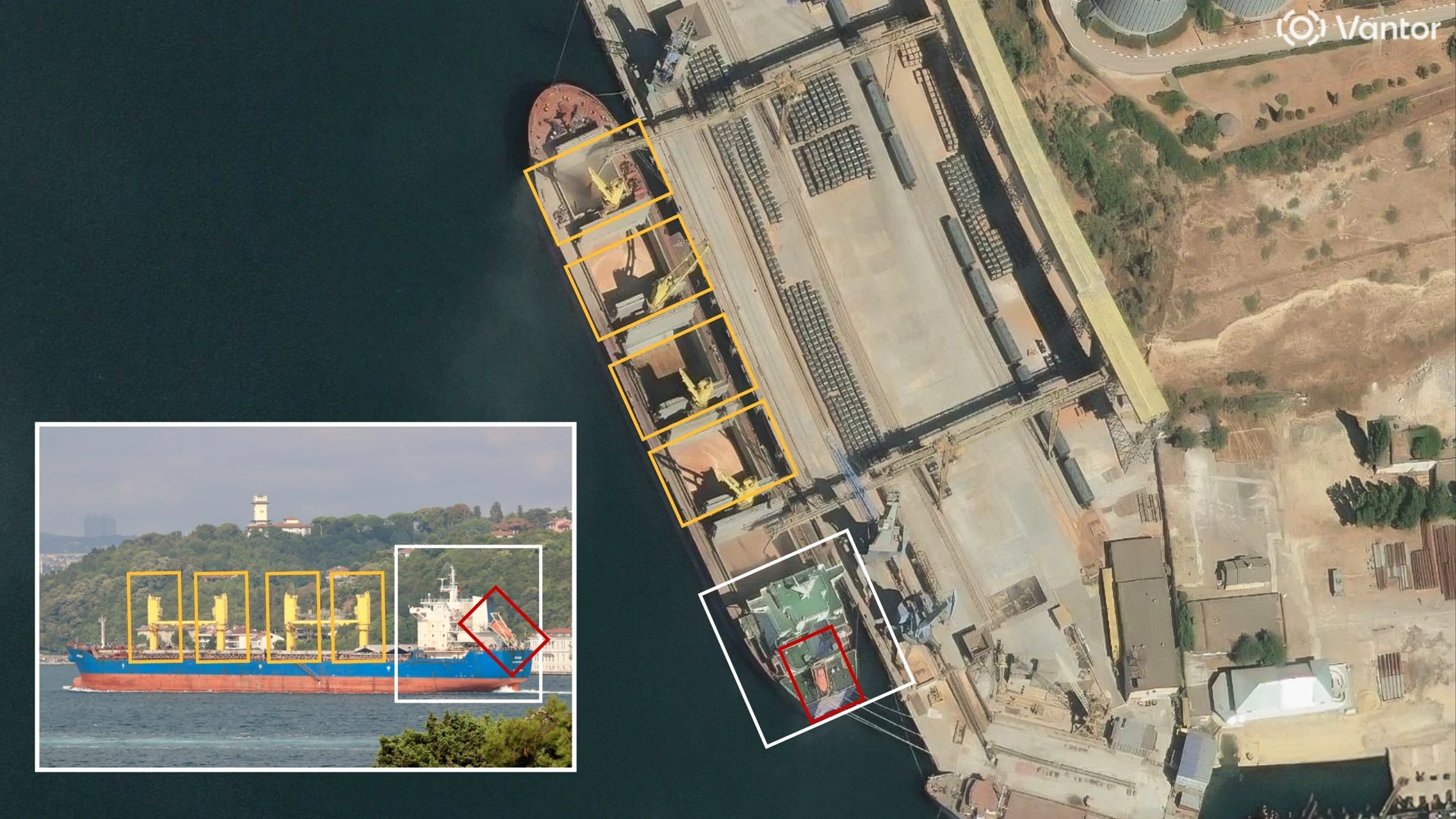
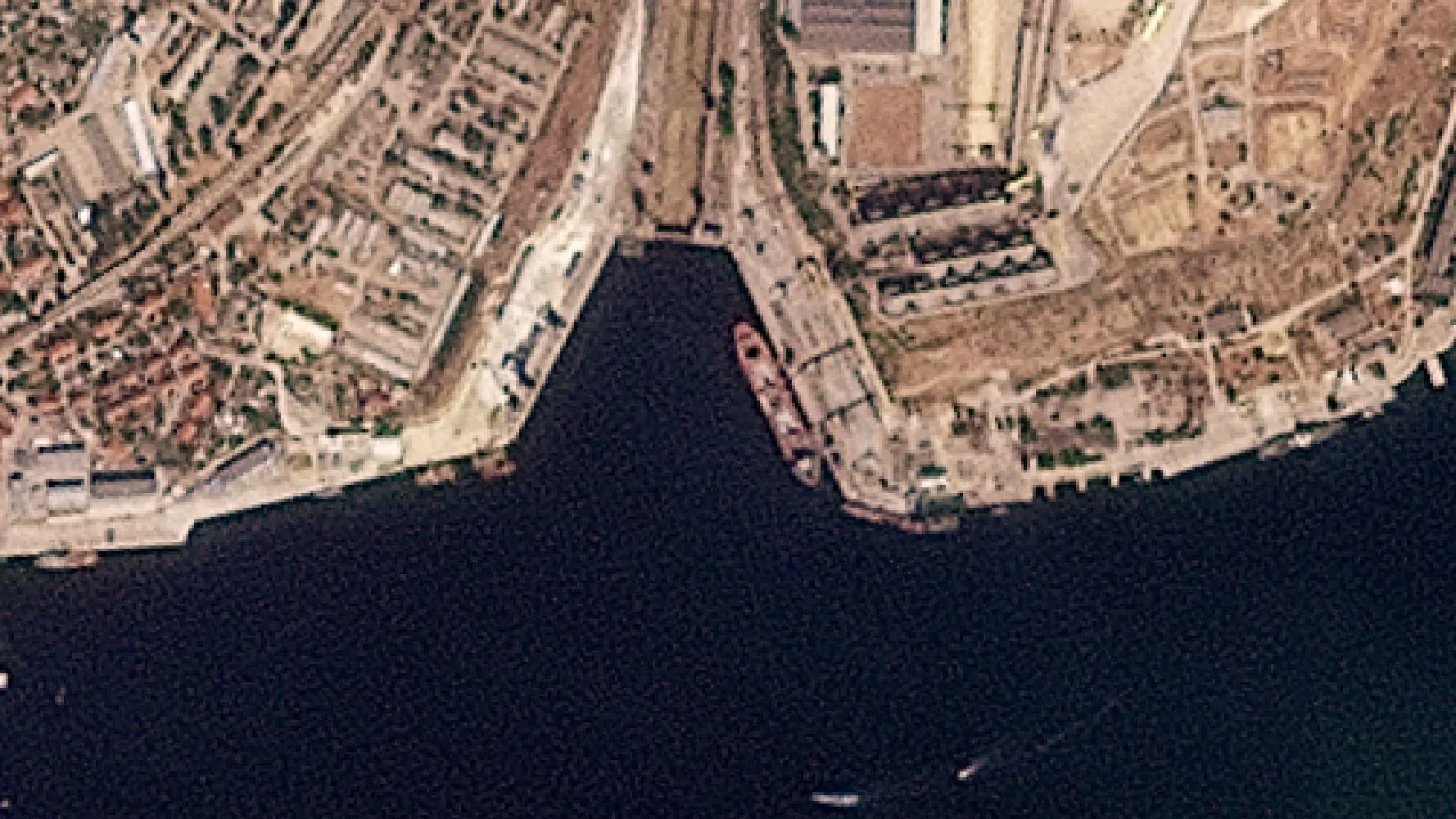
Imagery shows Krasnodar docked at Berth 21 of the Avlita grain terminal at the Port of Sevastopol on August 27.

Credit: Planet Labs PBC

Black Sea

Krasnodar turns its AIS back on in the Black Sea, as required to transit the Bosphorus on September 6.

Bosphorus Strait

Krasnodar transits the Bosphorus. Judging by the draft, with no visible red paint on its hull, the ship appears to be fully laden.

Credit: Yörük Işık

Saudi Arabia: King Abdullah Port

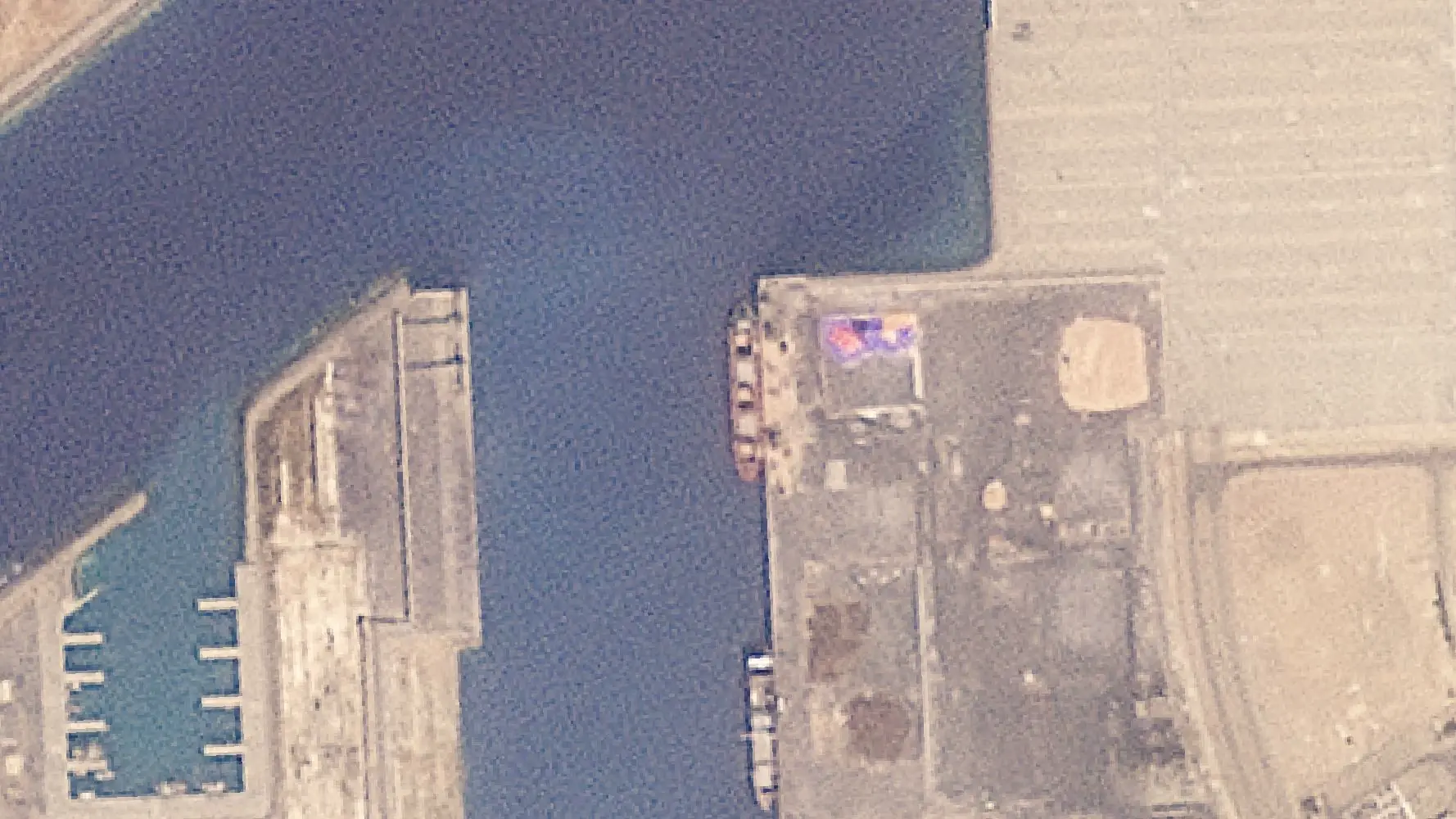
Imagery (as well as AIS data) shows Krasnodar docked at the King Abdullah Port. A pile of what appears to be grain is visible to the right of the image on September 18.

Credit: Planet Labs PBC

Bosphorus Strait

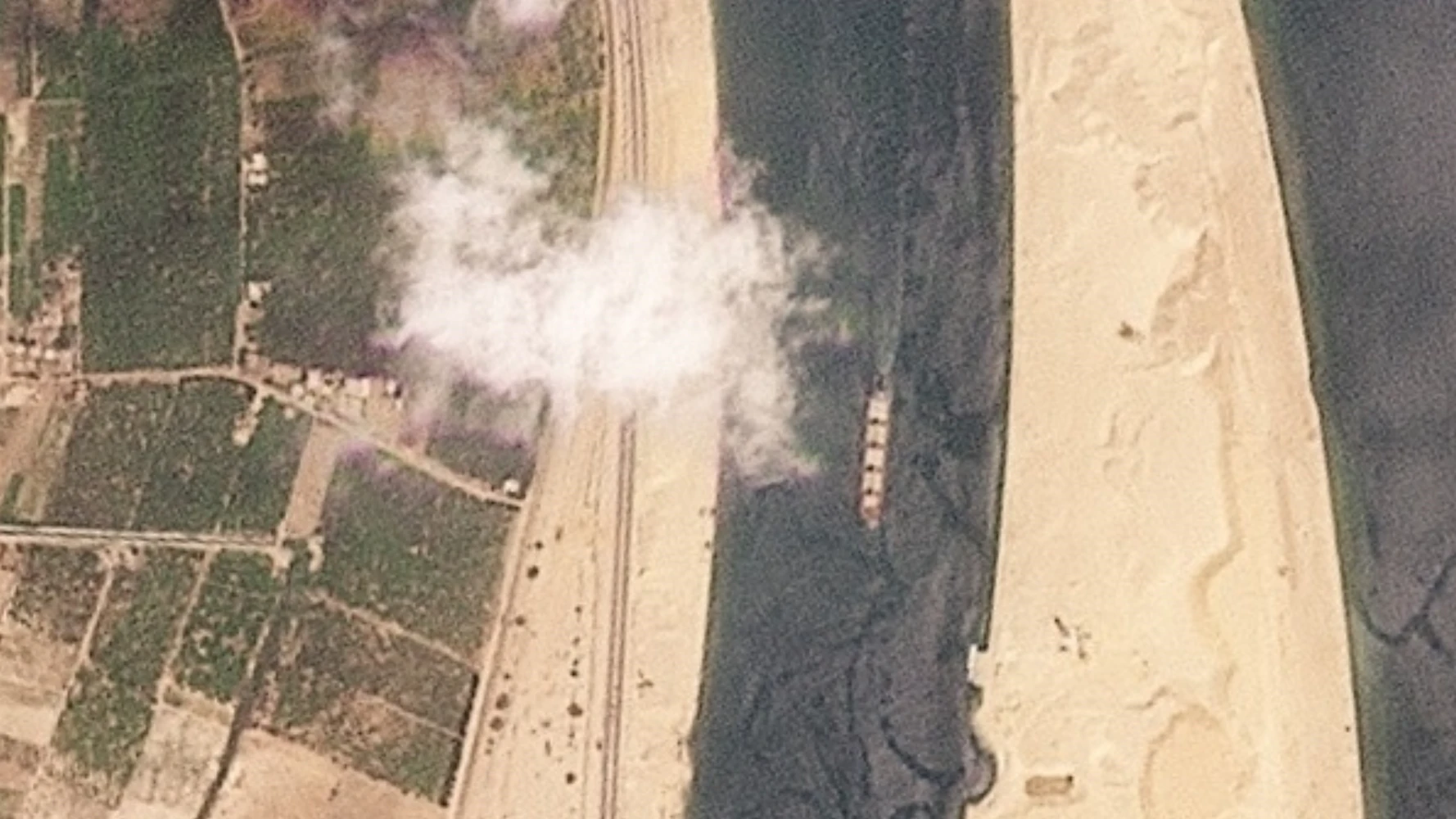
Returning via the Suez Canal, Krasnodar transits through the Bosphorus on September 28 with its red paint fully visible, indicating it is not heavily laden.

Credit: Yörük Işık

Black Sea

Krasnodar goes dark – an AIS gap lasting more than one week begins on October 6.

Occupied Crimea: Port of Sevastopol

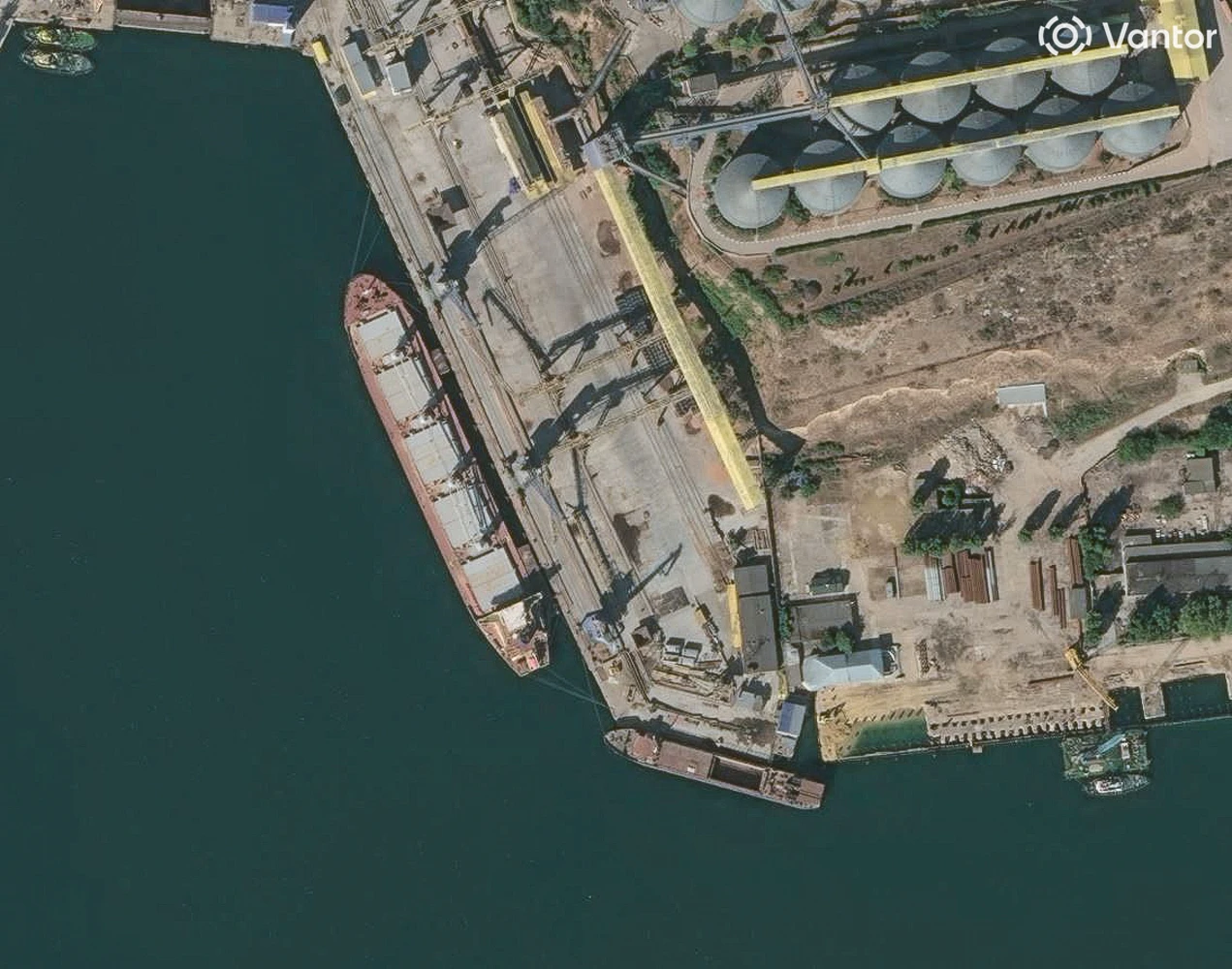
Satellite imagery shows Krasnodar docked, with its hatches open, at Berth 21 of the Avlita grain terminal on October 8.

Satellite image ©2025 Vantor

Black Sea

Krasnodar turns its AIS back on in the Kerch strait. After a few days loitering in the Kerch strait, it transits through the Bosphorus.

Bosphorus Strait

With no red paint visible and the Plimsoll line near maximum draft, the vessel appears to be fully laden when it transits the Bosphorus on October 26.

Credit: Yörük Işık

Saudi Arabia: Jazan City

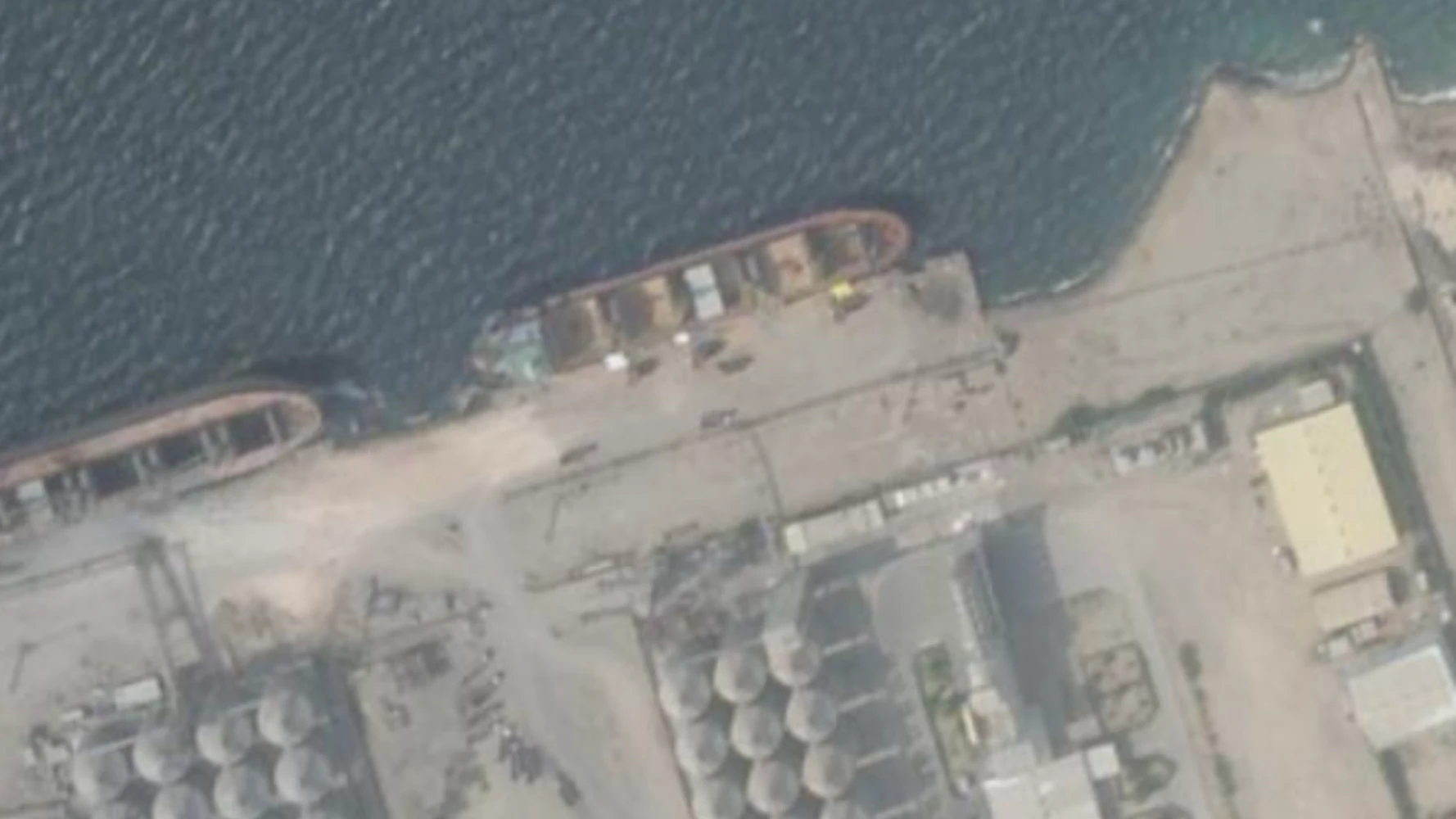
AIS data shows Krasnodar docked at Jazan City for Primary and Downstream Industries for seven days. Planet imagery captured it on November 6.

Credit: Planet Labs PBC

After leaving Jazan, Krasnodar returned to the Black Sea via the Bosphorus on November 23.

It stopped transmitting AIS for a third time on November 24 for nine days and has been intermittently transmitting data since.

Krasnodar was again captured in satellite imagery docked at the Avlita terminal in Sevastopol on November 26. 

Krasnodar captured in satellite imagery docked at the Avlita terminal in Sevastopol on November 26. Credit: Planet Labs PBC

Petrokhleb-Kuban Denies Visiting Avlita Terminal

Documents accessed on Russia’s federal registry indicate the vessel is leased by Russian firm Petrokhleb-Kuban, a major player in Russian and international grain markets. 

Petrokhleb Kuban told Bellingcat it “categorically denies any allegations of involvement in the theft of grain from Ukrainian regions”.

It added that Petrokhleb-Kuban does not export grain from the Avlita terminal to any country.

“Petrokhleb-Kuban does not operate at the port of Avlita and does not ship grain from there. All grain shipped by Petrokhleb-Kuban is produced by Russian farmers,” a spokesperson said. 

“The vessel Krasnodar follows all widely accepted safety protocols and does not disable its AIS while on passage. The AIS signal in the Black Sea is being jammed by the military due to the ongoing conflict between Russia and Ukraine.”

The spokesperson also said the vessel Krasnodar was loading barley at the port of Kavkaz, “as confirmed by bills of lading and port clearance.”

AIS interference is rampant in the Black Sea, however, instances of jamming typically do not last more than a couple of days. Further, third-party disruptions impact all vessels in one area indiscriminately. 

Bellingcat reviewed the AIS traces of vessels sailing near Krasnodar. In both voyages, Krasnodar was the only vessel in that area that stopped transmitting AIS data for that period of time.  

Bellingcat also checked available Planet Labs PBC and Sentinel-2 satellite imagery covering the grain terminal in Port Kavkaz during the two periods of August and October where Krasnodar has absent or unreliable AIS coverage and found no vessels matching the length of the Krasnodar.

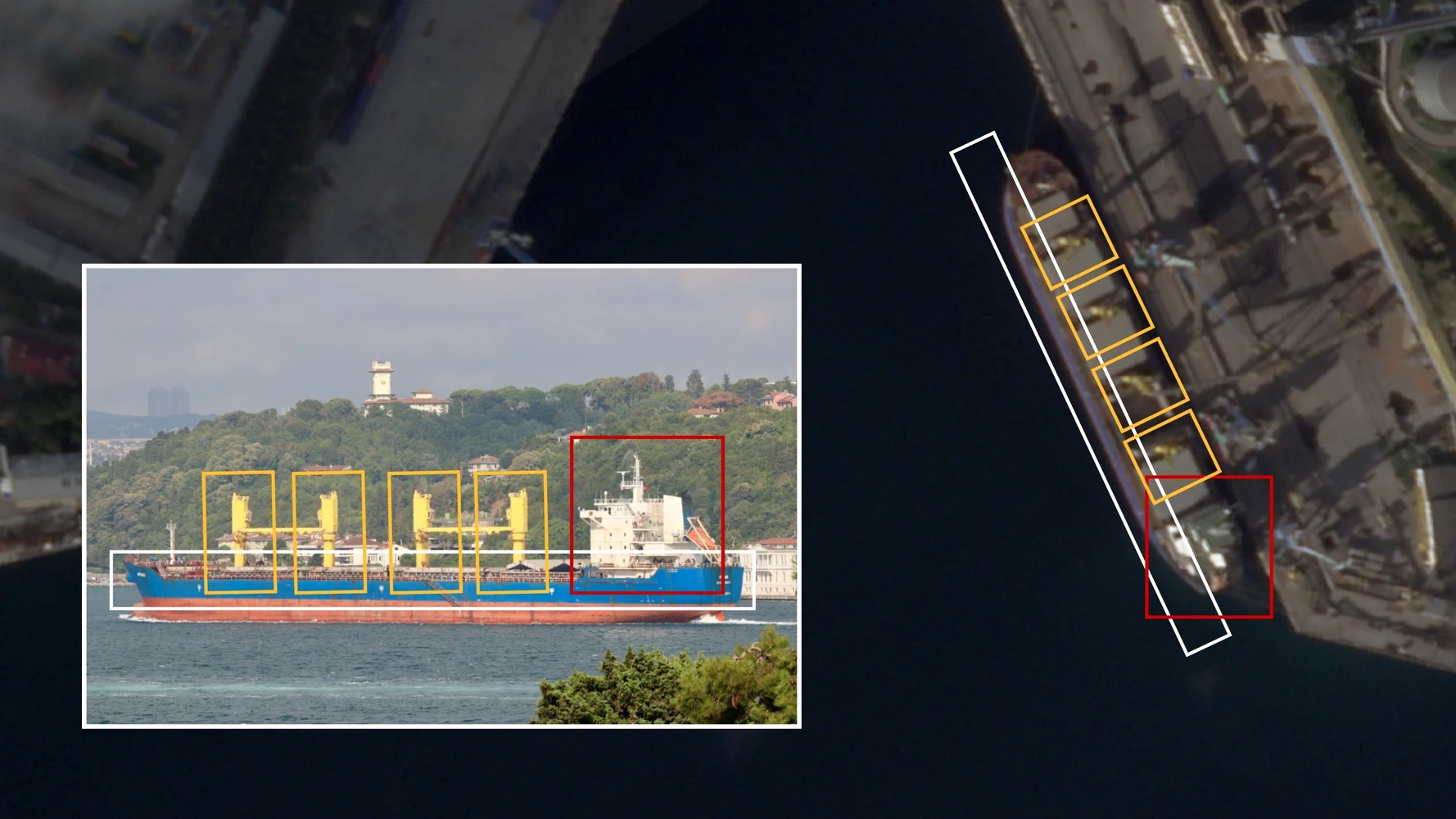
Bellingcat identified Krasnodar in Avlita terminal on three occasions, by cross referencing satellite images of Krasnodar and recent images and video of the ship. Krasnodar was last detected at Avlita terminal in satellite imagery on November 26, again with its AIS switched off.  Krasnodar’s chimney is navy blue in colour, except for a white band on the left, right, and front side of the chimney. The ship’s other features – five grey hatches, four grey cranes, a red deck, a green floor on the bridge, all visually match known images of the ship.

Finally, the ship’s measurements (a total length of 183 metre according to Russia’s shipping registry) matches what we see in satellite images.

Visual Comparison: Images of Krasnodar at Avlita Terminal and other recent images of Krasnodar

The Krasnodar has a dark blue (midnight navy blue) chimney with a white band that runs around the sides and the front of the chimney, leaving the back completely blue.

A close up of the Krasnodar photographed in the Bosphorus on October 26, 2025. Credit: Yörük Işık.

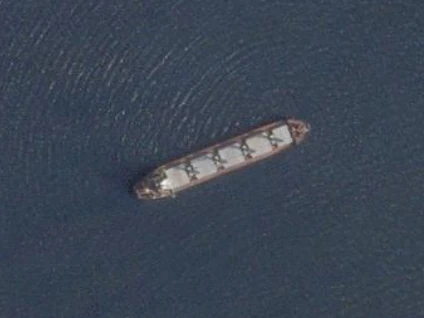
The life boats are immediately to the left and right of the bridge. The boats can also be seen in satellite imagery from Saudi Arabia. The image below shows Krasnodar in Jazan.

Krasnodar seen in Satellite Image at the Port of Jazan, Saudi Arabia on November 6, 2025. Credit: Planet Labs PBC.

Satellite imagery also clearly shows the colour of deck (dull red), the floor colour of the bridge (green), the colour of the hatches and the cranes (grey). All of that, as well as the chimney (navy blue with white) can be matched with satellite imagery from Sevastopol that show Krasnodar docked at the Avlita grain terminal.

Left: Krasnodar seen in Satellite Image at the Port of Jazan, Saudi Arabia on November 6, 2025. Right: Krasnodar seen in Satellite Image docked at Avlita grain terminal in the Port of Sevastopol on October 8, 2025. Credits: Planet Labs PBC and 2025 Vantor.

Five grey hatches and a red deck. The image on the left is from Jazan (November 6). The image on the right is from Sevastopol (October 8).

A close up of the above images. Credits: Planet Labs PBC and 2025 Vantor.

If we zoom in on the bridge, we can also see that the shape and the colour (grey) of the top of the bridge are also a visual match. 

The chimney is not very clearly visible in the image from Jazan but it is clear that the chimney is dark in colour. The image from Sevastopol shows a dark blue chimney with a white band, which was also visible in images and video of Krasnodar.

Left: Krasnodar seen in Satellite Image docked at Avlita grain terminal in the Port of Sevastopol on October 8, 2025. Right: A close up of the Krasnodar taken in the Bosphorus on October 26, 2025. Credits: 2025 Vantor and Yörük Işık. Annotations by Bellingcat.

We see red on the hull, below the water line, in the Sevastopol satellite image. You can also see it in the image from when the ship transited the Bosphorus. The rest of the hull is dark.

Left: Krasnodar seen in Satellite Image docked at Avlita grain terminal in the Port of Sevastopol on October 8, 2025. Right: Krasnodar photographed in the Bosphorus on October 26, 2025. Credits: 2025 Vantor and Yörük Işık.

There are no live or historic sanctions on Krasnodar, according to Lloyd’s List Intelligence data.

Saudi Arabia Joins List of Importers of Russia’s Smuggled Grain


Krasnodar’s voyages from Sevastopol to Saudi Arabia demonstrate that Russia is continuing to expand its grain exports from occupied Crimea to new markets as it negotiates to end the war in Ukraine.

Crimea’s occupied ports have become important assets for Moscow, having evolved into key logistics hubs for dark grain exports over the course of the war.

Prior to the full-scale invasion of Ukraine in 2022, the ports in occupied Crimea were used for the small-scale export of grain and scrap metal, mostly to Syria and Turkey.

The occupation of additional territory in Donetsk and Zaporizhia enabled Russia to establish a new supply route, resulting in more grain being shipped south to Crimea for export to international markets.

The Port of Sevastopol and the Avlita grain terminal remain under European, UK and US sanctions. While no UN sanctions specifically target the port, a majority of UN member states have passed resolutions condemning Russia’s invasion of Ukraine and its occupation of Crimea since 2024. 

Ukraine has repeatedly tried to dissuade countries from purchasing shipments loaded with what it describes as “stolen” grain from occupied regions.

In 2023, Iran received its first grain shipments from Sevastopol. In 2024, it was joined by Venezuela, Libya, Egypt and the Houthis, which control territory in Yemen. Last month, Bellingcat revealed that the bulk carrier Irtysh (IMO: 9664976) delivered grain from the Crimean port of Sevastopol to the Houthi-controlled port of Saleef in Yemen despite Western Sanctions. 

Bellingcat and other news outlets have identified a total of eight countries that have imported grain directly from occupied Crimea.

While Saudi Arabia is the latest direct importer from Sevastopol, it is unclear if authorities are aware of the origin of the cargo. 

The grain shipments follow a similar pattern to Russia’s shadow fleet, which moves sanctioned oil barrels. In both cases steps are taken to disguise the origin of the cargo and port of loading.

Most ships calling to Crimea disable their AIS transponders, which is considered a deceptive shipping practice, and fraudulent documents are issued. 

Alona Shkrum, First Deputy Minister for Development of Communities and Territories of Ukraine, told Bellingcat that Ukraine was closely monitoring Russian exports from occupied territories. She said Ukraine had discussed the issue with Saudi Arabia on the sidelines of recent talks at the International Maritime Organisation Assembly.

She told Bellingcat that Ukraine had “received assurances that Saudi authorities are actively counteracting the risks posed by shadow fleet operations and other violations of international maritime law.” 

She added that Ukraine would continue to work with partners to identify and sanction vessels involved in the illegal export of grain from occupied territories. 

Bellingcat contacted both the Saudi Arabian Ministry of Foreign Affairs and the Russian Ministry of Foreign Affairs; neither responded to requests for comment. 

US-Russia Peace Plan and Ownership of Ukraine’s Ports


The US-Russia 28-point peace proposal includes the recognition of Crimea, Luhansk and Donetsk as “de facto” Russian. Ownership of Crimea and the occupied territories bordering the Sea of Azov is critical for securing shipping routes to and from Russia, and these ports play a vital role in supporting economic growth in the region. 

However, the impact of ceding control of this region and the port of Sevastopol to Russia is not mentioned in either the original US draft plan or subsequent amended versions.

Ian Ralby, chief executive of the maritime and resource security consultancy I.R. Consilium said while it was a high priority for Ukraine to ensure access to the grain market through the Black Sea is preserved, Russia is continuing to try to expand its global access to ports. 

“We see that there is a resurgence in Russia’s efforts on port access.”

“As the prospect of potential peace begins to loom, even though it seems to be much farther off than many would want, there is likely to be a renewed focus on the key strategic assets that matter for the future, and the ports have to be foremost among them.” 


Bridget Diakun, Yörük Işık, Youri van der Weide, Peter Barth and Galen Reich contributed to this report.

Cover image: Planet Lab image shows Krasnodar docked at Jazan City, Saudi Arabia on November 6. Credit: Planet Labs PBC.

Bellingcat is a non-profit and the ability to carry out our work is dependent on the kind support of individual donors. If you would like to support our work, you can do so here. You can also subscribe to our Patreon channel here. Subscribe to our Newsletter and follow us on Twitter here and Mastodon here.

The post Russia’s Smuggled Grain Finds New Market in Saudi Arabia appeared first on bellingcat.
‘Pattern of Extreme Brutality’: Tear Gas, Pepper Balls Among Weapons Deployed Against Protesters in Illinois

To stay up to date on our latest investigations, join Bellingcat’s new WhatsApp channel here.

This investigation is part of a collaboration between Bellingcat and Evident. You can watch Evident’s video here.

Children in Chicago’s Old Irving Park neighbourhood were preparing for a Halloween parade on Oct. 25 when federal agents reportedly deployed tear gas on the street to disperse protesters opposing immigration-related arrests in the neighbourhood.

“Those kids were tear gassed on their way to celebrate Halloween in their local school parking lot,” US District Judge Sara Ellis said in court on Tuesday, according to a CBS News report. “I can only imagine how terrified they were.” 

Images of tear gas being deployed in Old Irving Park during the arrest of multiple people in the neighbourhood. Source: X / Mondophotos and X / TVMigrante

Ellis was questioning US Customs and Border Patrol Commander Gregory Bovino over this and other incidents that protesters allege violate a temporary restraining order (TRO) she issued earlier this month. 

The Oct. 9 TRO was issued after a group of journalists, faith leaders and protesters filed a lawsuit against the Trump administration over what they described as a “pattern of extreme brutality” by federal agents against peaceful protesters since Operation Midway Blitz – a multi-agency operation against “criminal illegal aliens” in Illinois – began on Sept. 2. 

Subscribe to the Bellingcat newsletter

Subscribe to our newsletter for first access to our published content and events that our staff and contributors are involved with, including interviews and training workshops.

When Judge Ellis asked Bovino to produce all use-of-force reports since Sept. 2 from agents involved in Operation Midway Blitz by the end of Tuesday, Bovino said it would be impossible because of the “sheer amount”. Ellis then ordered Bovino to turn over these reports, along with the accompanying body camera footage, by the end of Friday, Oct. 31.

The court order places restrictions on federal agents’ crowd-control measures within the state, including their use of “riot control weapons” such as tear gas and pepper spray, the use of force against individuals and requiring people to leave public spaces that they lawfully have the right to be in. 

A subsequent court filing on Oct. 27 alleges that federal agents have violated the TRO “almost every day” since it was issued. “Immigration enforcement does not typically require the daily use of tear gas on civilians in residential areas,” the filing stated.

Bellingcat’s analysis of social media videos from 28 events in Illinois from Oct. 9 to Oct. 27 found multiple examples of force and riot control weapons being used.

In total, we found seven that appeared to show the use of riot control weapons when there was seemingly no apparent immediate threat by protesters and no audible warnings given. Nineteen showed use of force, such as tackling people to the ground when they were not visibly resisting. Another seven showed agents ordering or threatening people to leave public places. Some of the events identified showed incidents that appeared to fall into more than one of these categories. 

You can view the full dataset here

It is important to note that the full context of an incident may be unclear from videos on social media alone. Bystanders often only begin filming when an arrest is already ongoing, for example, which can make it difficult to determine what happened in the moments before force was applied. Each of the events included in our dataset were verified to have taken place in Illinois in recent weeks with at least two sources – videos taken by different people, local reporting or statements from the Department of Homeland Security (DHS).

The DHS – which oversees Customs and Border Patrol (CBP) as well as the United States Immigration and Customs Enforcement (ICE) – has justified the use of force or riot control weapons by saying that protesters were threatening or attacking agents. 

Bellingcat asked DHS whether it had any response to the TRO or allegations that agents had violated the TRO.

In a response received after the publication of this piece, Assistant Secretary Tricia McLaughlin did not directly address the TRO but said DHS officers “only use crowd control methods as a last resort when repeated warnings have been given”. 

DHS also said, several times in its response, that its officers were “facing a 1,000 percent increase in assaults against them”. This is a claim that the department has previously made when commenting on clashes with protesters during immigration operations in other cities such as Los Angeles and Portland. However, an NPR analysis of court records earlier this month only showed about a 25 percent rise in charges for assault against federal officers through mid-September, compared with the same period a year ago.

Support Bellingcat

Your donations directly contribute to our ability to publish groundbreaking investigations and uncover wrongdoing around the world.

The TRO does say that riot control weapons or force may be deployed in circumstances such as where there is an “immediate threat” of physical harm to the agents or others, multiple warnings have been given, or where “necessary and proportional” for an arrest. We did not include videos where it was obvious that such conditions had been met. 

Despite the limitations, videos taken by eyewitnesses are often the only evidence of such incidents, which may not be reported by media or may have concluded by the time journalists reach the scene.

Riot Control Weapons

In our analysis, we found videos showing the use of riot control weapons such as tear gas, pepper spray and other less-lethal weapons in seven events where protesters appeared to be posing no visible threat in the footage, and where no audible warnings appeared to be given. 

Among its provisions, the TRO prohibits the use of these types of weapons on people “who are not posing an immediate threat to the safety of a law enforcement officer or others” and also in cases where using them on intended targets would result in injury to those who aren’t posing any threat. 

One of these videos captured the moment Bovino threw what looked like a tear gas canister during the Oct. 23 clashes in the Little Village neighbourhood, during an operation where eight people were arrested, including a 16-year-old US citizen. Bovino and DHS have said that he was hit on the head by objects thrown by protesters before he threw the tear gas canister.  

Border Patrol Commander Gregory Bovino throwing a tear gas canister into a group of protesters in Little Village. Source: Instagram / @littlevillagelocal

DHS posted a video on Facebook, claiming that it was evidence that “the use of chemical munitions was conducted in full accordance with CBP policy and was necessary to ensure the safety of both law enforcement and the public”. 

The video showed a rock skidding on the ground behind Bovino, but did not show the moment that it allegedly hit the Border Patrol chief on the head. A protester who filmed the encounter has reportedly disputed that Bovino was hit. 

Tear gas was also deployed on Oct. 12 in Albany Park, Oct. 14 in the East Side of Chicago, Oct. 24 in Lakeview and Oct. 25 in Avondale. Bellingcat reviewed footage of each of these incidents and could not see threats to the agents’ safety in the videos before tear gas was deployed, or that audible warnings were issued within the footage.

Videos we reviewed also showed other types of riot-control weapons mentioned in the TRO. Another video from the Oct. 23 protests in Little Village, posted by a protester named Enrique Bahena, shows an agent shooting a less-lethal projectile directly at the person filming. An Oct. 26 court filing said Bahena was shot in the “neck from five feet away with a pepper ball”. 

A federal agent shooting in the direction of a person filming with a B&T GL06 40mm less-lethal launcher in Little Village. Source: YouTube / @BlockClubChi

Bellingcat’s analysis of the video, which appears to be the same one shown in screengrabs in the court filing, found that the video in fact shows the agent deploying a B&T GL-06 40mm launcher, which can be used to launch chemical irritant rounds such as the one visible in the video.  

Top left: Federal Agent with B&T GL06 40mm launcher (red box) before aiming. Source: Facebook / Draco Nesquik, annotation by Bellingcat; top right: reference image of a B&T GL06 40mm launcher. Source: B&T USA; bottom left: Border Patrol Agent at the same scene with a PepperBall gun. Source: Youtube / @BlockClubChicago, annotation by Bellingcat; bottom right: image from the manual of a TAC-SF PepperBall gun showing the general arrangement. Source: PepperBall

Bahena said in an interview with local outlet Chicago Block Club that agents did not give warnings before they shot him “in the throat” and threw gas canisters at the group of protesters who were shouting at them to leave. He also said in the interview that protesters did throw objects at agents, but that this was after agents had already used force.

B&T technical specifications for their 40mm projectiles state that “shots to the head, neck, spine, or heart are to be avoided unless lethal force is justified”, and advise users to aim at the waistline. 

A DHS Office of Inspector General Report in 2021 states that “ICE’s use of force policy indicates that the 40MM launcher is deadly force when fired at someone, while the CBP use of force policy only directs officers not to target a person’s head or neck”.

During this same event in Little Village, videos show other officers appearing to fire less-lethal weapons towards protestors.

Left: A federal officer appearing to fire pepper balls at protestors in Little Village on Oct. 23. Source: Facebook / Ismael Cordova-Clough; right: zoomed in view of the same scene by Bellingcat

The TRO restricts the use of Compressed Air Launchers or Munitions Launchers such as 40mm launchers to strike a person, including on the neck, unless they pose an “immediate threat of causing serious bodily injury or death”.  

In another incident on Oct. 22, an agent appeared to quickly roll down a window and spray what appeared to be a chemical irritant at protesters who were confronting federal officers near a Sam’s Club store in the Cicero neighbourhood of Chicago. 

The incident was captured in two separate livestreams, which show a few protesters near an unmarked dark grey Chevrolet Tahoe with no front licence plate. One of the protesters taps on the window of the vehicle. Someone then rolls down the window and sprays what appears to be a liquid very quickly before rolling the window back up as the car leaves the scene. One of the people filming said in the post for the livestream that this was pepper spray, although Bellingcat was unable to verify this. 

An officer spraying a chemical agent, said to be pepper spray, from the back seat of a vehicle. Source: Facebook/ Eddie Guillen (at 23:16)

DHS did not respond directly to Bellingcat’s questions about whether it believed that the use of riot-control weapons – including during the Oct. 23 Little Village protests – was justified based on the terms of the TRO. 

Use of Force

Bellingcat also reviewed multiple videos of agents using force in arrests that appeared to be related to Operation Midway Blitz, and identified those where the force shown being used looked potentially excessive and the person being arrested did not appear to pose an “immediate threat of physical harm to others” – a requirement in the TRO for using force such as tackling or shoving someone to the ground.

On Oct. 10, a day after the TRO was issued, an ICE agent was seen dragging a teenage girl out of a car in Hoffman Estates, a suburb of Chicago, and tackling her to the ground while she shouted “I’m not resisting”. The teenager, reportedly an 18-year-old US citizen, was handcuffed and an officer appeared to put a knee on her back. DHS Assistant Secretary McLaughlin said in a post that the incident was a “burglary” arrest from 2024 which did not involve ICE – although this has been debunked by multiple news outlets

Bellingcat asked DHS about this specific incident and why McLaughlin’s post remains up on X despite multiple news outlets verifying that the incident took place this month in Hoffman Estates, but did not receive a response. 

Screenshot of a video of a teenager’s arrest in Hoffman Estates. Source: Facebook / Ismael Cordová-Clough

This was not the only case where DHS’ version of events appears to contradict video footage of the incident posted on social media. 

On Oct. 22, a woman identified by DHS as Isabel Mata was arrested by Border Patrol agents in Little Village. A video of the incident shows multiple agents tackling her while one of them has his knee on her back to hold her to the ground. DHS stated Mata “allegedly threatened a law enforcement officer after stating she would put a hit out on Chief Gregory Bovino”. Bellingcat reviewed a video that showed the minutes before Mata was tackled by agents but did not hear any threat being made, even though Mata appeared to have been standing near the person filming.

DHS initially did not respond to Bellingcat’s questions about this incident, but after publication it sent us the same statement it made on Oct. 24 with the allegation that Mata had threatened Bovino.

Another video from Oct. 10 appears to show agents colliding with a car on Hubbard Street and dragging the driver out by her legs. The woman, identified as Dayanne Figueroa, told Newsweek that she was on her way to get coffee before work and “instead of handling the situation as a routine traffic incident”, masked armed agents forcibly removed her without questions or informing that she was under arrest.

DHS reportedly told Newsweek that Border Patrol was making a targeted arrest when Figueroa’s vehicle blocked agents and struck an unmarked government vehicle. They also said she “violently resisted” and was arrested for assault on a federal agent.

The video shows agents arresting someone, before one of their vehicles swerves into another lane and appears to hit Figueroa’s car. Multiple bystanders can be heard shouting that the agents hit Figueroa’s car first and that they were making a U-turn in the middle of the street.

Left: Screenshot of a video showing Dayanne Figueroa’s arrest. Source: YouTube/ Fernando Figueroa; right: screenshot of video showing Isabel Mata’s arrest. Source: Facebook/ Ismael Cordová-Clough

Bellingcat asked DHS about the conditions under which it would consider the use of force – such as tackling or shoving people to the ground – proportionate and necessary, but did not receive a direct response to this question. 

Dispersal Orders

The TRO prohibits federal agents from “issuing a crowd dispersal order requiring any person to leave a public place that they lawfully have a right to be, unless dispersal is justified by exigent circumstances as defined by Department of Homeland Security Use of Force Policy”. 

Bellingcat has asked DHS about when agents are justified in telling people to get off the streets, or people in cars to stop following them, and whether there are any laws preventing people from following or filming federal agents from a distance. DHS did not respond to these questions in their response after this story was published.

However, we found several examples of agents telling people to leave public places when they did not appear to be impeding arrests in video footage. 

In a video recorded in Chicago’s Arlington Heights on Oct. 24, a masked man with a rifle tells someone filming to “get the f*** across the street” and “get back to your car”. The person filming is shouting that agents have assaulted a woman and slapped her phone out of her hands, and the video appears to show a woman in a scuffle with a masked agent. A separate video from the same location and date shows agents arresting a man who is on the ground. 

Left: screenshot of a video appearing to show a federal agent in a scuffle with a woman in Arlington Heights. Source: Facebook/ GMV Podcast; right: the same agent seen involved in an arrest nearby on the same day. Source: TikTok / @luisjavi04

In some of these cases, agents appear to be pointing non-lethal weapons at civilians while ordering them to leave public spaces. A video from Oct. 16 shows agents telling protesters to “get out of the street”, pointing pepper spray at them and threatening them with arrest in Chicago’s Evanston neighbourhood.

A plainclothes agent filmed pointing pepper spray at a protester in Evanston. Source:  Instagram / orchidstrueblue

A similar incident took place in Rolling Meadows on Oct. 19 when an officer was pictured pointing a pepper ball gun from a moving vehicle at a person filming him in a parking lot. A federal judge reportedly said the incident was “troubling” and has called for answers. 

On Oct. 20, in Berwyn, an agent pointed a gun at a woman who said she was pregnant. By the woman’s account, the agents were chasing after two people and the video shows her honking to alert those nearby. A DHS agent told Newsweek that the agent “acted to protect his life and safety of others around him and showed great restraint”.

Left: Screenshot of a video showing a federal agent pointing a pepper ball gun from a moving car at a protester. Source: TikTok / ericcervantes25; right: screenshot of a video of an agent pointing a gun at a woman in Berwyn. Source: TikTok / chiquibaby317

Judge Ellis’ TRO is set to expire on Nov. 6. There is a scheduled hearing the day prior, Nov. 5, to determine if the TRO should be converted into a preliminary injunction. 


Editor’s Note (Oct. 31): This story was updated to include a response by the Department of Homeland Security who responded to our request for comment after publication.

Pooja Chaudhuri, Kolina Koltai, Youri van der Weide, Sebastian Vandermeersch, Melissa Zhu and Trevor Ball contributed research to this piece, alongside Fraser Crichton, Olivia Gresham, Bonny Albo and Vladimir Zaha from Bellingcat’s Global Authentication Project.

Bellingcat is a non-profit and the ability to carry out our work is dependent on the kind support of individual donors. If you would like to support our work, you can do so here. You can also subscribe to our Patreon channel here. Subscribe to our Newsletter and follow us on Twitter here and Mastodon here.

The post ‘Pattern of Extreme Brutality’: Tear Gas, Pepper Balls Among Weapons Deployed Against Protesters in Illinois appeared first on bellingcat.

Russia’s Grain Smuggling Fleet Continues Undeterred

An investigation by Bellingcat has identified yet another Russian-flagged bulk carrier, Irtysh (IMO: 9664976), operating in defiance of Western sanctions by exporting grain from occupied Crimea to Houthi-controlled Yemen. 

Following the same pattern of deceptive methods used by other vessels involved in what Ukraine describes as “grain theft,” Irtysh disabled its location tracking en route to and from the Port of Sevastopol. The vessel also made a mandatory stop in Djibouti for inspection by the United Nations Verification and Inspection Mechanism (UNVIM) for Yemen before sailing on to the Port of Saleef, Yemen. 

The majority of UN member states have repeatedly voted against Russia’s invasion of Ukraine. UNVIM told Bellingcat: “As a UN mandated body UNVIM does not have the authority to block shipments based on unilateral national or regional sanctions.” They added: “The UNVIM mandate is limited to verifying compliance with the UN Security Council resolutions related to Yemen.”

However, experts have previously highlighted to Bellingcat that even with the limitations of that remit the fact that grain shipments from occupied Ukrainian territories are passing through UN inspection mechanism creates an awkward situation.

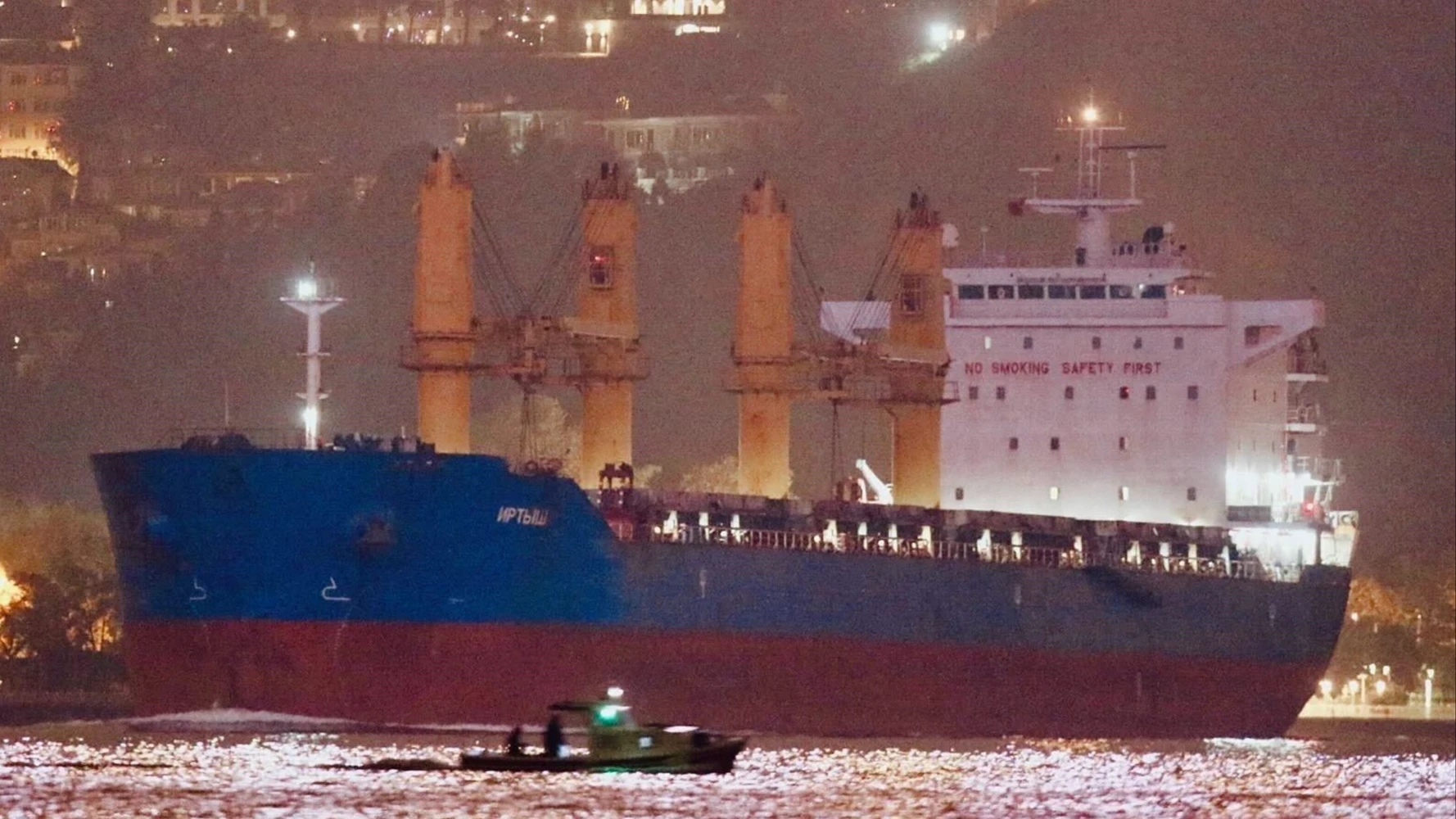
Bellingcat mapped Irtysh’s journey by combining Automated Identification System (AIS) data from Lloyd’s List Intelligence and satellite analysis. During the investigation, two additional vessels were also identified with their tracking systems disabled while loading grain in Sevastopol: Matros Pozynich (IMO: 9573816) and Zafar (IMO: 9720263).

MapLibre | Protomaps© OpenStreetMap contributors
2025-08-07 14:27

Bosphorus Strait

With its red paint fully visible, the vessel appeared to be carrying very little cargo.

Credit: Yörük Işık

Black Sea

Irtysh went dark – an AIS gap lasting two weeks began.

Occupied Crimea: Port of Sevastopol

Imagery showed Irtysh docked with its hatches open at Berth 21 of the Avlita grain terminal.

Satellite image ©2025 Vantor

Black Sea

Returning to Turkish waters, Irtysh turned its AIS back on as required for transiting the Bosphorus.

Bosphorus Strait

With no red paint visible and the Plimsoll line near maximum draft, the vessel appeared fully laden.

Credit: Yörük Işık

Egypt: Suez Canal

Irtysh transited the man-made waterway connecting the Mediterranean to the Red Sea.

Credit: Planet Labs PBC

Port of Djibouti: UNVIM Inspection

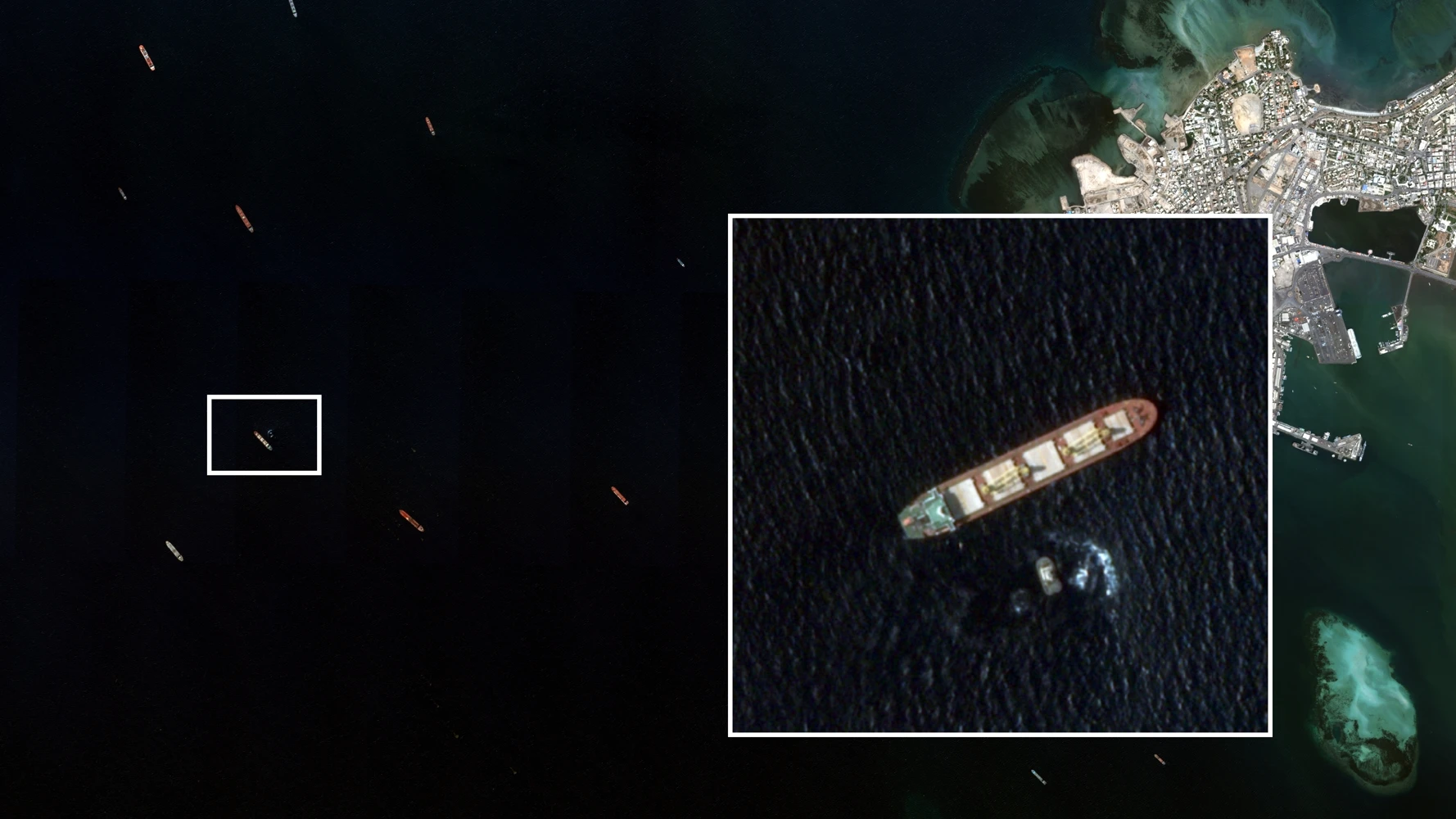
All cargo vessels must be inspected in Djibouti before proceeding to Houthi-controlled ports. AIS data showed Irtysh anchored off Djibouti for six days.

Credit: Planet Labs PBC

Houthi-controlled Yemen: Port of Saleef

Irtysh docked at the Port of Saleef for ten days, according to imagery and AIS data.

Credit: Planet Labs PBC

Bosphorus Strait

Returning via the Suez Canal, Irtysh transited the Bosphorus with its red paint fully visible, thus was not heavily laden.

Credit: Yörük Işık

Black Sea

Another AIS blackout, echoing its outbound path.

Occupied Crimea: Port of Sevastopol

Irtysh returned to Berth 21 of the Avlita grain terminal. As of the latest available imagery, the vessel remains in Sevastopol.

Credit: Planet Labs PBC

Just over a month after Irtysh was first seen loading grain at the Port of Sevastopol, Bellingcat identified another Russian vessel, Matros Pozynich, at the same berth. Previously identified by CNN in 2022 for exporting grain from occupied Ukraine, and by Bellingcat the following year, the vessel was docked at the Avlita grain terminal on Sept. 20.

Two days later, Matros Pozynich switched its AIS back on before sailing through the Bosphorus Strait, just as Irtysh had. With its hull sitting low in the water, the vessel was photographed passing through Turkish waters seemingly fully laden.

After calling at Djibouti, likely for inspection by UNVIM, AIS data shows the bulk carrier departing for Saleef, Yemen, on Oct. 8. At time of publication, Matros Pozynich remains in anchorage off the Port of Saleef, Yemen.

Docked at Port of Sevastopol

Sept. 20, 2025

Satellite image ©2025 Vantor

Fully Laden in Bosphorus Strait

Sept. 23, 2025

Credit: Yörük Işık

At Anchor in Djibouti

Oct. 5, 2025

Credit: Planet Labs PBC

At Anchor in Port of Saleef

Oct. 14, 2025

Credit: Planet Labs PBC

A third vessel, also previously implicated for smuggling grain, Zafar, was captured by satellite imagery with its AIS turned off at the Port of Sevastopol from Sept. 23.

Avlita grain terminal, Port of Sevastopol, Sept. 23–25. Satellite image ©2025 Vantor

At the time of publication, Zafar had not sailed to Yemen via Djibouti. Instead, it was anchored off the Port of Alexandria, Egypt – another known location for offloading grain from occupied Ukraine, according to OCCRP reporting.

“Grain Theft”

Ukraine has repeatedly tried to dissuade countries from purchasing shipments loaded with what it describes as stolen grain from occupied regions

The Port of Sevastopol and the Avlita grain terminal remain under European, UK and US sanctions. While no UN sanctions specifically target the port, a majority of UN member states have passed resolutions condemning Russia’s invasion of Ukraine and of its occupation of Crimea since 2024. 

Support Bellingcat

Your donations directly contribute to our ability to publish groundbreaking investigations and uncover wrongdoing around the world.

Both Irtysh and Matros Pozynich delivered grain to the Houti-controlled Port of Saleef via Djibouti – the UNVIM inspection point for Yemen. After ten years of war, the UNHCR reports that tens of thousands of people in Yemen are living in famine-like conditions, with a further five million people experiencing food insecurity.

UNVIM confirmed to Bellingcat that the Irtysh was inspected “in line with UNVIM operational protocols” on Sept. 7 and cleared by the Saudi-led coalition Evacuation and Humanitarian Operations Cell (EHOC) – a body entirely separate from the UN – on Sept. 8.

Asked whether UNVIM was aware the vessel had picked up grain from a port under Western sanctions, the agency replied: “The UNVIM mandate is limited to verifying compliance with the UN Security Council resolutions related to Yemen. Unilateral national sanctions or measures beyond that scope are outside the UNVIM mandate.”

Neither the Russian government nor its foreign ministry responded to requests for comment.


Yörük Işık, Bridget Diakun, Peter Barth, Galen Reich, Claire Press and Merel Zoet contributed to this report.

Bellingcat is a non-profit and the ability to carry out our work is dependent on the kind support of individual donors. If you would like to support our work, you can do so here. You can also subscribe to our Patreon channel here. Subscribe to our Newsletter and follow us on Twitter here and Mastodon here.

The post Russia’s Grain Smuggling Fleet Continues Undeterred appeared first on bellingcat.
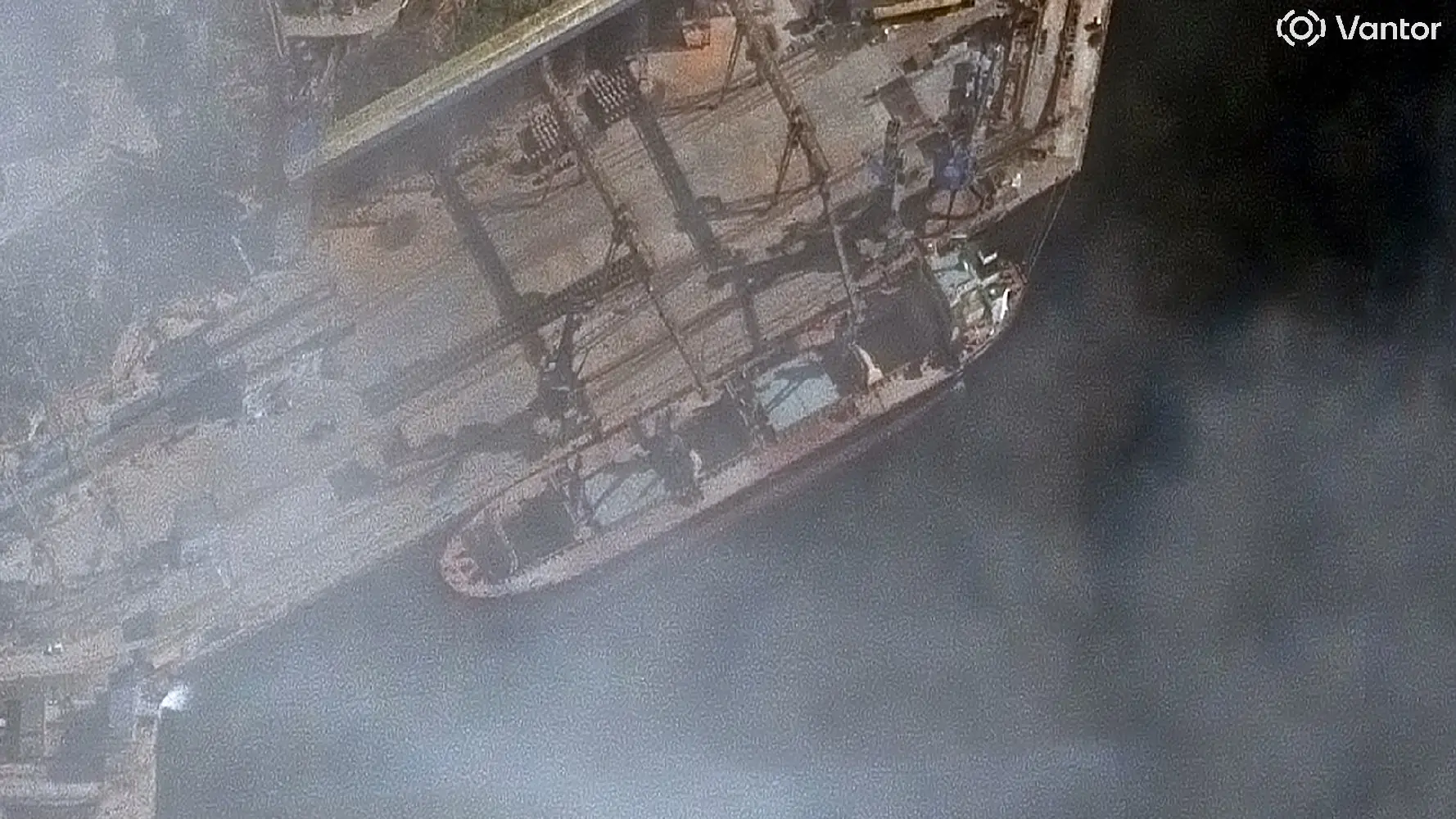
Trump’s Takeover of DC: Traffic Stops Turn Into Immigration Arrests for Delivery Riders and Workers

Four masked men in police tactical vests surround a young scooter rider, cuffing his hands behind his back. One person, whose face is fully obscured with a cap, sunglasses and a balaclava, is heard on eyewitness video telling the scooter rider: “You came into this country as a J1, as an exchange student. You didn’t show up … You lied, ok?” 

“Yeah, he’s illegal, either way,” another person is heard saying, before they lead him to an unmarked car. 

Screengrab from a video showing a man being arrested by federal agents along Florida Avenue Northwest, Washington DC on Tuesday, Sept. 2. Source: Instagram/@will.allendupraw

Nearby, two Metropolitan Police Department (MPD) cars are seen blocking part of the lane. Uniformed MPD officers stand around the area, neither intervening nor appearing to participate directly in the arrest. 

MPD vehicles seen blocking part of a lane where federal officers are arresting a man on a scooter along Florida Avenue Northwest, Washington DC on Tuesday, Sept. 2. Source: Instagram/@will.allendupraw

Support Bellingcat

Your donations directly contribute to our ability to publish groundbreaking investigations and uncover wrongdoing around the world.

The video was posted by Will Allen-DuPraw, whose profile says that he is a photographer and videographer based in DC, on Sept. 2. Allen-DuPraw wrote in the post that bystanders reported that authorities were stopping Latino men on scooters along Florida Avenue Northwest, a major road in Washington DC, and had arrested two. 

An urgent alert sent out on the morning of the same day by Stop ICE Alerts, a community-driven alert network for those affected by Immigration and Customs Enforcement (ICE) raids, reported similar information. The alert said that ICE, Homeland Security Investigations (HSI) – a branch of ICE focused on investigating transnational crime – and MPD were “stopping Latinos on scooters” and had arrested one or two people along Florida Avenue Northwest. 

A Metropolitan Police officer directs traffic at a checkpoint on New York Avenue after US President Donald Trump deployed US National Guard troops to Washington and ordered an increase in the presence of federal law enforcement to assist in crime prevention, in Washington, DC. Source: Reuters/Al Drago

With US President Donald Trump’s crackdown on immigration, scenes of federal agents detaining people while accusing them of immigration offences have been cropping up all over social media from around the country. An analysis of ICE arrest data by DC-based think tank Cato Institute found that in June and July alone, ICE conducted almost 9,000 street arrests nationwide of immigrants who had no criminal convictions, charges, or removal orders. About 90 percent of these were immigrants from Latin America.

The incident on Florida Avenue Northwest was one of 42 that Bellingcat and our partner Evident Media geolocated and verified using videos and photos from social media and news reports. These showed federal agent encounters in the capital, in the month or so since Trump’s federal takeover of DC on August 11. The full dataset can be downloaded here.

In the three weeks after DC was placed under federal control, Trump’s administration said more than 300 people without legal immigration status were arrested in the District. 

Like previous immigration raids that we documented in Los Angeles, the federal agents involved in the DC cases were often masked and in military wear. Some wore generic “Police” vests, while others had attire indicating specific government entities such as ICE and HSI. The vehicles they used were usually unmarked, with plates from a variety of US states.

Car plates from a variety of US states that federal agents in DC were filmed using in Washington DC. Source: Evident Media

There is one key difference, however. In LA, a state law prohibits local law enforcement from using its resources for immigration enforcement in most cases. But in DC, where no such law applies, MPD has frequently been seen working with federal officers since the federal takeover last month. 

In half of the incidents in our dataset, local DC law enforcement could be seen working alongside federal agents. Most of the DC local police were from MPD, though some were from the Metro Transit Police Department. Aside from ICE and HSI, agents from federal agencies including the US Park Police, Federal Bureau of Investigation (FBI), Drug Enforcement Administration (DEA) and Bureau of Alcohol, Tobacco, Firearms and Explosives (ATF) were also seen in the videos.

Agents from US Park Police, FBI, DEA and ATF were seen in the videos. Source: Evident Media

“We are definitely seeing MPD cooperate at a level we’ve never seen before, and it is resulting in people getting arrested and sent to detention,” Michael Lukens, who runs immigrant rights centre Amica, told Evident Media.

MPD has not replied to Evident Media’s queries about their cooperation with federal law enforcement agencies as of publication.

Of the cases we analysed, 22 involved the arrest of delivery drivers or tradespeople, such as workers in an air conditioning and heating truck.

In two widely shared videos, DC resident Tyler DeSue claimed agents pulled over his Uber Eats driver for having “incorrect tags” on his bike, then checked his registration and insurance and saw it was valid. DeSue said they then asked for his immigration status and detained him.

Police officers, one in an HSI vest, seen questioning a man in a video posted by Tyler DeSue on Aug. 17. Source: TikTok/@td13__

The videos DeSue posted did not show the initial encounter between the agents and the driver, but did show the arrest. DeSue can be heard in one video telling agents that the man they were questioning did not understand what they were saying, and they should use Google Translate. Another witness is heard calling the arrest “ridiculous” and questioning if the agents have “better things to do than to harass Uber Eats drivers”. 

In a second video, also posted by DeSue, agents are seen wrapping the man in chains before putting him in an unmarked car. 

A second video posted by DeSue on Aug. 17 show agents wrapping the man in chains before putting him into an unmarked car. Source: TikTok/@td13__

Another video posted by NPR reporter Chiara Eisner on Aug. 21 shows an agent in a “Police” tactical vest handcuffing a man in front of a truck, with US Park Police nearby. When Eisner asks what is happening, a Park Police officer says this is a traffic enforcement because the man was driving a commercial vehicle on park roads. 

US Park Police stand by as a man is arrested by an agent in a “Police” tactical vest, after what they said was a traffic enforcement for driving a commercial vehicle on park roads. Source: TikTok/@chiaraeisner

Subscribe to the Bellingcat newsletter

Subscribe to our newsletter for first access to our published content and events that our staff and contributors are involved with, including interviews and training workshops.

Evident Media asked the Department of Homeland Security (DHS) about videos of these two specific incidents, as well as whether federal agents were using race or language as factors in their stops and arrests. In response, a DHS spokesperson said: 

“What makes someone a target for immigration enforcement is if they are illegally in the US – NOT their skin colour, race or ethnicity. America’s brave men and women are removing murderers, MS-13 gang members, pedophiles, rapists – truly the worst of the worst from our communities.”

The spokesperson also claimed that the men detained in these two incidents were undocumented immigrants who entered the country illegally. They did not mention any other criminal record for the men or comment on why the men were stopped by local police in the first place. 

Lukens told Evident Media that ICE agents had been seen in areas with larger immigrant populations, such as Columbia Heights and Adams Morgan, which he described as “high-level racial profiling”.

Constitutionally, the Fourth Amendment protects anyone in the US, regardless of immigration status, from unreasonable searches and seizures by the government. 

“If you are an ICE officer and the only thing that you have to fall on or to fall back on in justifying arrest is a person’s racial makeup and what vehicle they are driving, then you have conducted an illegal stop and an illegal arrest,” Lukens said. 


Melissa Zhu, Eoghan Macguire, Pooja Chaudhuri and Kolina Koltai from Bellingcat, as well as Vladimir Zaha, Fraser Crichton and Bonny Albo from Bellingcat’s Global Authentication Project, contributed research to this piece.

From Evident Media, Jennifer Smart, Kevin Clancy and Zach Toombs contributed to research and production for the video report.

Bellingcat is a non-profit and the ability to carry out our work is dependent on the kind support of individual donors. If you would like to support our work, you can do so here. You can also subscribe to our Patreon channel here. Subscribe to our Newsletter and follow us on Bluesky here and Mastodon here.

The post Trump’s Takeover of DC: Traffic Stops Turn Into Immigration Arrests for Delivery Riders and Workers appeared first on bellingcat.

Ukraine’s Contaminated Land: Clearing Landmines With Rakes, Tractors and Drones

This story was produced in partnership with Agence France-Presse (AFP).

In a field near the small town of Bezymenne in southern Ukraine, Viktoria Shynkar carefully picks out a narrow path through the overgrown grass in front of her. 

This small corridor of farmland in Mykolaiv Oblast will be checked for the presence of landmines and explosive ordnance. 

If clear, Shynkar – a 36-year-old who worked as a hairdresser before Russia’s full-scale invasion in February 2022 – will move forward and create another space of the same size.

While she enjoys spending her days outside, it remains painstaking and dangerous work.

Viktoria Shynkar, 36, a HALO Trust deminer, works in a minefield near the village of Bezymenne, Mykolaiv region, on May 5, 2025, amid the Russian invasion of Ukraine. (Photo by Ivan SAMOILOV / AFP)

Shynkar and her colleagues, who work for the demining charity the Halo Trust, uncovered 243 TM-62 Soviet-designed anti-tank mines left by the Russian army in a neighbouring field.

A chunky and intimidating 32-centimetres in diameter and 13-cm-wide, the TM-62 contains 7.5 kilos of TNT and can puncture a tank if triggered. 

The presence of landmines and other unexploded ordnance is a significant issue in Ukraine, impacting civilians and Ukraine’s agricultural industry – a major employer and source of income to the country.

Data Challenges

Numerous bodies have sought to calculate the impact of landmines on Ukraine since the onset of Russia’s full invasion.

A screengrab of a map produced by Ukraine’s National Mine Action Centre (NMAC) detailing humanitarian mining activities in Ukraine. Green icons depict land that has been checked and cleared, yellow depicts suspected hazardous areas and red depicts confirmed hazardous areas.

Established by the Ministry of Defence, the country’s National Mine Action Centre (NMAC) has produced a map that highlights areas it confirms as hazardous, are suspected of being hazardous as well as those that have been cleared or checked for hazards. It can be seen here and in the image below.

The information is collated from over 80 demining groups operating in the country, which employ people like Shynkar. They collect data from the field and share it with the NMAC who upload it to this map made using the IMSMA platform produced by the Geneva International Centre for Humanitarian Demining.

Support Bellingcat

Your donations directly contribute to our ability to publish groundbreaking investigations and uncover wrongdoing around the world.

Yet the data the NMAC map contains, while significant, is only partial. 

For example, it only creates a picture for the Ukrainian side of the front line, and just parts of it at that, with an area 20 kilometres from the frontline inaccessible to demining groups. Those same demining groups are also not operating in Russian-controlled regions, making the overall picture even less clear.

Furthermore, just because an area may be noted as not being impacted in landmine datasets doesn’t mean that it is not at risk from mines or other explosive ordnance that may not have detonated on impact. Some may simply not have been found yet.

Waiting for Demining Groups To Visit

This is a concern for Ihor Kniazev, a farmer from the town of Dovhen’ke in Kharkiv Oblast. He complains to AFP that he has been waiting a long time for demining groups to visit. “Every year, they promise ‘tomorrow, tomorrow, we will clear all the fields’,” he says.

Kniazev says that he undertook the dangerous task of clearing his own fields with a metal detector. “Everyone clears mines themselves, absolutely everyone,” he insists. He even says that he ran over a mine in his tractor and was lucky not to be injured.

An interactive map shows the area around Dovhen’ke overlaid with data from Ukraine’s National Mine Action Centre (NMAC). Areas shaded red depict confirmed hazardous areas, according to NMAC data. Areas shaded yellow depict suspected hazardous areas, according to NMAC data. Data source here. Areas coloured light green on the map depict agricultural land as defined by Ukraine’s Ministry of Agriculture crop map tool. Data source here. Map credit: Logan Williams and Galen Reich/Bellingcat.

While Kniazev found that his land was indeed contaminated, his predicament highlights an important issue in demining in Ukraine and for farmers returning to areas that were previously occupied or near lines of contact.

While some areas are clearly identified as being mined, there remains uncertainty around those that are only suspected of being mined.

Several experts AFP and Bellingcat spoke to warned of the economic damage that could arise from suspicions that turn out to be incorrect. As a 2024 UN Development Programme report stated, areas suspected of being contaminated but not actually contaminated are either left alone or subjected to the same lengthy clearance process at what can be significant cost.

Such land could otherwise be used to grow crops and help reestablish returning farmers. Ukraine remains a huge food exporter despite the war, ensuring the issue is significant beyond its borders.

Some farmers AFP spoke to highlighted the complexity of trying to figure out which areas were contaminated and which were not.

Ukrainian farmer Ihor Kniazev, 45, stands in front of his field that is divided between one that is still contaminated by landmines and one that has been decontaminated in the village of Dovhenke, Kharkiv region, on May 2, 2025, amid the Russian invasion of Ukraine. (Photo by Ivan SAMOILOV / AFP)

When Detectors Become Useless

In the town of Kamyanka in Kharkiv Oblast, Victor and Larisa Sysenko talk about their gratitude to a team from the Fondation Suisse de Déminage (FSD) who helped clear their land with the help of a specialist demining machine. “There were lots of explosions under that machine,” recalled Larisa. 

Many of the mines were PFM-1 anti-personnel mines, which are more sensitive than anti-tank mines and can be deadly if stepped on by people. The Sysenkos have also had to deal with the danger of unexploded shells, remnants of a Ukrainian assault on retreating Russian troops in 2022 that remained burrowed in the soft soil without exploding.

However, in a selection of other fields nearby, it was a different story as FSD deminers found only three explosive remnants after a long and time-consuming search. 

One of the FSD team told AFP that the metal contamination in these fields was “so immense that our detectors became useless, constantly beeping”. Of the thousands of metal fragments detected, the vast majority proved non-explosive.

An interactive map shows the area around Kamyanka overlaid with data from Ukraine’s National Mine Action Centre (NMAC). Areas shaded red depict confirmed hazardous areas, according to NMAC data. Areas shaded yellow depict suspected hazardous areas, according to NMAC data. Data source here. Areas coloured light green on the map depict agricultural land as defined by Ukraine’s Ministry of Agriculture crop map tool. Data source here. Map credit: Logan Williams and Galen Reich/Bellingcat.

A few hundred miles to the west in the town of Korobchyne, Mykola Pereverzev describes building a remote-controlled tractor to try and activate all of the mines laid in around 200 hectares of fields present there.

Pereverzev, who works for an agricultural firm, describes the tractor being blown up and building another as the first was beyond repair.

The land is eventually being used again, and Pereverzev is putting down herbicides in the soil to sow sunflowers. 

But doubts remain about what may lie beneath.

“Soldiers have the saying that you can pass through one place normally five times, and blow up on the sixth time. Even professionals blow up, so what about us? We are just an agriculture company,” he says.

An interactive map shows the area around Korobchyne overlaid with data from Ukraine’s National Mine Action Centre (NMAC). Areas shaded red depict confirmed hazardous areas, according to NMAC data. Areas shaded yellow depict suspected hazardous areas, according to NMAC data. Data source here. Areas coloured light green on the map depict agricultural land as defined by Ukraine’s Ministry of Agriculture crop map tool. Data source here. Map credit: Logan Williams and Galen Reich/Bellingcat.

Falling Exports

Unsurprisingly, Ukraine’s agricultural exports have been severely impacted since the onset of Russia’s full invasion.

The country’s Agriculture Minister, Vitaliy Koval, told AFP that “grain production has dropped from 84 million tons in 2021 to 56 million tons.”.

He continued: “Ukraine has 42 million hectares of agricultural land, including arable land. On paper, we can cultivate 32 million hectares. But available, non-contaminated, non-occupied land? 24 million hectares.”

“When we come to Brussels (to prepare Ukraine’s future EU membership), they show us an infographic saying we have 42 million hectares. But the reality, unfortunately, is 24 million,” Koval said. 

Not all of this is down to the presence of landmines or explosive ordnance, of course. Other factors also contribute to agricultural output. These include land being located in areas of ongoing fighting, farm equipment being destroyed or farmers joining the armed forces, fleeing to safety or not returning.

Yet landmines remain a significant part of the mix.

Koval’s office stated that just over 123,000 km2 of land still needs to be assessed for the presence of landmines or explosives. That is a huge area, almost the same size as Greece, much of which remains inaccessible along the 1,500 km frontline. 

In terms of agricultural areas that are accessible and have been assessed thus far, however, 14,200 hectares was defined by the Ministry of Agriculture as being contaminated. As of May 2025, 11,800 hectares of this area had been cleared, the ministry said.

To be clear, though, these figures don’t take into account areas that remain suspected of being contaminated or the large frontline area that is currently inaccessible to demining groups, all of which will need to be assessed at some point in the future. If Ukraine was to withdraw from the Ottawa Convention on anti-personnel mines, as it said it would last week, this likely would add another layer of complexity to future demining efforts. Russia never signed the 1997 convention and several of Ukraine’s neighbors have recently signaled they may leave the treaty as well.

Making Choices

Paul Heslop is Programme Manager for Mine Action at the UN Development Programme in Ukraine. Like all experts who were interviewed for this article, he is cautious about making precise estimations as to the scale of the landmine issue given the length of the frontline and the many unknowns that remain in a country at war.

Yet he acknowledges to AFP that it is significant, with likely millions of mines or unexploded shells in the ground in Ukraine.

But he adds that by organising and being strategic about which areas are prioritised for assessment, land that is of the most importance can potentially be put back to productive use first. 

The most contaminated land will fall within the area closest to the frontline, he told AFP. Just beyond that, there is still an area that is still significantly impacted, although less intensely, he adds. Within this area “you have got critical infrastructure, bridges, power lines, power plants … transformers, schools, hospitals. They need to be cleared first,” he says.

By way of example, Heslop points to farming areas north of Kyiv or between the Ukrainian capital and Kharkiv that were occupied in the early days of the war. “A lot of that land has now been assessed as not contaminated … or the areas that were contaminated have now been cleared.”

Still, some areas – especially along the current front line area – will be being assessed for a long time, he acknowledges.

A mine warning sign is on display in the yard of the Sysenko family in the village of Kamyanka, Kharkiv region, on May 1, 2025, amid the Russian invasion of Ukraine. (Photo by Ivan SAMOILOV / AFP)

Pete Smith is another prominent hand in the demining game. 

He oversees the work of the Halo Trust and their 1,500 staff in Ukraine. Like Heslop, he recognises the scale of the challenge, suggesting Ukraine may be the most mined country in the world. But he also sees hope in new technological solutions that may quicken the pace of demining. 

Speaking to AFP, he said: “We are able to innovate and bring technology such as satellite imagery, drone imagery, all helping us just to drill down to identify where those pockets of concentration of landmines and explosive ordnance are.”

He describes analysts looking at drone and satellite images “pixel by pixel” to locate mines and employing AI algorithms to aid the search. Yet while enthused by such developments, Smith adds: “It’s not an industrial process yet.” 

“We’re getting low-level benefits,” he adds. “But I think it is that area where we will continue to grow.”

For the time being, those out in the field, like Viktoria Shynkar, will continue the job of demining Ukraine.

Viktoria Shynkar, 36, a HALO Trust deminer, works in a minefield near the village of Bezymenne, Mykolaiv region, on May 5, 2025, amid the Russian invasion of Ukraine. (Photo by Ivan SAMOILOV / AFP)

As of May 31, 2025, she had been with the Halo Trust for a year. It’s a position she feels comfortable in despite the danger that comes with the job.

“Not once have I regretted [taking on the work], not at all,” she says. “I like the job very much. Because there are many good people here, and I feel like I’m resting at work.”

On top of that, the impact of what she is doing gives her satisfaction.

“There’s a lot of contamination … and farmers can’t work, can’t grow crops,” she says. 

“We really need this, so I want to help however I can, so that our country can prosper.”


Eoghan Macguire, Gyula Csák, Logan Williams and Galen Reich contributed to this report for Bellingcat.

Boris Bachorz reported for AFP with contributions from Yulia Surkova, Kseniia Tomchik and Oleksii Obolensky.

Editor’s note: This article was updated on July 2, 2025, to include the name of the Fondation Suisse de Déminage.

Bellingcat is a non-profit and the ability to carry out our work is dependent on the kind support of individual donors. If you would like to support our work, you can do so here. You can also subscribe to our Patreon channel here. Subscribe to our Newsletter and follow us on Twitter here and Mastodon here.

The post Ukraine’s Contaminated Land: Clearing Landmines With Rakes, Tractors and Drones appeared first on bellingcat.
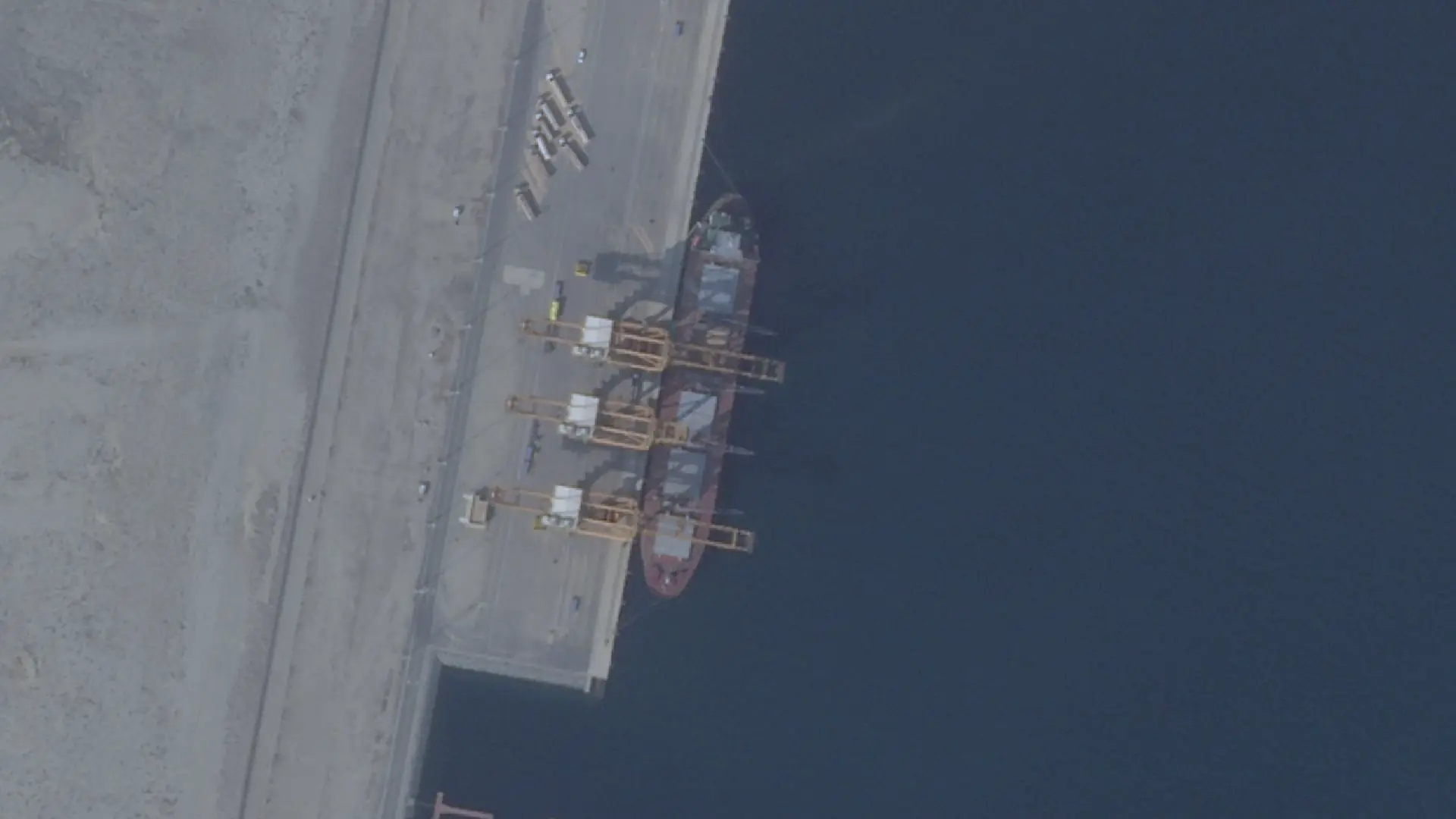
❌