Visualização de leitura

The Biggest Threat to Your Digital Security Isn’t a Hacker — It’s Human Nature, Says Dr. Sheeba Armoogum

Dr Sheeba Armoogum interview

What if the biggest vulnerability in your security system isn't a line of code — it's a person? That's the question driving one of cybersecurity's most compelling thinkers today. In this exclusive Dr. Sheeba Armoogum interview, we sit down with the Associate Professor in Cybersecurity at the University of Mauritius — a researcher, author, and strategist whose work spans AI-driven threat detection, digital forensics, cyberpsychology, and quantum security.

With over two decades of experience across academia, research, and industry, Dr. Sheeba Armoogum has built a reputation for asking the questions others overlook.

What happens to your digital identity after you die? Why do technically sound systems still get breached? And why does cybersecurity still struggle to include the very diversity of thinking it desperately needs?

Her recently published book, Digital Afterlife: A Global Framework for Law, Technology and Victim Justice, is already reshaping conversations around digital legacy and governance, a field most security professionals haven't even begun to map.

From the psychology behind cyberattacks to ethical AI design, from mentoring the next generation of women in cybersecurity to building systems that are not just intelligent but accountableDr. Sheeba Armoogum doesn't just defend networks. She defends trust.

Read on full Dr. Sheeba Armoogum interview:

Dr. Sheeba Armoogum Interview on Women, Leadership, and Structural Change

TCE: You have worked across academia, research, and industry for over two decades. What first inspired you to pursue cybersecurity, and how has your journey evolved over the years?

Dr. Sheeba Armoogum: My journey into cybersecurity did not begin with a grand plan. It started with curiosity — an urge to understand how systems think, respond, and connect to the world. This fascination also led me to a realisation: as we became more interconnected, our vulnerability increased. I saw how easily systems could be compromised and how breaches affected not just data but people's finances, privacy, and sense of security. Cybersecurity transformed from a technical field into a deeply human concern. My doctoral research marked a significant turning point. It encouraged me to rethink not only how we block known threats but also how to build systems that can adapt, learn, and evolve. As my work progressed, I explored how AI could detect patterns humans might overlook, how digital forensics could protect justice, how cyberpsychology could explain why people become victims of manipulation, and how quantum cybersecurity could redefine what 'secure' truly means. Today, I no longer see cybersecurity merely as protecting infrastructure. I consider it as safeguarding trust.

TCE: Cybersecurity is constantly evolving with AI, quantum technologies, and digital forensics. Which emerging area do you believe will most reshape the future of cyber defense?

Dr. Sheeba Armoogum: Artificial Intelligence will transform cyber defense in ways we're only beginning to understand. Historically, security has been reactive: an attack occurs, a signature is created, and a patch is released. We are now shifting towards an era where systems must anticipate threats proactively. What excites me is the ability of AI-driven systems to detect subtle behavioural changes — minor anomalies potentially indicating an early breach before any damage occurs. At the same time, I remain cautious. When AI systems operate as black boxes, making decisions that even their creators can't fully explain, we face a different kind of vulnerability. Security architectures should be intelligent, yet also auditable, transparent, and ethically aligned. I envision systems that safeguard not only networks but also public confidence. Ultimately, cyber defence revolves around maintaining trust within a digital society.

TCE: As a global advocate for innovation and research, what are the biggest challenges women still face in cybersecurity, especially in leadership and technical research roles?

Dr. Sheeba Armoogum: While progress is visible, it is not yet deeply rooted structurally. More women are joining the field, but just entering the profession doesn't equate to having influence. Many women begin in operational or support roles, but fewer hold positions in advanced areas like algorithmic research, secure systems architecture, or strategic advisory roles where long-term security decisions are made. A subtle issue lies in how credibility is perceived. Women often need to repeatedly demonstrate their expertise before receiving recognition. Addressing this cannot depend only on encouragement — it demands institutional maturity, with deliberate access to fair research funding, structured doctoral mentorship, and inclusion in international research consortia. Representation in patent development, standards committees, and strategic innovation boards shapes the future of the field. Cybersecurity depends on diverse thinking, and when leadership includes a variety of experiences, overall resilience improves.

Also Read: Top 50 Women Leaders in Cybersecurity to Watch in 2026

TCE: This year's Women's Day theme focuses on "Give to Gain." What does this idea mean to you in the context of mentoring and empowering the next generation of women in cybersecurity?

Dr. Sheeba Armoogum: For me, "Give to Gain" reflects how cybersecurity operates in reality. No system is completely secure by itself — resilience requires a collective effort, and sharing knowledge strengthens protection. I now see mentorship as more than generosity; it's a strategic investment in future stability. When young researchers are entrusted with complex algorithmic challenges or guided in ethical AI design, they are not merely acquiring knowledge; they are becoming integral to the next line of defence. When expertise is limited to a few individuals, systems become more fragile. When knowledge is shared thoughtfully, ecosystems are strengthened. In cybersecurity, giving is not a loss. It is multiplication.

TCE: You lead and mentor doctoral researchers through your CyberSecurity & Forensics Research initiatives. What are three practical steps organizations can take to encourage more women to enter advanced cybersecurity research?

Dr. Sheeba Armoogum: Our strategy should extend beyond motivational messages. First, organizations must establish well-defined, funded pathways into high-impact technical disciplines — opportunities in AI-based intrusion detection, quantum-safe cryptography, or advanced digital forensics need to be deliberately made accessible, making women integral contributors at the foundational level. Second, exposure plays a crucial role. True confidence is gained through hands-on experience — working in AI labs, contributing to secure system designs, or analysing real forensic datasets builds both technical skills and intellectual authority. Third, visibility holds significant influence. When women lead keynote technical sessions, showcase new algorithms, or participate in standards committees, it signals that leadership is not exceptional; it is normal. Aspiration is shaped by what appears achievable. Dr Sheeba Armoogum Interview Quote

TCE: Your recent book, Digital Afterlife: A Global Framework for Law, Technology and Victim Justice, explores an important emerging topic. What inspired you to write it, and why is digital legacy becoming a critical cybersecurity and policy concern?

Dr. Sheeba Armoogum: Digital Afterlife originated from a recurring question: what happens to our digital footprint when we're gone? Cybersecurity conversations focus on breaches and encryption but often overlook what remains — digital identities, intellectual property, cloud storage, social media profiles, and AI models trained on personal information. Our legal and governance frameworks lag behind. When someone passes away, their digital footprints don't disappear; they persist. Families are left managing passwords, privacy policies, and legal uncertainties during moments of grief. Digital legacy has shifted from a philosophical concern to a practical security issue. Dormant accounts can be exploited for identity theft, unmanaged digital wallets are vulnerable, and research data may become compromised. The book provides a framework combining law, cybersecurity protocols, platform governance, and victim justice. Managing digital afterlife is not optional — it is an increasingly important responsibility. Safeguarding dignity must go beyond simply protecting life.

TCE: From a cybersecurity and digital forensics perspective, what should individuals and organizations start doing today to better manage digital footprints and digital assets after death?

Dr. Sheeba Armoogum: A significant part of our value — personal, intellectual, or economic — resides digitally. Individuals must treat digital assets with the same importance as physical property: online accounts, intellectual property, research data, digital wallets, and professional platforms all need to be accounted for. Estate planning now needs to include digital credentials and instructions — documenting digital footprints, clarifying data intentions, and ensuring lawful, secure transfer of access. Organizations share a similar responsibility. They should proactively create access procedures, developing structured data governance policies, clear transfer protocols, and memorialisation frameworks in advance. Without proactive planning, digital remnants can lead to identity theft, internal disputes, or legal issues. Cybersecurity must now focus on lifecycle management, understanding that digital systems outlive individuals, and governance should be structured to reflect this.

TCE: You work at the intersection of AI, cybersecurity, and cyberpsychology. How do you see human behavior influencing future cyber threats and defense strategies?

Dr. Sheeba Armoogum: Cyber threats now mainly target individuals rather than systems. The key vulnerability is often psychological. Social engineering is about manipulating trust. AI-generated impersonations sound convincing because they replicate familiarity. Sextortion tactics rely on fear and shame, while misinformation campaigns exploit biases and emotional reactions. Attackers analyse behaviour as carefully as they inspect infrastructure. This is why relying solely on technical security measures is insufficient. Cyber resilience must extend beyond architecture to include behavioural science, digital literacy, and psychological awareness. Analysing why people become victims reveals recurring patterns — emotional triggers, situational stress, and social influences. Recognising these patterns helps develop more effective training and awareness campaigns. Protecting systems depends on understanding people.

TCE: As both a CIO/CISO-level strategist and academic leader, how do you balance technical innovation with ethical responsibility, especially in AI-driven security environments?

Dr. Sheeba Armoogum: Every intelligent system makes decisions, but the key questions are whether those decisions are understandable, auditable, and justifiable. Bias auditing, explainability, and traceability are not mere administrative tasks; they are essential safeguards. Without them, there is a risk of embedding hidden biases or opaque processes into security systems. In high-stakes environments, there's often a push toward speed — but prioritising quick results without ethical oversight causes long-term instability. A system that functions well but isn't accountable will eventually erode trust. I do not see ethics as a barrier to innovation but as a means of stabilising the structure. Responsible innovation guarantees that as our systems grow more intelligent, they stay fair, transparent, and justifiable.

TCE: What advice would you give to young women aspiring to build impactful careers in cybersecurity, particularly those who may feel intimidated by the technical depth of the field?

Dr. Sheeba Armoogum: Take both the field and yourself seriously. Begin by mastering the fundamentals — understand how data moves through networks, how encryption protects information, and how AI models learn. A strong foundation naturally boosts confidence. Start exploring early, even if it feels overwhelming. Genuine progress happens when you apply theory to real-world challenges: designing, building, testing, and sometimes failing before achieving success. Do not let technical intimidation take over. True expertise is based on understanding, not volume. What truly matters in cybersecurity is competence, curiosity, and courage — the willingness to ask difficult questions and challenge assumptions. Your perspective is not just an addition to the field; it is vital to its development. Diversity in thinking improves architecture, refines threat modelling, and drives innovation. Your contribution is not minor; it is crucial.

Women in Cybersecurity Reveal the Skills That Built Their Confidence

Women in Cybersecurity initiative

As International Women’s Day is marked on 8 March, conversations around representation, leadership, and opportunity across industries take renewed focus. In cybersecurity — a field that continues to evolve at remarkable speed — women in cybersecurity are playing a growing role in strengthening digital resilience, shaping security strategies, and mentoring the next generation of professionals.

Their journeys often involve navigating complex challenges while continuously adapting to new technologies, emerging threats, and changing security landscapes.

As part of its Women in Cybersecurity initiative, The Cyber Express asked cybersecurity leaders a simple but important question:

“Which skill or mindset has played the biggest role in building your confidence and growth in cybersecurity?”

From curiosity and continuous learning to calm decision-making and structured problem-solving, their responses highlight the perspectives that have helped them grow and succeed in the cybersecurity industry.

Here’s what they shared.

Women’s Day 2026: Voices of Women in Cybersecurity

Carmen Marsh

President & CEO at United Cybersecurity Alliance (Europe, US, Middle East & Japan) Curiosity. Disciplined, courageous curiosity. Cybersecurity is not a static profession. It is an evolving battlefield of technology, psychology, geopolitics, and human behavior. The moment you believe you know enough, you become obsolete. I have always believed in expanding beyond what is required of me. Not just mastering the tools of today, but understanding the patterns shaping tomorrow. Reading outside your lane. Engaging with peers. Asking uncomfortable questions. Challenging assumptions. Just as important is stepping out of isolation. Cybersecurity can feel technical and solitary, but the community is extraordinary. When you connect with mentors, peers, and diverse voices, you realize you are not alone in navigating complexity. That shared learning builds both competence and confidence. Growth in cybersecurity is not about ego. It is about intellectual humility and relentless evolution. That mindset changes everything.

Lisa Fitzgerald

Partner, Norton Rose Fulbright Staying ‘cyber-calm’ is critical. Cyber-attacks are generally times of crisis for organisations. As a legal adviser, our role is to ensure certain steps are taken in a timely, methodical and strategic manner. It can seem like a clinical role – ensuring the information needed is gathered, mitigation obligations are in place and notification deadlines are met – but interacting with various stakeholders who are under great stress requires a very human and calm approach.

Hannah Suarez

CISO, Loyalty Status Co I find that knowing when to specialize and when to generalize is a great asset. Specialization enables you to build and explore new and deeper threads of knowledge in a given area, and generalization allows you to build those threads into something more and to connect these threads into other areas. I don't believe in the dichotomy that you can only be one or the other.

Dr Sheeba Armoogum

Associate Professor in Cybersecurity, University of Mauritius My personal focus has been on ongoing learning. I make sure to stay up to date daily on new cybercrime trends, threat intelligence, and policy changes. Since cybersecurity evolves quickly, keeping informed helps me stay competent and confident.

Sofia Scozzari

CEO & Founder, Hackmanac Curiosity has always been my primary driver and the strongest catalyst for my growth. Another key mindset for me has been embracing constant innovation, anticipating change, rather than just react to it. Finally, I strongly believe that dedicating time to education and awareness is essential. Cybersecurity is often perceived as overly technical and complex, confined to specialists. In reality, however, it is also a business issue. Managers and C-level executives make strategic decisions about budgets and asset protection. Therefore, it is crucial that they understand the real impact of cyber risk and threats on their organization.

Bonnie Butlin

Co-Founder and Executive Director, Security Partners' Forum I did not come into security and cybersecurity as a technical or cybersecurity expert, and had to accept that understanding and addressing cybersecurity in my work is unavoidable. Over time, understanding cybersecurity, particularly as the field continues to develop and mature, has become a true asset for my work. It allows me to enhance my work with additional perspectives and understanding, for example, on threats and operations in the cybersecurity space, which directly or indirectly cross over into other areas of security and society.

Dr. Priyanka Sunder

CHRIO and Co-founder Secure Mojo Personally, continuous learning and moving out of your comfort zone has benefitted me in building my confidence, credibility, professional brand and network. It has also helped me solve real life problems and align my career aspirations with my IKIGAI – my purpose or calling. I don’t look as growth as linear or hierarchical for me growth is measured in terms of knowledge across multiple domains (related or un-related), improving soft skills and solving deep-seated problems be it people, process, technology or data security. Every aspect of growth be it intrinsic or extrinsic, linear or vertical, regional role or bigger portfolio is a way to showcase your strengths and bring value additions to your team and organisation and communities at large. Follow you calling, make your career your calling instead of trading time and health for money.

Sabitha Sriram

Security and Risk Consultant I think working for passion, strategic thinking, learning orientation and soft skills help a lot to excel in this domain.

Bree Kagwe

Ethical Hacker | Simplifying Cybersecurity For Women In Offensive Security Structured problem-solving. Instead of getting overwhelmed by a big challenge, I focus on the next logical step. Being okay with not knowing everything, as long as you know how to find the next step, has been the biggest boost to my confidence.

Top 50 Women Leaders in Cybersecurity to Watch in 2026

op 50 Women in Cybersecurity to Watch in 2026

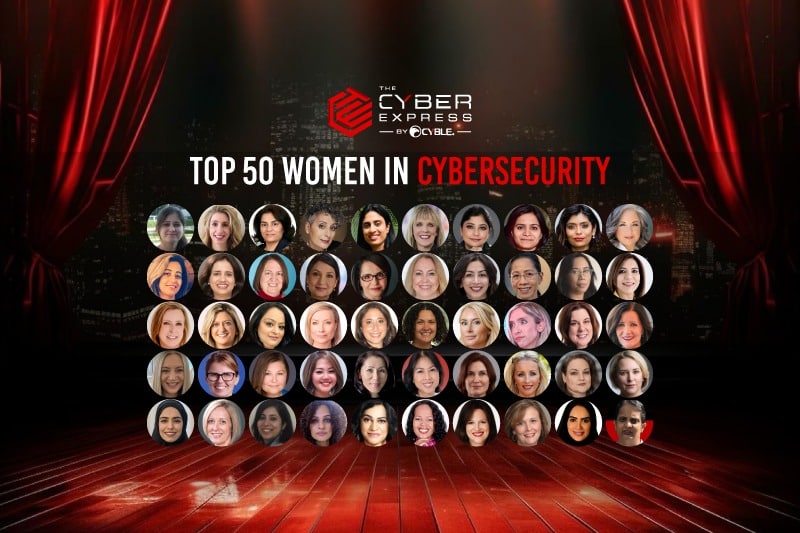
As the world prepares to celebrate International Women’s Day on March 8, The Cyber Express takes the opportunity to celebrate the achievements of the women trailblazers of the realm of cybersecurity. We proudly present the “Top 50 Women in Cybersecurity to Watch in 2026.”   This special recognition to Women in Cybersecurity highlights influential professionals who are driving innovation, strengthening cyber resilience, and shaping the future of digital security across industries.  This year’s International Women’s Day theme, “Give to Gain,” stresses on meaningful progress towards gender equality, which requires intentional contributions from governments, organizations, and individuals. When institutions invest in women’s safety, leadership, and opportunities, the impact extends far beyond workplace representation — strengthening innovation, improving decision-making, and building more resilient societies. 

Women in Cybersecurity: Progress and Persistent Challenges 

Within cybersecurity, women continue to expand their presence in a field that has historically been male dominated. According to the latest available data, women currently make up about 22% of the global cybersecurity workforce, a significant increase from just 11% in 2017. Today, one in four cybersecurity professionals is a woman, and projections suggest that by 2031, women could represent nearly one-third of the cybersecurity workforce.  Despite this progress, challenges remain. In the United States, women still hold less than 20% of cybersecurity roles, and a gender pay gap of around 5% persists in the sector. Career growth also continues to present obstacles, with nearly half of women in cybersecurity reporting challenges in professional advancement, while almost one-third say they have experienced workplace discrimination at some point in their careers.  Even so, women across the cybersecurity ecosystem are making remarkable contributions — from leading security operations and shaping national cyber policies to advancing threat intelligence, digital forensics, and cyber resilience strategies. Their work is not only protecting organizations and critical infrastructure but also inspiring the next generation of security professionals.  Keeping this in mind, The Cyber Express’ “Top 50 Women Leaders in Cybersecurity to Watch in 2026” recognizes professionals whose leadership, expertise, and impact are helping redefine the cybersecurity landscape. Their journeys reflect the spirit of International Women’s Day on 8 March — demonstrating that when we support and empower women in cybersecurity, the entire digital ecosystem stands to gain. 

Top 50 Women Leader in Cybersecurity | IWD Special by The Cyber Express 

Name  Designation  Company Name 
Celia Mantshiyane  Group Chief Information Security Officer  FirstRand 
Radhika Bajpai  CISO  Russell Investments 
Holly Foxcroft  Cyber Security Business Partner - BISO  OneAdvanced 
Dr Sheeba Armoogum  Associate Professor in Cybersecurity  University of Mauritius 
Irene Corpuz  Founding Partner, Head of Governance & Communications  Women in Cyber Security Middle East 
Patricia "Patty" Voight  Executive Managing Director; CISO and Tech Risk Management  Webster Bank 
Alya Al Marzooqi  Group Digital Risk Management and Compliance Manager  ADNOC Group  
Sakshi Porwal  Global Chief Information Security Officer & Cybersecurity Consulting Practice Head  Compunnel Inc.  
Rona Michele Spiegel, CISSP  Senior Manager, Security and Trust, Mergers and Acquisitions  Autodesk  
Dr Priyanka Sunder  Co-Founder & Chief Human Risk Intelligence Officer  Secure Mojo  
Lauren Dana Rosenblatt  Vice President, Chief Information Security Officer (CISO)  PSEG 
Sheeba Sultan Hasnain  Chairwoman & CIO  SENTIENTE 
Dr. Meetali Sharma  Director - Risk, Compliance and Information Security  SDG Corporation 
Kylie Watson  Head of Cyber Security, ANZ/ASEAN/Japan/India/GC/Middle East/Africa  DXC Technology 
Catherine Rowe  Chief Information Security Officer  Reserve Bank of Australia 
Maryam Bechtel  General Manager, Chief Information Security Officer (CISO)  TAL Australia  
Sofia Scozzari  CEO (Chief Executive Officer) and Founder  Hackmanac 
Archana Venugopal  Senior Vice President & Chief Information Secuirty Officer National aCommodity& Derivates Exchange  National Commodity & Derivative Exchange Of India Limited 
Shivani Arni   Enterprise CISO  Mahindra Group 
Cindy (Monceaux) Hoots  Chief Digital Officer & CIO  AstraZeneca 
Jae Evans  EVP, Oracle Cloud Infrastructure and Global CIO  Oracle 
Sheila Jordan  Chief Digital Technology Officer  Honeywell 
Maria Demaree  Senior Vice President, Enterprise Business and Digital Transformation & CIO  Lockheed Martin 
Heide Young  Manager Cyber Strategy & Engagement  NEOM 
Eman Al Awadhi  Vice President – Network and Cyber Security  Expo City Dubai 
Julia Dudenko  Group CISO  Haniel 
Anne Neuberger  Deputy National Security Advisor, Cyber & Emerging Tech  National Security Council, The White House 
Kris Lovejoy  Global Head of Strategy  Kyndryl 
Ramya Ganesh  Cybersecurity XDR Leader  Cisco 
Jane Teh  Founder and CEO  VortiQ[x] 
Nasrin Rezai  SVP, Chief Information Security Officer   Verizon 
Laura Deaner  Chief Information Security Officer  The Depository Trust & Clearing Corporation (DTCC) 
Mignona Coté  SVP Chief Information Security Officer  Infor 
Noopur Davis  Global CISO. Chief Product Privacy Officer. Corporate EVP.  Comcast 
Teresa Zielinski  Vice President, CISO  GE Vernova 
Andrea Abell  Chief Information Security Officer  Eli Lilly and Company  
Deneen DeFiore  Vice President & Chief Information Security Officer  United Airlines 
Elizabeth Joyce  EVP & Global CISO  State Street 
Mary Rose Martinez  Chief Information Security Officer and Vice President of Infrastructure  Marathon Petroleum Corporation 
Marnie (Huss) Wilking  VP Chief Security Officer  Booking.com 
Hannah Suarez 🇵🇸  CISO  Loyalty Status Co 
Annie (Anne) Haggar  Deputy Chief of Staff  Australian Government 
Sujata Misra  GM - Network Infra and Security Leader  Brigade Group  
Bonnie Butlin  Co-Founder and Executive Director  Security Partners' Forum 
Gurdeep Kaur  Chief Operating Officer  Suraksha Catalyst 
Vandana Verma  President  InfoSec Girls 
Mansi Thapar  Global Head – Cyber Security & Infra  Apollo Tyres 
Rosalia Hajek   CISO  Topgolf Callaway Brands 
Carmen Marsh  President & CEO  United Cybersecurity Alliance (Europe, US, Middle East & Japan)  
Lisa Fitzgerald  Partner  Norton Rose Fulbright 
 
❌