Qualcomm's new Snapdragon C platform brings 67% better battery life to $300 Windows laptops, launching first on the Acer Aspire Go 15 to rival MacBook Neo.
For many organizations, AI is proving easy to pilot but difficult to scale. Pilots often look inexpensive because they run on narrow datasets with a handful of users, explains Ben Schein, chief AI and analytics officer at cloud software company Domo. “But the cost lives in deployment, the moment you connect that capability to real workflows and the systems of record behind them,” he says. “That’s when the real bill appears.” So CIOs must always budget for the gap between when it works in a demo and when it produces governed and durable value.
Organizations can easily get caught out because they run pilots as a technology experiment instead of a business initiative, he adds. “The interesting question is never whether AI can do the thing in a demo,” he says. “It’s whether it should run in this process, and whether it survives contact with production.”
There’s also a lot of pressure on IT teams to be doing something with AI simply because everyone else is, says Naren Gangavarapu, chief transformation and AI officer at Australian Cruise Group.
Naren Gangavarapu, chief transformation and AI officer, Australian Cruise Group
Australian Cruise Group
He calls it AI theater because there’s a big show around AI even though there aren’t that many successful applications of the technology in production environments.
AI costs out of control
According to John D’Emic, CTO at AI observability platform Revenium, one of the big traps when running a pilot is failing to anticipate how quickly consumption can spiral as adoption grows. “As an example from our own engineering org, back in May, a developer opened an AI coding session on his laptop, and it stayed open for four days,” he says. “By the time it closed, it had run 4,819 calls and cost us $3,762. We didn’t budget for this, and no alert fired. But that one session cost more than a lot of teams spend on their entire monthly AI tooling.”
While this showcases how a developer can make a costly error, Dmitriy Anderson, CIO and digital and social commerce leader at home and gardening retailer Leroy Merlin South Africa, believes the pilot trap frequently happens when employees with little or no software development experience vibe code applications. “It doesn’t matter if you can create something in 15 or 20 minutes if the result is AI slop,” he says. “Think dirty code, no consideration for safety, security, and possible data exposure.” In most cases, these pilots are developed with one of the frontier apps, and someone probably used their personal AI subscription, so the costs are negligible, he adds. But if you have a company of several thousand people, and you now want to roll this tool out more broadly, that’s where costs can get out of control.
This scenario is only exacerbated by the introduction of agentic AI, D’Emic adds. “Agents don’t spend money at human speed,” he says. “In the old cloud days, an engineer could spin up infrastructure in minutes and finance might not see the bill for a month, which was painful but recoverable. Agents, though, call APIs around the clock without waiting on anyone’s approval.”
Mind the trap
While cost is a big factor in the AI pilot trap, it should be treated as a symptom of a bigger problem, says Schein. The underlying issue is governance and observability. “An autonomous workflow can fan out into more queries, API calls, and model invocations than anyone scoped,” he says. “So if you can’t see what it’s doing, and spend compounds quietly, you only find out once the invoice arrives.”
In a recent LinkedIn post, Anderson outlined how in just six weeks he built a platform for a fraction of the sticker cost using three AI models orchestrated together. The traditional estimate to build the same tool would have required 2,472 engineering hours from a team, and was expected to take around nine months. “I went through the proper engineering steps and planning, and made sure the application passed a series of cybersecurity frameworks,” he says. “The purpose of this exercise was to showcase that AI can still speed up the process even if you take the time to work through the necessary steps. You can build with AI rigorously and securely.”
Dmitriy Anderson, CIO and digital and social commerce leader, Leroy Merlin, SA
LMSA
So to turn AI experiments into enterprise value, every AI interaction must be attributable: who triggered it, against what data, on which model, and at what cost, Schein says. For each workload, be sure to ask how often it runs, which model tier the job actually needs, and what triggers it, human or automatic. “A frontier model on an automatic trigger and a small model called on demand are completely different cost curves for the same task,” Schein adds.
For Anderson, it’s helpful to use AI to highlight potential gaps, assumptions, or blind spots in your ideas early on. “When you start building an idea, ask the agent to interview you,” he says. “It will go through every phase and ask questions about the important facets of the process, from scalability and budget to deployment options. You can even make AI write a prompt for itself, because it knows its capabilities and quirks better than you ever will. It’s called meta prompting.”
Anil Inamdar, global head of data services for the Instaclustr BU at NetApp, suggests CIOs cost out the whole program, not just the demo. “Generally, the model itself is the cheapest part of the program,” he says. For him, it’s important to have security and governance people in the scoping meeting, not the launch meeting.
Anil Inamdar, global head of data services. Instaclustr BU. NetApp
NetApp
He believes the pilot trap is also, or perhaps mostly, a sequencing trap. “A lot of teams are wired to build first and ask permission later, only to discover months down the line they can’t pass a security review or data privacy audit without a painful and costly rebuild. It’s also valuable to define what failure looks like before you define success.
“Pilots tend to die because of no result, which isn’t the same as a bad result,” Inamdar says. “Emphasize to the deployment team on day one that if a target result by a certain month isn’t seen, we shut it down. Otherwise, you’re funding a zombie pilot because everyone’s invested and no one wants to be the one to call it out.”
Security researchers found 150 lookalike Open VSX extensions published under trusted names, highlighting how extension marketplaces can expose developer credentials, source code, and CI/CD systems to supply-chain risk.
Running a threat intelligence program today means operating across more tools, more workflows, and more organizational complexity than most platforms were originally designed to handle. The intelligence is there. The question is whether the platform is keeping up with how your team actually needs to use it.
GitHub’s new Actions safeguard pauses potentially malicious workflow runs before execution, leaving repository owners to decide who can approve them and what checks must come first.
A few weeks ago, I found myself in yet another demonstration of an application that was not built by my team or my technology partners. The demonstration lasted 20 minutes and by the end of it, everyone in the room agreed that the application solved a genuine business problem. There was genuine admiration for the business team’s initiative, a few questions about future enhancements and the inevitable congratulations that accompany any successful AI story. Then somebody asked, almost casually, “Can IT roll this out quickly across the organization?” It was a short question that unfortunately needed a long and unpopular answer.
I am sure almost every technology leader reading this has experienced some variation of this moment. The application itself is rarely the problem. In fact, many of the applications I’ve seen over the past year have been remarkably good. What concerns me most is something rather different. Somewhere along the way, we’ve started confusing the act of building software with the responsibility of running it. AI has dramatically reduced the effort required to create an application, but it has done little to reduce the effort required to own and operate one sustainably.
That distinction may sound subtle, but it is not. I think this might be one of the most significant leadership challenges of the AI era.
The success nobody planned for
None of this should come as a surprise. For years, we have been telling the business to become more digitally savvy. We invested in low-code platforms and citizen development initiatives, organised hackathons and innovation challenges, and repeatedly argued that technology shouldn’t become a bottleneck to solving business problems. The rapid emergence of AI coding assistants has simply completed that journey. Today, anybody from finance, marketing or operations can turn an idea into a working application faster than most technology teams can schedule a requirements workshop.
Personally, I think that’s amazing. Some of the most interesting ideas I’ve seen this year didn’t emerge from tech teams. They came from people who understood the business problem intimately and no longer needed permission to begin experimenting. That’s a future I would much rather embrace than resist.
The problem isn’t that business teams are building software. The problem is that successful prototypes have a habit of raising enterprise expectations quickly. Yesterday it was a departmental experiment. Today it is being demonstrated to the executive committee. Tomorrow someone is asking why the rest of the organization isn’t using it. The application hasn’t changed; the expectation has. In many ways, this feels like the next evolution of what we’ve traditionally called shadow IT. The difference is that these applications are often better engineered, solve genuine business problems and, ironically, are being built with the very experimentation that technology leaders have spent years encouraging.
The thin line between building and running
This is the point where discussions between business leaders and technology leaders begin to fall apart. The business sees an application that works. Technology sees an application that now needs to survive outside the protected environment in which it was created. Those are fundamentally different things.
A prototype rarely worries about things like identity management, resilience, audit trails, backup policies, API versioning, support models or regulatory obligations because none of those questions matter while an idea is still being tested. However, they become important once the organization decides that the application has graduated from an experiment to an enterprise capability. In many ways, this is the point where software engineering gives way to software operations—a discipline that organizations like Google have spent years formalising through practices such as Site Reliability Engineering (SRE).
This is the point where many organizations are beginning to underestimate the challenge. AI has democratised software development. It has not democratised enterprise operations. Running software is an entirely different discipline. It is less visible, less celebrated and considerably less exciting than building it, but it is also the reason enterprise technology exists. Every application that enters production quietly accumulates obligations. Someone has to secure it. Someone has to integrate it. Someone has to monitor it, patch it, support it and explain it to an auditor. Eventually, someone has to retire it. None of those responsibilities disappear simply because the first version happened to be created in forty-eight hours using an AI.
Walking the tightrope
The temptation for technology functions is to respond in one of two ways. The first is to become the organization’s brake pedal. Every application must now navigate governance committees, architecture reviews, security assessments and operational checklists before it is allowed anywhere near production. The enterprise is undoubtedly safer, but enthusiasm evaporates quickly when innovation feels like it needs intricate planning and convoluted permissions.
The second temptation is more subtle, and in many ways more dangerous. We become so determined not to discourage innovation that every successful prototype quietly becomes another production application. We congratulate ourselves on enabling the business while gradually accumulating a software estate that nobody really owns or understands. Six months later, the original creator has moved to another project, the AI prompts have disappeared, users have doubled, integrations have multiplied and suddenly the technology team is required to support something it neither designed nor approved.
Neither extreme is sustainable.
This, I suspect, is the balancing act that leadership will increasingly be judged on. Not whether we can prevent people from building software—that battle has already been lost, and rightly so—but whether we can encourage experimentation without allowing enthusiasm to become tomorrow’s operational burden.
I’ve discovered that the tone of these conversations changes entirely if we begin with curiosity instead of governance. Rather than asking why technology wasn’t involved earlier, we now ask what problem the team was trying to solve. It sounds like a small change, but it transforms the discussion. People become far more willing to talk about security, resilience and operational ownership once they know those questions are intended to preserve what they’ve built rather than prevent it from succeeding.
Stewardship, not gatekeeping
Interestingly, this isn’t simply a challenge that individual technology leaders are experiencing. Recent research points in the same direction. The 2025 DORA State of AI-assisted Software Development report concludes that AI acts primarily as an amplifier. It magnifies the strengths of organizations with mature engineering practices and exposes the weaknesses of those without them. In other words, the greatest returns from AI don’t come from the coding tools themselves, but from the quality of the underlying engineering and operational system.
Gartner arrives at a similar conclusion from a different perspective. In its analysis of enterprise AI coding agents, the firm argues that the market is rapidly evolving beyond developer productivity towards operational excellence and enterprise readiness. As organizations begin operationalising AI-generated software at scale, governance, operational ownership and long-term lifecycle considerations become just as important as the tools themselves.
None of this should really surprise us. We’ve spent the last couple of years asking whether AI can help us build software faster. That question has largely been answered. The more interesting question now is whether organizations are prepared for the consequences of making software creation almost frictionless. Every successful application creates an obligation that lasts far longer than the weekend it took to build.
Technology leaders have traditionally thought about technical debt as ageing platforms, deferred upgrades, architectural compromises and code that has outlived its original design. CIO.com has written extensively about the long-term business impact of technical debt. I believe AI is quietly introducing another form of debt that deserves equal attention—operational debt.
Operational debt begins the moment an application is promoted from a successful prototype to a business-critical service without a clearly defined operating model. Every application that is enthusiastically pushed into production quietly becomes another long-term obligation. It needs monitoring, support, ownership, governance, funding, documentation and, eventually, retirement. Unlike technical debt, operational debt is rarely visible until something fails, an audit raises uncomfortable questions or the person who originally built the application has long since moved on.
The role of leaders may no longer be to decide who gets to write software. AI has already democratised that capability. Our responsibility is something altogether more nuanced. We have to preserve the excitement, curiosity and initiative that AI has unlocked across the business while ensuring that the enterprise remains secure, resilient and supportable. Push too hard and we become the one that quietly kills innovation. Push too little and we inherit an estate of applications that nobody is truly prepared to operate.
This isn’t a governance problem. It’s a leadership one…and I suspect it may well become one of the most defining responsibilities of enterprise technology for years to come.
This article is published as part of the Foundry Expert Contributor Network. Want to join?
JetBrains has patched CVE-2026-63077, a critical TeamCity flaw that could let unauthenticated attackers execute server commands and compromise connected CI/CD pipelines.
Google is restricting Gemini 3.5 Flash Cyber to select partners as CodeMender enters preview. Here’s what security teams should verify before adoption.
Learn how Fig adds testing, deployment, and continuous verification to SecOps, helping security teams keep detections reliable as infrastructure evolves. daily.
An AWS software bug showed some customers billing estimates in the billions and trillions. Here is what failed, why invoices were unaffected, and what IT teams should know.
SOC and CTI teams spend a significant part of their day maintaining context that should already be there. The assets they monitor, the technologies they protect, the threat actors they track, this organizational knowledge gets re-entered manually across searches, rules, and requirements, duplicated across individual analyst workflows, and updated inconsistently when environments change. The intelligence keeps up with the threat landscape. The context that scopes it rarely does. That is why Intelligence Center 3.8 introduces Keyword lists, a capability that lets teams define organizational context once and apply it automatically across every workflow.
Rank One, whose board includes a former CIA deputy director and a former FBI science chief, supplied face recognition to Meta for internal development of its smart glasses app.
Compare Broadcom TDM and K2view across architecture, integration, masking, and scalability to find the right test data management solution for your needs.
A group of unauthorized users reportedly has gained access to Anthropic’s controversial Claude Mythos Preview AI frontier model despite the AI vendor’s efforts to keep it out of public hands by limiting the organizations that can use it. Bloomberg reported that the unnamed group had tried multiple ways to gain access to the AI model..
Cyber AI Suite (CAIS) Contact Us Solution Brief Overview What is Cyber AI Suite (CAIS)? As AI security concerns shift from theoretical to tangible, the threat landscape evolves rapidly. Corporate data is increasingly at risk of being ingested by third-party models unnoticed. AI-powered applications with internal access introduce new attack vectors, creating a blind spot […]
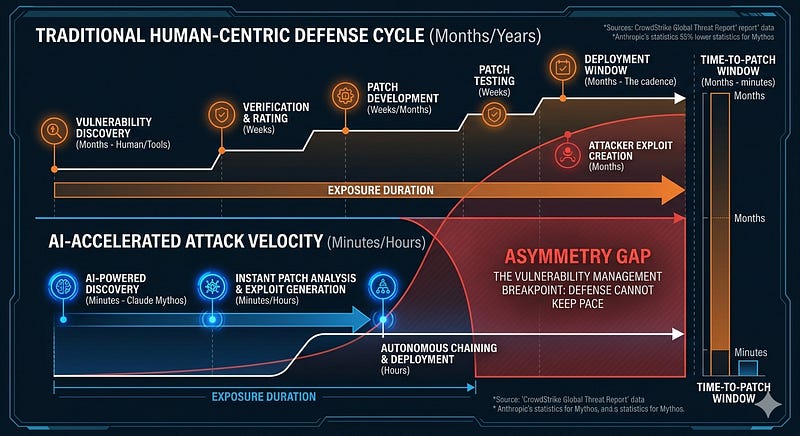
Anthropic’s latest AI Model, Claude Mythos, will break the cybersecurity vulnerability management operational models. Mythos is so good at discovering and building viable exploits it is currently being rolled-out in a controlled manner under “Project Glasswing“. Those cybersecurity companies who have early access are attesting to the blazing speed and accuracy of the model and have declared the traditional processes the industry uses to manage vulnerabilities in their systems is no longer viable.
The Problem is Twofold
First, new AI models like Mythos, are incredibly proficient at identifying weaknesses in code that could be leveraged by cyber attackers. Mythos has found over 2000 high-severity vulnerabilities, including in every major operating system and web browser!
The second issue is how fast workable exploits can be created to take advantages of discovered vulnerabilities. The latest AI models are highly proficient and quickly figuring out how to leverage weakness and chain them together across multiple vulnerabilities to gain unprecedented access to targeted systems and infrastructures.
The speed of discovery and exploitation of vulnerabilities is now well beyond what defenders can address. Currently, the industry must become aware of vulnerabilities through industry announcements, direct notification by researchers, or in rare cases by self-discovery efforts. They must then verify the vulnerability and understand its potential applicability to their environment. It gets rated and based upon that rating; resources will be committed to develop a patch. The patch must be tested and then scheduled for roll-out in a way that it can be withdrawn if something unforeseen occurs.
This takes time and may incur downtime for impacted systems.
Legacy Patching Fails
Most organizations have a cadence for addressing different severity vulnerabilities. A patch calendar may bundle fixes to control the disruption and prioritize the most urgent fixes. High risk may be fixed in weeks or a month, medium in several months, and low, perhaps every year if they choose to fix them at all.
The goal is simply to fix the vulnerabilities before the attackers could create and deploy an exploit in the wild, which typically took months.
No longer.
Now, what took months will take minutes with Mythos and other AI models.
That breaks the entire vulnerability management system that protects our digital world.
For those who read my annual cybersecurity predictions (video version), we can check off prediction number 2, which outlined how AI acceleration would shrink the time-to-patch window dramatically, beyond what is currently possible for cybersecurity teams.
Predicting Strategic Outcomes
First, organizations will cut corners to speed up patch release for the impactful vulnerabilities most likely to be exploited. This will shrink the patch window a little, but not enough, and introduce errors in patches which will have undesired impacts on users. Essentially, the number of ‘bad patches’ will increase.
Secondly, the increased attack velocity will drive software developers to commit much more to using AI tools to proactively detect and resolve vulnerabilities prior to product release. This should have happened long ago, but in the race to market, security vetting often gets deferred to later. The outcome will be slower product release timelines from responsible vendors. The haphazard companies will want to take advantage and continue to push vulnerable code to get into the market faster. But that will eventually have consequences.
Third, there will be massive shift for cybersecurity teams to adopt these AI tools to compete with attackers by trying to detect and address vulnerabilities before the hackers. The tools, processes, and operating models will need to be entirely redrawn. The window of exposure will be the metric that must shrink, from months to hours.
Adaptation Required
The latest AI tools will compress the vulnerability lifecycle from discovery to exploitation at a pace that challenges the foundations of today’s security operations. Organizations that continue to rely on legacy processes will find themselves operating outside the window of safety. Defenders can no longer rely on traditional disclosure cycles, patch cadences, or reactive security models when intelligent systems can discover and weaponize weaknesses in hours. To survive this new era, organizations must reinvent their processes around AI-driven velocity. The signals are clear; it is time to radically adapt vulnerability management or be victimized.
Os ataques a cadeias de suprimentos têm sido uma das categorias mais perigosas de incidentes de cibersegurança há anos. Se o ano de 2025 nos ensinou alguma coisa, é que os cibercriminosos estão aumentando sua capacidade de ataque. Nesta análise detalhada, veremos ataques a cadeias de suprimentos realizados em 2025 que, embora não sejam os que causaram maiores prejuízos financeiros, certamente foram os mais incomuns e chamaram a atenção do setor.
Janeiro de 2025: um RAT encontrado no repositório do GitHub do DogWifTools
Como um “aquecimento” após o fim de ano, os cibercriminosos realizaram inúmeros ataques de backdoor a várias versões do DogWifTools. Trata-se de um utilitário projetado para lançar e promover vigorosamente moedas de meme baseadas em Solana no Pump.fun. Depois de comprometer o repositório privado do GitHub para o DogWifTools, os invasores esperaram os desenvolvedores carregarem uma nova versão do utilitário, injetaram um RAT nela e trocaram o programa legítimo por uma versão maliciosa apenas algumas horas depois. De acordo com os desenvolvedores, os agentes de ameaças instalaram com êxito as versões 1.6.3 a 1.6.6 do DogWifTools para Windows.
O golpe final foi dado no fim de janeiro. Depois de usar o RAT para coletar uma grande quantidade de dados dos dispositivos infectados, os invasores esvaziaram as carteiras de criptomoedas das vítimas. As vítimas estimaram o total de mais de USD 10 milhões em criptomoedas, mas os invasores contestaram esse número, embora não tenham revelado exatamente o valor total roubado.
Fevereiro de 2025: roubo de USD 1,5 bilhão do Bybit
Se janeiro foi só o aquecimento, o mês de fevereiro foi um colapso total. A invasão da plataforma de câmbio de criptomoedas Bybit superou completamente os incidentes anteriores, tornando-se o maior roubo de criptomoedas da história. Os invasores conseguiram comprometer o software Safe{Wallet}, a solução de armazenamento a frio de múltiplas assinaturas na qual a empresa confiava para gerenciar os seus ativos.
Os funcionários da Bybit pensaram que estavam assinando uma transação de rotina. Na realidade, eles estavam autorizando um contrato inteligente malicioso. Uma vez executado, ele esvaziou os fundos de uma carteira fria principal e os distribuiu em várias centenas de endereços controlados pelo invasor. A transferência final ultrapassou 400 mil ETH/stETH, com um impressionante valor total de aproximadamente… USD 1,5 bilhão!
Março de 2025: Coinbase é alvo de comprometimento em cascata do GitHub Actions
O ano de 2025 seguiu com um ataque sofisticado que usou o comprometimento de vários GitHub Actions, os padrões de fluxo de trabalho usados para automatizar tarefas de DevOps padrão, como seu principal mecanismo de entrega. Tudo começou com o roubo de um token de acesso pessoal pertencente a um mantenedor da ferramenta de análise SpotBugs. Usando esse ponto de apoio, os invasores publicaram um processo malicioso e conseguiram sequestrar um token de um mantenedor do fluxo de trabalho reviewdog/action-setup, que também estava envolvido no projeto.
A partir daí, eles comprometeram uma dependência, o fluxo de trabalho tj-actions/changed-files, modificando-o para executar um script Python malicioso. Esse script foi projetado para procurar segredos de alto valor, como chaves da AWS, do Azure e do Google Cloud, tokens do GitHub e do NPM, credenciais de banco de dados e chaves privadas do RSA. Por incrível que pareça, o script gravou tudo o que encontrou diretamente nos registros de compilação acessíveis ao público em geral. Isso significa que os dados vazados não estavam disponíveis apenas para os invasores, mas também para qualquer pessoa experiente o suficiente para acessá-los.
O alvo original dessa operação era um repositório pertencente à plataforma de câmbio de criptomoedas Coinbase. Felizmente, os desenvolvedores detectaram a ameaça a tempo e impediram o comprometimento. Ao que tudo indica, depois de perceberem que estavam prestes a perder o controle do pipeline tj-actions/changed-files, os invasores adotaram uma abordagem indiscriminada. Isso colocou 23 mil repositórios em risco de vazamento de segredos. No final, várias centenas desses repositórios realmente tiveram suas credenciais confidenciais expostas ao público.
Abril de 2025: um backdoor em 21 extensões do Magento
Em abril, uma infecção foi descoberta em um amplo conjunto de extensões do Magento, uma das plataformas mais populares para a criação de lojas on-line. O backdoor foi incorporado em 21 módulos desenvolvidos por três fornecedores: Tigren, Meetanshi e MGS. As extensões faziam parte da infraestrutura de várias centenas de empresas de comércio eletrônico, incluindo pelo menos uma corporação multinacional.
De acordo com os pesquisadores que o descobriram, o backdoor na verdade foi implantado em 2019. Em abril de 2025, os invasores o acionaram para comprometer sites e fazer o upload de web shells. Isso foi feito por meio de uma função incorporada nas extensões que executava um código arbitrário extraído de um arquivo de licença.
Por ironia, os módulos infectados incluíam o MGS GDPR e o Meetanshi CookieNotice. Como os nomes sugerem, essas extensões foram projetadas para ajudar os sites a cumprir os regulamentos de privacidade e processamento de dados dos usuários. Por fim, em vez de garantir a privacidade, o uso deles provavelmente levou ao roubo de dados e ativos financeiros do usuário por meio de skimming digital.
Maio de 2025: ransomware distribuído por meio de um MSP comprometido
Em maio, os agentes de ransomware da gangue DragonForce obtiveram acesso à infraestrutura de um provedor de serviços gerenciados (MSP) não identificado e a usaram para distribuir um ransomware e roubar dados das organizações clientes do MSP.
Ao que tudo indica, os invasores exploraram várias vulnerabilidades (incluindo uma falha crítica) no SimpleHelp, a ferramenta de monitoramento e gerenciamento remoto usada pelo MSP. Essas vulnerabilidades foram descobertas em 2024 e divulgadas publicamente e corrigidas em janeiro de 2025. Infelizmente, ficou claro que o MSP optou por não acelerar o processo de atualização, um atraso que a gangue do ransomware ficou mais do que feliz em explorar.
Junho de 2025: um backdoor em mais de uma dúzia de pacotes npm populares
No início do verão, os invasores invadiram a conta de um dos mantenedores da biblioteca Glustack e usaram um token de acesso roubado para injetar backdoors em 17 pacotes npm. O mais popular desses pacotes, @react-native-aria/interactions, ostentava 125 mil downloads semanais, enquanto todos os pacotes comprometidos combinados totalizaram mais de um milhão.
O que é particularmente interessante nesse caso são as etapas que os desenvolvedores do Glustack seguiram após o incidente: primeiro, eles restringiram o acesso ao repositório GitHub para contribuidores secundários; segundo, eles ativaram a autenticação de dois fatores (2FA) para publicar novas versões; e terceiro, eles prometeram implementar práticas de desenvolvimento seguras, como fluxo de trabalho baseado em pull requests, revisões sistemáticas de código, registro de auditorias e assim por diante. Em outras palavras, antes do incidente, um projeto com centenas de milhares de downloads semanais não tinha tais medidas em vigor.
Julho de 2025: pacotes npm populares infectados por meio de um ataque de phishing
Em julho, os pacotes npm foram novamente as estrelas do show, incluindo o pacote amplamente usado chamado “is”, que possui 2,7 milhões de downloads semanais. Essa biblioteca de utilitários JavaScript fornece uma ampla variedade de funções de verificação de tipo e validação de valor. Para realizar um ataque de phishing contra um dos proprietários do projeto, os invasores utilizaram com êxito um truque antigo: o typosquatting (usar o domínio npnjs.com em vez de npmjs.com) e um clone do site oficial do npm.
Em seguida, eles usaram a conta comprometida para publicar várias das suas próprias versões do pacote com um backdoor incorporado. A infecção passou desapercebida por seis horas: tempo suficiente para um grande número de desenvolvedores baixarem os pacotes npm maliciosos.
A mesma tática de phishing foi usada contra outros desenvolvedores. Os invasores aproveitaram várias contas de desenvolvedores comprometidas para distribuir diferentes variantes de sua carga maliciosa. Há também uma forte suspeita de que eles podem ter guardado parte dessa carga para ataques futuros.
Agosto de 2025: o ataque s1ngularity e o vazamento de centenas de segredos dos desenvolvedores
No final de agosto, um incidente apelidado de “s1ngularity” continuou a tendência de atingir desenvolvedores de JavaScript. Os invasores comprometeram o Nx, um sistema de compilação popular e uma ferramenta de otimização de pipeline de CI/CD. O código malicioso injetado nos pacotes pesquisou diversos sistemas dos desenvolvedores infectados, acessando uma grande quantidade de dados confidenciais, como chaves de carteiras de criptomoedas, tokens do npm e do GitHub, chaves SSH, chaves de API e muito mais.
Curiosamente, os invasores usaram ferramentas de IA instaladas localmente, como Claude Code, Gemini CLI e Amazon Q, para detectar os segredos nas máquinas das vítimas. Tudo o que eles encontraram foi publicado nos repositórios públicos do GitHub criados em nome das vítimas, usando os títulos “s1ngularity-repository”, “s1ngularity-repository-0” e “s1ngularity-repository-1”. Como você deve ter adivinhado, é daí que vem o nome do ataque.
Consequentemente, os dados privados de centenas de desenvolvedores acabaram ficando à vista de todos e poderiam ser acessados não apenas pelos invasores, mas por absolutamente qualquer pessoa com uma conexão com a Internet.
Setembro de 2025: um stealer de criptomoedas ataca pacotes npm que têm 2,6 bilhões de downloads semanais
A tendência de comprometimentos de pacotes npm seguiu até setembro. Após uma nova campanha de phishing direcionada a desenvolvedores de JavaScript, os invasores conseguiram injetar código malicioso em algumas dezenas de projetos de alto nível. Alguns deles, especificamente “chalk” e “debug”, tiveram centenas de milhões de downloads semanais; coletivamente, os pacotes infectados estavam acumulando mais de 2,6 bilhões de downloads por semana no momento da violação, e eles se tornaram mais populares desde então.
A carga era um stealer de criptomoedas: um malware projetado para interceptar transações de criptomoeda e redirecioná-las para as carteiras dos invasores. Felizmente, apesar de infectar com sucesso alguns dos projetos mais populares do mundo, os invasores acabaram falhando no estágio final da operação. No final, eles ficaram com míseros USD 925.
Apenas uma semana depois, outro grande incidente ocorreu: a primeira onda do malware autopropagável Shai-Hulud, que infectou cerca de 150 pacotes npm, incluindo projetos da CrowdStrike. No entanto, a segunda onda, que ocorreu vários meses depois, provou ser muito mais destrutiva. Vamos analisar o Great Worm em mais detalhes a seguir.
Outubro de 2025: o GlassWorm infecta o ecossistema do Visual Studio Code
Cerca de um mês após o ataque do Shai-Hulud, um malware autopropagável semelhante denominado GlassWorm começou a infectar extensões do Visual Studio Code no Open VSX Registry e no Microsoft Extension Marketplace. Os invasores estavam procurando contas do GitHub, Git, npm e Open VSX, bem como chaves de carteiras de criptomoedas.
Os criadores do GlassWorm adotaram uma abordagem altamente criativa para sua infraestrutura de comando e controle: eles usaram uma carteira de criptomoedas no blockchain Solana como seu C2 principal, com o Google Agenda servindo como um canal de comunicação de backup.
Além de esvaziar as carteiras de criptomoedas das vítimas e sequestrar suas contas para espalhar o worm ainda mais, os invasores também injetaram um RAT chamado Zombi nos dispositivos infectados, obtendo controle total sobre os sistemas comprometidos.
Novembro de 2025: a campanha IndonesianFoods e 150 mil pacotes de spam no npm
Em novembro, um novo incômodo emergiu do repositório do npm. Uma campanha maliciosa coordenada apelidada de IndonesianFoods fez os invasores inundarem o repositório com dezenas de milhares de pacotes inúteis.
O objetivo principal era jogar com o sistema para inflar as métricas e os tokens de farm no tea.xyz, uma plataforma de blockchain projetada para recompensar os desenvolvedores de código aberto. Para conseguir isso, os invasores construíram uma enorme rede de projetos interdependentes com nomes que fazem referência à culinária indonésia, como zul-tapai9-kyuki e andi-rendang23-breki.
Os criadores da campanha não se deram ao trabalho de invadir contas. Estritamente falando, os pacotes de spam nem sequer continham um contêiner malicioso, a menos que você considere um script projetado para gerar automaticamente novos contêineres a cada sete segundos. No entanto, o incidente serviu como um lembrete de como a infraestrutura npm é vulnerável a campanhas de spam em larga escala.
Dezembro de 2025: Shai-Hulud 2.0 e o vazamento de 400 mil segredos de desenvolvedores
O destaque absoluto do ano, não apenas de ataques a cadeias de suprimentos, mas provavelmente para todo o campo de segurança cibernética, foi o malware autopropagável Shai-Hulud (também conhecido como Sha1-Hulud) contra desenvolvedores.
Esse malware foi a evolução lógica do ataque s1ngularity mencionado anteriormente: ele também vasculhou os sistemas em busca de todos os tipos de segredos e os publicou em repositórios GitHub abertos. No entanto, o Shai-Hulud adicionou um mecanismo de autopropagação à linha de base: o worm infectou projetos controlados por desenvolvedores já comprometidos usando as credenciais roubadas.
A primeira onda do Shai-Hulud ocorreu em setembro, infectando várias centenas de pacotes npm. No final do ano, a segunda onda chegou e foi batizada como Shai-Hulud 2.0.
Dessa vez, o worm foi atualizado com a funcionalidade de wiper. Se o malware não encontrasse tokens npm ou GitHub válidos em um sistema infectado, ele acionava uma carga destrutiva que apagava os arquivos do usuários.
Aproximadamente 400 mil segredos foram vazados no total como resultado do ataque. Vale a pena notar que, assim como no s1ngularity, todos os dados confidenciais acabaram publicados em repositórios públicos, onde poderiam ser baixados não apenas pelos invasores, mas por qualquer outra pessoa. E é altamente provável que as consequências desse ataque ainda sejam sentidas por um longo tempo.
Um dos primeiros casos confirmados de uma exploração usando segredos vazados pelo Shai-Hulud foi um roubo de criptomoeda visando vários milhares de usuários da Trust Wallet. Os invasores usaram esses segredos na véspera de Natal para carregar uma versão maliciosa da extensão Trust Wallet com um drenador de criptomoedas integrado para a Chrome Web Store. No final, eles conseguiram se safar com USD 8,5 milhões em criptomoedas.
Como se proteger contra ataques a cadeias de suprimentos
Ao elaborar uma retrospectiva semelhante para 2024, descobrimos que manter uma estrutura de “um mês, uma ameaça” é bastante fácil. Para 2025, no entanto, o caso foi muito mais grave. Houve tantos ataques maciços a cadeias de suprimentos no ano passado, que não conseguimos encaixá-los em uma visão geral.
O ano de 2026 está se mostrando igualmente intenso, por isso recomendamos verificar nossa postagem sobre a prevenção de ataques a cadeias de suprimentos. Enquanto isso, aqui estão as conclusões mais importantes:
Avalie minuciosamente seus fornecedores e faça uma auditoria cuidadosa do código que você integra em seus projetos.
Implemente requisitos de segurança rígidos diretamente em seus contratos de serviço.
Desenvolva um plano abrangente de resposta a incidentes.
Monitore atividades suspeitas em sua infraestrutura corporativa usando uma solução de XDR.
Se quiser saber mais detalhes sobre os ataques a cadeias de suprimentos, confira o nosso relatório analítico Supply chain reaction: securing the global digital ecosystem in an age of interdependence (Reação em cadeia de suprimentos: proteção ao ecossistema digital global em uma era de interdependência). Ele se baseia em insights de especialistas técnicos e revela com que frequência as organizações enfrentam riscos relacionados à cadeia de suprimentos e a relações de confiança, onde ainda existem lacunas de proteção e quais estratégias adotar para aumentar a resiliência contra esse tipo de ameaça.
Software supply chain attacks are evolving. Beyond compromised packages, discover the 2026 "Agentic" threat surface—where prompt injection, toolchain poisoning, and hallucinated dependencies bypass traditional DevSecOps. Learn how the 3 Pillars and AI-driven sandboxing provide a new defensive architecture.
TL;DR: Julius v0.2.0 nearly doubles LLM fingerprinting probe coverage from 33 to 63, adding detection for cloud-managed AI services (AWS Bedrock, Azure OpenAI, Vertex AI), high-performance inference servers (SGLang, TensorRT-LLM, Triton), AI gateways (Portkey, Helicone, Bifrost), and self-hosted RAG platforms (PrivateGPT, RAGFlow, Quivr). This release also hardens the scanner itself with response size limiting and […]

 Entrar