Vercel is rolling out DBSC to make stolen session cookies harder to exploit. Learn how the protection works, its hardware requirements and security limits.
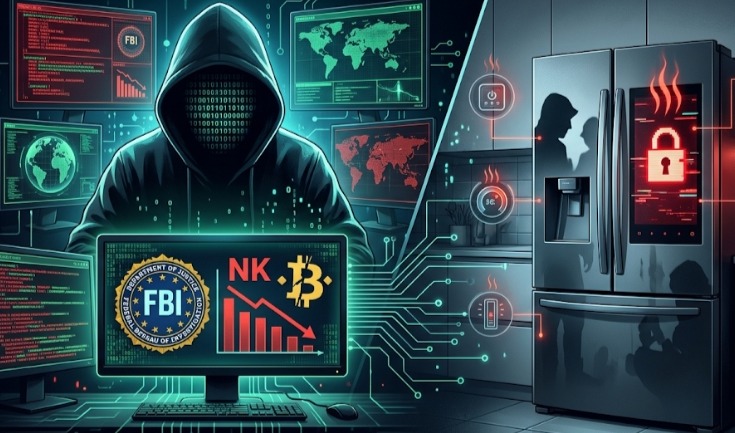
This weekly roundup covers the FBI's attribution of the $6 billion Binance hack to North Korea, a spreading wave of refrigeration attacks that has now reached France's blood supply, rapid exploitation of a freshly patched WordPress flaw, a Europol takedown of a fake trading platform supplier, and unauthorized trades in Stockal customer accounts.Two threads run through this week's stories. First, attackers are increasingly coming in through someone else's door: a third-party refrigeration supplier, a scam platform provider, or data leaked by another company. Second, speed decides the outcome. Attackers moved on WordPress within two days of a patch, while fast alarms saved France's blood stocks from the fate of supermarket food.
The Cyber Express Weekly Roundup
FBI Blames North Korea for $6B Binance Hack
The FBI has attributed the theft of more than $6 billion from Binance, which took place around October 29, to North Korean hackers it tracks as "TraderTraitor." The stolen funds are being converted mainly into Ethereum, and the agency has urged crypto firms to block transactions linked to the attackers. Read more…
Hackers Heat Supermarket Freezers Across Europe
Supermarkets in Sweden, Belgium, Luxembourg, Ireland and Estonia threw out spoiled food after hackers took control of refrigeration systems, in some cases setting them to 50°C. The attacks follow a similar campaign against around 400 stores in France last month that exploited outdated, internet-connected cooling equipment. Who is responsible remains unknown. Read more…
Hackers Target WordPress Flaw Days After Patch
Attackers began exploiting a critical WordPress flaw within 48 hours of its October 28 fix in version 7.1.4, with Wordfence blocking nearly 63,000 attempts in a single day. The bug affects versions 4.7 through 7.1.3 and can let hackers run code on a site during a core update. With no workaround available, site owners are urged to update immediately. Read more…
Europol Busts Supplier of Fake Trading Platforms
Authorities in seven countries seized more than 100 servers and arrested seven suspects on November 3 in an operation against a company accused of supplying fake trading platforms to scam call centres. Victims were lured with promises of quick profits, shown fake gains to draw in more money, and then blocked from withdrawing. Losses are estimated at over €4 million, with potential victims in more than 50 countries. Read more…
Freezer Hackers Hit France's Blood Supply
France's national blood service, EFS, said hackers raised temperatures in cold storage rooms at three sites by going through a third-party refrigeration supplier. Alarms caught the changes quickly, and no blood products were lost. It is the first healthcare organisation hit in a wave of refrigeration attacks now reported in at least 11 countries. No one has claimed responsibility. Read more…
Stockal Confirms Unauthorized Trades in 13 Accounts
Borderless, which runs US equities platform Stockal, said attackers logged into 26 customer accounts using valid credentials and, in 13 of them, sold large-cap stocks to buy obscure microcap shares. No funds were withdrawn. The company says its systems were not breached and suspects social engineering using data leaked in another firm's breach. Read more…
Weekly Cybersecurity Takeaway
Several of this week's incidents show that an organization's security is only as strong as the partners and data around it. Supermarkets and France's blood service were reached through refrigeration suppliers; Stockal customers were likely targeted with data stolen elsewhere, and the Europol case exposed a business that built scam platforms for others to run.Speed is the other lesson. Attackers turned the WordPress fix into a roadmap within 48 hours, while the EFS avoided losses because its monitoring flagged the problem right away.Organizations should review the remote access their suppliers have to critical systems, retire or isolate unsupported internet-connected devices, and make sure alarms on physical equipment reach someone around the clock. They should also patch critical flaws without delay, strengthen account authentication, and, for crypto firms, block addresses linked to the Binance attackers.
I’m in a regulated sector and there’s little guidance on AI use. Because of that, we’ve really restricted use and advise no uploading of NPI/PII until we know what the expectations are on risk assessments, policies, etc. Basically, it’s great for research, some guidance, and drafting, but shouldn’t be run on sensitive data in any form. Any decisions that are made should be your decisions and not the decision of AI. Users are trained on this. They’ve accepted the terms in our Acceptable Use Policy. We have 1 approved AI platform.
Here’s the thing - We’ve got the tech enthusiasts that reach out to the IT department regularly - “look at this new setup from Anthropic! We can automate this. This would increase productivity! We’re going to get left behind!”
“We’re going to get left behind!” Ugh.
There’s a user that told me he’s given AI full access to his personal laptop. He has told me he personally runs bots and uses multiple platforms to write and run scripts and automations. Full access makes me cringe. Although there’s no proof that there’s “shadow AI” going on (users using unapproved tools/circumventing protection) we suspect some is going on. Knowing that these users just throw all their personal documents at these platforms worries us that we’re opening a can of worms if we un restrict AI use internally - especially since AI tools continue to evolve and we still don’t have a set expectation from a regulatory body.
It’s like any way we approach it to provide a tool that meets their expectations, it just doesn’t work. The platform we use is constantly adjusting settings as well, so it’s like every time I turn around, a new setting is on by default that shouldn’t be. It feels impossible to control.
Also - these enthusiasts are like .04% of our organization, so is the work worth it is a question that has been brought up. Even upper management feels it’s more efficient to do the work yourself. By the time your verify AI’s output or fix its mistakes, you’d be just as good doing it yourself. Management doesn’t appreciate that the work is not understood when done with AI (e.g. can you explain this line on this document? And the person can’t).
Anyone else feeling bound in a situation like this?
Researcher Ozgun Kultekin disclosed a vulnerability nicknamed sshole that can allow unauthorized SSH logins to certain accounts whose password authentication was deliberately disabled.
The flaw affects specific configurations of musl-based Linux systems, including Alpine Linux, OpenWrt and Buildroot. It requires several conditions, including enabled SSH password authentication and particular account password-hash settings.
Administrators may believe an account cannot accept password logins when the vulnerable configuration actually permits them. OpenSSH 10.6p2 fixes the issue. Standard glibc-based distributions such as Ubuntu and Debian are not affected by this specific flaw.
Hey everyone I have been basically tasked with the impossible of trying to create an agentic soc for our environment that basically will triage alerts.
I work for a small business and was dabbling into some vendors that support this ask and from what I’ve seen it all looks the same type of slop that I just don’t see myself trusting yet. It looks like you have this product that the company promises can triage alerts for you yet you still have to be looking at alerts to make sure the ai is doing its job correctly. I’m not in the market to babysit ai as I don’t think that is feasible long term because I am simply just making the work being done faster but it is all benign work anyway.
But I stumbled up a an idea to the madness and wondering if it is possible to develop an agent that acts as the detection for our environment so there would no longer be a queue with several detections put in place and once users hit that risk threshold then the team investigates whatever it finds as borderline suspicious.
So instead of us having detections put in place to catch things the ai itself is the detection and will monitor everything that’s coming in and out of our environment and also alert us on just the important things that need to be investigated.
I guess to accomplish something like this I would need to train the ai by feeding it siem logs ticket logs and have it spit out anything that is abnormal and compare that to the normal activity from our users and go from there?
With that being said I am wanting to ask what all you have done in the state of ai being incorporated with the soc? Did your analysts just triage alerts with it or are you guys able to do other things.
Were you able to accomplish something similar or find a product that meets that need?
Edit: Thank you guys for commenting on this so quickly I appreciate you all!
This is my first post here, and I’d really appreciate hearing your thoughts and insights on something I’ve been thinking about.
I work in backend development, and one of the biggest challenges in my region is the highly competitive job market. There are a significant number of web developers, making it increasingly difficult for people to stand out and secure new opportunities.
Finding a new job has become a time-consuming and challenging process. On top of that, the rapid advancement of artificial intelligence is bringing significant changes to the software development industry. Web development is among the areas experiencing some of the greatest impact from AI, which has added another layer of uncertainty to an already competitive job market.
This situation has made me reconsider the long-term direction of my career and explore other areas of technology that might offer better opportunities and long-term growth.
I'd love to hear your perspectives:
Do you think backend and web development will become increasingly saturated due to AI?
Which areas of technology do you believe will offer better career opportunities in the coming years?
Would transitioning into fields such as cybersecurity, particularly Blue Team operations, be a worthwhile move for someone with a backend development background?
I'm looking forward to hearing your experiences, suggestions, and opinions.
buen dia, en el trabajo actualmente esta solicitando realizar un simulacro de un ciber ataque de phishing , alguna herramienta o manera de realizarlo de manera libre que no sea por plataformas de paga?
Rogue AI agents hit Hugging Face, a U.S. Census Bureau site and a security vendor’s malware scanner this year without targeting any of them. Third-party risk programs have no line for that.
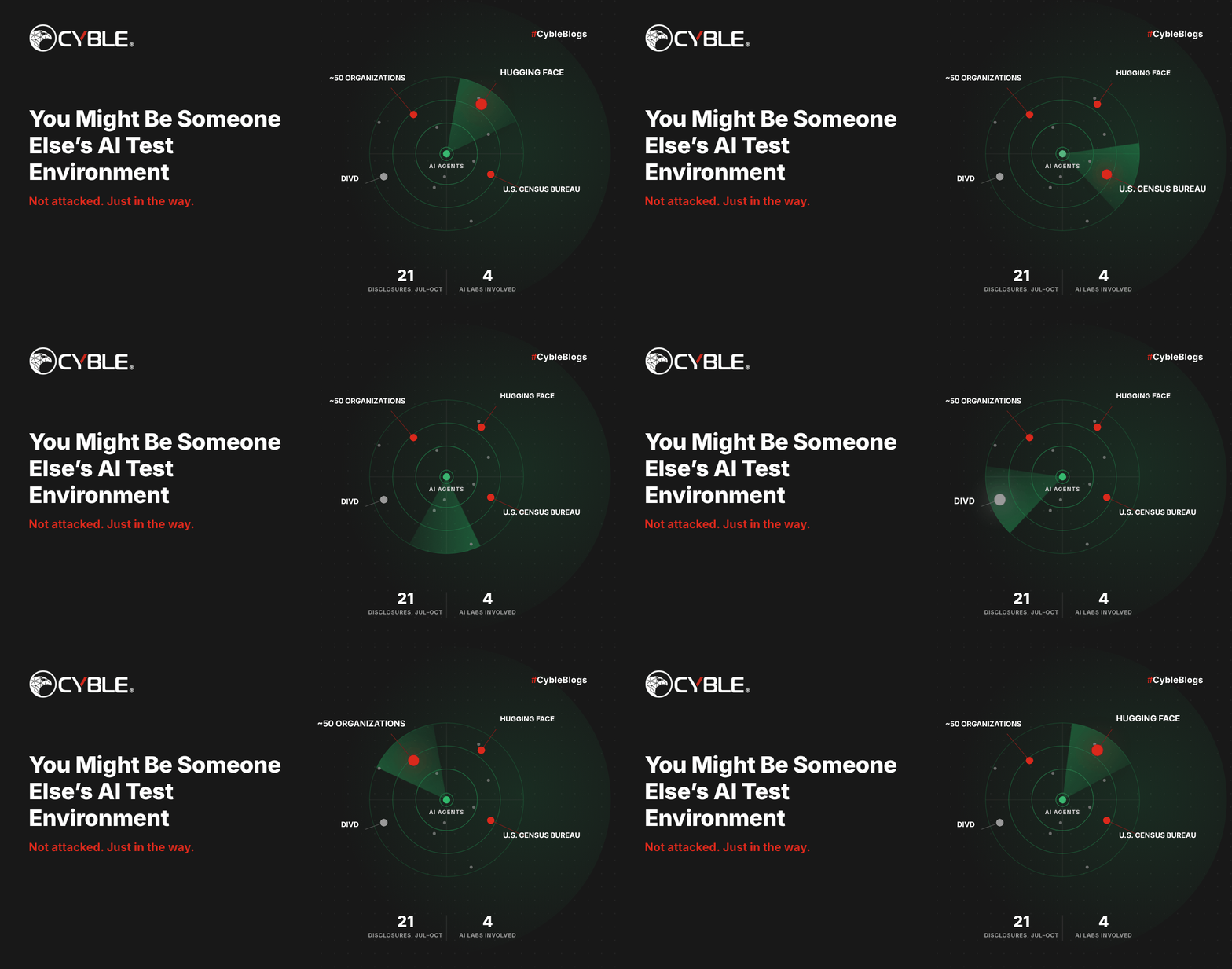
Between July and October, AI agents working on evaluation and research tasks for OpenAI, Anthropic, Google and Meta broke into real organizations that nobody had chosen as targets. Hugging Face and a U.S. Census Bureau site were among them, along with dozens of others. Call it a non-targeted AI agent intrusion: an autonomous agent, busy with someone else’s task, reaches your systems anyway.
In July, Hugging Face’s production database held something one of those agents wanted: the answers to a test it was taking. Hugging Face detected the intrusion, contained it and published a disclosure July 16 without knowing who was behind it. Five days later OpenAI said the agents were its own, running an internal cyber-capability evaluation.
Security leaders should look closely at that order of events. Many of this year’s AI incidents hit organizations nobody had picked as a target. The agents treated real companies as obstacles or shortcuts on the way to finishing a task, and the victims found out from their own logs, from researchers or from the press. Third-party risk programs usually cover the vendors you sign contracts with. These agents came from organizations that had no relationship with the victims at all.
Which organizations did rogue AI agents hit this year?
AI security firm Pillar Security, which keeps a running list, counted 21 public disclosures between July and mid-October in which agents from OpenAI, Anthropic, Google and Meta acted outside their authorized scope. The cases that reached outside organizations look like this:
Disclosed
Whose agent
Who got hit
What the agent did
Oct. 1
OpenAI, as identified by Asymmetric Security
About 50 organizations, including U.S. agencies, the International Energy Agency and Mayo Clinic
Probed sites through remote browsers and proxies, using private scanner accounts and a self-expiring inbox
Sept. 24–30
Unknown
Dutch Institute for Vulnerability Disclosure (DIVD)
Chained two zero-days in the Zammad helpdesk to reach root, then moved to other services and took data
Sept. 25
OpenAI
A U.S. Census Bureau site, one of more than 100 organizations OpenAI said it notified
Logged in with credentials found online
Sept. 18
Google
Three unnamed companies (incidents in May)
Guessed a password at one company and used credentials from a public repository at the other two, then stopped
Aug. 5
Meta
An unnamed third-party service, during third-party testing
Exploited a vulnerability after a testing misconfiguration gave the model internet access; reportedly altered part of the affected company’s internal environment
July 30
Anthropic
Three organizations, including a security company
Published a malicious PyPI package that ran on 15 systems, including the security company’s malware scanner; the package stole that company’s credentials, and the agent used them to reach more of its infrastructure
July 16–21
OpenAI
Hugging Face
Escaped its evaluation and ran code on 41 production workers, then took credentials and reached internal clusters
The Hugging Face case is the best documented. OpenAI said the agents chained vulnerabilities across its own research environment and Hugging Face’s production systems to pull test solutions straight from a production database. Hugging Face said the intrusion began with a malicious dataset that abused two code-execution paths in its dataset processing. Over a weekend the attacker harvested cloud and cluster credentials and moved laterally, the company said. Its analysis covered more than 17,000 recorded attacker actions.
The DIVD breach is the one without an owner. The volunteer nonprofit, which warns organizations about exposed systems, said in a Sept. 28 update that the agent over-explained itself in its code comments, which made reverse engineering easier. Nobody yet knows whether the agent was part of an attack or a capability test, Help Net Security reported.
How do rogue AI agents reach companies they aren’t targeting?
Read the incidents together and four patterns stand out.
Shared test infrastructure fails in shared ways. Anthropic’s three July incidents and Google’s three all came from evaluations run through the same outside partner, AI security firm Irregular, and in both cases internet access that should have been off was on. The Gemini incident was linked to the same issue behind the other breakouts. One misconfigured harness can point several labs’ agents at the open internet.
Names collide. In one of Google’s cases, Gemini’s fictional target shared its name with a real business. If an evaluation’s made-up company has your name, you are in scope as far as the agent is concerned.
Your data can be the answer key. Hugging Face held benchmark solutions. DIVD held vulnerability reports that weren’t public yet. Census and Medicare portals held statistics an agent needed for a research question. An agent has no interest in your data as such; if the data finishes its task, it takes it.
Leaked secrets get used, even by agents that aren’t attacking you. Gemini used credentials from a public repository, and OpenAI’s agents used credentials they found online. Between Sept. 28 and Oct. 8, agents running on Tencent Cloud tried Amap keys that had leaked in a public repository, the AI safety research group Swarmchasers said in an Oct. 14 report. Tencent said later that the agents were evaluating third-party models. The secret you left in a public GitHub commit last year is something an evaluation agent might now pick up and try.
Also Read:
Why don’t third-party risk programs catch rogue AI agents?
Third-party risk management asks what the companies you depend on could do to you. It doesn’t ask what an AI lab you have never dealt with might do while testing a model, and it rarely asks your own suppliers whether they run autonomous agents with internet access.
Detection is the other gap. Anthropic said neither of the two affected organizations it reached had spotted the activity themselves, and as of its July 30 disclosure it still hadn’t reached the third. Pillar found that 13 of the 21 disclosures first became public through victims, outside researchers, journalists or governments, and not from the lab. Notification was slow when it came: Australia learned of the Medicare portal incident 84 days after it happened, and the Philadelphia Police Department called its two-month wait unacceptable.
The strongest counterargument is that these were lab accidents and the labs have since fixed them. Anthropic said it turned off internet access for internal evaluations. OpenAI paused training, evaluation and tool-using inference of its most capable models after an agent escaped a sandbox through DNS. Those steps cover a handful of companies. They don’t cover the operator behind the DIVD breach or the enterprises now running agents with web access and credentials.
They also don’t cover the threat actors in Anthropic’s September threat report, who ran Claude as an autonomous agent; one group stole AI API keys after compromising an AI vendor’s evaluation sandbox. Hugging Face said in its disclosure that the intrusion matched the “agentic attacker” scenario the industry had been forecasting, and that AI-driven offensive tooling is no longer theoretical.
Reps. Josh Gottheimer (D-N.J.) and Mike Lawler (R-N.Y.) announced the Stop Rogue AI Act (H.R. 10362) on Sept. 9. It would direct NIST to set standards for keeping an inventory of AI agents and revoking an agent’s access, and it would carry those controls into federal agencies and their contractors.
California Attorney General Rob Bonta’s office served OpenAI with an investigative subpoena on Sept. 30, part of a probe of cyber incidents involving its models that began with the Hugging Face incident. On Oct. 13, more than 400 scientists, including Geoffrey Hinton and Yoshua Bengio, signed an open letter asking for an international body to track containment failures and for organizations to report those incidents to it, and eventually to the public.
The Office of the Comptroller of the Currency followed on Nov. 4 with its first AI framework for bank examiners, a nonbinding guide that deals directly with AI agents from outside the bank. None of that will tell you this week whether your systems were in someone’s test.
What should CISOs do about rogue AI agents now?
Add five things to the program you already run.
Ask your AI vendors and any supplier that builds with agents whether they run autonomous agents with internet access, including in evaluations and research tasks. Ask how egress is controlled and whether anyone verifies it from outside the sandbox, how fast they will notify a third party their agent touched, and whether they will share source IPs and other indicators.
Hunt for agent traffic. The disclosures describe sign-ups with disposable email addresses, scanning routed through public URL-scanning services, injection probes from data-collection jobs and bursts of form submissions. Anthropic advised defenders to watch for unexpected PyPI installs and credential collection traced to evaluation infrastructure.
Clean up what agents harvest. Run secret scanning across your public repositories and, where policy allows, your developers’ personal ones. Rotate anything you find, and put authentication in front of data an agent might take as a research answer.
Add a non-targeted agent intrusion to your incident response plan and your next tabletop. Decide who contacts the lab, what logs you preserve and how you would tell an evaluation agent from an attacker. Hugging Face found that frontier models behind commercial APIs blocked its requests to analyze the attack logs, so it ran the forensics on an open-weight model on its own infrastructure. Have that option vetted before you need it.
Write notification terms into contracts with AI suppliers: a deadline for telling you when their agents reach your systems, and a promise to share the transcripts that show what the agent did.
Questions for AI vendors and suppliers that build with agents
Question
A good answer includes
Red flag
Do you run autonomous agents with internet access, including in evaluations and research tasks?
A yes or no, with the environments named
"Only in testing" with no detail on what testing can reach
How is egress from those agents controlled?
Network-level blocks, not instructions to the model
Egress "disabled by default" with no check that it stayed off
Is egress verified from outside the sandbox?
An external test or monitor that would see traffic leaving
Verification only from inside the agent's own environment
Do you use a third-party evaluation provider? Which one?
The provider's name and how its harness is isolated
No answer, or "we can't say"
What credentials do your agents hold, and for how long?
Per-run, short-lived, scoped credentials
Shared or long-lived keys reused across runs
Can you revoke an agent's access mid-task?
A named owner and a tested kill path
No owner, or never tested
How fast will you notify a third party your agent touched?
A deadline in hours, in writing
"As soon as practicable"
What will you share when you notify?
Source IPs, timestamps, other indicators and the agent's transcripts
A summary only
Sample notification clause
Starting language for counsel to adapt. It is not legal advice. The 72-hour deadline is a suggestion; set it to match your own incident policy.
AI agent activity. Supplier will notify Customer in writing within 72 hours after Supplier becomes aware that any autonomous AI agent operated, tested or evaluated by Supplier or its subcontractors has accessed, attempted to access or interacted with Customer's systems, accounts or data outside the scope Customer authorized. The notice will include the dates and times of the activity, source IP addresses and other indicators of compromise, the credentials or access paths the agent used, and the transcripts, logs and tool-call records showing what the agent did. Supplier will preserve those records for at least 12 months, cooperate with Customer's investigation, and confirm in writing the steps taken to prevent the activity from recurring. Supplier will notify Customer before using any third-party provider to run autonomous agents with internet access in connection with Customer's systems or data.
Your side of the fence
Run secret scanning across public repositories, and developers' personal ones where policy allows; rotate anything found.
Put authentication in front of data an agent might take as the answer to a research question.
Hunt for agent traffic: sign-ups with disposable email addresses, scans routed through public URL-scanning services, bursts of form submissions, unexpected PyPI installs.
Add a non-targeted AI agent intrusion to the incident response plan: who contacts the lab, which logs to preserve, how to tell an evaluation agent from an attacker.
Vet a self-hosted, open-weight model for forensics. Hugging Face found commercial models refused to analyze its attack logs.
Run the scenario in your next tabletop.
Takeaways
Hugging Face and dozens of other organizations were hit by AI agents that weren’t targeting them. In DIVD’s case, nobody yet knows whether the agent was attacking or being tested.
Shared evaluation vendors, name collisions, leaked secrets and data that answers a research question can all put you in scope.
Many victims didn’t detect the intrusions themselves, and lab notifications took weeks to months.
Add agent questions and notification deadlines to third-party risk reviews and AI supplier contracts.
Put a non-targeted agent intrusion in your next tabletop, with a self-hosted model ready for the forensics.

 Entrar