 Entrar
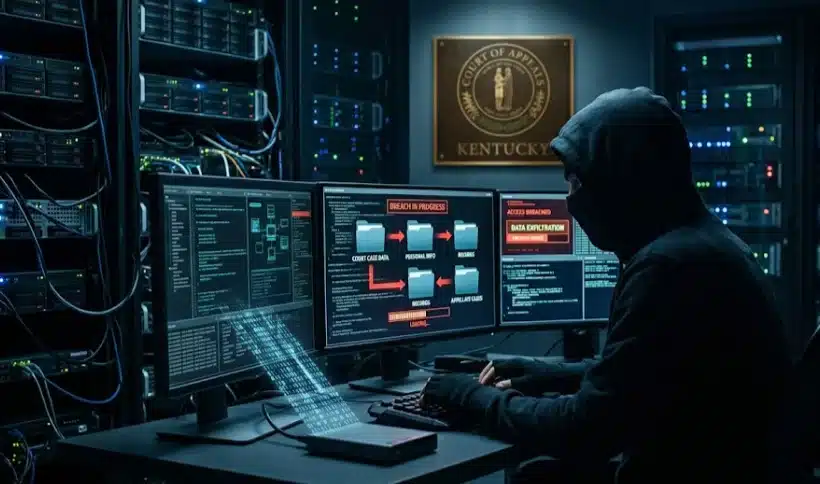
Kentucky Appellate Court Data Caught in Multi-State Cyber Data Breach

This week on the Lock and Code podcast…
You will die. Your data will not.
The afterlife of our information is a recent phenomenon, and some of the companies with the most to sort through are still just figuring it out.
As far back as 2007, Facebook was forced to reckon with mass grief when users asked the company to maintain the profile pages of the 32 victims killed by a school shooter at Virginia Tech that year. Those pages became de facto memorials for loved ones to fill with comments, and today, memorialization has become a full-fledged feature on both Facebook and Instagram. Platforms like YouTube, Pinterest, and LinkedIn—launched with likely zero strategy for a user’s death—now have procedures for next-of-kin to request that a deceased person’s account be deactivated.
Now, think about all the other ways your data can linger after death.
Every year, people accumulate more and digital stuff—email addresses, social media profiles, contact lists, domain names, subscription services, online banking accounts, and the phones, laptops, and tablets that hold it all—and every year, as that digital stuff accumulates, it compounds into ever more problems for someone else to sort out. Here, a small industry of digital estate planners have cropped up, helping families retrieve and preserve anything valuable, no matter how digital, from Spotify playlists, to poignant social media posts that mattered, to the photos stored on a phone.
And where retrieval fails, artificial intelligence has offered an attempt at comfort. The chatbot service Replika launched in 2015 after its founder uploaded a dead friend’s text messages. HereAfter AI reportedly let users upload voice recordings to power a chatbot that sounded and spoke like the deceased. Film studios have pursued the same idea for entertainment, seeking to portray deceased actors in future films.
Surprisingly, almost none of this activity is governed by law, said Tamara Kneese, author of the 2023 book “Death Glitch: How Techno-Solutionism Fails Us in This Life and Beyond.”
“By and large, there is not a great legal mechanism for protecting the privacy rights of the dead,” said Kneese. “It may not be just that a grieving loved one decides to use a bunch of your data from all of your podcasts to create a chatbot to simulate interacting with you after you’re dead, but it may be that a company chooses, in some way, to use an aspect of your personality, of your demeanor, of your voice, of your likeness after your death without anyone really being aware.”
Today, on the Lock and Code podcast with host David Ruiz, we speak with Kneese—Senior Research Scientist at Partnership on AI—about who owns a person’s data after they die, why every platform has invented its own private policy for the dead, and how the technology built to keep the dead close can vanish just as suddenly as they did.
Or worse yet, as Kneese warned for those relying heavily on certain technologies in grief:
“The company gets sold to someone else or disappears, goes bankrupt, and you no longer have that outlet or place for interaction when you’re mourning another time.”
Tune in today to listen to the full conversation.
Show notes and credits:
Intro Music: “Spellbound” by Kevin MacLeod (incompetech.com)
Licensed under Creative Commons: By Attribution 4.0 License
http://creativecommons.org/licenses/by/4.0/
Outro Music: “Good God” by Wowa (unminus.com)
Further reading:
Fartein Hauan Nilsen, “Caring for the Algorithm: Care, Love, and the Relational Personhood of Chatbots,” Somatosphere, February 26, 2026
Fartein Hauan Nilsen, “Therapeutic ideology and AI personhood: an anthropological inquiry into AI companionship,” a chapter from “Handbook on Anthropology and Artificial Intelligence,” Edward Elgar Publishing, July 21, 2026
University of Birmingham, “New Model Rules mark meaningful step towards digital inheritance laws,” July 16, 2026
Edina Harbinja, “Governing Digital Immortality: Artificial Intelligence, Deadbots and the Law,” Edward Elgar Publishing, to be published September 2026
Lilian Edwards and Edina Harbinja, “Protecting Post-Mortem Privacy: Reconsidering the Privacy Interests of the Deceased in a Digital World,” May 2013, revised November 2013
Lilian Edwards, Edina Harbinja, and Marisa McVey, “Governing Ghostbots,” Computer Law & Security Review, November 2023
SAG-AFTRA, “SAG-AFTRA Statement on Today’s Passing of California Assembly Bill 1836,” August 31, 2024
Listen up—Malwarebytes doesn’t just talk cybersecurity, we provide it.
Protect yourself from online attacks that threaten your identity, your files, your system, and your financial well-being with our exclusive offer for Malwarebytes Premium for Lock and Code listeners.
G DATA details Projextor, an Electron malware hidden in working PDF and recipe apps that runs injected scripts and captures the desktop.
Related Posts:
The post Projextor Malware Hides in Fake PDF and Recipe Apps appeared first on Daily CyberSecurity.
Healthcare technology giant CareCloud has confirmed that a data breach earlier this year impacted more than 3.75 million people, making it one of the largest healthcare data incidents disclosed this year.
The New Jersey-based company, which provides electronic health record (EHR) and practice management services, first flagged the intrusion in an SEC filing back in March, but the true scope only became clear this month when the Department of Health and Human Services (HHS) breach tracker updated the affected total from roughly 345,000 to 3,756,469 individuals.
CareCloud says an unauthorized third party accessed one of its Amazon Web Services (AWS) environments between March 10 and March 16, 2026. The intrusion caused an eight-hour disruption to one of the company’s six EHR environments before systems were restored that same evening. During a forensic investigation, CareCloud determined that the attacker claimed to have exfiltrated data from databases within that environment.
The stolen data reportedly includes both identity and medical information:
Anyone receiving a breach notification letter should take it seriously, given the combination of medical, identity, and financial data involved.
If you think you’ve been affected by a data breach, here are steps you can take to protect yourself:
What do cybercriminals know about you?
Use Malwarebytes’ free Digital Footprint scan to see whether your personal information has been exposed online.
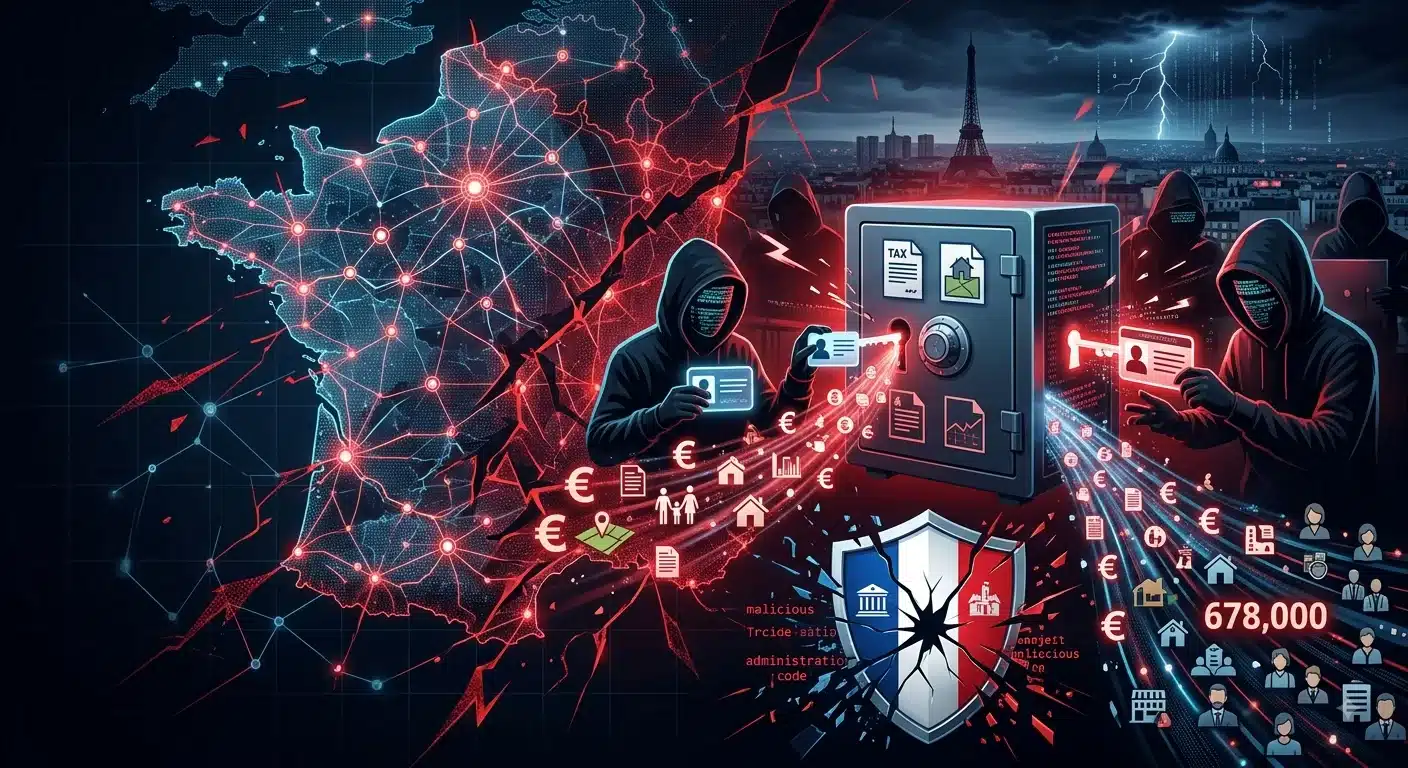
France’s tax authority confirmed a cyberattack exposed taxpayer data as officials investigate the breach’s scope and an unverified 678,000-record claim.
The post Nearly 700,000 French Taxpayer Records Reportedly Stolen in Government Cyberattack appeared first on TechRepublic.
Google now lets users remove visible watermarks from AI-generated media. However, invisible SynthID and C2PA metadata tracking remains mandatory.
Related Posts:
The post Google Relaxes AI Visible Watermarks Policy appeared first on Daily CyberSecurity.
Samsung plans to ban Smart TV apps containing residential proxy software after researchers found apps could route traffic through users’ home connections.
The post Samsung Will Ban Smart TV Apps Containing Residential Proxy Software appeared first on TechRepublic.
This week on the Lock and Code podcast…
Twenty years ago, a British mathematician named Clive Humby popularized a phrase that came to describe data’s relationship with the entire global economy: “Data is the new oil.”
Pithy as the phrase sounds, it is undeniably true.
Data steers decisions at businesses of every size. Data created entirely new industries built around its capture. And, for a select number of companies, data has produced billions—if not trillions—of dollars in value.
So how is it that, on the dark web, your stolen identity can be purchased for just 95 cents?
That’s what a Malwarebytes researcher found last month after spending 48 hours inside the dark web to investigate cybercrime. Across a variety of forums and directories, he found subscription plans for malware that steals information once implanted on a device. He found guides for deploying social engineering scams. He found people selling their services to build fake websites that trick people into handing over their usernames and passwords. And he found one of the dark web’s most traded commodities—personal data, packaged together about individual people, to help a cybercriminal commit identity fraud.
These packages are called “fullz.” For victims in the United States, a fullz contains a full name, Social Security Number, date of birth, address, and other personal details. That is enough, on its own, for a cybercriminal to potentially open a bogus line of credit, file a fake tax return, access financial accounts, or obtain medical services under someone else’s name.
As we wrote on Malwarebytes Labs:
“For less than the cost of a cup of coffee, a cybercriminal can buy enough information to devastate someone’s financial life.”
It’s the kind of risk that could scare anyone, especially considering the scale behind it. In just the first six months of 2026, Malwarebytes found more than 7,500 compromised data sets on the dark web containing more than 8.4 billion records.
And yet, even today, cybersecurity professionals still get asked why anyone should bother protecting their data.
The public, understandably, are exhausted. With data breaches happening every week—if not every day—cybersecurity can start to feel pointless. With young people unable to build financial security, they start believing that they have nothing worth stealing. And with Big Tech already collecting our every movement, behavior, click, and concern, people understandably feel powerless to fight any kind of data abuse, be it corporate or criminal.
So today’s episode approaches the question from a different direction. This isn’t about why you should protect yourself—plenty of company websites will tell you that, and most of them rely on fear. This is about why hackers want your data in the first place.
Today, on the Lock and Code podcast, host David Ruiz explains how cybercriminals turn a single repeated password into account takeover, how a screenshot of your house from Google Maps became a tool in extortion emails, and why the most benign information about you—an address, an age, one public photo—is often the most useful data a stranger can buy.
Tune in today to listen to the full episode.
Show notes and credits:
Intro Music: “Spellbound” by Kevin MacLeod (incompetech.com)
Licensed under Creative Commons: By Attribution 4.0 License
http://creativecommons.org/licenses/by/4.0/
Outro Music: “Good God” by Wowa (unminus.com)
Listen up—Malwarebytes doesn’t just talk cybersecurity, we provide it.
Protect yourself from online attacks that threaten your identity, your files, your system, and your financial well-being with our exclusive offer for Malwarebytes Premium for Lock and Code listeners.
New data shows 55.3 million Suno accounts were affected in a breach exposing contact details, purchases, and partial payment card information.
The post New Data Shows Suno Breach Affected 55M Accounts appeared first on TechRepublic.
The home appliance giant LG Electronics USA said this week it plans to suspend any apps built for its smart TVs that turn one’s television into an always-on residential proxy node. The move comes less than a month after researchers found that more than 42 percent of games and other apps available for download on LG’s webOS store allow unknown third-parties to route their Internet traffic through a user’s TV.

Proxy SDK prevalence among smart TV apps for LG (webOS) and Samsung (Tizen OS) televisions. Image: Spur.us.
On July 2, we featured research by the security firm Spur that examined the prevalence of residential proxy software development kits (SDKs) in smart TV apps. Spur found more than 42 percent of apps available for download on LG smart TVs include SDKs that turn one’s television in a proxy node indefinitely, and that more than a quarter of the apps made for Samsung’s Tizen operating system had similar residential proxy components.
Responding to questions about Spur’s research, LG Senior Vice President John Taylor told KrebsOnSecurity the company was working with app developers to remove the residential proxy option from their apps on the webOS platform. Developers that fail to comply, he said, will find their apps suspended.
“A residential proxy network is not an intended use for LG smart TVs, and LG Electronics is working with developers to remove the residential proxy option from their apps on the webOS platform,” Taylor said. “If this option is not removed, these apps will be suspended.”
Taylor said LG is committed to keeping residential proxy networks out of its smart TV apps going forward, and that the company’s review of those apps is “well underway now.”
“As part of our ongoing efforts to enhance platform quality and the user experience, LG will continue to strengthen our evaluation process for developer-submitted apps, including those that incorporate residential proxy SDKs,” Taylor wrote in an emailed statement.
App makers looking for ways to monetize their creations can turn to residential proxy providers, which pay developers to include SDKs that turn the user’s device into a residential proxy node that is rented to paying customers. In the case of LG and Samsung smart TVs, Spur found residential proxy SDKs bundled with everything from simple games like Pac-Man to screensavers and file utilities.

A Pac-Man smart TV app from Bright Data offers users the choice between viewing ads in the game or agreeing to allow their TV to serve as a residential proxy node. Image: Spur.us.
Spur’s report found the residential proxy network Bright Data accounted for a majority of proxy SDKs across both Samsung and LG smart TVs. In a statement shared with KrebsOnSecurity, Bright Data said its network is built on consent and responsibility and operates by LG and Samsung terms.
“Every peer opts in through a dedicated screen and receives value in return; every customer is vetted, and our practices have now undergone a second independent audit by PwC,” the statement reads. “We remain committed to an open, transparent internet where legitimate businesses, researchers, and institutions can responsibly access data that lives in the public domain.”
Bright Data and other proxy providers named in Spur’s report all say they follow rigorous know-your-customer processes to validate legitimate uses of their services, which is often heavily tied to content-scraping activities by said customers. The proxy companies also say they incorporate technological countermeasures to prevent proxy service customers from being able to interact with and control other devices on the proxy user’s local network.
Spur argues the problem is not that residential proxy networks exist, but rather that they are being embedded at scale in devices that most consumers do not think of as computers and are not equipped to audit.
“A one-time consent prompt buried in a TV app is not a substitute for meaningful transparency, ongoing control, and platform oversight,” Spur’s Trevor Sutter wrote. “The risk is amplified when consent comes from individuals within the household who use the device but shouldn’t give consent, such as minors.”
LG’s announcement that it is culling residential proxy SDKs from its app store is welcome news, but the company recently came under fire for another questionable partnership: Pimping McAfee security products via software drivers included in its high-end LCD monitors.
Earlier this week, the Youtube channel Gamers Nexus showed that certain LG LCD monitors will automatically install an app that promotes paid McAfee antivirus subscriptions, and that the app arrives through Windows Update without an approval prompt.
Update, July 22, 1:06 p.m. ET: Added statement from Bright Data.
Security Operations Centers (SOCs) are currently confronting scalability challenges on two fronts: structural and cognitive. The day-to-day reality of modern defensive operations is stark: an analyst frequently begins a shift facing a queue deeply saturated with unvetted alerts. To process a single event, the analyst must open the alert, pivot to a secondary console to complete an investigation, manually enrich an IP address, copy a file hash into a third interface, and cross-reference an asset inventory that may not have been updated in months. Following this, they must author and refine queries, waiting for overloaded databases to return historical context.
The actual work of assessing the investigation’s results and moving to decision-making and action has not even begun. This is the administrative burden of the modern SOC. The true threats are not just those that attempt to bypass defenses, but the critical operational hours lost before an active mitigation attempt is even initiated. While analysts are highly trained professionals, the relentless requirement to perform manual data aggregation inevitably leads to exhaustion.
Threat actors operate at machine speed, utilizing automation to pivot laterally across networks in a matter of seconds, frequently disappearing before defensive teams can even log into their terminals. Expecting human defenders to counter automated threat vectors by manually aggregating bad data is an architectural failure.
Every SOC inherits a highly fragmented data ecosystem. Telemetry is continuously generated by diverse sources, including firewalls, cloud workloads, identity providers, endpoint sensors, and legacy systems. This telemetry arrives in disparate dialects, varying formats, and highly inconsistent levels of fidelity. Before AI tools can accurately reason about a potential threat, or an analyst can initiate a logical investigation and run a playbook response, this raw telemetry must be synthesized.
Historically, organizations analysts take on these complex synthesis processes, manually normalizing data points across different vendor schemas. This represents a key misallocation of human intelligence. The asymmetry in modern security operations is not merely a discrepancy in speed; it is an imbalance in how security teams are forced to allocate their finite time. When operators spend the majority of their shifts wrangling data instead of actively investigating threats, the foundation of the SOC itself is inadequate. To achieve defensive velocity, organizations must recognize that fixing the data foundation is the mandatory prerequisite for improving all downstream security functions.
 AI Data Pipelines
Addressing the upstream data problem requires the implementation of advanced data pipelines capable of resolving enterprise data chaos before it impacts the detection engine. Frameworks such as SentinelOne’s® Singularity AI Data Pipelines serve as this foundational layer, engineered to ingest telemetry from every source and in every format without requiring months-long integration projects or heavy manual engineering.
Modern pipelines utilize AI to normalize raw telemetry into standardized formats, specifically aligning with the Open Cybersecurity Schema Framework (OCSF). This structural alignment transforms fragmented logs into structured data that is immediately actionable. It eliminates the need for analysts to construct complex regular expressions during critical incidents simply to reconcile how two different software vendors format data, such as usernames or a timestamp.
Efficient data ingestion also requires dynamic, in-flight optimization. Not all telemetry possesses the same analytical value, and storing all generated logs in highly indexed, expensive storage tiers is financially and operationally untenable. Data pipelines optimize data streams by filtering out extraneous noise, trimming excess volume, and routing specific logs based on dynamic criteria. High-value security events are routed and indexed for rapid search retrieval, while lower-priority compliance or operational logs are routed to more cost-effective tiered storage. The result is a substantial reduction in infrastructure costs, a higher signal-to-noise ratio, and a structured data foundation that is completely prepared the moment an investigation is required.
When underlying data pipelines automatically enrich that log with identity and asset information, revealing (for example) that a specific financial director’s laptop in a remote office is communicating with a known botnet, the output transitions from a raw data point into a definitive starting point. Crucially, this enrichment occurs systematically before the human operator ever interacts with the alert. Solving this data problem end-to-end is a primary reason SentinelOne was recognized in the IDC MarketScape for AI SIEM.
When a clean, structured data foundation is properly established, the performance of downstream security tools accelerates. Modern detection engines, such as the Singularity AI SIEM, leverage indexless architectures to manage enterprise-scale telemetry. Because the data is normalized and optimized prior to ingestion, these platforms can execute petabyte-scale queries with minimal latency, ensuring investigative results are delivered before the analyst’s attention wanes.
Within this architecture, detection logic is executed continuously against a stream of clean, correlated telemetry. This transforms an ocean of disparate event logs into readable, centralized dashboards that provide immediate situational awareness. The quantitative benefits of this approach are substantial. With AI SIEM, organizations are already executing their queries 70% faster. Adding AI Data Pipelines further augments this workstream, providing cleaner data for AI to run at optimal efficiency. These improvements represent the direct result of ensuring that the data arriving at the SIEM is inherently fit for purpose.
AI SIEM remains a single, comprehensive SKU with customers automatically receiving integrated pipeline functionality for everyday data optimization rather than treating it as a premium add-on. For every unit of paid Data Ingest capacity, customers can process twice that volume through Data Pipelines. A customer with 500 GB/day SIEM entitlement can push 1 TB/day through the pipeline at no additional cost.
The establishment of a structured data pipeline unlocks the capability for true agentic reasoning within the SOC. Unlike traditional rule-based automation, which executes static responses to predefined triggers, technologies like SentinelOne’s Purple AI operate as a dynamic investigative layer.
When an initial alert is generated, an agentic reasoning system does not simply pause and wait for human triage. It autonomously launches an investigation, comprehensively maps the potential blast radius of the incident, and synthesizes a clear, logical recommendation for containment. Then, the analyst logs into the console and is presented with a fully formed situational briefing rather than a blank investigation screen.
More importantly, an agentic AI layer possesses the capacity to evaluate broader adversarial campaigns rather than isolated security events. In isolation, a minor registry key modification, a singular file write, or a brief outbound network connection may not meet the threshold for a critical alert. Legacy security tools often fail to connect these disparate, low-signal events. However, Purple AI can assemble these seemingly unrelated activities into a cohesive narrative, exposing the overarching strategy of the attacker before a major breach occurs.
This level of autonomous intelligence is strictly dependent on the underlying architecture. Advanced AI algorithms cannot derive accurate conclusions from unparsed, low-quality telemetry. The analytical integrity of the agentic layer is entirely contingent on the principle of data quality; systems like Purple AI require clean, structured data to function effectively, avoiding the fundamental issue of “garbage in, garbage out”.
The final component of a modernized, agentic SOC is the deployment of Hyperautomation to execute defensive responses. To counter threats effectively, organizations must deploy automated workflows capable of executing decisions at machine speed. These no-code workflows can be configured to trigger autonomously based on AI triage verdicts, the disclosure of new high-severity vulnerabilities, or specific incoming alerts. By automating the mitigation phase, the SOC evolves from an environment strictly dedicated to passive observation into a dynamic system that actively neutralizes threats.
However, the implementation of automated response mechanisms must be rigorously governed. Executing changes to enterprise infrastructure carries inherent risk. To mitigate this, automated workflows must integrate critical approval steps, ensuring that highly consequential actions are paused until human authorization is provided. The analyst retains the ultimate authority, defining the precise parameters of what processes may run automatically and what workflows require manual judgment.
The strategic objective of integrating data pipelines, agentic reasoning, and Hyperautomation is not the removal of the human operator. Instead, the overarching goal is the restoration of the analyst’s primary function: exercising expert judgment.
By offloading repetitive tasks to technological systems, organizations systematically remove operational friction. The data layer filters out irrelevant noise, allowing the analyst to clearly see the threat. The AI investigation layer removes the administrative grind of data collection, allowing the analyst to focus purely on analytical thinking. Finally, the automated response layer eliminates procedural delays, ensuring the analyst’s decisions are executed rapidly enough to matter. This creates an intelligence fabric, known as Autonomous Security Intelligence (ASI), where data, investigation, and response function concurrently as a single, unified system.
Under this model, the operational output of a single analyst is exponentially multiplied, allowing one unburdened professional to accomplish the work of ten while still owning every critical decision. While the alert queue will perpetually require attention, the fundamental nature of the work fundamentally changes. The timeline of a manual initial triage to active investigation compresses from a multi-hour ordeal into a matter of minutes. The data arrives clean, the investigation runs automatically, and the response mechanisms are prepared. The hours previously consumed by administrative waiting are directly reallocated to strategic decision-making.
When defensive systems are finally architected to operate at the speed of the modern threat landscape, the role of the human operator transforms. Analysts are no longer forced to act as passive passengers, grateful to be carried by fragmented tools. They are elevated to the role of pilots, operating with full situational awareness, retaining their judgment, and actively directing the defensive posture of the organization. This is the paradigm of the agentic SOC, and it is entirely predicated on the foundation of clean, structured data.
Contact us today to learn more about how SentinelOne is leading the way forward with Agentic SOC.

23andMe will pay $18 million to settle claims from 43 states over its 2023 data breach, which exposed genetic information tied to nearly 7 million people.
The post 23andMe Agrees to $18M Settlement With 43 States Over 2023 Data Breach appeared first on TechRepublic.
OpenAI is set to launch GPT-5.6 after a US security review, raising new questions for enterprise AI access, safeguards, and governance.
The post OpenAI’s New GPT-5.6 Is Coming Sooner Than You Think appeared first on TechRepublic.
Aflac says a data breach in Japan may affect 4.38 million customers and agents, exposing personal, policy, and some banking information.
The post Aflac Data Breach: Over 4M Customers in Japan May Be at Risk appeared first on TechRepublic.
Hackers claim 1M+ records tied to French employment apps were exposed, including HR files, health data, worker details, and plaintext passwords.
The post Hackers Claim French Employment Leak Exposes Over 1M Records, Health Data appeared first on TechRepublic.
Xsolis confirmed a healthcare data breach affecting nearly 1.4 million people after a phishing attack exposed health and identity data.
The post Healthcare Vendor Xsolis Reports Breach Affecting 1.4M People appeared first on TechRepublic.
LastPass said customer contact and support data were exposed after attackers used stolen Klue OAuth tokens to access its Salesforce environment and CRM records.
The post LastPass Confirms Vendor Breach Exposed Customer Contact, Support Data appeared first on TechRepublic.
