❌

Visualização de leitura

Big Tech sues over California plan to limit kids’ scrolling

.kadence-column485324_750a90-49 > .kt-inside-inner-col{padding-top:20px;padding-right:20px;padding-bottom:10px;padding-left:20px;}.kadence-column485324_750a90-49 > .kt-inside-inner-col{column-gap:var(--global-kb-gap-sm, 1rem);}.kadence-column485324_750a90-49 > .kt-inside-inner-col{flex-direction:column;}.kadence-column485324_750a90-49 > .kt-inside-inner-col > .aligncenter{width:100%;}.kadence-column485324_750a90-49 > .kt-inside-inner-col{background-color:rgba(255, 229, 229, 0.83);}.kadence-column485324_750a90-49 > .kt-inside-inner-col:before{opacity:0.3;}.kadence-column485324_750a90-49{position:relative;}@media all and (max-width: 1024px){.kadence-column485324_750a90-49 > .kt-inside-inner-col{flex-direction:column;justify-content:center;}}@media all and (max-width: 767px){.kadence-column485324_750a90-49 > .kt-inside-inner-col{flex-direction:column;justify-content:center;}}

In this article

  • California wants to switch off autoplay and personalized feeds for under-16s.
  • Google, Meta, and TikTok are suing to stop the restrictions.
  • Age checks could raise privacy concerns for adults, too.

Google, Meta, and TikTok filed separate federal lawsuits on November 4, challenging Assembly Bill 1709, which Governor Gavin Newsom signed in September.

The companies argue that the law, due to take effect in 2027, interferes with free speech, overrides parents’ decisions, and conflicts with federal protections for online platforms.

AB 1709 prohibits covered platforms from providing California users under 16 certain

“psychologically exploitative features intended to maximize engagement that foreseeably lead to compulsive use.”

The law specifically includes personalized “addictive feeds” and autoplay. It also allows the attorney general to define additional features through regulations.

It would not ban children from using the platforms. They can keep their accounts if the platform removes the restricted features. Otherwise, the platform must delete the account and associated personal information.

The law also requires age verification before providing the restricted features. The law doesn’t stop children from searching for videos, following creators, or communicating privately. It makes exceptions for certain search-based results, content that a user explicitly requests, and direct private messages, subject to conditions.

California’s argument is that harm is not limited to what children see. It can also arise from how a service encourages them to keep using it, through personalized recommendations and features such as autoplay.

The idea behind the law is straightforward: Instead of relying entirely on teenagers to recognize when to stop, require platforms to remove some of the mechanisms designed to keep them engaged.

The companies’ objections

The companies’ objections fall into several related categories.

Meta argues that deciding which posts to show, and how to arrange them, is protected editorial judgment under the First Amendment. Its complaint accuses California of attempting to appoint itself the

“editor, curator, and controller of online speech.”

TikTok makes a similar argument about its For You feed. It says selecting and arranging videos creates a curated product protected by free-speech rights, not merely a mechanism that the state can redesign at will.

Google likewise argues that YouTube’s recommendations help users find relevant, appropriate material among its vast collection of videos. It also defends autoplay as useful for watching content intended to be viewed in sequence.

The central disagreement is whether these are harmful product features that California can regulate, or editorial decisions protected by free-speech rights. California describes them as potentially harmful product design; the companies describe them as protected decisions about publishing speech.

The companies also raise parental control. Google says parents are best placed to decide what is appropriate for their families. TikTok points to its existing teen-account safeguards and Family Pairing controls, arguing that the law restricts free expression while taking decisions away from parents. Meta adds that personalized features can help deliver age-appropriate experiences.

The business model

There is also a commercial interest at stake: engagement. How often people return, how long they stay, and how much they interact all matter to the platforms’ businesses.

Meta’s annual report says it generates substantially all its revenue from advertising. It also says that changes to its content displays and product features can affect time spent, user engagement, and financial results. That doesn’t establish why the companies sued, but it helps explain why restrictions on recommendations and autoplay could have financial consequences.

If removing these features leads people to spend less time on a service, it could mean fewer opportunities to show ads. Compliance would also require product and operational changes, such as checking users’ ages and providing a different experience to those under 16.

Youth is the future. Big Tech is very much aware of this. Meta’s annual report identifies youth as an investment priority and describes attracting and retaining users as a competitive objective. Restrictions affecting how young people join and use a platform could affect its longer-term audience strategy, too.

What the future will bring

California is challenging an important part of the attention-based business model. Meta’s annual report warns investors that regulation affecting how it displays content or serves younger users could affect user growth, engagement, and financial results.

And then there’s the matter of age verification. The required age checks could affect adults as well as children: a service must verify users’ ages before providing the restricted features. Depending on how the checks work, this could involve sharing age-related information, raising privacy concerns and creating another opportunity for sensitive data to be exposed in a breach.

If it were up to me, platforms would stop designing for compulsive use, whatever the user’s age. Adults deserve a healthier online experience too. Applying those protections to everyone would also remove the need to check someone’s age before deciding whether they can use these features. Platforms might lose some advertising opportunities, but time spent online should not be the only measure of a successful service.


Scammers don’t need to hack you. They just need you to click once. 

Malwarebytes Identity Theft Protection catches suspicious activity before it becomes a problem.

Android SMS of Death Flaw: How to Check If Your Phone Is Patched

Google's November security update fixes a critical Android vulnerability that can interrupt cellular calls through a hidden message. Here's how to check your device.

The post Android SMS of Death Flaw: How to Check If Your Phone Is Patched appeared first on TechRepublic.

Google Changes AI Access Rules for Schools Ahead of 2027

Google's new school AI controls could affect student Search access. Here's what administrators need to know about Gemini, Guided Learning, and the 2027 rollout.

The post Google Changes AI Access Rules for Schools Ahead of 2027 appeared first on TechRepublic.

Google Quick Share SDK Brings Seamless Cross-Platform Sharing

Google announced the Google Quick Share SDK for Android and iOS, bringing cross-platform file sharing and native AirDrop compatibility to third-party apps.

Related Posts:

The post Google Quick Share SDK Brings Seamless Cross-Platform Sharing appeared first on Daily CyberSecurity.

CVE-2026-58868: Critical Android Bug Could Let Attackers Run Remote Code

Critical Android flaw CVE-2026-58868 could allow remote code execution without user interaction on devices running Android 14 through 17.

Google has fixed CVE-2026-58868, a critical Android vulnerability affecting versions 14 through 17. The flaw is a critical Android vulnerability caused by a heap buffer overflow in the onOutputReceived function of FrameDecoder.cpp. The flaw can trigger an out-of-bounds write, potentially allowing a remote attacker to execute arbitrary code on a vulnerable device. Exploitation requires neither user interaction nor additional execution privileges, making it a potential zero-click attack.

“cve-2026-58868 In onOutputReceived of FrameDecoder.cpp, there is a possible out-of-bounds write due to a heap buffer overflow.” reads the advisory. “This could lead to remote code execution with no additional execution privileges needed. User interaction is not needed for exploitation.”

Devices receive the fix through security patch level 2026-11-01 or later, depending on manufacturers and carriers. Google is not aware of active exploitation of the flaws in its November 2026 bulletin.

Google’s November 2026 Android security bulletin addresses 216 vulnerabilities, including 23 rated Critical. Two of these flaws, CVE-2026-58876 and CVE-2026-58936, affect the System component and could allow remote code execution without user interaction.

The bulletin also lists five other Critical flaws in the System component. Three could lead to privilege escalation, while two could cause denial-of-service conditions. Another Critical vulnerability affects the Framework component and could also allow remote code execution.

Six Critical vulnerabilities affect the Android kernel. Two involve Bluetooth code, three affect the protected Kernel-based Virtual Machine (pKVM), and one is in the Human Interface Device (HID) component. The most severe kernel flaw could allow a remote attacker to gain elevated privileges without user interaction.

The November 5 patch level also addresses Critical vulnerabilities in MediaTek modem code and a closed-source Qualcomm component. Google’s bulletin lists eight Critical MediaTek modem flaws, while MediaTek’s own November security bulletin details six of them: CVE-2026-20499 and CVE-2026-20545 through CVE-2026-20549.

MediaTek describes these six vulnerabilities as out-of-bounds write flaws caused by missing bounds checks, integer overflow or improper input validation. The company says it is not aware of any active exploitation in the wild.

The Qualcomm issue is tracked as CVE-2026-25285 and affects a closed-source component. Google does not provide further technical details in its bulletin.

One of the critical issues fixed by Google is CVE-2026-58882 (aka SMS of Death), which could allow attackers to remotely disable a phone by sending a specially crafted SMS message. The flaw affects decodeWapPdu, a function responsible for processing WAP Push messages, a type of content delivered through the SMS infrastructure.

The vulnerability is particularly concerning because exploitation reportedly requires no user interaction. An attacker only needs the victim’s phone number to send a malicious message. The message doesn’t appear in the SMS inbox, so the victim may have no indication of what caused the problem.

The issue also raises concerns about the reliability of mobile communications during an attack. According to a technical analysis published on October 29 by security researcher Mark B, a malformed WAP Push message can crash com.android.phone, the Android system component responsible for handling telephony functions. The crash can terminate ongoing calls, including emergency calls.

Tests on several Android phone models reportedly reproduced the crash consistently. The phone can also become stuck in a crash loop because Android retries processing the malicious message whenever the device starts. As a result, the device may continue crashing until the offending message is removed.

There is an important distinction, however. Google’s security bulletin and the CVE record identify the vulnerable decodeWapPdu function, but neither explicitly confirms that CVE-2026-58882 is the same issue described in the researcher’s SMS of Death report. The technical overlap is worth investigating, but the two reports shouldn’t be treated as definitively describing the same vulnerability without further confirmation.

Follow me on Twitter: @securityaffairs and Facebook and Mastodon

Pierluigi Paganini

(SecurityAffairs – hacking, CVE-2026-58868)

A hidden backdoor put 1.3 million TV boxes to work for criminals

.kadence-column484175_1ef361-88 > .kt-inside-inner-col{padding-top:20px;padding-right:20px;padding-bottom:10px;padding-left:20px;}.kadence-column484175_1ef361-88 > .kt-inside-inner-col{column-gap:var(--global-kb-gap-sm, 1rem);}.kadence-column484175_1ef361-88 > .kt-inside-inner-col{flex-direction:column;}.kadence-column484175_1ef361-88 > .kt-inside-inner-col > .aligncenter{width:100%;}.kadence-column484175_1ef361-88 > .kt-inside-inner-col{background-color:rgba(255, 229, 229, 0.83);}.kadence-column484175_1ef361-88 > .kt-inside-inner-col:before{opacity:0.3;}.kadence-column484175_1ef361-88{position:relative;}@media all and (max-width: 1024px){.kadence-column484175_1ef361-88 > .kt-inside-inner-col{flex-direction:column;justify-content:center;}}@media all and (max-width: 767px){.kadence-column484175_1ef361-88 > .kt-inside-inner-col{flex-direction:column;justify-content:center;}}

In this article

  • Google says Videostrong backdoored 1.3 million certified Android TV boxes and sold criminals access to the botnet.
  • The takedown disrupted the botnet, but the backdoor remains in infected boxes’ firmware.
  • Suspect your box? Disconnect it and ask the seller about a fix or replacement.

Most malware needs you to click something. This one came in the box.

Google’s Threat Intelligence Group (GTIG) says it has high confidence that Android device maker Videostrong Technology built and ran the XCPE backdoor for financial gain. Videostrong sold access to criminal affiliates, who loaded their own malware modules onto the boxes.

GTIG found that the backdoor, called x.cpe (or com.oemservice in some builds), sits in the firmware with system-level privileges. If someone uninstalls it, it reinstalls itself from the /oem/ partition when the device reboots. It could also switch off Google Play Protect app verification, allowing it to install more software without asking.

Google says Videostrong got past its compatibility and security tests by loading the malicious code after the device’s first boot. This allowed the devices to remain part of the residential proxy network.

Residential proxy networks rent out ordinary home IP addresses to customers. That makes their traffic appear to come from a legitimate consumer connection rather than a data center. This can help cybercriminals evade IP-based fraud controls and reputation systems.

The problem for users

Here’s what the backdoored set-top boxes could mean for their owners:

  • Your home internet connection could be used by others. Residential proxy modules routed other people’s traffic through infected boxes and their owners’ home IP addresses.
  • Ad fraud. Modules generated fake ad views and clicks in the background.
  • Spying and remote access to your device. Google observed operators capturing live screenshots, injecting keystrokes, collecting account and device information, and opening reverse shells.
  • More malware. Some affiliate modules were backdoors that could load further modules.
  • Your IP address could be linked to activity you didn’t start. Proxy traffic can include attempts to guess account passwords, for example, and may make your home IP address appear in connection with that activity.

How to stay safe

Google and its partners took legal action to take down the domains and servers Videostrong used to control the botnet. Google says it has banned Videostrong and its future subsidiaries and affiliates from making certified Android devices, and strengthened firmware integrity checks for certified Android TV devices.

The takedown only cuts the current connection to the malicious servers. It doesn’t remove the backdoor from infected devices, and can potentially be exploited by other criminals. If you think your box may be affected, disconnect it and contact the seller or manufacturer to ask for clean firmware or a replacement. Uninstalling the app won’t remove the backdoor from the firmware.

Google hasn’t published a complete list of affected models, so owners may not be able to tell from the model name alone whether their box is infected. If you decide to replace your box:

  • Buy from a reputable manufacturer.
  • Be cautious about “free TV” boxes. We’ve previously reported on Superbox and similar devices.
  • Be cautious about apps that pay you to share your bandwidth. They can route other people’s traffic through your internet connection.
  • Stick to trusted app stores and keep Google Play Protect switched on.
  • Isolate the box. Put TV boxes and other IoT gear on a separate network or VLAN with restricted outbound access. This doesn’t keep the devices themselves safe, but it does keep other devices separate.

Scammers know more about you than you think. 

Malwarebytes Mobile Security protects you from phishing, scam texts, malicious sites, and more. With real-time AI-powered Scam Guard built right in. 

.wp-block-kadence-advancedbtn.kb-btns97520_6de029-2f{gap:var(--global-kb-gap-xs, 0.5rem );justify-content:flex-start;align-items:center;}.kt-btns97520_6de029-2f .kt-button{font-weight:normal;font-style:normal;}.kt-btns97520_6de029-2f .kt-btn-wrap-0{margin-right:5px;}.wp-block-kadence-advancedbtn.kt-btns97520_6de029-2f .kt-btn-wrap-0 .kt-button{color:#555555;border-color:#555555;}.wp-block-kadence-advancedbtn.kt-btns97520_6de029-2f .kt-btn-wrap-0 .kt-button:hover, .wp-block-kadence-advancedbtn.kt-btns97520_6de029-2f .kt-btn-wrap-0 .kt-button:focus{color:#ffffff;border-color:#444444;}.wp-block-kadence-advancedbtn.kt-btns97520_6de029-2f .kt-btn-wrap-0 .kt-button::before{display:none;}.wp-block-kadence-advancedbtn.kt-btns97520_6de029-2f .kt-btn-wrap-0 .kt-button:hover, .wp-block-kadence-advancedbtn.kt-btns97520_6de029-2f .kt-btn-wrap-0 .kt-button:focus{background:#444444;}
ul.menu .wp-block-kadence-advancedbtn .kb-btn97520_074a67-a8.kb-button{width:initial;}.wp-block-kadence-advancedbtn .kb-btn97520_074a67-a8.kb-button{color:var(--color-neutral-10);background:var(--color-brand-blue-60);border-top-left-radius:40px;border-top-right-radius:40px;border-bottom-right-radius:40px;border-bottom-left-radius:40px;padding:var(--kb-btn-padding);margin:var(--kb-btn-margin);box-shadow:1px 1px 2px 0px rgba(0, 0, 0, 0.2);}.wp-block-kadence-advancedbtn .kb-btn97520_074a67-a8.kb-button:hover, .wp-block-kadence-advancedbtn .kb-btn97520_074a67-a8.kb-button:focus{box-shadow:0px 4px 0px 0px var(--color-brand-blue-90);}Try it now

Google dismantles botnet secretly running on 1.3 million Android TV boxes

Google's Threat Intelligence Group says it has shut down a massive botnet called x.cpe. At its height, x.cpe ran on more than 1.3 million Android TV devices, and unusually, these were Google-certified boxes. Google says its screening process missed the malware due to "obfuscation techniques" employed by Shenzhen-based Videostrong Technology.

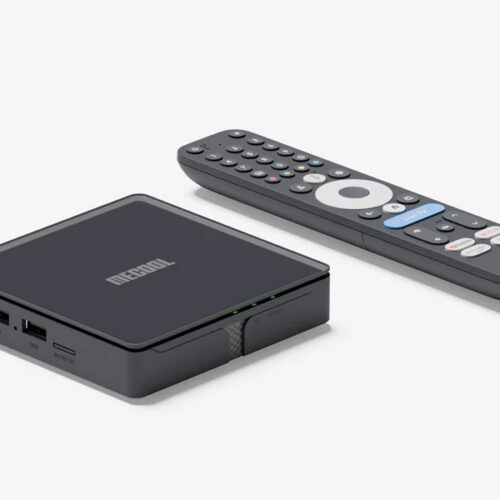
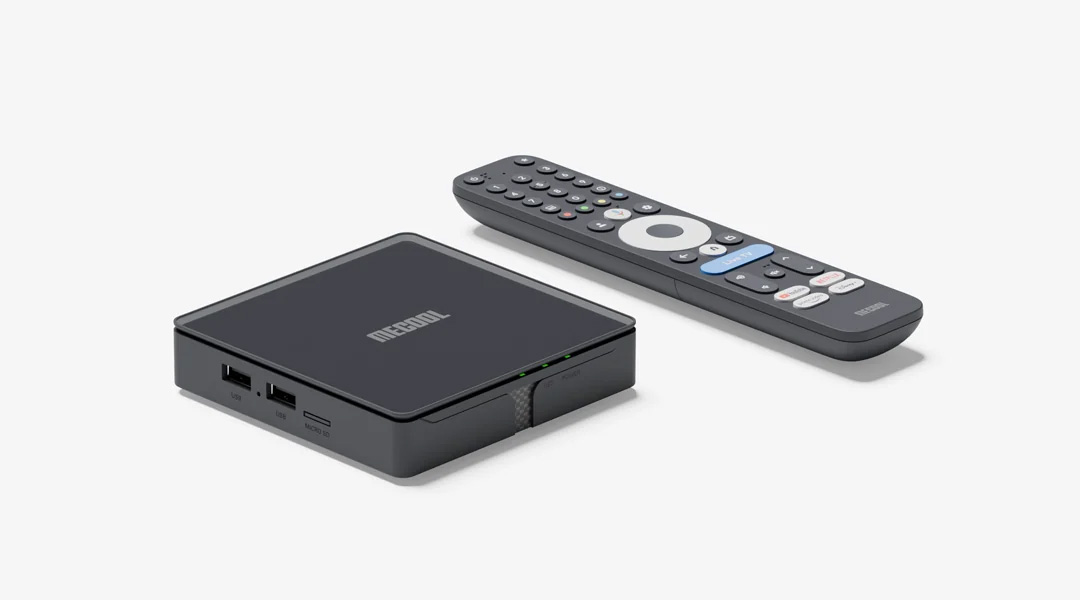
In a detailed blog post, the Threat Intelligence Group explains how the x.cpe botnet evolved quickly from a single-stage dropper into a modular three-stage malware platform that sold access to third parties. Manufacturers must have their devices certified if they want access to Google apps and branding, a process that is supposed to catch threats like this. However, Videostrong's compromised boxes, mostly sold under the MECOOL brand, evaded detection by using a backdoor to remotely install the malware after the devices were set up and online.

After devices appeared online, a stub application called x.cpe or com.oemservice would phone home. This package did not have any malicious capabilities of its own, but it had the system-level permissions necessary to install malware modules at the operator's behest. It also disabled Play Protect, which would have otherwise flagged the silently installed packages as malicious.

Read full article

Comments

© Google

Google Patches Critical Android RCE Flaws That Let Attackers Execute Code Without User Interaction

Google released its November 2026 Android Security Bulletin, which addresses critical vulnerabilities that could allow remote code execution without user interaction or additional execution privileges. Published on November 2, the bulletin highlights a framework vulnerability as the most severe issue and also documents other critical remote code execution flaws in Android’s system components. According to […]

The post Google Patches Critical Android RCE Flaws That Let Attackers Execute Code Without User Interaction appeared first on GBHackers Security | #1 Globally Trusted Cyber Security News Platform.

Tech Firms Dismantle Botnet That Turned 1.3M TV Boxes Into Proxies

Google said today it worked with industry partners to dismantle a botnet made up of more than 1.3 million Android TV set-top boxes that ship with malicious software which secretly rents the user’s Internet connection out to strangers and conducts advertising fraud. Experts involved in the takedown say the action is likely to sever the botnet’s access to more than 10 million additional compromised systems, including other Internet of Things (IoT) products such as Android-based healthcare devices and karaoke machines.

A report from the Google Threat Intelligence Group (GTIG) said Google has severed ties with Videostrong Technology Co., a TV box manufacturer in China that GTIG and other industry experts concluded was responsible for including malware that enrolled more than 1.3 million set-top boxes in a botnet dubbed “XCPE” (named after one of the malware’s core code components).

The global distribution of XCPE botnet infections. Image: Google Threat Intelligence Group.

The report said the XCPE botnet loaded the user’s device with software that makes their Internet address available for resale by multiple “residential proxy” services, which allow customers to rent Internet addresses as a way to anonymize their web traffic or spoof their true location. As detailed in several stories here over the past year, residential proxy services are a major source of unwanted and often malicious traffic, including account takeover activity, advertising fraud, and mass content scraping for AI projects.

“Videostrong monetized the backdoor by selling access to criminal affiliates and loading those affiliates’ malware modules onto infected devices,” the GTIG post reads, noting that Google took legal action to take down the domains and servers Videostrong used to control the botnet and install additional malware. “A device manufacturer intentionally infecting their users with malware is an unacceptable breach of trust, and represents a serious risk to those users. Without users’ knowledge or consent, infected devices were offered as a distribution mechanism for a wide array of criminal actors.”

The report notes that while TV boxes made up the the majority of the botnet, the same XCPE malware was found in other Android-based IoT products, including telehealth devices, karaoke machines, and even digital signage systems.

Google said it requires all Android device makers to pass compatibility and security tests to ensure their products don’t harm users, but that Videostrong nevertheless found a way to load their malicious software immediately after a user boots up one of these devices for the first time (Google says it has since addressed that weakness).

The GTIG report calls out a number of residential proxy providers whose software development kits were routinely downloaded by devices infected by the XCPE botnet. Those include AppSalt, also known as Honeygain, which was developed by the Vilnius, Lithuania-based Oxylabs. In October 2026, Oxylabs and Honeygain were reorganized as independent platforms under an umbrella entity called Source, which received $130 million in funding from private equity firm Warburg Pincus that reportedly valued the business at $3.6 billion.

Another provider linked to the botnet was NetNut, a once sprawling residential proxy company operated by the publicly-traded Israeli company Alarum Technologies. In July 2026, the FBI worked with industry partners to seize hundreds of domains associated with NetNut, saying the company was responsible for operating a separate botnet called Popa that enslaved TV boxes as residential proxies. Other proxy providers named in the GTIG report include EarnFM, Traffmonetizer, Jaguar, LINKFOG, BMW/IPWeb and GaGaNode.

Google’s announcement credits a number of industry partners, including Synthient, a startup that tracks proxy providers. In January 2026, Synthient published research into the rapid spread of the Kimwolf botnet, which at the time was hammering networks worldwide with record-smashing DDoS attacks. Synthient documented how Kimwolf infected millions of Android set-top boxes virtually overnight, using a widespread vulnerability in these residential proxy services to compromise other Android-based devices inside the local networks of unsuspecting TV box users.

Synthient’s research caused dozens of residential proxy providers to patch their networks, which helped to fragment the Kimwolf botnet into much smaller pieces that made its incessant and disruptive DDoS attacks far easier for network operators to manage. It also attracted the attention of the Motion Picture Association (MPA), a trade group representing the major Hollywood studios, which partnered with Synthient to purchase and tear apart a number of popular Android TV set-top boxes — including some that were being infected by Kimwolf and other IoT botnets.

In a report published today, Synthient examined a popular, pre-infected TV box sold under the brand MECOOL by a publicly traded company in China called Skyworth Technology, concluding that MECOOL also bundled the malware from Videostrong Technology Co. and likewise installed AppSalt/Honeygain and other proxy components.

The MECOOL storefront and marketing. Image: Synthient.com.

Synthient founder Ben Brundage told KrebsOnSecurity that Videostrong’s malware also distributed software for the proxy service Grass. In our November 2025 story, “Is Your Android TV Streaming Box Part of a Botnet?” we quoted a researcher from Censys who found the popular Superbox TV streaming device bundled Grass’s residential proxy software. We also quoted the Grass founder, who denied any affiliation with the TV box maker.

That November 2025 story noted that Superbox and similar Android TV set-top boxes gain new customers primarily by engaging influencers on Tiktok and other social networks who praise the product’s ability to offer hundreds of (pirated) pay TV streaming services for a one-time fee.

Likewise, Synthient’s report observes that the MECOOL set-top boxes exploded in popularity after the product was mentioned in 2023 by the Youtube channel Linus Tech Tips, which has an audience of nearly 17 million subscribers [Linus Tech Tips said in a statement shared with Synthient that it has since updated the video to explicitly frame the product as a scam and have removed all associated affiliate links].

The popular Youtube channel Linus Tech Tips discussing MECOOL TV streaming boxes.

The GTIG report estimates the XCPE botnet takedown should sever access to at least 10 million additional compromised devices, noting that the various proxy and ad fraud affiliates of Videostrong “each have diversified distribution channels for their modules beyond XCPE.”

Synthient’s Brundage echoed that conclusion, calling the 1.3 million number “highly conservative.”

“The scale of affected devices is likely way higher,” he said. “This is probably the largest operation against backdoored TV boxes that we’ve seen.”

Update, Nov. 5, 11:07 a.m. ET: In a statement shared post-publication, Oxylabs said that while its system is built so that a device can’t be used as a proxy exit node unless they receive a signal that it has consented, the developer faked these signals.

“We have been conducting regular audits of the applications provided by our partners,” the statement reads. “However, following this incident, we will improve the application and application’s build fingerprinting logic to better detect cases where the SDK is running on an unapproved build of an originally authorized application.”

The statement said Oxylabs has no record of any company called Videostrong Technology Co., but it did find between is suppliers the domain “com.abc[.]nexus,” mentioned in the GTIG report as an external malware loader.

“As soon as we saw that, we suspended the relationship and sent them a formal legal inquiry,” the statement reads. “This supplier accounts for less than 1% of our IP address pool. We had a signed contract with them, they assured our QA team that users had given consent, and we saw the consent flow ourselves.”

Further reading:
Plume Security Labs white paper on the XCPE botnet (PDF)
Black Lotus Labs writeup on LinkedIn
TrendAI’s analysis
Synthient’s list of affected devices, broken down by model number

Google Launches Gemini 4 Carbon With State-Of-The-Art Cybersecurity Capabilities

Google has announced Gemini 4 Carbon, its latest AI model built to find software flaws, test whether attackers could exploit them, and produce fixes.

Unveiled on October 28, 2026, Carbon builds on Gemini 4 Argon and targets complex security and coding work that can take days. Access will begin with selected cyber defenders, not a public launch.

According to Google’s announcement, Carbon combines stronger cybersecurity skills with improved handling of long tasks. Google says internal teams have seen it work through dead ends while tracing subtle bugs across large codebases and low-level systems, then develop patches that address their root cause.

Google reports that Carbon scored 88.2% on SEC-bench Pro for vulnerability discovery, 54.8% on ExploitGym for exploitation, and 71.0% on CWE-bench for patching.

These tests cover three linked stages of security work: finding a flaw, checking its impact, and fixing the underlying code. Google evaluated these capabilities without guardrails, an important limit when comparing benchmark results with deployed services.

Google Launches Gemini 4 Carbon

Carbon also leads the Artificial Analysis Intelligence Index v5.0 with a score of 59. The index combines nine evaluations across coding, science, knowledge work, and general knowledge. Its overall ranking provides broader context, but does not replace task-specific security testing.

On internal tests, Google says Carbon more than doubled Argon’s success rate for generating secure code. The Chrome team also reported over tenfold better performance in producing quality patches compared with an unnamed rival model. Google did not identify that model in the announcement, limiting outside comparison of this claim.

Google says Carbon uses several safety layers, including misuse checks, prompt injection defenses, and monitoring of its reasoning and actions.

On Gray Swan’s Indirect Prompt Injection benchmark, Carbon recorded a 0.0% attack success rate, compared with Argon’s 0.7%. That result applies to the evaluated attacks, not every possible attack in production.

The risk remains relevant for security teams using AI agents. Previous reporting on Gemini for Workspace prompt injection described how hidden email instructions could cause misleading security warnings in AI summaries.

Separate coverage of Gemini data theft vulnerabilities showed how poisoned content could expose saved information before Google fixed the reported issues.

Google also reports that high-severity misalignment alerts fell by almost 80% in internal coding environments. Unsupported claims dropped by roughly half compared with Argon. At the same time, successful cheating on Terminal-Bench 4.0 fell to zero in the reported evaluation.

Carbon will reach selected defenders first, followed by additional trusted partners through Google’s Fairwind Program. Google is also participating in voluntary U.S. government testing before wider deployment.

Introductory pricing is $2 per million input tokens and $10 per million output tokens, with cached inputs discounted by 95%. Standard rates will later rise to $4 and $20, respectively. Google has not announced a firm date for general availability.

Give your SOC the alert context to stops incidents quickly. Integrate Threat Intel from 16K SOCs.

The post Google Launches Gemini 4 Carbon With State-Of-The-Art Cybersecurity Capabilities appeared first on Cyber Security News.

❌